Are Rats Dangerous in the Garden? A Pro Guide
Are garden rats dangerous to plants and people? Extension-backed ID, damage clues, safe harvest rules, and a 72-hour action plan—no rodenticide shortcuts.
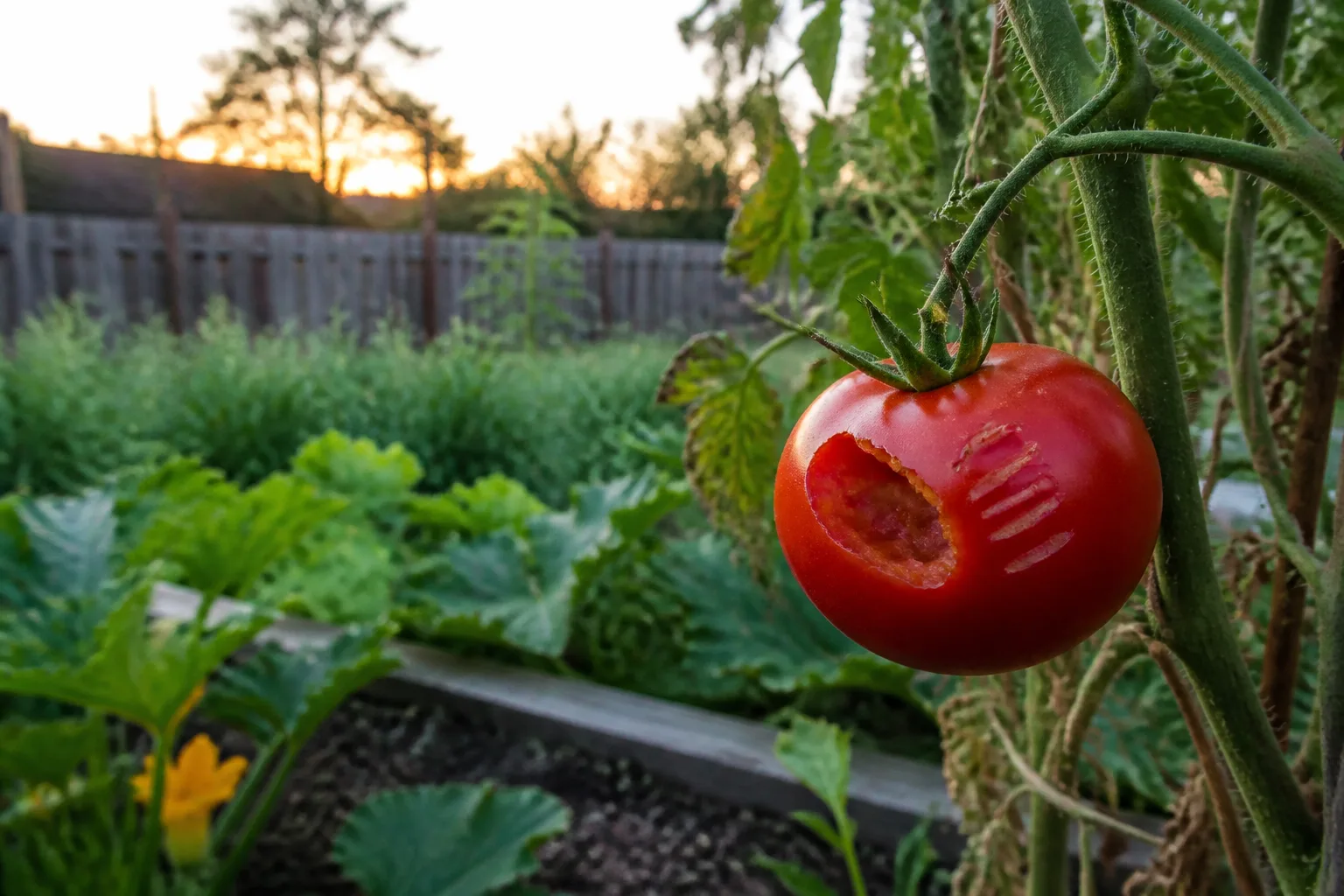
A rat in the marigolds is not the same crisis as rats nesting in your attic—but in a food garden, the stakes climb fast. Rats chew ripe produce, contaminate harvest surfaces with urine and feces, and burrow under compost and sheds while you sleep. The question is not whether rats can damage a garden; it is whether your situation is a passing visitor, a manageable outdoor problem, or the early edge of a household infestation.
The Quick Answer: When Garden Rats Are a Real Problem
Rats are dangerous to edible gardens because they eat and spoil crops, undermine beds with burrows, and can transmit pathogens through droppings and urine on food you planned to eat raw. UC IPM lists rats among the most troublesome residential rodents precisely because they damage crops and tree fruits while also posing indoor contamination risk once populations grow (UC IPM). A single nighttime gnaw on one tomato is a sanitation and monitoring job—not a panic—but repeat damage, burrows, droppings near food prep areas, or rats on fence lines every dusk mean you need an active control plan this week, not next season.
Ornamental beds suffer too—rats nibble flowers, buds, and stems—but the health and money pain concentrates in vegetable patches, fruit trees, compost, and chicken runs where calories are easy. If you only grow flowers and see one burrow by the trash cans, tighten sanitation. If you grow food and find parallel tooth marks on strawberries, treat it as a harvest safety and population control problem immediately.
Are Rats Dangerous to Garden Plants and Your Harvest?
Yes—for food growers, rats are both a yield pest and a contamination hazard. They do not inject toxins into plants, but anything they touch with saliva, urine, or feces can carry bacteria and parasites you do not want on salad greens or kid-snacked cherry tomatoes.
What Gets Damaged First in an Edible Garden
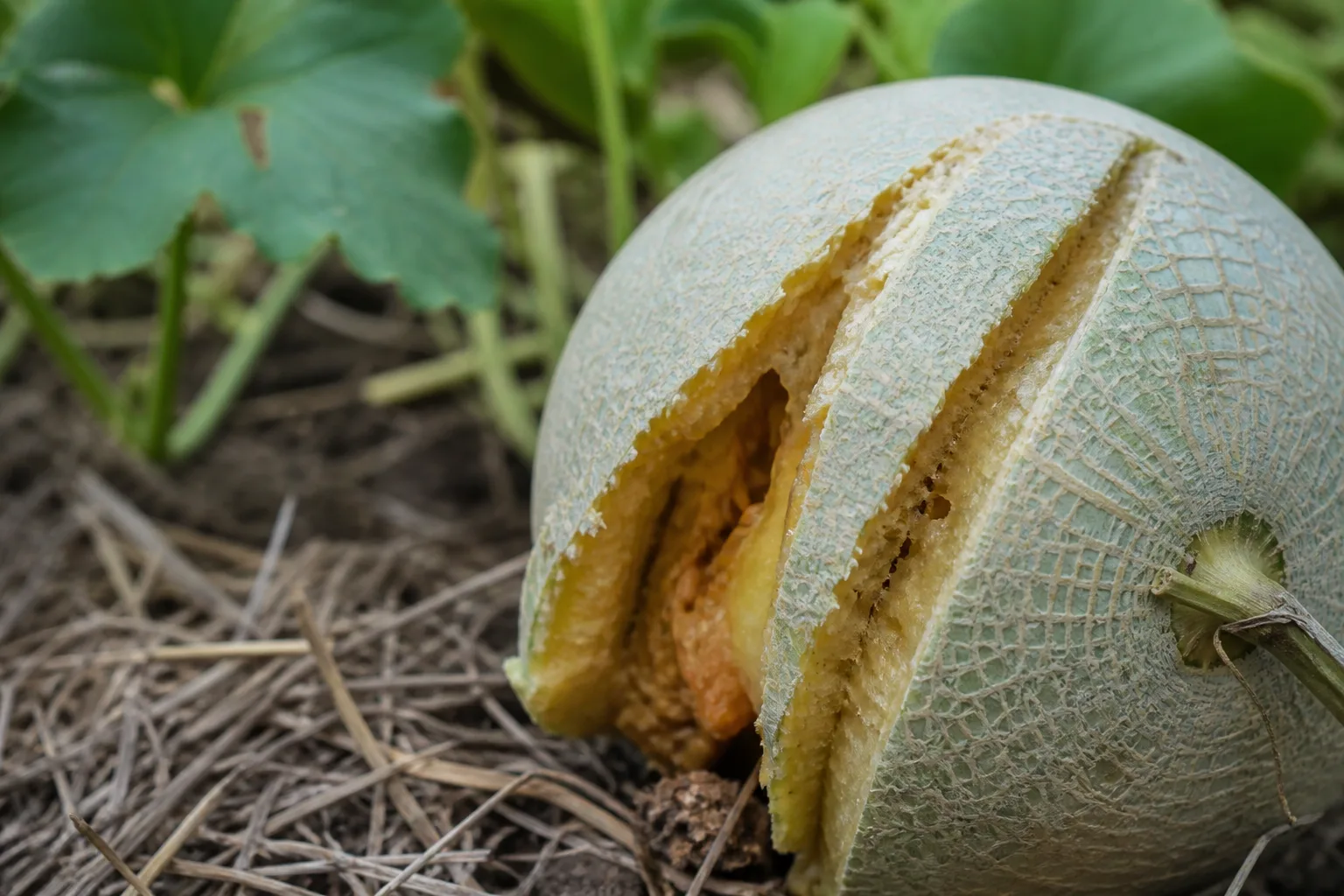
Roof rats—excellent climbers—often hit tree fruit first. UC IPM notes they may hollow out oranges while leaving rinds hanging, or strip lemon rinds while flesh remains on the branch (UC IPM). Ground-level Norway rats favor corn, melons, squash, root vegetables, and anything near compost or pet food. Both species will take tomatoes, strawberries, apples, pumpkins, and seed heads when ripe or nearly ripe.
Damage usually appears overnight. Look for parallel gnaw lines from paired incisors—clean, chisel-like edges—not the messy shredding squirrels leave or the tiny scratchy marks of mice. Rats also gnaw irrigation tubing, plastic bins, wood stakes, and roots of ornamentals, sometimes stunting plants outright. Burrows under compost, tool sheds, or dense shrub lines (1–3 inch openings with smooth, packed “runways”) confirm residency, not a one-off visit.
Health Risks From Rats in Outdoor Growing Spaces
Rodents can carry leptospirosis, typhus, salmonella, E. coli, campylobacter, and rat-bite fever, among other pathogens (UC IPM). Commensal rats are not rabies carriers, unlike some wildlife—a common worry that steers people toward poison when trapping and cleanup would be safer.
Outdoor exposure risk is lower than indoor kitchen contamination but not zero. Pathogens in droppings can become airborne when dry material is swept; urine on produce is invisible. Do not eat visibly gnawed fruit; wash peelable crops thoroughly; discard greens with droppings on them; wear gloves handling traps or dead rats. If rats have been active in your beds, shift raw-eaten crops (lettuce, herbs, strawberries) to raised containers or protected tunnels until control works—prevention beats debating how much washing is “enough.”
Norway Rats vs Roof Rats: Why Species ID Changes Your Plan
California—and much of the U.S.—hosts two introduced commensal species: Norway rats (burrowers, ground feeders) and roof rats (climbers, fruit specialists). They do not interbreed, and they rarely share the same nest zone in a building: Norways low, roof rats high (UC IPM). Misidentification wastes traps placed on the ground when the problem runs fence-top at night.
| Trait | Roof rat | Norway rat |
|---|---|---|
| Body | Sleek, 5–10 oz | Stocky, 7–18 oz |
| Tail vs body | Longer than head + body | Shorter than head + body |
| Nesting | Shrubs, trees, attics, vines | Burrows, basements, ground clutter |
| Favorite garden foods | Citrus, avocados, tree nuts, berries | Grains, meat scraps, compost, pet food |
| Trap placement | Ledges, branches, fences, above ground | Along walls, burrow openings, ground level |
How to Tell Which Rat You Have
Set a phone camera at dusk along fence tops and utility lines—roof rats are showy travelers. Check burrow locations: soil mounds along foundations and compost suggest Norway rats; damage only in tree canopies with no burrows points to roof rats. If you trap one, compare tail length to the head-plus-body: roof rat tails extend past the snout when pulled forward; Norway tails reach mid-skull. Droppings help too—roof rat pellets are about ½ inch, curved; Norway pellets are ¾ inch, blunt-ended (UC IPM).
How to Recognize Rat Damage (Not Mice, Voles, or Squirrels)
Before you blame rats, rule out mice, voles, and squirrels—each needs a different fix. Mice leave 1/12-inch (2 mm) scratch marks; rats leave 1/6-inch (4 mm) gnaws (UC IPM). Voles create surface runways in turf and small golf-ball burrows without the greasy rub marks rats leave on beams and pipes. Squirrels strip bark, bury nuts, and mangle fruit messily—often in daylight.
Tooth Marks, Droppings, and Burrows Explained
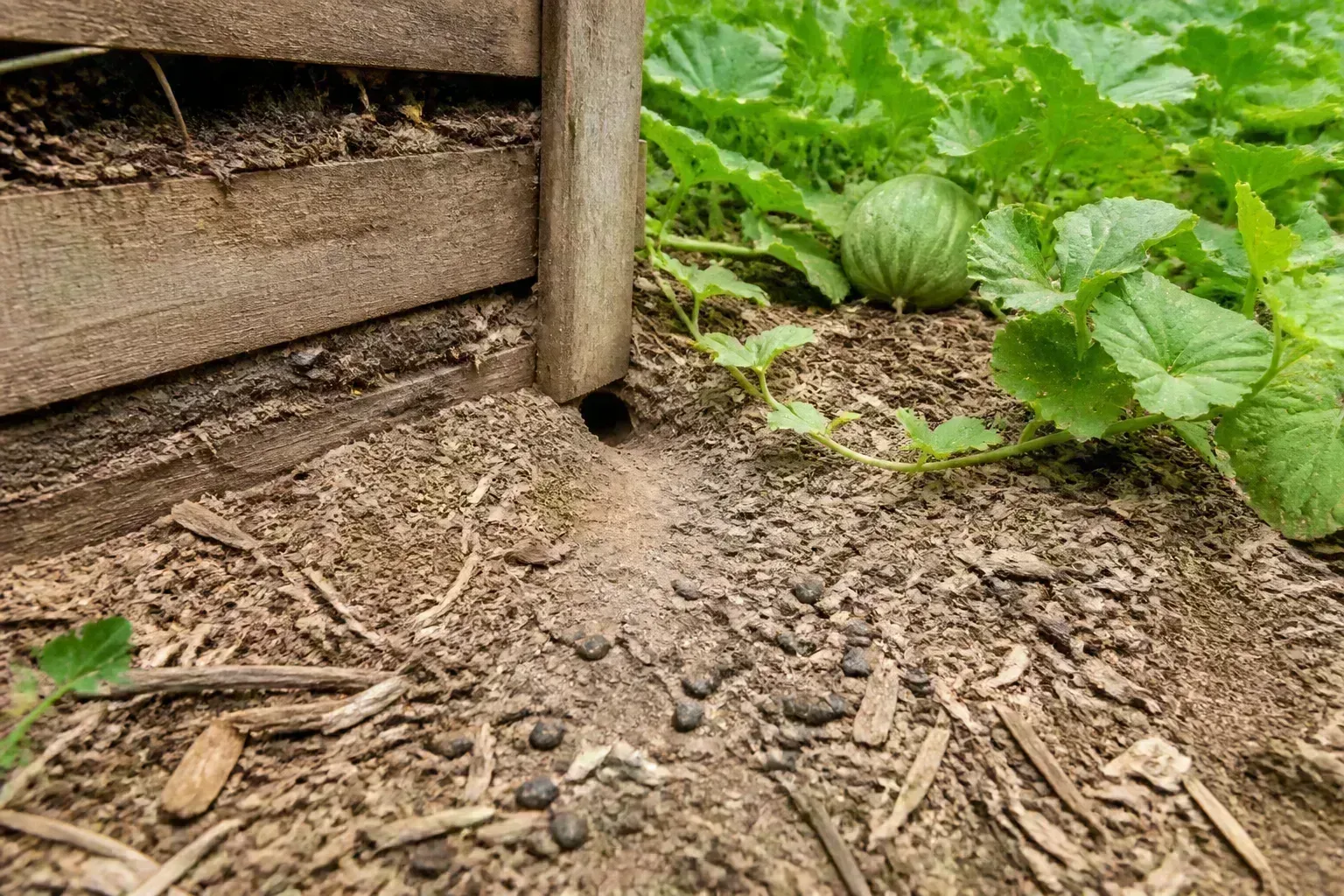
Tooth marks: Two parallel grooves on melons, corn kernels shaved flat, or a tomato hollowed from one side. Droppings: Dark, tapered pellets scattered along runs—not piles of round pellets in one corner like rabbits. Smudge marks: Oily fur rubs on rafters, pipes, and fence rails at repeated heights. Burrows: Norway rat tunnels may include escape holes and a nest chamber; fresh soil at entries means active use. Sounds: Scratching in attic or wall voids at night often means roof rats already bridged from garden to house—the outdoor problem is now structural.
Where Rats Hide in Yards and Food Gardens
Rats want cover, calories, and water within a short commute. Dense ivy on fences, unmowed edges, woodpiles on soil, cluttered potting benches, and overgrown shrubs touching the roof are premium habitat. Compost with meat, fish, or eggshells, open chicken feed, dog bowls left out, and spilled birdseed under feeders rank among the strongest attractants (UC IPM).
Roof rats may nest 100–300 feet from where they feed—living in a neighbor’s palm while dining on your citrus. Norway rats forage 100–500 feet but stay closer when food is steady. That means your tidy bed can suffer because someone else’s woodpile is the nest. Community sanitation still helps: shared alleys, HOA green waste piles, and restaurant dumpsters near community gardens pull rats into everyone’s plots.
What to Do in the First 72 Hours
Day 1—Document and remove food. Photograph damage and droppings for comparison later. Harvest everything ripe; pick up fallen fruit; stop filling bird feeders until seed on the ground is gone; store pet and chicken feed in metal bins. Day 2—Sanitize and exclude. Thin dense shrubs; elevate woodpiles; line compost with 1/4-inch hardware cloth; seal gaps larger than 1/4 inch on shed doors and crawl spaces—rats squeeze through half-inch door gaps (UC IPM). Day 3—Trap, don’t poison. Set snap traps where you have evidence, species-appropriate height, pre-baited unset for two nights if rats seem trap-shy (neophobia is stronger in roof rats).
If you see rats indoors, hear attic scratching, or find droppings near kitchen pet bowls, escalate immediately—garden control and house rodent-proofing are the same war now. Our guide on keeping silverfish out of the house covers exclusion mindset for other pests; rats demand steel mesh, not caulk alone.
Remove Food and Shelter Without Poison
Long-term rat control is sanitation + exclusion + trapping. Poisons are a last resort outdoors because dead rats become secondary poisoning hazards for hawks, owls, foxes, cats, and dogs (UC IPM).
Compost, Bird Feeders, and Chicken Coops
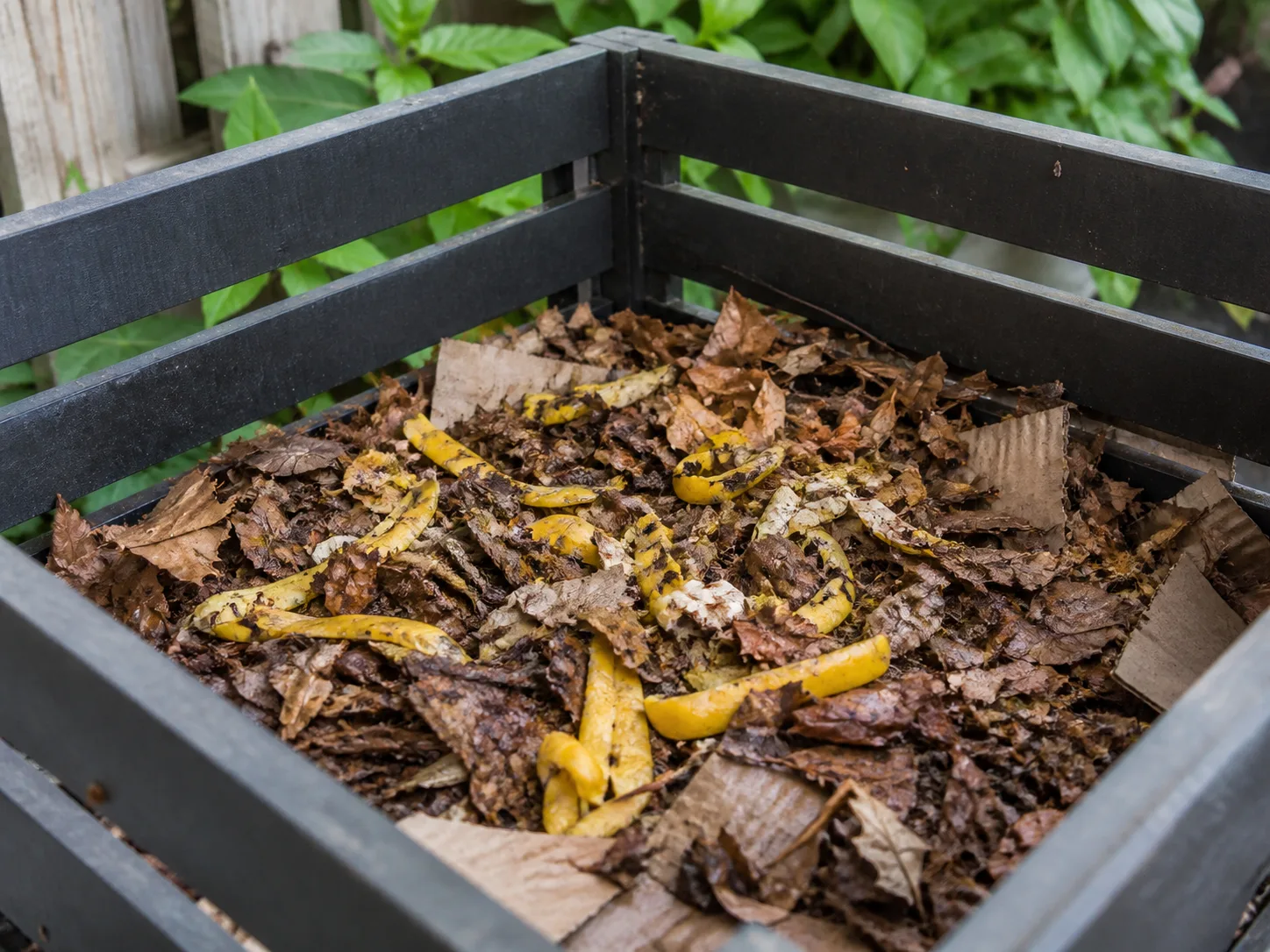
Compost: Use rigid bins with tight lids; rats gnaw plastic, so metal or wire-reinforced bins last longer. Never add meat, fish, or dairy; turn piles often so heat and disturbance deny nest comfort. Burrows under the bin mean move the pile, wire the base, and trap at openings.
Bird feeders: Spilled seed is a rat buffet. BBC Gardeners’ World presenter Monty Don has publicly warned that loose grain under feeders invites rats and squirrels—use trays, sweep nightly, or pause feeding until the rat issue clears (reported in Chronicle Live). Hang feeders on poles with baffles, away from shrub cover; store seed indoors in sealed containers.
Chickens: Rats eat layer pellets and eggs. Use ** treadle or weight-activated feeders**, collect eggs before dusk, and hardware-cloth the coop floor and lower walls. A coop without rat-proof feed storage will re-infest no matter how many mint sprays you buy.
Sanitation and Exclusion That Actually Works
UC IPM’s sanitation checklist is unglamorous and effective: frequent garbage pickup with tight lids, clean grease from outdoor bins, remove fallen nuts and fruit, thin ground-cover hedges, and keep 2 feet of clearance between shrubs and walls (UC IPM). Trim tree limbs within 3–6 feet of the roof to block roof-rat bridges. Stack firewood 18 inches off soil on racks.
Rodent-proofing beats repellents. Cover vent openings with 1/2-inch galvanized mesh, not chicken wire—rats pass through lightweight wire. Door sweeps must seal to the threshold; weather stripping alone often fails. For vulnerable beds, hardware-cloth baskets over melons and fruit-tree trunk guards reduce overnight losses while you trap.
Trapping and Control Options That Protect Wildlife
Snap traps remain the safest, most economical control for homeowners (UC IPM). Use rat-sized traps; mouse traps may not kill juvenile rats cleanly. Bait with pea-sized peanut butter, dried fruit, or nuts; for Norway rats along walls, place traps perpendicular to the wall with the trigger end nearly touching it. For roof rats, secure traps on fence rails, branches, or rafters inside stations so pets and birds cannot reach them.
Pre-bait unset traps until bait is taken twice if rats avoid new objects—common the first week. Use many traps for heavy infestations: UC IPM suggests a dozen or more in a serious home/garden case, spaced 10–20 feet along known runs. Check daily; wear gloves; bag dead rats for trash burial per local rules.
Electric traps and live traps are optional; live release of non-native rats is not recommended and may be restricted. Glue boards outdoors endanger birds and are discouraged for DIY use.
Why Outdoor Rodenticides Are Risky
All rodenticides are toxic to pets, children, and wildlife. Second-generation anticoagulants caused enough secondary poisoning that EPA retail rules tightened; California further restricts many anticoagulant uses in residential areas (UC IPM). Outdoor bait must often sit in tamper-resistant stations, and poisoned rats may die inside walls or be eaten by owls—creating odor, flies, and predator deaths.
If you bait outdoors, exclude entry to buildings first so poisoned rats cannot die indoors. Never scatter loose pellets in garden soil. For most food gardens, trapping plus sanitation outperforms poison without the food-chain cost—similar to why many gardeners choose natural ant control indoors before reaching for broad toxic sprays.
Predators, Repellents, and What Does Not Work
Cats and owls eat rats, but predators cannot keep up with rat reproduction when food and cover remain unlimited (UC IPM). Outdoor cat food bowls feed rats more reliably than cats hunt them. Owl boxes help only where owls already forage and poison is absent—secondary poisoning kills the owls you hoped would help.
Ultrasonic devices, mint/garlic/rosemary sprays, and “scary” noise gadgets fail long-term tests. Rats habituate quickly; UC IPM states no truly effective rat repellents are registered in California (UC IPM). Moving garden furniture may briefly disturb neophobic rats, but without removing food it is theater. Smoke bombs in burrows can drive toxic gas toward structures—not recommended near homes.
What does work: removing calories, sealing entries, sustained trapping, and not feeding wildlife in ways that subsidize rodents. Integrated pest management—monitor, identify, act least-toxic first—matches how we handle other garden pests like powdery mildew or squash bugs: fix conditions, then intervene surgically.
When to Call a Professional
DIY control fails when rats are indoors, traps stop catching but damage continues, burrows reopen faster than you can fill them, or you lack time for daily trap checks. Professionals can map entry points, install commercial stations legally, and coordinate community-wide sanitation in dense neighborhoods.
Call sooner if anyone in the home is immunocompromised, you keep free-range chickens with egg theft nightly, or you see rats in daylight—often a sign of heavy pressure or poisoned, disoriented animals. Ask for IPM-first companies that prioritize exclusion and trapping; avoid services that only drop perimeter poison without removing attractants.
Conclusion
Rats are dangerous in food gardens—not because they kill plants like blight, but because they steal yields and contaminate what you eat. Treat species ID, sanitation, and trapping as the core toolkit; treat mint spray and ultrasonic boxes as distractions. Start with a 72-hour cleanup, protect your harvest with washing and exclusion, and act before attic scratching proves the population moved inside. Your garden can coexist with occasional wildlife; it should not subsidize a rat colony with free compost, seed, and ripe tomatoes.