How to Prune Pothos for Fuller, Glossier Growth
Prune pothos above the node with clean shears for bushier vines and naturally glossy leaves. When to cut, how much to remove, and what to do with trimmings.
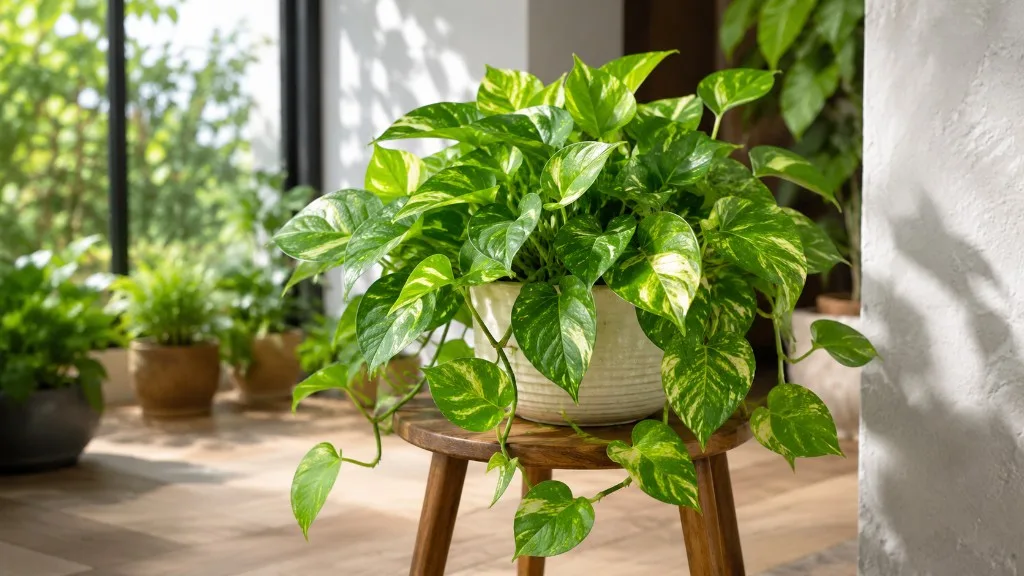
Pothos (Epipremnum aureum) is one of the most forgiving houseplants you can grow — and one of the fastest to look tired when a few long, bare runners take over the pot. A clean prune above the right node redirects energy into fresh leaves with that waxy, heart-shaped gloss pothos is known for. The trick is not cutting randomly or chasing shine with sprays. It is matching where you cut, when you cut, and how much you remove to the shape you actually want.
Quick Answer: Where, When, and How Much to Cut
Cut each pothos stem ¼ inch (about 6 mm) above a visible node — the slightly swollen bump where a leaf meets the stem and a tiny aerial root may appear. Use sharp, sterilized scissors or pruning shears. For shaping cuts, late spring through early summer is ideal because active growth fills in faster. Remove no more than one-third of total foliage per session unless you are doing a deliberate rejuvenation cut in warm, bright conditions. Dead, yellow, mushy, or pest-ridden stems come off immediately, any time of year.
Penn State Extension notes that pothos can be trimmed at any point along a vine by shortening the stem just above a node, or by removing the entire length and leaving a short stub. Wisconsin Horticulture Extension adds that selective pruning keeps vines a reasonable length and promotes new growth — and that plants can even be cut back to within a couple of inches of the soil line when necessary.
What You’ll Need Before You Start
Gather a pair of sharp bypass pruners or household scissors, 70% isopropyl alcohol or rubbing alcohol for sterilizing blades, a damp microfiber cloth for wiping dust off leaves after pruning, and a small jar of water if you plan to root your cuttings. Wear gloves if you have sensitive skin — pothos sap contains calcium oxalate crystals that can irritate skin and is toxic to pets if chewed (Wisconsin Horticulture Extension). Work over a towel or compost bin so fallen leaves do not scatter sap on furniture.
Why Pruning Makes Pothos Leaves Look Shinier and Fuller
Pruning does not polish leaves chemically. It changes how the plant allocates growth. Each pothos vine follows apical dominance: the growing tip produces auxin that suppresses buds lower on the stem. Without intervention, the tip keeps extending, internodes stretch, and older leaves drop off, leaving bare runners with foliage clustered at the ends. That sparse silhouette catches more dust, blocks less light from reaching inner leaves, and makes the whole plant look dull even when individual leaves are healthy.
When you remove the dominant tip just above a node, dormant buds below that cut wake up. You often get two new shoots from a single pruning point (Gardening Know How), which thickens the crown and produces younger leaves with tighter spacing. Younger pothos foliage tends to look glossier because the waxy cuticle is fresh and unmarred by months of indoor dust and handling.
Apical Dominance and Why Vines Get Bare
Indoor pothos rarely gets the filtered canopy light it would climb toward in the wild. In dim corners, vines stretch toward windows, internodes lengthen, and leaves shrink. Pruning removes the stretched section but does not fix low light — if you hard-trim a pothos and put it back in the same dark shelf, new growth will leggy again within a few months. Treat pruning as a shaping tool paired with adequate bright, indirect light. For the full fix order, see our guide to fixing leggy houseplants.
Signs Your Pothos Actually Needs Pruning
Not every long vine is a problem. Prune when the plant’s current shape is working against your goals or when failing tissue is stealing energy from healthy growth.
Leggy Runners vs Intentional Long Vines
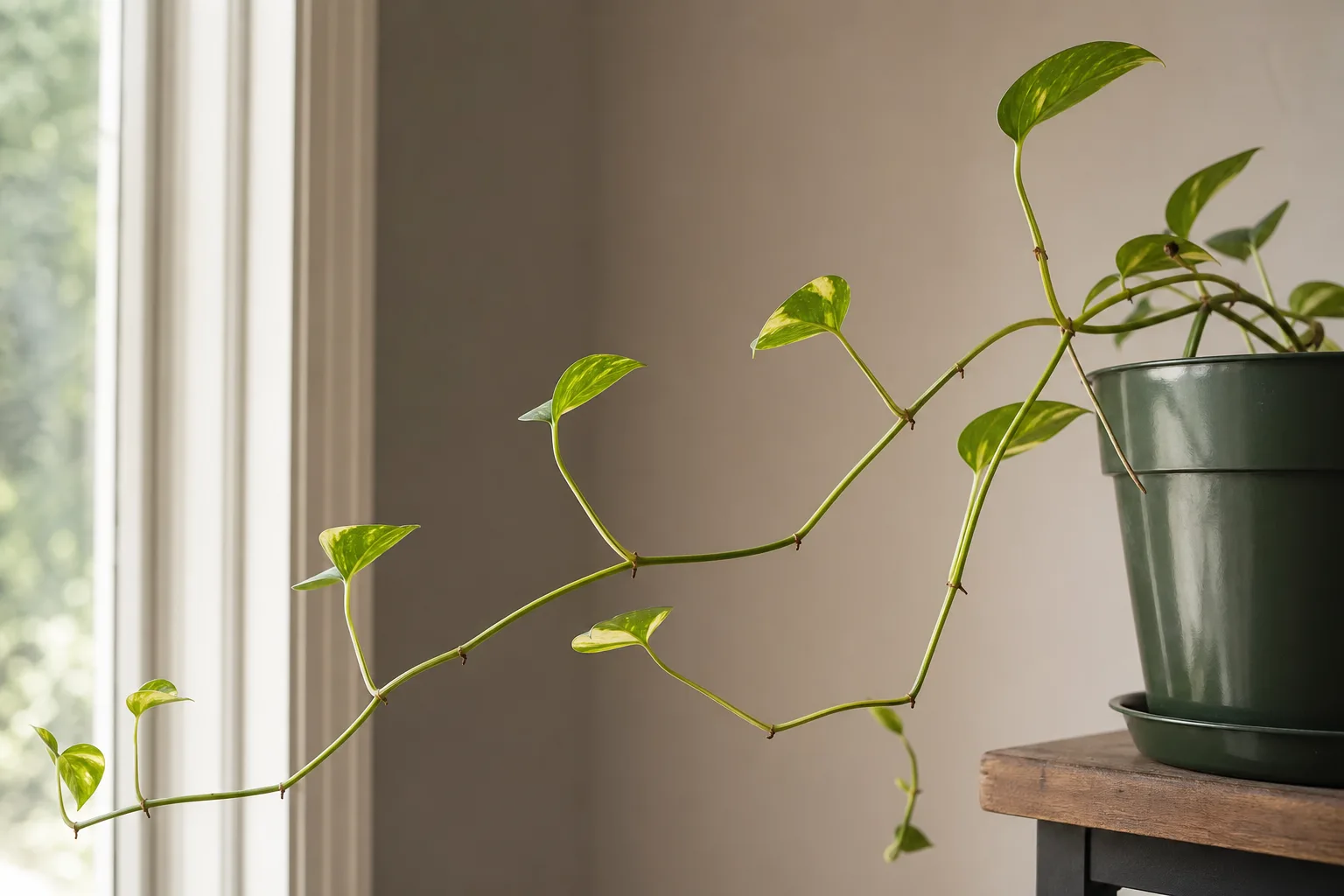
Leggy runners have wide gaps between leaves, small new foliage, and bare stems for six inches or more below the active tip. If you want a bushy tabletop plant or a hanging basket that looks full from the top down, these stems are prime candidates for shortening above a lower node.
Intentional long vines are a valid aesthetic. If you love a single dramatic trail from a high shelf, prune less often — just snip the tip when it reaches the floor or remove the occasional yellow leaf. Penn State Extension describes pothos as versatile enough to flow from a hanging basket, climb a moss totem, or stay short and bushy when trimmed regularly. Match your pruning frequency to the look you want, not a one-size rule.
Yellow Leaves, Brown Tips, and Pest Damage
Fully yellow or brown, dry leaves no longer photosynthesize. Snip them at the petiole base any time. Partially yellow leaves often signal overwatering, underwatering, or low light — remove the worst ones, then diagnose the underlying cause before aggressive reshaping. Mushy, blackened stems need to be cut back into firm green tissue above a healthy node; sterilize your blade between cuts on diseased material. Stems with heavy mealybug or scale infestation may be easier to remove entirely than treat in place.
Best Time to Prune Pothos (Season and Situational Cuts)
Pothos tolerates light trimming year-round, but timing changes speed, not survival.
Spring and Summer Shaping Cuts
Late spring through early summer is the sweet spot for structural pruning in most homes. Daylight is increasing, temperatures are stable, and pothos is actively pushing new leaves. Cuts made in June often show fresh shoots within two to four weeks. Gardening Know How recommends heavier trimming during the growing season from spring to early fall so the plant has time to fill in before winter slowdown.
If you propagate from your trimmings, spring and summer rooting is also fastest — Wisconsin Horticulture Extension notes that cuttings root in water or vermiculite within three to four weeks under warm conditions, with buds starting in one to two weeks.
Emergency Trims That Should Not Wait
Some cuts should not wait for spring:
- Rotting or blackened stems — cut immediately into healthy tissue
- Fully dead leaves and vines — remove anytime
- Stems blocking walkways or tangling with furniture — safety and practicality trump season
- Severe pest damage on isolated vines — remove after you have a treatment plan for the rest of the plant
Avoid major rejuvenation — cutting most of the plant back to stubs — in late autumn or winter unless you accept a slow response. The plant will survive, but new shoots may not appear until light improves in spring.
How to Prune Pothos Step by Step
Pruning pothos is straightforward once you know what you are looking at on the stem. Work methodically so you do not remove more than planned in one pass.
Sterilize Your Tools First
Wipe blades with isopropyl alcohol before you start and again if you move between plants or cut through diseased tissue. Dull scissors crush stems instead of slicing cleanly, which slows healing and invites infection. Bypass pruners give the cleanest cut on thicker, woody lower stems.
Find the Node and Make the Cut
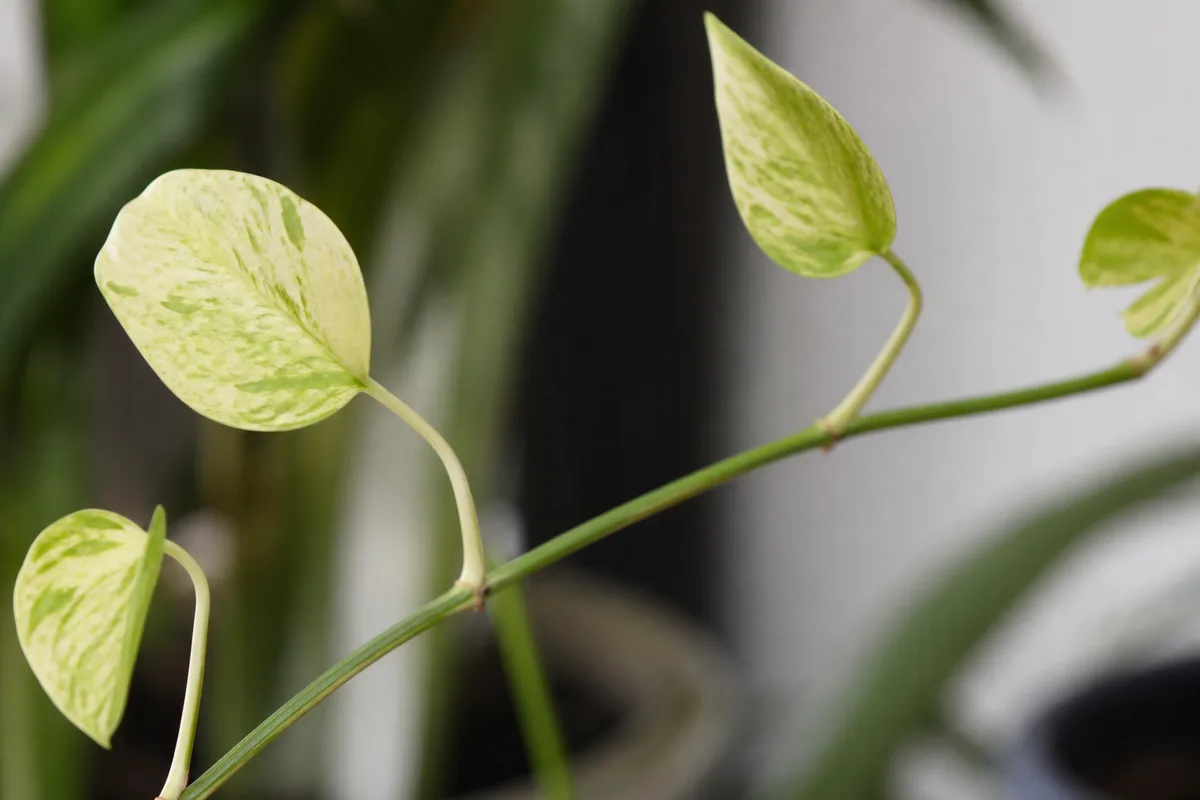
Locate the node — the joint where a leaf petiole attaches to the vine. You may also see a small brown nub (an aerial root precursor) beside the leaf. Cut ¼ inch above the node, angled slightly if you prefer, but accuracy matters more than angle on soft pothos tissue. Never cut through the middle of an internode far from a node; buds will not reliably emerge from bare stem tissue.
If you are shortening a long vine, follow it down to the node where you want new branching to start — often one or two nodes above the soil line for a bushier base, or midway on the vine for a tiered trailing look. Penn State Extension describes shortening at any point or removing the entire vine length and leaving about a two-inch stub.
How Much Foliage to Remove in One Session
Follow the one-third rule: do not remove more than one-third of total leaves and stems in a single session under normal conditions. Pothos is vigorous, but stripping most of the foliage at once stresses the root system — the plant still has to support the same root mass with far less photosynthetic surface.
For a severely leggy specimen, plan two or three lighter sessions spaced three to four weeks apart during spring or summer rather than one dramatic chop. Exception: a deliberate rejuvenation where you cut vines back to within a couple of inches of the soil (Wisconsin Horticulture Extension) works best on a healthy, well-rooted plant in bright indirect light during active growth.
Pruning Styles for Different Goals
The same plant can look completely different depending on which vines you shorten and which you leave alone.
Bushy Tabletop Shape
Target the longest runners first, cutting each back above a node roughly one-third to halfway down the vine. Rotate the pot as you work so one side does not stay dominant. Pinch or snip soft growing tips monthly during summer to encourage side shoots without another hard cut. When several cuttings root, plant them back into the same pot for instant fullness — a technique covered in our pothos propagation guide.
Long Trailing Vines With a Fuller Crown
Keep one or two dramatic trailers but shorten the side vines near the soil to build a dense crown at the top of the pot. Trim any bare middle sections on secondary vines back to the nearest node with a healthy leaf. This gives you length where you want it and foliage mass where the plant is visible from below a hanging basket.
What Glossy Leaves Really Need (Beyond a Good Trim)
Pruning improves density and brings younger leaves forward, but natural gloss comes from plant health and clean foliage, not cosmetic coatings.
Clean Dust Off Leaves the Right Way
Indoor dust settles on the waxy cuticle and dulls the shine within weeks. Wipe leaves with a damp microfiber cloth every two to four weeks, supporting the leaf from underneath with your free hand to avoid tearing. For stubborn film, a drop of mild dish soap in lukewarm water on the cloth is enough — rinse by wiping with a clean damp cloth afterward.
Skip commercial leaf shine sprays. They lay down a waxy or silicone film that blocks stomata, attracts more dust, and can burn leaves in direct sun. Do not use neem oil as a polish. Neem is an insecticide; coating leaves for gloss adds unnecessary residue and does not address the reason leaves look dull. Reserve neem for confirmed pest issues, applied sparingly and only when needed.
Light, Water, and Fertilizer for Natural Shine
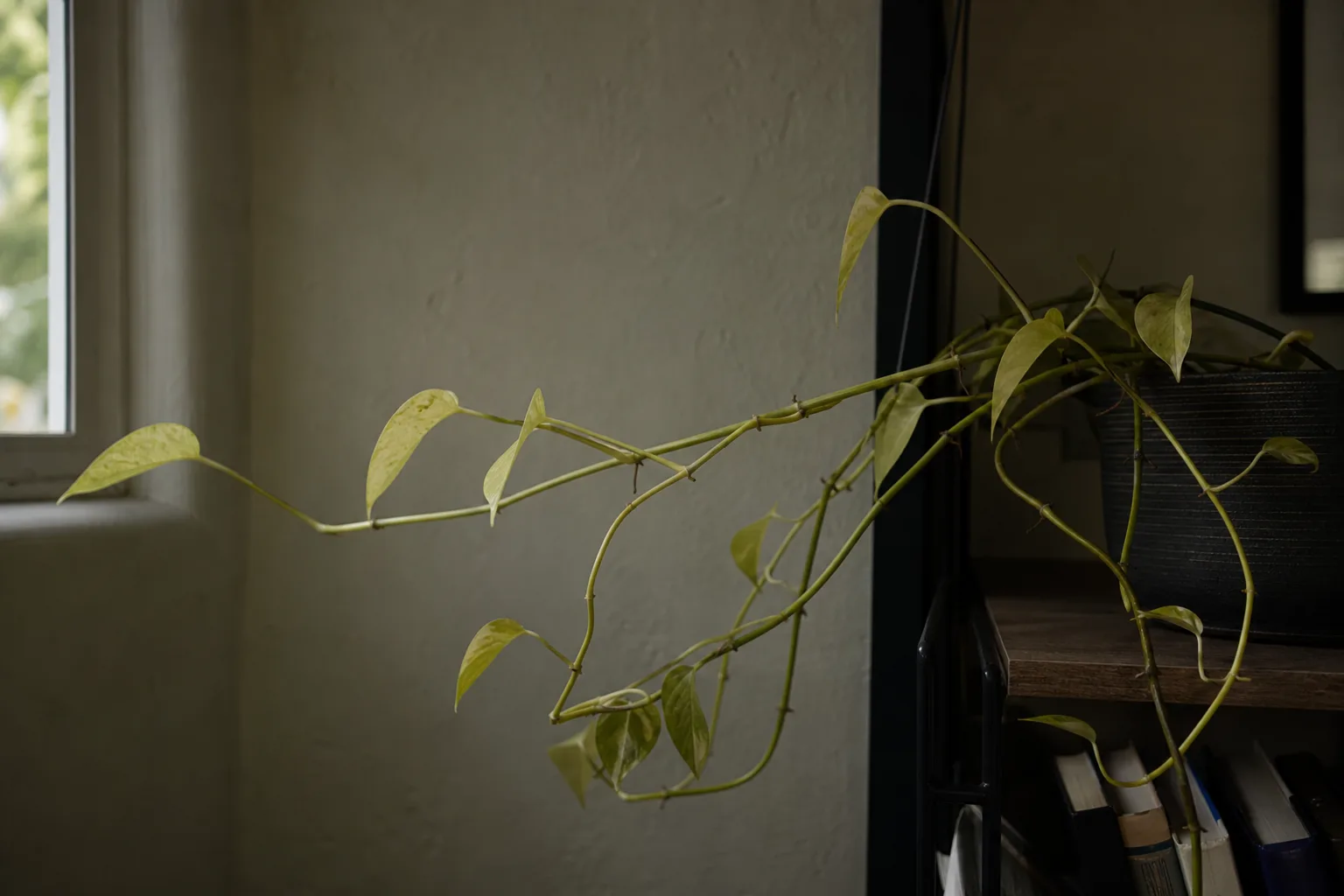
Bright, indirect light produces the largest, most vibrant leaves pothos can offer. Wisconsin Horticulture Extension recommends filtered light and temperatures between 70 and 90°F for best growth; direct sun yellows and scorches foliage. Variegated cultivars like Marble Queen lose their white pattern in low light and look flat even when clean.
Water when the top inch of soil is dry — pothos tolerates brief drought better than chronic soggy soil (Penn State Extension). Overwatering yellows leaves and causes brown margins that no amount of wiping fixes.
Fertilize during active growth with a balanced houseplant food at half strength every two to four weeks in spring and summer; pull back in winter. Penn State Extension suggests monthly feeding through winter and every two weeks the rest of the year for vigorous specimens — adjust down if your plant is in low light and growing slowly.
For cultivar-specific light and care, see the Golden Pothos pruning page and light requirements.
Turn Your Trimmings Into New Plants
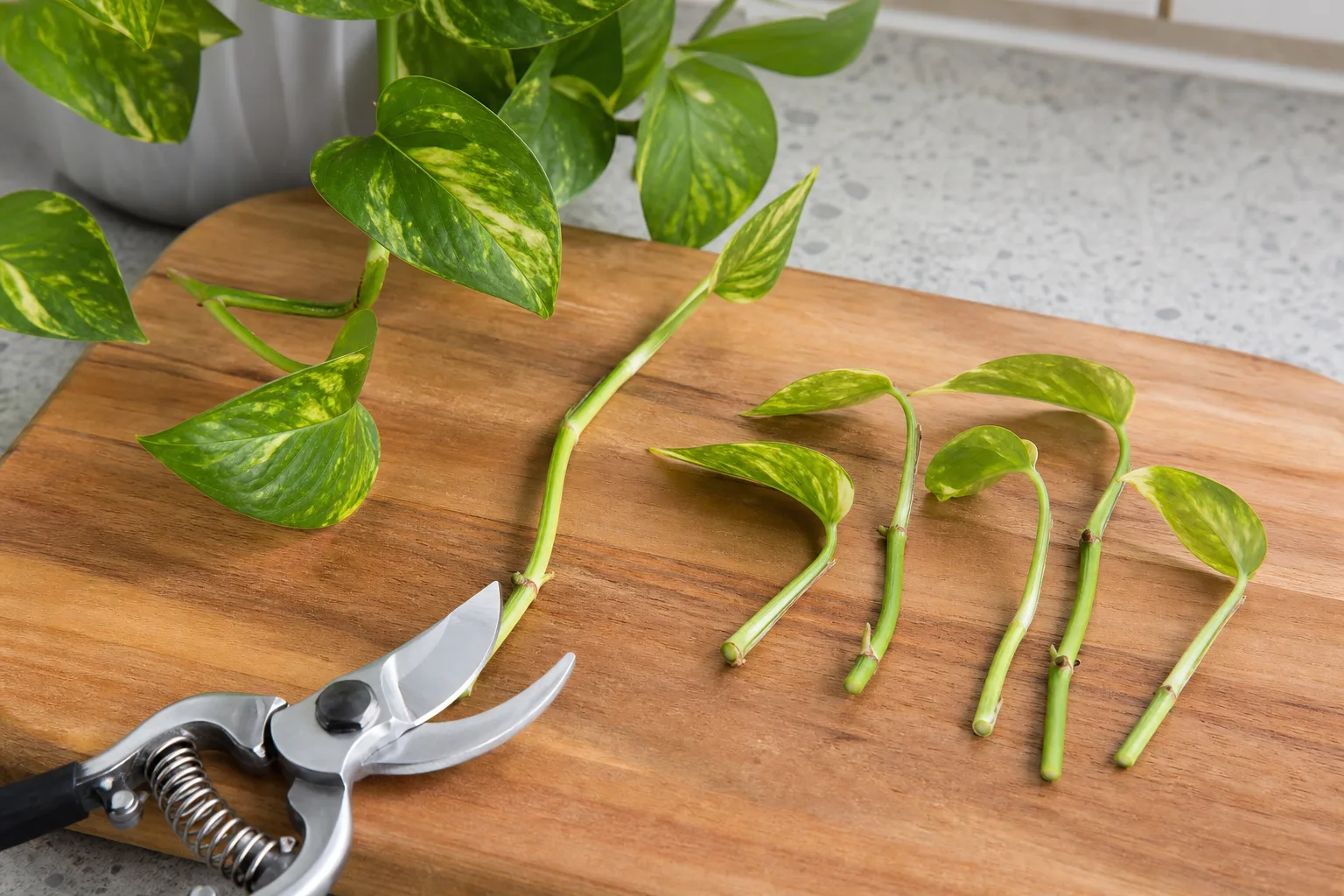
Every healthy pruning session produces propagation material. Choose stem sections with at least one node and one or two leaves. Remove leaves that would sit below the water line, place the node in a jar of fresh water, and set the cutting in bright indirect light. Roots typically appear in two to four weeks; transplant when they reach two to three inches.
Planting rooted cuttings back into the parent pot is the fastest way to fill a sparse base without buying another plant. Full water-to-soil steps, timing, and troubleshooting live in our pothos propagation guide.
Common Pothos Pruning Mistakes to Avoid
Cutting too much at once is the most common error. A pothos stripped to stubs in December on a north windowsill may sit unchanged for months. Spread major work across warm-season sessions.
Cutting in the wrong place — through internodes or leaving ragged tears — produces slow or no regrowth. Always cut just above a node with a sharp, clean blade.
Pruning without fixing light sends you into a loop: trim, regrow leggy, trim again. Move the plant or add a grow light before expecting compact, glossy new foliage.
Using shine products trades a temporary gleam for long-term leaf health problems. Dust and adequate light are the sustainable gloss strategy.
Ignoring yellow leaves as only a pruning issue wastes a diagnostic clue. One or two old yellow leaves at the base are normal senescence; widespread yellowing usually means water or light stress that pruning alone will not solve.
Forgetting tool hygiene spreads disease between houseplants. A ten-second alcohol wipe prevents most cross-contamination.
Conclusion
Pruning pothos well comes down to three decisions: cut above the node, time shaping work for spring and summer, and remove no more than one-third per session unless you are deliberately rejuvenating a healthy plant. Glossy leaves follow from dense, young growth plus regular dusting and bright indirect light — not sprays or oils rubbed on for show. Save your trimmings, root them in water, and plant them back for a fuller pot in a single season. When you pair smart cuts with the right light and watering rhythm, pothos rewards you with the lush, waxy foliage that made it a houseplant classic in the first place.



