Bottom Watering Plants Before Vacation: Complete Guide
Bottom watering before vacation hydrates roots evenly—but it won't carry most houseplants through three weeks alone. Learn the soak, the limits, and the full pre-trip plan.
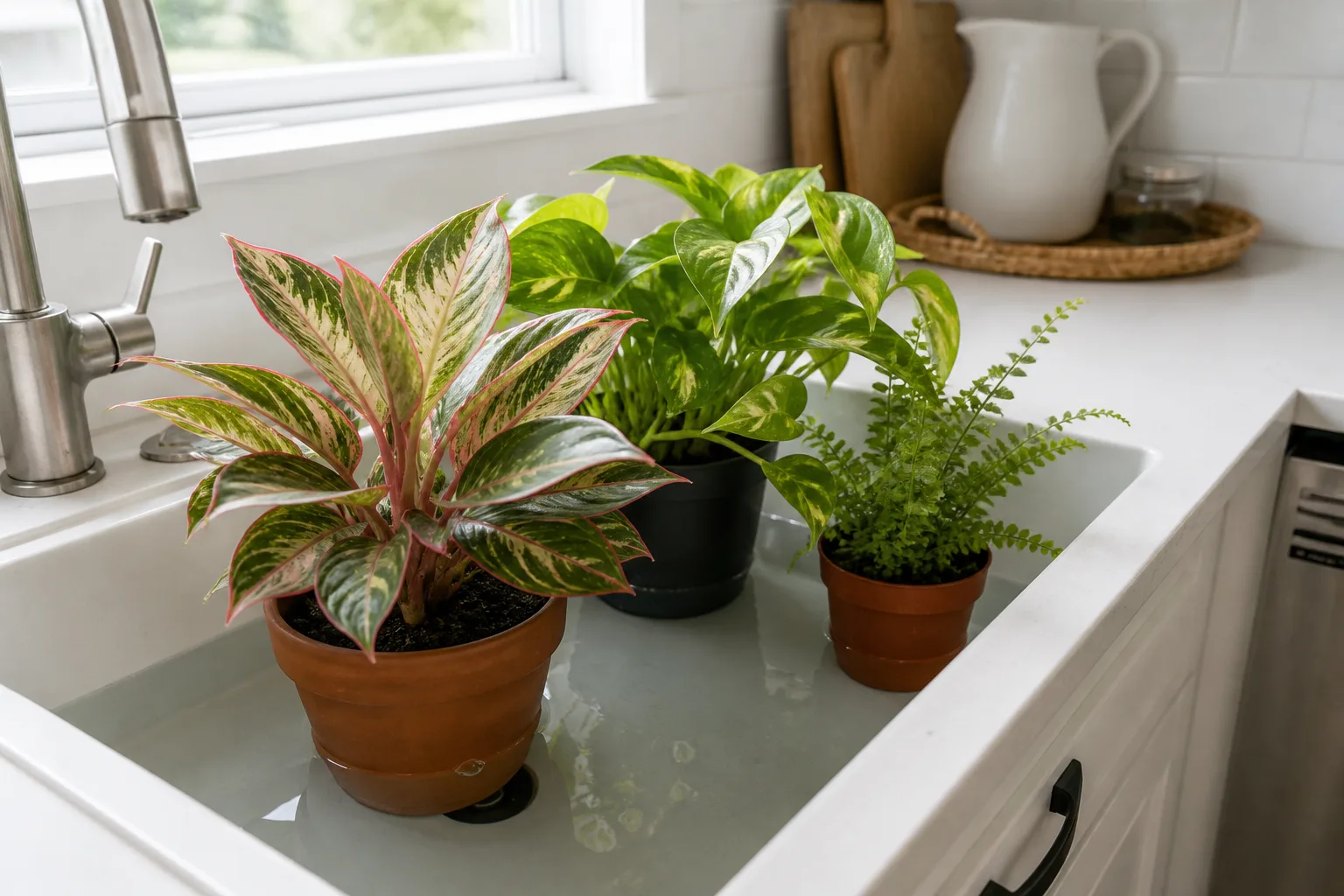
The night before a long trip, my kitchen sink turns into a plant spa. Every pot with drainage holes gets a measured bottom soak, a full drain, and a spot away from the sunniest glass. That single ritual—bottom watering before vacation—is the one step I never skip. It is not magic, and it is not enough by itself for a three-week absence. But it is the highest-leverage move I have found for hydrating the whole root ball evenly without flooding stems, crowns, or fuzzy leaves right before I hand the keys to a sitter or walk out the door solo.
If you have ever poured water over dry potting mix and watched it race down the inside of the pot while the center stays pale and dusty, you already know why this matters. A pre-trip bottom water fixes that lopsided dryness. It also buys time. What it does not do is replace a realistic vacation plan for plants that drink every four days in July.
Why Bottom Watering Became My Pre-Trip Ritual
I travel often enough that “who waters the plants?” became a recurring stress point. Top-watering everything the morning of departure felt responsible, but it created two predictable problems. Thirsty tropicals in terracotta still went dry by mid-trip because water never reached the middle of the root ball. Meanwhile, a well-meaning friend overwrote my instructions and soaked pots that were not ready, which is how you learn that overwatering before vacation kills roots as surely as drought.
Bottom watering changed the math. Standing the pot in a shallow basin lets dry mix wick moisture upward through the drainage holes until the surface finally darkens. The roots get a full drink; the leaves stay dry. For plants like aglaonema in porous terracotta that normally want water twice a week, one thorough capillary soak right before I leave stretches the first dry window without leaving the crown soggy.
That is the honest scope: a better last drink and more even hydration—not a three-week autopilot system.
What Bottom Watering Actually Does—and What It Cannot
Bottom watering means placing a potted plant in a tray, sink, or basin of water and letting the potting mix absorb moisture from below through capillary action instead of pouring from above. The mix behaves like a sponge: water climbs pore spaces until equilibrium, then stops. You remove the pot, let excess drain, and return it to its saucer or cachepot.
Done correctly, the method rehydrates hydrophobic or edge-dry soil that repels top water, keeps fuzzy leaves dry, and reduces runoff waste. Done naively—left sitting in deep water for hours or used on pots without holes—it becomes a root-rot setup.
Capillary Action in Plain Language
Water moves upward in potting mix the same way it climbs a paper towel: narrow spaces pull moisture against gravity until the matrix is evenly damp. The Royal Horticultural Society explains that roots absorb water when it is available in soil pores and when roots are healthy enough to take it up. Bottom watering supplies that pore water from the bottom up, which is especially useful when the top inch looks desert-dry but the lower root zone never got the last top-watering.
Container mixes drain differently than garden soil. The University of Georgia’s indoor plant guidance notes that shallow pots have poorer natural drainage than in-ground beds, which makes oxygen around roots a constant concern (UGA Extension). A controlled soak followed by full drainage respects that constraint. Leaving the pot submerged does not.
The Vacation Myth: One Soak Is Not Three Weeks of Water
Here is the sentence I wish every travel article said out loud: a single bottom water does not store three weeks of moisture in the soil. It recharges the root ball once. After that, evaporation, plant uptake, pot material, room temperature, and light determine how fast the mix dries again.
For many established tropicals in stable indoor conditions, a thorough soak plus smart placement might cover roughly seven to ten days—not twenty-one. A small fern in a 4-inch terracotta pot may need intervention sooner. A drought-trained succulent might not need water at all before a two-week winter trip. Three weeks spans multiple drying cycles for most houseplants, which is why I still arrange at least one informed check, a tested wick, or a written sitter plan even after the sink session.
Treating bottom watering as the entire vacation strategy is how people come home to wilted calatheas and rotted peperomias in cachepots full of stale water.
How to Bottom Water Before You Leave
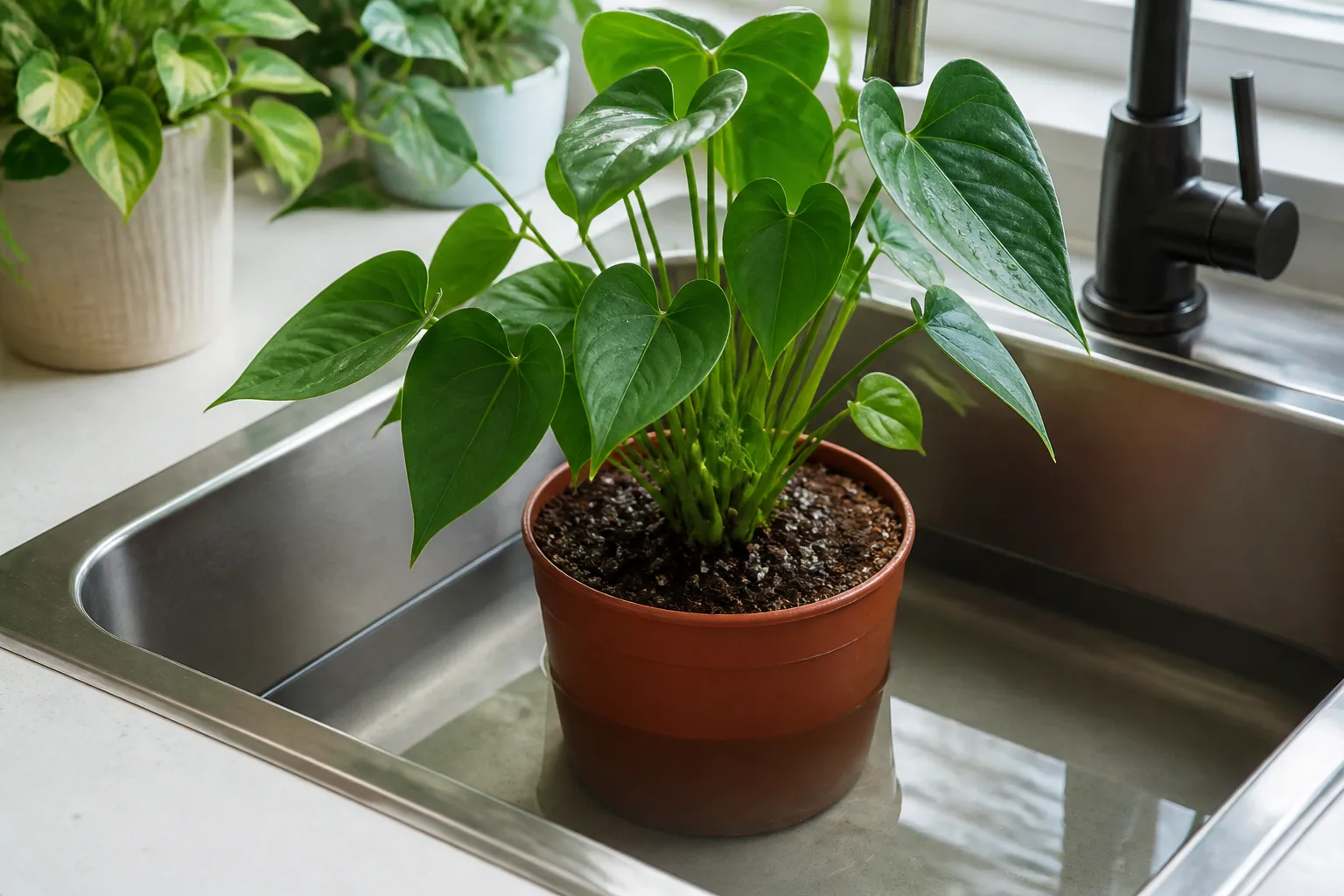
The process is simple. The details—water depth, timing, and drainage—are what separate a helpful soak from an accidental bog.
Step-by-Step in a Sink or Basin
Use a container wider than the pot base: a kitchen sink with the stopper in, a utility tub, or a large tray. Fill with room-temperature water to about one-third the height of the pot—roughly 1 to 2 inches for small pots, up to 4 to 5 inches for larger ones (Green Sage). Cold tap water can shock roots; hot water damages them.
Set the pot directly in the water so drainage holes contact the bath. Remove decorative foil or empty the outer cachepot first. If the plant lives in a cachepot, bottom water the inner nursery pot with holes, not the decorative shell.
Wait. Check the surface every 10 minutes by pressing a finger into the top inch. When it feels evenly damp—not muddy—the soak is complete. Lift the pot out.
How Long to Soak and When to Stop
Most small and medium houseplant pots need 20 to 45 minutes. Very dry peat-heavy mix or a root-bound plant can take longer; succulents often finish in 15 to 20 minutes because their mix should not become saturated. If the surface is still dry after 45 minutes, add water to the basin and give it another 15 minutes, or lightly mist the top once before resuming the soak.
Stop signals:
- Top inch feels moist and color darkens evenly
- Pot weight increases noticeably
- No more bubbles rising from drainage holes
Stop errors:
- Leaving pots submerged overnight
- Assuming “more time = safer for vacation” (it means less oxygen)
- Skipping the finger test on the surface
As Leaf & Thrive notes, the mistake that turns bottom watering into overwatering is letting the pot stand in the tray long after the mix has finished drinking.
Drain Fully Before You Walk Out the Door
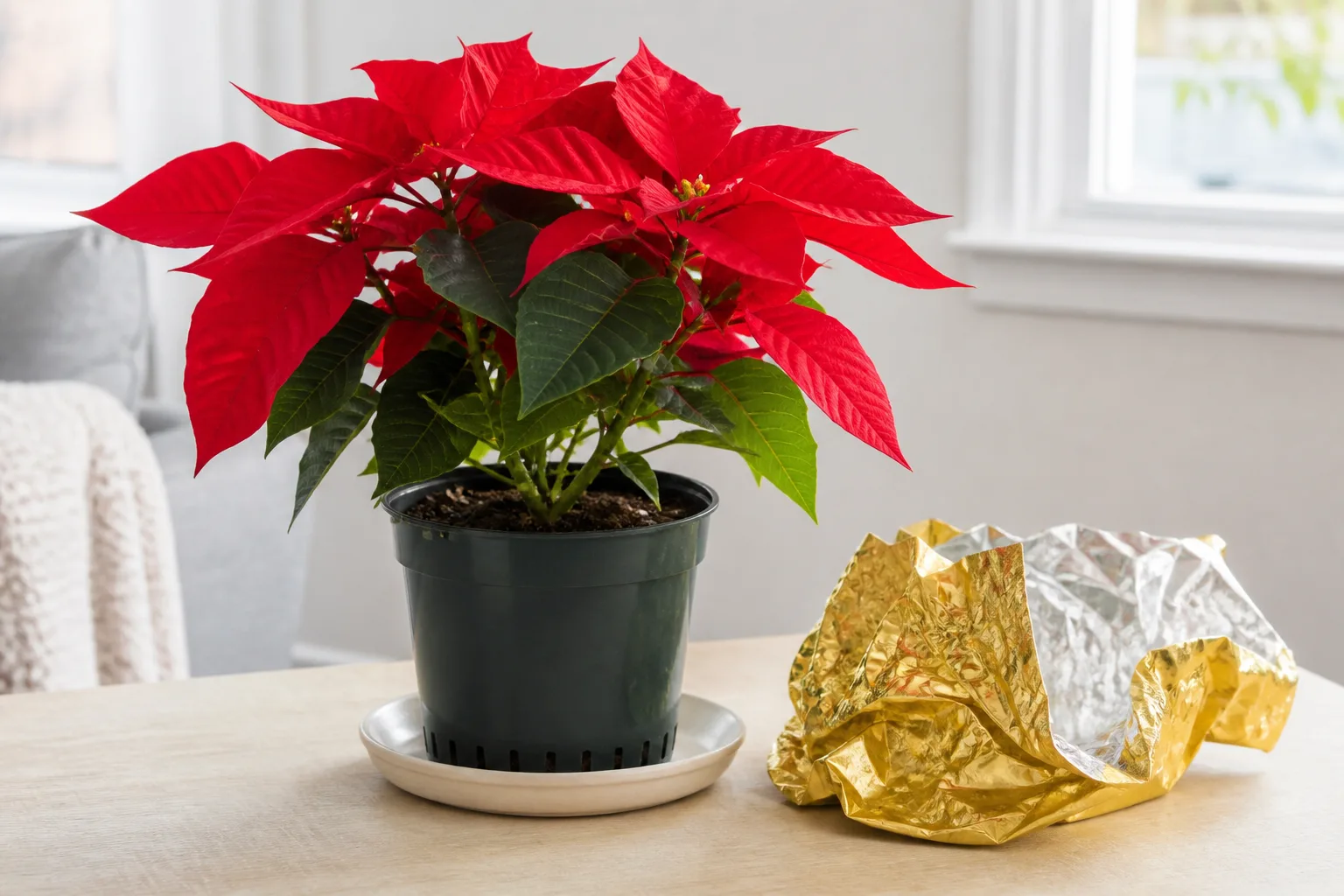
After the soak, set pots on a rack, slatted tray, or the empty sink for 15 to 30 minutes until water stops dripping freely. Empty saucers. If you use a cachepot, never return a dripping inner pot to a sealed outer pot—standing water at the bottom is one of the fastest routes to root rot, which UGA Extension links to excess moisture and poor aeration in container mixes.
Only after drainage do I move plants to their vacation positions: slightly back from hot south glass, away from heating vents, and out of direct AC blast. I do not fertilize before travel; new soft growth is the first thing to collapse when watering slips.
Match the Soak to Each Plant’s Real Thirst
Bottom watering is a technique, not a universal schedule. Group plants by how they actually dry in your rooms before you soak them all the same way.
Thirsty Tropicals and Fast-Drying Terracotta
Aglaonema, ferns, calatheas, and pothos in terracotta are my prime candidates. Terracotta breathes; the outer wall pulls moisture from the mix, which speeds drying. That is great for root health during normal weeks and frustrating before a long trip. A deep bottom soak saturates the core without repeatedly wetting leaves.
Moisture-loving plants with fuzzy foliage—African violets, begonias, rex begonias—also belong here. Top water splashes cause spotting and crown rot on hairy leaves (PlantCareAI practical guidance). Bottom watering keeps foliage dry while the root zone hydrates.
For these groups, I soak until the surface is evenly damp, drain thoroughly, and label them “check at day 7; water only if top half is dry.”
Succulents, Cacti, and Plants That Want to Stay Dry
Echeveria, haworthia, and other succulents are the exception to the “soak everyone” impulse. Their mixes must dry fully between drinks. A heavy pre-trip soak in a cold, dim house can leave roots wet for weeks—exactly the wrong conditions.
For succulents I might skip water entirely on a two-week winter trip, or give a short 15-minute bottom soak only if the pot is genuinely light and leaves show thirst. Lemon cypress and other woody indoor plants sit in the middle: they dislike drought but still need oxygen. I soak until damp, not saturated, and never leave them in deep water.
If a plant’s normal rhythm is “water every three weeks,” do not force a vacation soak just because you are leaving. Match the plant, not the calendar.
Build a Three-Week Vacation Plan Around the Soak
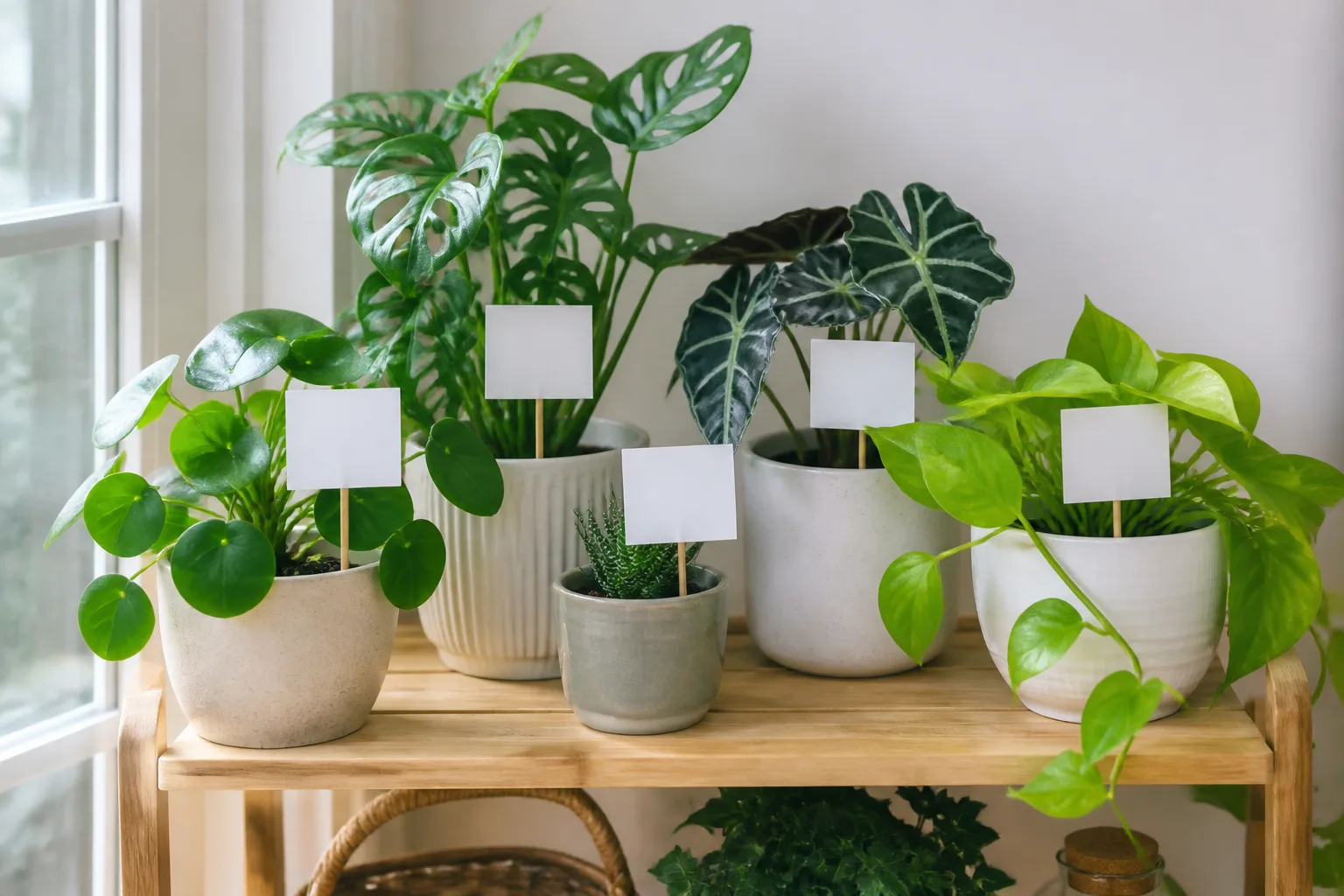
Bottom watering is step one in a sequence. The length of your trip determines what else must be true.
One Week Before Departure
Do not wait until packing night. Seven days out, I:
- Log each pot’s normal drying time—how many days from “ready to water” to “lightly dry on top.”
- Inspect drainage holes and clear blocked saucers.
- Check for pests on leaf undersides; I do not group a suspicious plant with healthy ones.
- Test any wick, globe, or reservoir with the same pot, mix, and window for at least one full drying cycle.
- Repot only if already planned—never repot and leave the same day.
This mirrors standard vacation-prep advice: reduce risk early, not at the airport door.
At Fourteen Days: Sitter Cards and Grouped Zones
Two weeks is where vague instructions fail. I group plants into labeled zones:
- “Water if top inch dry” — thirsty tropicals post-soak
- “Do not water unless pot feels light” — semi-succulents
- “Do not water” — dormant or recently watered succulents
Each card lists plant name or photo, date last watered, how deep to probe, what “ready” feels like, where to drain, and my phone number. I include one line in bold: no fertilizer, no repotting, no moving plants outdoors.
A single bottom soak before departure plus one mid-trip check beats a heavy pre-trip flood with zero follow-up.
At Twenty-One Days: Why I Still Schedule a Check
Three weeks is multiple drying cycles for a typical pothos in a 6-inch pot on a sunny sill. Even after a perfect soak, I arrange at least one human check—or two lighter checks—rather than betting on one session. If that is impossible, I test a capillary mat or wick ahead of time with the exact setup, knowing continuous wet mix can rot roots of plants that prefer a dry window.
I also run a monthly top-water flush on plants I normally bottom water, so salt buildup does not scorch leaf tips while I am gone (Leaf & Thrive on mineral accumulation). If a plant is due for that flush, I do it two weeks before travel, not the night before, so the mix has time to return to its normal moisture rhythm.
Bottom Watering vs Top Watering for Travel Prep
| Factor | Bottom watering before travel | Top watering before travel |
|---|---|---|
| Even root-ball hydration | Strong; wicks water into dry center | Weak if mix is hydrophobic or edge-dry |
| Leaf and crown safety | Excellent for fuzzy or rot-prone plants | Risk of wet foliage and crown pooling |
| Salt and mineral flush | Poor; can concentrate salts upward | Strong when you run water through until it drains |
| Large pots (12+ in.) | Slow and incomplete | Faster for full saturation |
| Best use before a trip | Final even soak after normal care | Periodic flush weeks before; not a hasty morning flood |
My routine: bottom soak as the last even drink, with a proper top-to-drain flush on another weekend. For more on year-round technique, see how to water indoor plants the right way.
Common Mistakes That Undo a Good Bottom Water
Soaking pots without drainage holes. Water has nowhere to go; roots sit in a sealed bath. Use double-potting with gravel only if the inner pot drains.
Leaving plants in the basin too long. Beyond 45 to 60 minutes, you are trading drought risk for oxygen loss. Set a timer.
Watering every plant “just in case.” Heavy soil in a recently watered pot plus a trip is a rot invitation. Check first; soak only if ready.
Moving sun-loving plants to a dark bathroom. Slower water loss from low light also means weaker plants and etiolated growth. Pull pots slightly from intense glass; do not plunge them into shade.
Installing untested self-watering gadgets on departure day. Reservoirs and wicks work only when matched to the plant and tested for the full absence length. Read DIY self-watering: what actually works before betting a three-week trip on a new bottle.
Skipping the drain step. A soaked pot in a sealed cachepot is standing water by another name.
Bottom watering exclusively for months without an occasional top flush. Dissolved salts accumulate at the surface and can brown leaf tips—something you do not want to discover on day twenty-two.
When to Skip Bottom Watering Entirely
Skip or limit bottom watering when:
- The pot has no drainage holes and cannot be lifted from a decorative shell
- The plant was watered within the last 48 hours and mix still feels cool and heavy
- The plant is root-bound and water channels around the edges without soaking the core—repot or loosen the root ball first
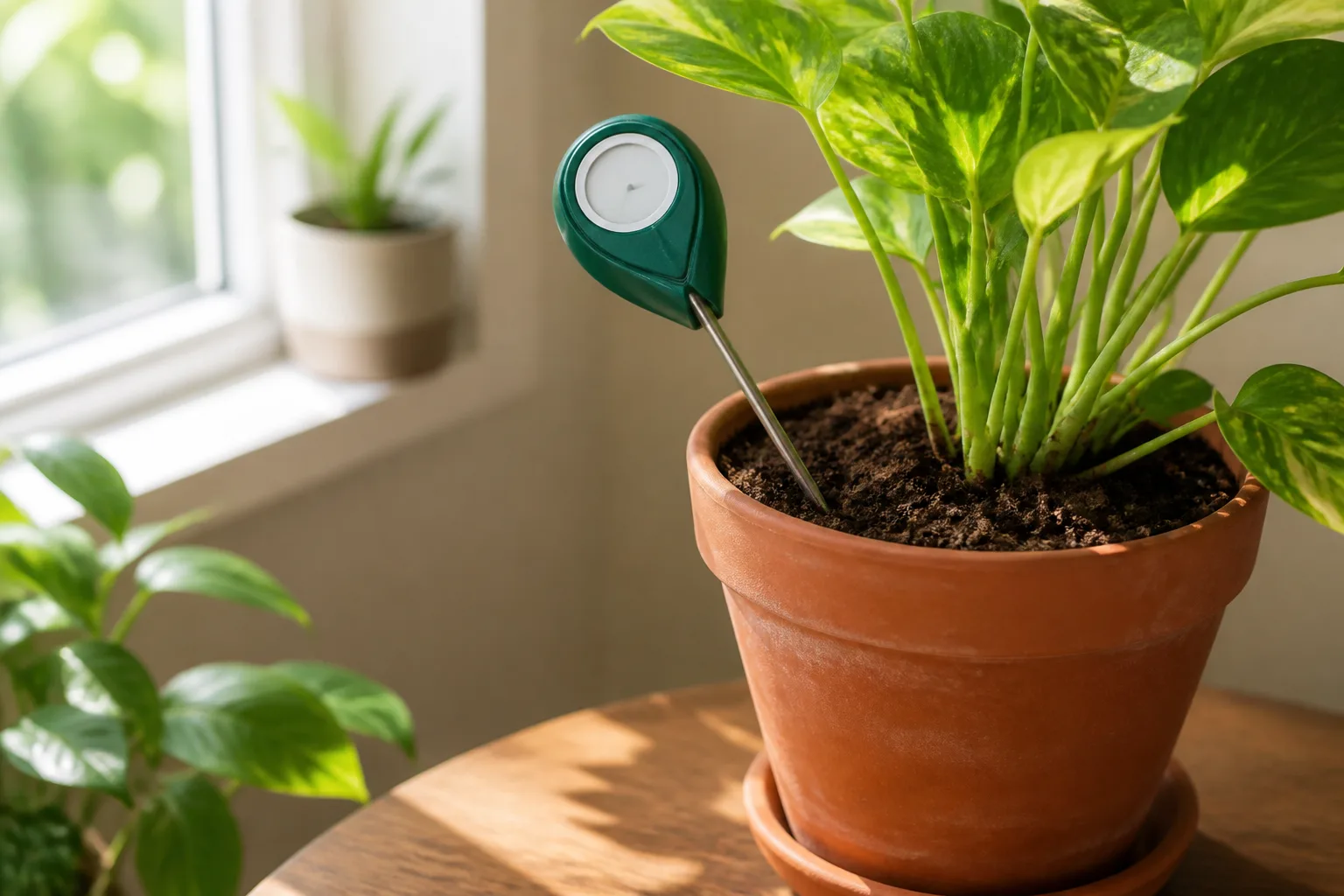
- You are dealing with very large containers where top watering plus a moisture meter is more reliable
- The species wants sharp dry periods—most cacti, many succulents, and some sansevierias
- Soil is already hydrophobic and shrank away from the pot wall—bottom water helps, but severe cases need repotting with pre-moistened mix (how to fix hydrophobic soil)
Bottom watering is also a poor solo strategy for fungus gnat outbreaks if you never address the top layer; pairing occasional top flushes with drier surface conditions works better long term.
Return-Home Checklist
The worst mistake after travel is watering everything on autopilot. When I walk in:
- Look before you pour. Wilting can mean dry soil—or rotted roots from sitting wet while you were gone.
- Probe the root zone, not just the surface. Lift small pots to judge weight.
- Empty all saucers and cachepots of standing water.
- Inspect leaf undersides for spider mites and fungus gnats that multiplied in stagnant air.
- Photograph odd symptoms before you change anything; it helps if you need to adjust care over the next week.
- Resume normal light gradually if someone moved plants; sudden sun shock burns leaves.
- Bottom water only the pots that are genuinely ready—do not repeat the pre-trip group soak by reflex.
Plants that are dry get a measured soak and drain. Plants that are still damp get airflow and time. Plants with mushy stems get trimmed rot and dry mix—not another bath.
Conclusion
The one thing I always do before a long trip is a controlled bottom water: basin, capillary soak until the surface dampens, full drain, then placement that matches each plant’s thirst. That ritual earns me an even root ball, dry crowns, and a clearer head start for whoever checks in while I am gone.
It does not cancel the physics of a three-week calendar. Terracotta still breathes. Succulents still want dry spells. Sunny windows still pull water faster than a hallway. Treat the soak as the first move in a travel plan—sitter cards, tested wicks, honest plant groups, and a return-home inspection—not as a substitute for them. Get that sequence right and you stop begging favors for plants that were never set up to survive your itinerary in the first place.