Hydrogen Peroxide for Plants: Safe Uses and Risks
Should you use hydrogen peroxide on plants? Get cautious dilution guidance, problem-by-problem alternatives, and mistakes to avoid around roots and leaves.
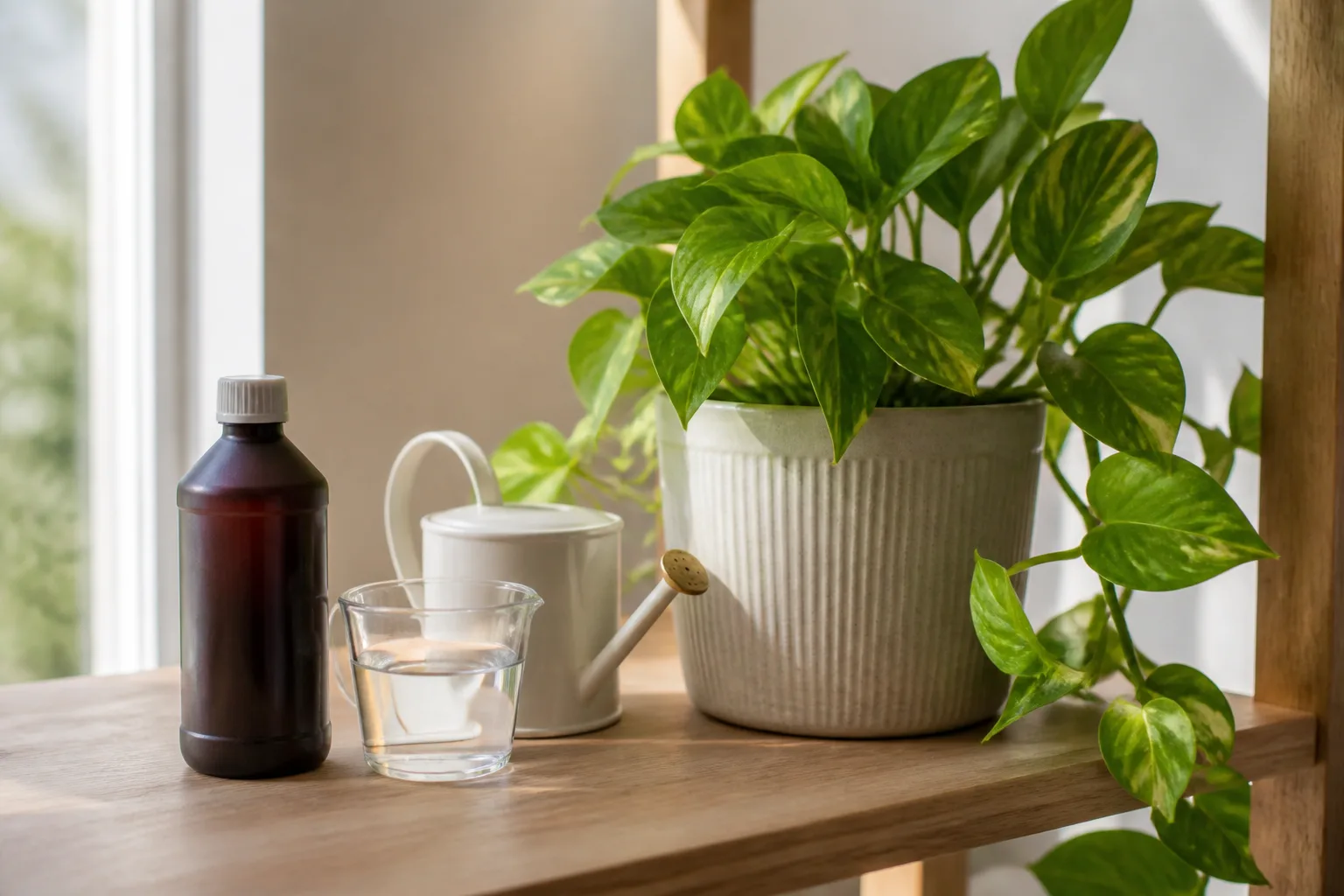
Hydrogen peroxide can be useful around plants, but the useful part is narrower than the internet’s “miracle cure” reputation suggests. A bottle of ordinary 3% hydrogen peroxide is a reasonable hard-surface sanitizer for empty pots, seed trays, and tools; it is a much less certain choice for living roots, leaves, and soil.
The best answer depends on the job. If a pot is dirty, clean and disinfect it. If fungus gnats are hovering over wet mix, change the moisture conditions and identify the larvae before reaching for a drench. If a plant has root rot, remove the rotten roots and correct the potting setup; peroxide cannot undo tissue that has already decayed.
The short answer: yes for sanitation, maybe for a narrow plant problem
Hydrogen peroxide is H2O2, an unstable compound that breaks down into water and oxygen. That reaction gives it oxidizing and disinfecting action on some surfaces and organisms, but it does not mean that pouring it into a pot supplies a lasting oxygen boost or restores a failing root system.
For most home gardeners, the sensible hierarchy is simple: use it most confidently on clean, empty equipment, use it cautiously and sparingly on an established ornamental if a specific problem justifies a trial, and do not use it as routine plant food, routine watering, or a substitute for diagnosing the cause of decline. The “maybe” matters because a plant’s species, leaf texture, root health, pot size, temperature, and current stress all change the margin for error.
If the plant is already wilted, sun-scalded, freshly repotted, drought-stressed, or covered in tender new growth, postpone an experiment. A stressed plant has less capacity to tolerate a mistake, and a dramatic fizz at the soil surface is not proof that the treatment is helping.
What hydrogen peroxide actually does in a garden
On a hard surface, peroxide can help reduce some microbes and organic residue after the surface has been physically cleaned. It is not magic over potting soil, algae, or root debris: dirt consumes disinfectant, and a visibly grimy pot needs scrubbing before any sanitizer can do its job.
On a living plant, the same oxidative activity that may damage a pest or surface pathogen can also damage plant cells. It may contact a few exposed organisms, then decompose quickly; it does not travel through a plant to cure an internal infection, and it does not reliably reach every fungus-gnat egg, larva, pupa, or adult.
That distinction explains why “extra oxygen for roots” is a poor decision rule. Roots need a well-aerated, physically draining medium over time. If a container stays saturated, adding a short-lived oxidizer does not fix the compacted mix, blocked drainage hole, oversized pot, or watering schedule that caused the low-oxygen conditions.
When it is a reasonable tool—and when it is not
Use peroxide first for sanitation: an empty pot that held a diseased plant, a seed tray between batches, or a pair of pruners that you have already washed. It can also be a limited experiment for fungus-gnat larvae in an established ornamental when the plant tolerates a careful dry-down, but it should not be the first or only control.
Do not reach for it automatically because a leaf is yellow, soil is moldy, or a fly is circling. Yellow leaves can reflect overwatering, low light, aging, pests, temperature stress, or root damage. White growth on soil may be harmless saprophytic fungi, while white growth on leaves may be powdery mildew, residue, or mealybugs. Peroxide applied before identification adds risk without adding information.
The same restraint applies outdoors. A homemade peroxide mixture is not automatically a legal or tested pesticide for a vegetable bed, fruit crop, or ornamental landscape. For any product sold with pesticide directions, follow that product’s label, including crop, pest, rate, protective equipment, harvest interval, and re-entry instructions. A household recipe copied from a blog is not a universal label.
Identify the problem before you open the bottle
Start with four observations: where the symptom is, how quickly it appeared, whether the plant is wet or dry, and whether a pest is actually present. Look under leaves, inspect stems and crowns, smell the root zone, and check whether the pot drains freely. This small diagnostic pause prevents a common mistake: treating a visible symptom while leaving the condition that produced it untouched.
For fungus gnats, look for weak, mosquito-like adults near the pot and translucent larvae with dark heads in moist mix. Colorado State University Extension notes that the larvae commonly occupy the top 2 to 3 inches of growing medium and that adults are strongly attracted to moist media; its management advice starts with allowing the top 1 to 2 inches to dry between waterings where the plant can tolerate it. Colorado State University Extension’s fungus-gnat guide also describes the potato-wedge test, which is more useful than guessing from a few flying adults.
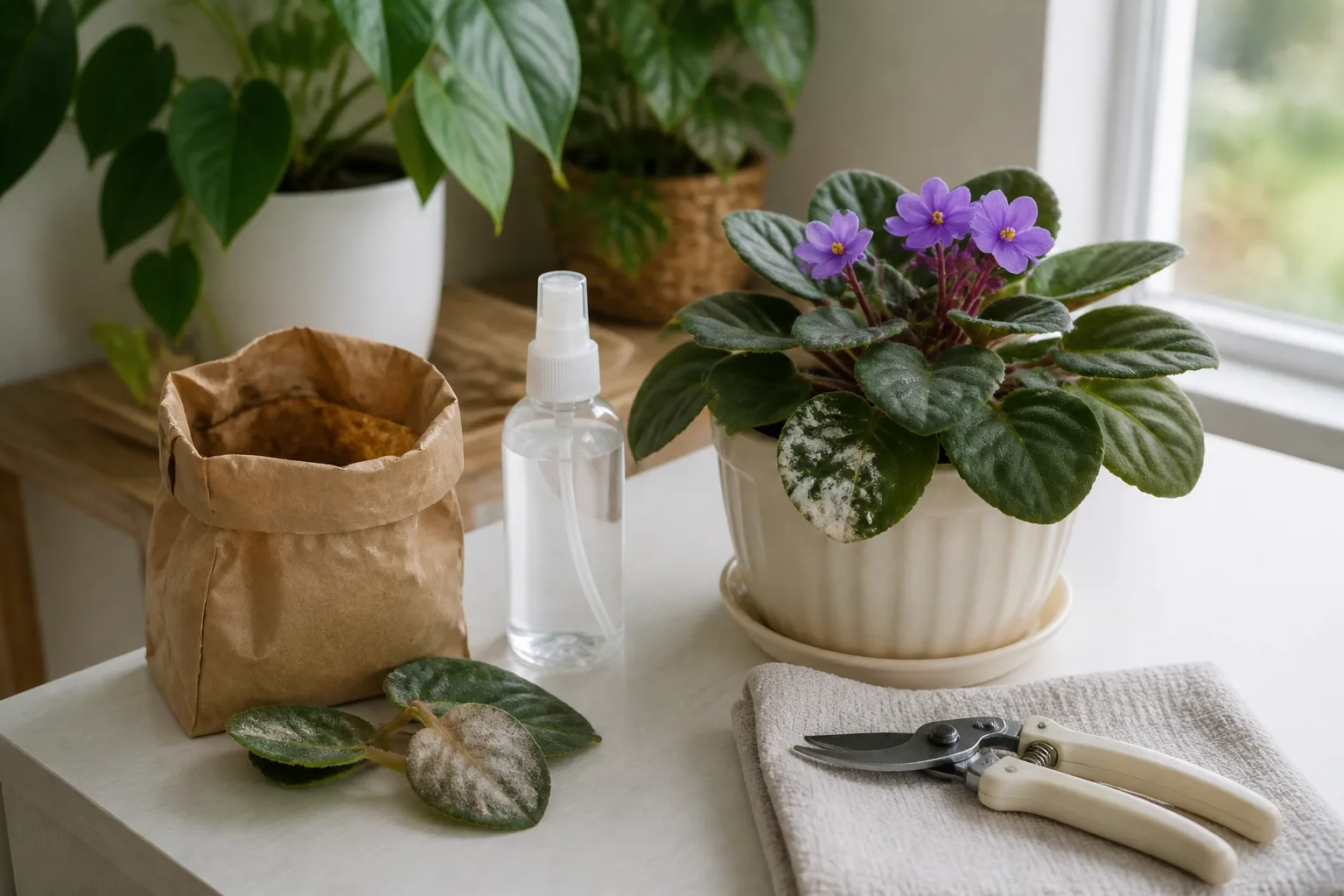
For powdery mildew, look for a flour-like coating on leaf surfaces rather than assuming every white patch is mildew. Airflow, spacing, light, resistant varieties, removal of heavily affected leaves, and a properly labeled treatment are usually more durable than repeatedly wetting foliage with a homemade oxidizer. A practical overview from Birds & Blooms emphasizes diagnosis, airflow, spacing, cleanup, and label directions.
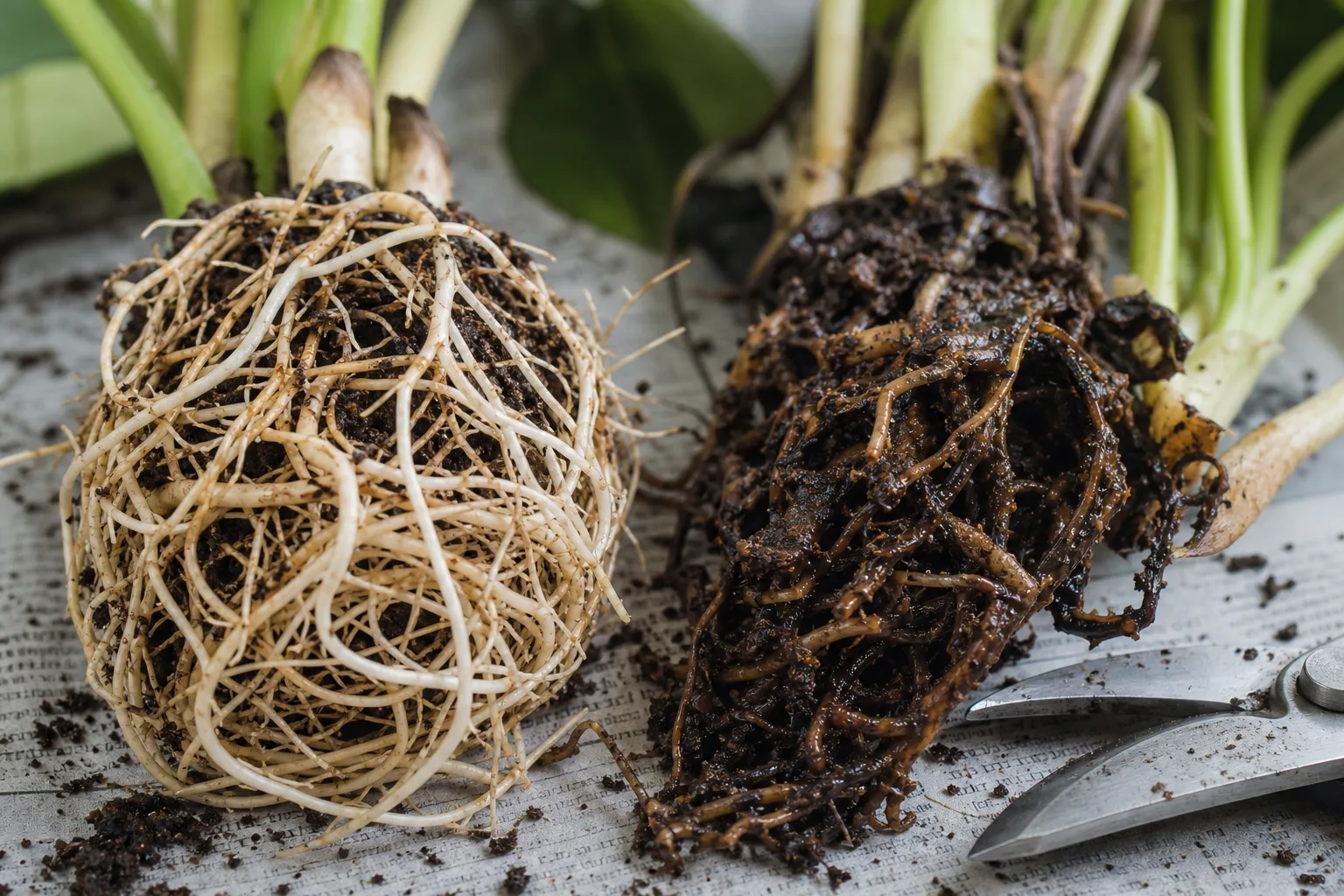
For root trouble, slide the plant from its pot and inspect rather than treating the soil by reflex. Healthy roots are firm; rotten roots are often brown or black, soft, and easy to strip. The first intervention is physical: remove the damaged material, keep healthy roots, use a clean pot with open drainage, and repot into a suitable fresh mix.
A cautious dilution framework for 3% solution
There is no single household dilution that is equally safe for every plant, pest, disease, and application method. Online recipes vary substantially; for example, Plants Spark Joy’s practical article discusses several ratios and even promotes repeated drenches, while extension guidance for fungus gnats centers on moisture management, traps, biological controls, and labeled products instead. That disagreement is a reason to narrow the use, not a reason to choose the strongest recipe.
Use only a clearly labeled 3% household solution if you decide to make a small ornamental-plant trial. Never improvise with concentrated 30% or 35% products, hair-bleaching peroxide, or an unlabeled agricultural concentrate. Measure with a clean spoon or syringe, make only what you need, label the bottle, and store the original container as directed.
| Job | Conservative approach | Why the limit matters |
|---|---|---|
| Empty pots, trays, or tools | Clean first, then use 3% solution on the hard surface; rinse residue when appropriate and dry completely. | The goal is sanitation, not exposing living roots or soil biology. |
| Fungus gnats in an established ornamental | Optional one-time trial of 1 part 3% peroxide to 4 parts water, applied only to already-moist top mix; do not make it a weekly watering habit. | The rate is a cautious home experiment, not a universal pesticide label; drying and IPM are better foundations. |
| Leaf spray | No default recipe. If a low-stakes ornamental trial is justified, use a very small batch at about 1 teaspoon 3% solution per cup of water, test one leaf, and wait. | Thin, fuzzy, waxy, young, or sun-stressed leaves can scorch, and soap adds another possible source of burn. |
| Root rot | Do not use peroxide as the rescue step. Inspect, trim, repot, and correct moisture and drainage first. | A drench cannot replace removal of dead tissue or repair a waterlogged root zone. |
| Seeds and seedlings | Sanitize empty equipment; use a seed-specific protocol only when supplied by a credible seed or extension source. | Germinating tissue is tender, and a strong or prolonged soak can reduce rather than improve emergence. |
Cleaning pots, trays, and tools
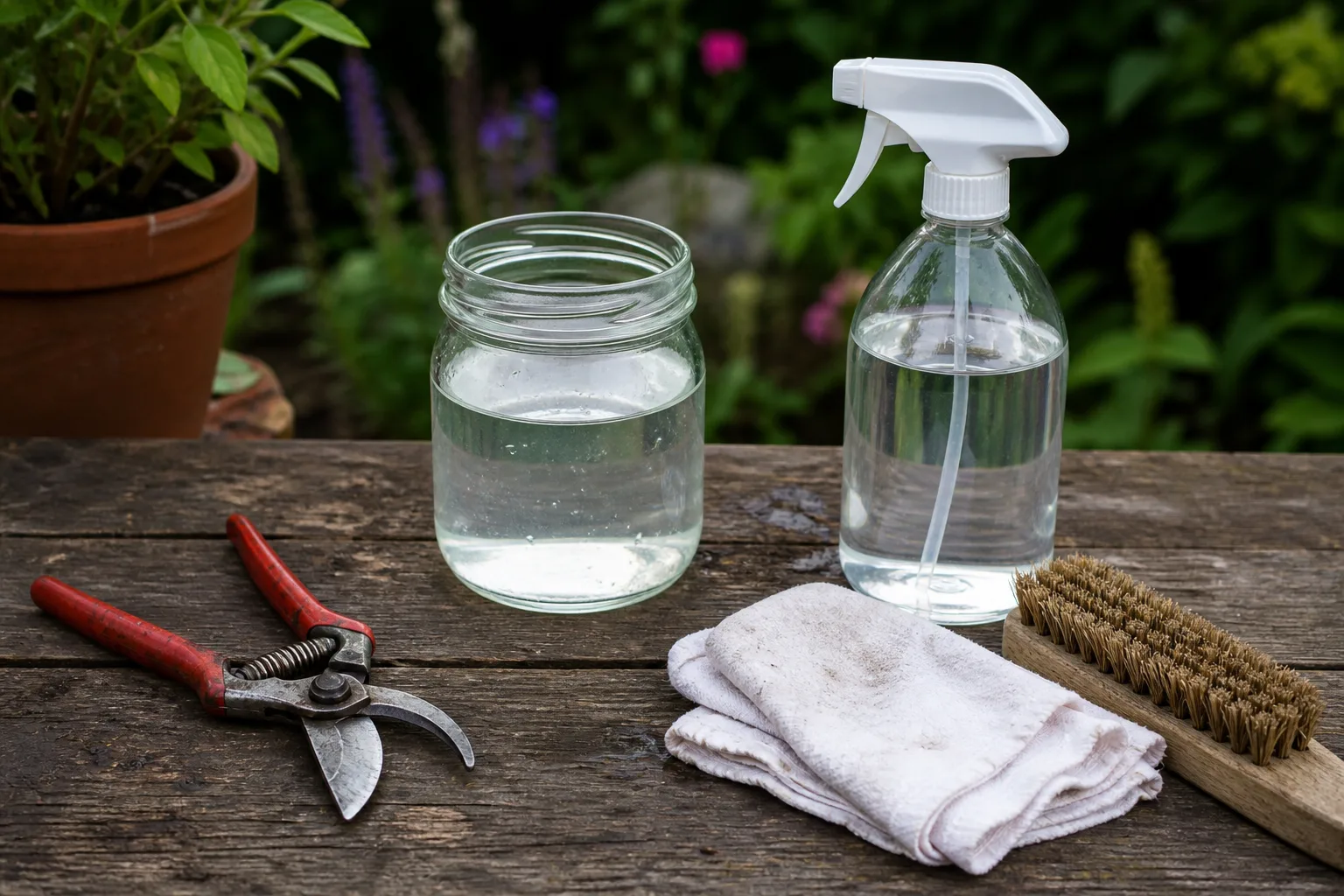
For sanitation, empty the pot or tray, remove every bit of old soil, and scrub with detergent and water. Rinse away the detergent and visible debris, then apply 3% peroxide to the clean hard surface. Give it contact time according to the product’s directions or your established sanitation protocol, rinse if the surface may contact roots or seedlings, and let it air-dry before reuse.
Pruners need the same sequence. Soil and sap are not removed by simply spraying the blades. Wash, rinse, disinfect, and dry; then lightly oil the pivot if the tool’s manufacturer recommends it. Never mix peroxide with bleach, vinegar, ammonia, or another cleaner in the same bottle or container. Different cleaners can react, create irritating vapors, or make the result less predictable.
Fungus gnats: a limited emergency drench
Peroxide may kill or irritate some exposed fungus-gnat larvae, but it does not solve the underlying wet-media cycle. Colorado State and Ohio State Extension both put moisture management and sanitation ahead of chemical intervention. Ohio State University Extension’s fungus-gnat fact sheet notes that overwatering, leaks, poor drainage, and decaying organic matter encourage infestations; it recommends letting soil dry as much as the plant can tolerate and using biological options when conditions stay wet.
If you choose to test a 1:4 mix of 3% peroxide to water on an established ornamental, first make sure the plant is not a moisture-sensitive seedling, fresh cutting, or plant in acute wilt. Apply enough to wet only the upper zone where larvae are likely to be, not repeated full-pot drenches. Keep the plant in its normal light and observe the next several days; stop if the mix smells sharply chemical, the plant wilts unexpectedly, roots darken, or leaf damage appears.
At the same time, put a yellow sticky card near the pot to monitor adults, remove dead leaves and algae, empty cachepots, and allow the upper mix to dry between waterings if the species permits. A small potato slice placed just under the surface for a few days can help confirm larvae; remove it promptly. If adults keep appearing, switch to a labeled Bti product or beneficial nematodes where available and suitable rather than escalating peroxide frequency.
Leaf disease: why spraying is a last resort
A peroxide spray is a contact treatment, not a diagnosis. It may reduce some surface organisms for a short time, but a leaf disease can continue from new spores, crowded foliage, poor airflow, contaminated tools, or a misidentified problem. Repeated spraying can create a second problem: scorched tissue that looks like worsening disease.
For a genuinely low-stakes ornamental, a careful test is the most anyone should consider. Mix a small amount of a very dilute solution, spray one older leaf in shade, mark the test leaf with a removable plant tag rather than spraying the whole plant, and wait at least a day or two through normal light conditions. If the leaf spots, bronzes, curls, or develops a bleached patch, rinse the plant with plain water and abandon the trial. Do not add dish soap by default; soap can damage foliage, especially in heat or bright light.
For powdery mildew, improve spacing and airflow, remove badly affected leaves, avoid wetting foliage late in the day, and choose a treatment specifically labeled for that plant and disease if intervention is needed. Those measures address the environment rather than repeatedly sterilizing one leaf at a time.
Root trouble: fix the cause first
Hydrogen peroxide does not cure root rot. Root rot is a condition of damaged roots in a persistently wet, poorly aerated, or contaminated root zone; the plant needs a physical reset and a better balance of moisture and air. A peroxide drench may briefly fizz, but that response is not evidence that rotten roots have recovered.
Remove the plant, discard the old mix, rinse away clinging soil, and cut off soft or collapsing roots with a clean tool. Repot into fresh, appropriately textured mix in a pot with drainage holes. Choose a container only modestly larger than the remaining root ball, and do not leave the inner pot sitting in water inside a decorative cachepot.
After repotting, give the plant the light and water its species can use, not a calendar-based watering schedule. If the stems or crown are soft, the smell is foul, or nearly all roots are gone, take a healthy cutting if the species allows it; peroxide cannot substitute for propagation or professional diagnosis when the original root system is beyond recovery.
Seed trays and seedlings
The safest peroxide job in seed starting is sanitation between batches. Wash trays, cells, domes, and tools first, disinfect the clean surfaces, rinse any residue that may contact germinating roots, and dry everything before adding fresh, sterile seed-starting mix.
Avoid soaking seeds or repeatedly drenching seedlings just because a recipe promises faster germination or protection from damping-off. Germination depends on seed quality, temperature, moisture, oxygen, sowing depth, and cleanliness; damping-off is a group of diseases, not a single peroxide-shaped problem. A fragile stem at the soil line is more likely to need better airflow, less saturated mix, and clean equipment than a stronger chemical application.
How to apply a test spray or drench safely
Use a small, repeatable test rather than treating an entire collection. Write down the product strength, ratio, date, plant, weather or room conditions, and exact part treated. This turns a vague “it seemed to help” into an observation you can stop, compare, and learn from.
For a foliar test, choose one mature leaf, avoid direct sun and high heat, wet the leaf lightly rather than soaking the crown, and keep the plant separated from valuable specimens while you wait. For a soil test, apply to one pot only, keep the solution off the foliage, and do not add another pesticide, fertilizer, oil, soap, or microbial product on the same day.
Wear eye protection and gloves if the product label calls for them, work with ventilation, and keep the bottle away from children and pets. Do not spray in a closed room, over food-preparation surfaces, or near flames and reactive cleaners. If the solution contacts eyes or skin, follow the first-aid directions on the product label.
What not to mix, repeat, or assume
Do not mix hydrogen peroxide with bleach, vinegar, ammonia, alcohol, or commercial pesticides. “Natural” does not mean chemically neutral, and combining cleaners can create hazards unrelated to plant care. Use one clearly identified product at a time and clean the measuring tools afterward.
Do not repeat a treatment on a fixed weekly schedule simply because adults or spots remain. A repeated peroxide drench may be selecting for the wrong target, stressing roots, and disrupting organisms that help decompose organic matter. If the first limited trial does not produce a measurable improvement, stop and re-diagnose instead of increasing concentration.
Do not assume fizz equals oxygenation, that brown roots can be revived in place, that peroxide kills every pest stage, or that a surface treatment reaches a systemic disease. Those are attractive shortcuts, but they turn a limited contact sanitizer into a promise it cannot keep.
Better first-line treatments by problem
For fungus gnats, start with the root cause: let the top layer dry as the plant allows, empty standing water, remove decaying debris, improve drainage, and use yellow sticky cards to monitor adults. The CSU and OSU guidance supports this moisture-first approach; both also describe biological controls such as Bti or beneficial nematodes for larvae when the situation warrants them.
For powdery mildew, confirm the diagnosis, improve airflow and spacing, remove the most affected material, and select a labeled fungicide or horticultural oil if the plant and disease call for one. A homemade peroxide spray is not inherently safer than a labeled product simply because the bottle came from a medicine cabinet.
For root rot, inspect and prune damaged roots, replace degraded or waterlogged mix, clear drainage holes, and change the watering interval. For dirty pots or tools, physical cleaning followed by sanitation is the right job for peroxide. For damping-off, use clean equipment, sterile mix, adequate light, airflow, and careful watering; discard collapsed seedlings rather than repeatedly bathing the tray.
How to tell whether your intervention helped
Measure the target, not the drama. For gnats, count adults on sticky cards and inspect a potato test rather than judging by whether a few flies disappear for an hour. For mildew, look at new growth and the rate of fresh lesions, not whether an old white patch briefly fades. For root trouble, watch for stable turgor and new growth after the roots and potting conditions have been corrected.
Give environmental changes time to work. Fungus gnats have overlapping life stages, and Colorado State Extension describes a life cycle that can complete in roughly three to four weeks at typical indoor temperatures; adults may therefore keep emerging after the wet conditions have been fixed. That does not automatically mean the drench failed, but it does mean that traps, dry-down, and larval control must be evaluated over a cycle rather than one afternoon.
Stop immediately if a plant develops translucent spots, bleached tissue, crisp margins, sudden wilt, a sour root-zone odor, or new damage concentrated on treated leaves. Rinse foliage with plain water when appropriate, move the plant out of harsh light, and return to basic care. A treatment that creates more damage than the original problem is not a successful treatment.
Special cases: edibles, pets, and sensitive leaves
Use extra restraint on herbs, vegetables, fruiting plants, and anything harvested for food. Do not apply an internet recipe to an edible crop unless the product is labeled for that crop and use, and follow all harvest and re-entry directions. Household 3% peroxide is not a free pass around produce.
Fuzzy leaves, thin leaves, newly unfurled leaves, succulents, seedlings, and plants already stressed by heat or drought deserve a lower-risk approach or no experiment at all. Test one leaf only if there is a compelling reason, and keep the plant isolated from a collection until you know the response.
Store the original bottle securely, keep it in its labeled container, and prevent pets or children from reaching a mixed solution. For a household exposure or product-specific concern, use the safety information on the label or contact an appropriate poison-control service; do not rely on plant-care comments as chemical-safety advice.
A practical decision tree for gardeners
Ask, in order:
- Am I cleaning an empty hard surface? If yes, scrub first, then use peroxide as a surface sanitizer and rinse or dry as appropriate.
- Am I treating a living plant? If yes, identify the pest, disease, or root condition before mixing anything.
- Is moisture the real driver? If fungus gnats, moldy mix, or root damage is involved, correct watering, drainage, and debris first.
- Is there a labeled or better-established control? Prefer sticky cards, Bti, beneficial nematodes, pruning, airflow, fresh mix, or a labeled product when each fits the problem.
- Would this plant tolerate a failed experiment? If it is rare, edible, a seedling, freshly repotted, or already declining, skip peroxide.
- Can I test one leaf or one pot and define a stop rule? If not, do not apply it.
This framework gives peroxide a useful place without giving it control of the whole garden. It also explains why a method can be harmless on a pruner, occasionally helpful against exposed larvae, and a bad idea on delicate foliage in the same week.
Conclusion
You can use hydrogen peroxide around plants, but the safest and most dependable use is sanitation of clean, empty pots, trays, and tools. Live-plant applications are optional experiments with narrow goals, not a routine watering method, root-rot cure, universal fungicide, or substitute for integrated pest management.
If fungus gnats are the problem, dry the mix as the plant allows and monitor the adults. If mildew is the problem, improve airflow and confirm the diagnosis. If roots are rotting, inspect and repot. When a limited peroxide trial is still justified on an established ornamental, use a standard 3% solution, a conservative small batch, one plant or leaf, and a clear stop rule. The bottle is a tool; the diagnosis and the growing conditions do most of the work.



