7 Best Okra Companion Plants to Grow Nearby
Learn what to plant with okra, when to use quick crops such as lettuce and radishes, and why companion plants cannot replace good spacing or crop rotation.
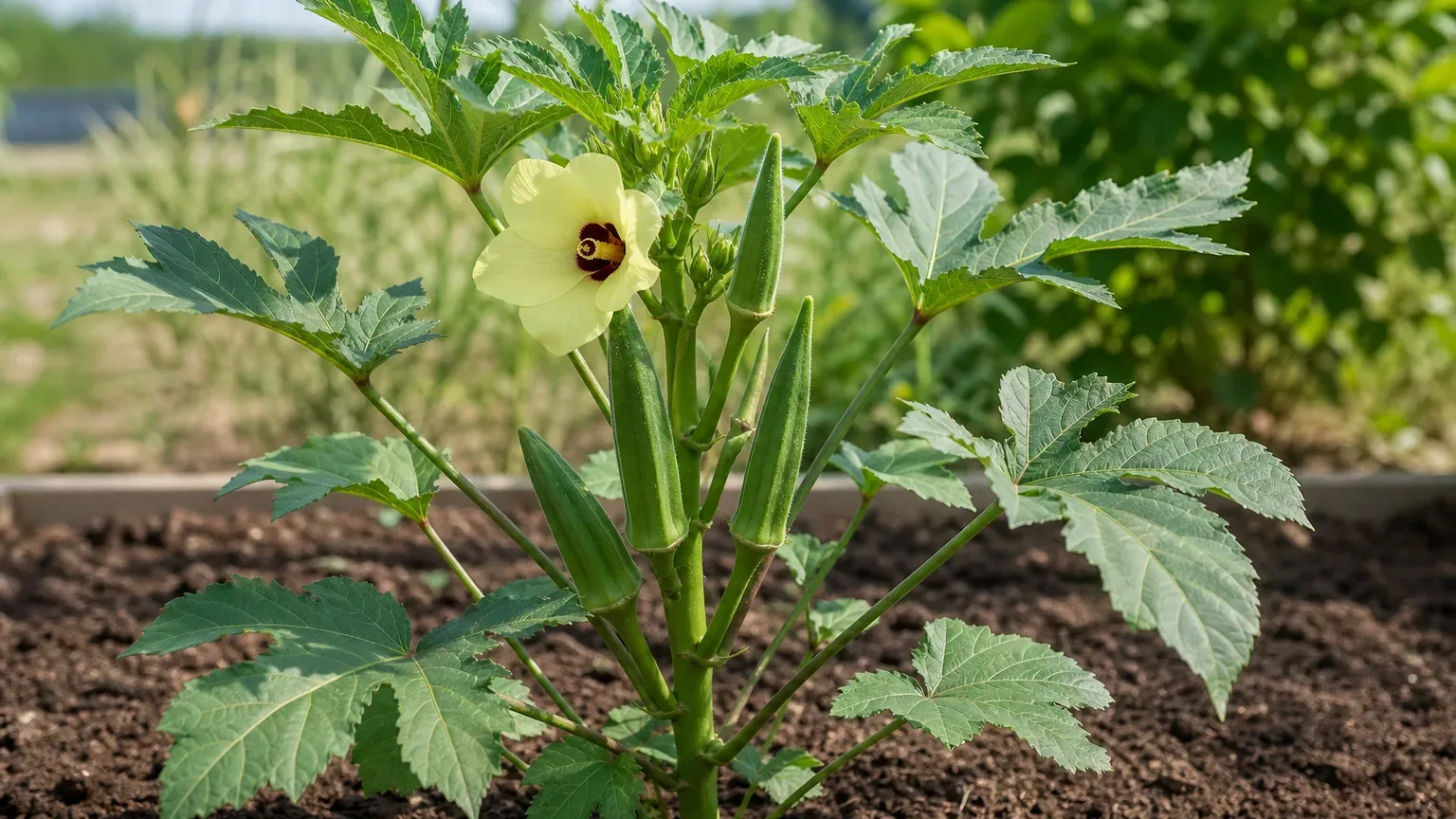
Okra is a tall, heat-loving crop with a longer harvest than many summer vegetables. That makes it useful in a mixed bed, but also means a neighbor that looks harmless in May can be buried under its leaves by July. The best okra companion plants either share its warm-season conditions or use the space before the okra reaches full size.
Here are seven practical choices: basil, bush beans, peppers, eggplant, cucumbers, lettuce, and radishes. Think of them as compatible crops, not protective charms. Pairing two plants does not guarantee higher yields, pest control, or improved soil; the reliable gains come from sensible timing, spacing, and making good use of the light and water you already provide.
What Makes a Useful Okra Companion?
Start with the growing conditions. Okra needs full sun, warm soil, and good drainage. In its Georgia home-garden guide, University of Georgia Cooperative Extension advises waiting until soil is at least 65°F at a four-inch depth and thinning plants to about 18 to 24 inches apart within rows. A companion must fit around that footprint without turning the bed into a damp, crowded thicket.
The most useful question is not “Which plant repels okra pests?” but “What job will this neighbor do without competing too hard?” A short crop can finish before okra shades it. A compact warm-season plant can share the bed without spilling across a path. A flowering herb may add a useful nectar source if you let it bloom. These are practical design benefits; a list of compatible crops is not proof that a particular pair will improve okra’s yield.
That distinction matters because companion planting is an umbrella term. SARE’s intercropping guidance describes possible benefits such as making better use of light, water, and nutrients and sometimes reducing insect pressure, while emphasizing that mixtures require careful timing and management. The same mixture can work in one bed and disappoint in another if one crop shades, roots through, or outgrows its neighbor.
7 Companion Plants That Fit Okra’s Growing Pattern
These picks are chosen for season, shape, timing, or harvest use. Give each its own space; okra’s mature canopy is large enough to change the conditions around it as summer progresses.
1. Basil
Basil is a natural warm-season neighbor because it likes sun and warmth and stays relatively compact when harvested regularly. Set it near the outside of an okra row, where it can receive light and where you can snip leaves without reaching through mature stems. Let a few basil stems flower if you want blooms in the bed, but pinch the rest if you are growing for tender leaves.
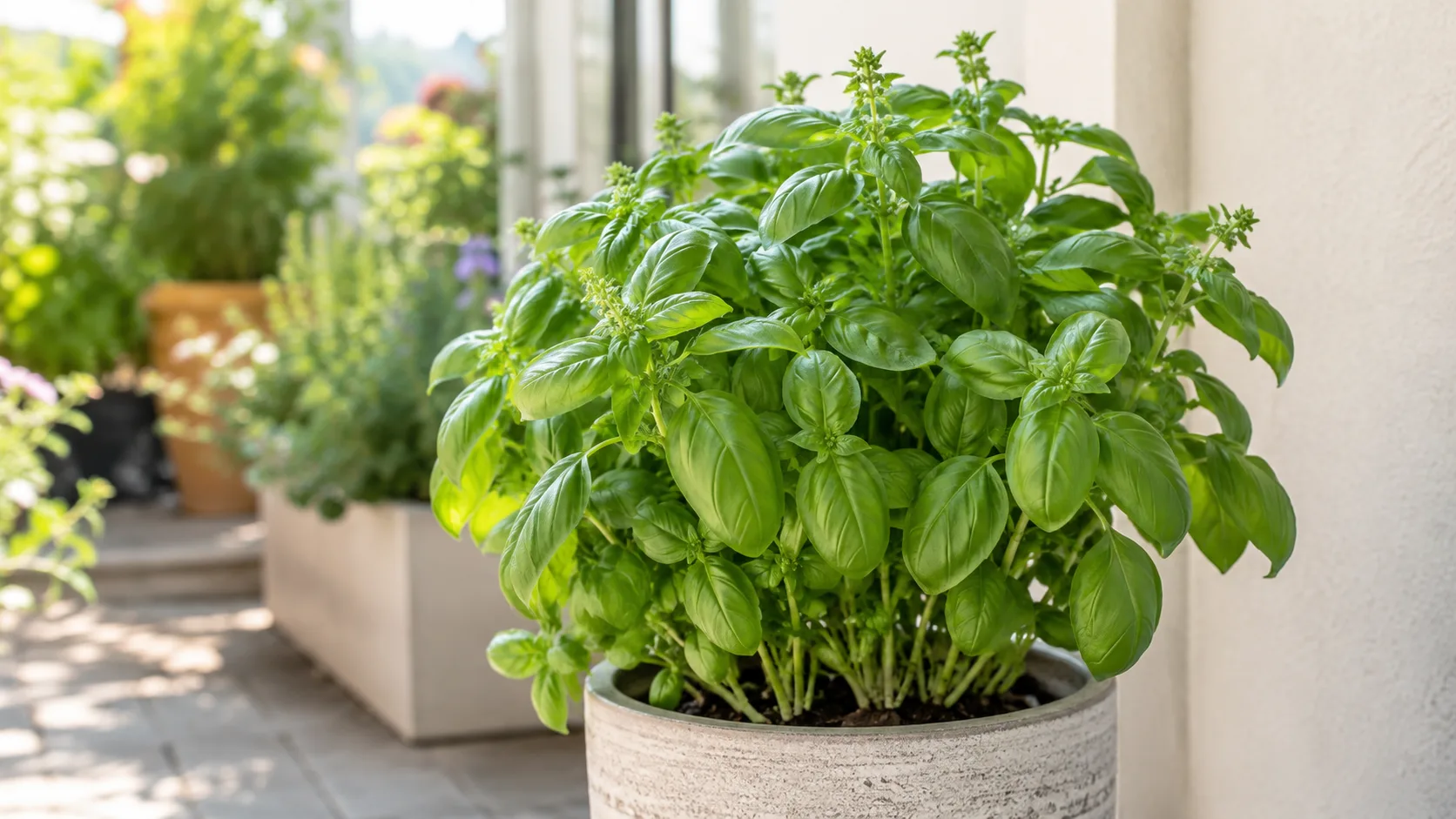
You will find claims that basil’s scent repels a long list of insects. Treat those claims cautiously: the presence of an aromatic herb is not a dependable control for flea beetles, aphids, whiteflies, or other pests. The more certain benefit is that basil and okra can share a summer garden, and both have culinary uses. Gardeners’ Path’s okra companion guide likewise presents basil as a warm-season pairing, while acknowledging that individual pairings are not guaranteed to work in every garden.
2. Bush Beans
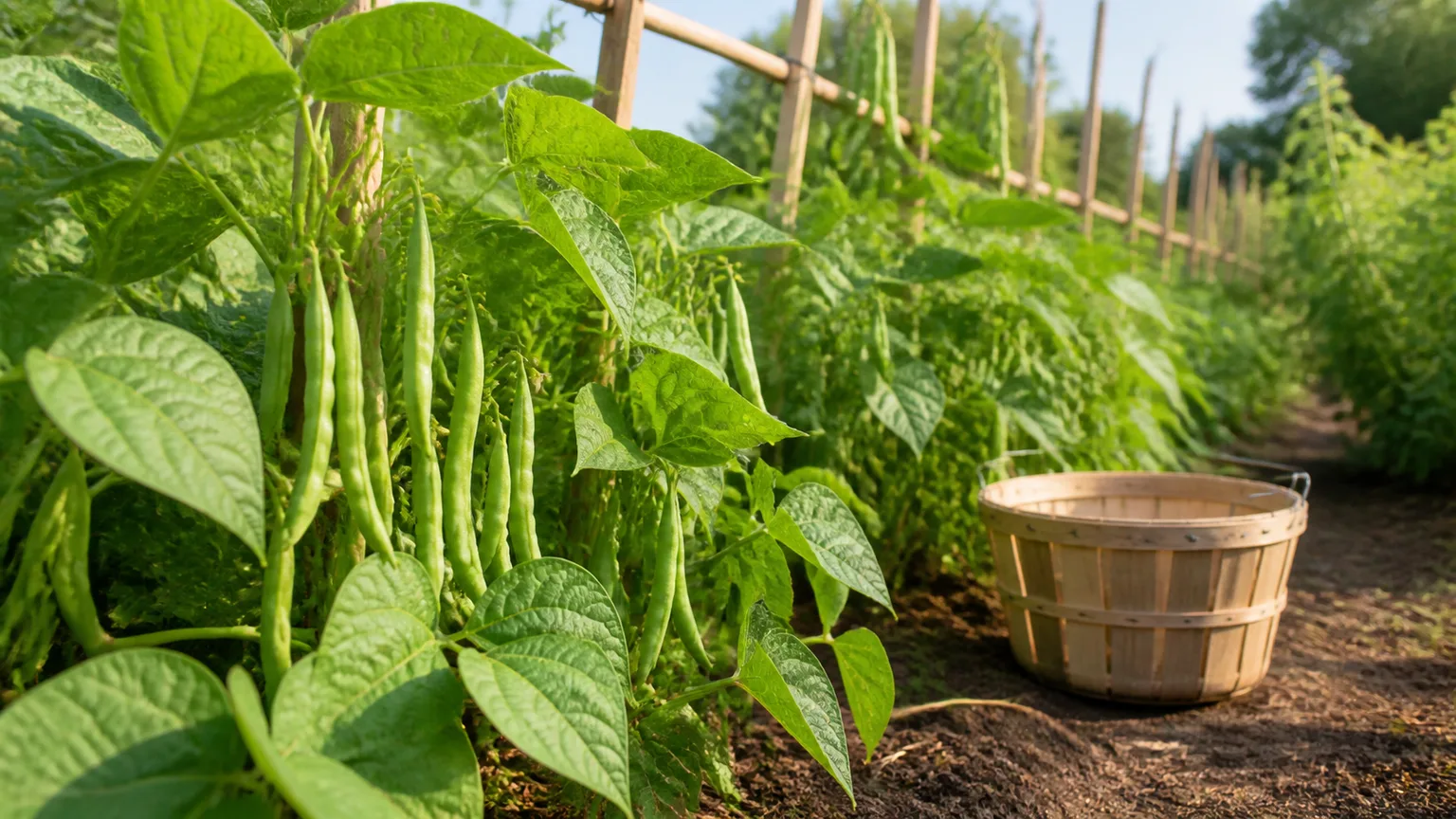
Bush beans are easier to fit beside okra than pole beans because they do not need a trellis or climb into the okra canopy. Sow them in an open strip at the edge of the bed after the soil is warm, and leave enough room to reach both crops for picking. Avoid placing a dense bean row directly under mature okra, where shade and poor air movement can make harvest frustrating.
Beans are legumes, but that does not make them instant fertilizer for neighboring okra. Nitrogen fixation is a plant-and-microbe relationship in bean root nodules; the benefit to a later crop depends on what happens to the bean roots and residue, and the living bean crop is using nutrients too. Keep okra fertility decisions based on the bed and the crop’s growth. UGA Extension warns against excessive nitrogen because it can encourage foliage at the expense of yield.
3. Peppers
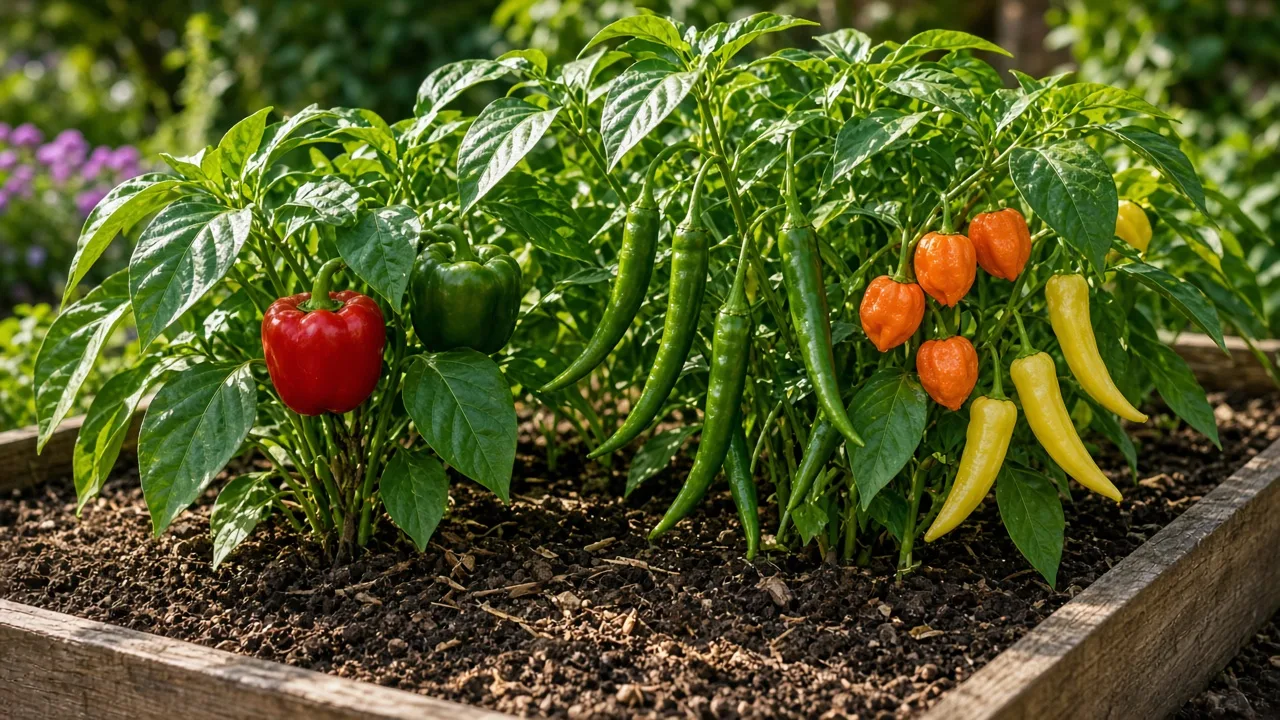
Bell or hot peppers fit the same hot-weather calendar and have an upright growth habit that is easier to manage than a sprawling vine. Place them where both plants receive direct sun for most of the day, then leave a path or reachable edge for frequent okra picking. In a small bed, use one pepper rather than creating a tight block of plants around the okra.
Peppers and okra can share a watering routine during hot, dry weather, but they should not be crowded together simply because both are summer crops. Keep leaves from overlapping heavily, and inspect both for insects instead of assuming one protects the other. A pepper plant is a food-producing neighbor, not a proven barrier to cabbage worms or other pests.
4. Eggplant
Eggplant is another heat-loving vegetable that can occupy the same summer bed. It is a good option when you want a second fruiting crop and have enough space to keep each plant open to sun and air. Place it beside, rather than directly in front of, the okra from the sunniest direction; the taller plant should not cast a long shadow across the shorter one for most of the day.
The pairing works best in a generous bed, not a crowded square-foot patch. Okra can grow several feet tall, and mature eggplant also needs room for its branches and fruit. Keep a hand-width route between the plant canopies where possible so you can spot damaged leaves, pick pods, and avoid snapping stems while reaching into the bed.
5. Cucumbers
Cucumbers share okra’s warm-season timing and need regular moisture while they are growing and setting fruit. Their difference is the important part: many cucumber varieties spread on long vines. Give those vines a path along the outer bed edge, or train a suitable variety on a sturdy trellis placed so it does not shade the okra.
Do not interplant a sprawling cucumber through the center of a tight okra patch. Vines can tangle around stems, conceal pods, and make it difficult to weed or harvest. If you have room to direct the growth away from the okra, the two crops can share a garden; if you do not, plant the cucumber in its own bed. Gardeners’ Path includes cucumbers among possible okra companions, but the usable-space condition is what makes that pairing work in practice.
6. Lettuce
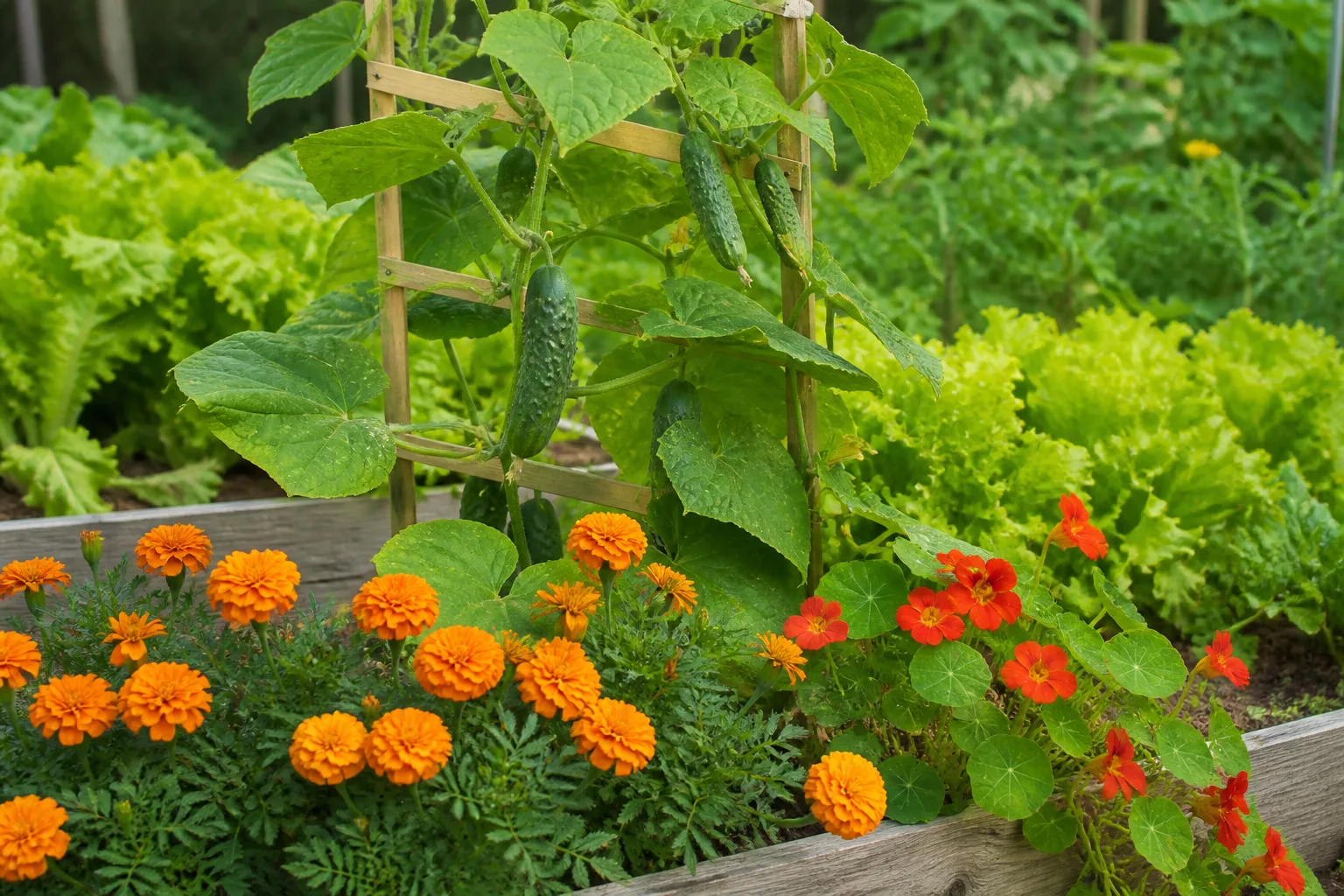
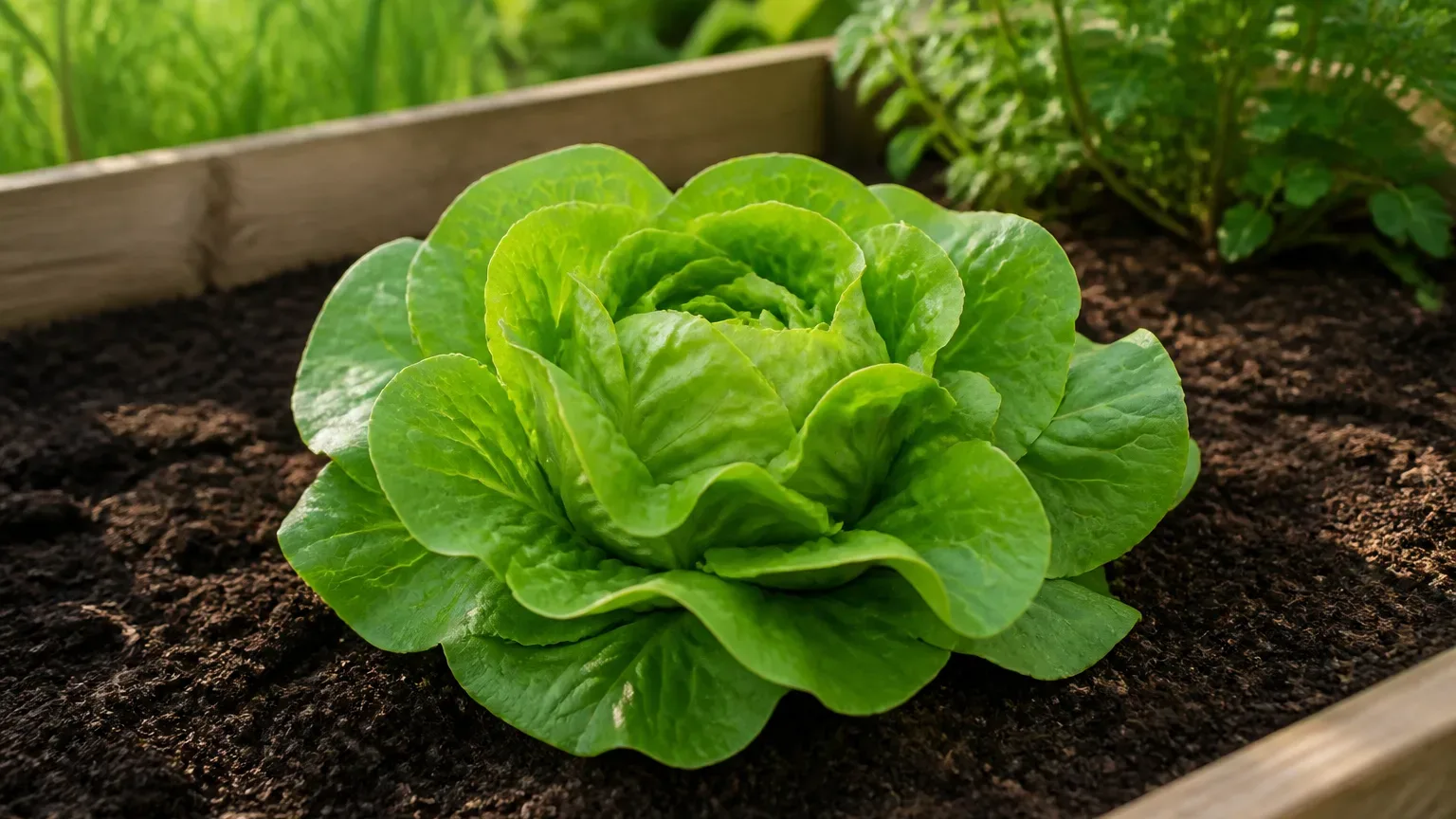
Lettuce is a timing companion, not a reliable crop to tuck under a fully grown okra plant all season. Sow or transplant it while the okra is still small, then harvest the leaves or whole heads before the canopy closes. This lets you use a patch of spring or early-summer soil that would otherwise sit bare while you wait for the warm soil okra needs.
Later, okra’s shade may reduce harsh afternoon sun around a few remaining lettuce plants, but it cannot make lettuce a heat-loving crop. Warm nights and high temperatures still encourage bolting and bitter leaves. Use short-season or heat-tolerant lettuce, keep it at the brighter edge of the row, and pull it when growth turns tall or bitter rather than nursing it through unsuitable weather.
7. Radishes
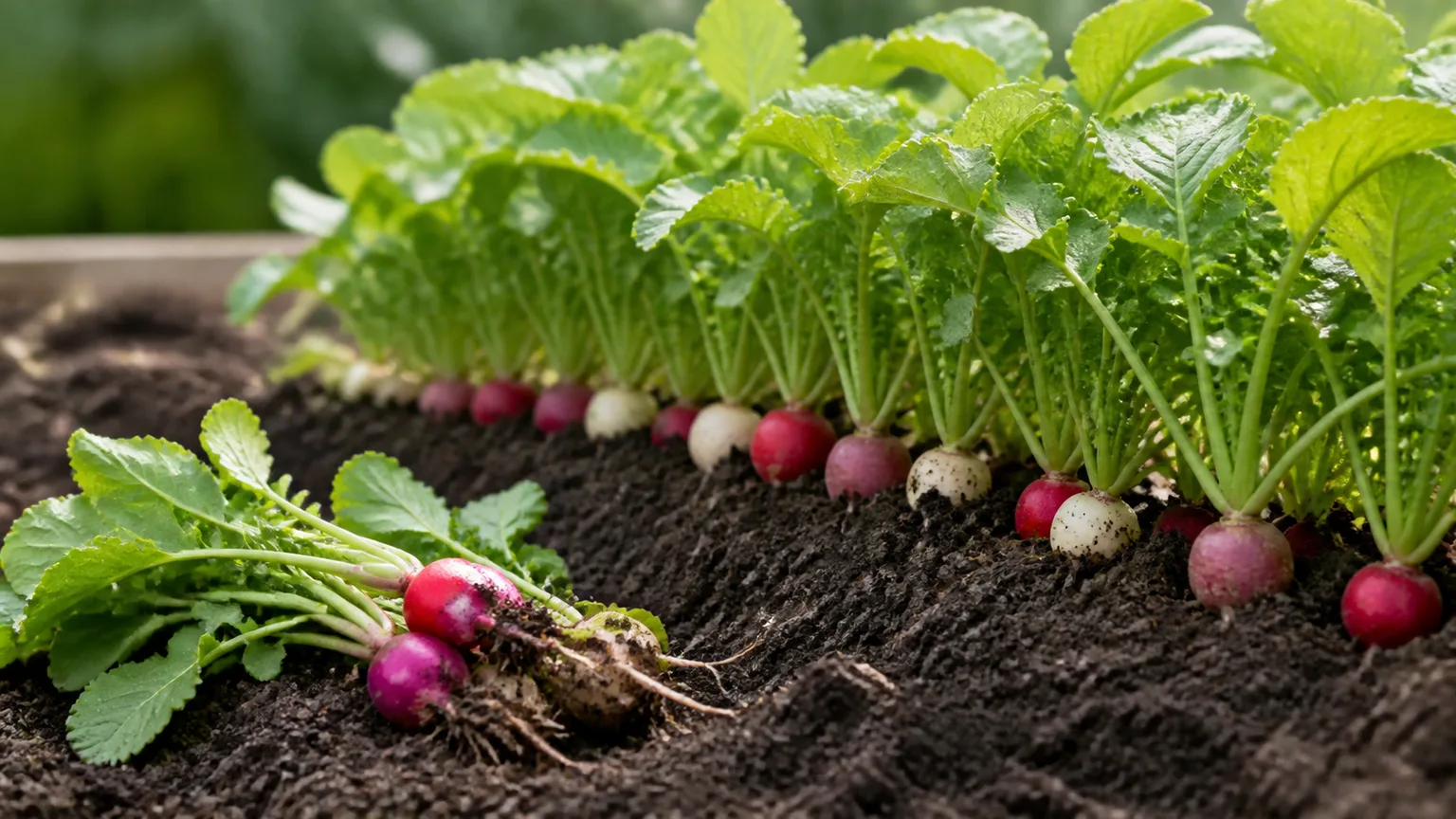
Radishes make a useful early crop because they mature quickly and can be harvested before okra becomes tall and wide. Sow a small patch where young okra will later grow, but finish pulling the radishes before okra roots and leaves occupy the space. This is a simple form of relay planting: one crop uses the bed first, then the longer-season crop takes over.
Do not count on radishes to mechanically loosen compacted soil deep enough for okra. Their value here is their short season and small footprint, not a guaranteed soil-improvement effect. If a bed is hard, waterlogged, or compacted, correct that condition before planting; okra needs drainage, and adding a companion crop will not fix a poor root zone.
What Should You Avoid Planting Near Okra?
There is no dependable universal blacklist of plants that are poisonous or chemically hostile to okra. Avoid neighbors when their size, timing, or growing conditions create a real conflict in your bed. It is more useful to name the problem—shade, tangled vines, repeated host crops, or inaccessible harvests—than to label an entire crop as a bad companion everywhere.
Avoid Crops That Crowd or Shade It
The obvious troublemakers in a small bed are large sprawlers, including winter squash and sweet potatoes, when their vines are allowed to cover the okra’s root zone and canopy. The issue is primarily space and management: creeping foliage can shade lower growth, obscure pods, compete for water, and block the route you need to pick okra every few days. In a larger garden, you can still grow them nearby if the vines have a separate direction to run.
Also watch the bed’s sun angle. A tall row on the south side of okra in the Northern Hemisphere can cast shade across it; the same tall crop placed farther north may be less disruptive. Measure the mature spread on seed packets, reserve an access lane, and keep okra leaves from being boxed in by plants with different watering needs. A plant is a poor neighbor only when the arrangement makes the bed harder to grow or use.
Treat Nematodes as a Site Problem, Not a Pairing Curse
Root-knot nematodes are a genuine concern for okra. UGA Extension lists root-knot nematode among its more serious disease pests and recommends crop rotation and sound soil management as part of control. If you have a confirmed history of nematode damage, plan the whole crop sequence around the susceptible crops in your garden; shifting one plant a few inches away from another does not sanitize infested soil.
That is different from saying a specific vegetable is always a bad neighbor because nematodes might occur. In a clean, healthy bed, make the decision based on space and crop timing. In an infested bed, identify the problem and follow local extension advice for rotation and management rather than expecting basil, radishes, or a companion chart to protect okra.
Three Layouts That Put Companions to Work
Choose a layout according to available area, then leave room for the okra at its mature size. The goal is not maximum plant count. It is a bed that receives sun, drains well, stays accessible, and lets you harvest before pods become tough.
A Compact Raised Bed
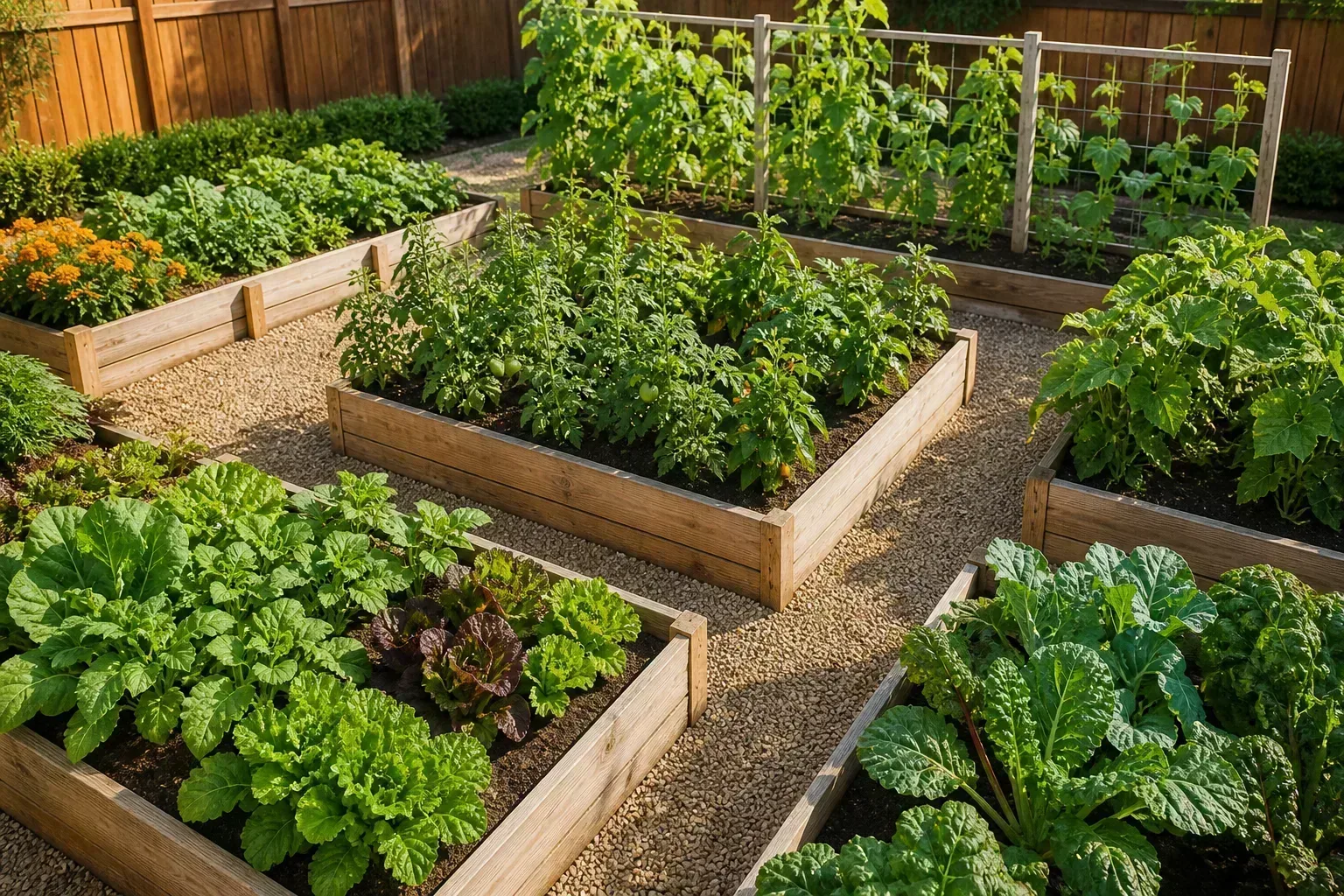
In a compact raised bed, use one or two okra plants rather than filling the entire bed with a row. Sow radishes first or plant a few lettuce starts at the front edge, then harvest them as the okra grows. Add one basil plant or a single pepper at a corner where it will not shade the okra or block the path.
Skip cucumber vines and winter squash in a small bed unless you have a trellis or a clear route beyond the bed. Keep the layout simple enough that you can reach the base of each plant to water and inspect it. A small bed with fewer, well-spaced plants is more productive than a crowded one where leaves overlap and pods hide.
A Larger In-Ground Garden
With more room, put okra in a sunny row and place bush beans, peppers, or eggplant in an adjacent row with separate access. Run cucumber vines along an outside edge or use a trellis set to avoid casting shade. You can also reserve the first part of the season for lettuce or radishes in the okra row and clear them as the okra fills out.
Keep a simple sketch of what went where. It helps with harvesting, reveals which combinations caused shade or competition, and makes next year’s rotation easier. Epic Gardening’s discussion of companion planting recommends starting with simple combinations and keeping notes; that is especially sensible for okra because mature size and local weather determine whether an arrangement feels generous or crowded.
Keep Water and Fertility in Balance
Shared bed does not mean identical needs. Okra tolerates short dry spells once established, but it benefits from moisture during flowering and pod development. Cucumbers can need more regular water, while lettuce may be leaving the bed by the time okra is at full height. Use drip or a soaker hose where possible, and direct water to the soil rather than wetting a dense canopy.
Before planting, correct drainage and use a soil test to guide lime and fertilizer decisions. Do not add extra nitrogen just because okra is tall or because beans are nearby; excessive nitrogen may produce lots of leaves with fewer pods. UGA Extension recommends harvesting pods frequently once they reach a tender size—around two to three inches for many varieties—and not allowing mature pods to remain on the plant, which can slow further production.
Companion Planting Myths to Ignore
Aromatic herbs do not guarantee pest control. Basil or oregano may contribute scent and flowers to a diverse bed, but scent alone does not promise that pests will leave okra. Companion planting can fit into broader garden diversity, yet it is not a replacement for inspecting leaves, identifying insects, removing diseased plants, or using a crop-appropriate response when damage becomes serious.
Legumes do not automatically replace fertilizer. Beans can fix nitrogen, but the timing and amount available to nearby okra depend on the system; simply placing a bean plant next to okra does not provide a measured dose. Follow a soil test and observe growth rather than applying a blanket rule.
A nearby plant does not release potassium on demand. Eggplant leaves and roots are not a dependable potassium amendment for okra. Keep the soil fertility plan based on actual soil conditions, and do not make fertilizer choices from companion-plant folklore. The strongest companion strategy is straightforward: protect okra’s light and root space, use early crops before the canopy closes, and treat any claimed pest or nutrient benefit as a possibility to test rather than a guarantee.
Conclusion
Basil, bush beans, peppers, eggplant, cucumbers, lettuce, and radishes can all fit into an okra garden when the layout matches their growth habits. Basil, beans, peppers, and eggplant suit a warm-season bed; cucumbers need a route for their vines; lettuce and radishes work best as early crops that are harvested before okra fills the space.
For a small bed, start with one or two okra plants, then add just one compact neighbor or a quick crop. In a larger plot, separate rows and direct sprawling crops away from the okra. Skip any arrangement that blocks full sun, airflow, irrigation, or regular harvest. Companion planting is most useful when it helps you use the garden thoughtfully—not when it promises that one plant will solve every pest, soil, or yield problem.