What to Plant With Zucchini—and What to Skip
Find practical companions for zucchini and summer squash, from beans and pollinator flowers to space-saving greens, plus what to keep apart and where they fit.
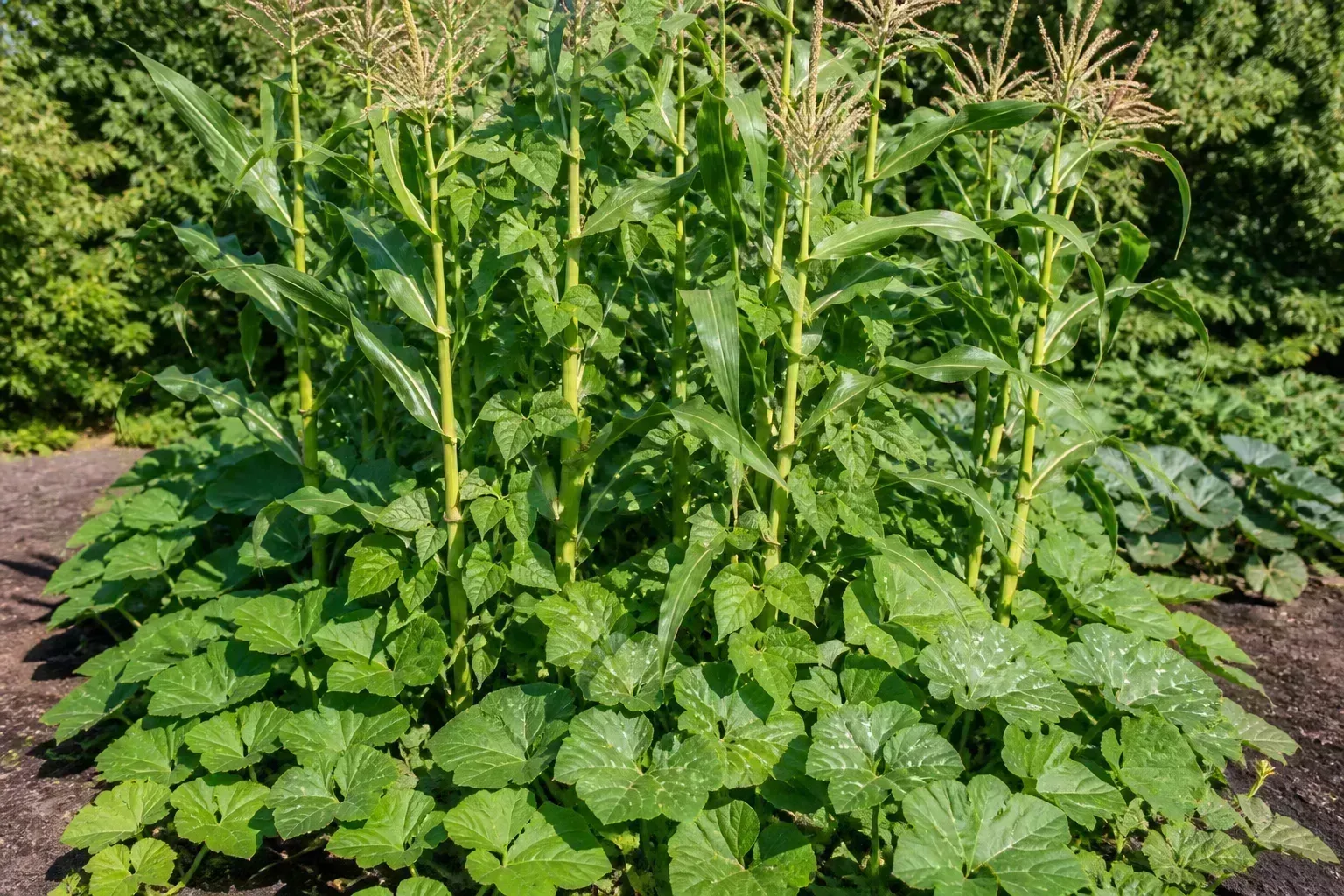
For most home gardens, the most useful zucchini companions are flowering plants that bring pollinators and beneficial insects, beans grown with enough room, and quick crops such as radishes or lettuce that finish before squash leaves spread. Corn and beans can join squash in a traditional Three Sisters planting, but the dense arrangement needs space, fertility, and a harvest plan; it is not automatically the best layout for a small patch of summer zucchini.
Choose neighbors by what you need them to do. A flower can feed insects, a quick crop can use open soil early, and a trellised bean can add a second harvest above ground. None of these plants will fix poor spacing, drought, weak pollination, or a squash vine borer infestation.
Quick answer: choose companions by the job they do
| If you want to… | Try… | Keep in mind… |
|---|---|---|
| Encourage pollinators and beneficial insects | Borage, calendula, cosmos, sweet alyssum, flowering dill or parsley | Choose plants that bloom while squash is flowering; nearby color alone does not guarantee more fruit |
| Use space before squash spreads | Radishes, leaf lettuce, spinach, or short-season greens | Harvest them before the squash canopy closes |
| Add a legume crop | Bush beans or peas; pole beans only with a sturdy, separately planned support | Legumes do not feed neighboring squash instantly |
| Try a traditional mixed planting | Corn, pole beans, and squash in a broad, sunny plot | Classic Three Sisters planting needs a block of corn, strong fertility, and room to direct vines |
| Experiment with pest diversion | A monitored Blue Hubbard trap crop in a larger garden | A trap crop can attract pests; it needs scouting and a plan for the insects it gathers |
For a typical raised bed, start with one zucchini plant, two or three flowers at the edge, and a short row of radishes or lettuce. Add bush beans in a separate strip if you have room. This conservative combination leaves airflow and harvest access around a plant that can become wider than its seed packet photo suggests.
What a companion plant can realistically do
Companion planting means placing different crops near one another to use space, support beneficial insects, provide physical structure, or influence where pests settle. Some mechanisms are easy to observe: a pole bean can climb a support; a low crop can cover open soil; flowers can supply nectar and pollen. Other claims—especially that a specific herb smell repels a specific squash pest—often have less reliable evidence.
University of Illinois Extension emphasizes that companion-planting research is limited and that results depend on the crop combination, planting density, and site. Its overview of companion planting distinguishes plausible ecological benefits from claims that have not been consistently demonstrated. The Royal Horticultural Society likewise describes companion planting as potentially useful, while noting that benefits do not apply to every crop or setting in the same way.
For zucchini, judge any proposed companion against four practical questions: Does it flower when squash flowers need pollination? Will it fit after the squash reaches full size? Does it share the bed’s sun and water needs? Does it bring a pest or disease risk you would rather avoid? If you cannot name the job the companion performs, it may be an ornamental extra rather than a crop helper—and that is fine if you have the room.
The strongest general strategy is not a magic plant pairing. It is a small, diverse bed where squash has enough light and water, flowers are available to insects, and you can still reach stems and inspect leaf undersides. A crowded bed can undermine the very airflow and access that make pest scouting possible.
The Three Sisters: a useful pattern with limits
The Three Sisters planting brings together corn, beans, and squash. In a well-planned version, corn gives climbing beans a living support, the squash spreads across the ground, and bean roots host bacteria that fix atmospheric nitrogen. The broad squash leaves can shade soil and suppress some weeds while the crops occupy different vertical layers.
This planting has deep roots in Indigenous agriculture, including Haudenosaunee traditions; there is no single universal Three Sisters layout used identically by every Native community. Cornell Cooperative Extension’s Three Sisters garden guide describes one Iroquois-inspired mound arrangement and notes that much of the nitrogen fixed by bean plants is not available to corn and squash in the same season. The benefits are therefore not as simple as “beans fertilize everything beside them.”
When the Three Sisters layout makes sense
Try this system when you want to grow all three crops, have a wide, sunny patch, and are comfortable managing a dense canopy. It works best when you can devote a block rather than a narrow, shaded strip to corn, because pollination of corn depends on pollen moving from tassels to silks. A few isolated stalks tucked beside a fence may produce poorly filled ears even if the beans climb well.
The system also suits crops that can mature together and be harvested at different stages. Traditional varieties and local food traditions vary, so choose seeds and spacing with guidance suited to your region rather than assuming one modern sweet-corn, snap-bean, and zucchini combination reproduces every historic version. For fresh zucchini and sweet corn that you plan to harvest frequently, the dense vines can make access awkward.
How to adapt the pattern to summer squash
If you want to include zucchini, let corn establish first, then add pole beans after stalks are sturdy enough to hold them. Plant squash toward the outside of the planting, where its leaves can spread without covering young corn seedlings or making the center impossible to reach. Use only one or two squash plants in a small patch; vigorous zucchini can occupy the ground faster than compact pumpkins.
A simpler variation is to grow corn and pole beans together on a trellis or in a corn block, then plant zucchini along the sunny edge. This keeps the crops close enough to feel like a mixed garden while making zucchini easier to harvest. Remember that the bean canopy can shade corn, and excess vines can pull stalks down in wind, so thin or redirect growth if the planting becomes top-heavy.
If your goal is specifically high sweet-corn and zucchini yields, separate rows are often easier to water, feed, and harvest. The Three Sisters is a compelling polyculture and cultural planting tradition, not proof that every combination improves yields in every soil or climate. Extension guidance from Illinois notes that the productivity and soil effects of this system are not guaranteed by published evidence in every modern garden context.
Beans and peas: useful partners, not instant fertilizer
Bush beans and peas can share a bed with zucchini when there is room for each plant’s canopy. Their roots form associations with nitrogen-fixing bacteria, but that does not mean a bean plant leaks a season’s worth of usable nitrogen directly into a neighboring zucchini’s root zone. Much of the fixed nitrogen stays in the legume until roots and plant residue decompose.
For this reason, plant beans because you want beans, a different growth form, or a legume in the rotation—not as a replacement for compost or a soil test. If the zucchini is pale, stunted, or producing poorly, first check moisture, root health, temperature, and fertility. Do not crowd a second heavy feeder against a squash crown and expect the pairing to solve the problem.
Bush beans are usually easier than pole beans in a small squash bed. They mature without a tall climbing frame and can be planted in a strip along the bed edge, provided mature zucchini leaves will not shade them completely. Pole beans need a support that stands independently or is designed for the mature weight; a few corn stalks may not be sturdy enough for a vigorous bean vine.
Peas prefer cooler weather and often finish before zucchini reaches full size. In a short spring, sow peas early along the north side of the bed or a trellis, then remove the vines once they yellow or stop producing. Their timing makes them a better seasonal neighbor than a crop expected to thrive under a full summer squash canopy.
Flowers that support pollinators and beneficial insects
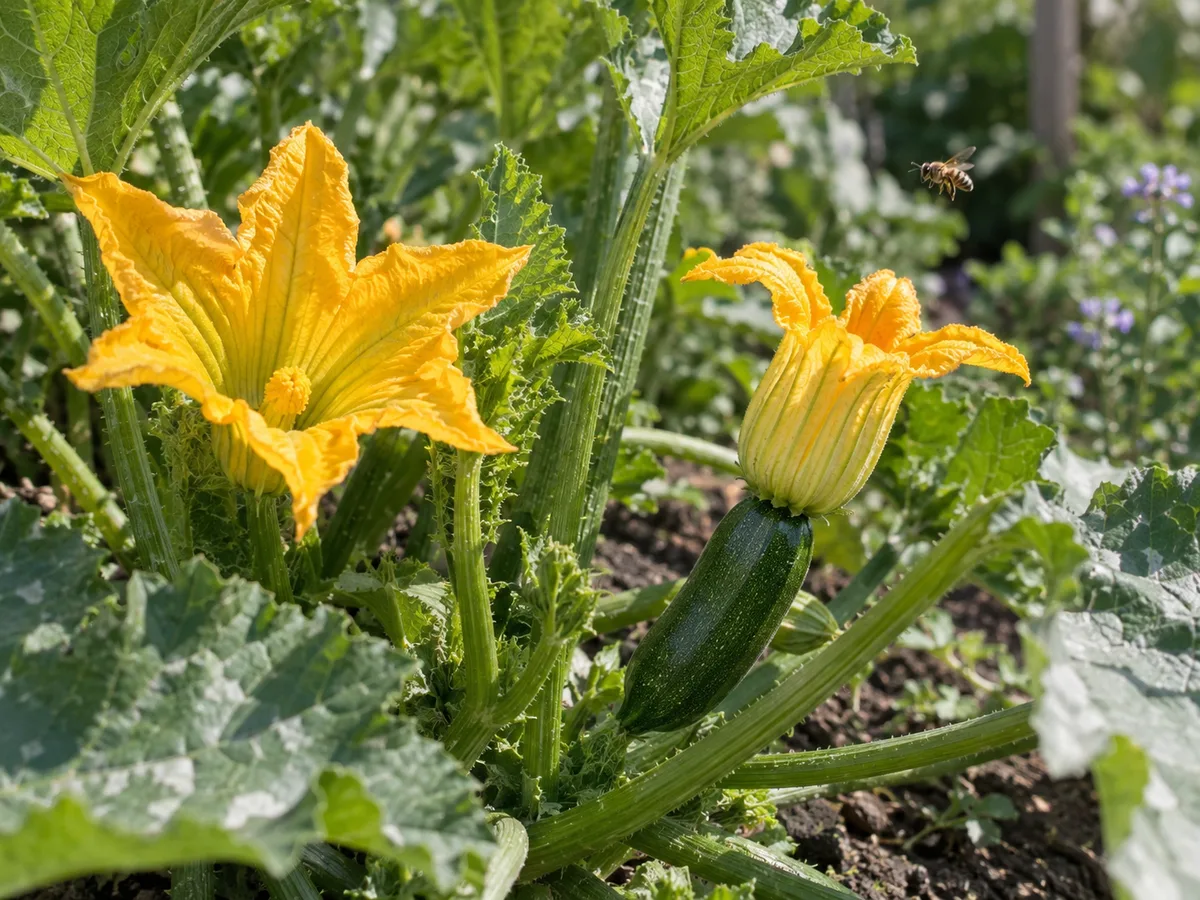
Zucchini and summer squash have separate male and female flowers. Bees transfer pollen between them, and squash bees and bumblebees are important visitors. Flowering companions can help make a garden more attractive and provide food for pollinators and predatory insects, but they do not directly “pollinate” a squash flower or guarantee fruit set. The practical target is a steady supply of accessible blooms across the growing season.
University of Minnesota Extension explains that insects must move pollen from a male squash flower to a female one for fruit to develop. The summer squash growing guide also notes that squash plants need room and that poor fruit set can result from inadequate pollination. Add flowers where they will not shade the squash, and keep flowers pesticide-free while bees are visiting.
Nasturtiums and marigolds: flowers, not force fields
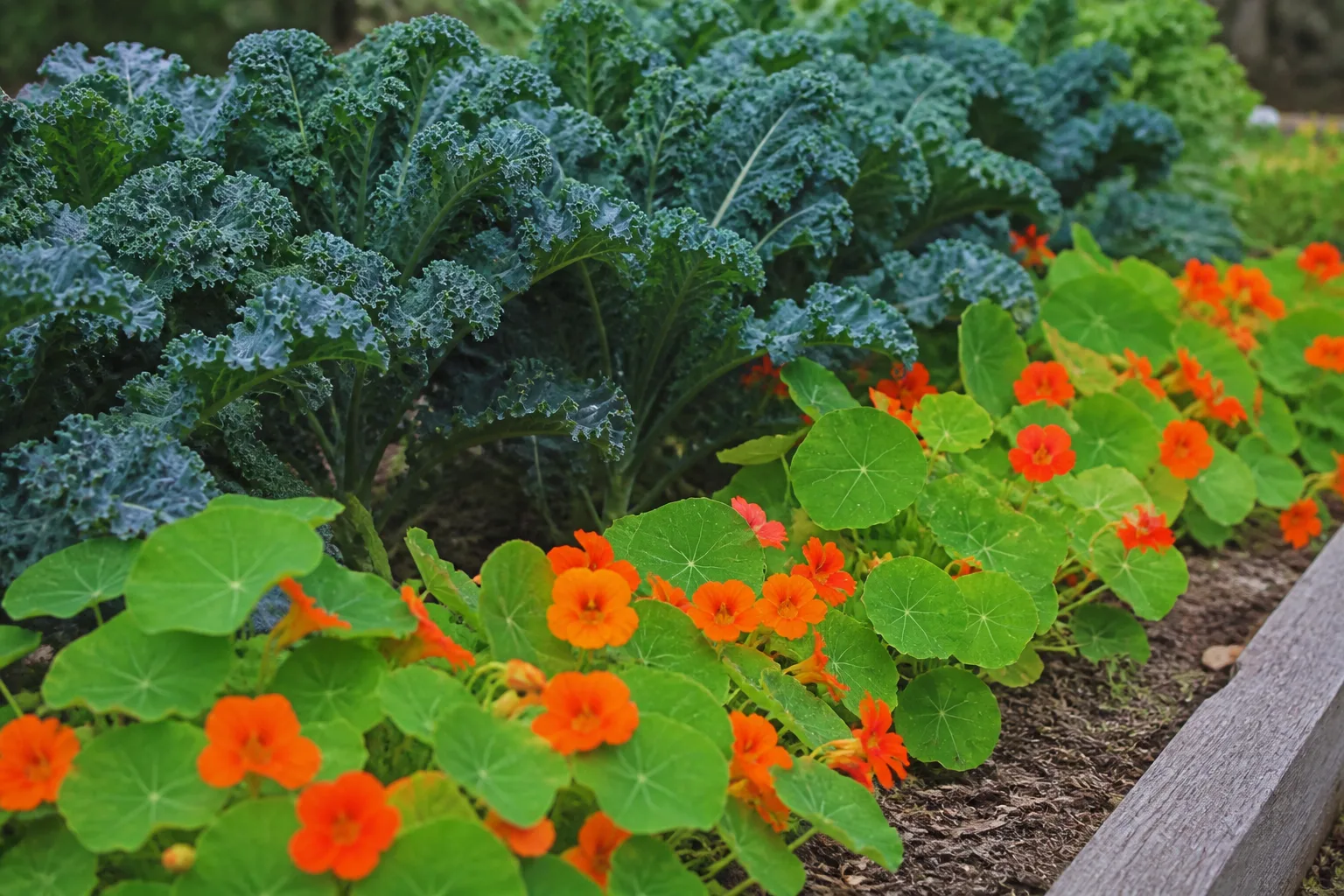
Nasturtiums are colorful, edible, and useful as a low border if they do not crawl over the squash crown. Their blooms attract pollinators, while their foliage can sometimes draw aphids, which makes them a possible sacrificial plant to monitor. If aphids collect there, inspect the zucchini and decide whether to prune or remove the nasturtium; a plant overloaded with pests is not quietly protecting the rest of the bed.
Marigolds also bring flowers and diversity, but the familiar claim that they reliably repel squash bugs or squash vine borers is too broad. Some marigold species and planting methods affect particular pests under particular conditions, yet a row of marigolds is not a dependable control for cucurbit pests. Keep them if you enjoy them or want a flowering border; use row covers, scouting, sanitation, and rotation for pests that threaten squash.
Borage, alyssum, calendula, and dill
Borage produces blue, star-shaped flowers that attract visiting insects, but the plant can become broad and self-seed. Give it an outside corner rather than the narrow gap between a squash plant and the bed edge. Its coarse growth can be a poor fit where squash leaves already occupy the path.
Sweet alyssum is a more compact option, especially at a bed edge or path-side border. Small, nectar-rich flowers can support hoverflies and other beneficial insects; hoverfly larvae feed on aphids. Calendula and cosmos add longer-lasting seasonal blooms. Dill is most useful when allowed to flower, when its small clustered blossoms can feed beneficial insects; young dill planted for leaves contributes little to that function until it blooms.
The University of Delaware Cooperative Extension guide to adding diversity explains why flower strips can support natural enemies and pollinators, while the RHS companion-planting overview cautions that benefits vary by pairing. Think in terms of habitat and bloom timing, not an invisible pest-repelling shield around the zucchini.
Herbs and aromatics: choose them for more than scent
Dill, parsley, cilantro, and other flowering herbs can fit at the garden’s edge and feed beneficial insects once they bloom. Keep leafy herbs close enough to harvest but far enough from the squash base that you can water and inspect the plant. If you want fresh leaves all summer, stagger small sowings rather than letting every plant bolt at once.
Peppermint and lemon balm are poor choices to plant loose beside zucchini in a small bed because both can spread aggressively. Grow mint in a pot set near the bed if you want its flowers or leaves; a container also keeps runners from threading through squash roots. Oregano and thyme are less rampant, but many Mediterranean herbs prefer drier, leaner conditions than zucchini, so they may be happier in a separate border than in the same frequently watered pocket.
Do not choose an herb solely because a chart says its smell repels pests. The evidence for aromatic plants reliably deterring squash bugs, cucumber beetles, or vine borers in an ordinary home garden is inconsistent. Flowering herbs can be worthwhile for insect food, cooking, or diversity, but they are not substitutes for identifying pests and responding early.
Fast crops beneath young squash leaves
Before the squash canopy expands, open soil is an opportunity for quick crops. Radishes, baby lettuce, spinach, and other short-season greens can be sown in a strip near the outside edge of the plant. Harvest them young, while they still get enough light, and remove the remains before the squash leaves cover them.
This is succession planting, not permanent understory. A mature zucchini leaf can shade much of the soil around it, which helps conserve moisture and suppress weeds, but the same shade slows crops that need sun. Trying to grow a full row of lettuce under a dense squash canopy often produces thin, weak leaves and makes the area hard to inspect.
Radishes are sometimes advertised as a way to deter squash vine borers. Treat that claim cautiously: a radish row is not a proven barrier against moths laying eggs on squash stems. Their clearest benefit is that they mature quickly and can use early-season space before the zucchini sprawls. Keep the crown clear so you can spot stem damage and remove diseased or pest-infested leaves.
Trap crops for squash pests require a plan
A trap crop is a plant deliberately placed where a pest is more likely to find it than the main crop. Blue Hubbard squash has been studied and recommended as a trap crop for cucumber beetles and squash bugs in some cucurbit systems. The University of Missouri Extension explains the tactic in its vegetable insect guide, but a trap crop does not repel pests; it attracts them to a plant that you then need to monitor and manage.
For one zucchini in a small patio bed, a Blue Hubbard plant can be a bad bargain: it takes up substantial space and may attract the exact insects you hoped to avoid. In a larger vegetable garden, place it at the perimeter or in a managed trap-crop row, check it frequently, and be ready to remove or control pests before they move onto zucchini. If you do not have the time or space to monitor a trap crop, skip it.
Do not rely on companions as the only response to squash bugs or vine borers. Check leaf undersides and stem bases routinely, remove egg masses, rotate cucurbits to a different bed when possible, and consider row covers early in the season. Because row covers block pollinators too, remove them once female and male flowers need insect visits, unless you are hand-pollinating.
What to keep apart from zucchini and squash
The most important plants to keep away are other crops that create physical crowding or make pest management harder. Cucumbers, melons, pumpkins, and winter squash all have sprawling growth habits and can cover one another, complicate harvest, and share several pests and diseases. You can grow them in the same garden, but give vines separate space or a trellis rather than letting them tangle through one small bed.
Potatoes are not automatically toxic or harmful neighbors to zucchini. Avoid planting them together only when the bed is too crowded, the soil and harvest schedules conflict, or you want to rotate crops. Likewise, tomatoes are not a universal “bad companion”; a tomato and zucchini can share a large garden if each gets sun, water, airflow, and root room. The practical rule is to prevent competition, not to follow a blacklist without considering the actual bed.
Zucchini and cucumbers will not cross-pollinate into strange fruit during the current season; they belong to different genera. Even zucchini and some other summer or winter squashes can cross with compatible varieties, but the effect is in seeds saved from that fruit, not the taste or shape of the fruit you eat this year. If you plan to save seed, check species compatibility and isolate or hand-pollinate; if you are growing for dinner, cross-pollination is usually not a reason to separate them.
Avoid placing another huge, moisture-loving plant directly over the squash crown or against its main stem. Crowding restricts airflow, traps damp foliage, and makes it harder to find squash bugs or vine-borer entry holes. A little separation does more for plant health than a rigid list of forbidden vegetables.
Layout and spacing for beds, borders, and containers
Start with the squash variety’s mature size, not the tiny seedling. Bush zucchini still needs space for broad leaves and harvest access; vining varieties can travel several feet. University of Minnesota Extension gives home-garden spacing guidance that varies by type, with larger spacing for vining squash and closer spacing for compact bush plants. Check the seed packet and leave a clear route to reach the center of each plant.
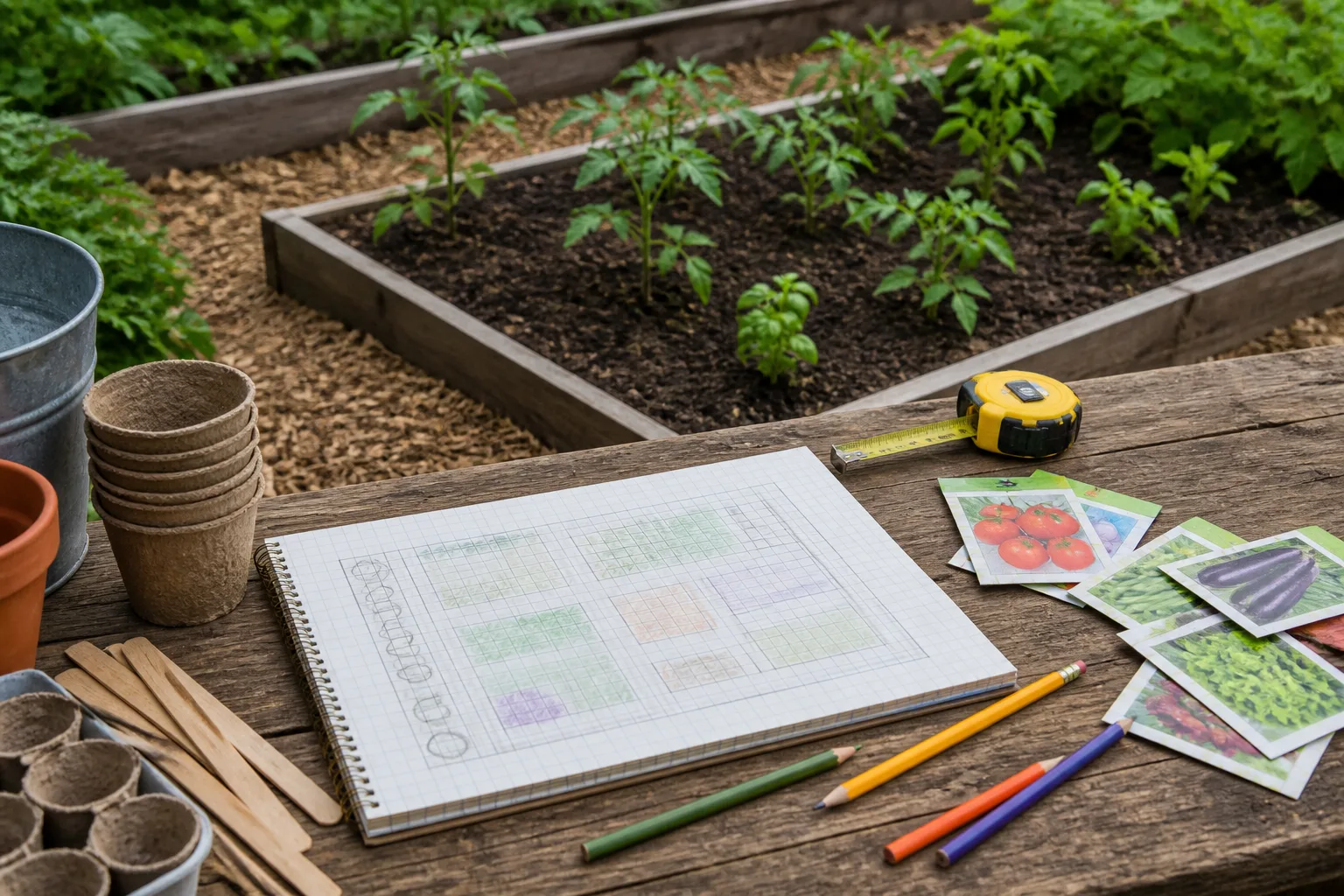
In a raised bed, put one zucchini near an outside corner and direct leaves toward an open path rather than into the center. Place flowers on the opposite edge or at the ends, where they do not block access. Sow radishes or lettuce in early gaps, then harvest them as leaves expand. If you add beans, reserve a separate strip or use a trellis on the north side so taller plants do not shade the squash for most of the day.
In an in-ground bed, you have more flexibility to separate squash from corn and beans by a few feet while still planting them in a mixed garden. Tall crops generally belong on the north side in the Northern Hemisphere so their shade falls away from shorter crops; reverse the orientation if your local sun path or slope changes the shade pattern. Keep squash vines pointed into space you can let them occupy, such as a path edge or a mulched open strip.
For a container, prioritize one squash plant and skip the full Three Sisters arrangement. A zucchini can already fill a large pot; adding companions often reduces root volume and makes watering harder to manage. Put a separate pot of flowers nearby instead. Container-grown squash may attract fewer pollinators in an isolated location, so watch fruit development and hand-pollinate when necessary.
Water, fertility, rotation, and pollination still come first
Zucchini needs warm weather, consistent moisture, and fertile but well-drained soil. A layer of organic mulch can reduce evaporation and soil splash, but keep it a few inches from the crown so the stem does not stay wet. Water the soil deeply rather than wetting leaves late in the day, and adjust frequency to rainfall, soil type, and container size.
Use compost or fertilizer based on the soil and the plant’s growth, not the presence of companion beans. Too much nitrogen can encourage a mass of leaves at the expense of flowers and fruit. If leaves are lush but fruit set is weak, check for pollination, heat stress, irregular watering, or pest injury before adding more fertilizer.
Rotate the cucurbit family—zucchini, summer and winter squash, pumpkins, cucumbers, and melons—away from the same bed in subsequent years when you can. Rotation will not erase every pest, but it reduces repeated exposure to pests and diseases that survive near host plants. University of Minnesota Extension’s advice on squash vine borer management includes moving cucurbits and timing row covers around the need for pollination.
Flowers are most useful when they overlap with the squash bloom period. If your flowers bloom only in spring or late summer, they may not feed insects during the weeks zucchini needs them. A small succession of annual flowers or a nearby mixed border can provide more continuous forage; choose plants that suit your climate, sun, and water conditions rather than packing every candidate into the squash bed.
Troubleshooting a crowded or flower-heavy squash bed
Many male flowers but no zucchini yet? This is common early in the season: male flowers often open before female flowers. Wait for female blooms, which have a small swollen ovary behind the petals, and make sure bees can reach them. Squash flowers open for a limited part of the day, so morning bee activity matters.
Female flowers form but the tiny fruit shrivels? Poor pollination is one possible cause, especially in cool, rainy, or cloudy weather. Check whether both flower types are open at the same time and whether bees are visiting. You can transfer pollen from a fresh male flower to the center of a female flower with a small brush, or carefully touch the male anther to the female stigma in the morning.
The bed looks lush but produces little? Look for deep shade, a nitrogen-heavy feed, crowded roots, or missed fruit that has grown oversized. Pick summer squash regularly while fruits are young so the plant continues to set new fruit. Remove only damaged leaves, and avoid pruning away so much foliage that fruit loses protection from sun.
A whole vine wilts suddenly? A companion plant will not solve a squash vine borer inside the stem. Examine the crown and lower vine for a hole, frass, or sawdust-like material, and consult local extension advice promptly. A squash bug cluster, root damage, heat, and water stress can also cause wilt, so identify the cause before applying a treatment.
Pests gather on the flowers or trap crop? Scout the main plant too. Beneficial insects and pest insects can both visit flowers, and a trap crop can become a reservoir if left unmanaged. If the companion is creating more work than it saves, pull it or move it to a better location next season.
Conclusion: start with one or two companions
The best companion plants for zucchini and squash are the ones that fit the garden’s real constraint: flowering plants when pollinator habitat is scarce, quick greens when open soil is going unused, or beans and corn when you have room for a planned mixed planting. The Three Sisters system is worth learning from, but it is not a guaranteed yield booster or a substitute for choosing varieties and spacing suited to your garden.
Begin with one zucchini, a few flowers at the edge, and a short early row of radishes or lettuce. Add another companion only if it has a clear job and does not crowd the crown, shade the plant, or make pest checks difficult. Consistent moisture, good light, insect access to flowers, and regular harvesting will do more for a dependable squash crop than any single companion pairing.



