How to Grow and Care for Epiphyllum Orchid Cacti
Give your orchid cactus the right light, soil, water, and winter rest—and learn how to root cuttings and troubleshoot a plant that will not flower.
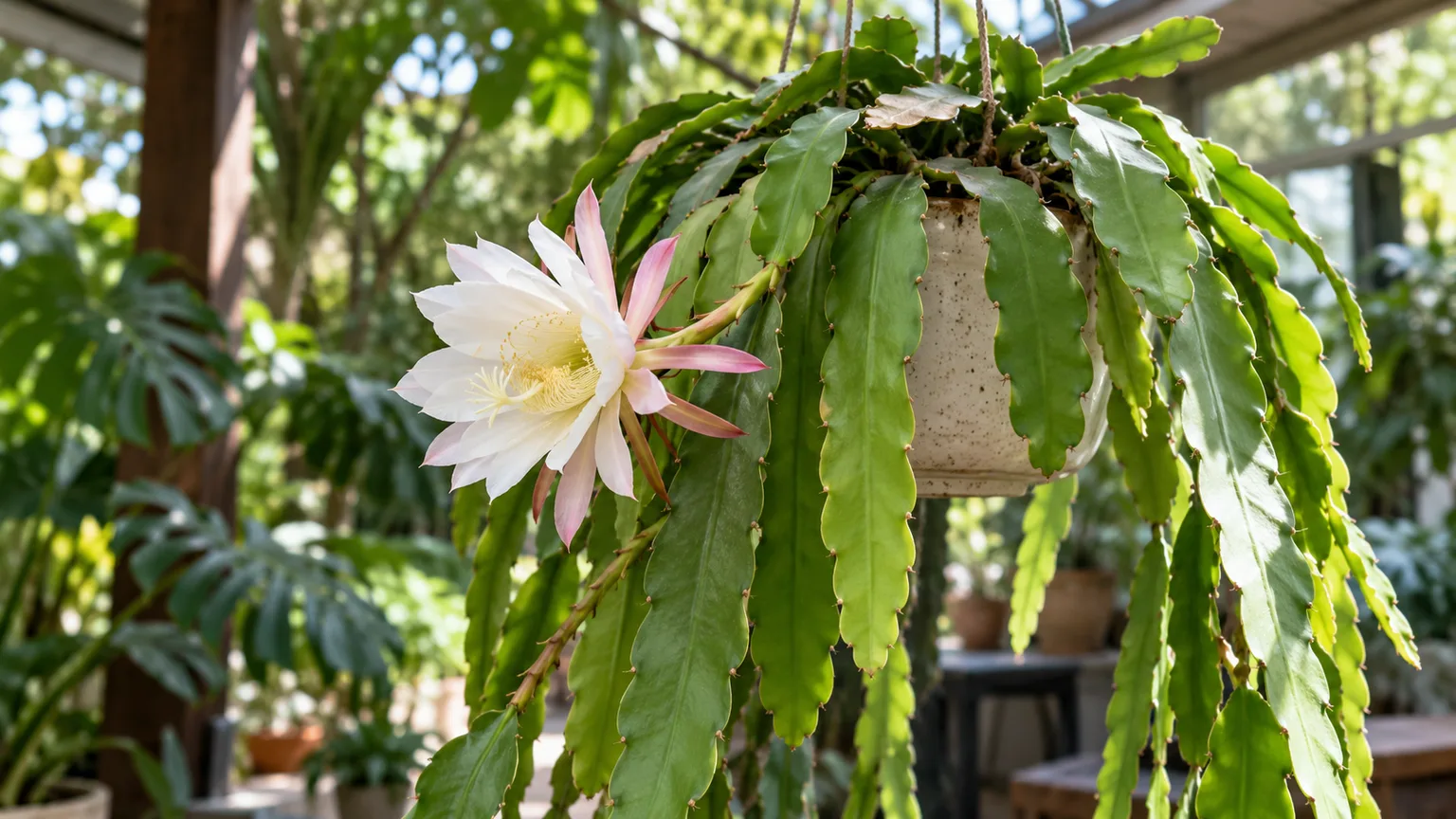
An Epiphyllum is a cactus with a rainforest upbringing: it wants bright filtered light, an open potting mix, and regular water while it is growing. Treat it like a sun-baked desert cactus and you can scorch the stems or leave it thirsty; keep its roots wet in dense soil and rot can follow. The useful middle ground is a mix that holds a little moisture but lets air reach the roots, paired with watering based on what the pot is doing.
“Orchid cactus” can refer to true Epiphyllum species, hybrids, and a wider group of related forest cacti sold under familiar older names. That naming blur explains why two plants on the same shelf may differ in flower color, bloom time, and preferred winter conditions. Start with the plant’s visible growth and its potting environment, then adjust care as it responds.
Identify the plant before following a care label
Epiphyllum belongs to the cactus family, Cactaceae. Plants in the genus are native from Mexico through tropical America; Kew’s Plants of the World Online treats Epiphyllum as an accepted genus, and ITIS also lists it among climbing cacti. In cultivation, the name “orchid cactus” is used more loosely for showy forest-cactus hybrids and plants once classified in Epiphyllum but now placed elsewhere. Kew’s Plants of the World Online and ITIS are useful when you need to distinguish the botanical genus from a nursery label.
The usual form is a cluster of long, flattened, fleshy stems that arch or trail from a pot. They are stems, not true leaves, and their scalloped edges contain areoles—the small points from which new growth and flowers emerge. The plant’s epiphytic habit means it can grow attached to a tree or other support in nature, gathering moisture and organic debris rather than rooting into deep, compact soil. Kew’s record for Epiphyllum phyllanthus identifies it as a succulent epiphyte.
This naming distinction matters most when you are buying a plant or trying to predict flowering. A label such as “red orchid cactus” may name a horticultural hybrid or an older synonym rather than the currently accepted species name; even “Queen of the Night” can be applied to more than one cactus. If the label is vague, keep the care broadly appropriate for a forest cactus and avoid assuming a particular bloom color or schedule. Gardeners’ Path’s overview of orchid cacti describes how horticultural usage extends beyond the accepted genus.
The short version: build a forest-cactus setup
The most reliable starting arrangement is a pot with drainage, a loose mix containing both organic matter and coarse particles, and a position with strong indirect light. Water thoroughly when the upper part of the mix has dried, then let excess water escape; as light and temperature fall in winter, the pot will usually take longer to dry. A mature, healthy plant can benefit from a cooler, drier winter period, but a young cutting should not be forced into a rest before it has established.
| Need | A practical starting point | What to watch |
|---|---|---|
| Light | Bright filtered light; gentle morning sun is usually easier to manage than afternoon sun | Pale, bleached, or reddish patches can signal excess direct exposure; thin, stretched growth can signal too little light |
| Potting mix | Moisture-retentive base mixed with bark, pumice, or perlite; pot must drain | Mix that stays heavy and wet long after watering needs more air or a smaller pot |
| Water | Soak the root ball, drain, and wait for the top portion of mix to dry | Shriveling can mean either drought or damaged roots, so check the mix and roots before watering more |
| Season | Active growth in warm months; less water and no fertilizer during a cool, slower winter | A cold, wet root ball is a bigger risk than a short period of slightly dry mix |
Use the table as a starting point rather than a calendar. A small plastic pot in a warm bright room can dry much faster than a large hanging basket in a cool, dim room, even if the plants are the same size.
Give it bright light with a safe amount of sun
Place an indoor Epiphyllum near a bright window where daylight is filtered by a sheer curtain, a nearby tree, or distance from the glass. An east-facing window is often a forgiving option because it can provide gentler morning sun; a bright south- or west-facing exposure may work if the plant sits back from the glass or receives shade during the hottest hours. Look at the stems across the day: if direct rays leave hot patches or the surface begins to bleach, move it farther away or add a sheer curtain.
Outdoors, hang the pot beneath a tree canopy or in a bright covered patio where it receives open shade. A few hours of mild early sun can be useful, but exposure changes should be gradual: move a plant outside first to shade, then increase morning light over a week or two. Sudden movement from an indoor room to full sun can burn stems even when the weather feels mild.
Low light causes slower, thinner growth and can reduce flowering, while too much intense sun can make stems pale, red, or scorched. Do not respond to every red tint by moving the plant into deep shade; some cultivars color up in brighter conditions, and older stems naturally change. Assess the whole pattern, the time of day the plant gets sun, and whether the newest growth remains firm and proportionate.
Choose an airy mix that still holds some moisture
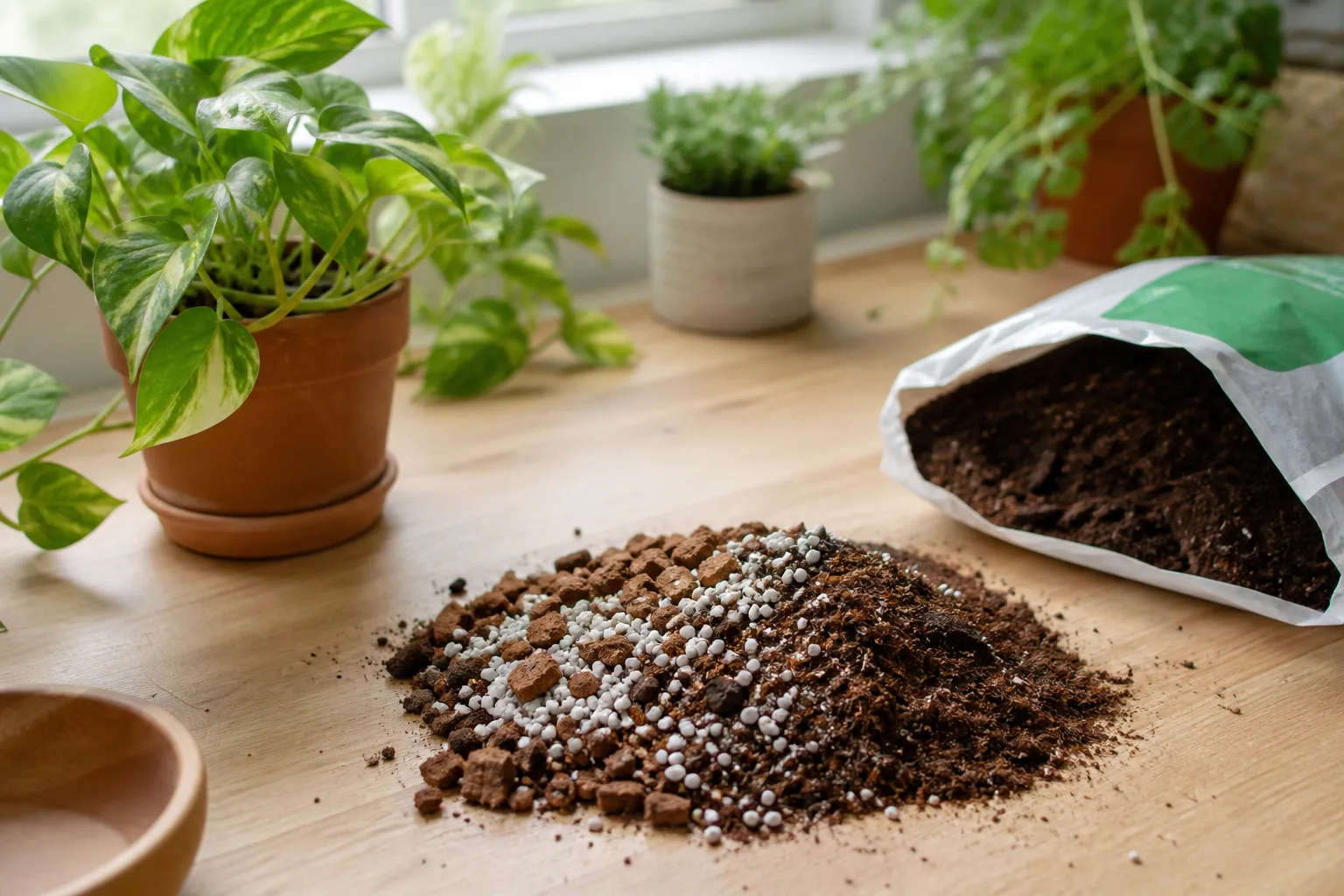
A suitable orchid-cactus mix must solve two problems at once: roots need air, but the plant should not dry like a desert cactus after every watering. A practical homemade starting blend is about two parts quality indoor potting mix to one part coarse orchid bark and one part pumice or perlite. If your home is cool or humid, increase the coarse portion; if the room is hot and dry and the mix is drying very quickly, keep a little more organic base.
Avoid dense garden soil and heavy mixes that compress into a wet block. A bag labeled “cactus and succulent mix” may drain well, but some are too mineral and dry too rapidly for a forest cactus; combine it with bark or an organic houseplant mix if water runs through immediately and the stems keep losing firmness. The goal is not one exact recipe but a medium that wets evenly, drains freely, and does not stay saturated. Gardeners’ Path discusses the need for aeration and drainage alongside moisture retention.
Choose a container with open drainage holes. A pot that is only modestly wider than the root ball is easier to manage than a large decorative planter full of unused wet mix; hanging baskets work well for trailing stems, but make sure the liner does not hold water against the roots. Empty the saucer or cachepot after watering so the bottom of the pot is not left standing in water.
Water by the potting mix, not by the calendar
During active growth, water when the upper portion of the mix has dried—often the top inch or upper third, depending on pot depth and particle size. Insert a finger or a wooden skewer into the mix rather than judging only by its surface. If the skewer comes out cool and damp with particles clinging to it, wait; if it is mostly dry and the pot feels lighter, water thoroughly until water drains from the bottom.
The amount of time between waterings can vary widely. A plant in a warm, bright room with a small porous pot may need water much sooner than a similar plant in a cool room, a large plastic pot, or a dense mix. Use the plant and container as your gauge: water when the mix has dried enough, not because a fixed number of days has passed. The care advice from Gardeners’ Path and Gardenia both emphasizes regular moisture with good drainage; the practical interval depends on the growing setup.
In cooler, dimmer months, growth slows and the pot stays wet longer. Stretch the interval between waterings and use a deeper check before adding more. Do not keep the mix bone-dry for months: a forest cactus still has succulent stems, but it is not adapted to the same prolonged drought as a desert barrel cactus.
Watering problems can look deceptively similar. A dry plant may have limp, wrinkled stems and a very light pot; a plant with root damage may also shrivel because damaged roots cannot take up water, even though the mix is wet. If stems are soft or the base is dark and the soil remains wet, stop watering and inspect the root ball instead of adding more water in response to the limp appearance.
Keep it warm and use winter as a gentle reset
Epiphyllums grow best in warm conditions and should be protected from frost. Bring outdoor plants inside before cold nights arrive; for a plant you want to flower, it is safer to move it before temperatures approach 50°F (10°C) than to test its cold tolerance. Keep it away from cold drafts and from hot, dry air blowing directly from a heater.
A mature plant that is not actively growing can be given a cooler winter rest, roughly in the low-to-mid 50s°F (about 12–15°C), with bright filtered light and less frequent watering. This cooler interval can support bud formation in some species and hybrids, but it is not a guaranteed flowering switch. If you cannot provide a consistently cool room, prioritize bright light, reduced watering as the mix dries slowly, and protection from temperature extremes rather than putting the plant through severe drought or cold.
Resume warmer growing conditions and more frequent watering when days lengthen and new growth appears. A cutting that has only recently rooted, a sick plant, or a specimen already losing roots should remain stable and warm rather than being pushed into a winter rest. Seasonal care is an adjustment to growth rate, not a punishment period.
Raise humidity without keeping stems wet
These forest cacti appreciate more humidity than many desert cacti, but they do not need a constantly damp surface. If indoor air is dry, group plants together or run a room humidifier nearby; keep enough spacing for air to move between stems. A humidity tray may modestly affect the air immediately around a plant, but it cannot compensate for a dry room or a waterlogged pot.
Misting is optional and usually short-lived as a humidity boost. Repeatedly wetting the stems in a cool room with little airflow can leave moisture sitting in folds and against the potting mix, so use a humidifier or room-level adjustment instead if the plant needs more humidity. If you do mist, do it early in the day and keep the plant where air can circulate.
Feed lightly while the plant is actively growing
Feed only while the plant is making new stems or otherwise growing. A balanced liquid houseplant fertilizer diluted according to its label—or at a lighter concentration if the plant is in fresh, already-fertilized mix—is a reasonable choice every few weeks during active growth. Gardenia suggests monthly feeding for Epiphyllum oxypetalum, while Gardeners’ Path describes a more frequent schedule; that difference is a reminder that fertilizer strength and growing conditions matter as much as the calendar.
Do not compensate for poor light or old potting mix with extra fertilizer. Excess salts can damage roots and create brown or weak growth, while a high-nitrogen feed can favor soft stems over balanced growth. Stop feeding when growth slows in winter, and avoid fertilizing a freshly repotted or newly rooted cutting until it resumes growth.
Support flowering with maturity, light, and a rest period
A plant can be healthy and still be too young or too recently propagated to bloom. Some nursery plants are already mature, while a small cutting may need several growing seasons to build enough stem structure for buds. There is no dependable year-by-year deadline because the species, hybrid, starting size, and indoor light all differ.
For a mature plant, begin with the basics: give it strong filtered light with some mild morning sun, avoid repeatedly moving it once buds appear, and keep the mix appropriately moist during active growth. A slightly snug pot can help keep the root zone manageable, but severe root binding is not a flowering requirement. A cool, relatively dry winter rest can help some plants initiate buds; keep the plant above cold-damage temperatures and do not dry it to the point that stems shrivel.
Flowering behavior depends on the plant. Epiphyllum oxypetalum, commonly called Queen of the Night, opens fragrant white flowers at night, while many cultivated orchid-cactus hybrids bloom in daylight and may have pink, red, orange, or yellow flowers. Some flowers last only one night; others persist longer. Gardenia’s genus guide and its E. oxypetalum profile distinguish the species’ nocturnal flowering from broader hybrid variation.
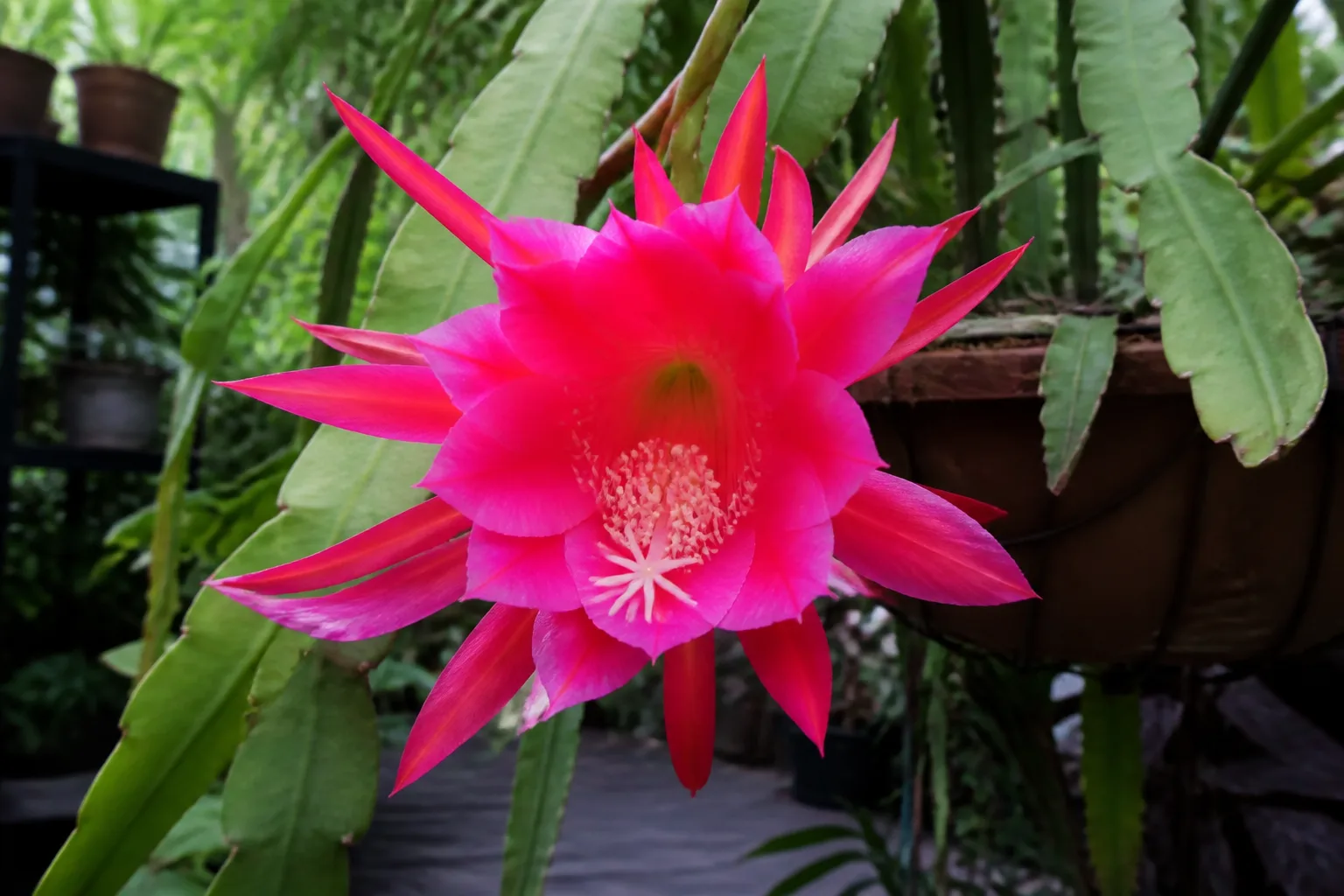
“Queen of the Night” is an imprecise common name, so identify the plant by its botanical label before planning a flower-watching night or changing care. The horticultural term “night-blooming cereus” is also used for cacti outside Epiphyllum, including desert-growing species with very different needs. If a plant has buds, leave it in place, avoid letting it dry suddenly, and keep the pot from being chilled; moving a budded plant is not usually necessary.
If a mature plant refuses to flower, change one factor at a time. First check whether the brightest part of the day reaches the stems, whether the plant is old enough, and whether it had a slower winter period. If those are already in place, inspect the mix, root health, and fertilizer history rather than increasing fertilizer or watering blindly.
Read stem changes before changing the whole routine
The stems tell you what to investigate, but no single symptom proves a cause. Check the mix, roots, recent light changes, and temperature before taking action; several stresses can happen together. This quick comparison helps narrow the first check.
| What you see | First checks | Safer first response |
|---|---|---|
| Pale, bleached, or crispy patches on the sun-facing side | Recent move into direct sun; hot glass; afternoon exposure | Add shade or move it back gradually; keep unaffected stems in bright filtered light |
| Thin, stretched new stems with little flowering | Low light; a plant still establishing; winter growth without enough light | Move gradually to a brighter filtered position and wait for new growth to show the change |
| Yellowing with a persistently wet, heavy pot | Dense mix; blocked drainage; pot too large; roots staying wet | Stop watering, empty standing water, and inspect roots if the mix does not begin to dry |
| Wrinkled or limp stems with a very dry, light pot | Mix that dried fully; hot room; small pot or root mass | Water thoroughly and drain; then adjust the interval to how quickly the pot dries |
| Wrinkled stems even though the mix is wet | Root rot or root loss; water cannot be absorbed normally | Unpot and inspect; trim only clearly soft, damaged roots with clean tools and repot in fresh airy mix |
| Red or bronze tint without softening | Stronger light, cool nights, or cultivar pigmentation | Track whether new damage or loss of firmness develops before moving the plant |
Older stems may become corky or less attractive near the base while new growth remains healthy. That gradual aging differs from a rapidly expanding soft, dark patch. Remove only dead or clearly rotting tissue; cutting healthy stems before checking the cause can reduce the plant’s ability to recover and flower.
Prune after flowering and keep the plant balanced
Pruning is mainly for size, shape, and removal of damaged stems. After flowering, use clean sharp pruners to remove a stem at its base or shorten one that has become too heavy for its support. Avoid cutting all the mature, healthy growth just to make the plant compact; those stems are the plant’s energy-producing structure and may carry future flower sites.
A long stem can be saved as a cutting if it is firm and free of pests. Let the cut end dry before planting it, and do not immediately increase watering on the parent plant after removing a large amount of growth. With less stem tissue to support, it may use water more slowly until new growth fills in.
Root a cutting without inviting rot
Stem cuttings are the simplest way to make another orchid cactus that resembles the parent. Choose a firm, mature stem several inches long, ideally after flowering or during warm active growth. Use a clean blade and make a clean cut; discard tissue that is soft, spotted through, or carrying pests.
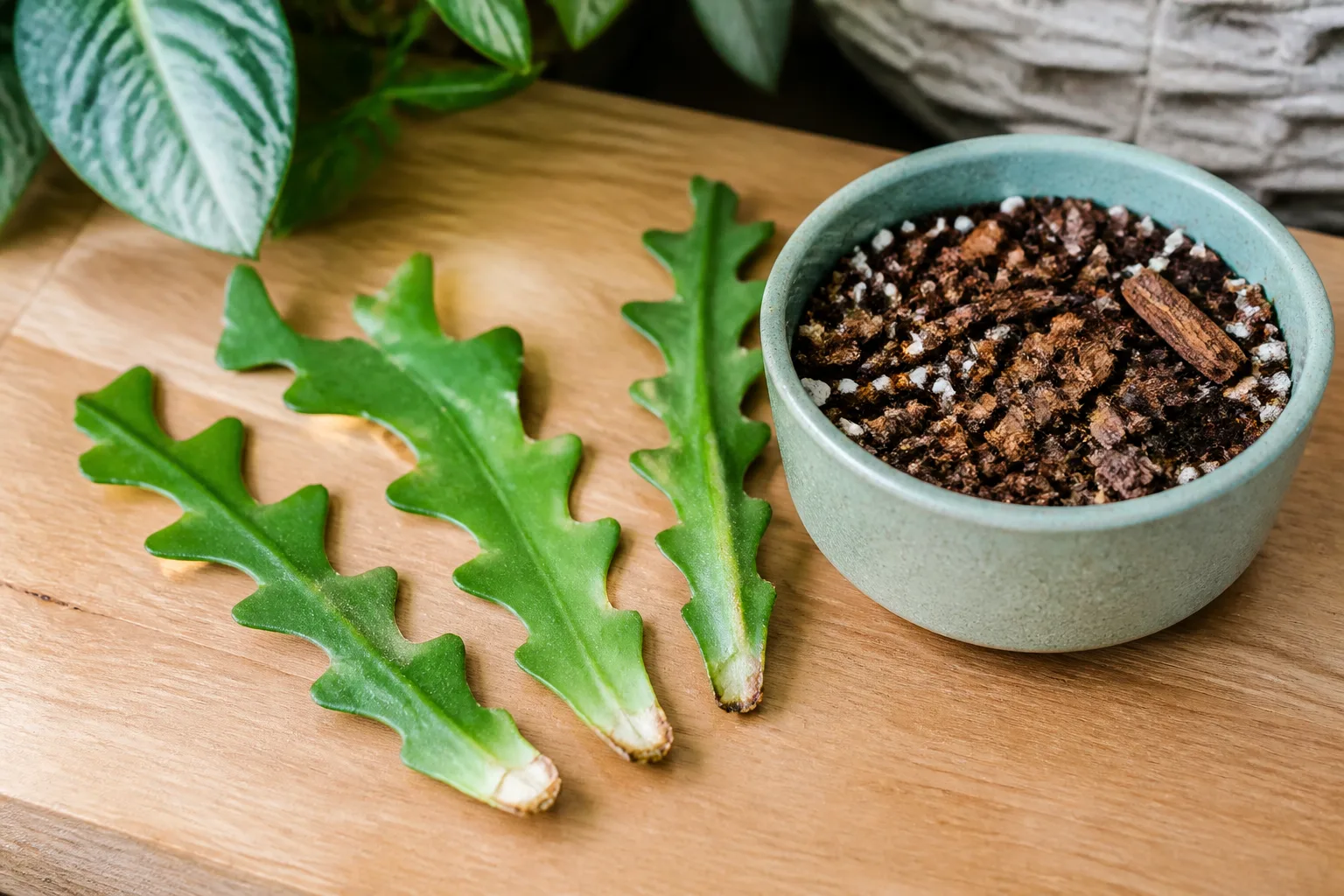
Set the cutting in a dry, shaded, airy spot until the cut end forms a dry callus. Depending on stem thickness and room humidity, that may take several days or longer; do not bury a fresh, wet cut. Place the callused end in a small pot of barely moist, fast-draining mix, deep enough to keep it upright but not so deep that much of the stem is buried.
Keep the pot warm in bright indirect light. Do not keep the medium saturated or seal the cutting into a humid bag; trapped moisture around a fresh wound is an invitation to rot. Allow the mix to approach dryness before adding a small amount of water, and wait for new growth or gentle resistance when nudged before treating it like an established plant. Roots may take weeks, and a new cutting can take much longer to flower than a mature parent.
Seed propagation is possible but slow and less predictable for a named hybrid. Seeds require pollination and may not grow true to the parent plant, so choose a cutting when the goal is to preserve a particular flower color or growth habit.
Repot when the mix or root ball gives you a reason
Repot when the mix has broken down and stays wet, roots have filled the container, drainage has become unreliable, or the plant dries unusually quickly despite appropriate care. Do not repot solely because a calendar says it is time. Many orchid cacti tolerate a snug root zone and can remain in the same pot for years if the medium stays open and the plant is growing well.
After flowering is a convenient time to repot. Move up only enough to give the roots room, use a pot with drainage, and support the trailing stems while you work so they do not split at the base. If roots are healthy, disturb them as little as practical; if you find soft brown roots, remove damaged tissue and replace the old saturated medium. Let fresh cuts dry before watering, then resume normal care as the plant settles.
Check for pests and isolate problems early
Inspect stem joints, undersides, and the shaded center of the plant for mealybugs, scale, and spider mites. Mealybugs may appear as white cottony patches, scale as fixed bumps, and spider mites as fine stippling or webbing. A sticky film can be honeydew from sap-feeding insects, but dust or corky marks are not automatically pests.
Move an infested plant away from the rest of your collection and confirm the pest before treatment. For a small infestation, wipe or rinse the stems and repeat inspections; if you use insecticidal soap or horticultural oil, follow that product’s label, test a small area first, and keep the plant out of strong sun until it is dry. A plant already stressed by sun or drought may be more sensitive to sprays, so do not apply several treatments at once.
Grow Epiphyllum outdoors only where nights stay warm
In warm, frost-free climates, Epiphyllum can grow outdoors in a protected hanging basket or under tree shade. Choose a spot with filtered light, protection from strong wind, and enough air movement for stems to dry after rain. A sheltered patio is often easier to manage than an exposed bed because the plant can be moved when the weather shifts.
In colder regions, treat it as a seasonal patio plant and bring the container in before chilly nights. Acclimate it in stages when moving outside in spring, inspect for hitchhiking pests before bringing it indoors again, and expect the watering interval to change sharply with outdoor heat and airflow. Never leave the pot in rainwater or a cachepot that traps runoff.
Conclusion
Grow Epiphyllum as a forest cactus: give it bright filtered light, an airy mix that holds some moisture, and thorough watering only after the upper mix has dried. Protect it from hot afternoon sun, frost, and a pot that remains wet; adjust feeding and watering as growth slows in winter. If flowers are the goal, start with a mature plant, steady light, and a gentle seasonal rest, then let the plant—not a rigid schedule—tell you when to change care.



