How to Grow and Care for Ficus Audrey
Ficus Audrey is the forgiving fiddle-leaf alternative. Learn light, watering, soil, pruning, propagation, and fixes for leaf drop and yellow leaves.
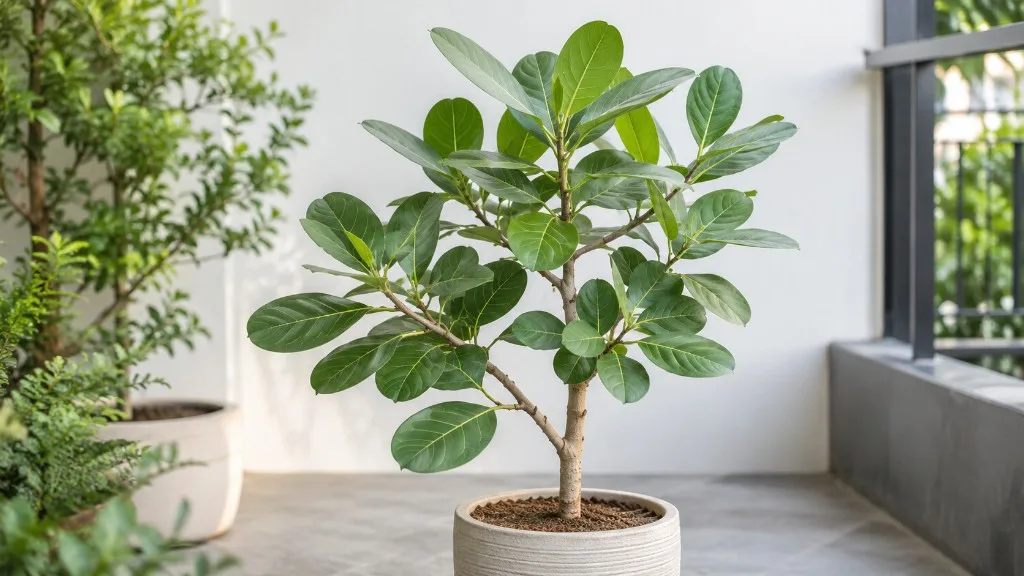
Ficus Audrey (Ficus benghalensis ‘Audrey’) is the houseplant people buy when they want fiddle-leaf fig drama without fiddle-leaf fig fragility. Velvety green leaves, pale veins, and a smooth light trunk give you the same sculptural look in a tree that usually forgives a missed watering or a week of adjustment after you bring it home. It is not a set-and-forget plant—but it is one of the more workable large ficuses indoors if you understand what it actually wants: bright filtered light, a predictable watering rhythm, and stability after every move.
What Ficus Audrey Is
In trade pots, Ficus Audrey is a cultivated form of the banyan tree—the national tree of India and one of the largest canopy trees on earth in its native range. NC State Extension describes Ficus benghalensis as an epiphytic strangler fig that can send aerial roots to the ground and spread into multi-trunked giants. Indoors, ‘Audrey’ stays a single-stem floor tree with glossy elliptical leaves and a smooth pale trunk. You will not see wild-type aerial roots in a living room, and flowering is rare on container plants because pollination depends on specialized fig wasps in nature.
Botanical ID and Native Range
The botanical name is Ficus benghalensis ‘Audrey’, in the mulberry family Moraceae. Common names include banyan tree, Bengal fig, Indian banyan, and strangler fig. The species is native to the Indian subcontinent and surrounding tropical Asia. In the wild it begins life as an epiphyte on a host tree, then roots down and can outcompete its host—behavior that makes it a serious landscape weed in parts of Florida but irrelevant to a potted specimen on a plant stand.
Indoors, healthy specimens commonly reach 5–10 feet tall and 3–4 feet wide over several years, depending on light, pot size, and pruning. NC State Extension notes the ‘Audrey’ cultivar is a popular houseplant with glossy green leaves, light-colored veins, and a smooth trunk. Growth is moderate in good conditions and slows sharply when light or water is off.
Audrey vs Fiddle Leaf Fig vs Rubber Plant
Buyers often cross-shop these three ficuses. They are cousins, not clones.
| Trait | Ficus Audrey | Fiddle leaf fig | Rubber plant |
|---|---|---|---|
| Species | F. benghalensis ‘Audrey’ | F. lyrata | F. elastica |
| Leaf texture | Slightly fuzzy / velvety | Thick, leathery | Thick, glossy |
| Forgiveness | Moderate; tolerates some inconsistency | Low; punishes change fast | Moderate to high |
| Light demand | Bright indirect | Bright indirect | Bright indirect to some direct |
| Typical indoor height | 5–10 ft | 6–10 ft | 4–8 ft |
| Pet safety | Toxic | Toxic | Toxic |
If you already own a struggling fiddle leaf fig, do not assume Audrey wants identical care—but you can reuse the same bright window with a sheer curtain. For rubber-tree troubleshooting patterns (leaf drop after moves), see our rubber plant leaf drop guide.
Who should buy Audrey: you have a bright room with ceiling height, you can water on a schedule rather than a whim, and you do not need a pet-safe floor plant. Who should skip it: dim apartments, households with leaf-chewing pets, or anyone who moves large plants weekly—ficus trees interpret relocation as an emergency even when everything else is perfect.
Ficus Audrey Care Snapshot
Healthy Audrey care is a system: placement, drainage, and moisture checks before fertilizer or repotting.
| Factor | Target | Deeper guide |
|---|---|---|
| Light | Bright indirect; filter harsh afternoon sun | Light guide |
| Water | Top 2–3 inches dry, then soak and drain | Watering guide |
| Soil | Well-draining potting mix + perlite; neutral pH | Soil guide |
| Humidity | 50–80%; avoid dry HVAC blasts | — |
| Temperature | 65–80°F (18–27°C); no cold drafts | — |
| Fertilizer | Monthly liquid in spring–summer | Fertilizer guide |
| Repot | Every 2–3 years when roots escape drains | Repotting guide |
| Prune | Spring/summer; wear gloves for sap | Pruning guide |
First month after purchase: quarantine away from other plants, do not repot on day one unless the mix is clearly failing, and keep light and watering boring while the tree acclimates. Ficus species often drop a few older leaves after a move even when care is correct. Inspect leaf undersides and stems for mealybugs and scale before you place Audrey beside other tropicals—a nursery tree can arrive with hitchhikers you do not want spreading.
When you shop, choose a plant with firm new growth at the tip, evenly colored leaves without widespread brown spots, and soil that smells neutral rather than sour. A slight lean is fine; a pot wedged into a decorative sleeve with no drainage is not.
Light Requirements for Ficus Audrey
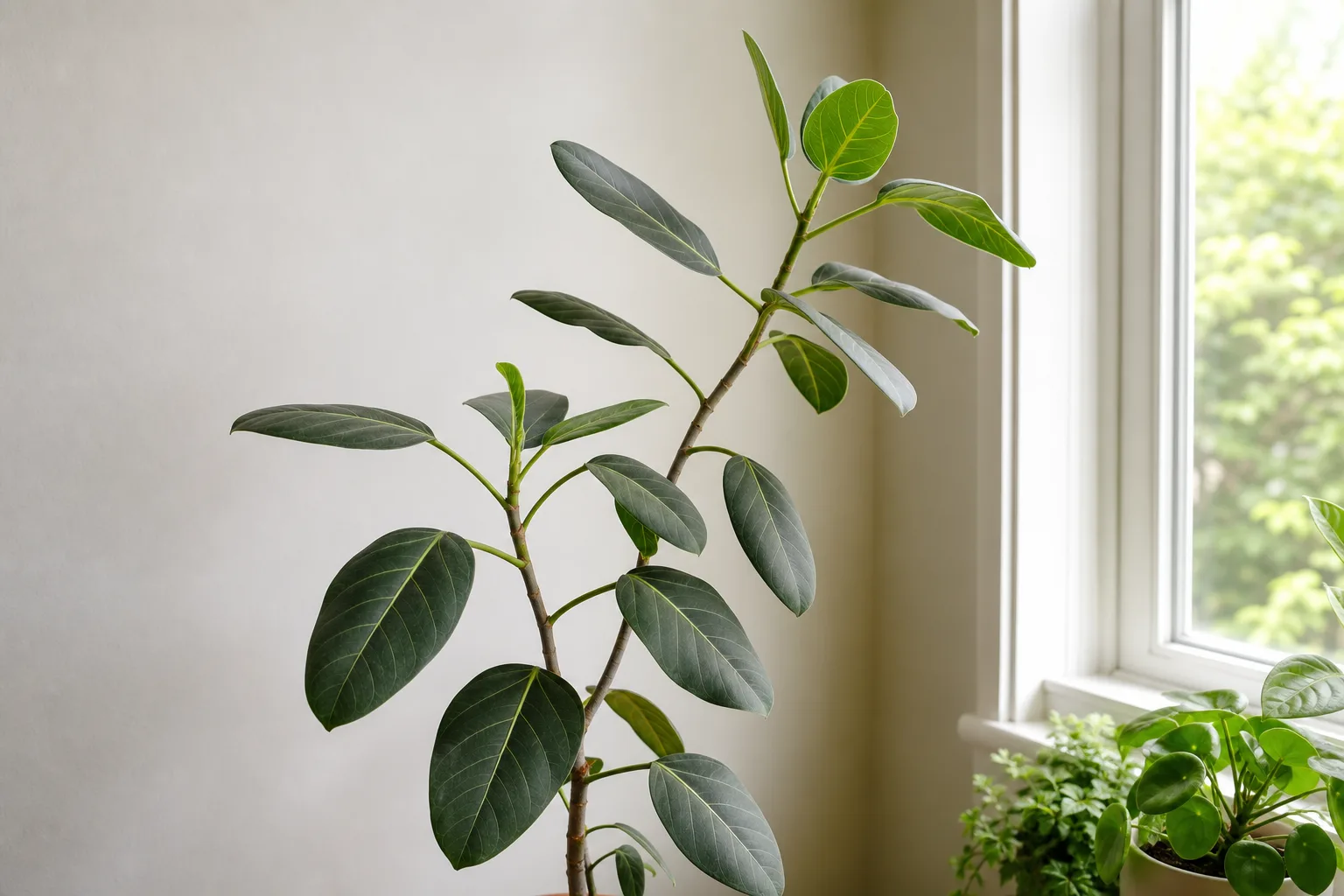
Ficus Audrey wants several hours of bright, indirect light daily—think an east-facing window, a few feet back from a south- or west-facing glass, or a filtered south exposure where afternoon sun is softened by a sheer curtain. NC State Extension lists bright indirect sunlight for houseplant culture. Morning or late-day sun is usually fine; long stretches of hot midday sun can scorch velvety leaves.
Too little light produces leggy stems, smaller leaves, and soil that stays wet too long because the plant is not using water. Rotate the pot a quarter turn every few weeks so growth stays even. If natural light is marginal, a full-spectrum grow light 12–14 inches above the canopy for 10–12 hours can supplement—especially in winter at higher latitudes.
Watering Ficus Audrey the Right Way
The watering rule that works in most homes: let the top 2–3 inches of soil dry, then water thoroughly until a little runs from the drainage hole, and empty the saucer within 30 minutes. NC State Extension and Epic Gardening both describe this depth check. In bright, warm summer conditions that might mean every 7–10 days; in dimmer winter rooms, 14–21 days is common. The calendar matters less than the pot weight and finger test.
Audrey prefers evenly moist root zone soil, not a swamp. That means the middle and bottom of the pot should not bone-dry for weeks, but the surface can dry between drinks. A moisture meter can help beginners, yet lifting the pot—light means dry, heavy means wait—is often more reliable.
Signs You’re Overwatering or Underwatering
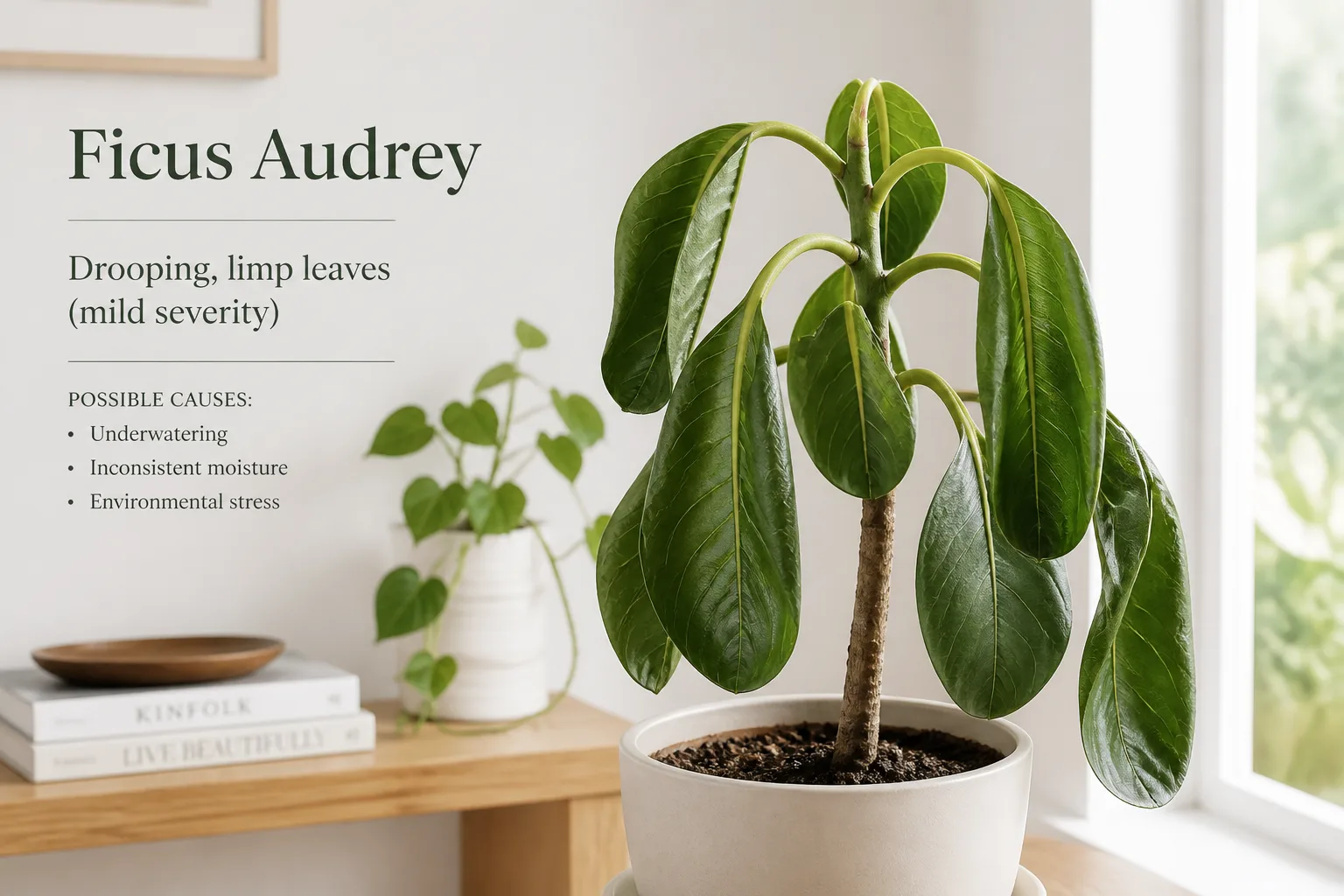
Overwatering shows up as yellowing on multiple leaves at once, soft stems, fungus gnats, sour-smelling mix, or brown spots spreading on lower leaves while soil stays wet. Underwatering causes crisp brown edges, wilting that recovers after a soak, and sudden leaf drop—Audrey’s most dramatic complaint.
If you are unsure which side you are on, slide the root ball out once: mushy brown roots mean back off water and improve drainage; dry, pale roots mean increase frequency slightly and check that light is adequate. Do not fertilize a stressed tree to “fix” watering mistakes.
Seasonal rhythm: in active growth (spring through early fall), Audrey uses water faster—check depth weekly. In winter, shorten intervals only if grow lights keep the tree pushing new leaves; otherwise let the pot dry deeper before the next soak. A tree parked near a heating vent may need more water in January than one in a cool back bedroom because transpiration stays high even when day length is short.
Soil, Drainage, and pH
Use a well-draining indoor potting mix amended with perlite (roughly 70% potting mix / 30% perlite is a workable starting point). NC State Extension recommends good-quality mix with perlite and neutral pH. Avoid garden soil in containers—it compacts and suffocates roots.
Every pot needs a drainage hole. Cachepots are fine only if you lift the grow pot to water and drain. Audrey tolerates being slightly root-bound, which actually helps prevent overwatering in oversized decorative pots—a common killer of large ficuses.
Temperature, Humidity, and Airflow
Target 65–80°F (18–27°C) and protect the plant from cold drafts below about 60°F. Keep it away from blasting heat vents and air-conditioner returns; dry, turbulent air browns leaf margins fast.
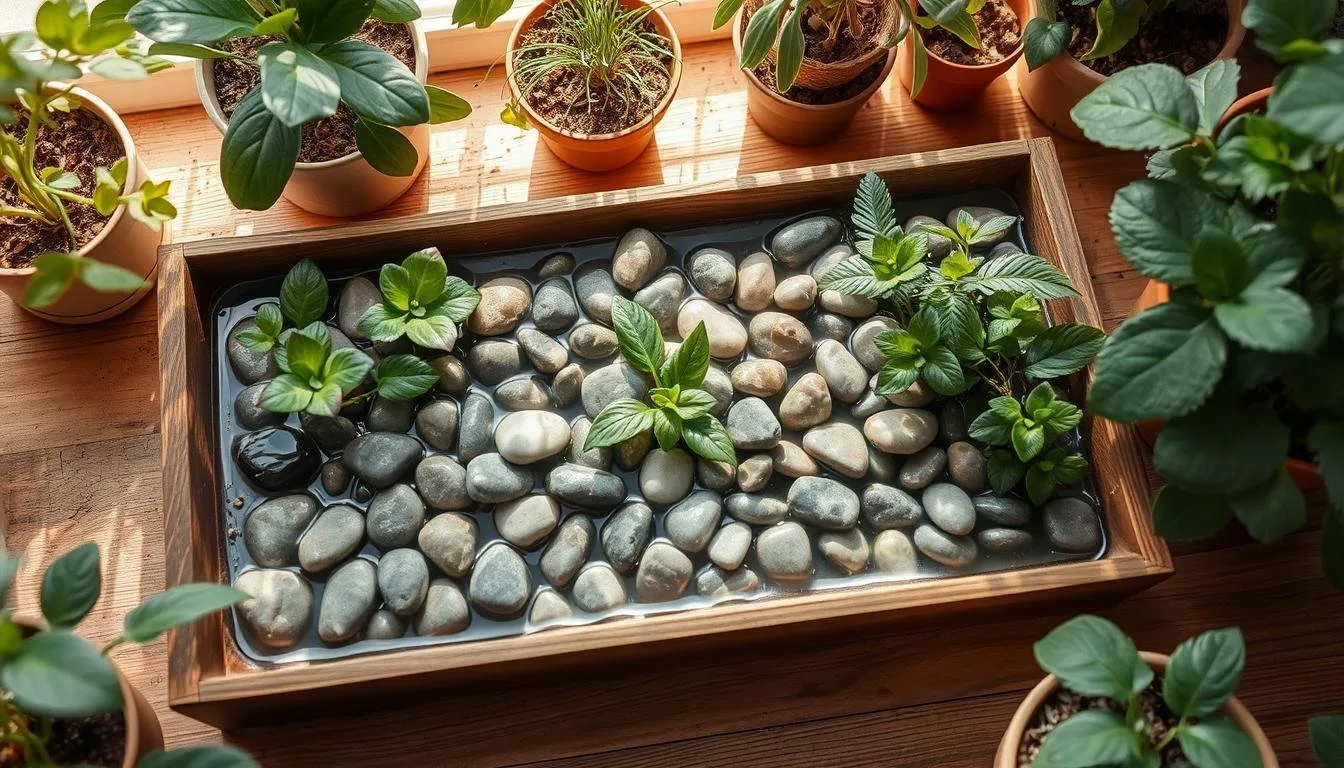
Humidity of 50–80% is ideal per NC State’s houseplant guidance. Average homes sit lower in winter. A humidifier near the canopy beats misting alone for sustained relief. Grouping plants or a pebble tray under the pot (water below stone tops, pot above the waterline) adds a few points locally. Epic Gardening notes temperatures below about 60°F can damage tropical ficuses—treat outdoor nights in borderline zones the same way.
Fertilizing During Active Growth
Feed from early spring through early fall when new leaves are opening. A balanced liquid fertilizer diluted to half label strength once a month is enough for most indoor specimens. Skip fertilizer on newly purchased or recently repotted plants for 4–6 weeks. In fall and winter, when growth slows, hold off unless you are running strong grow lights and see active new foliage.
Organic top-dressings like worm castings or compost can supplement synthetic feeds, but do not pile them against the trunk.
Pruning Ficus Audrey Safely
Prune in spring or summer to control height, remove leggy branches, or encourage bushier growth. Cut just above a leaf node or lateral bud. If you have a single tall stalk with no branches, topping the leader where you want branching to start is valid—new shoots usually break below the cut within weeks in good light.
Wear gloves and cover floors: ficus sap is a thin latex that sticks to skin and surfaces. It can irritate skin and eyes. Wipe tools with alcohol between cuts. Remove no more than one-third of live foliage in a single session.
For a single-stem whip with no side branches, make one clean cut through the leader at the height where you want the canopy to branch. Two to four new shoots usually emerge from nodes just below the cut within a few weeks if light is strong. Stagger hard pruning across seasons rather than stripping the tree bare in one afternoon—Audrey recovers, but recovery is faster when some leaves remain to photosynthesize.
How to Propagate Ficus Audrey
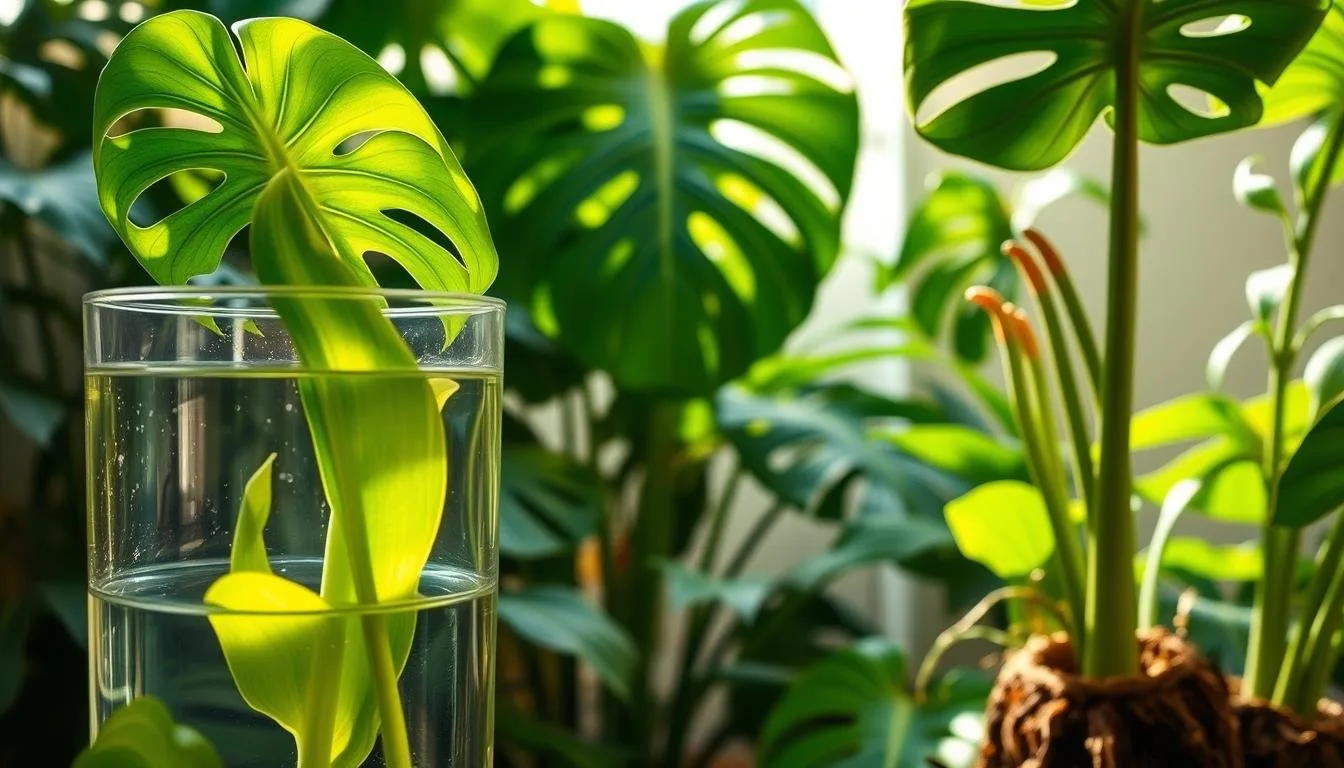
Stem cuttings are the practical home method. NC State Extension lists stem cuttings and air layering as recommended propagation strategies for the species.
- Choose a healthy stem with at least two or three leaves.
- Cut with sharp, sterilized shears; wear gloves for sap.
- Dip the cut end in rooting hormone (optional but helpful).
- Plant in moist, well-draining mix or root in water first.
- Cover with a clear bag or dome for humidity; keep in bright indirect light.
- Keep mix lightly moist. Roots often form in 3–4 weeks; tug gently to test.
Air layering works on thicker stems if you want a larger starter plant. Seed propagation is not realistic indoors.
Repotting and Root-Pruning for Size Control
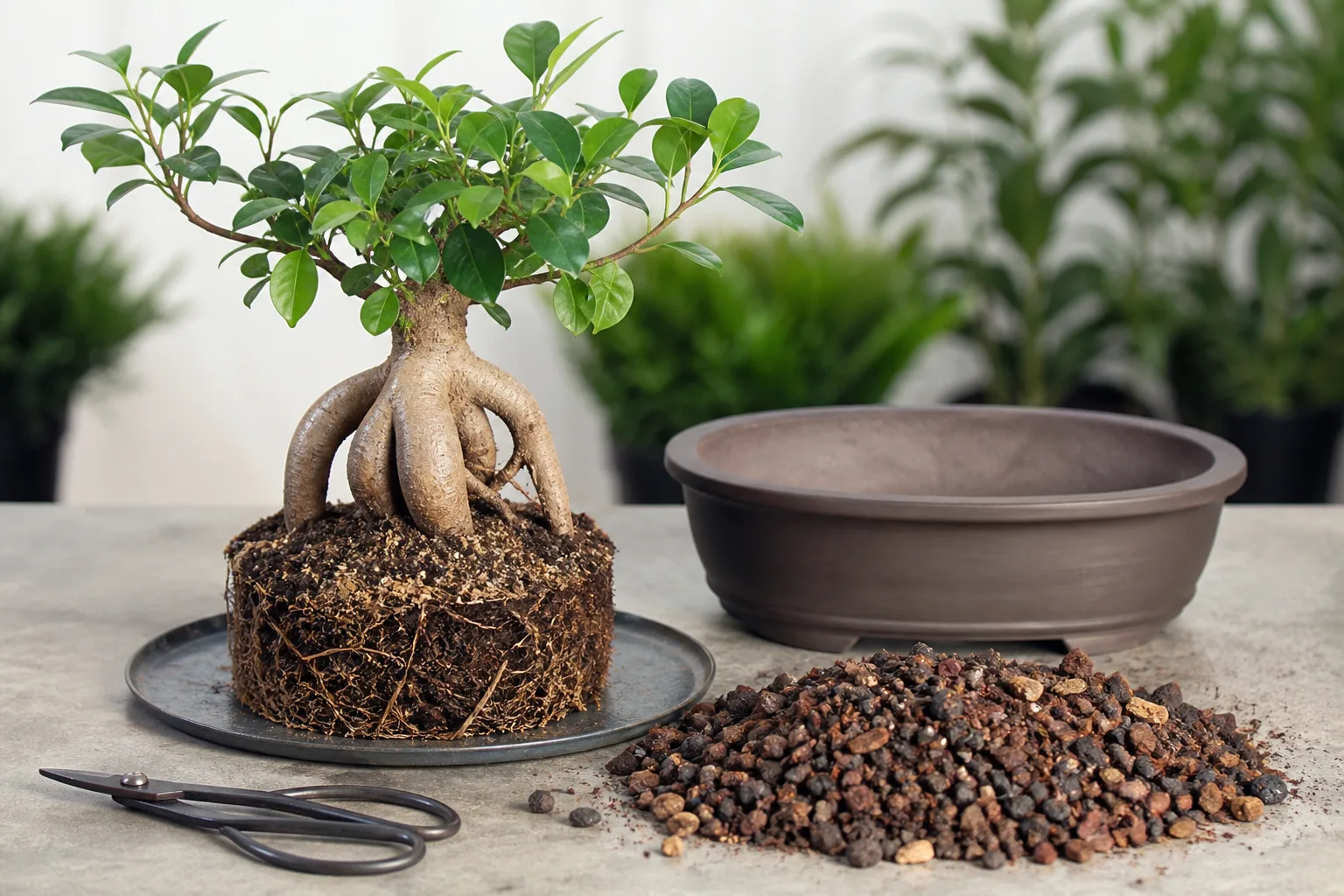
Repot every 2–3 years, or when roots circle the pot or emerge from drainage holes. Spring or early summer is safest. Move up only 2–3 inches in pot diameter—oversized pots stay wet too long.
To limit height, refresh soil in the same pot and trim up to one-third of the root mass with a clean knife before replanting at the same soil line. Water well once, then let the tree settle without extra stress from fertilizer or relocation.
Pests and Diseases to Watch For
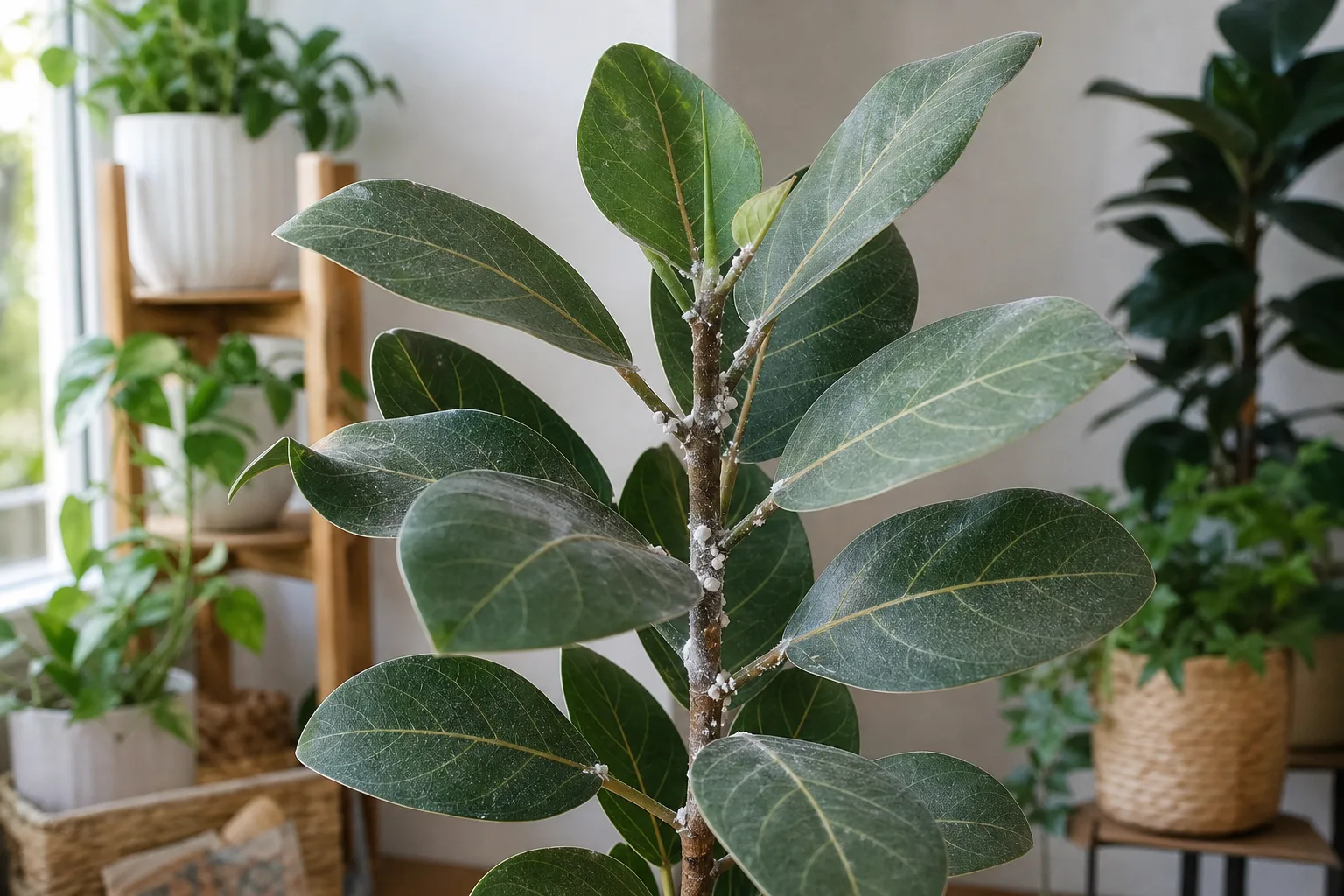
NC State Extension lists spider mites, mealybugs, scale, and fungus gnats as common issues. Sap-feeding pests leave sticky honeydew and sooty mold on leaves; inspect undersides weekly.
- Mealybugs and scale: dab with alcohol on a cotton swab for light infestations; repeat weekly. Heavier cases need insecticidal soap or horticultural oil applied to all leaf surfaces.
- Spider mites: increase humidity, rinse foliage, and treat with miticide or neem if webbing appears on leaf undersides.
- Fungus gnats: let the surface dry longer between waterings; yellow sticky traps catch adults while the soil dries.
When to escalate: if honeydew and sooty mold return within two weeks of treatment, isolate the plant, rinse foliage, and repeat oil or soap applications on a seven-day cycle until you see no live pests for three consecutive checks. Chronic fungus gnats with wet soil often mean the pot is too large or light is too low—fix drainage and placement, not just traps.
Root rot follows chronic overwatering—mushy roots, yellow leaves, stunted growth. Trim rotten roots, repot into fresh mix, and fix the watering schedule. Bacterial leaf spot from wet foliage and poor airflow shows as spreading brown/yellow spots; remove affected leaves and improve air movement.
Leaf Drop, Yellowing, and Other Common Problems
Leaf drop is Audrey’s loudest stress signal. Short-term drop after purchase or a move is normal if new care is stable. Persistent drop usually means underwatering, cold drafts, or a recent shift in light—fix the most likely cause and wait two weeks before repotting.
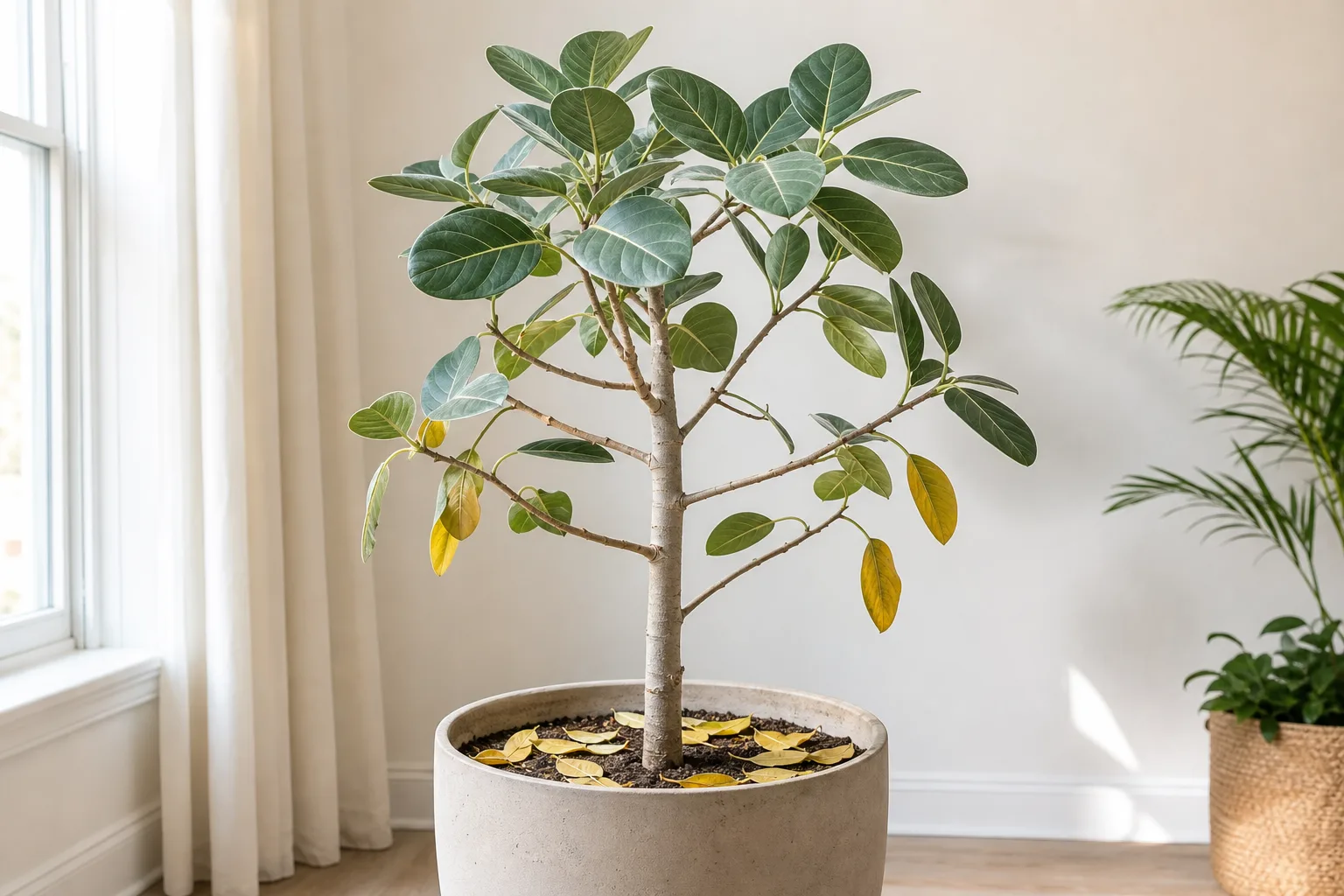
Yellow leaves on old lower growth can be natural senescence—one or two leaves at a time. Widespread yellowing with wet soil points to overwatering; with dry soil, underwatering.
Brown leaf edges often mean low humidity, underwatering, or fertilizer burn. Cracked or split leaves can indicate humidity too low, per NC State’s problem notes.
Dust collects fast on fuzzy leaves and blocks light. Wipe with a damp soft cloth monthly. Skip commercial leaf shine—it damages the velvety surface. For persistent problems tied to one symptom, see the Ficus Audrey plant hub and linked care pages on watering, light, and repotting before you stack fixes.
Toxicity, Sap, and Pet Safety
Treat Ficus Audrey as toxic to cats, dogs, and humans if ingested. The ASPCA lists fig species (Ficus spp.) as toxic to dogs and cats, with proteolytic enzyme (ficin) and psoralen (ficusin) causing gastrointestinal and dermal irritation. Sap contact can irritate skin—wear gloves when pruning.
Keep pots on sturdy stands out of pet reach. If a pet chews leaves, contact your veterinarian or ASPCA Animal Poison Control at (888) 426-4435. For pet-safe alternatives at floor level, consider plants like cast iron plant (Aspidistra) instead of any Ficus.
Growing Ficus Audrey Outdoors
In USDA zones 10–11, Audrey can live outdoors year-round in warm, humid climates with filtered light and frost-free winters. PlantCareToday lists zones 10–12 for outdoor culture; protect from temperatures below about 60°F. In zone 9, treat it as a patio plant you move inside before cold nights.
Never plant Ficus benghalensis in the ground in frost-free subtropical regions where it can escape cultivation—NC State warns it has become a serious weed in Florida with invasive roots and canopy spread. Container culture only unless you are in its native range and understand local restrictions.
On a covered patio in warm months, move Audrey gradually—an hour of outdoor shade the first day, then longer exposures over a week—to avoid sun scorch on leaves acclimated to indoor glass. Bring it inside before nights drop below about 60°F, and hose foliage before re-entry to knock off outdoor pests.
Conclusion
Ficus Audrey rewards growers who treat it like a tropical tree, not a plastic decoration: bright indirect light, water when the top few inches of soil dry, humidity above 50% when possible, and hands-off stability for the first month home. It is more forgiving than a fiddle leaf fig, but it will still drop leaves to tell you when water, drafts, or light are wrong. Nail those basics, wipe the velvety foliage now and then, and you get a sculptural indoor tree that can live with you for decades.



