French Marigold Care: Grow Tagetes patula to Frost
Learn French marigold care from seed to frost: timing, sun, soil, watering, spacing, deadheading, containers, pests, and nematode limits.
French Marigold at a Glance
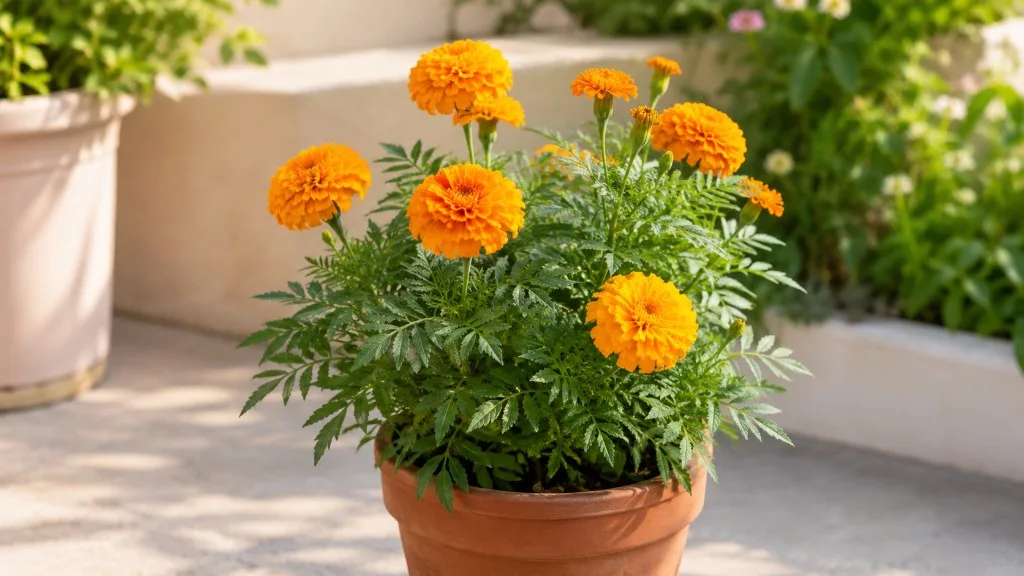
French marigold (Tagetes patula) is the compact, branching marigold sold for edging, patio pots, vegetable-garden borders, and long summer color. It is a warm-season annual, not a perennial houseplant: one plant usually completes its life cycle in a single growing season, although dry seed can produce volunteer plants the following year. NC State Extension describes it as a 6- to 12-inch plant that can spread 6 to 18 inches, so the “dwarf” label describes height more reliably than width.
Expect ferny, aromatic foliage and single, semi-double, double, or crested flower heads in yellow, orange, red, copper, and bicolor combinations. RHS lists French marigold as a compact annual for full sun and moist but well-drained soil; that pairing is the foundation of almost every successful care decision. Warmth starts the plant, light keeps it compact, drainage protects the roots, and regular removal of fading flowers keeps the plant investing in new buds.
The most useful routine is simple: plant after frost, give the brightest site available, water deeply when the root zone begins to dry, feed sparingly, and deadhead before old blooms become wet seed heads. The details below matter because French marigolds are forgiving of imperfect soil but much less forgiving of cold roots, stagnant moisture, and heavy shade.
Choose the Right Variety for Your Space
French marigolds are not one uniform size. A 6-inch bedding cultivar can make a neat edge, while a vigorous 12-inch selection may mound outward and crowd a narrow pot. Read the mature height and spread on the seed packet rather than relying on the common name. Missouri Botanical Garden describes the species as typically 6 to 12 inches tall with 1- to 2-inch flowers, but hybrids can differ in branching, flower size, and heat performance.
For a formal border, choose a compact, uniform series and plant several of the same color at the same spacing. For a pot, prioritize a naturally mounding or dwarf selection so you do not have to shear it into shape. For a vegetable bed, a vigorous single-flowered type may be more useful than a large double: open flowers are easier for small beneficial insects to access, and the plant often dries faster after rain.
Some cultivars are promoted for nematode management, but a name on a packet is not a guarantee for every soil or nematode species. Treat cultivar claims as a reason to investigate, not as permission to skip crop rotation, sanitation, or a soil diagnosis.
When to Plant: Use Soil Temperature, Not Just the Calendar
Plant French marigolds outdoors after your area’s last expected frost and once the soil has warmed. A practical target is at least 60°F (16°C) for transplants and closer to 70°F (21°C) for quick seed germination. The date matters less than the conditions: a late cold snap, chilled potting mix, or a wet spring can stall plants even when the calendar says summer is near. Gardener’s Path likewise recommends waiting for frost danger to pass and soil temperatures to rise above 60°F.
If you garden in a warm, frost-free climate, replace the frost rule with a heat-and-rain rule. Sow when the next several weeks are warm enough for growth but not so hot or wet that seedlings bake or stay saturated. In tropical and subtropical areas, a drier shoulder season often gives better establishment than the wettest part of the monsoon.
Start Seeds Indoors for Earlier Flowers
Start seeds indoors six to eight weeks before the last frost if you want flowering plants ready for the first warm stretch. Use clean cells or a shallow tray filled with a fine, free-draining seed-starting mix. Moisten the mix before sowing so you do not wash seeds into a corner later. Place seeds about ¼ inch deep, cover them, and keep the surface evenly moist rather than waterlogged.
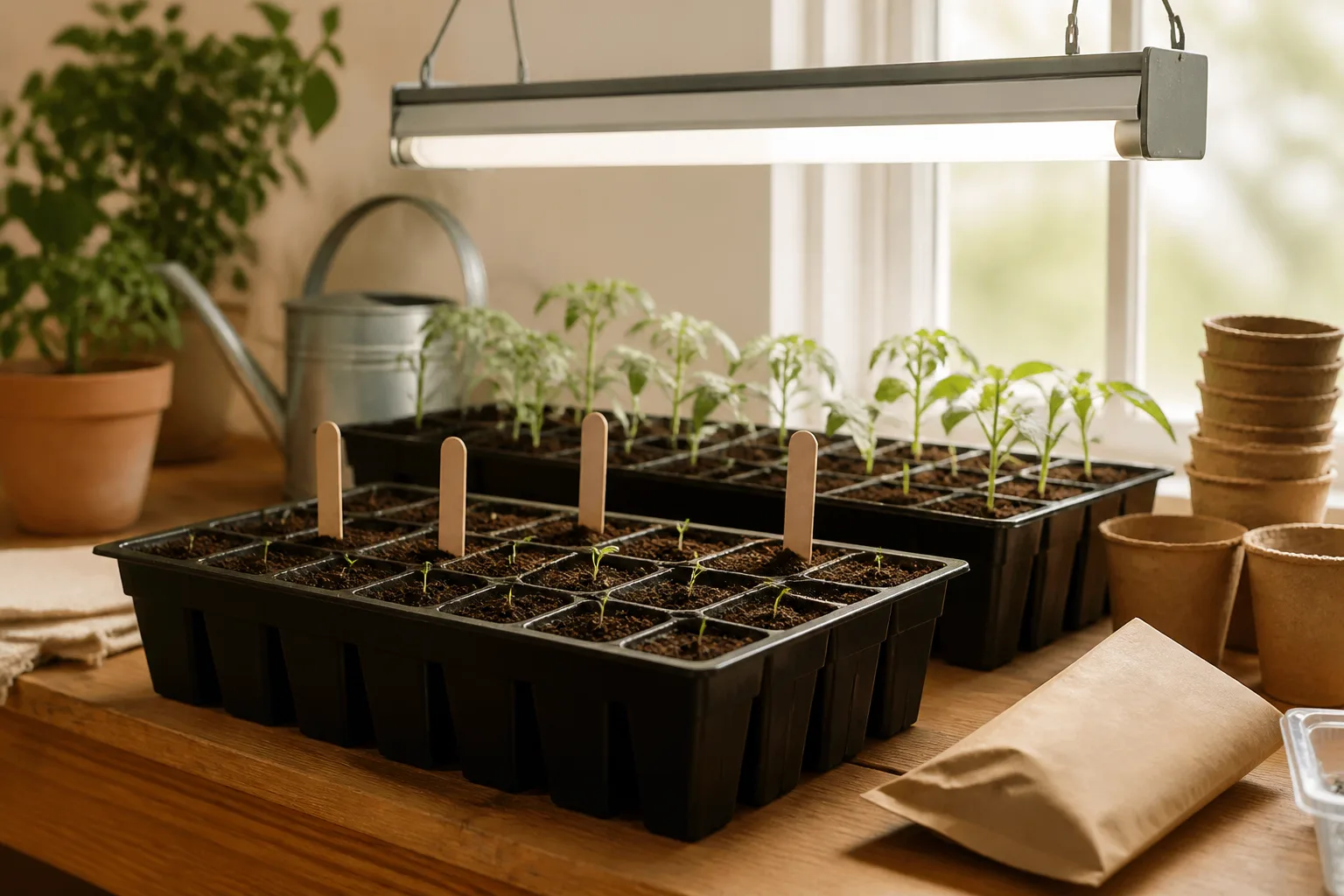
Warmth is more important than intense light until the seedlings emerge, but light becomes urgent as soon as green shoots appear. Move the tray to a bright window or grow light and keep the light close enough to prevent stretched stems. Thin crowded seedlings early, or transplant them to individual cells once they have several true leaves and a root plug that holds together.
Expect germination in roughly four to 14 days, with the faster end more likely in warm, consistently moist mix. Epic Gardening notes the same germination window and warns that low light quickly creates leggy seedlings. Before planting outside, harden seedlings over seven to 14 days: begin in bright shade for a short outing, add sun and wind exposure gradually, and protect them if nights drop toward 50°F (10°C).
Direct-Sow Outdoors for Less Transplant Stress
Direct sowing is often the best choice for French marigolds because it avoids root disturbance and the indoor-light problem. Prepare a weed-free bed, make shallow furrows or holes, sow seeds ¼ inch deep, and keep them about an inch apart until they emerge. Water with a gentle stream so the seed stays covered. When seedlings have true leaves, thin them to the final spacing required by the variety.
Direct sowing trades earlier flowers for simpler establishment. If you sow too early into cold soil, seeds may sit for weeks, rot in wet conditions, or emerge unevenly. If you sow after the soil is warm, the plants usually catch up quickly. To extend the display, sow a second small batch two to three weeks after the first instead of crowding one sowing.
Pick a Site With Sun and Drainage
Give French marigolds six to eight hours of direct sun whenever possible. A little afternoon shade can help in an extremely hot climate, but shade should be relief from punishing heat, not the plant’s normal light supply. Inadequate light produces long spaces between leaves, fewer buds, and foliage that stays wet longer after rain. The University of Minnesota Extension recommends full sun for a strong flower display.
Choose an open bed, sunny balcony, or south- or west-facing container position with enough airflow around the plant. Avoid a low pocket where rain collects, a narrow strip pressed against a wall with no air movement, or soil beneath a dense tree canopy. Roots can tolerate ordinary clay or sand, but they need oxygen between watering events.
If a nursery plant was grown under shade cloth, do not place it directly into the harshest midday sun. Give it several days of bright morning light and filtered afternoon light, then increase direct exposure over a week. Scorched foliage after transplant is often an acclimation failure, not a sign that the plant needs more fertilizer.
Prepare the Soil Without Overfeeding
French marigolds grow in clay, loam, or sand if the soil drains and is not compacted. Work compost into the top 6 to 8 inches of a poor bed, break up hard clods, and remove perennial weeds before planting. Do not create a deep pocket of rich compost inside otherwise heavy clay; that can collect water around the root ball. Improve the whole planting area modestly so water moves consistently through it.
Aim for soil that is moderately fertile, roughly pH 6 to 7, and crumbly enough that a handful breaks apart rather than smearing into a ribbon. A soil test is worthwhile if plants repeatedly show nutrient symptoms, but routine liming or acidifying is rarely necessary for a single season of annual color. RHS includes clay, loam, and sand as suitable soil textures when drainage is good.
Avoid fresh manure and high-nitrogen amendments. They can produce dark, soft foliage with fewer flowers and can add soluble salts to a container. French marigold is a low-to-moderate feeder; the goal is enough nutrition for steady branching, not maximum leaf growth.
Plant Nursery Transplants Correctly
Water a nursery plug a few hours before planting so the root ball is cohesive but not dripping. Slide it from the pot by supporting the soil and roots, never by pulling the stem. If roots are tightly circling, loosen only the outermost layer gently. Do not bare-root a small annual or tease the root ball into a pile of loose roots.
Set the plant at the same depth it grew in its cell. Backfill, press the soil lightly around the plug, and water the root zone thoroughly to settle air gaps. Keep the soil moderately moist for the first week, then begin allowing a little surface dry-down between waterings. A plant that droops once in the first hot afternoon may need shade and a drink; a plant that stays wet for days needs better drainage, not more water.
Plant in the late afternoon or on a cloudy day when possible. That gives disturbed roots a cooler transition. If you must plant in bright heat, use temporary shade for a day or two and remove it as soon as the plant stops wilting.
Give French Marigolds the Right Spacing
Spacing is a disease-prevention decision as much as a design decision. Use the packet’s mature spread as the upper limit, then adjust for your climate and the look you want. A useful starting point is 8 to 12 inches between compact plants, with more room for vigorous selections or humid sites. Crowding can create a solid carpet of color, but it also traps wet petals and leaves.
| Situation | Starting spacing | Why it works |
|---|---|---|
| Narrow edging | 6–8 inches | Creates a joined border once plants branch |
| General bed | 8–12 inches | Balances fullness and airflow |
| Humid or rainy site | 10–14 inches | Speeds drying and makes inspection easier |
| 10–12 inch container | 1–3 compact plants | Gives a full mound without a wet soil mass |
Thin seedlings with scissors at soil level rather than pulling neighboring roots loose. If you want a massed effect, sow more seeds than you need and thin decisively. Three healthy plants with room to dry often outflower six stressed plants packed into the same square foot.
Water by Root-Zone Dry-Down
Newly sown seeds and fresh transplants need consistent moisture while roots are shallow. After establishment, French marigolds tolerate short dry spells, but flowering is better when they receive a thorough drink before the root zone becomes bone dry. Check the soil an inch or two below the surface with a finger; if it is dry at that depth, water slowly at the base until the bed is moistened deeply.
In-ground plants may need water every few days during hot, dry weather and much less after rain. Containers can need water daily or every other day in sun, wind, or small pots. Do not copy a neighbor’s schedule: terracotta, plastic, pot size, mulch, humidity, and root volume all change the drying rate. Gardeners’ World recommends regular water during establishment and more frequent checks for pot-grown plants.
Water at soil level in the morning. Repeatedly wetting flower heads and dense foliage, especially late in the day, encourages Botrytis and leaf spots. Mulch the surrounding bed lightly to slow evaporation, but keep mulch away from the stems. If soil is still damp and the plant wilts, stop watering and inspect drainage and roots; wilting is not proof of thirst.
Feed Lightly for Flowers, Not Foliage
Compost at planting is enough for many in-ground French marigolds. Feed only when plants are actively growing and the soil is genuinely lean, the foliage is pale for reasons other than overwatering, or a container has been watered frequently enough to leach nutrients. A balanced fertilizer at the label rate, or a liquid feed diluted according to its instructions, is safer than trying to force blooms with repeated heavy doses.
For containers, a half-strength liquid fertilizer every three to four weeks during active growth is a reasonable starting rhythm if the potting mix contains little slow-release nutrition. In a fertile bed, one light application at planting and an optional midsummer application may be enough. Penn State Extension emphasizes that marigolds perform well in ordinary garden conditions and do not need an aggressive feeding program.
Do not apply high-nitrogen lawn fertilizer, feed bone-dry soil, or fertilize a plant that is wilted from heat or damaged roots. If a plant is leafy but flowerless, fix light and check for excess nitrogen before adding more food. Brown tips, a white salt crust, and wilting in moist soil after feeding point toward fertilizer stress; flush a container with plain water and pause feeding while it recovers.
Pinch, Deadhead, and Shape Plants
Pinch the growing tip of a young, healthy transplant once it has several sets of leaves and is actively growing. This removes the dominant tip and encourages side branches, which creates a wider plant with more flowering points. Do not pinch a severely wilted, recently transplanted, or cold-stressed plant; it needs roots and leaves intact while it establishes.
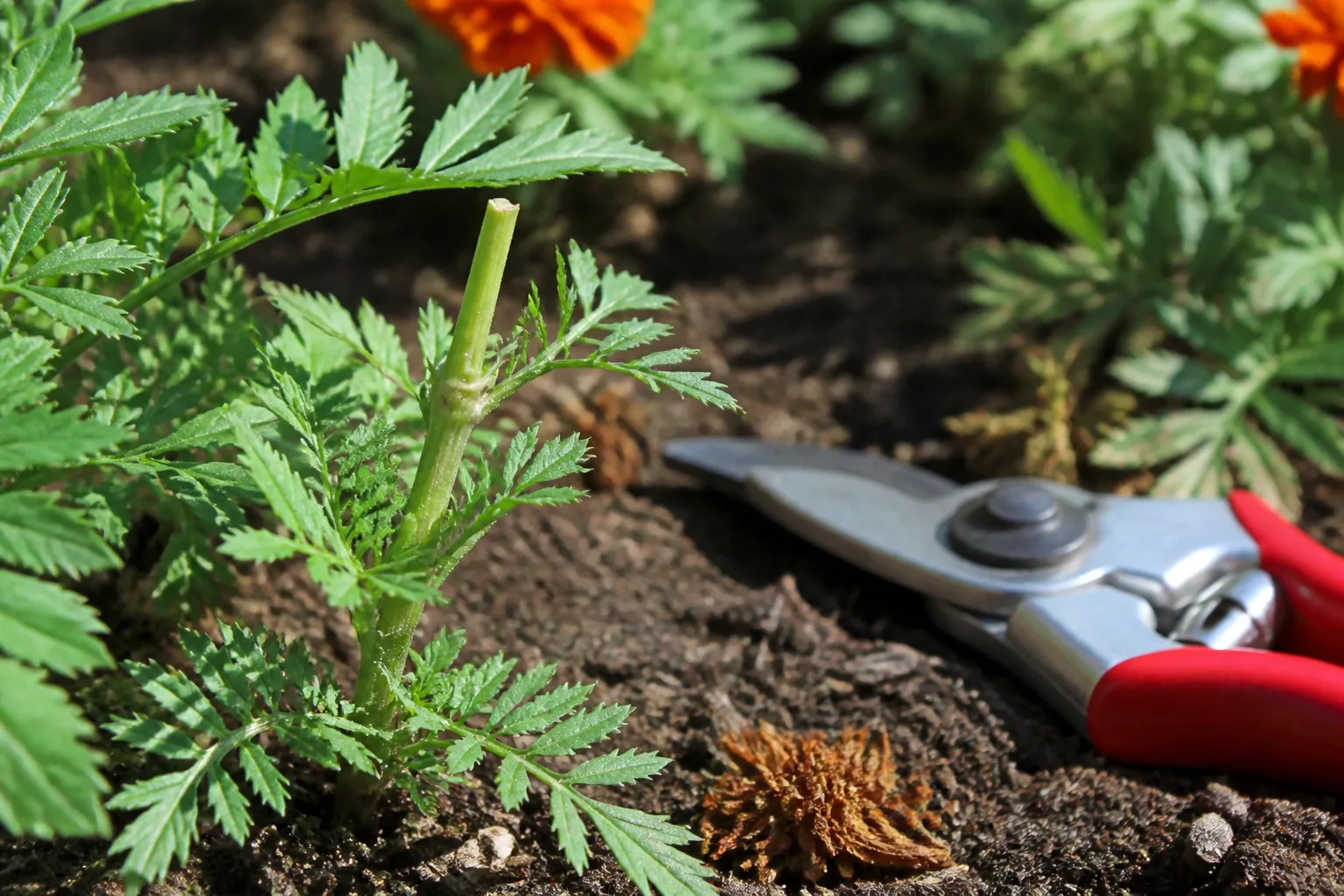
Deadhead when a flower begins to fade, especially during humid weather. Follow the flower stem down to the first healthy leaf joint and cut or pinch just above it. Removing only the dry petals leaves a seed head that can trap moisture. Regular deadheading is not strictly required for every French marigold cultivar, but it keeps the plant tidier and reduces the chance that spent heads shade new buds.
If a plant becomes leggy, cut back the longest stems by no more than one-third, then move the plant to brighter light. Severe shearing in hot weather can expose shaded stems to sunburn and temporarily remove too much leaf area. Keep the removed healthy tips out of the bed if they show disease, but compost clean trimmings.
Grow French Marigolds in Containers
French marigolds are among the easiest annuals for pots because their compact roots and branching habit fill a container quickly. Use a pot with drainage holes and a lightweight potting mix rather than garden soil. One compact plant fits a 6- to 8-inch pot; a 10- to 12-inch pot can hold two or three small plants if the mix drains freely and the plants are not packed against a wall.
Container material changes care. Terracotta loses moisture quickly and suits a gardener who tends to overwater. Plastic or glazed pots stay wet longer and suit a hot, windy balcony only if you check the soil rather than watering on autopilot. Set pots where they get direct sun and air movement, but protect them from reflected heat that turns a small root ball into an oven.
Water until excess drains from the bottom, then empty a saucer. In a hot spell, check daily; in cool cloudy weather, the same pot may need several days before watering. Repot only when roots have filled the current container or the plant is clearly drying out within hours. Move up one pot size, preserve the planting depth, and avoid placing a small plug into a huge decorative pot full of wet mix.
Use French Marigolds in Vegetable Beds—with Realistic Expectations
French marigolds make useful edging and attract pollinating insects, but they are not a universal insect shield. The strongest garden evidence concerns certain plant-parasitic nematodes, and even that effect depends on the marigold variety, nematode species, soil temperature, plant density, and how long the plants occupy the soil. UF/IFAS explains that Tagetes produces alpha-terthienyl and that nematode suppression varies with the crop, species, and conditions.
That is different from planting a few flowering pots beside tomatoes and expecting every aphid, caterpillar, or mosquito to leave. A peer-reviewed study of T. patula found insecticidal activity in plant and foliar extracts against specific laboratory pest species, but extract bioassays do not prove that a border planting will control those pests in a home garden. Use marigolds as one part of an integrated plan: inspect crops, protect beneficial insects, remove heavily infested leaves, and identify the pest before choosing a treatment.
If nematodes are the actual problem, confirm the diagnosis where possible and grow a suitable marigold cover crop densely for the recommended period rather than sprinkling a few plants between vegetables. Variety-specific results matter. Do not chop diseased plants into the bed, and do not move soil from an infested bed to clean containers.
Diagnose Pests and Disease Early
Start with the pattern, not the product. Check whether damage is on new or old leaves, whether insects are visible, whether the soil is wet or dry, and whether the problem affects one branch or the whole plant. The same wilt can come from drought, saturated roots, stem damage, or a vascular disease, so watering first is not always the right response.
French marigold problems become more likely when plants are shaded, overcrowded, repeatedly wet, or weakened by heat. Missouri Botanical Garden lists powdery mildew, Botrytis, leaf spot, rots, spider mites, and thrips among the issues to watch. Remove badly affected leaves, improve airflow, correct the cultural cause, and follow the label of any pesticide used; homemade concentrates can burn foliage and harm non-target insects.
Spider Mites, Thrips, and Aphids
Fine stippling, dull leaves, and webbing on the undersides point toward spider mites, especially in hot, dry conditions. Isolate a container if possible, rinse the foliage with a firm but not damaging stream of water, and inspect again after a few days. Avoid blasting flowers repeatedly and avoid applying oil in high heat; read the product label for crop safety, timing, and temperature limits.
Thrips can scar petals and distort new growth. Aphids cluster around soft tips and excrete sticky honeydew. For either, start with monitoring and physical removal, then use a targeted, labeled control only if the population is growing and natural enemies are not keeping up. A marigold’s scent is not a substitute for identifying the insect.
Leaf Spots, Powdery Mildew, and Root Rot
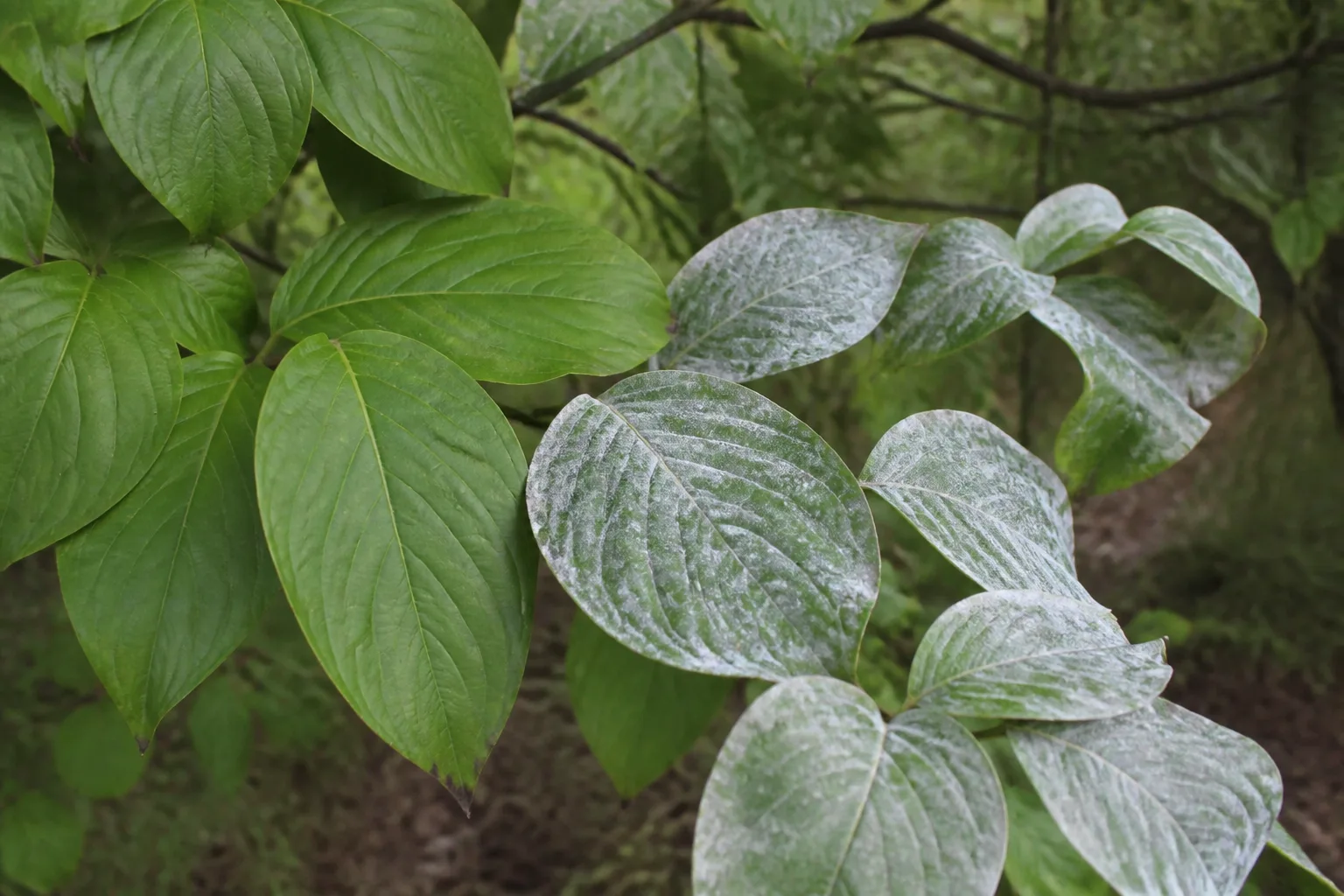
Tan or brown spots that expand after frequent leaf wetting are a reason to stop overhead irrigation, increase spacing, and remove the worst leaves. White powder on leaves suggests powdery mildew; it can appear even when the soil is dry if air is stagnant and nights are humid. Move containers farther apart and water the base early in the day.
Gray, collapsing petals and fuzzy growth suggest Botrytis, especially in dense doubles during rainy weather. Remove spent blooms promptly and keep flowers from resting on wet soil. UC IPM recommends moderate, regular water for marigolds while avoiding practices that keep the canopy wet.
Root rot is more likely when the entire plant wilts despite wet soil, the stem base softens, or the container smells sour. Slide the plant out and look for brown, mushy roots rather than assuming it needs another drink. If most roots are damaged, discard the plant and the contaminated mix; if some roots are healthy, move the plant into fresh, draining mix and reduce irrigation while it rebuilds.
Save Seed and Finish the Season Well
French marigolds usually decline with the first frost or after a long season of heat. If you want seed, stop deadheading a few healthy flowers late in the season and let the heads dry on the plant. Pick them when they are papery and brown, then place them in a labeled paper envelope or bag until fully dry. Rub the head gently to release the long, narrow seeds and remove loose chaff.
Store seed somewhere cool, dry, and dark. A volunteer seedling may not match the parent exactly, especially if the original plant was a hybrid or other marigolds flowered nearby. That is part of the fun of saving seed, but buy fresh seed when you need predictable height, color, or disease resistance.
After frost, remove diseased plants from the bed rather than burying them. Clean healthy annual material can go into a hot, active compost pile. If the season was wet and disease-heavy, rotate the planting location next year and avoid carrying old debris into the new crop. Gardeners’ World recommends saving dry seed heads and clearing frost-finished marigolds.
Conclusion
Good French marigold care is mostly about timing and restraint. Wait for warm soil, plant Tagetes patula in direct sun, give the roots drainage, and water deeply only when the root zone begins to dry. A modest amount of compost or fertilizer supports growth; excessive nitrogen and constant moisture work against flowers.
Choose spacing and pot size for the mature cultivar, pinch young plants only after they are growing strongly, and deadhead before spent flowers become wet seed heads. When trouble appears, inspect light, moisture, airflow, roots, and the actual pest in that order. Marigolds can contribute to a healthier mixed garden, including some nematode-management programs, but their value is greatest when their real limits are understood.



