Which Containers for Growing Vegetables Work Best?
Compare six containers for growing vegetables, from self-watering boxes to grow bags. Match pot size, drainage, material, and upkeep to the crops you want.
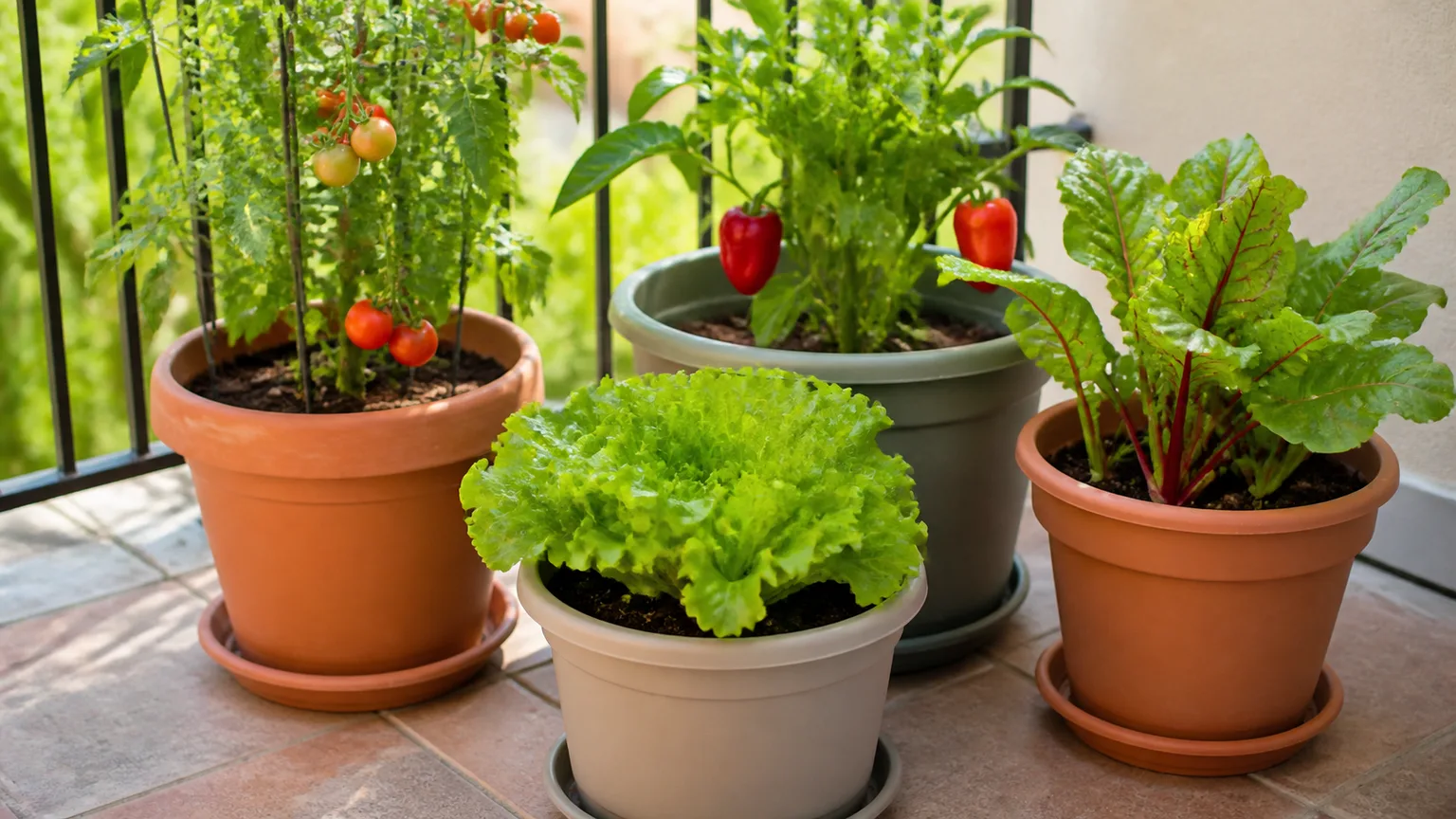
The best container for a vegetable garden is the one that gives a specific crop enough root room, drains freely, and fits the way you actually water and harvest. A deep fabric bag can be excellent for potatoes but frustrating for a gardener who cannot water often; a reservoir planter can steady moisture but may be awkward to move once full. The right choice is less about finding a universally “best” material and more about matching the container to the crop, site, and maintenance you can provide.
This comparison covers six useful choices: self-watering planters, large rigid pots, fabric grow bags, safe reused vessels, straw bales, and baskets. It also explains what each choice does well, what can go wrong, and how to narrow down the options before you buy or repurpose anything.
Choose your crop and site first
Start with the harvest and the spot. A caged tomato, a row of salad greens, and a potato plant need different root space. A sunny driveway, windy balcony, or shaded porch also changes moisture, stability, and light demands.
Count direct-sun hours at the actual growing spot rather than relying on how bright it looks at noon. Fruiting crops usually need the sunniest position: Penn State Extension lists at least six hours for tomatoes and peppers, while Colorado State University Extension gives eight hours for fruiting vegetables in its container guidance. Treat the lower figure as a practical floor, not a guarantee of abundant fruit; check the seed packet or regional growing guide for your crop and climate. Leafy vegetables can tolerate less direct sun, and they often appreciate some afternoon shade in hot weather.
On a balcony, check building load limits for wet mix, mature plants, and stored water. Also decide how often you can water: fabric bags and small pots need close checks, while larger planters or reservoirs buffer short gaps.
Four checks every vegetable container must pass
Every vegetable container needs mature root room, reliable drainage, an airy mix that holds moisture, and stability in wind. Colorado State Extension notes waterlogged mix deprives roots of oxygen and undersized pots hold less moisture; Fine Gardening’s review of Jessica Walliser’s Container Gardening Complete likewise emphasizes matching containers and growing conditions (Fine Gardening).
Drainage and a workable root zone
For ordinary pots and planters, look for open drainage holes in the bottom or lower sides. Water needs a route out after a thorough watering; without one, the soil can stay saturated even if the surface looks dry. A sealed decorative cachepot can still be useful as an outer sleeve, but put a smaller growing pot with drainage inside it and empty excess water from the outer vessel rather than letting the root ball stand in it.
Use a light container potting mix, not dense soil dug from a garden bed. A bagged vegetable or general container mix usually combines materials such as bark, coir, peat, perlite, or vermiculite so it can hold some water while leaving pore space for air. Do not add a layer of gravel to the bottom as a substitute for drainage: it takes away usable root depth and does not turn a pot with blocked or absent holes into a well-drained one. If drainage holes are large enough to lose mix, cover them with a small piece of mesh or a coffee filter without sealing them.
Container medium also affects upkeep: shallow baskets need frequent checks, while deep troughs can stay too wet. Penn State Extension recommends soilless mix, with finished compost as an optional addition. Follow product directions to preserve pore space.
Size, material, and stability
Match the container to the plant at mature size, not the small transplant in its nursery pot. Penn State Extension suggests a pot around 20 inches wide for a single tomato and about 14 inches for peppers or eggplants; Colorado State Extension uses a five-gallon minimum for several larger vegetables and three gallons for crops such as lettuce, beets, and carrots. Those are starting points from regional guidance, not universal guarantees. A compact variety, a hot climate, a windy roof, or a particularly dry mix can change what is comfortable to manage. For a broader crop-by-crop starting chart, see our vegetable container gardening guide.
Material changes the watering rhythm. Plastic and glazed pots retain moisture longer than porous terracotta or unlined wood, while terracotta’s exposed sides can dry the root zone faster. Fabric allows airflow through the sides and is lightweight, but it dries more readily than a closed plastic pot. If you travel often or miss watering, lean toward a larger, moisture-retentive planter and a site protected from hot, drying wind; if you grow in a rainy area, pay closer attention to drainage and do not use a saucer that keeps the base submerged.
Weight matters before and after planting. Wet mix can make a large pot too heavy to move, so choose its final spot early or use a rated caddy. Install the cage or trellis before filling the pot; adding a support through established roots is harder.
Six containers worth considering
The table summarizes six options; the sections below explain their daily trade-offs.
| Container | Best fit | Main advantage | Main watch-out |
|---|---|---|---|
| Self-watering planter | Tomatoes, peppers, greens when steady moisture is useful | Water reservoir can buffer short gaps between checks | Reservoir needs refilling and the planter is heavy when full |
| Large rigid pot or trough | Fruiting crops, greens, roots in a stable footprint | Durable, easy to size and support | Big pots can be expensive to fill and difficult to move |
| Fabric grow bag | Potatoes, tomatoes, compact crops, temporary gardens | Light, folds for storage, breathable sides | Dries faster and can be harder to keep evenly moist |
| Safe reused vessel | A low-cost, one-season test garden | Makes use of a suitable box, tub, or food-safe bag | Unknown materials, weak handles, or no drainage make it a poor choice |
| Straw bale | A sunny surface where soil beds are impractical | Creates a raised, composting growing surface | Needs advance conditioning, steady water, and continued feeding |
| Wide or hanging basket | Loose-leaf greens, herbs, and compact trailing crops | Uses vertical space and keeps harvest close | Small volume dries quickly and can swing in wind |
1. Self-watering boxes and reservoir planters
A self-watering planter separates a growing bed from a water reservoir below it. A wick or connected soil column draws water upward as the mix dries, so you refill a reservoir instead of pouring water over the surface every time. The larger soil volume and more even moisture make this style a strong option for a sunny patio where tomatoes, peppers, or a long row of lettuce would otherwise demand frequent watering.
The benefit is consistency, not independence. A reservoir still empties, and a plant in full sun can use water quickly as it grows and sets fruit. Check the water indicator or reservoir opening on a schedule, and verify moisture in the upper root zone while you learn the planter: a full reservoir does not necessarily mean every part of a large potting mix is evenly moist. Penn State Extension notes that vegetables in containers need regular watering in hot summer conditions; a reservoir makes that job easier to manage, but does not remove it.
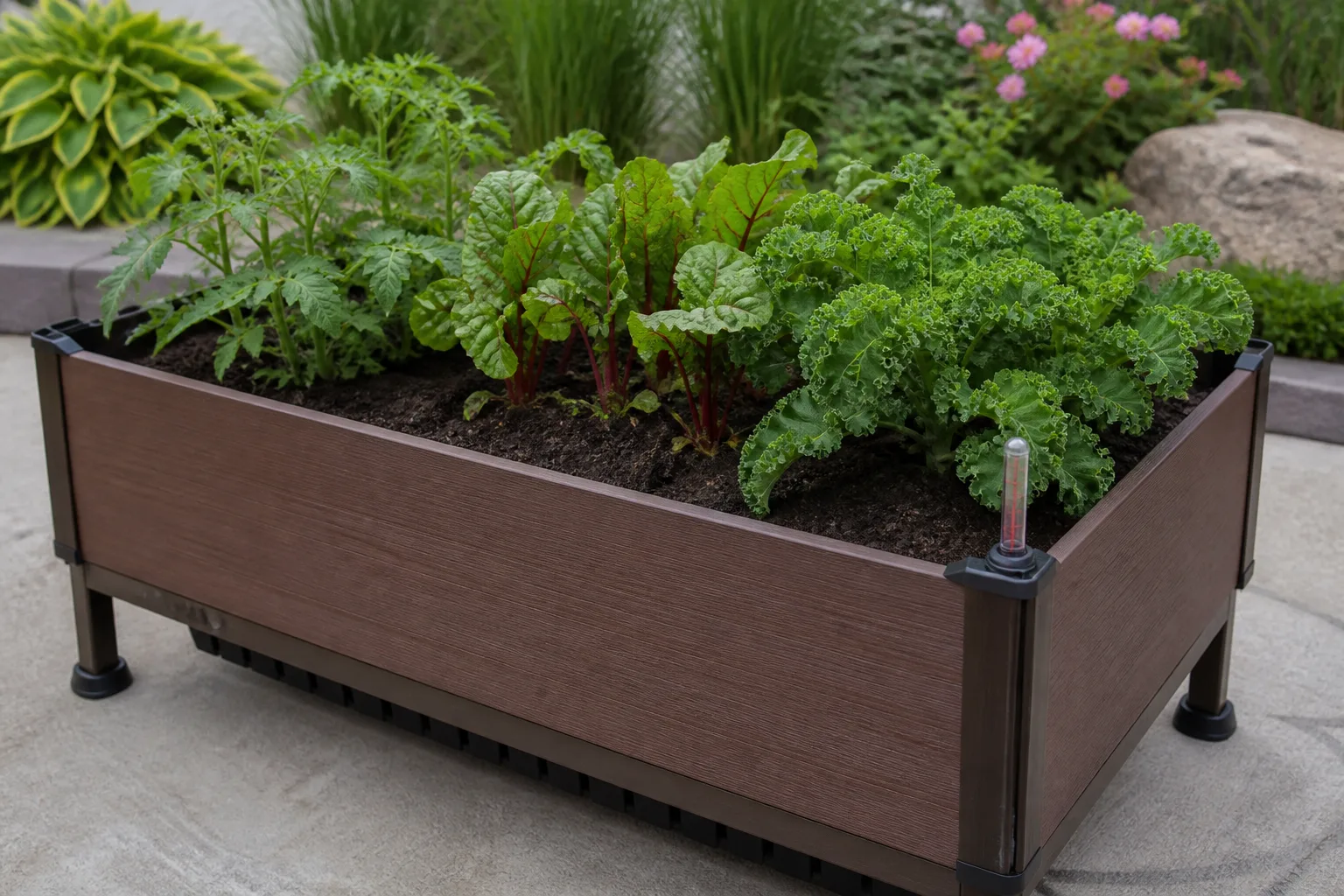
Choose this design when you want a steady supply of water and a container wide enough for the crop, not just because a product claims to be low-maintenance. Check for an overflow route so rain or overfilling cannot keep the growing zone saturated. Also consider where the planter will sit before filling it: the reservoir, frame, and wet mix make a large raised model difficult to relocate once planted.
2. Large rigid pots and troughs
A large nursery pot, resin planter, glazed container, wooden box, or trough is the most flexible starting point for many vegetable growers. The shape is easy to match to the crop: a wide trough can hold a line of lettuce or several herbs, while a deep round pot can support one tomato, pepper, eggplant, or compact cucumber. Choose the largest size that fits the site and your budget; more mix gives roots room and makes the pot less sensitive to a missed watering than a tiny decorative pot.
Stability is the main advantage for tall or trellised plants. A heavy container and a broad base help counterbalance a cage, trellis, or full canopy, and square planters can use balcony space efficiently. If the pot has tapered sides, confirm a stake or support can still be anchored securely; some garden cane supports wobble when the container narrows toward the base. Use compact or determinate varieties if you want a tomato that fits a smaller patio setup, but do not crowd a full-size plant simply because its nursery pot looked small.
Large pots use substantial mix and can be hard to move once filled. Set them on a firm, level surface, check drainage before planting, and choose a material whose moisture retention matches your watering routine.
3. Fabric grow bags
Fabric grow bags are a practical choice when storage space is tight or when you want to move a container garden between seasons. They fold flat, come in many sizes, and suit crops such as potatoes, tomatoes, peppers, or compact greens when the bag is large enough for the root system. Savvy Gardening’s guide to vegetable container gardening describes using fabric bags for potatoes, tomatoes, and kale, while also emphasizing that crop size and pot size need to match.
The porous sides are both the appeal and the limitation. Air movement can discourage roots from circling around a smooth pot wall, but those same sides release moisture more quickly than plastic. In hot, windy weather, a fabric bag may need more frequent watering than a rigid planter of similar volume. Use the bag size recommended for the variety, water slowly until the whole root zone is moist, and place it where runoff will not stain or damage the surface below.
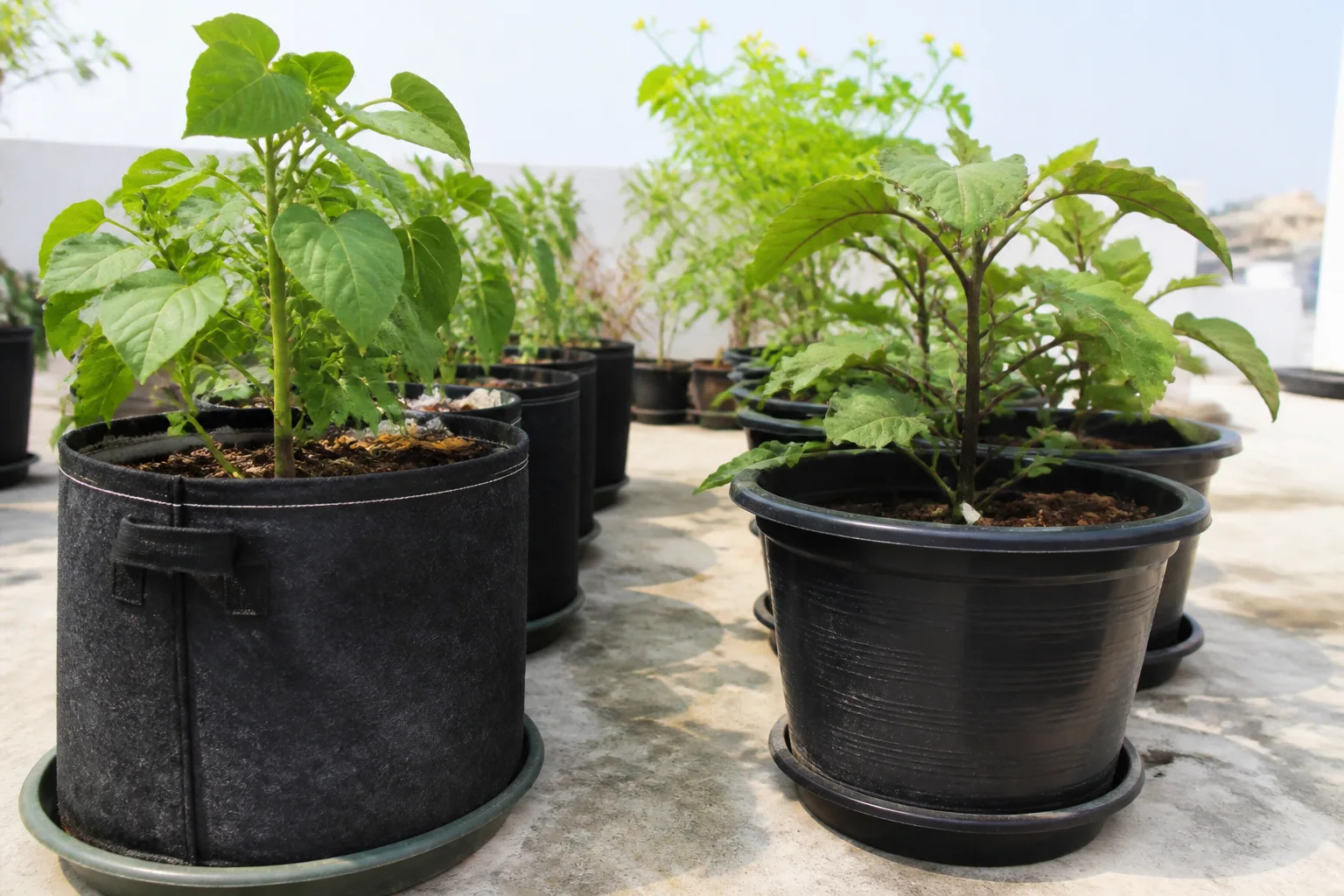
Bags with sturdy handles are useful before they are planted, but do not assume a handle makes a wet, root-filled bag easy to carry. Move it before filling, or leave it in place for the season. At cleanup, empty the mix, remove roots and plant debris, wash the bag according to its care instructions, let it dry fully, and store it out of prolonged sun. A fabric bag can be a good seasonal tool without being a permanent planter.
4. Reusable bags and safe upcycled vessels
A reused tub, wooden crate, or durable shopping-style bag can turn an unused sunny corner into a small garden, but “repurposed” does not automatically mean suitable for growing food. Start with the material history: choose a vessel made for food contact or sold for planting, with no residue from fuel, paint, cleaners, or other chemicals. If you cannot identify what it held or whether its liner is safe around food crops, use it for ornamentals instead or pick a known food-safe planter.
Then make it function like a proper pot. It needs enough depth for the crop, reliable drainage openings, and a base that will not sag when the growing mix becomes wet. A reusable bag that has a thin, peeling lining or weak seams may last only a few waterings; a rigid crate may need a liner that holds mix but does not block water from escaping. Add drainage openings before filling, place the container where excess water can run safely, and avoid a shape so narrow that mature roots are crowded.
Upcycling suits one-season greens, herbs, or compact varieties better than a large tomato in a flimsy carrier. Test the filled container for leaks, sagging, or blocked drainage before planting; a bargain is useful only if it will not become a daily rescue job.
5. Straw bales for a no-dig surface garden
A straw bale is not a conventional pot, but it can function as a raised growing bed when you cannot dig or want to garden on a hard surface. The plants root into a conditioned bale rather than a container full of soil, so the method offers height, a fresh surface, and an end-of-season bale that can be composted. It is especially useful when bending is difficult or when a sunny driveway is the only available growing area.
The critical step is preparation. Clemson Cooperative Extension recommends placing bales in sun about two weeks before planting, then conditioning them with water and fertilizer while the interior decomposes and warms. Plant only after the bale has cooled; Clemson gives 99°F or below as its threshold for planting. The conditioning schedule and fertilizer amounts are specific to its regional guidance, so follow a current extension recipe for your area rather than copying a generic timetable or improvising with extra fertilizer.
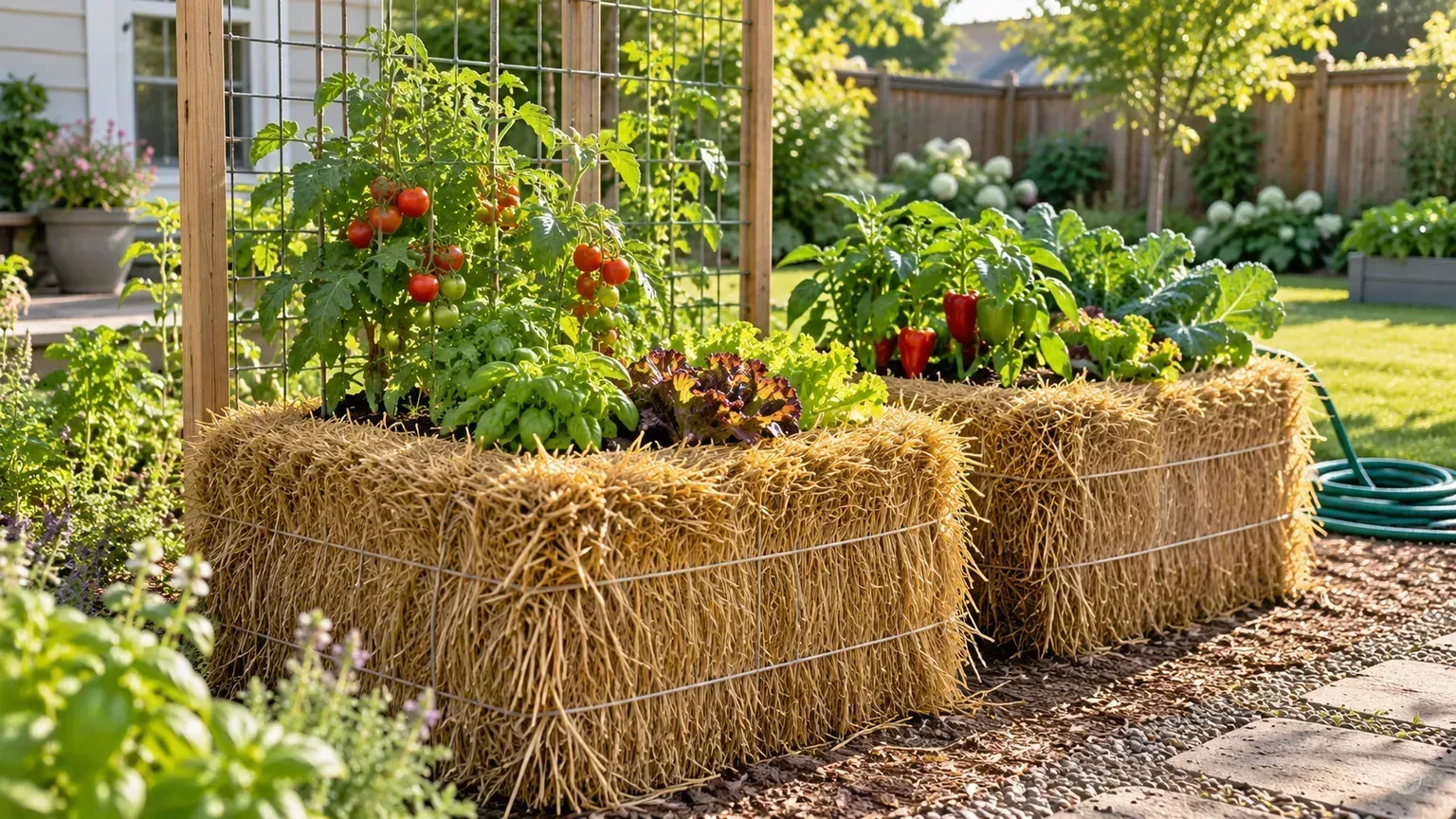
Bales need steady moisture and ongoing nutrition because water and nutrients can leach through them. Clemson Extension advises daily moisture checks and continued fertilizing, so this is not a low-water shortcut. Buy clean straw rather than weedy hay and ask about herbicide exposure if the source is uncertain; treated runoff can also injure crops. Support tall plants only after the bale is stable.
6. Wide baskets and hanging baskets
A wide basket lined with a material that holds mix while still allowing water to drain can grow shallow-rooted salad greens, herbs, or compact trailing vegetables. Baskets work on a patio, table, railing, or secure hook, and they can turn otherwise unused vertical space into harvest space. A wide, shallow vessel is more useful for a cut-and-come-again lettuce planting than a deep narrow pot because greens spread sideways while remaining easy to reach.
The small soil volume makes a hanging basket the most demanding option in hot, dry, or windy weather. A breeze can dry coir or fabric quickly; sow in small successions, harvest outer leaves, and check moisture daily in warm spells. BBC Gardeners’ World’s guide to growing vegetables in pots likewise matches salad leaves to shallow containers.
Use baskets for modest roots and light mature plants: loose-leaf lettuce, parsley, thyme, or a compact trailing tomato, not a full-size caged tomato or squash. Secure the hook, keep the basket from swinging into people or windows, and direct runoff away from neighbors and unprotected decks.
Match the container to the crop
Match the container to mature roots and growth habit. “Bush,” “patio,” “dwarf,” and “compact” varieties are easier to manage, but still need adequate mix and water. Colorado State Extension uses a five-gallon minimum for tomatoes, peppers, eggplant, cucumbers, cabbage, and beans, and three gallons for lettuce, beets, carrots, and green onions. Treat these as regional starting points; check variety guidance and size up if space allows.
| If you want to grow… | Start with… | Why it fits |
|---|---|---|
| Lettuce, spinach, arugula, or herbs | Wide trough, shallow pot, or broad basket | Surface area matters and small harvests are easy to reach |
| Carrots or beets | Deep rigid pot or tall grow bag | Roots need a clear column of mix without compacted garden soil |
| Potatoes | Deep fabric grow bag or sturdy tub | The flexible sides make harvesting and emptying easier |
| Tomato, pepper, or eggplant | Large rigid pot or reservoir planter | Root space, steady moisture, and support matter more than portability |
| Peas or pole beans | Deep pot or grow bag plus a stable trellis | The container anchors roots while the support carries vertical growth |
Best choices for greens, herbs, and roots
Lettuce, spinach, mustard greens, and many culinary herbs suit wide, shallow troughs because you can sow a small row, harvest outer leaves, then resow as the season changes. Put a broad container in a spot with enough morning or filtered light, especially in hot climates where tender leaves can bolt or turn bitter in intense afternoon heat. A basket can also work, but use it for smaller plantings and expect to water more often than you would a large trough.
Root crops ask a different question: depth. A short, wide planter may look spacious but still produce stubby carrots if the selected variety needs a longer root run. Choose short-rooted or round carrot varieties for a shallower vessel; for standard carrots or potatoes, use a deeper container that can hold a loose, stone-free mix. Potato bags and tubs also make it easier to add mix around developing stems or tip out the harvest, but they take a lot of water and mix when used at useful scale.
Keep roots and greens in separate containers if their depth, watering, or harvest needs differ. You can move a cool-season lettuce trough into afternoon shade without depriving sun-loving carrots or fruiting crops nearby.
Best choices for fruiting crops and climbers
Tomatoes, peppers, eggplants, cucumbers, and beans have larger root systems and a longer period of active growth than a quick lettuce crop. Use a large container with drainage and enough soil volume to buffer moisture swings. For tomatoes, Penn State Extension’s 20-inch-wide pot guideline gives a useful starting point; choose more volume for an indeterminate plant or a hot, exposed site if you can support and water it. A rigid pot or a self-watering box usually offers more stability than a small hanging basket.
Climbing crops need a support that can handle the mature plant, rain, and wind. Gardeners’ World recommends using large pots for vegetables and notes that deep pots help provide stability for tall crops; it also cautions that tapered sides can make it hard to anchor canes. Install a trellis, cage, or stake before the roots fill the pot, and position a climbing bean or pea planter where the support will not shade smaller crops. A compact variety can reduce the required footprint, but it still needs room for roots and access for harvest.
Avoid treating every large plant as a good small-container crop. Sweet corn, full-size winter squash, and watermelons can grow in exceptional setups, but their height, vine spread, root demand, pollination needs, or support make them poor choices for a narrow balcony. If you are set on trying one, plan for a large container, strong support, ample sun, and frequent water before buying the seed; otherwise choose a compact crop that suits the space you have.
Set containers up to stay productive
Prepare the container before you bring home seedlings. Clean a reused pot, check its base for cracks, confirm that holes drain freely, and decide how the water runoff will be handled. Fill with fresh container mix rather than compacted yard soil; moisten dry mix before planting because peat- or coir-heavy media can initially repel water if they are completely dry. Leave enough headspace that watering does not wash mix over the rim, but do not plant so low that stems are buried or leaves rest on wet soil.
Place the container in its final location while it is still empty or only partly filled. If you must use a tray to protect a deck, elevate the pot or empty standing runoff promptly so drainage holes do not sit in water. Add a cage, trellis, or other support at planting time. Then plant at the spacing on the seed packet or transplant label, even if the empty container looks sparse; crowded leaves reduce airflow and make harvesting harder later.
A practical watering and feeding routine
Check the mix instead of following a calendar. Push a finger an inch or two into the root zone; if it is dry at that depth, water slowly until moisture reaches the full container and a little drains out. The top can look dry while lower mix is still moist, or the reverse can happen when water channels down the edge of a dried potting mix. If a pot keeps drying in hours, do not respond by giving it a tiny splash every time you walk past; use a larger container, add a thin mulch layer, group pots by water needs, or move the crop away from hot reflected heat.
Morning watering gives foliage and the soil surface time to dry during the day, and it is easier to notice which container needs attention before afternoon heat. Water at the soil line rather than repeatedly wetting foliage. During heat waves, a container exposed to sun and wind may need a check twice a day; a large, shaded pot in mild weather may go much longer. The pot material, plant size, root coverage, weather, and mix all change the schedule, so observe each pot and adjust instead of assuming all containers need the same amount.
Container plants have a limited reservoir of nutrients and are watered often enough to leach some nutrients out. Start with a mix and fertilizer program suited to edible crops, then follow the fertilizer label for dose and interval. Penn State Extension suggests using a slow-release fertilizer at planting and reapplying a soluble fertilizer every two to four weeks in its general container-vegetable guidance; that interval is not a license to exceed the label or combine products blindly. If plants look pale or stop growing, check moisture and root health first before adding more fertilizer, because waterlogged roots or excess salts can imitate nutrient problems.
Mistakes that make containers harder to manage
- Choosing by diameter alone: A wide but very shallow pot may not suit tomatoes, carrots, or potatoes. Check both width and depth against mature roots.
- Using no drainage or blocking the holes: Waterlogged mix suffocates roots. A self-watering unit should have a reservoir overflow path; a standard pot needs open drainage.
- Filling with garden soil: Dense soil settles and can reduce air movement. Use a container mix designed to hold moisture without becoming a solid, heavy mass.
- Planting before the site is ready: Full pots are heavy, trellises are difficult to add later, and a bright balcony may still be too windy or shaded for the crop.
- Overcrowding for an instant harvest: Several small seedlings become mature plants with competing roots. Thin them to label spacing even when the container initially looks empty.
- Using an unknown vessel for edible crops: Avoid containers with uncertain prior contents, peeling coatings, or materials not intended for food contact.
Conclusion
Choose a vegetable container by working backward from the crop: decide how much root room it needs, where it will get its sun, how you will support the mature plant, and how often you can water. A large rigid pot is dependable for fruiting crops; a grow bag is handy for seasonal roots and flexible storage; a reservoir planter helps even out moisture; and baskets or reused vessels make sense only when their size, material, drainage, and location fit the job.
Straw bales extend the same idea to a no-dig surface, but they need time to condition and consistent water and feeding after planting. None of these systems replaces attention to the root zone. Pick the container that solves your biggest constraint, use a fresh, well-draining medium, and give the plant the space and light its mature size demands.