Angel Wing Begonia: Indoor Care Guide
Grow angel wing begonias indoors with bright indirect light, steady humidity, and a watering rhythm that avoids root rot—plus pruning, propagation, and pet safety.
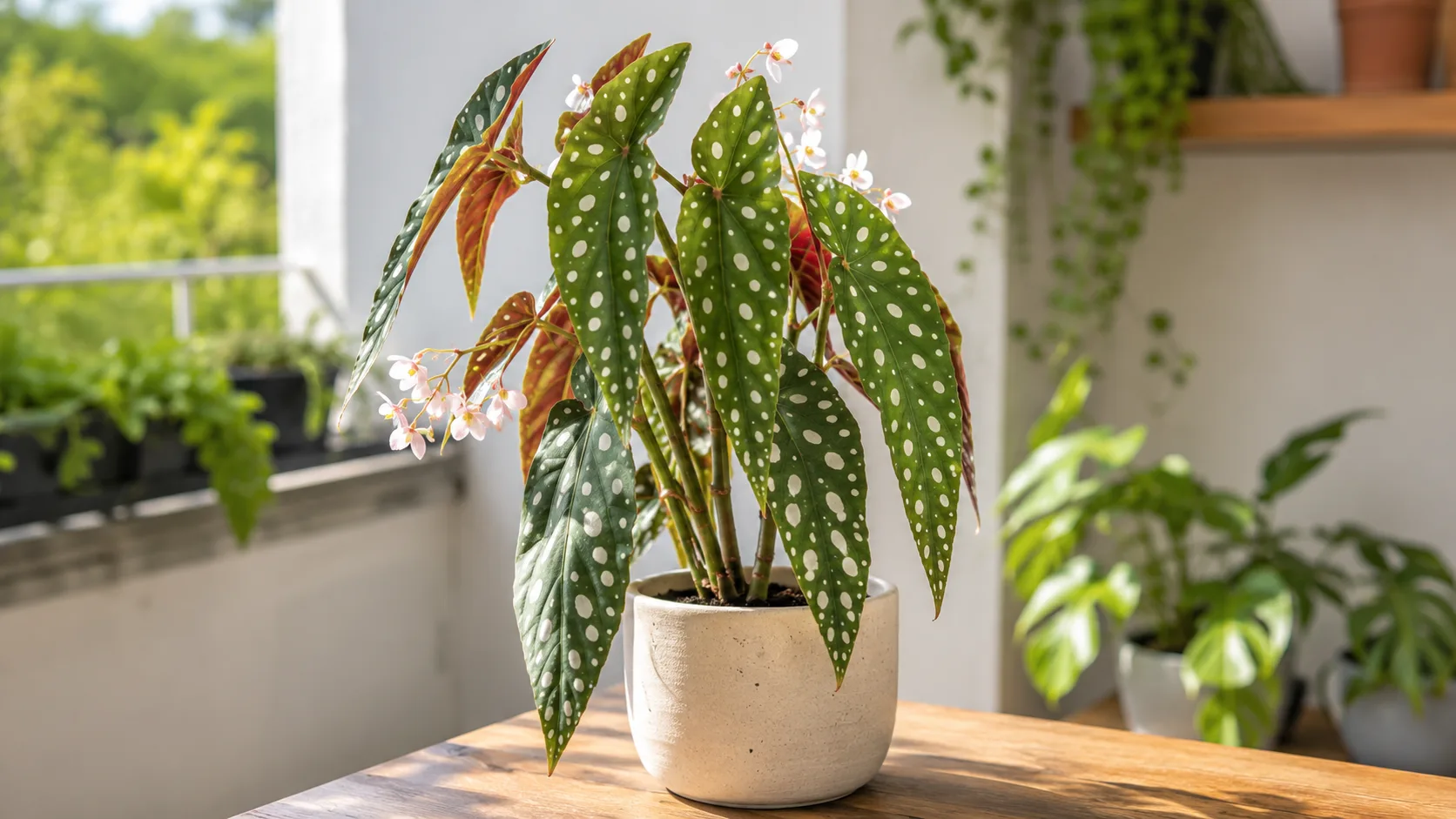
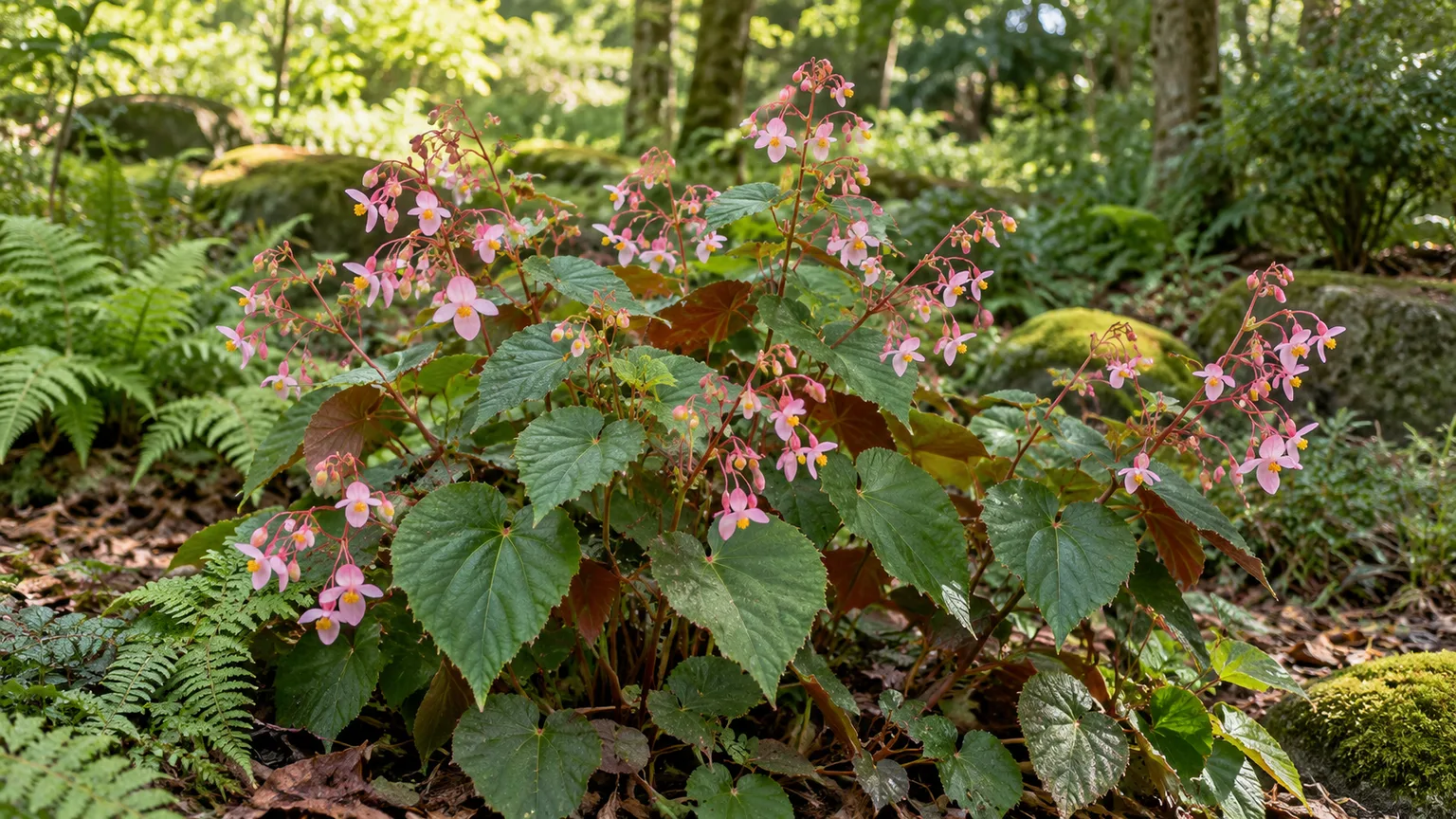
An angel wing begonia looks like it belongs in a greenhouse mural—wing-shaped leaves splashed with silver, red undersides, and dangling clusters of pink or coral flowers when the plant is truly happy. The care reality is less Instagram, more rainforest math: these are cane-type begonias from Brazilian understory, built for filtered light, warm stable air, and soil that stays moist without drowning fibrous roots. Nail those variables and a cane begonia can push substantial growth in six weeks; miss one pillar and you get the familiar spiral—crispy leaf edges after a sunny windowsill move, leggy stems reaching for light, or wilt that worsens when you add more water to already soggy mix.
This guide covers what “angel wing” actually means on a nursery tag, how to place and water the plant indoors, when to pinch and stake, how to propagate stem cuttings that match the parent, and what to do when blooms or foliage slip. For species-specific depth on the most common spotted cane begonia sold today, bookmark the Begonia maculata hub and its watering, light, and propagation pages as you work.
What Angel Wing Begonia Is (and What the Label Really Means)
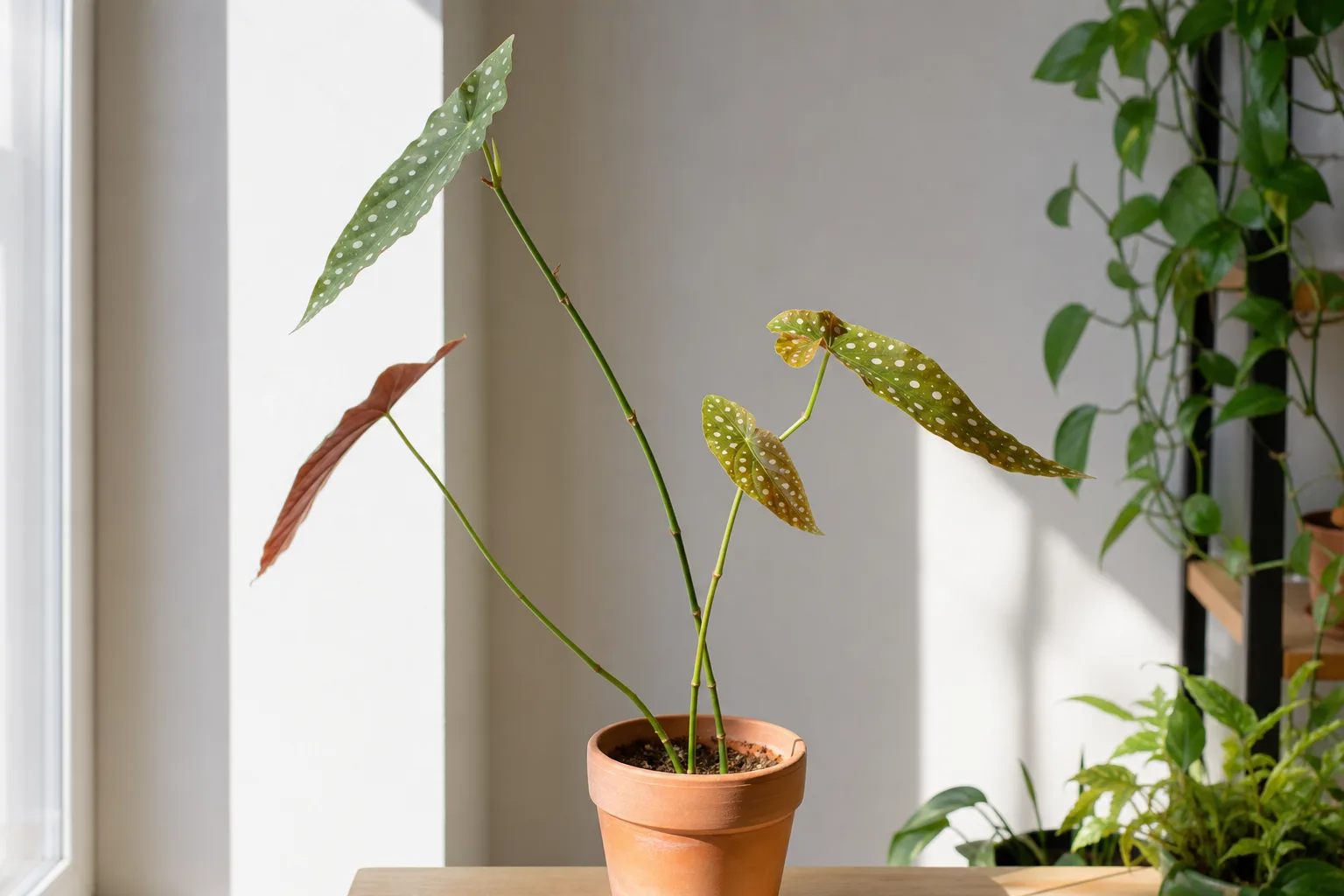
Angel wing describes leaf shape—elongated, asymmetric, pointed like a bird’s wing—not one single species. Retail pots labeled angel wing are almost always cane-type begonias: upright, bamboo-like stems with swollen nodes, fibrous roots, and showy foliage. The classic hybrid lineage traces to crosses such as Begonia aconitifolia × Begonia coccinea, often grouped under names like Begonia × corallina or old cultivars such as ‘Corallina de Lucerna’ (Lucerna). NC State Extension lists cane types under common names angel wing begonia, polka dot begonia, and spotted begonia, with dozens of hybrids differing in spot density, leaf color, and flower hue (NC State Extension — Cane-Type Begonias).
That naming mess matters when you shop. A pot marked only “angel wing” may be Begonia maculata, a bronze-leaf hybrid, or a chartreuse ‘Canary Wings’ selection. Core care overlaps—partial shade, humidity, moist well-drained soil—but bloom color, mature height, and drought tolerance vary. When in doubt, match care to cane anatomy (tall segmented stems) rather than chasing a perfect botanical name on a faded tag.
Cane Begonias vs Rex and Wax Types
Cane begonias grow upward on stiff stems and want more vertical space than rex types. Rex begonias are rhizomatous: a horizontal stem at the soil line, shallow pots, and painted foliage with little emphasis on flowers. Wax begonias (Begonia semperflorens) are sun-tolerant bedding annuals grown for continuous small blooms, not spotted angel-wing leaves. Cane types sit in the middle for indoor difficulty—more forgiving than rex in bright rooms, less tolerant of direct sun and dry air than wax begonias outdoors. If you already grow a polka dot begonia, you understand cane rhythm; this page broadens that framework to the whole angel wing group, including unnamed hybrids.
Angel Wing Begonia Quick Reference
| Factor | Indoor target | First sign something is off |
|---|---|---|
| Light | Bright indirect; partial shade (2–6 hrs gentle light) | Leggy stems, faded spots, no blooms |
| Water | When top 1 inch of mix is dry | Yellow lower leaves = often too wet |
| Soil | Moist, humus-rich, well-drained; slightly acidic | Sour smell, mushy stems at soil line |
| Temperature | 65–75°F (18–24°C); never below ~50°F | Cold wilt overnight near drafty glass |
| Humidity | 50–60%+; pebble tray or humidifier | Crispy leaf margins in heated rooms |
| Fertilizer | Diluted liquid every 2–4 weeks in active growth | Big leaves, no flowers = excess nitrogen |
| Mature size | 1–3 ft typical indoors; can reach 10 ft in ideal conditions | Top-heavy lean without staking |
| Pets | Toxic to cats and dogs (oxalates) | Keep off reachable shelves |
| Outdoor | USDA zones 10–11 year-round; summer patio elsewhere | Bring in before nights drop below ~60°F |
Use the table as a triage lens before you change three variables at once. Most angel wing emergencies trace back to one row.
Can You Grow Angel Wing Begonias Indoors?
Yes—and for most U.S. growers, indoors is the default. Cane begonias are native to Brazilian rainforests and perform best in partial shade, high humidity, and moist, well-drained, humus-rich soil (NC State Extension). Your heated living room is not a cloud forest, but you can approximate one with an east window, a pebble tray, and a watering check before every soak. NC State notes cane types are among the best-performing begonias for houseplant use and patio containers in frost-free climates.
Indoors, expect rapid growth when light and warmth align—sometimes noticeable extension within weeks on a healthy cutting. Growth slows in short winter days; that is normal, not a death sentence. Do not confuse seasonal rest with failure. Reduce water and pause fertilizer when new leaves arrive slowly and room temperatures dip. A cane begonia that drops a few older leaves in winter while holding firm stems usually rebounds in March when you restore brighter light and a gentle feeding schedule.
Light Requirements for Spotted Foliage and Blooms
Angel wing begonias need bright, indirect light year-round—the dappled brightness of a rainforest edge, not the blast of a south-facing sill at noon. An east-facing window is often ideal: several hours of soft morning sun without scorching heat. West windows work with sheer curtains; south exposures need the pot several feet back from glass or filtered with a shade cloth indoors. NC State classifies cane types as partial shade plants (NC State Extension).
Unlike rex begonias, cane angel wings tolerate a little more light and may bloom better with it—but they are not wax begonias that laugh at full sun. If you do not want flowers, a shadier spot will keep foliage lush while reducing bloom energy; most growers want both leaves and panicles, so aim for bright filtered light instead of dark corners.
Winter is the exception many guides skip: a few hours of gentle direct sun on a winter windowsill can help when daylight is weak, especially if the plant shares space with other winter-blooming companions. Watch leaf surfaces for bleached patches and pull back if scorch appears.
Signs Your Plant Is Getting Too Much or Too Little Light
Too much light shows up as pale or washed-out leaves, brown crisp patches on the side facing the window, and dry edges even when soil moisture looks fine. Move the plant back, add a sheer curtain, or shift to an east exposure. Too little light produces long internodes (leggy stems), smaller leaves, silver spots that lose contrast, and few or no flower clusters. If a cane stretches toward one direction, rotate the pot weekly and add a full-spectrum grow light 12–18 inches above the canopy for 10–12 hours daily until new growth compacts.
A quick field test: hold your hand between the plant and the window at midday. A soft, blurry shadow usually means usable indirect light; a sharp dark shadow means you are closer to direct sun than cane begonias prefer.
Soil, Pots, and Drainage That Cane Roots Need
Angel wing begonias have fine, fibrous roots that need oxygen as much as moisture. Plant in a moist (not soggy) mix high in organic matter with good drainage—NC State describes the ideal as humus-rich loam with acidic to neutral pH (NC State Extension). A reliable indoor blend:
- 70% peat-free houseplant potting mix
- 30% perlite or pumice for pore space
- Optional 10% orchid bark if you tend to water heavily
Some growers recommend a slightly heavier mix for tall canes, but it must still drain within seconds when you water. Cane stems benefit from slightly denser mix than rex rhizomes without sacrificing pore space. Terracotta pots help wick excess moisture in overwater-prone homes; plastic is fine if you check soil religiously. Always use drainage holes—cache pots without holes are a fast route to stem rot.
Pot size: cane begonias prefer being slightly root-bound. Size up only 1–2 inches when roots circle the pot or water runs through instantly. An oversized pot holds wet mix the roots cannot use, the classic setup for rot on a plant that “always looks thirsty.”
Watering Angel Wing Begonias Without Root Rot
The rule that saves more cane begonias than any gadget: water when the top inch of potting mix feels dry, then soak until a little water exits the drainage hole and empty the saucer within 30 minutes. Angel wing leaves telegraph drought with brown, crisp edges; chronic overwatering yellows lower leaves and softens stems at the soil line. Longfield Gardens summarizes the target as “moist but not soggy”—hydrated roots, never standing water (Longfield Gardens — Angel Wing Begonia Care Indoor).
In bright active growth, that may mean watering every 5–7 days; in cool dim winter, 10–14 days or longer. Never water on a calendar without touching the soil. If the plant wilts, check moisture first: dry, light pot = underwatered; wet, heavy pot = overwatered. Matching the wrong fix kills faster than waiting one day.
Use room-temperature water. Cold tap water can shock tropical roots. Avoid repeatedly splashing leaves—wet foliage plus stagnant air invites powdery mildew, which cane begonias are prone to when airflow is poor (NC State Extension). If edges brown despite good watering rhythm, raise humidity before you chase fertilizer.
Humidity and Temperature for Rainforest Comfort
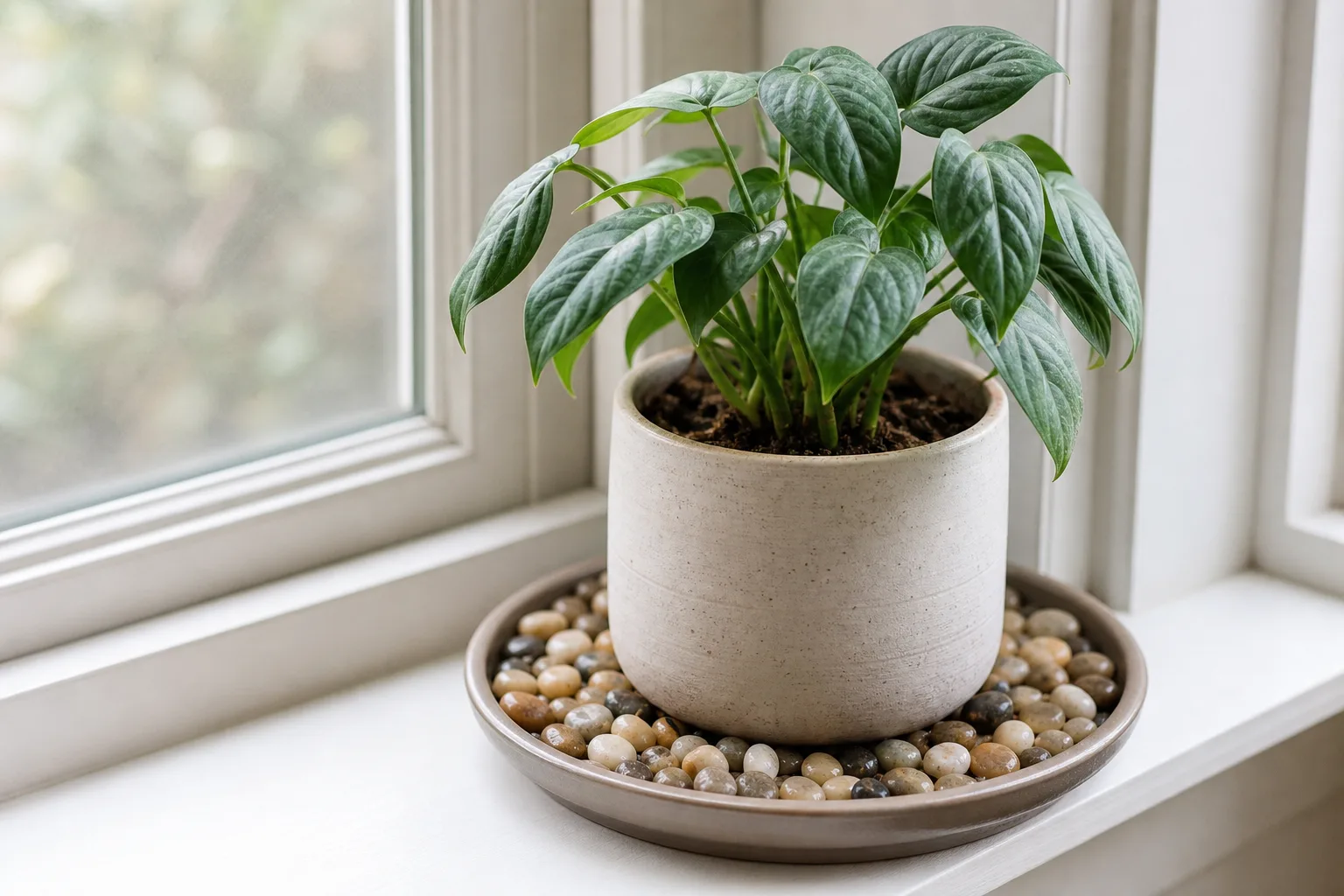
Cane begonias are humidity tolerant in extension tagging because they evolved under canopy mist—but average heated homes still run too dry, especially in winter. Aim for 50–60% relative humidity or higher. Effective tools:
- Pebble tray with water below stone tops (not submerging the pot base)
- Small humidifier nearby—not misting leaves
- Grouping plants to share transpired moisture
- Bright bathroom or kitchen if light is adequate
Temperature sweet spot: 65–75°F days, avoiding sustained drops below 50°F, which damages canes and can kill tissue (NC State Extension). Keep plants off drafty winter sills, forced-air vents, and AC blasts. Night temperatures in the high 50s°F are a warning to move outdoor summer plants inside.
Fertilizer Timing That Supports Flowers
Angel wing begonias are moderate feeders during active growth, not hungry monsters. From spring through early fall, feed a balanced liquid houseplant fertilizer at half label strength every two to four weeks while the plant produces new leaves. Longfield Gardens recommends diluting to avoid root burn and pausing feed in late fall and winter when growth rests (Longfield Gardens).
To encourage blooms, switch to a formula with higher phosphorus (the middle N-P-K number) as flower clusters form—late winter into spring for many hybrids. Avoid heavy nitrogen when you want panicles; it pushes leaves at bloom’s expense. If your plant is dark, dry, and unfed, fertilizer will not fix legginess—light comes first. Always apply to moist soil, never to dust-dry roots after a drought.
For bloom troubleshooting beyond feeding, see why begonias aren’t blooming when light and water look correct but flowers never arrive.
Pruning, Pinching, and Staking Tall Canes
Unpruned cane begonias become top-heavy with brittle stems—gorgeous until one lean snaps the main cane. Stake tall plants with bamboo or coated supports; tie stems loosely with soft twine at two heights so the cane cannot whip in drafts.
Pinching keeps plants bushy. Once a young plant reaches about 6 inches, pinch the top growing shoot to force lateral branches from nodes. Remove errant shoots that grow away from the main framework. After a full season, many growers cut canes back to about 6 inches twice yearly—once in late winter and again in late spring—to reset height and density. Use clean scissors; cut just above a node.
The best time for a hard prune is early spring as new growth emerges. You can pinch tips through summer for maintenance. Every pruning session is a propagation opportunity—save healthy tip cuttings (see below).
Propagating Angel Wing Begonia From Stem Cuttings
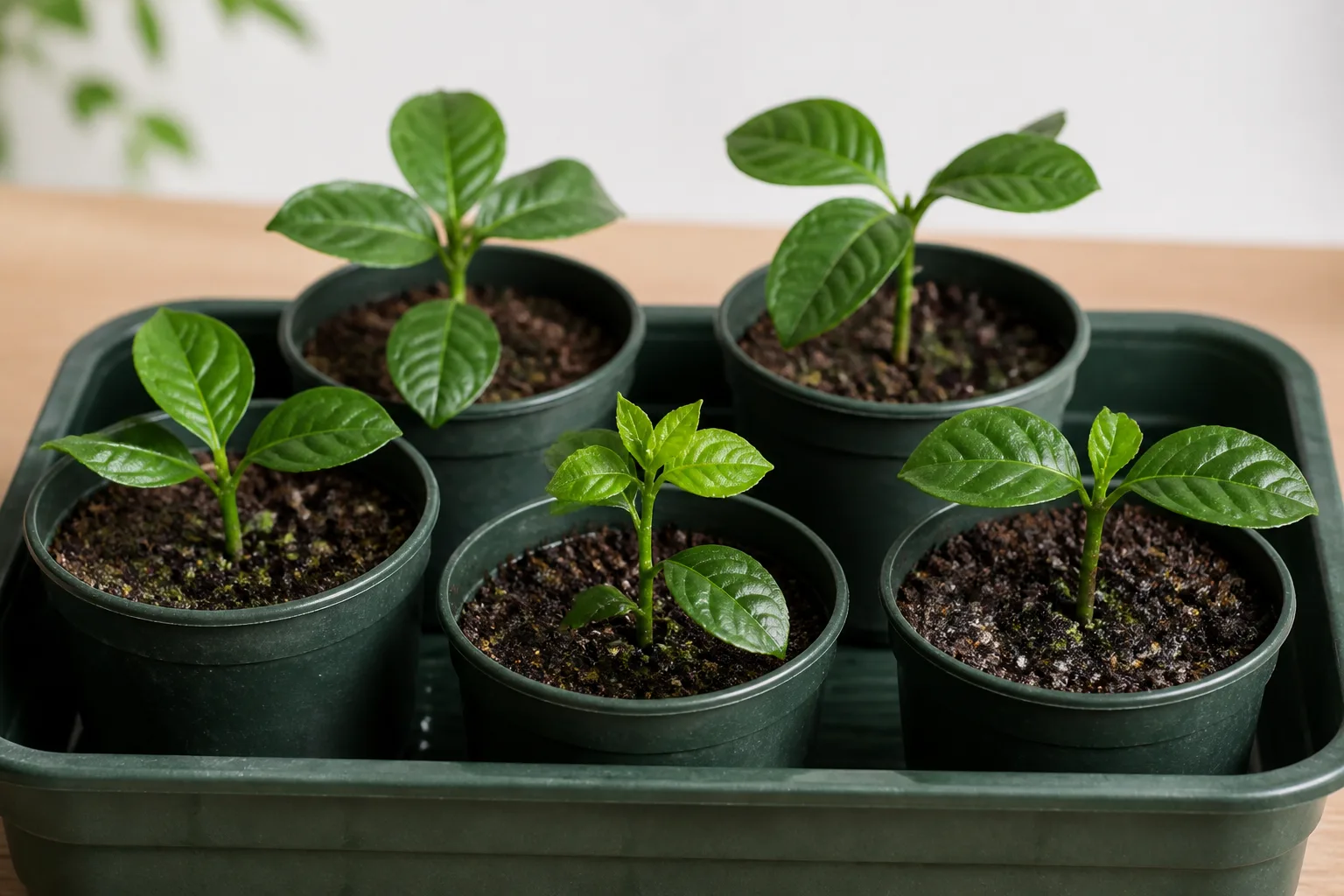
Hybrids do not grow true from seed; stem cuttings are the reliable path (NC State Extension). Cane begonias root readily when warmth and humidity align.
Soil method (most dependable indoors):
- In spring, select a healthy stem that has not flowered—flowering nodes root poorly.
- Cut a 2–4 inch tip just below a node; keep two leaves on the upper half.
- Optional: dip the cut end in rooting hormone; shake off excess.
- Insert into moist, well-drained potting mix; bury lower nodes, keep leaves above soil.
- Place in bright indirect warmth; keep mix evenly moist, not soggy.
- Test roots in 3–6 weeks with a gentle tug; repot when resistance is firm.
Water method: submerge lower nodes in a clear jar of room-temperature water in bright indirect light; change water when cloudy. Pot up when roots reach about 1 inch.
When to Propagate and Which Canes to Cut
Spring is ideal when sap rises; fall and winter cuttings root slower but still work—cover soil pots with a vented clear bag to hold humidity. Natural lifespan for many angel wing specimens is about five to six years before legginess wins; taking fresh cuttings each spring renews your collection without mourning a sparse old cane. Compost or discard tired parent plants that no longer branch well after a hard prune.
Division suits mature, multi-cane pots in early spring: split the root ball so each section has stems and roots, repot, and water thoroughly.
Repotting, Lifespan, and When to Start Fresh
Repot only when necessary—roots circling the pot, mix collapsed to dust, or the plant tips from top weight. Cane begonias thrive slightly pot-bound; premature upsizing invites rot. Best timing: early spring as new growth starts. Never repot during heavy bloom if you can avoid it; shock shortens flower display.
When you repot, move one pot size up, refresh the outer root zone, and stake immediately if height warrants. If a plant is more scaffold than foliage despite good culture—often after years in a drafty spot—take cuttings and retire the mother rather than fighting cold damage on woody canes.
Moving Angel Wing Begonias Outdoors for Summer
In USDA zones 10–11, cane begonias live outdoors in partial shade borders or containers protected from frost and direct midday sun (NC State Extension). Everywhere else, summer patio time is optional and rewarding if you acclimate slowly.
Going out: start with 2 hours of shaded outdoor time, add an hour daily over 7–10 days until the plant sits in filtered or dappled light—never harsh afternoon sun. Outdoor rain is fine in a drained pot; do not let roots sit in saucers that fill with storms.
Heat ceiling: most cane types tolerate days into the mid-80s°F if humidity and shade hold; wilting in afternoon heat means move deeper into shade. Bring plants in when nights fall toward the 50s°F—sustained cool damages tropical tissue.
Coming in: reverse-acclimate over two weeks (short indoor visits lengthening daily). Inspect undersides for pests; rinse or treat with insecticidal soap or horticultural oil before the plant joins your indoor collection. Skipping inspection is how whiteflies become a whole-room problem by November.
Common Problems: Pests, Mildew, and Legginess
NC State flags whiteflies, thrips, spider mites, and mealybugs on cane begonias, plus powdery mildew, botrytis, and stem rot when airflow and drainage fail (NC State Extension). Prevention beats cure:
- Isolate new plants two weeks before placement.
- Increase airflow without cold drafts; a small fan helps indoors.
- Water soil, not leaves; remove heavily infected foliage promptly.
- Quarantine and treat infested plants with soap or oil repeats until pests are gone.
Legginess is almost always low light plus skipped pinching—not a mysterious nutrient deficiency. Improve placement, prune back, and stake while new side shoots fill in. Brown leaf edges usually mean low humidity or inconsistent watering; fix environment before fertilizing. Yellow lower leaves with wet mix point to overwatering or poor drainage—see overwatering patterns on cane begonias for the shared diagnostic sequence.
If blooms fail despite good light and moisture, review phosphorus timing and avoid dark corners; the linked begonia blooming guide walks through the full checklist.
Pet Safety Around Angel Wing Begonias
Angel wing begonias are toxic to cats and dogs. ASPCA lists Begonia species under soluble calcium oxalates, with vomiting and salivation in dogs and cats; the most toxic parts are underground, though stems and leaves still matter when chewed (ASPCA — Begonia). NC State rates cane begonias as low-severity poison for humans but still flags problems for pets and horses (NC State Extension).
Display plants on high shelves, hanging baskets, or closed rooms pets cannot access. Pick up fallen leaves. If ingestion is suspected, call your veterinarian or ASPCA Poison Control at (888) 426-4435. Angel wing begonias are a poor fit for homes with plant-chewing pets—choose a non-toxic alternative rather than hoping training alone will suffice.
Conclusion
Angel wing begonias reward growers who think in canes, not calendars: bright filtered light, soil that breathes, humidity without wet leaves, and pruning that keeps tall stems branched and supported. Learn the wilt test before you water, renew plants with spring cuttings before old canes go sparse, and acclimate patio summers slowly so autumn pests do not move indoors. Whether your tag says Lucerna, maculata, or simply “angel wing,” the same rainforest logic applies—and a well-staked, spotted cane in bloom is still one of the easiest showpieces in the begonia family once you match its basic climate.