Dragon Tree Indoor Care: Dracaena Marginata Guide
Learn dragon tree indoor care for light, watering, soil, pruning, propagation, repotting, pests, brown tips, yellow leaves, and pet safety.
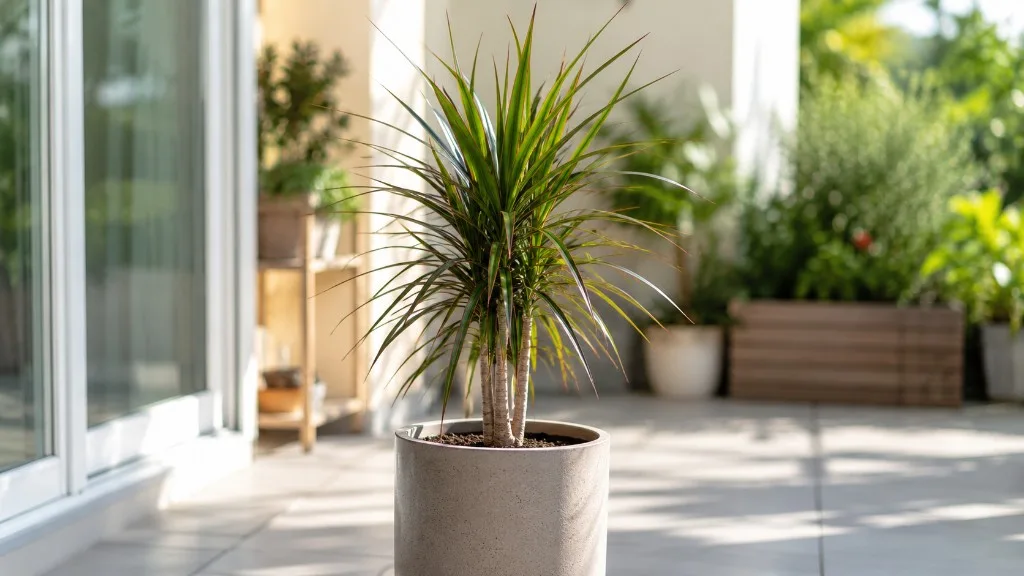
The dragon tree, usually sold as Dracaena marginata, is a tall, narrow houseplant with woody canes and tufts of strap-like leaves. It earns its low-maintenance reputation because it tolerates missed waterings and a range of indoor light, but it is not indestructible: dense wet soil, sudden hot sun, cold drafts, and poor water quality can all leave lasting damage.
The reliable routine is simple. Give it bright filtered light, let the upper part of the mix dry before watering, use a small pot with fast drainage, and prune only when you have a clear reason. The details below explain how to adjust that routine for a dim room, a variegated cultivar, a dry apartment, or a plant already showing brown tips or yellow leaves.
Quick care at a glance
| Need | Practical target |
|---|---|
| Light | Bright indirect light; lower light is survivable but slows growth and fades variegation. |
| Water | Check the mix; water when the top 2 inches are dry, then drain completely. |
| Soil | Loose, airy, well-draining houseplant mix amended with perlite, pumice, or bark. |
| Temperature | Stable indoor warmth, roughly 65–80°F (18–27°C), away from drafts and radiators. |
| Humidity | Average household humidity is usually adequate; improve dry airflow, not just leaf surfaces. |
| Feeding | Half-strength balanced fertilizer during active growth; skip feeding in cool, dark periods. |
| Repotting | Usually every 2–3 years, or sooner when roots circle densely or the mix stays wet. |
| Safety | Toxic to cats and dogs if eaten; place it where pets cannot chew it. |
Use this table as a starting point, not a care contract. A dragon tree in a large plastic pot two metres from a low-light window may need water far less often than a small plant in a warm, bright room. The pot and the drying speed tell you more than the day of the week.
What Dracaena marginata is and how it grows
The plant sold as Dracaena marginata is also widely treated botanically as Dracaena reflexa var. angustifolia. It is native to Madagascar and belongs to the Asparagaceae family. The mature form is a woody shrub or small tree: old lower leaves drop away as the canes extend, leaving a palm-like trunk topped by one or more leafy crowns.
The Royal Horticultural Society’s plant record describes an erect evergreen shrub with recurved, sword-shaped leaves edged reddish brown. Indoors, its slow pace is an advantage when you want height without constant repotting, but it also means a weak or damaged plant does not become full again overnight. New leaves are the best indicator of current care; old leaves and old brown tips cannot be repaired.
Cultivars change the visual requirements. The plain green form is the most forgiving in lower light. ‘Tricolor’ has green, cream, and red striping, while ‘Colorama’ carries much more pink-red coloration; both need brighter usable light to hold their pattern. ‘Tarzan’ is valued more for its thicker, spikier crown than for a different care routine.
Choose a healthy dragon tree at the nursery
Start with the plant you are bringing home. Choose a specimen with firm canes, a stable root ball, and leaves that are mostly green and free of widespread spotting. A few old brown tips are cosmetic, but a soft stem base, sour-smelling soil, fungus gnats rising from the pot, or several yellow leaves at once is a reason to choose another plant.
Look closely where the leaf bases meet the cane and on the undersides of leaves. Scale insects can look like tan or brown bumps, mealybugs resemble small cottony deposits, and fine webbing or stippling can indicate spider mites. Quarantine a new dragon tree from your existing plants for a couple of weeks when possible; early inspection is easier than treating an entire collection.
Do not repot automatically on the day you buy it. Let a healthy plant settle into your home while you learn how quickly its nursery mix dries. Repot immediately only if the container cannot drain, the mix is staying saturated, or you find active rot or a serious pest problem.
Give it the right light without bleaching leaves
Bright, indirect light is the safest default for dragon tree indoor care. An east-facing window, a west-facing window softened by a sheer curtain, or a spot near a bright south-facing window usually works well. Keep the plant close enough to receive useful daylight but not so close that hot afternoon rays strike the leaves through glass.
The RHS growing guide recommends bright but indirect light and warns that summer sun can scorch foliage. In practice, the word “indirect” describes the intensity and heat at the leaf, not a fixed distance: a filtered window may be fine, while a bare west-facing pane may be too harsh for a plant that has been living in a dim shop.
Acclimate before increasing exposure. Move a low-light plant halfway toward the brighter location for a week, then closer if the leaves remain firm and unbleached. A sudden jump from dim shade to strong sun can create pale, crispy patches that will not recover, even though the plant may eventually tolerate a brighter position.
Lower light is acceptable when survival matters more than speed. A plain green dragon tree can hold its color in a moderately dim office or hallway, but growth becomes slower, leaf clusters become smaller, and the cane may lean toward the window. Variegated cultivars lose contrast first. BBC Gardeners’ World’s plant profile likewise describes the species as tolerant of lower light while preferring a brighter or lightly shaded position. Rotate the pot a quarter turn every few weeks, or add a grow light on a timer if you want straighter, fuller new growth.
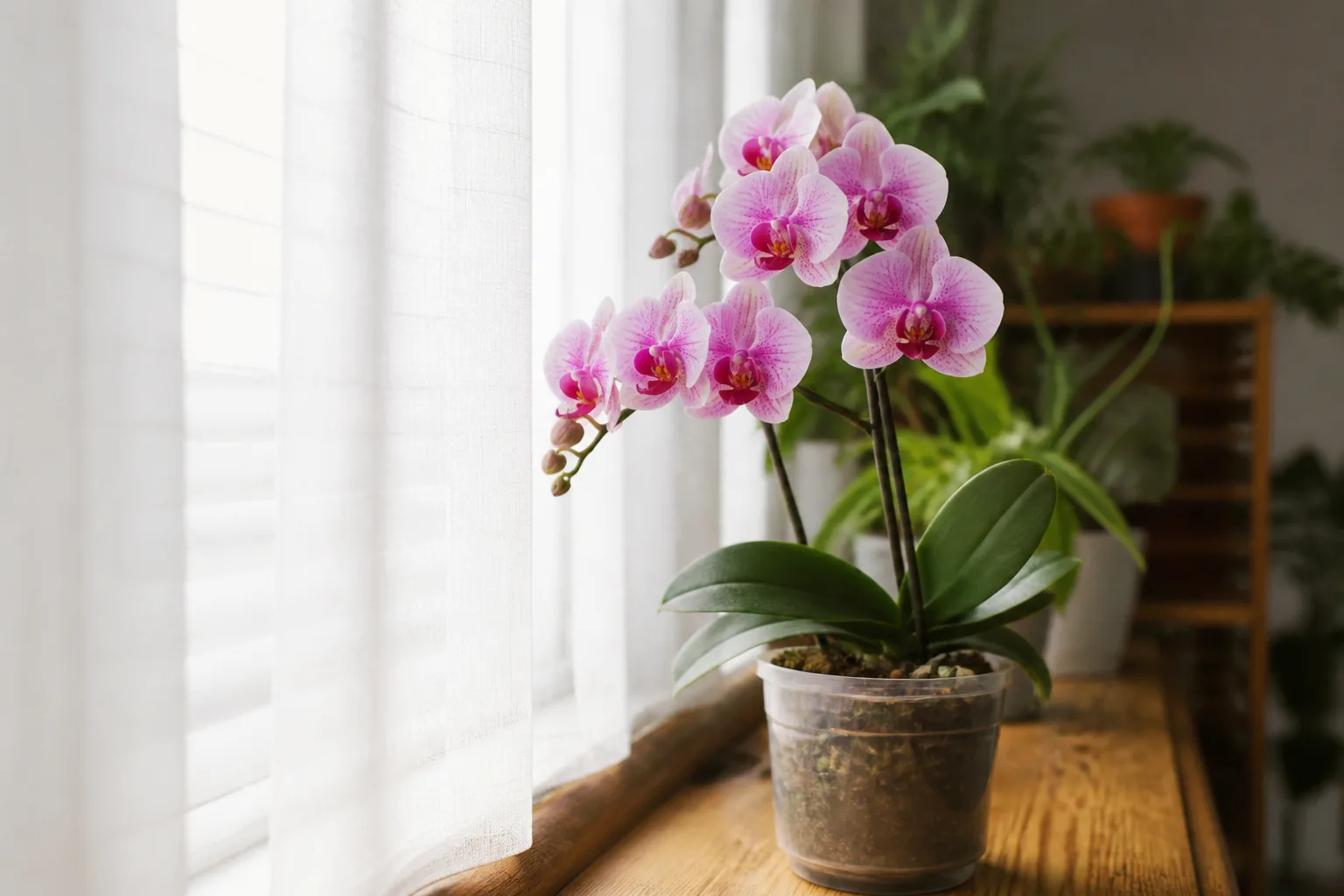
If new growth is thin and widely spaced, improve light before adding fertilizer. Extra nutrients cannot replace the energy the plant needs to make sturdy leaves. If leaf surfaces develop crisp tan patches on the window-facing side, filter the light or move the plant back gradually.
Water by soil dryness, not calendar
Dragon trees prefer a dry-down between thorough waterings. Press a finger about 2 inches into the mix, insert a wooden skewer and inspect what comes out, or lift the pot before and after watering so you learn the weight difference. When the upper zone is dry and the lower mix is not staying cold and saturated, water deeply.
There is no universal “every three weeks” rule. A small pot in bright light may dry in seven to ten days in warm weather; a large pot in a cool, dim room may remain damp much longer. The RHS guidance uses the top 5 cm (2 inches) of compost as a useful check and specifically warns that constantly wet compost or standing water can rot the roots.
Winter changes the equation. Shorter days and cooler soil slow both growth and evaporation, so a plant that needed weekly checks in summer may need inspection every ten to twenty days or longer. Do not water less by habit if the plant is in a warm, bright room; test the mix instead.
The deep-soak routine that prevents root trouble
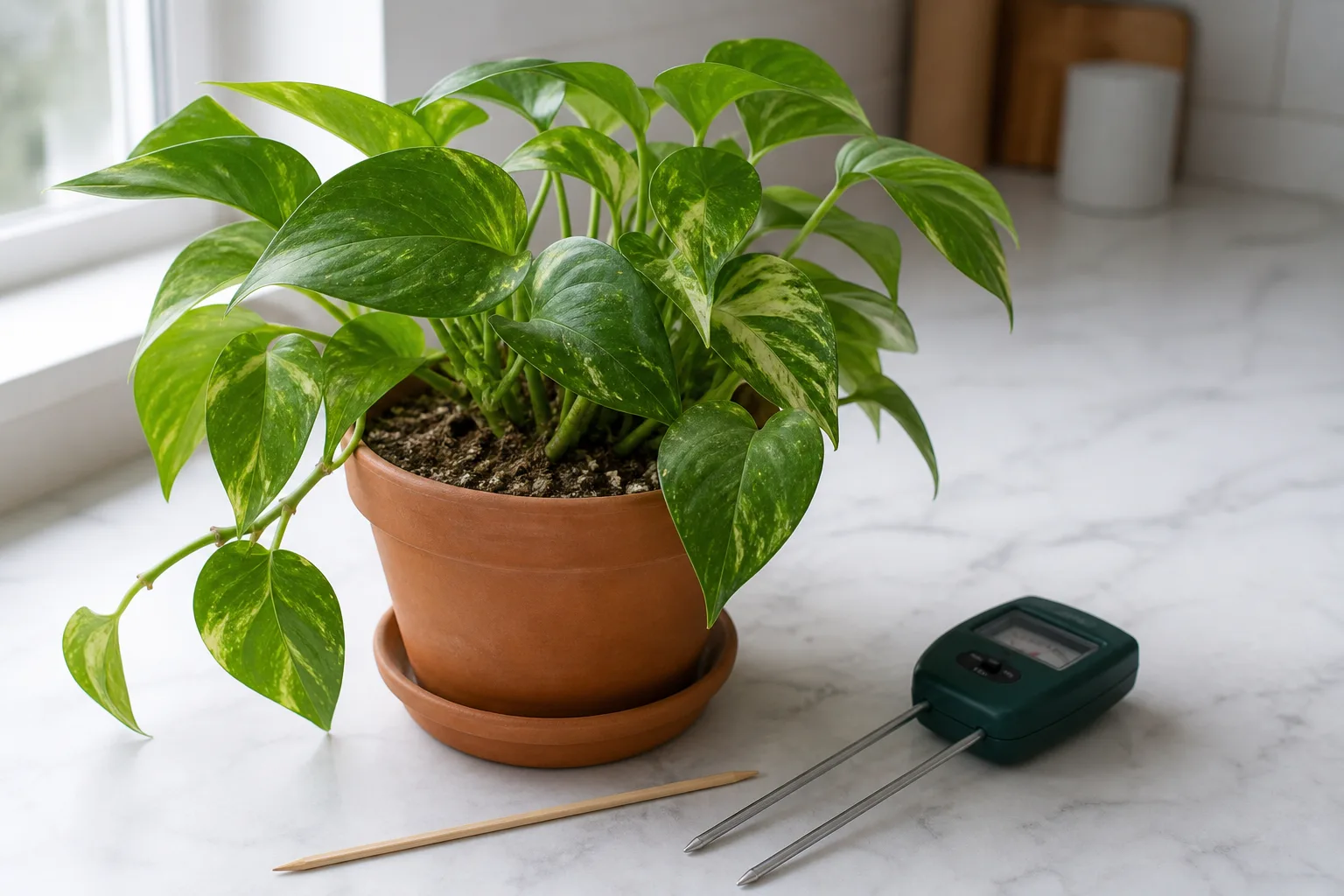
When the soil is ready, carry the pot to a sink or place it where runoff is safe. Pour water slowly over the entire surface until a steady stream exits the drainage holes. Wait a minute, water once more if the mix has pulled away from the pot edges, and let the container drain fully before returning it to a cachepot.
Empty the saucer rather than allowing the pot base to sit in runoff. Bottom watering can be useful when a very dry mix repels water from the top, but it is not a license to leave the pot submerged. Soak until the upper mix is evenly damp, then drain and return to the normal dry-down cycle.
Water quality can matter as much as quantity. Dracaenas are sensitive to fluoride and can accumulate salts at leaf tips over time. The RHS advises rainwater or filtered water where possible, particularly because hard water can also push an acidic mix toward a higher pH. If brown tips keep appearing while the soil dries at a sensible rate, test a different water source for several weeks and watch the new growth rather than expecting old tips to turn green.
Use a loose mix and a pot that drains
The best soil for a dragon tree is airy enough for roots to receive oxygen after watering but absorbent enough to avoid drying into a hard shell. A practical starting blend is two parts quality indoor potting mix to one part perlite or pumice. Add a small portion of fine orchid bark if your base mix is dense and holds water for too long.
The RHS suggests a loose, fast-draining, slightly acidic, peat-free mix with ericaceous compost, perlite, and medium orchid bark. You do not need to reproduce that exact recipe for every home; the operational test is more important. Wet a handful: it should hold together briefly, then crumble easily, with visible air spaces rather than a muddy paste.
Use a container with an open drainage hole. A decorative pot without a hole can be used as an outer cachepot only if the plant stays in a removable inner pot and runoff is emptied after watering. Do not add a thick layer of gravel and assume it creates drainage inside a sealed pot; the water still collects above that layer, leaving the root zone wet.
Choose a new pot only 1–2 inches wider than the current root ball or container. Oversizing is a common hidden cause of root rot because the larger volume stays wet around a small root system. A heavy pot with a broad base is worthwhile for a tall dragon tree because stability prevents tipping without forcing the roots into an oversized container.
Temperature and humidity that work in a normal home
Dragon trees are tropical and subtropical foliage plants, so they prefer stable warmth. Aim for roughly 65–80°F (18–27°C) during active growth and keep the plant away from cold drafts, frequently opened exterior doors, air-conditioning blasts, and hot radiators. The RHS recommends 18–30°C and specifically cautions against cold air and heat sources.
Average household humidity is usually sufficient. If an air conditioner or winter heater is drying the room, group plants together or run a room humidifier with a hygrometer rather than misting on a fixed schedule. Misting briefly wets the leaf surface but does not reliably raise room humidity, and persistently damp foliage with poor airflow can encourage leaf spotting.
A correctly built pebble tray can add a little local moisture, but keep the pot base above the waterline on the stones. Never use a pebble tray as a substitute for a drainage hole or place the root ball in standing water. If only the dragon tree has brown tips, examine water quality, watering consistency, light, and fertilizer before assuming the entire room needs more humidity.
Feed lightly during active growth
Dragon trees are not heavy feeders. During spring and summer, apply a balanced liquid houseplant fertilizer at half strength after the soil has been watered normally. Feeding a thirsty plant with concentrated fertilizer can injure roots, while feeding a plant in low light may create salts faster than the plant can use them.
The RHS recommends feeding from April to October and warns that overfeeding can damage roots. A monthly half-strength application is a reasonable upper limit for a vigorously growing plant in fresh, well-drained mix; every six to eight weeks or a few light applications per season is enough for a slower plant. Stop in winter unless the plant is clearly growing under warm, bright conditions, and even then use a very dilute dose.
If you see a white crust on the mix or browning that began soon after fertilizing, pause feeding. Flush the pot thoroughly with clean, low-mineral water and let it drain. Do not compensate for weak light or poor roots with more fertilizer.
Prune for height, branching, and clean leaves
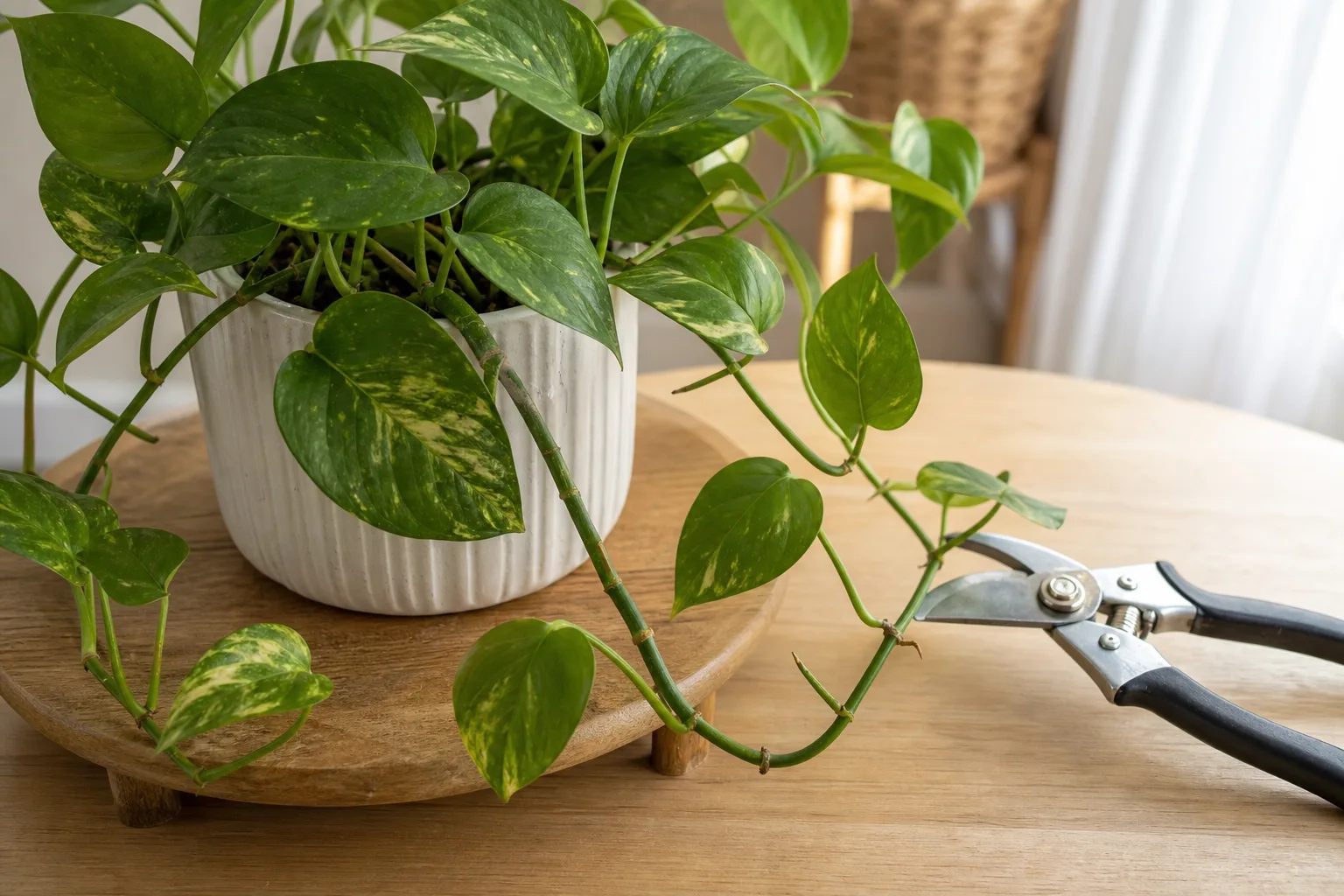
Pruning is optional for health but useful for shape. Remove a fully dead lower leaf by cutting its base once it loosens, or trim a brown tip with clean scissors while following the leaf’s natural point. Leave a narrow sliver of brown tissue instead of cutting into healthy green; the cut edge may brown again if the original cause remains.
To reduce height or make a bare cane branch, cut the stem cleanly at the height where you want new shoots. New growth usually appears below the cut rather than from the cut end, so place the cut with the future crown in mind. A tall plant may look temporarily stark after heading back; that pause is part of the process, not evidence that the cut failed.
The RHS notes that dragon plants readily produce new shoots below pruning cuts. Ohio Tropics’ care and troubleshooting guide also recommends late winter through spring or the active growing season for rejuvenation, when the plant has light and warmth to support new buds. After pruning, keep the plant in bright indirect light, avoid soggy soil, and do not fertilize heavily to force growth.
Clean the blade before and after cutting. Wipe it with rubbing alcohol and allow it to dry; use one clean cut rather than sawing through the cane. Save healthy top sections for propagation, but discard tissue that is soft, dark, or pest-ridden.
Propagate from tip or cane cuttings
Stem propagation is the most useful way to multiply a dragon tree and the easiest way to reuse a healthy pruning. The RHS propagation guidance lists semi-ripe and hardwood cuttings, while Ohio Tropics’ propagation notes show why healthy tip cuttings can also root in water or a free-draining medium.
Tip cuttings in water:
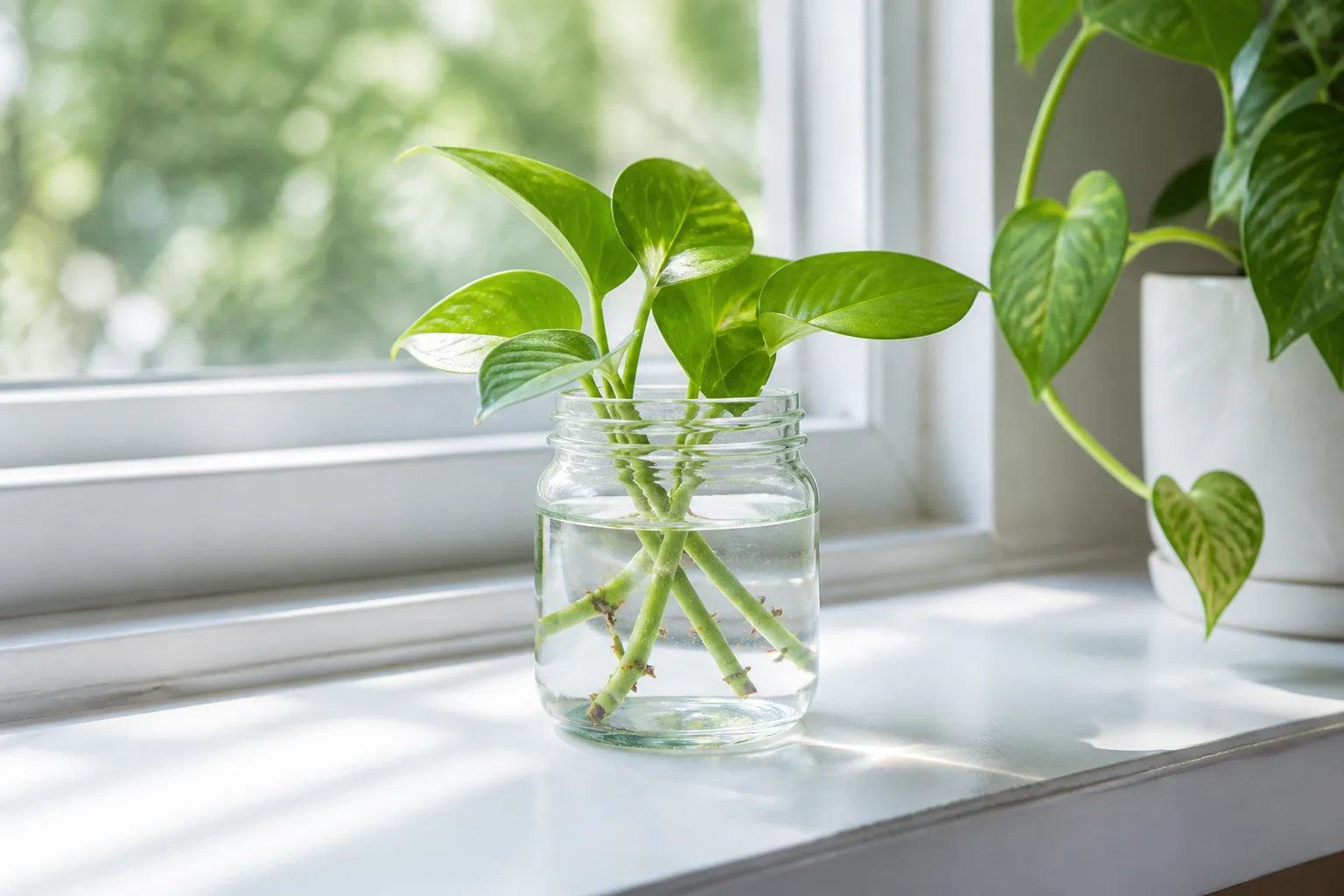
Choose a healthy leafy top with about 4–8 inches of stem below the crown. Make a clean cut, strip off leaves that would sit below the waterline, and place only the lower stem in a clean jar. Keep the jar in bright indirect light, change the water weekly, and move the cutting to mix when roots are roughly 1–2 inches long.
Water roots are fragile and adapted to a submerged environment. When potting up, use a small container and evenly moist, airy mix for the first few weeks, then begin a gradual dry-down. A cutting can look fine in water and wilt after transplanting; that transition is normal, which is why a small pot and gentle aftercare are safer than a large wet container.
Cane sections in soil:
Long bare stems can be cut into 4–6 inch sections. Keep track of which end was originally uppermost; planting a section upside down can delay or prevent useful shoot formation. Lay a section horizontally on damp mix with a node contacting the surface, or insert it upright with the lower end down and only a small portion buried.
Use a 1:1 blend of perlite and potting mix or another clean, airy propagation medium. Keep it lightly moist, never saturated, and provide warmth around 70–77°F (21–25°C). Bright shade is better than harsh sun while roots and shoots are forming. Resistance when you gently test a tip and fresh growth at a node are better signs than a fixed rooting deadline.
High humidity helps, but a sealed plastic bag can trap condensation and mold. If you cover the cutting, leave ventilation and check the medium frequently. Once the cutting has roots and a stable new crown, pot it into regular mix and resume mature-plant care.
Repot only when roots or mix demand it
A dragon tree often grows well slightly snug in its pot, so repotting every year is unnecessary. Inspect it once or twice a year instead. Move up when roots circle densely, emerge from drainage holes, the plant repeatedly tips because the root ball is packed, or the mix has collapsed and stays wet or dries into a water-repelling block.
Spring is the easiest time because brighter light supports recovery. Slide the root ball out and inspect it. Healthy roots are generally firm and pale tan to light brown; rotten roots are soft, dark, and may smell sour. Trim only clearly dead roots with clean scissors rather than cutting away healthy roots for the sake of making the ball look tidy.
Set the plant at the same depth in a pot one size larger. Backfill with fresh mix, firm it lightly, water once to settle the roots, and let the excess drain. Keep the repotted plant in bright indirect light for a week or two and avoid a heavy fertilizer dose until new growth resumes. If the original plant is already stressed from root rot, repotting is a rescue operation, not a routine upgrade; correct the moisture problem before encouraging growth.
Common pests and how to catch them early
Scale, mealybugs, spider mites, and thrips are the most likely pest problems on an indoor dragon tree. Epic Gardening’s dragon tree guide highlights the same sap-feeding pests and the value of early inspection. Inspect leaf undersides, cane joints, and the protected center of each crown whenever you water. A magnifying glass helps with mites and thrips, while a cotton swab makes scale and mealybugs easier to confirm.
Isolate an infested plant first. Wipe small mealybug clusters with a cotton swab dipped in rubbing alcohol, rinse dusty leaves with a gentle stream of water, and repeat inspections every few days. For a larger infestation, use an insecticidal soap or horticultural product only according to its label, checking that the product is approved for the plant and testing a small area before broad application.
Dry air does not create every pest problem, but it can make spider-mite conditions more favorable. Clean foliage and stable care improve detection; they do not guarantee prevention. Avoid spraying leaves with oily “shine” products, which can interfere with the leaf surface and make diagnosis harder.
Diagnose brown tips, yellow leaves, and drooping
The same symptom can have different causes, so diagnose in an order that rules out the most damaging one first. Check the soil, the pot’s drainage, the light pattern, the water source, and the location’s temperature. Then inspect roots if the plant is wet and declining.
| Symptom | Check first | Likely interpretation | First action |
|---|---|---|---|
| Brown tips on otherwise firm leaves | Water source, dry-down, fertilizer | Fluoride or salt buildup, inconsistent watering, dry air, or excess feed | Change water source, stabilize watering, and pause fertilizer; trim only for appearance. |
| Several yellow lower leaves at once | Soil moisture and stem base | Overwatering, root stress, severe drought, or shock | Stop calendar watering and inspect the mix; inspect roots if it is wet. |
| One oldest lower leaf yellowing slowly | New growth and stem firmness | Normal aging and trunk formation | Remove the leaf when it releases easily and keep routine care steady. |
| Drooping with dry mix | Root ball and pot weight | Underwatering or badly hydrophobic mix | Rehydrate thoroughly and drain; repeat a moisture check before watering again. |
| Drooping with wet mix or soft stem | Roots and stem base | Root rot or severe waterlogging | Isolate, unpot, remove rotten roots, and repot into fresh airy mix. |
| Pale, stretched new leaves | Light level | Insufficient usable light | Move brighter gradually or add a grow light; do not increase fertilizer first. |
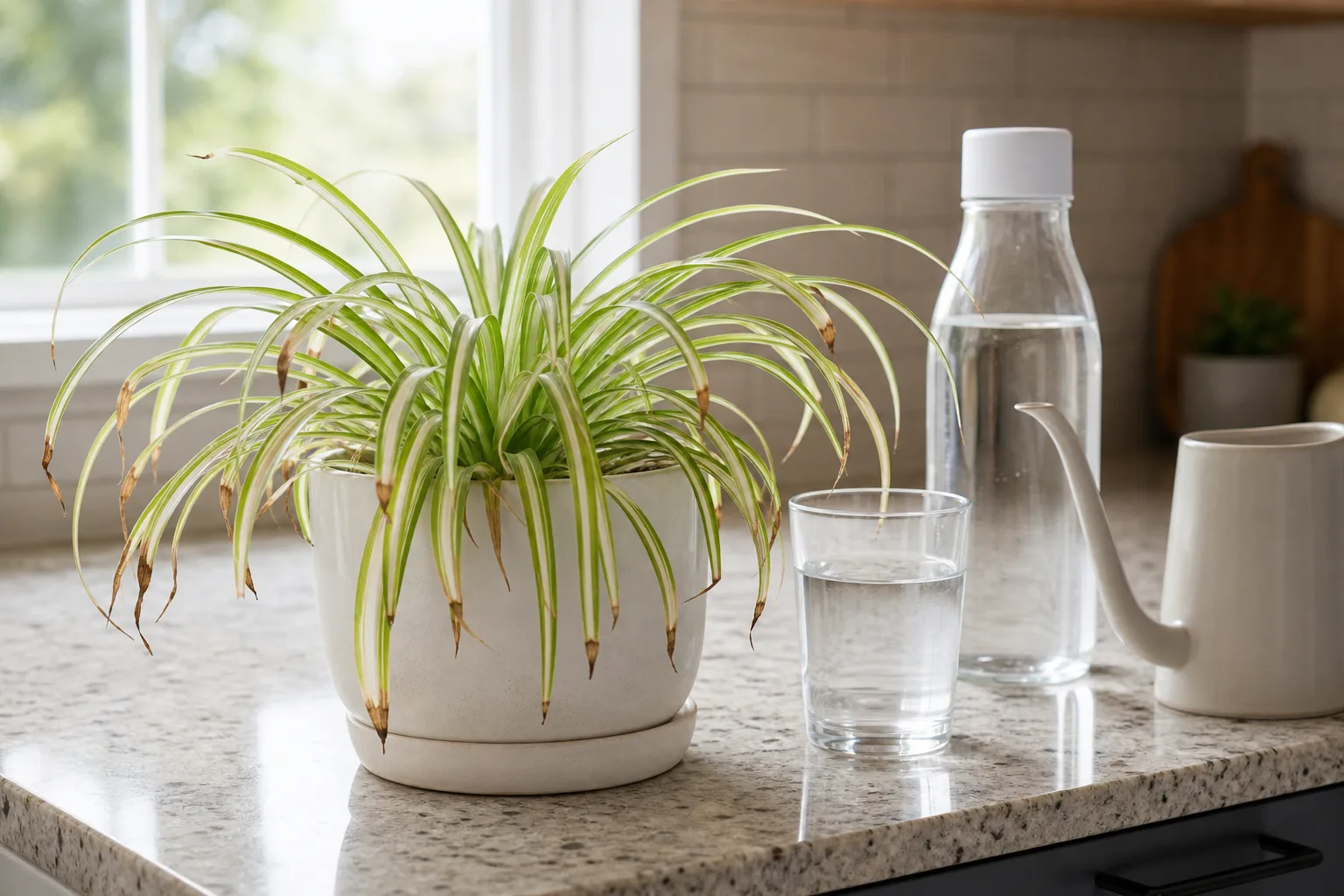
Brown tips: separate water quality from drought
Brown tips are common and usually permanent. If the browning is limited to the ends while the rest of the leaf is firm and the mix is drying normally, water chemistry is a strong suspect. Fluoride, hard-water minerals, fertilizer salts, low humidity, and repeated dry-to-soggy cycles can overlap, so changing only one variable at a time makes the result easier to read.
The RHS specifically lists fluoride, overwatering, underwatering, direct sun, dry air, cold drafts, and heat sources among possible causes of dying leaves or brown tips. Ohio Tropics’ practical troubleshooting guide makes the useful point that when watering is otherwise sensible, persistent brown tips after tap-water use make water quality worth testing. Try filtered water or rainwater where safe and available for the next several waterings, flush accumulated salts, and compare new growth.
Do not cut the plant back aggressively just because the tips are brown. Snip the damaged edge with clean scissors, following the leaf’s taper, but leave a thin brown border so you do not create a larger wound. A trim improves appearance; it does not reverse the cause.
Yellow leaves and soft stems: check roots
One old bottom leaf yellowing and dropping while the crown continues producing healthy leaves is normal. A sudden cluster of yellow leaves, especially with a limp crown, wet soil, or a soft cane base, is more serious. Overwatering can look like thirst because damaged roots cannot supply the leaves properly.
If the mix is wet beyond the expected dry-down window, stop watering and check drainage. If the plant continues to decline, unpot it, remove dark mushy roots, and repot into a clean container with fresh airy mix. Do not put the rescued plant into a much larger pot “for recovery”; the extra wet volume increases the same risk.
If the mix is completely dry and the roots are firm, water slowly until the root ball is evenly wet. A severely dried mix may let water run around the sides, so a short bottom soak followed by full drainage can help rehydrate it. Once the plant recovers, return to the soil test rather than increasing the frequency permanently.
Pet safety and placement decisions
Dragon trees are not pet-safe plants. The ASPCA lists Dracaena species as toxic to cats and dogs because of saponins and lists signs including vomiting, depression, appetite loss, excess salivation, and dilated pupils in cats. The Pet Poison Helpline identifies Dracaena marginata as the dragon tree and advises prompt expert or veterinary help after a possible ingestion.
Place the plant behind a closed door, on a high stable stand, or in a room inaccessible to a persistent chewer. Do not rely on a decorative barrier that a cat can jump over or a dog can knock down. If a pet eats any part, remove access and contact your veterinarian or an animal poison service rather than waiting to see whether symptoms develop.
People should not eat the plant either, and children should be taught not to chew leaves. Gloves are not normally needed for routine care, but washing hands after pruning is sensible and keeps sap and soil away from the face.
Make the plant fuller and steadier over time
Fullness comes from adequate light and deliberate pruning, not from repeated repotting. Give the plant a brighter position, let it establish, then head back one or more canes during active growth if you want several crowns. Cutting every stem at once can remove too much foliage and leave a slow-growing plant with little energy, so stagger major cuts when the specimen is small or stressed.
A leaning dragon tree needs a diagnosis. If the soil is reasonably dry and the stems are firm, the plant may simply be reaching toward a window; improve the light and rotate it. If the pot is wet and the plant wobbles at the base, inspect the roots before staking it. A stake can hide a failing root system but cannot repair it.
Keep the leaves clean with a damp, soft cloth. Dust blocks light from the leaf surface and hides early pests, while commercial leaf-shine products can leave residues. Wipe from the base toward the tip without bending the narrow leaves sharply, and remove dead foliage only when it releases easily.
Conclusion
Successful dragon tree indoor care is mostly about restraint. Let the mix dry before you water, drain every excess drop, provide bright filtered light, and feed lightly while the plant is actively growing. Keep water quality in mind when brown tips persist, and treat a soft stem or wet soil as a root problem until inspection proves otherwise.
The plant’s slow, woody habit gives you time to make adjustments. Prune a healthy cane when you want branching, root the cutting instead of discarding it, repot only when the roots or mix demand it, and keep the plant physically out of reach of cats and dogs. With those decisions in place, Dracaena marginata can stay an architectural, long-lived indoor plant without requiring a fussy schedule.