How to Grow and Care for Zebra Plant
Zebra plant (Aphelandra squarrosa) needs bright light, even moisture, and 60%+ humidity. Learn watering, blooming, propagation, and fixes.
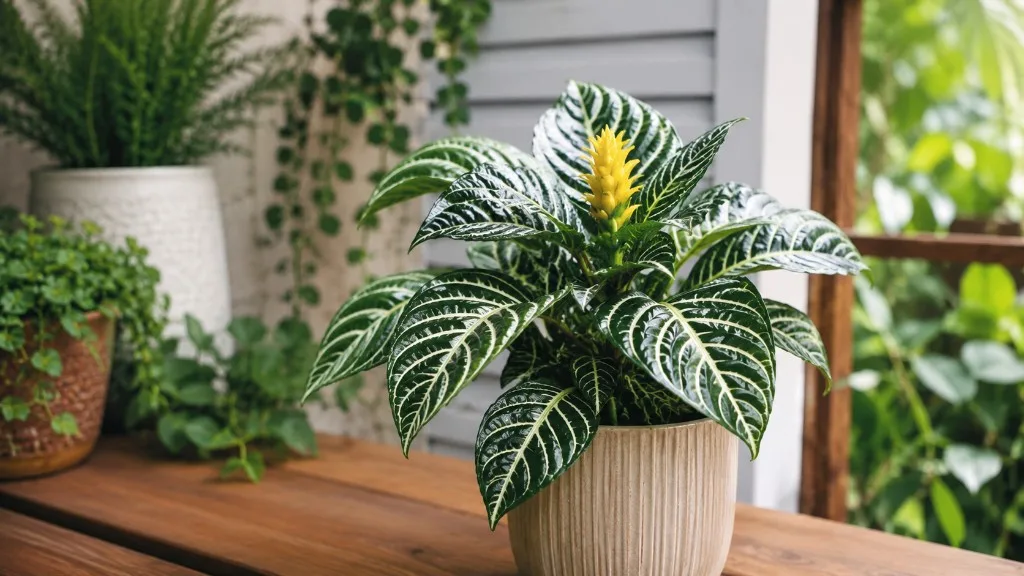
Zebra plant (Aphelandra squarrosa) is the houseplant people buy for glossy, dark green leaves striped with bold white veins — then lose to dry winter air, inconsistent watering, or the wrong plant entirely. Three different species share the nickname “zebra plant,” and only one of them is the flowering Brazilian shrub this guide covers. Get the ID right, then match bright filtered light, evenly moist but well-drained soil, 60–70% humidity, and nights above about 65°F (18°C), and you have a realistic shot at the yellow bract spike that makes the effort worthwhile.
This is not a set-and-forget desk plant. NC State Extension describes Aphelandra as a slow-growing broadleaf evergreen that is short-lived as a houseplant but easy to renew from stem cuttings after pruning. Treat it like a seasonal project — keep conditions stable, plan for post-bloom cutback, and propagate the stems you remove — and you can keep zebra plant in rotation for years. For symptom-specific fixes on your specimen, use the Zebra Plant care hub after the checks below.
Zebra Plant Care at a Glance
| Factor | Indoor target | Quick check |
|---|---|---|
| Light | Bright indirect; brief morning sun OK | Veins stay crisp; no bleached patches |
| Water | Moist mix, never bone-dry or soggy | Top inch dry, then soak and drain |
| Humidity | 60–70% RH | No chronic brown tips on new growth |
| Temperature | 65–75°F (18–24°C) days; above 55°F (13°C) nights | Away from vents and cold glass |
| Soil | Acidic, high-organic, well-draining | Water exits drainage holes within seconds |
| Bloom window | Late summer–fall indoors; bracts last weeks | Needs accumulated bright light in spring |
| Pets | Non-toxic per ASPCA | Sap may irritate skin — wear gloves when pruning |
If one row fails, fix environment before reaching for fertilizer. Pale veins and leggy stems almost always mean light or humidity, not hunger.
Confirm You Have Aphelandra, Not Another “Zebra Plant”
Retail tags lie by common name. Aphelandra squarrosa is an upright Acanthaceae shrub with glossy paddle leaves, prominent white longitudinal veins, and — when conditions align — a terminal yellow bract spike. In a 6-inch nursery pot it often stays under 18 inches (45 cm) indoors even though wild plants in Brazil can reach 4–6 feet, per NC State Extension.
Calathea zebrina and Other Common Lookalikes
| Feature | Aphelandra squarrosa (this guide) | Goeppertia zebrina (Calathea zebrina) | Haworthiopsis spp. (zebra haworthia) |
|---|---|---|---|
| Leaf texture | Glossy, stiff | Velvety, softer | Thick succulent |
| Stripe pattern | White veins on dark green | Light/dark green bands | White bumps on green |
| Flowers | Yellow bract spike | Insignificant, rare indoors | Small white spikes |
| Watering | Even moisture, no dry-outs | Similar, slightly more forgiving | Dry between waterings |
| Family | Acanthaceae | Marantaceae | Asphodelaceae |
Alocasia zebrina adds a third trap: zebra-striped stems, not leaf veins. If your plant flowers with a four-sided yellow spike, you have Aphelandra. If leaves fold at night with horizontal bands, you have a prayer plant — see Calathea zebrina for that care track. Matching botanical names on the tag prevents weeks of wrong watering advice.
Light for Bold Veins and Reliable Blooms
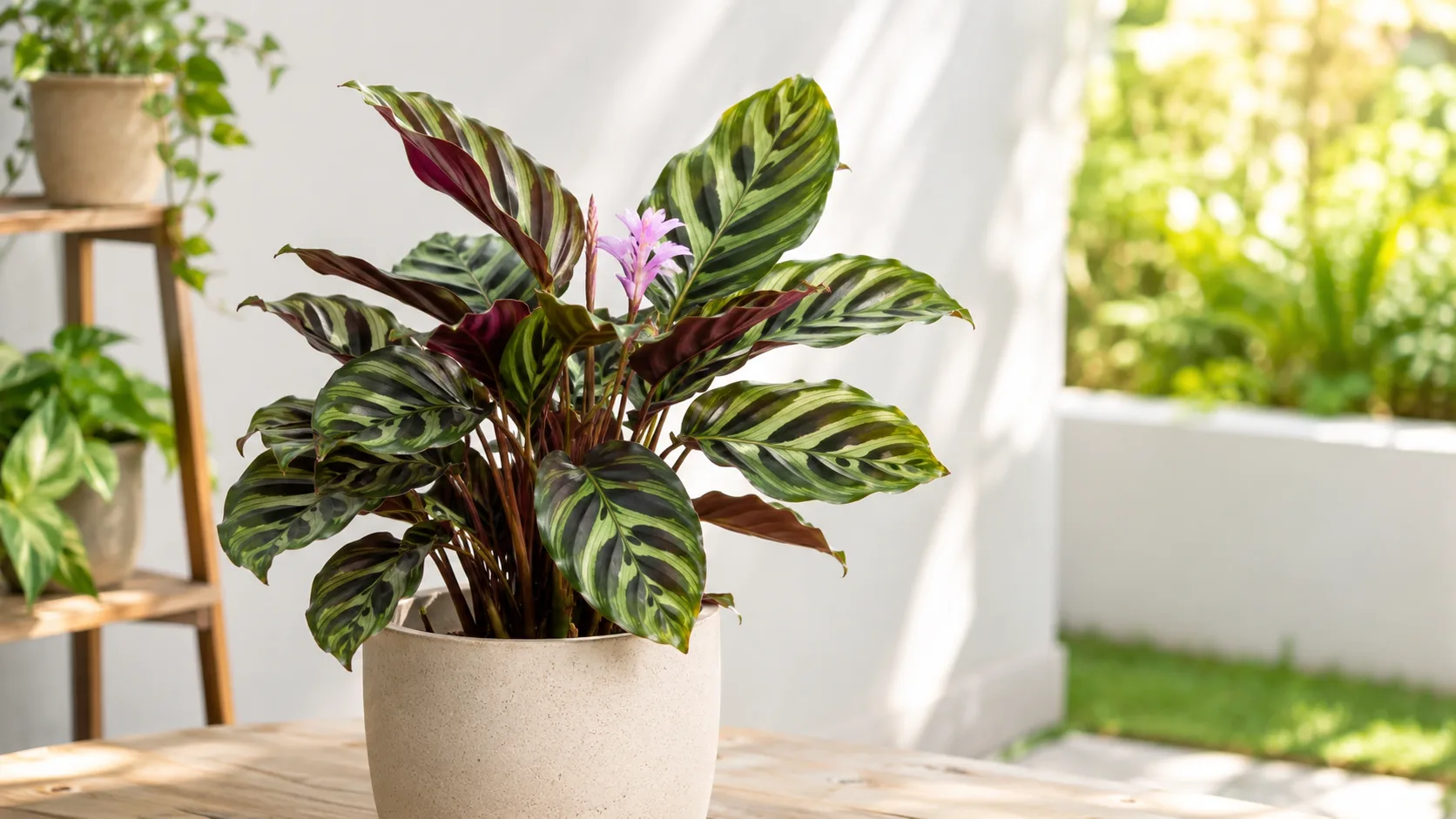
Zebra plant evolved under Brazilian forest canopy. It wants bright, indirect light all day — east or west windows behind sheer curtain, or a few feet back from a south window. NC State Extension lists dappled sunlight and partial shade as ideal; the RHS recommends bright indoor light with shelter from harsh midday sun.
Too little light produces pale veins, small leaves, and no bloom. Too much direct sun scorches glossy foliage and triggers curling — move the pot a foot farther from glass or add a sheer panel. Rotate the container weekly so stems do not permanently lean.
Bloom is a light problem as much as a fertilizer problem. University of Arkansas Extension describes Aphelandra as a photo-accumulator: it needs a run of bright days — historically around 650 foot-candles for roughly 12 weeks under warm nights above 65°F — before it commits to a flower spike. That is why a plant that looked fine in a humid greenhouse sulks on a dim shelf. If your only spot is medium shade, a full-spectrum grow light on a 10–12 hour timer a foot above the canopy is more honest than hoping leaves alone will trigger bracts. Deeper placement help lives on the Zebra Plant light guide.
Watering Without Wet Feet
Aphelandra is sensitive to both extremes. NC State Extension warns that excessive water or extreme dryness browns and drops lower leaves, while wet feet cause drooping stems. The goal is consistently moist root zone without a saturated bottom layer.
The Finger-Test and Full-Soak Method
Stick your finger into the top 1 inch (2.5 cm) of mix. If it feels dry, water until a small stream runs from drainage holes, then empty the saucer within 15 minutes. If the top is still cool and damp, wait. In bright warm rooms that may mean watering twice a week in summer; in dim winter quarters it might be every 10–14 days.
Water at the soil line, not over the foliage. Lukewarm or room-temperature water reduces shock. University of Arkansas Extension notes that even one or two wilt episodes can strip lower leaves and leave a palm-like bare stem — prevention beats rescue. If lower leaves yellow while the mix stays wet, you are overwatering; if edges crisp and the pot feels feather-light, you waited too long. The watering guide walks through seasonal intervals in more detail.
Humidity That Actually Moves the Needle
Zebra plant is a humidity plant first. NC State Extension recommends high humidity and suggests pebble trays or bathroom placement. The RHS groups it with conservatory plants that want moist air year-round. Aim for 60–70% relative humidity; below about 50%, expect brown leaf tips and bud abort even when watering is correct.
Rank your tools by effectiveness:
- Cool-mist humidifier within a few feet of the plant — most reliable for apartments with forced-air heat.
- Pebble tray wider than the pot, water below stone tops, pot resting on stones — good supplement; see low-cost humidity solutions for setup detail.
- Grouping with other tropicals — modest local boost.
- Misting — temporary surface wetting only; not a substitute for room RH.
Keep pots off radiators, AC vents, and drafty doorways. Winter heating without humidity adjustment is the most common reason new owners think they are “bad with zebra plants.” For symptom photos and fixes, see low humidity on zebra plant.
Soil Mix, Pots, and Drainage
Use acidic, organic, well-draining mix. NC State Extension specifies good drainage with moist (not waterlogged) conditions and acidic pH. The RHS suggests peat-free houseplant compost with added perlite.
A proven blend: two parts peat-free potting mix, one part perlite, and a handful of coarse sand — or commercial African violet mix with extra perlite. The mix should hold moisture in the middle of the root ball while shedding water from the bottom. Drainage holes are mandatory; cachepots are fine only if you lift the grow pot to water and never let runoff sit.
Repot into the next pot size only when roots circle the bottom or water runs straight through dry mix. More detail on structure and refresh timing is on the soil guide.
Temperature, Drafts, and Winter Semi-Dormancy
Days around 65–75°F (18–24°C) suit active growth. Nights should stay above 55°F (13°C); prolonged cool air triggers leaf drop and stalled buds. Arkansas Extension emphasizes that zebra plants resent cool, dry winter homes — the pairing of low humidity and chilly windowsills kills more specimens than summer heat.
In winter, NC State Extension describes semi-dormancy: reduce watering frequency but do not stop entirely, hold fertilizer until new growth appears in late winter, and keep humidity as high as practical. The classic mistake is summer watering on a short winter day with weak light — the mix stays wet, lower leaves yellow, and fungus gnats appear. Pair slower watering with brighter placement or a grow light. See why houseplants struggle in winter for the wider pattern.
Fertilizer Through the Growing Season
Feed only during active growth — roughly spring through early fall indoors. The RHS advises a general liquid fertilizer every two weeks in summer and monthly in winter; many growers skip winter entirely on semi-dormant plants.
Use a balanced or slightly bloom-weight liquid at half label strength every two weeks while new leaves unfurl. Stop if you see brown tips on fresh growth with moist soil — that often signals salt buildup or overfeeding, not hunger. Resume weak feeds when spring growth returns. Over-fertilizing is a common cause of crispy margins alongside sun stress.
How to Get a Zebra Plant to Bloom
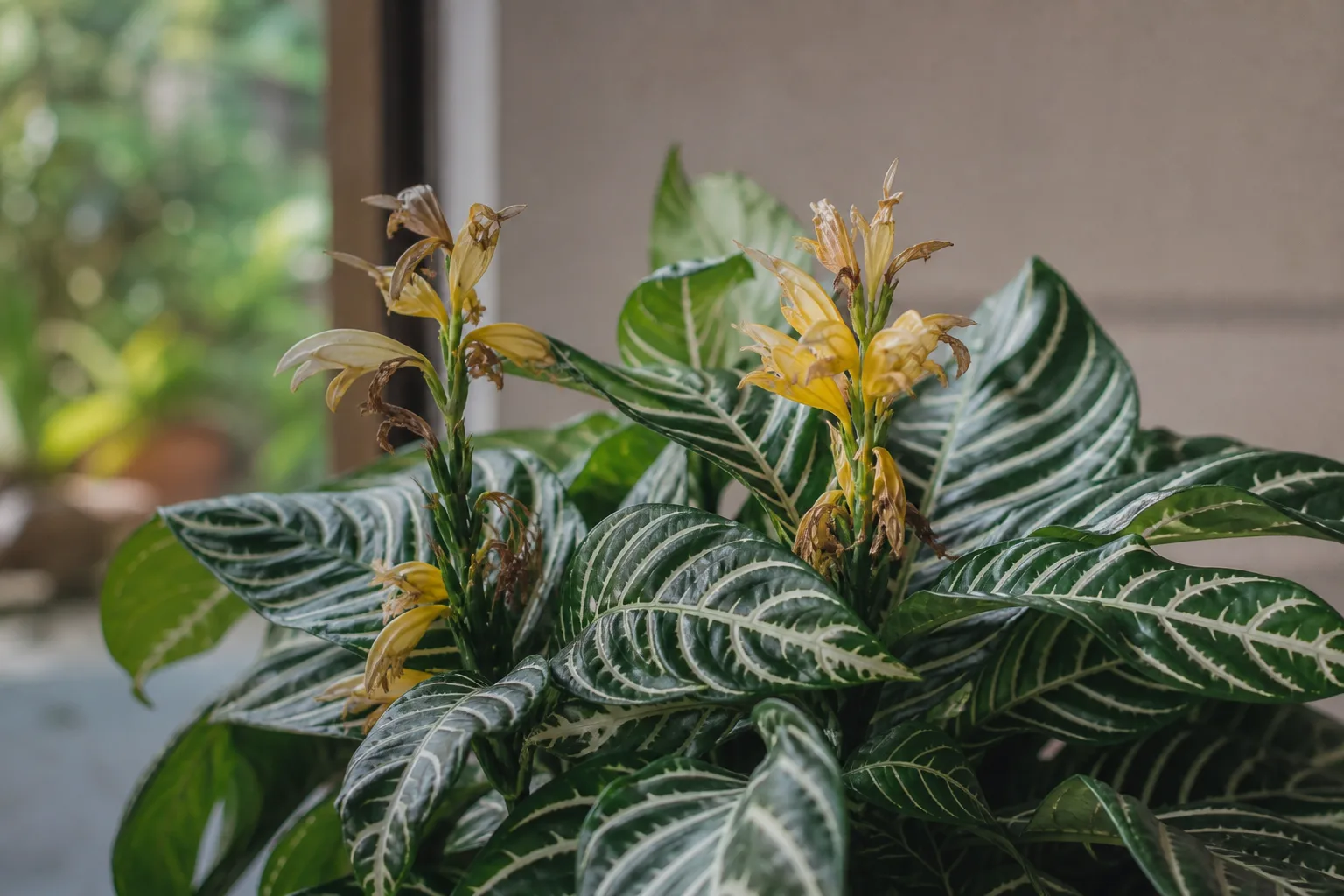
Honest expectation first: indoor bloom is not guaranteed every year, and repeat spikes in one season are rare. When it works, the show is worth the setup — a four-sided yellow bract overlapping like shingles, with short-lived tubular yellow flowers emerging from the waxy spike.
Trigger bloom by stacking favorable conditions:
- Accumulate bright light from late winter through spring — brightest filtered spot or supplemental grow light on a long-day timer.
- Hold warm nights above 65°F while light hours build.
- Keep humidity high so buds do not abort dry.
- Maintain even moisture — drought during bud formation drops the spike.
- Avoid repotting or heavy pruning during the accumulation window.
Some growers give a slightly cooler rest in late winter (still above 55°F), then move back to the brightest station in spring to mimic seasonal shift. Do not expect a nursery-fresh plant to rebloom immediately; it may need a full light cycle in your home.
What the Yellow Spike Looks Like—and How Long It Lasts
University of Arkansas Extension notes individual flowers last only a few days, but showy bracts persist six to eight weeks — sometimes longer in cool, bright conditions. The spike rises from the stem tip; bracts are yellow to gold, often with a maroon tint on some cultivars. A faint sweet scent may appear early, then fade. Once bracts look tired and brown at the edges, the display is finished — cut the spike rather than letting mold take hold on spent tissue.
After-Bloom Cutback and Renewal
When bracts fade, remove the spent spike and cut stems back, leaving about two rows of healthy leaves per NC State Extension guidance. Hard cutback prevents the bare, leggy silhouette that makes people toss otherwise salvageable plants. Removed stems are your propagation stock.
Move the plant to a warm, bright location for recovery — Arkansas Extension suggests a shaded patio in summer where nights stay mild. Resume regular watering and light feeding as new side shoots appear. Without cutback, many specimens keep one naked stem with a tuft of leaves on top. Step-by-step pruning timing is on the pruning guide.
Propagating Zebra Plant from Stem Cuttings
Because individual plants are short-lived, propagation is part of normal care, not a bonus project. NC State Extension lists stem cuttings as the recommended propagation method.
In spring, after bloom or scheduled cutback:
- Take 2–3 inch (5–8 cm) side shoots with a sharp, clean blade.
- Dip cut ends in rooting hormone if you have it — optional but helpful.
- Plant in moist, sterile mix; cover with a clear bag or propagation dome for humidity.
- Keep at around 70°F (21°C) — a heat mat helps in cool rooms.
- Open the cover daily for a few minutes to prevent mold.
- Expect roots in three to five weeks; transplant when new top growth appears.
Leggy parent plants often yield several viable cuttings at once — that is how you keep zebra plant on display after the original specimen declines. More detail lives on the propagation guide.
Repotting and Refreshing Old Mix
Zebra plant does not need annual repotting. NC State Extension suggests repotting annually by one size when actively growing, but many specimens stay happy two to three years in the same container if top-dressed.
Repot in spring when roots protrude from drainage holes or water channels through without wetting the center. If the pot is still appropriately sized but the mix has collapsed, scrape off the top 1–2 inches and replace with fresh acidic mix — a low-stress nutrient boost. Avoid repotting during bloom accumulation or immediately after a stressful leaf-drop episode.
Common Pests and Fungal Problems
High humidity invites problems if airflow is poor. Watch for:
- Aphids, mealybugs, scale, spider mites, whiteflies — NC State and RHS both list these as the main pests. Inspect leaf axils and new growth weekly. Isolate, blast with water where practical, then treat with insecticidal soap on a shaded day; repeat weekly until clear.
- Botrytis and leaf spots — avoid wet leaves overnight; improve air circulation.
- Phytophthora stem rot — black mushy lesions at the soil line from splashing infected mix onto stems. No cure; discard affected tissue and fix drainage.
- Pythium root rot — yellow wilting in wet mix; unpot, trim black roots, repot into fresh mix, and reduce water.
Fungus gnats signal chronic overwatering, not a separate pest crisis. Let the top inch dry slightly longer and use yellow sticky traps while the soil surface dries out.
Troubleshooting Leaf Drop, Curling, and Brown Tips
Use symptoms as a decision tree — fix the most likely cause first, then reassess in seven days.
Leaves falling from the lower stem usually means water stress or dry air. Check whether the mix has been soggy for days (overwatering) or allowed to go fully dry (underwatering). Arkansas Extension notes drought strips lower leaves permanently. If watering rhythm looks correct, raise humidity and move away from heating vents.
Curling or crinkling leaves point to too much direct sun or heat — pull back from glass or add shear. Epic Gardening also flags overheated leaves near radiators.
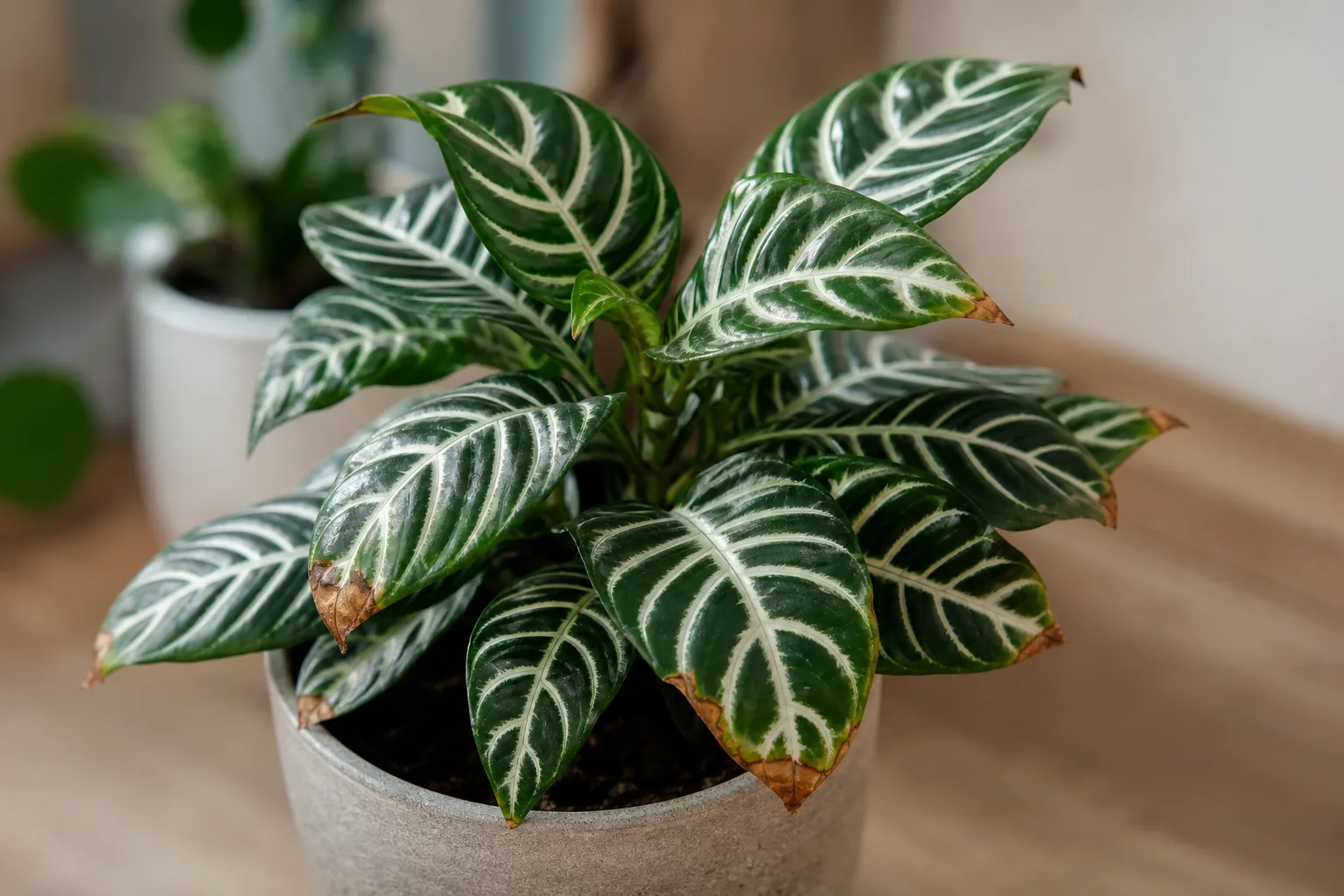
Brown tips on otherwise healthy leaves most often mean low humidity or fertilizer burn — humidifier first, halve feed rate second. Less commonly, fluoride/chlorine in tap water shows as tip burn on sensitive tropicals; try filtered water for a month.
Transparent yellow patches on lower leaves in wet mix = overwatering — stop watering until the top two inches dry, verify drainage, and consider a root check if wilting continues.
For photos matched to each symptom, see brown tips, curling leaves, and drooping leaves on the hub.
Your First 30 Days After Bringing One Home
Nursery zebra plants arrive from high humidity and bright greenhouse light. Your living room is a step down. A sane first month:
- Quarantine two weeks away from other tropicals while you watch for pests.
- Do not repot unless roots are rotting or the mix is clearly failing.
- Place in the brightest filtered spot you have; add a humidifier from day one if winter air is dry.
- Water when the top inch dries — expect adjustment leaf drop if humidity lags.
- Skip fertilizer until you see stable new growth.
- Photograph the label and confirm Aphelandra squarrosa on the tag.
If more than a third of leaves drop in week one, prioritize humidity and temperature before assuming the plant is doomed. Stabilize the environment for 14 days before repotting, moving to a darker corner, or feeding.
Conclusion
Zebra plant rewards growers who treat Aphelandra squarrosa as a humidity-loving, light-hungry Brazilian shrub — not a generic foliage plant. Confirm the botanical ID, keep the mix evenly moist with sharp drainage, hold 60–70% humidity, accumulate bright light for bloom, cut back after yellow bracts fade, and root the stems you remove. The individual specimen may be short-lived, but the species can stay in your collection indefinitely through propagation.
Start with the care table above, fix environment before fertilizer, and use the Zebra Plant hub when a specific symptom needs a deeper page. Get those basics right and the white-veined leaves — and, with luck, the golden spike — are absolutely worth the extra attention.