How to Grow & Care for Aeoniums (Tree Houseleeks)
Tree houseleeks grow on a backwards calendar. This guide covers light, water, soil, varieties, pests, monocarpic blooms, and indoor vs outdoor care.
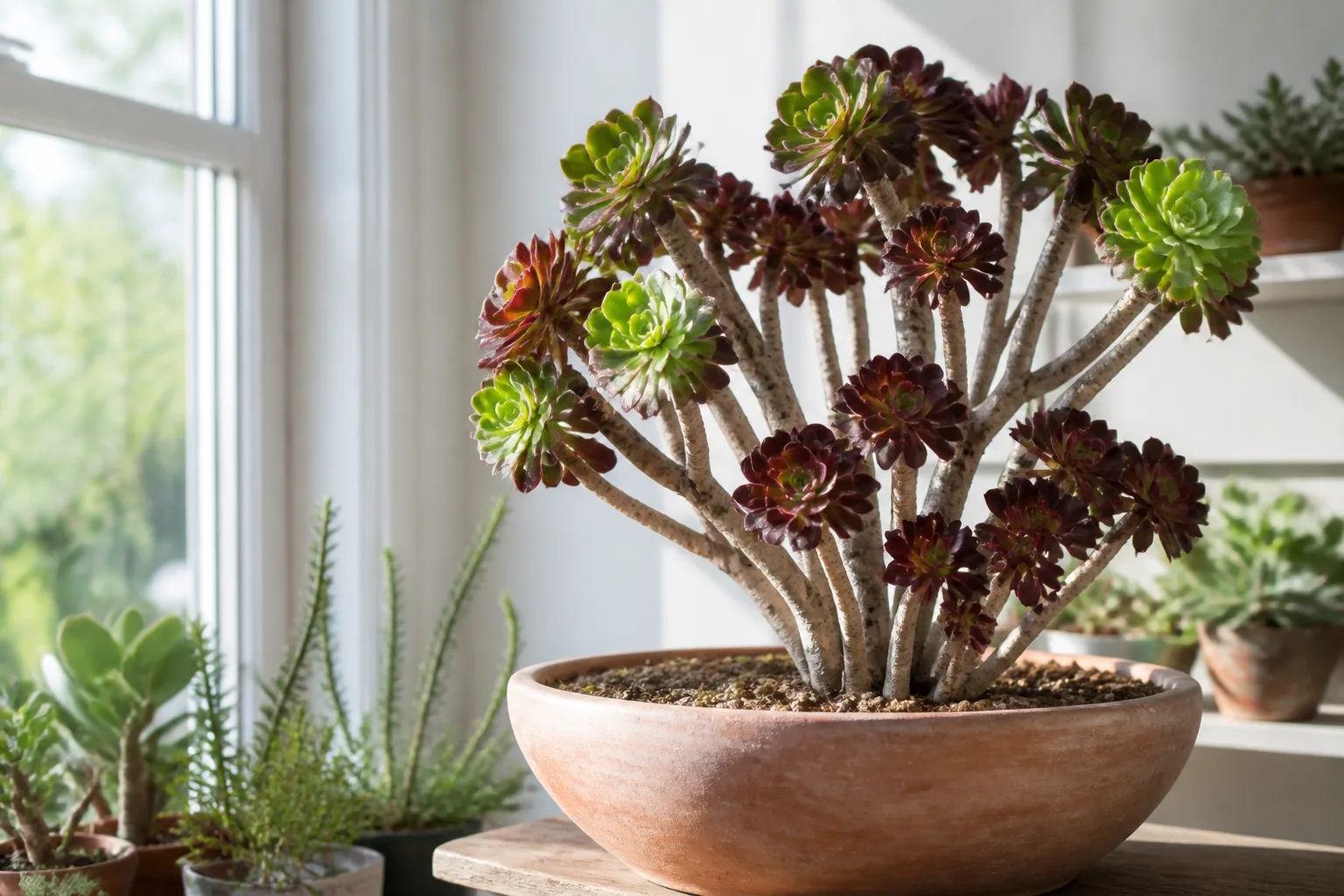
Aeonium care starts with one counterintuitive fact: most tree houseleeks grow in the cool months and rest in summer. If you water them like a jade plant or echeveria on a summer-heavy schedule, the rosettes curl tight, lower leaves shed, and the stem softens from rot. Match the calendar instead, and Aeonium species become some of the most sculptural, easy succulents you can grow.
Aeoniums—also called tree houseleeks—are evergreen succulents in the stonecrop family (Crassulaceae). Native mainly to the Canary Islands and nearby Atlantic islands, they form glossy rosettes of waxy leaves at the ends of branching woody stems. Mature plants look like miniature trees hung with living flowers. Cultivars such as ‘Zwartkop’ push that drama further with near-black foliage when light is strong enough.
Quick aeonium profile and what makes them different
Most succulents in the houseplant aisle follow a desert rhythm: active growth in warmth, slower metabolism in winter. Aeoniums flip that script. Their main growing season runs from late fall through spring, when mild temperatures and shorter days mimic their native winter-wet cliffs. When sustained heat arrives—often above about 80°F (27°C)—growth slows, rosettes close into tight balls, and the plant enters summer dormancy.
That seasonal flip changes everything: watering frequency, fertilizer timing, repotting windows, and how you interpret leaf drop. An aeonium that looks “sad” in July may be perfectly healthy. One that looks lush in August after weekly soaking is probably in trouble.
| Trait | Typical detail |
|---|---|
| Botanical name | Aeonium spp. |
| Common names | Aeonium, tree houseleek |
| Family | Crassulaceae |
| Native range | Canary Islands, Madeira, parts of Africa |
| Mature size | Roughly 3 in. to 6 ft. tall depending on species |
| USDA hardiness | Zones 9–11 outdoors; pots elsewhere |
| Growth habit | Branching woody stems with terminal rosettes |
| Bloom | Star-shaped flowers on tall stalks; often winter–spring |
| Key quirk | Cool-season grower; summer dormant; rosettes often monocarpic |
The Missouri Botanical Garden profile for Aeonium undulatum notes culture in sandy, well-drained soil with full sun to light shade, brief tolerance of minor frost near 28–30°F, and propagation by seed or rosette cuttings. North of zone 10, pots overwintered indoors in a bright window are the practical path.
Aeonium vs other rosette succulents
Aeoniums are often shelved beside echeverias, sempervivums, and other flat rosette succulents. The care overlap is real—bright light, fast drainage, careful watering—but the seasonal schedule is not interchangeable. Treating every rosette succulent the same is the most common reason aeoniums fail indoors.
How to tell an aeonium from an echeveria
Echeveria rosettes usually sit stemless or on very short stems. Leaves are often chalky or powdery with a farina coating. Aeonium rosettes perch on visible woody branches and have thinner, glossier leaves without heavy farina. If you see a rose-on-a-stick silhouette, you are almost certainly looking at an aeonium.
Sempervivums (true hens and chicks) are cold-hardy alpine rosettes that want frost; aeoniums are frost-tender cliff plants. Jade plants (Crassula) share woody stems but have oval, plump leaves and a year-round growth pattern closer to classic succulents. For a wider ID frame, see our types of succulents guide.
Choose the right light for tight rosettes and strong color
Aeoniums want bright light—often more than beginners expect. Aim for at least three to four hours of gentle direct sun daily indoors, or a very bright indirect position within a foot or two of the glass. An east window with morning sun is close to ideal. South- or west-facing glass works well if you filter harsh midsummer afternoon rays.
Light does two jobs. It keeps rosettes flat and compact instead of loose and stretched. On colored cultivars, it is the only thing that holds deep purple, burgundy, or near-black tones. A ‘Zwartkop’ or ‘Atropurpureum’ in weak light quietly reverts toward green. That color loss is a light problem, not a nutrient deficiency.
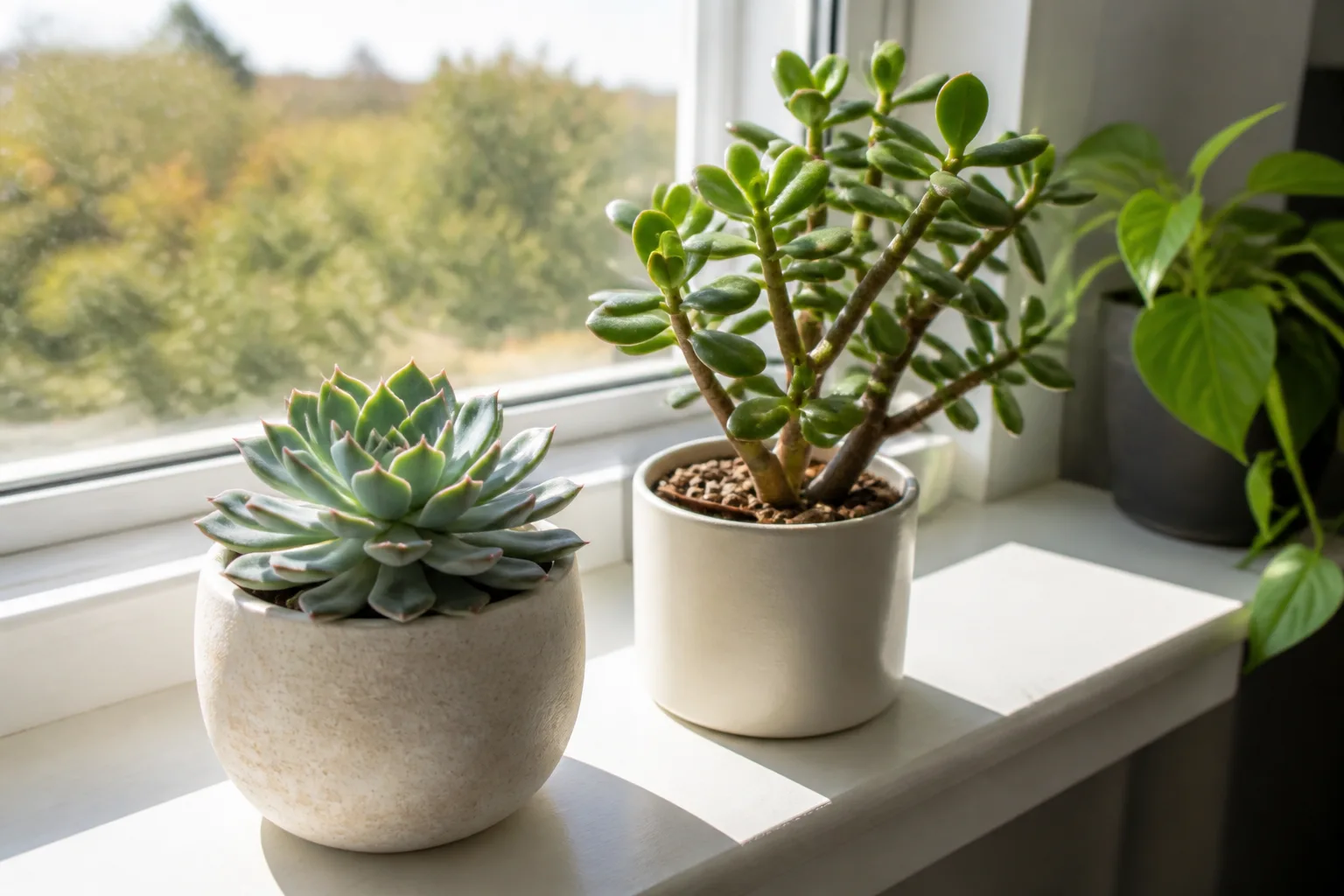
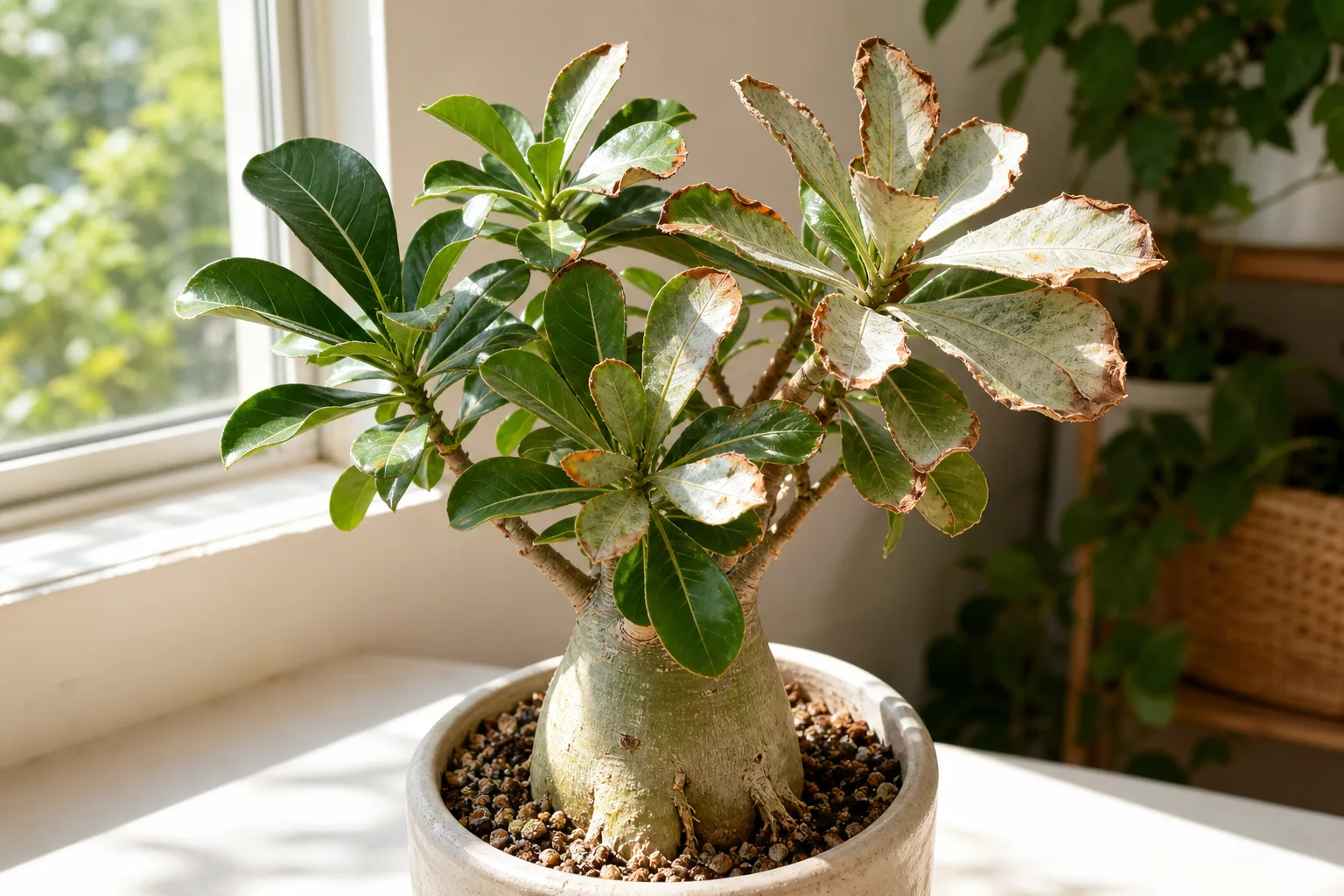
Signs of too much light include bleached patches, tan crispy tips, or brown dry scorch on the leaves facing the window. Signs of too little include pale green rosettes, wide gaps between leaves, and stems leaning hard toward the glass. If your plant is stretching, our guide to fixing leggy succulents covers the recovery path—usually brighter light plus a stem cutting reset.
Acclimate aeoniums before stronger sun
Plants moved straight from a shaded nursery bench into blazing summer glass scorch easily. Increase exposure gradually over one to two weeks: bright indirect first, then short morning sun, then longer direct periods while you watch for bleaching. During summer dormancy, pull the pot back from the hottest window even if the plant tolerated that spot in winter.
Outdoors, full sun in mild coastal climates builds the best color. In hot inland summers, afternoon shade prevents combined heat-and-sun stress while the plant is dormant. A grow light running 12–14 hours daily, hung 8–10 inches above the rosettes, can substitute for a weak natural window.
Water on a cool-season schedule, not a desert schedule
This is the section that makes or breaks aeonium care. Aeoniums tolerate—and in active growth, appreciate—more regular moisture than desert echeverias. Their native cliffs get winter rain. Still, the roots need air between drinks, and wet soil during summer dormancy is the fastest route to rot.
During active growth (roughly fall through spring): Water deeply when the top 1–2 inches of soil are dry. In a bright, cool room that may mean every 7–10 days; in dim winter light, longer. Push a wooden skewer to the bottom of the pot—if it emerges damp, wait. Water at the soil line, let excess drain freely, and empty the saucer. Try to keep standing water out of the tight rosette center, where cool nights can encourage fungal spotting.
During summer dormancy: When rosettes curl tight and growth stops, cut back hard. A small drink every two to three weeks is often enough to keep roots from desiccating—just enough that lower leaves are not crisping off wholesale. Never keep summer-dormant aeoniums on the same schedule you used in March.
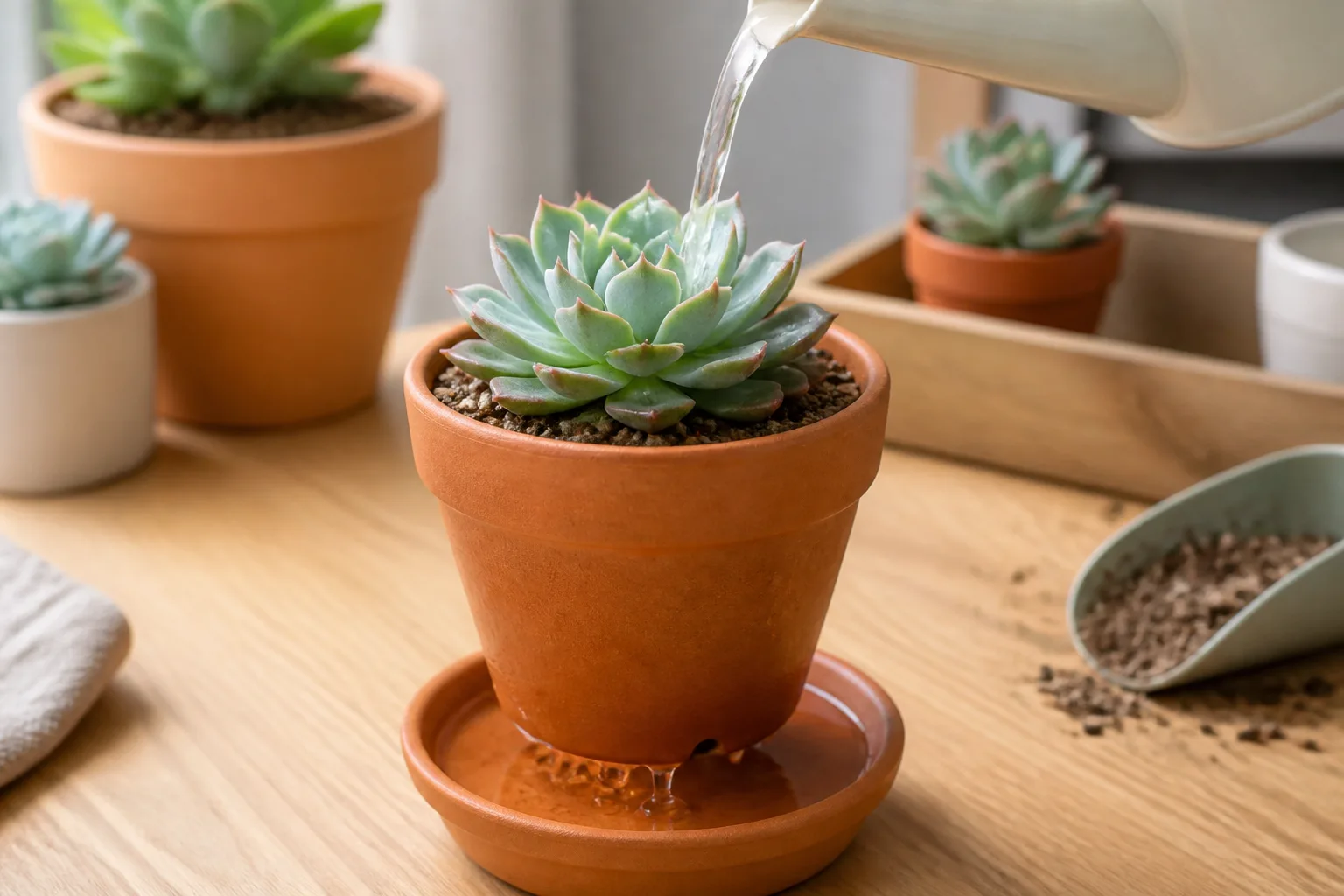
Thirst during growth shows as slightly soft, inward-curling leaves that plump back within a day of a good soak. Overwatering shows as yellow leaves that drop with no resistance, a darkening soft lower stem, and sometimes a sour smell from the soil. At that point you are dealing with root rot; rescue healthy rosettes as stem cuttings into dry gritty mix rather than watering again.
For general succulent watering mechanics—soak, drain, dry—see how to care for succulents. Apply the method, but keep the seasonal calendar aeonium-specific.
Summer dormancy watering rules
Use this quick check before you pick up the watering can between June and September:
- Rosettes tightly closed and stems firm → dormancy; minimal water only
- Soil still damp from the last drink → wait, even if leaves look slightly soft
- Lower leaves shriveling and soil bone-dry for weeks → one light soak, then return to sparse schedule
- Stem soft at the base or leaves yellowing with wet soil → stop watering; inspect roots and propagate tops
Outdoor plants in rainy humid summers may need almost no supplemental water if they are under cover. Plants baking on a patio in terracotta may need that occasional light drink. Read the plant and the pot weight, not the calendar.
Soil and containers that drain fast but hold a little moisture
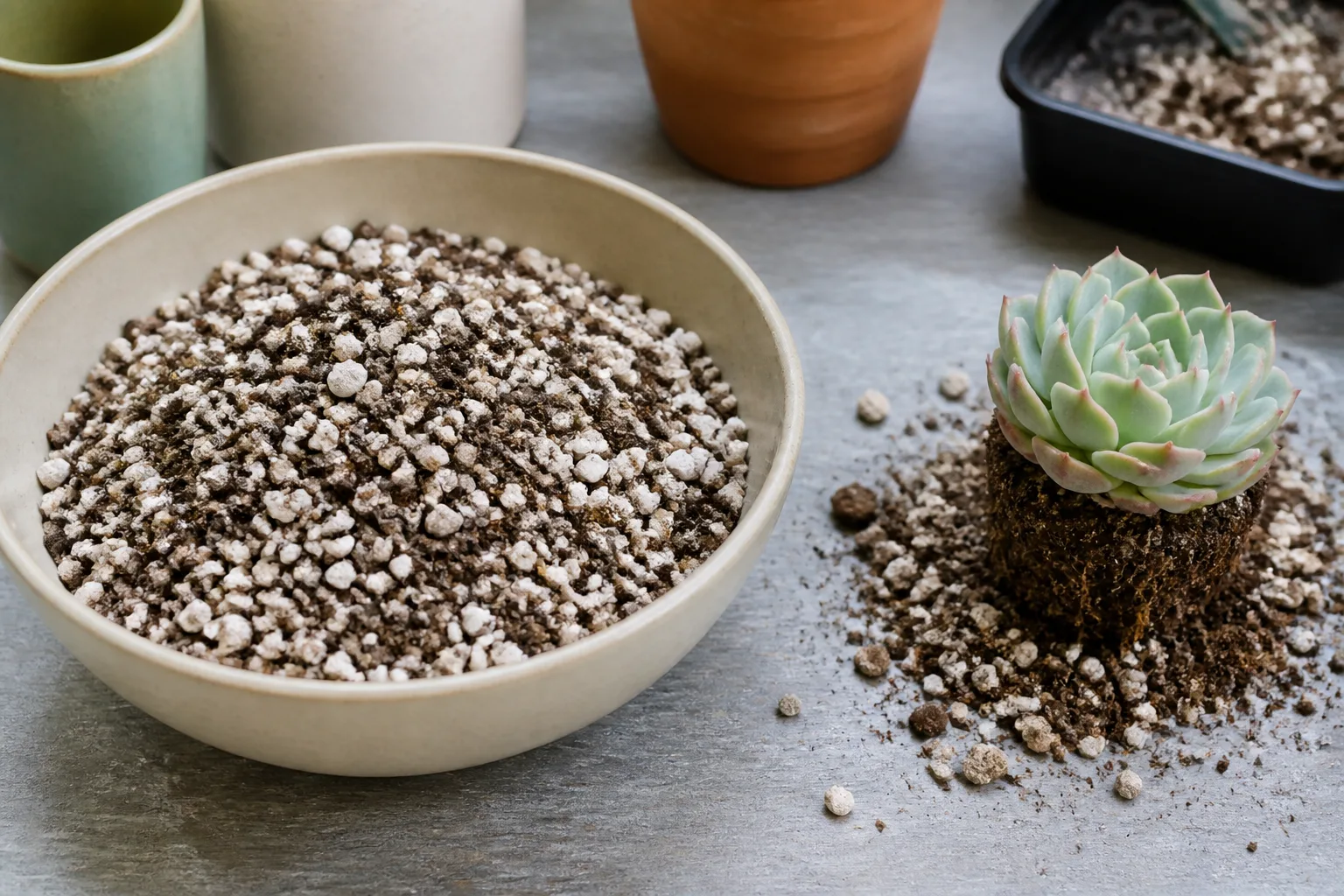
Aeoniums need fast drainage like any succulent, but a mix that is too lean and desert-dry works against them. Pure bagged cactus soil with no amendment often dries so fast that shallow roots stress in the active season. The better target is gritty, airy, and slightly moisture-retentive.
A reliable starting mix:
- 40% high-quality potting soil or compost
- 30% pumice, perlite, or coarse horticultural grit
- 30% additional grit or crushed granite for anchor
Squeeze a damp handful: it should crumble when you open your hand but leave your palm faintly moist, not dusty. If you only have commercial cactus mix, cut it with about one-third pumice or perlite rather than using it straight.
Pot shape and drainage for top-heavy plants
Aeonium roots are shallow and spreading, while branches become top-heavy. A wide, shallow terracotta bowl or pan beats a tall narrow pot for stability and moisture balance. Terracotta wicks excess water—useful when you are watering through cool, cloudy weeks. A drainage hole is non-negotiable.
Refresh soil every two to three years, or when water runs straight through dry mix in hours. When repotting, tease away old spent soil, trim any brown mushy roots with sterilized scissors, and let the plant sit dry for about a week before the first light water.
Temperature, humidity, and where to keep them year-round
The comfort zone for active growth is roughly 65–75°F (18–24°C)—mild Canary Island winter weather. Many aeoniums keep going down to about 40°F (4°C) if dry, but they are not frost-hardy. The Missouri Botanical Garden notes brief tolerance near 28–30°F for some species; do not plan on that for prized plants. Indoors, keep pots away from freezing window glass in winter.
Sustained heat above 80°F (27°C) triggers summer dormancy. Hot, dry air from radiators or heating vents can crisp thin leaf edges faster, so avoid blasting the rosette. A cool, bright, airy room—an unheated sun porch that stays frost-free, or a bright bedroom that does not overheat—often suits aeoniums better than a warm living room.
Normal household humidity between 30 and 50 percent is fine. Coastal breeze tolerance means aeoniums handle average indoor air better than desert cacti, but they still want movement—not a closed terrarium or steamy bathroom where moisture sits in the rosette crown.
Fertilize only during active growth
Aeoniums are light feeders, and timing matters more than strength. Feed from early fall through spring when you see new growth—once a month at half the label strength of a balanced or slightly low-nitrogen succulent fertilizer is plenty. Water with plain water first, then apply diluted feed to already-damp soil so dry roots are not shocked.
Stop completely in summer dormancy and for six to eight weeks after repotting into fresh mix. A white salt crust on the soil or pot rim means you are feeding too often or too strong; flush with plain water and skip the next round. Soft, pale, stretched growth on a colored cultivar usually means the plant is being pushed harder than the available light supports—fix light before adding more fertilizer.
Popular aeonium varieties worth knowing
Dozens of species and hybrids circulate through nurseries. These are the ones you are most likely to encounter—and the ones worth matching to your space.
Branching tree types
- Aeonium arboreum — Bright green rosettes on woody stems; can reach several feet outdoors. The baseline species for understanding the genus.
- A. arboreum ‘Atropurpureum’ — Burgundy to wine-purple leaves in strong light; easier to color up than ‘Zwartkop’ in average windows.
- A. arboreum ‘Zwartkop’ (‘Schwarzkopf’) — Near-black rosettes with a green heart; the most dramatic aeonium and the most sun-hungry. Fades to green in shade.
- A. undulatum — Large wavy spoon-shaped leaves on taller stems; yellow flower panicles. Missouri Botanical Garden lists plants to 2–3 feet tall.
Compact and colorful cultivars
- A. haworthii ‘Kiwi’ (‘Tricolor’) — Smaller rosettes with green centers, pink margins, and yellow highlights when young. Forgiving in bright indirect light.
- A. davidbramwellii ‘Sunburst’ — Pale green and cream variegation with pink tips; showy but can burn in harsh midday sun.
- A. tabuliforme (‘Dinner Plate’) — Flat, wide single rosette close to the ground; slow and collectible.
- A. canariense — Velvety large rosettes; slower growth, bold texture.
- A. ‘Garnet’ — Hybrid with green centers and dark red tips; intermediate size.
If you are shopping for one plant to learn on, green A. arboreum or ‘Kiwi’ forgive minor watering mistakes better than a dark-leaved specimen that punishes weak light immediately.
How to propagate aeonium from stem cuttings
Aeoniums are among the easiest succulents to propagate—from stem or rosette cuttings, not single leaves. A detached aeonium leaf rarely roots the way an echeveria leaf does. Always include a piece of stem.
When: Early fall, as active growth resumes, is ideal. Spring works too. Avoid summer dormancy unless you are rescuing a rotting plant.
Steps:
- Choose a young stem with a healthy rosette. Sterilize sharp snips with rubbing alcohol.
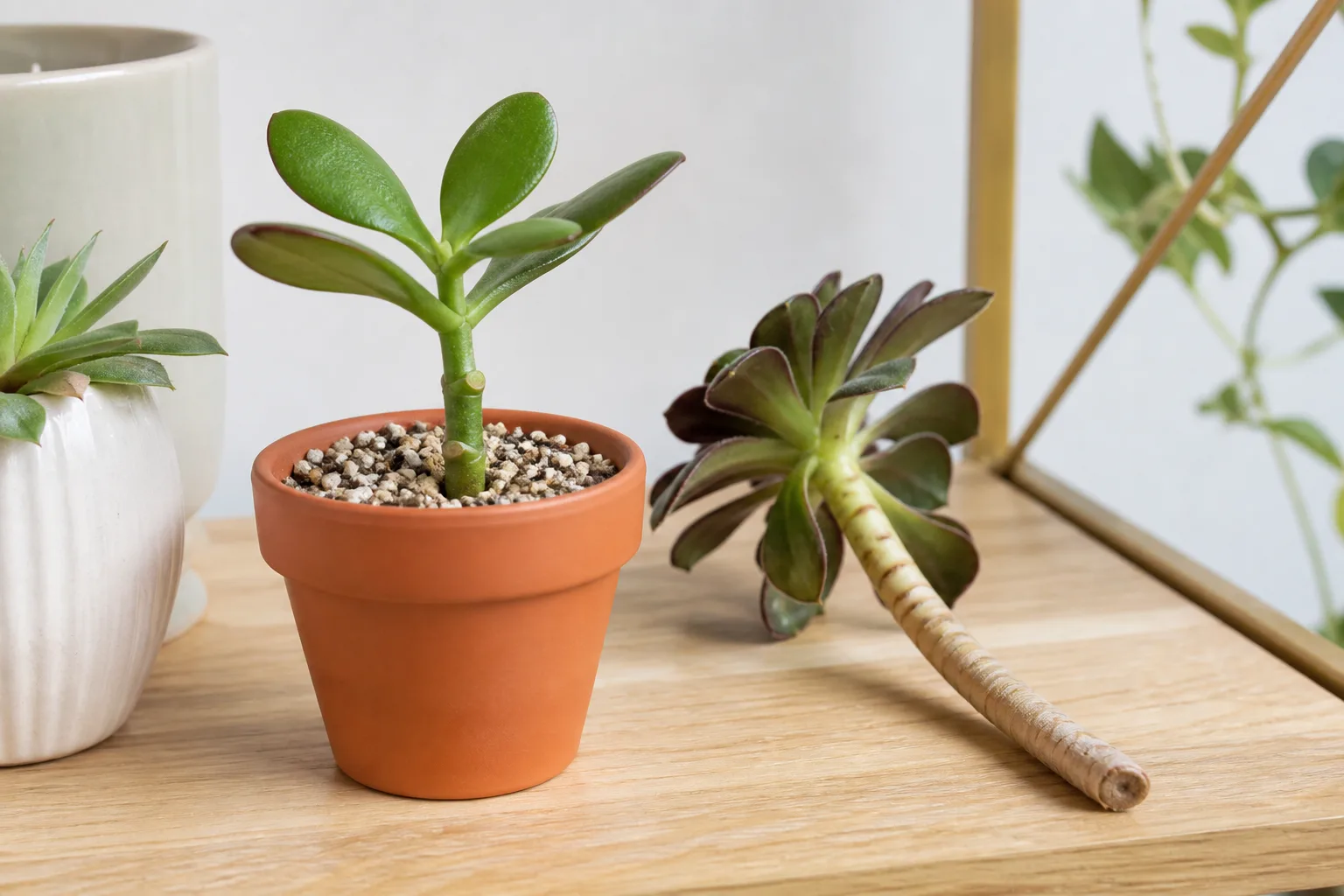
- Cut cleanly through the woody stem. Lay the cutting on its side in dry, bright shade for three to seven days until the cut end calluses dull and dry.
- Fill a small pot with half gritty succulent mix and half standard potting soil (or use the aeonium blend above). Plant the callused end just deep enough to stand upright.
- Place in bright indirect light. Water lightly once a week at first—just enough to settle roots, not saturate the core.
- Once the rosette resists a gentle tug and new growth appears, shift to normal cool-season watering: deep soak when dry.
Stem pieces that fall onto dry soil around a parent plant often root on their own. That is your backup propagation method when branches get leggy: behead the rosette, root the top, and let the stub sprout new heads. Our succulent propagation guide walks through callus timing and aftercare that applies here—especially the stem-cutting section built for jade and aeonium types.
Potting and repotting timing
Repot every two to three years, or when roots crowd drainage holes and the mix dries within a day of watering. Best window: early fall, when the plant wakes into its growing season. Avoid repotting in mid-summer dormancy unless you are emergency-rescuing rot.
Choose the next pot only slightly wider—one size up is enough. Aeoniums do not need deep soil volume; they need spread and stability. After repotting, wait about a week before the first light water so nicked roots can callus. Keep the plant in bright but not blazing light while it settles.
Overwintering aeoniums in cold climates
In USDA zones 9–11, many aeoniums live outdoors year-round with frost protection on the rare cold night. Everywhere else, treat them as container plants.
Before the first hard frost:
- Move pots indoors to the brightest cool spot you have—ideally 50–65°F (10–18°C) with good air movement.
- Reduce watering to match slower winter growth indoors; still water when dry, but expect longer intervals than in fall.
- Keep leaves off freezing glass and away from heating vents that desiccate rosettes overnight.
Plants left outdoors below about 30°F (-1°C) without protection usually die. A frost cloth plus dry soil buys a night or two; do not rely on it for a hard freeze.
Pests and how to treat them without damaging rosettes
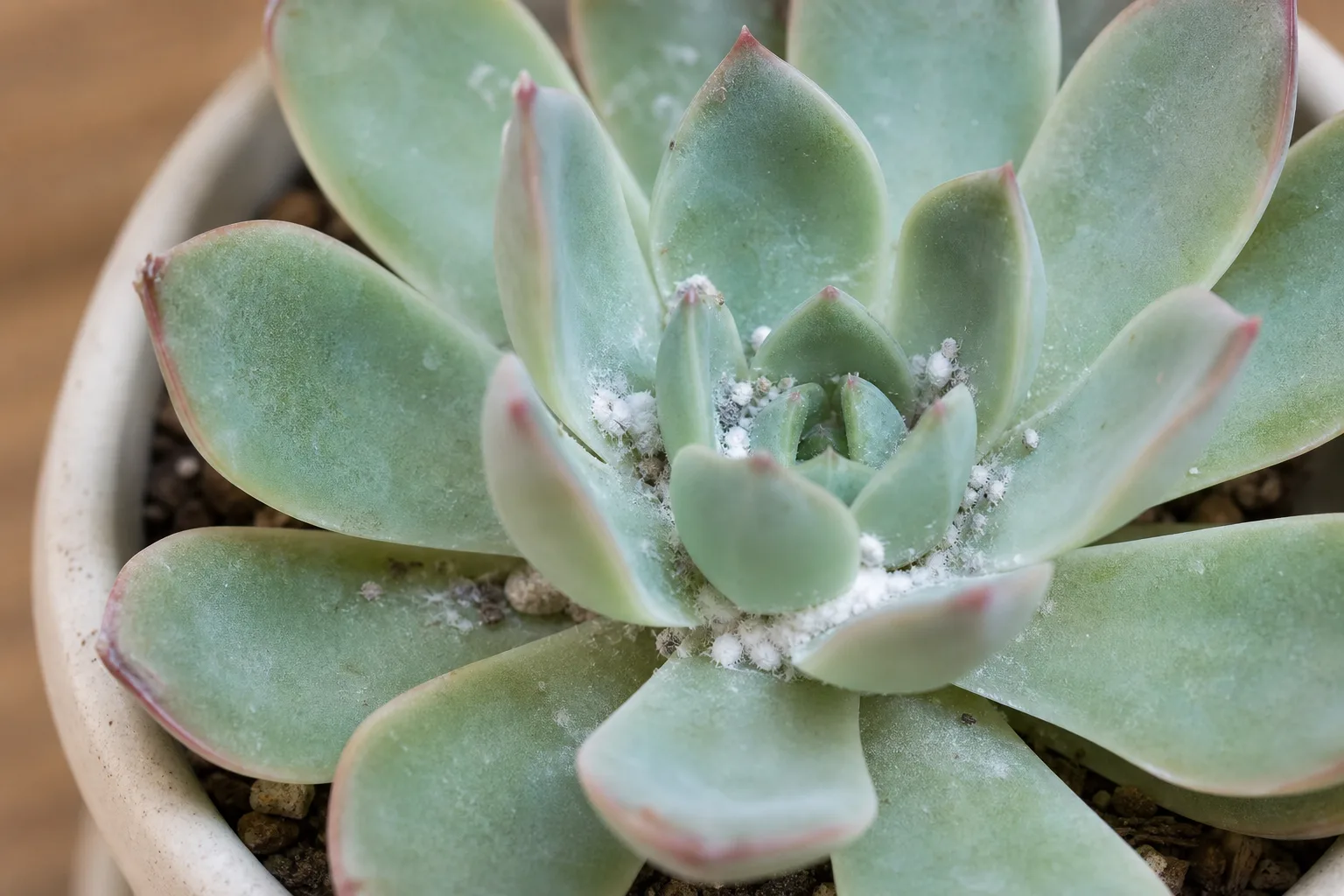
Aeoniums attract the usual succulent pests: aphids, mealybugs, spider mites, and scale. Ants often arrive first because they farm honeydew from aphids and mealybugs hidden in tight rosette centers—exactly where sprays are hard to reach.
Practical sequence:
- Isolate the plant and check neighboring succulents.
- If ants are present, set bait traps near the pot (not inside the rosette) until ant traffic stops.
- Blast loose pests with a gentle stream of water, or dab mealybugs with 70% isopropyl alcohol on a cotton swab.
- For stubborn infestations, use insecticidal soap on a test leaf first; avoid soaking the crown repeatedly in cool weather.
Inspect new purchases and cuttings before they join a collection. Tight rosettes hide pests until populations explode.
Common problems and what is actually normal
Aeoniums alarm owners because normal dormancy looks like decline. Learn the difference before you “rescue” a healthy plant with extra water.
Bottom leaf drop and rosette closing
The lowest leaves of each rosette naturally dry and fall away over time—that is how the bare woody stem forms. During winter or summer dormancy, rosettes may close into tight balls and shed several leaves at once. If the stem is firm and the remaining leaves are plump, leave the plant alone.
Worry when leaf drop happens during active fall–spring growth and the rosette is closing while the stem softens or leaves yellow with wet soil. That pattern points to overwatering or root rot. Underwatering during growth shows as widespread soft, slightly wrinkled leaves on dry soil—a deep soak fixes it within a day.
Sunburn on glossy leaves
Sunburn appears as white, tan, or brown crispy patches on the side facing the glass. Unlike some stress marks, scorch does not heal; damaged leaves stay scarred until they drop. Trim ugly leaves if you want, or let them shed naturally. Move the plant to slightly less intense light and acclimate again if you increase exposure later.
What to do when a rosette blooms
Each aeonium rosette is monocarpic: it flowers once from the center, then that head slowly dies back. On a well-branched plant, only the flowering shoot is lost; side branches and pups carry on. On a single-stem plant, blooming can mean the end of that specimen unless you act early.
When you see a flower stalk forming:
- Take stem cuttings from healthy non-flowering rosettes immediately.
- Let cuttings callus and root as described above.
- After bloom fades, you can remove the spent head; new shoots often emerge below on branching types.
Indoor aeoniums bloom rarely—and that is usually fine. Flowering needs maturity, a strong cool growing season, and sometimes a chilly winter spell that warm rooms never provide. Handsome foliage without the monocarpic gamble is the better indoor outcome for many growers.
Indoor vs outdoor aeonium care
Grow outdoors year-round if you live in a mild frost-free climate (zones 10–11) with excellent drainage and can shelter plants from hard rain during summer dormancy. Coastal California and similar Mediterranean climates are the sweet spot. Outdoor color on dark cultivars is unmatched.
Grow in pots indoors or on a patio if frost, extreme summer heat, or heavy summer rainfall are part of your weather. Pots let you chase the bright cool season indoors and pull back during summer rest. Indoors, prioritize light over humidity tricks—aeoniums do not need pebble trays or misting.
Split the year in zone 8–9: outdoor spring and fall on a bright patio, indoors before frost, and a shaded, dryish summer rest when heat spikes. Transition gradually each time; the shock of light and temperature swings shows up as scorch or leaf drop.
Conclusion
Aeoniums reward growers who respect their backwards calendar: water generously through the cool growing season, barely in summer, and never into soggy dormant soil. Give them bright light—especially for dark cultivars—gritty mix with a little organic hold, and wide stable pots. Propagate from stem cuttings before a rare bloom claims a rosette, and treat summer leaf shed as rest, not death.
Get those few decisions right and tree houseleeks become long-lived sculptural plants that outshine flatter rosette succulents on the shelf. Get them wrong and the same plant looks mysteriously “impossible.” The calendar was the missing piece.



