How to Grow and Care for Ginseng Ficus Bonsai
Grow ginseng ficus bonsai indoors with the right light, fast-draining soil, watering rhythm, wiring tips, and fixes for leaf drop.
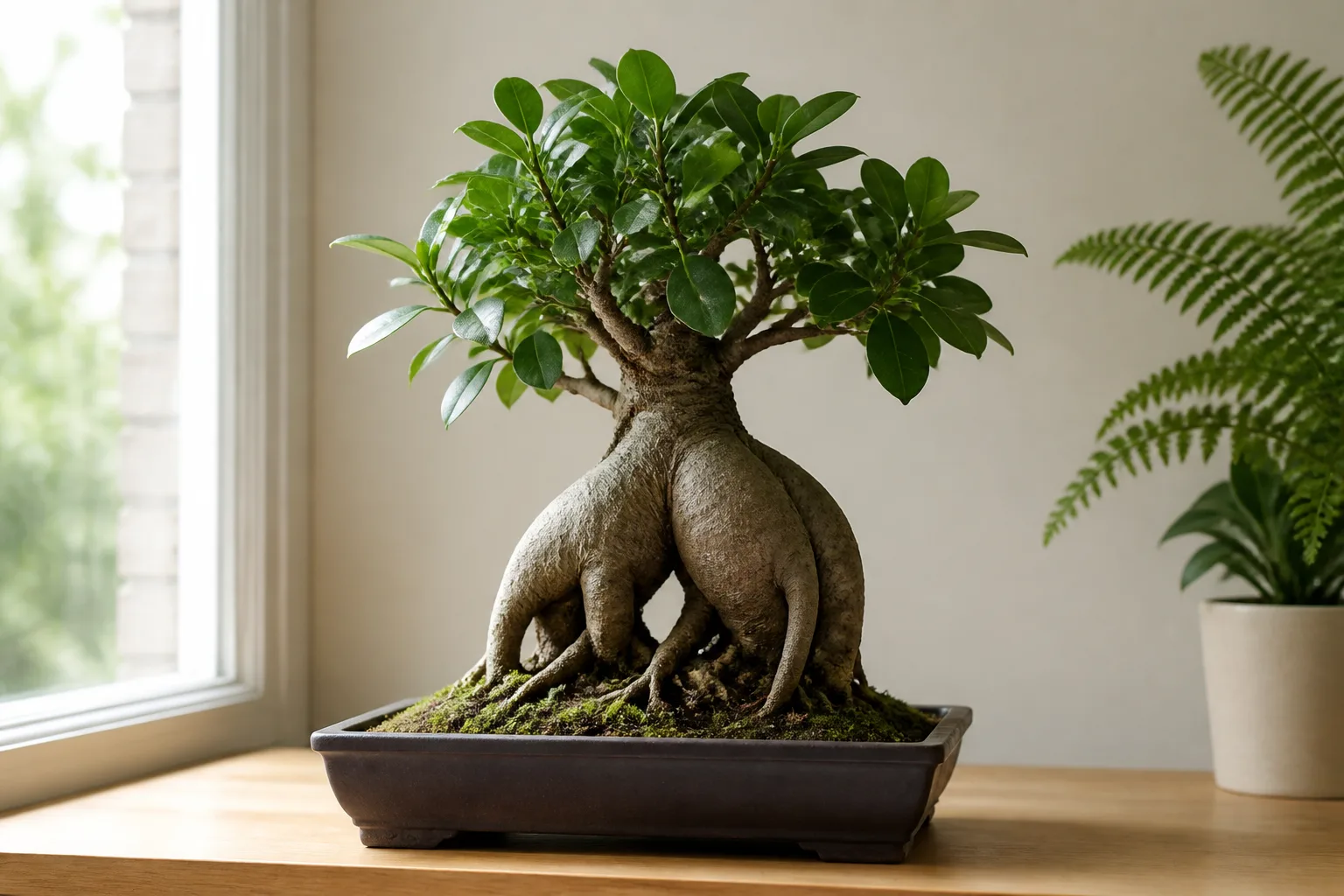
The ginseng ficus bonsai you see at garden centers looks ancient—potbelly trunk, surface roots, glossy canopy—but most of those trees are young Ficus microcarpa plants trained into bonsai form in just a few years. That fast visual payoff is exactly why this species dominates the beginner bonsai shelf. It also explains most failures: owners treat it like a tough houseplant in regular potting soil, then panic when half the leaves fall off after one overwatering cycle or a move to a new windowsill.
Done right, ginseng ficus is one of the most forgiving indoor bonsai species you can buy. It tolerates indoor humidity better than many traditional outdoor bonsai, bends willingly on wire, and recovers from hard pruning. Your job is to match bright light, fast-draining bonsai soil, and a consistent watering rhythm—then learn a few shaping rules so the tree keeps looking intentional instead of leggy.
Ginseng Ficus Quick Reference
Use this table before you change anything. If the tree already looks stressed, fix one variable at a time—usually light or water first—rather than repotting, pruning, and fertilizing in the same week.
| Factor | Indoor target | Notes |
|---|---|---|
| Botanical name | Ficus microcarpa (often sold as ginseng ficus) | Also called Chinese banyan, Malayan banyan, curtain fig |
| Light | Bright indirect; gentle morning sun OK | Leggy stems = too dim; scorched leaves = too much hot sun |
| Soil | Fast-draining bonsai mix (~60% aggregate / 40% organic) | Akadama, lava rock, pine bark common |
| Water | When top inch dries; soak until drain | Shallow bonsai pots dry fast in summer, slow in winter |
| Temperature | Above 60°F (15°C) year-round indoors | Not frost-hardy |
| Humidity | 40–70% comfortable; higher helps aerial roots | Pebble tray OK; misting leaves is optional, not a substitute for watering |
| Fertilizer | Half-strength liquid monthly in growth season | Skip or reduce in low-light winter |
| Repotting | Every 1–2 years in late spring/summer | Trim outer roots; refresh soil |
| Pets | Toxic to cats and dogs | Milky sap irritates skin and GI tract |
| Outdoor zones | USDA 9–11 year-round; summer-only elsewhere | Acclimate gradually |
| Lifespan | Decades with care; 50+ years common for bonsai specimens | Trunk thickening takes years, not weeks |
What Ginseng Ficus Actually Is
Ginseng ficus is a marketing name for bonsai-form Ficus microcarpa, a tropical fig in the mulberry family (Moraceae). In nature it grows across tropical and subtropical Asia as a large strangler fig with smooth gray bark, milky white sap, and dangling aerial roots. NC State Extension notes the species is widely sold as a houseplant and bonsai subject, prefers temperatures above 68°F (20°C), and develops aerial roots most readily in high humidity (70–100%). (NC State Extension)
The “ginseng” nickname comes from the swollen, potbelly trunk and exposed surface roots—not from any relationship to true ginseng (Panax). Nursery growers often graft or root-prune young plants to exaggerate that look long before the tree is old. That is normal in bonsai commerce; just know you are buying a styled young tree, not a centuries-old wild specimen.
Ficus microcarpa vs. Ficus retusa
Retail tags confuse Ficus microcarpa with Ficus retusa constantly. Both are figs used for bonsai, and many mass-market plants are grafted hybrids. For care purposes on a typical store-bought ginseng ficus, assume Ficus microcarpa or a microcarpa-dominant cultivar—especially if the plant shows thick surface roots and oval, glossy leaves. NC State lists dedicated bonsai cultivars including ‘Ginseng’, ‘Golden Gate’, ‘Green Island’, and ‘Mini Flat Leaf’, each with slightly different leaf size and root habit. (NC State Extension)
If you need a comparison point elsewhere in the ficus world, weeping fig (Ficus benjamina) shares the same milky sap and leaf-drop sensitivity to moves—but wants a different pruning cadence and is usually kept as a floor tree, not a shallow bonsai pot.
Is Ginseng Ficus a Good Beginner Bonsai?
Yes—with realistic expectations. Ginseng ficus earns its beginner reputation because it survives indoor conditions that kill juniper or pine bonsai, accepts wiring on young branches, and back-buds on old wood after pruning. It is not a set-and-forget desk plant. Bonsai pots hold very little soil, so water and nutrient management matter more than with a standard houseplant in a 10-inch nursery pot.
Buy the healthiest base material you can: firm trunk, no soft spots at the soil line, even green canopy, and no sticky residue suggesting scale. Pre-shaped trees are fine for beginners who want to learn maintenance pruning and watering first. If you want to learn wiring and trunk development, start with a younger, less stylized plant so you are not fighting someone else’s bad branch choices.
Light Requirements
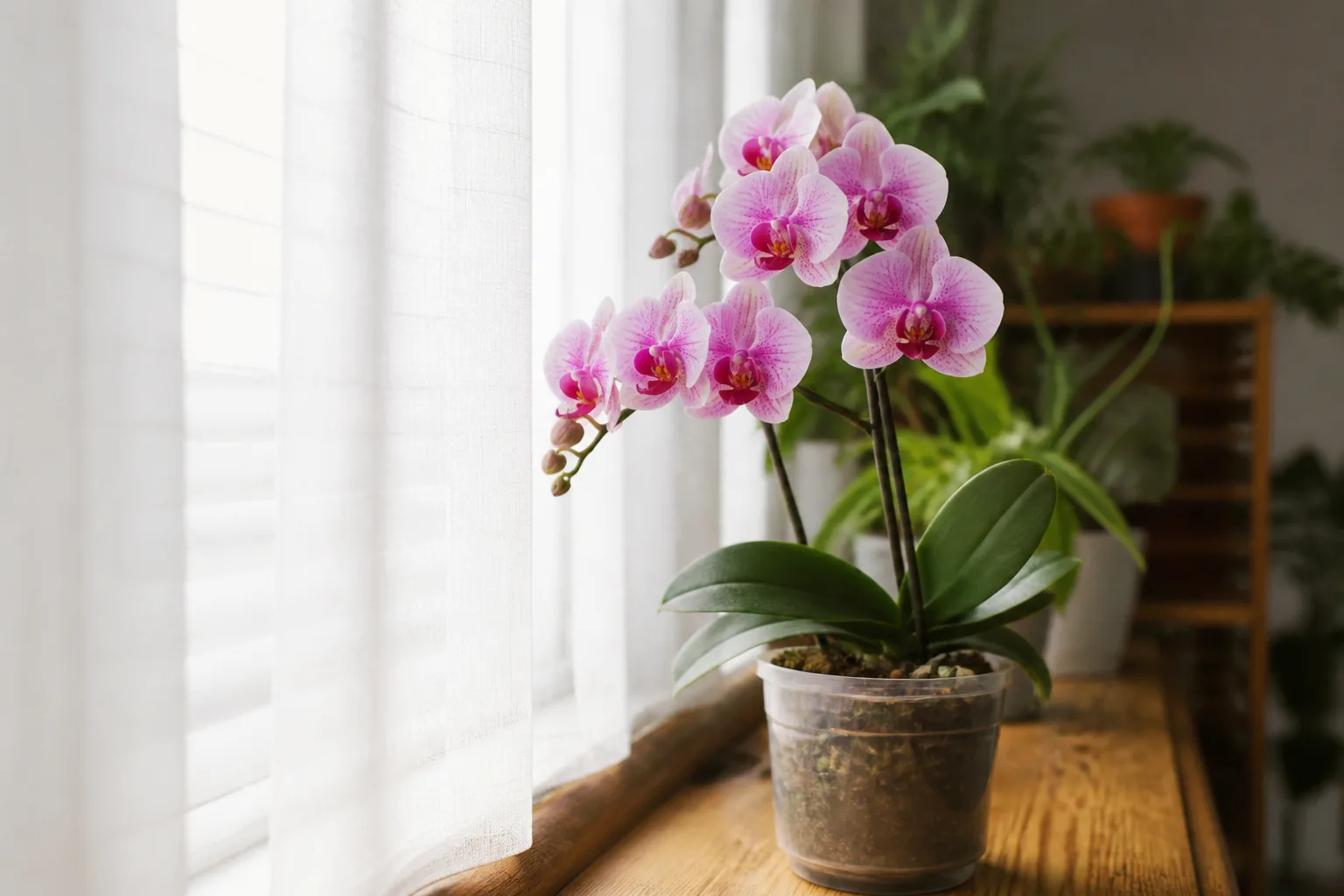
Indoors, ginseng ficus wants bright, indirect light for most of the day—think a south- or west-facing window with sheer curtain diffusion, or an east window with a few hours of gentle morning sun. NC State describes the species as shade-tolerant in landscapes, but bonsai in shallow pots need stronger light than a large floor tree to keep internodes short and leaves small.
Too little light produces leggy shoots, large leaves, and weak inner growth—the opposite of the compact bonsai look. Too much hot afternoon sun through glass can scorch leaves, especially if the plant was grown under greenhouse shade. If leaves bleach or crisp on the window side, pull the pot back or filter the light; do not respond by watering more.
Grow Lights and Summer Outdoor Moves
When natural light is weak from November through February, a full-spectrum grow light 6–12 inches above the canopy for 10–12 hours daily prevents winter stretch. Rotate the pot a quarter turn weekly so one side does not dominate.
In USDA zones 9–11, ginseng ficus can live outdoors in bright shade to partial sun. In cooler zones, many growers move pots outside for summer once nights stay above 60°F (15°C). Never jump from a dim living room to full patio sun in one day—burn and mass leaf drop follow that mistake. Increase outdoor time by about an hour per day over 7–10 days, starting in morning light. Our best indoor trees guide covers similar acclimation logic for other ficus species moved seasonally.
Bonsai Soil Mix
Ginseng ficus roots rot in heavy, wet mix. Use a fast-draining bonsai substrate with roughly 60% inorganic aggregate and 40% organic matter. A workable blend combines:
- Akadama (water-retaining clay that breaks down over time)
- Lava rock or pumice (drainage and air pockets)
- Pine bark or quality organic bonsai component (minor water retention)
Premixed tropical or bonsai soil from a reputable supplier is fine for your first tree. Avoid straight peat-based potting soil—it stays wet too long in a shallow bonsai pot. Every pot must have drainage holes; decorative cache pots without holes are display only.
Watering Without Root Rot
Water when the top inch of soil feels dry, then soak until water runs freely from the drainage holes. Empty the saucer so the pot is not sitting in standing water. In summer, that might mean watering every two to three days; in winter, once a week or less depending on light and indoor heat.
The most reliable habit experienced bonsai growers use is the pot weight test: lift the pot after a fresh watering to feel the heavy baseline, then lift it daily until it feels noticeably lighter—that is your cue to water again. Finger checks help, but weight catches the dry-out faster in shallow trays.
Overwatering keeps roots anaerobic and leads to yellow leaves, blackened roots, and musty soil. Underwatering makes leaves wilt, then crisp and drop; wilting leaves often recover after a full soak if roots are still healthy. If you are unsure which you have, check moisture deep in the pot before adding more water—wet soil plus wilt usually means root damage, not thirst.
Misting foliage does not replace root-zone watering and can promote fungal spotting if water pools on leaves overnight. Wipe dust off leaves with a damp cloth if needed; skip misting as a humidity strategy unless you also manage airflow.
Temperature and Humidity
Treat ginseng ficus as a warm-tropical indoor plant. It thrives between about 65°F and 85°F (18–29°C) and suffers in cold drafts from AC vents, winter window sills, or frequently opened doors. Below 60°F (15°C), growth slows and leaf drop becomes likely.
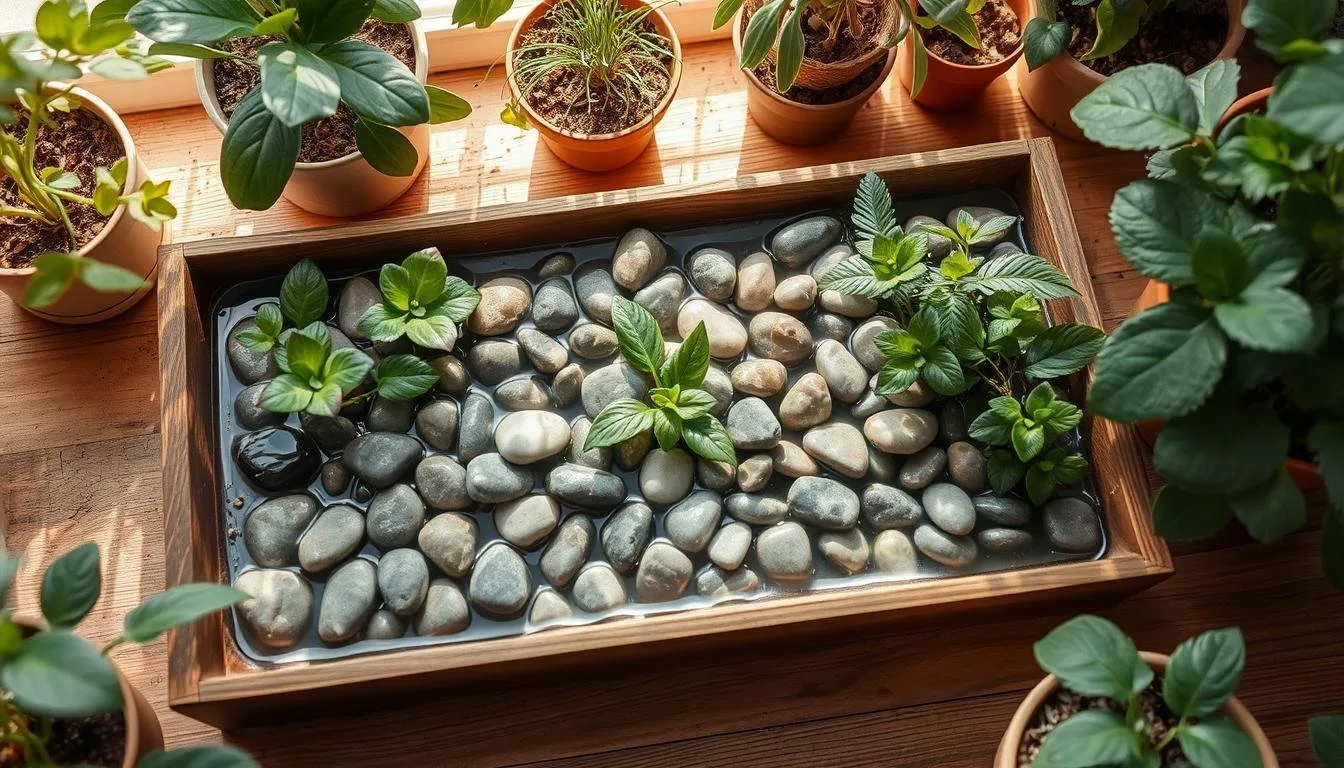
Average indoor humidity (40–50%) is usually enough for survival thanks to waxy leaves, but higher humidity (50–70%) encourages aerial root development and steadier growth. A pebble tray under the pot—water below the top of the stones, pot base above the waterline—is safer than misting. Grouping plants also raises local humidity slightly without soaking leaves.
Fertilizing on a Bonsai Schedule
Tiny bonsai pots exhaust nutrients quickly during active growth. From spring through early fall, feed monthly with a balanced liquid fertilizer diluted to half the label strength. Some growers fertilize every two weeks at quarter strength instead—either approach works if you stay mild; salt buildup from full-strength feeding burns fine roots.
Skip fertilizer on a stressed tree (major leaf drop, recent repot, or root rot recovery) until new growth looks stable. In low-light winter, reduce or pause feeding unless the plant sits under grow lights and is actively growing.
Wiring and Shaping
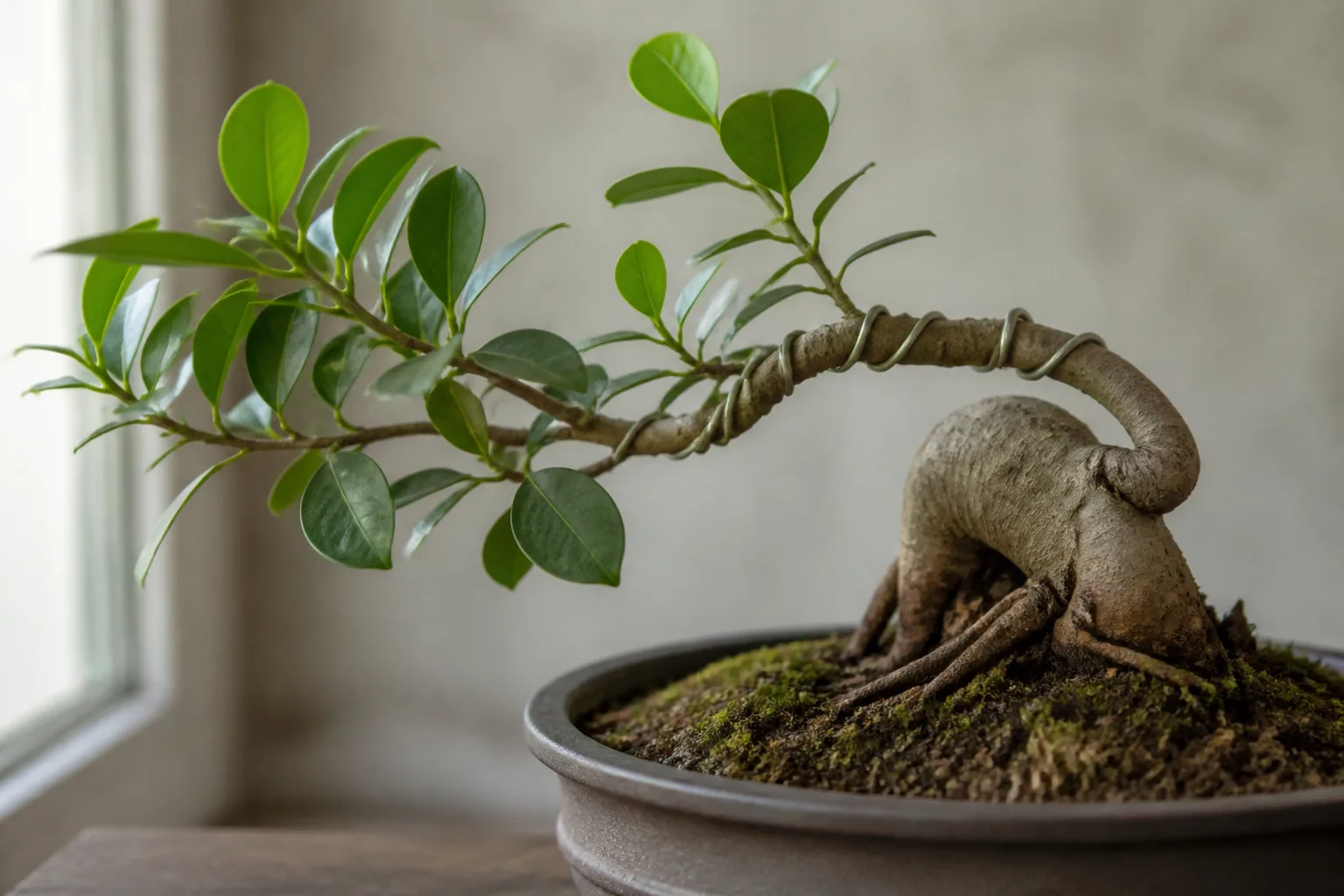
Ginseng ficus branches are flexible when young—ideal for beginner wiring. Use anodized aluminum wire (easier to bend) on thin and medium branches; reserve annealed copper for heavier branches that need stronger hold. Wrap wire at a 45° angle, anchor on the trunk when possible, and bend slowly until you reach the angle you want—never snap branches in one motion.
Check wired branches every few days. Ficus grows fast in warm, bright conditions, and wire can cut into bark within weeks, leaving permanent scars. Remove or reposition wire before it bites; typical branch wiring lasts weeks, not months.
Guy wires (soft wire anchored to the pot or trunk) move heavy branches with less scarring than tight coils. Ficus can also fuse touching branches and roots over time—a trait bonsai artists exploit for raft styles and root-over-rock (deshojo) designs where aerial roots are guided into soil to become secondary trunks.
Always disinfect tools before pruning or wiring. Ficus sap seals quickly, but open wounds invite infection when bacteria hitch a ride on dirty shears.
Pruning for Shape and Trunk Thickening
Pruning is what separates a bonsai from a small potted tree. For maintenance shape, let new shoots extend until they carry six to eight leaves, then cut back to two leaves. That defoliation-style pinch keeps the canopy compact and encourages ramification (fine branching).
If you want a thicker trunk, stop canopy pruning for 6–12 months and let the tree grow freely—even slightly “ugly”—while keeping basic health care steady. When the trunk reaches the girth you want, return to the two-after-six rule. Large cuts on thick wood benefit from cut paste to reduce dieback and infection risk.
Never remove more than about one-third of the live canopy in a single session on a stressed plant. Spread hard structural pruning across seasons if you are redesigning the silhouette.
Repotting and Root Trimming
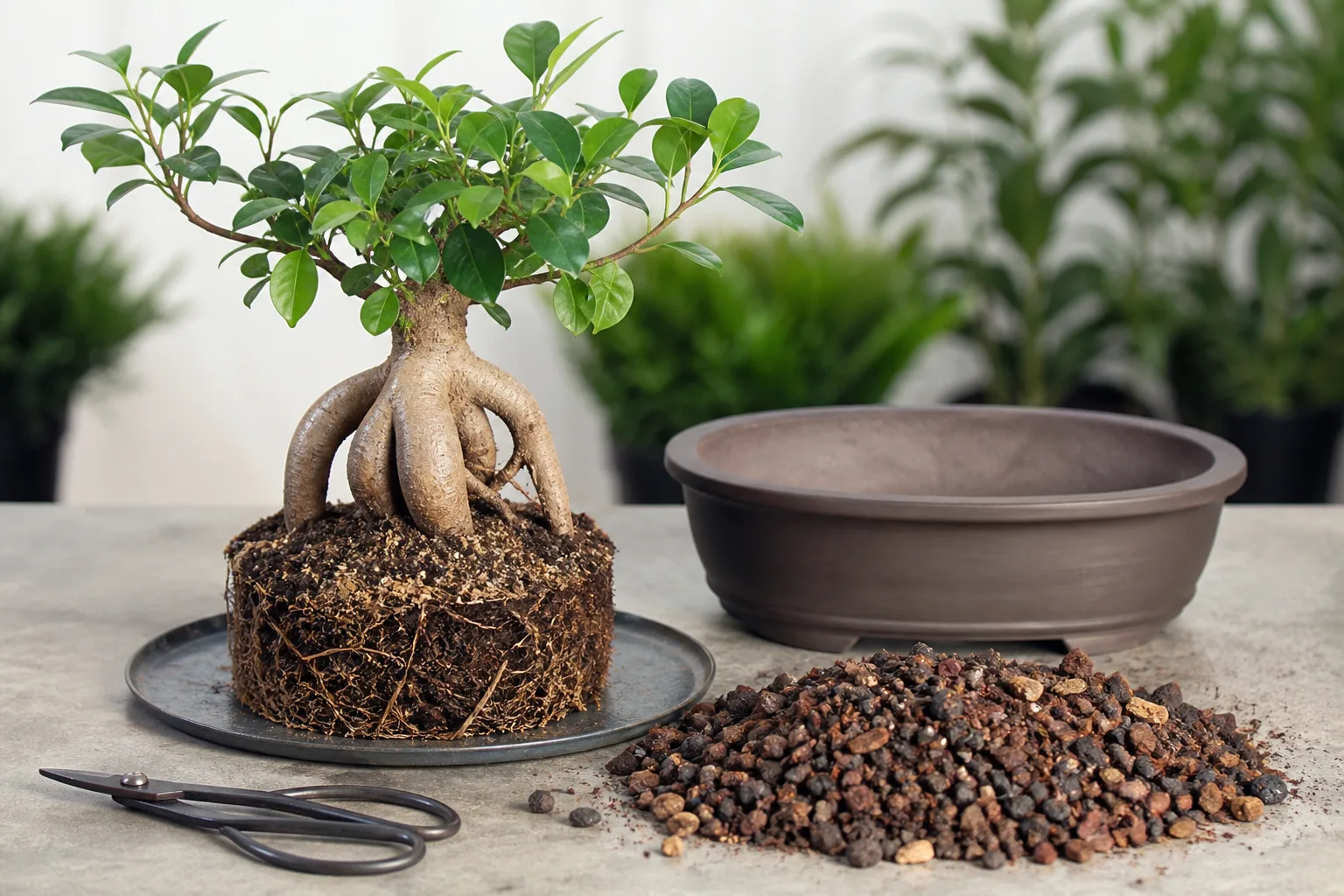
Repot when roots circle the pot or push up soil—typically every one to two years in late spring or summer when the tree is actively growing. Skip repotting in winter unless you are rescuing root rot.
To repot: slide the tree out, comb away old soil from the outer root mass, trim roughly one-quarter of the outer and bottom roots (remove dead, mushy roots entirely), then return the tree to the same pot or one slightly larger. Use fresh bonsai mix and water thoroughly. Trim canopy lightly afterward so roots and top growth stay balanced. Our repotting houseplants guide explains root-ball handling principles that apply here—though bonsai root pruning is more aggressive than a standard houseplant refresh.
Propagating From Cuttings
Ginseng ficus roots easily from stem cuttings taken in late spring or summer—often right after pruning gives you ideal material. Take a 6-inch healthy cutting with several leaf nodes, remove lower leaves, and insert the stem into moist bonsai mix or perlite-heavy propagation mix.
Cover the pot with a clear plastic bag or humidity dome to hold moisture, keep in bright indirect light, and water lightly every few days so the mix stays damp but not soggy. Roots usually form in three to six weeks. Tug gently to feel resistance before removing the cover. Air layering in spring is another reliable method if you want a pre-rooted branch on a larger tree.
Pests, Sap Toxicity, and Safety
Healthy ginseng ficus resists most pests, but spider mites, scale, mealybugs, and aphids appear when light is poor or air is stale. Inspect leaf axils and trunk crevices monthly. Treat early with insecticidal soap or horticultural oil; repeat weekly until pests clear. NC State lists aphids, spider mites, mealybugs, and scale as common Ficus microcarpa issues, with root rot from overwatering as the primary disease risk. (NC State Extension)
Milky latex sap irritates skin and is toxic to pets. ASPCA lists Ficus as toxic to cats and dogs; Pet Poison Helpline notes ingestion can cause mouth irritation, drooling, vomiting, and diarrhea, with dermal irritation if sap contacts skin. (ASPCA) (Pet Poison Helpline) Wear gloves when wiring or pruning if you are sensitive, wash tools and hands after, and keep trees off pet-accessible shelves. Call ASPCA Animal Poison Control at (888) 426-4435 or your veterinarian if a pet chews leaves or oozing cuts.
Troubleshooting Leaf Drop
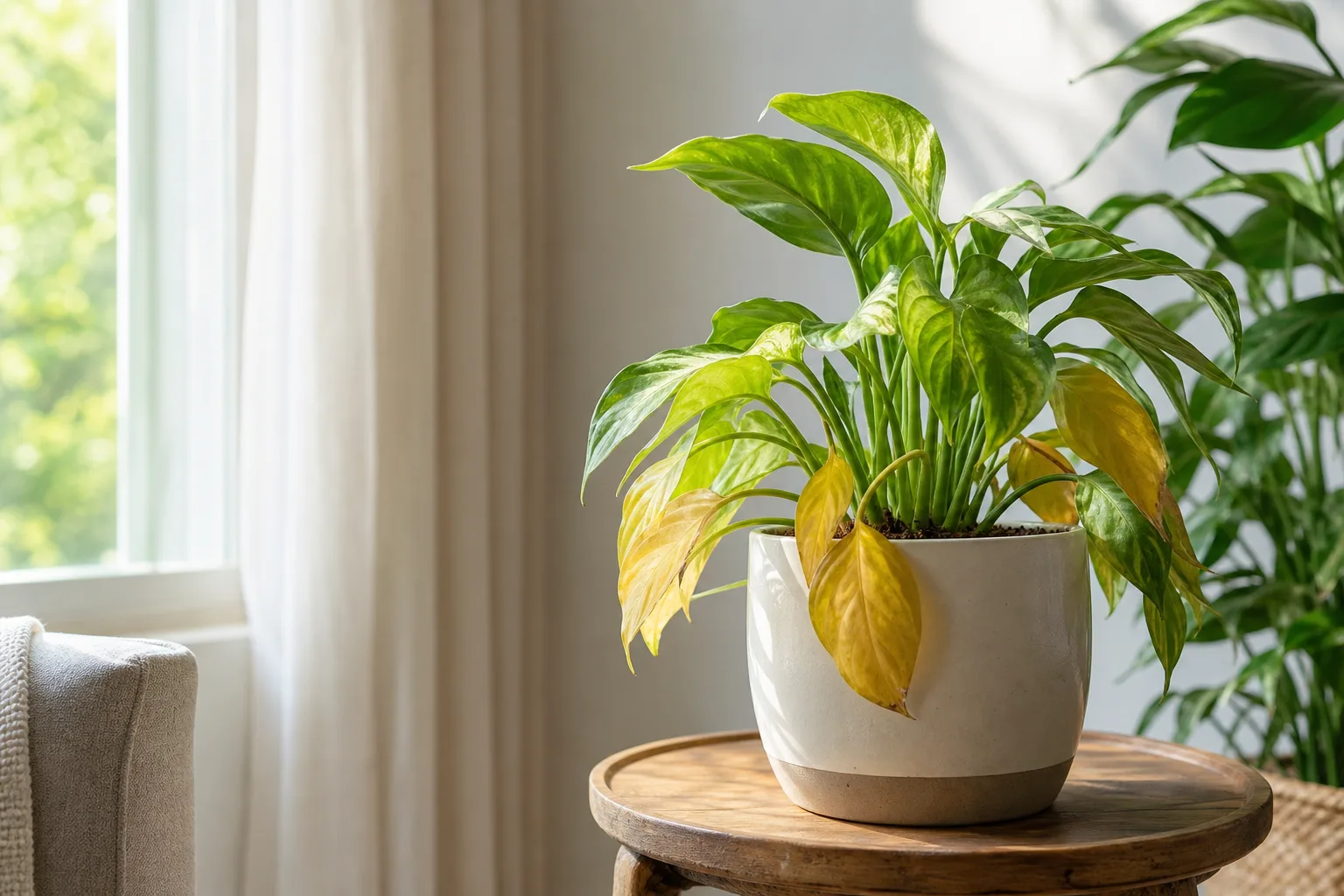
Leaf drop is the universal ficus complaint—and ginseng ficus is not exempt. The fix depends on which stress came first.
Overwatering shows yellowing lower leaves, soft stems at the base, and musty soil. Stop watering until the mix dries halfway down, improve drainage, and inspect roots—mushy roots need trimming and a repot into fresh mix.
Underwatering shows wilted, thin leaves that may recover after a soak. If they drop anyway, the root mass may have partially desiccated; soak thoroughly and shade slightly for a week.
Relocation shock hits after moving the pot to a new room, repotting, or bringing indoors from outdoors. Hold care steady—consistent light, no fertilizer, careful watering—and expect partial leaf drop for 2–4 weeks while the tree adjusts. Avoid moving it again during recovery.
Cold drafts or AC blasts cause sudden drop without obvious soil issues. Move the pot away from vents and monitor.
Pests cause stippling, sticky honeydew, or visible insects; treat the infestation, then improve light and airflow so the tree can refoliate.
When in doubt, check soil moisture at depth, then light intensity, then recent moves—in that order. Most ginseng ficus failures are water rhythm or light level, not mysterious bonsai curses.
Conclusion
Ginseng ficus bonsai rewards owners who respect three non-negotiables: bright light, fast-draining soil, and water only when the pot is approaching dry. Everything else—wiring, defoliation pruning, aerial roots, summer outdoor vacations—is layered on that foundation. Start by stabilizing your tree in one good location for a month, learn its weight when thirsty, then pick one styling goal: compact canopy, thicker trunk, or root-over-rock character. Master maintenance first and the art follows faster than forcing shape on a stressed plant.