How Often to Water Basil Indoors and Outdoors
Learn how often to water basil in beds, patio pots, and indoors. Use a simple soil test, adjust for heat and containers, and spot overwatering early.
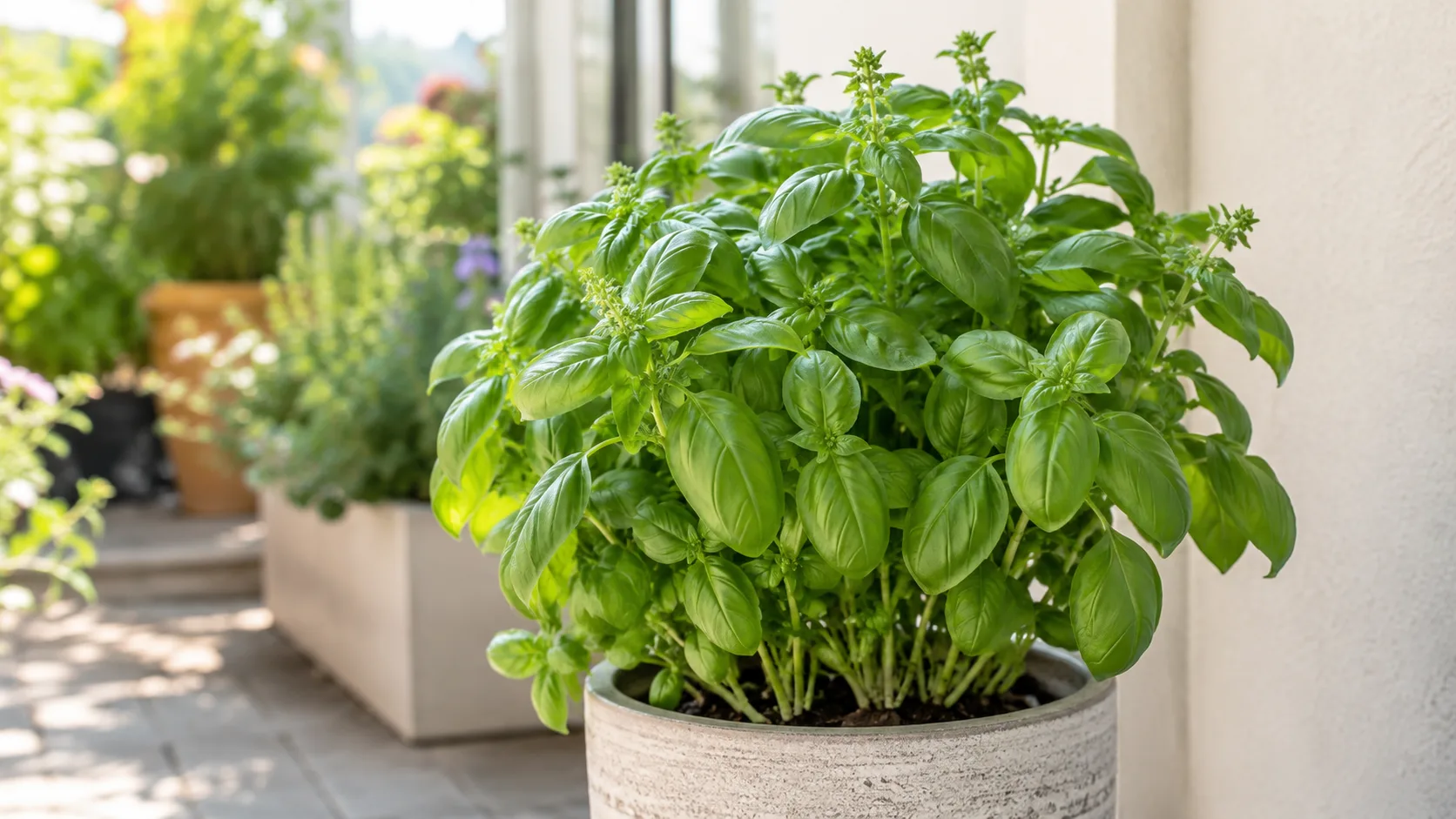
If you want one number, start with this: mature basil in a garden bed often needs about 1 to 1½ inches of water per week, including rainfall. Utah State University Extension uses that range for vigorous garden growth. But that is a weekly bed target, not a cup measurement for every pot on a windowsill.
The better rule is simple: water basil when the root-zone soil has started to dry, then water thoroughly enough to re-wet the root zone without leaving the plant in standing water. A small terracotta pot in full summer sun may need checking every day. A mature plant in a mulched bed may need one deep watering a week—or none after useful rain. Your soil and container decide the interval.
The short answer: water by soil, not the calendar
Basil (Ocimum basilicum) likes consistent moisture, but its roots also need air. Soil that swings from bone-dry to saturated stresses the plant; soil that stays wet for days can damage roots even if the leaves look thirsty. That is why “every three days” and “once a week” can both be reasonable starting points in different settings, but neither is a universal prescription.
Use a schedule only as a reminder to check. In warm weather, check outdoor pots daily and beds every day or two while basil is establishing. In a cooler indoor room, a healthy pot may go several days between checks. When light, temperature, wind, pot size, or rainfall changes, your watering interval changes with them.
Your starting watering range
These ranges are starting points for a plant already growing in a draining mix. Check the soil before every watering, and count meaningful rain in an outdoor bed.
Basil in a garden bed
Plan around 1 to 1½ inches of total water per week during active growth, adjusting upward in very hot, windy, or sandy conditions and downward after steady rain. Apply that water slowly so it moves below the surface instead of running off. A mature plant in good soil may need one deep session weekly; a new transplant or very hot bed may do better with two smaller deep sessions.
Do not turn the number into a shallow daily sprinkle. Light surface watering evaporates quickly and tells you very little about whether moisture reached the roots. A soaker hose or drip line is useful because it wets the soil rather than repeatedly coating basil foliage.
Basil in an outdoor container
Potted basil usually needs more frequent checks than bed-grown basil. A container exposes more of its potting mix to sun and moving air, and a small pot holds less moisture. Terracotta also loses water through its porous sides faster than glazed ceramic or plastic.
In warm weather, a small pot may need water every day or every other day, while a large container with a moisture-holding mix may go several days or longer. That range is intentionally broad: water until excess drains from the holes, empty any saucer, and wait until the upper root zone begins to dry before repeating. Never use the same volume for a six-inch nursery pot and a large planter.
Indoor basil and seedlings
Indoor basil often uses water more slowly than outdoor basil because it receives less intense light and less wind. A sunny window, grow light, dry heating vent, or warm kitchen can change that quickly, so check rather than assuming indoor means once a week.
For an established indoor pot, push a finger into the mix before watering. Gardening Know How recommends watering indoor basil when the top inch has dried while keeping the soil moist but not soggy. For seed trays and newly emerged seedlings, keep the shallow mix evenly damp with gentle watering; do not wait for a deep dry-down that a tiny root system cannot tolerate.
The 60-second moisture check
The fastest reliable basil schedule is a repeatable check. Look at the plant, feel the soil, and inspect the pot or bed before you reach for the watering can.
Check the root zone, not just the surface
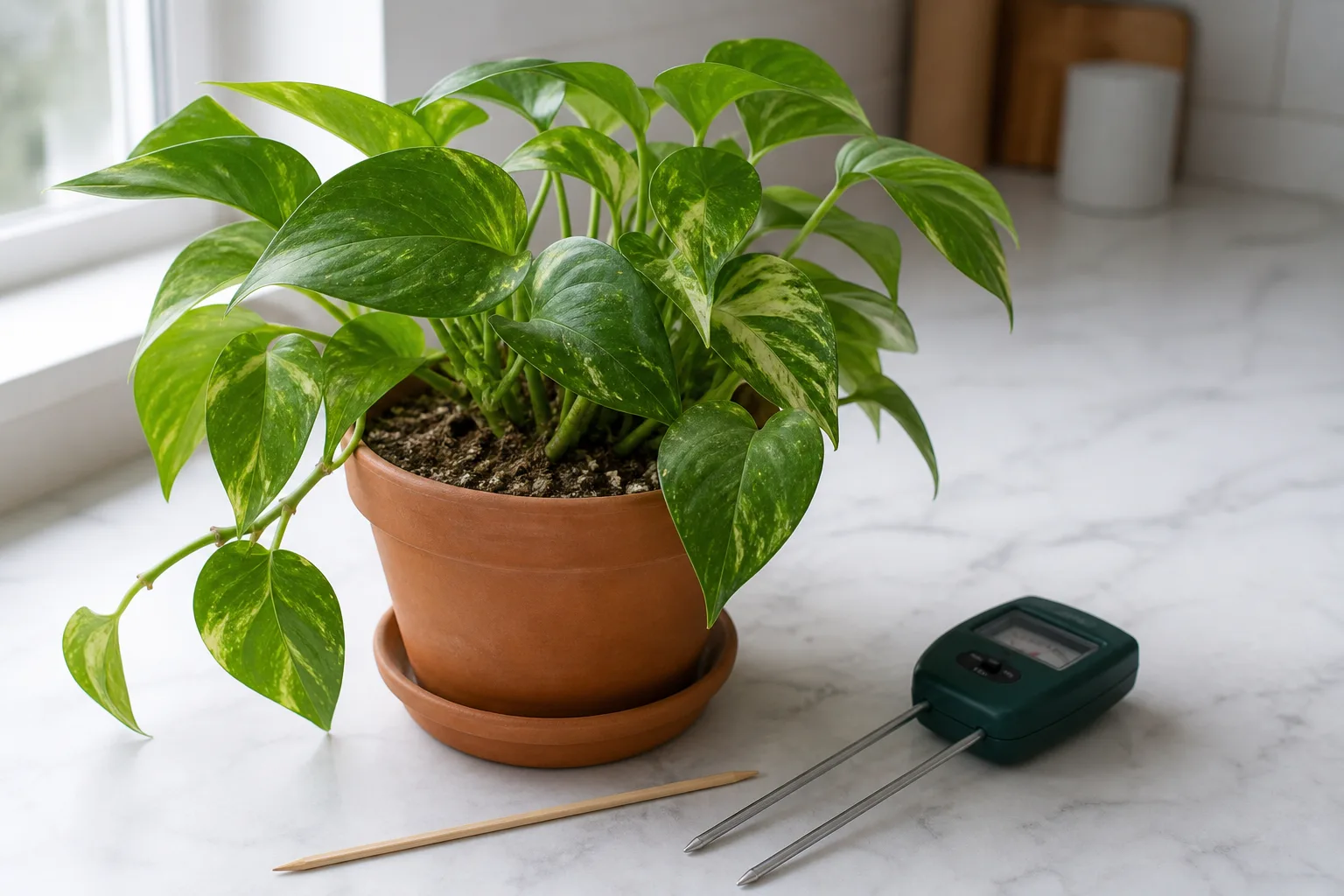
Push a clean finger about 1 to 2 inches into the soil a few inches away from the stem. A dry surface does not always mean the root zone is dry, especially after a hot afternoon. Conversely, a crusted surface can hide a dry pocket below if water has been running down the sides of a root-bound pot.
For a garden bed, check near the plant’s root zone rather than directly against the stem. For a pot, test more than one spot if the foliage is dense. If the soil feels cool and slightly moist, wait and check again later. If it feels dry at that depth and the plant is not merely flagging in afternoon heat, water deeply.
The finger test is not a laboratory reading; it is a practical consistency tool. Use the same depth and the same part of the pot each time. After a week, you will learn whether your particular pot dries in two days or six, which is more useful than copying a generic schedule.
Use pot weight and drainage as cross-checks
Lift a small pot before and after watering. A container that feels noticeably lighter is often approaching the point where it needs water. This helps when the soil surface is covered by leaves or mulch, though it is less useful with a very large planter.
Look for drainage holes and confirm that water can actually escape. A decorative cachepot with no opening, a blocked hole, or a saucer that stays full can leave basil roots wet even when the top looks dry. Drainage is not optional for basil; Penn State Extension describes the herb as suited to well-drained soil and notes that it can be grown in containers indoors or outdoors.
Water basil deeply without keeping it soggy
The goal is not to splash the surface. The goal is to moisten the root zone evenly, give excess water a way out, and allow enough time between sessions for air to return to the pore spaces.
Use the pause-and-check method
For a pot or a dry patch of bed, water slowly at the soil line. Move the stream around the root zone instead of aiming at one stem. When water begins to pool or run from the container’s drainage holes, pause for a few minutes so the mix can absorb it.
Then check again. If the soil is moist below the surface, stop. If the top layer is wet but the root zone is still dry—common in hydrophobic or severely dried potting mix—apply a second slow pass. This approach prevents a fast pour from running down the outside of a root ball while the middle stays dry.
In a container, allow a little drainage to confirm that the whole mix has been wetted, then empty the saucer. “It drains” does not mean “water again tomorrow.” Overwatering is usually a frequency problem: the next irrigation arrives before the mix has used enough water.
Choose the right time and keep leaves dry
Morning is the best default for outdoor basil. It gives the foliage and soil surface time to dry during the day and generally loses less water to evaporation than midday irrigation. Evening watering can work when necessary, but aim at the soil and avoid leaving the leaves wet overnight.
Penn State Extension recommends avoiding overhead watering as part of basil disease prevention. This matters because basil foliage that stays wet in crowded, poorly ventilated conditions is more vulnerable to leaf disease. Use a narrow-spout can, a hose directed at the soil, drip irrigation, or a soaker hose instead of a sprinkler when you have a choice.
Misting is not a substitute for watering the root zone. If indoor air is dry, improve the growing conditions around the plant, but do not keep basil leaves wet as a workaround for dry soil.
Adjust the schedule for heat, pot size, and soil
Water demand is the result of several variables working together. Basil in full sun and high heat may use water quickly; basil in low light may stay wet longer and can be harmed by a schedule copied from an outdoor plant.
Heat, wind, and rain
Check basil more often during heat waves, dry wind, or a sudden burst of growth. A plant that was comfortable with weekly irrigation can need a midweek check when temperatures rise, especially if it is in a raised bed or exposed patio pot. Water early enough that the root zone is moist before the hottest part of the day, but do not respond to every midday droop with more water.
Basil leaves can droop temporarily in intense afternoon sun and recover as the evening cools. If the soil is still moist and the plant perks up later, shade or heat stress may be the issue. If leaves stay limp after sunset and the soil is dry, water deeply and reassess the next morning.
Rain needs to be evaluated at the root zone, not by looking at a wet pot rim. Dense basil foliage can shed rain away from a container, while a light shower may wet only the surface. After rain, feel the soil before deciding whether to skip irrigation.
Mulch helps in garden beds by slowing evaporation and moderating the surface. Apply a thin layer of straw, shredded leaves, or another clean organic mulch, keeping it away from the stems. Mulch can reduce how often you water; it cannot correct compacted soil or a low spot that stays saturated.
Terracotta, small pots, and fast-draining mix
Container material and size are often the reason two basil plants beside each other need different schedules. Savvy Gardening notes that peat-based mixes drain quickly, terracotta is porous, and smaller pots dry faster than larger ones. A basil plant in a small terracotta pot on a hot balcony may need a daily moisture check even when a large plastic planter nearby is still damp.
Do not solve a fast-drying pot by moving it into a heavier, wetter mix without considering drainage. Basil needs moisture, but it also needs a mix that drains freely. If water sits on the surface, the pot remains heavy for days, or the mix smells sour, fix the container or soil problem instead of increasing the watering frequency.
Light matters too. Basil needs roughly six to eight hours of sun for strong growth; Penn State Extension lists full sun and warm conditions as core cultivation requirements. A plant placed far from a bright window may grow slowly and use less water, so watering it on the same interval as a full-sun patio plant can create a soggy root zone.
Diagnose wilt before you water again
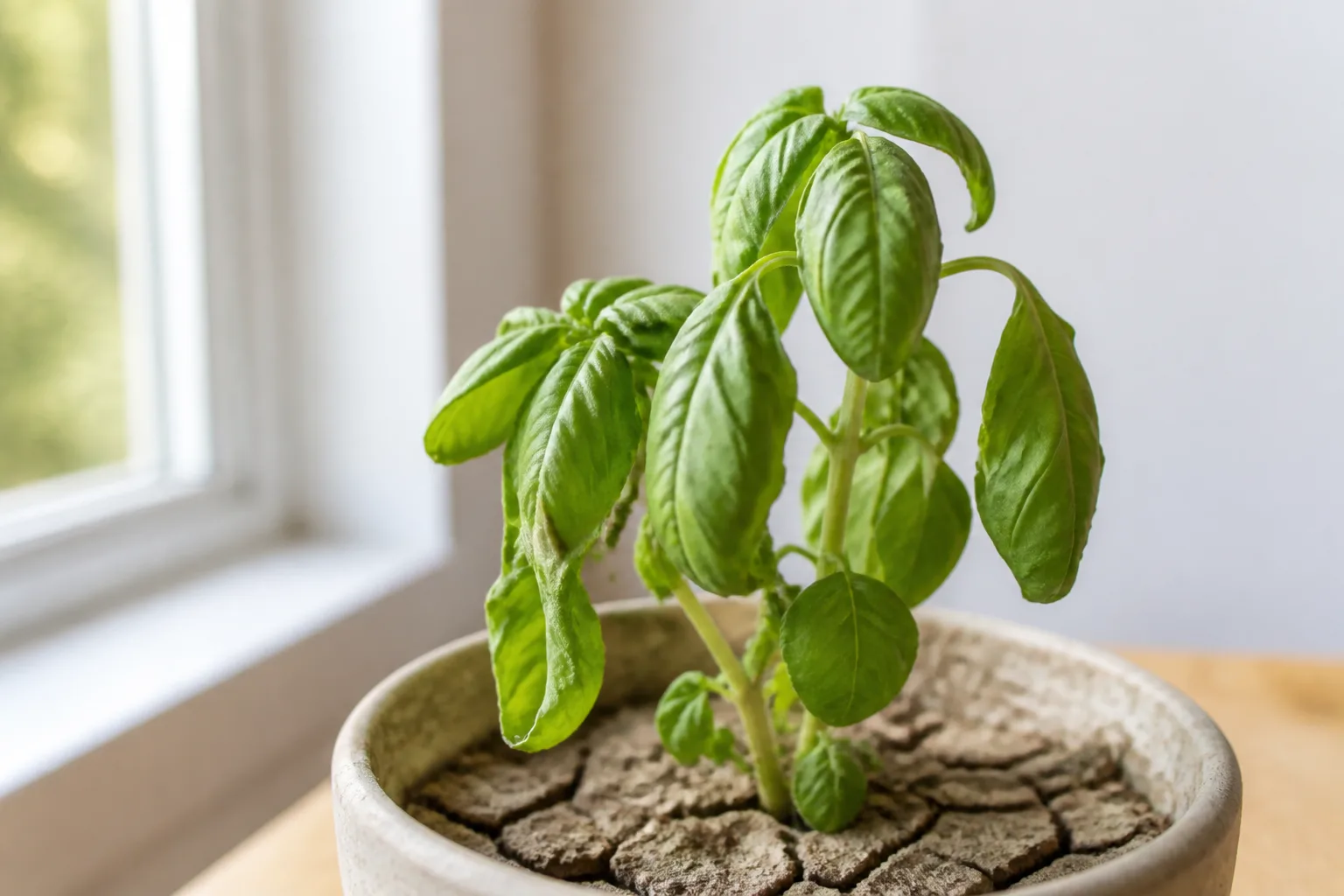
Wilting is a symptom, not a diagnosis. Basil can droop because it lacks available water, because roots are damaged by excess moisture, or because heat temporarily exceeds what the leaves can replace. Always pair the leaf check with a soil check.
The underwatering pattern
Underwatered basil usually has limp leaves and sagging stems alongside dry soil. The pot may feel light, the mix may pull away from the sides, and the plant may recover after a thorough watering if the roots are still healthy. Savvy Gardening notes that visible wilting means the plant is already stressed, so treat it as a prompt to improve the routine rather than as the ideal watering signal.
Water slowly at the base until the root zone is wet, then give the plant a few hours out of harsh afternoon exposure if it is severely wilted. Do not fertilize a badly dry plant immediately; restore moisture first. For a container that repeatedly becomes bone-dry, check whether the pot is too small, terracotta is wicking moisture away, or the mix has become difficult to re-wet.
If water races down the sides and exits immediately, do not assume the soil is saturated. Apply smaller passes, waiting between them, until the mix accepts water. The next time, water before the plant reaches the collapse stage by using the same depth check on a regular rhythm.
The overwatering and root-rot pattern
Overwatered basil can look surprisingly similar to thirsty basil: leaves droop, growth stalls, and the plant loses vigor. The clues are different below the surface—soil that stays wet, yellowing older leaves, a constantly heavy pot, standing water in the saucer, or a sour smell.
If the mix is wet, do not add more water just because the plant is limp. Move the pot into brighter indirect light with good airflow, empty the saucer, and wait until the root zone has begun to dry. Confirm that drainage holes are open. If the soil stays saturated for days, the underlying problem is the pot, mix, or root health—not a shortage of irrigation.
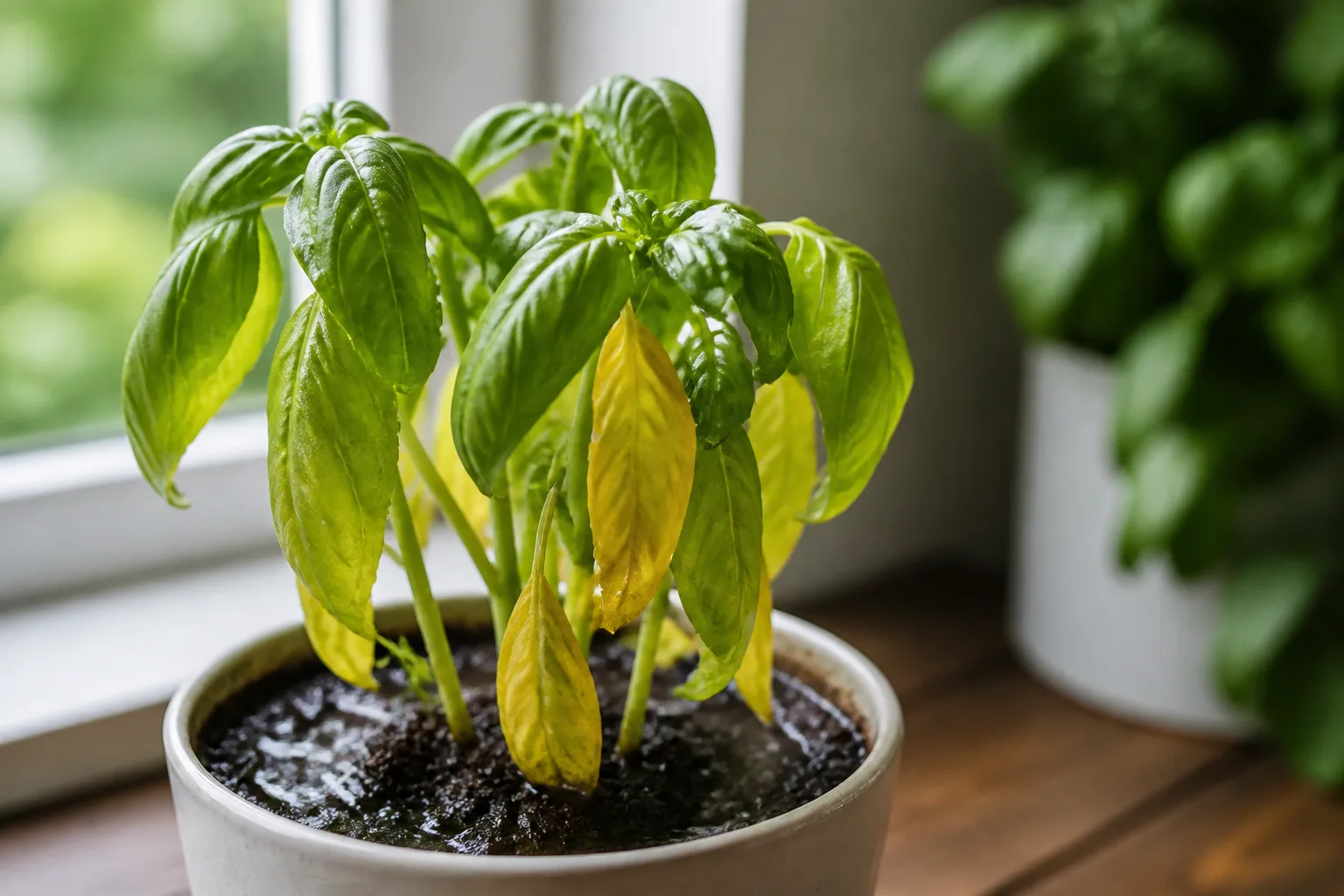
Severe root damage may not reverse after one dry day. If the plant continues to decline while the mix remains wet, inspect the roots when practical: healthy roots are firm, while rotting roots are soft and discolored. Remove the source of standing water and repot only when you can do so cleanly and safely; a larger pot filled with wet soil is not a rescue.
Brown or black leaf spots also deserve caution. They can follow wet foliage, disease, cold injury, or other stress, so do not label every spot “overwatering.” Keep leaves dry, improve airflow, and compare the symptom with the soil condition before changing the watering routine.
Keep basil productive between waterings
Watering is easier when the rest of the setup supports steady growth. Give basil full sun or a strong grow light, use fertile but well-drained soil, and leave enough space around plants for air movement. Consistent light and warmth help the plant use water predictably; low light and cold conditions make a calendar schedule especially risky.
Harvest regularly once the plant has several sets of leaves, cutting just above a leaf pair to encourage branching. Pinch flower buds when your goal is tender culinary foliage, because flowering changes the plant’s growth pattern and leaf flavor. Penn State Extension also notes that basil is sensitive to cold and water stress, so protecting it from chilly nights and avoiding repeated wilt-and-recover cycles will do more for a steady harvest than adding water by habit.
The practical routine is short: check the root zone, water the soil deeply when it begins to dry, let excess drain, and adjust the next check to the weather and container. Once you learn how quickly your basil dries in its actual pot or bed, the schedule stops being a guess.
Conclusion
The best answer to “how often should I water basil?” is as soon as the upper root zone begins to dry, with the interval set by the plant’s location. Use about 1 to 1½ inches per week as a garden-bed starting point, but expect small pots, terracotta, hot weather, wind, and young plants to need more frequent checks.
Water slowly at the base, preferably in the morning, and never leave the pot sitting in runoff. If basil droops, feel the soil before watering: dry soil points to underwatering, while wet soil points to drainage or root trouble. That one habit keeps the plant’s roots supplied with both moisture and air—the combination that produces a lush, harvestable basil plant.



