Rosemary Winter Care: How to Protect It From Cold
Keep rosemary alive through winter with a climate-based plan for frost, wind, wet soil, containers, indoor light, watering, pests, and spring recovery.
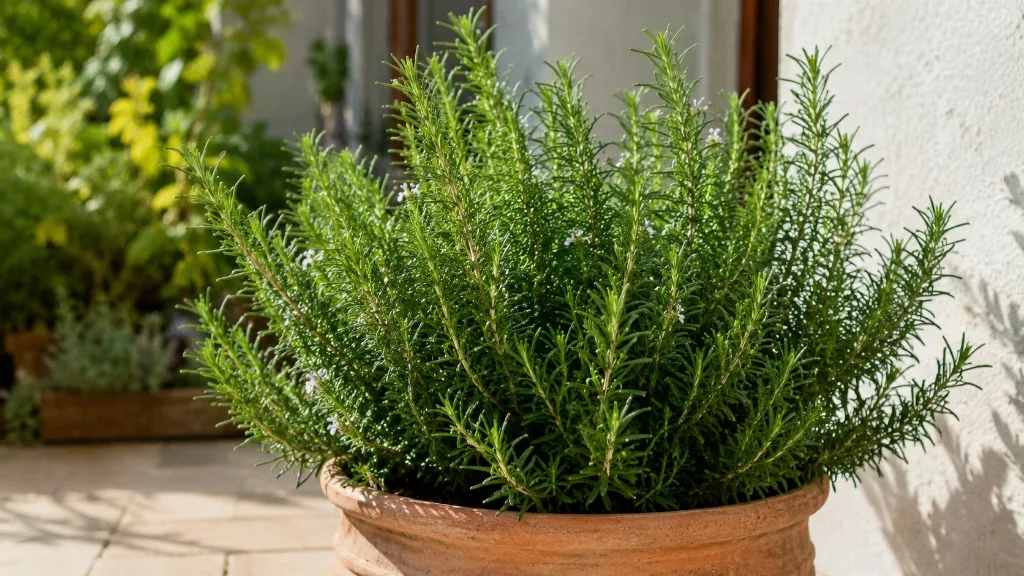
Rosemary can survive winter, but the right plan depends on four details: the cultivar, whether it grows in the ground or a pot, how wet and windy the site becomes, and the coldest temperatures it will actually face. A mature, well-drained shrub in a sheltered bed may need only a light mulch ring and a frost cover during a sharp cold snap. A young plant in a small container may need to move under cover much earlier.
The safest general rule is to protect rosemary from winter wet and exposed cold, not to keep it warm at all costs. Rosemary (Salvia rosmarinus, formerly Rosmarinus officinalis) is an evergreen Mediterranean shrub that prefers full sun and fast drainage. The RHS rosemary growing guide and NC State Extension plant profile both emphasize that wet soil, poor airflow, and unsuitable exposure create more trouble than a little cool weather by itself.
Before winter settles in, decide which of these three paths fits your plant: leave it outside with protection, move the container to a sheltered outdoor spot, or bring it indoors. That decision does more for survival than adding fertilizer, wrapping foliage in plastic, or following a fixed winter watering schedule.
The right winter plan starts with your climate
Hardiness labels are useful, but they are not a guarantee. A zone describes a region’s typical minimum temperature range; it does not tell you whether your garden is a wind tunnel, a frost pocket, a wet clay basin, or a warm south-facing microclimate. Rosemary also becomes more vulnerable when it is newly planted, heavily pruned late in the year, or sitting in a small pot that freezes quickly.
Match the cultivar and local winter
Standard rosemary is not equally hardy everywhere. The RHS reports that established rosemary plants can tolerate temperatures around 18°F (-8°C) in suitable conditions, while warning that harsh frosts and cold winds can still damage or kill plants. That is a useful reference point, not a promise for every variety, newly purchased plant, or exposed site.
In practical terms, gardeners in mild climates can often keep established rosemary outdoors year-round. In areas with regular hard freezes, the safer choice is a container that can move to shelter or a cultivar selected for greater cold tolerance. Fine Gardening’s zone-based guidance recommends growing rosemary in pots in Zone 6 or colder and overwintering new plants from Zone 7 indoors before planting them out after spring hardening. Its advice is deliberately conservative because a sunny, dry site can outperform a nominally warmer but wet one.
Look for the cultivar name before making a plan. ‘Arp’ and ‘Hill Hardy’ are commonly chosen where winters are colder, while ‘Tuscan Blue’ may need protection during severe weather. Even a cold-tolerant selection can fail in saturated soil or after repeated freeze-thaw cycles. If the plant is unlabeled, treat it as more tender until you know how it performs locally.
Do not use a single forecast low as your only trigger. Consider how long temperatures will stay below freezing, whether a cold wind will strip moisture from the foliage, whether rain will precede the freeze, and whether the plant is newly planted. A brief frost on a mature, acclimated shrub is a different event from several nights in the low 20s°F after a warm autumn flush of growth.
Compare in-ground and container rosemary
An in-ground plant has a large volume of surrounding soil that changes temperature slowly. A container has far less root insulation, and its sides are exposed to cold air on every side. This is why a rosemary shrub that is perfectly healthy in a garden bed can suffer in a pot during the same winter.
The RHS specifically identifies potted plants as especially vulnerable to winter cold and recommends grouping containers, wrapping pots, and moving them to a warmer, sheltered position. A container also collects rain differently from a bed: its mix can stay wet under a porch roof or dry quickly on a windy balcony, depending on the setting.
Use this quick comparison:
| Situation | Starting plan | Main risk to watch |
|---|---|---|
| Established rosemary in a sunny, well-drained bed | Leave outside; mulch the root area and cover only during severe spells | Cold wind, waterlogged soil, sudden frost |
| Young or unknown rosemary in the ground | Add shelter and monitor closely; consider a backup cutting | Shallow roots and poor acclimation |
| Large container in a mild, rain-sheltered spot | Keep outside with pot insulation and good drainage | Root ball freezing or staying wet |
| Small container in a cold, wet, or exposed spot | Move to a cool, bright shelter before hard frost | Rapid temperature swings and root rot |
| Tender plant that must be protected from a deep freeze | Bring indoors before the event and acclimate gradually | Low light, heater heat, pests, overwatering |
If you can move the plant, use that flexibility early. If you cannot, focus on the root zone first: block wind, keep rain off the pot, and maintain an open drainage hole. Wrapping the leafy top while the root ball remains cold and soaked solves only part of the problem.
Prepare rosemary before the first hard freeze
Winter preparation works best as a sequence. Start with the root zone, then remove late-season stimulation, then inspect the plant. The aim is to send rosemary into the cold with mature growth, healthy roots, and no hidden pests that can multiply indoors.
Fix drainage and rain exposure
Walk around the plant after a soaking rain. If water pools beside the crown, if the bed stays shiny and muddy for hours, or if a downspout sends runoff toward the roots, correct that before adding mulch. A raised bed, planting mound, redirected downspout, or better-drained location is more reliable than mixing a little sand into heavy clay around an established shrub.
Rosemary should sit slightly high rather than in a basin. The RHS recommends light, free-draining soil and shallow planting, because roots that stay cold and saturated are prone to rot. Do not bury the stem to compensate for winter exposure, and do not pack wet compost against the crown.
For a container, clear the drainage holes and remove the saucer or cachepot before winter. Raise the pot on feet, bricks, or a slatted stand so water can escape freely. Keep it away from a roof drip line, even if the spot is otherwise sheltered. If the mix drains very slowly, shelter the plant first and plan a spring refresh; repot immediately before a freeze unless rot is already active, because a late root disturbance adds another stress.

Stop fertilizer and finish pruning
Rosemary does not need a late-season push. Nitrogen-rich fertilizer can encourage soft new growth that has not hardened before frost, and rich, wet soil works against the plant’s natural preference for lean, well-drained conditions. The RHS winter-damage guidance recommends avoiding late nitrogen applications because sappy growth is more vulnerable to cold.
Finish routine shaping after flowering and while there is still time for cuts to settle. Take soft green tips for cooking or lightly shorten an overlong branch, but avoid a hard fall haircut that exposes old wood just before winter. Rosemary is woody; it does not reliably resprout from every bare stem. Leave healthy structure in place when the choice is between a slightly untidy plant and a heavily opened-up one before a freeze.
If you need to remove a broken or diseased branch, make a clean cut to healthy tissue. Save major renovation for spring, after you can see where new buds and shoots are forming. This timing also preserves more of the previous season’s growth, which may carry flowers and offers some protection from winter exposure.
Inspect the plant before bringing it indoors
Do the inspection outdoors, before the pot joins your houseplants. Look along the undersides of leaves and around stem joints for webbing, clusters of small insects, sticky residue, cottony spots, or scale-like bumps. Check the soil surface for weeds, decaying leaves, and a sour smell that suggests the root zone has stayed too wet.
The NC State profile lists aphids, mealybugs, whiteflies, and spider mites among pests to monitor, especially when rosemary is grown indoors. Epic Gardening’s indoor rosemary guidance also recommends checking plants moved in from outdoors because spider mites can arrive unnoticed and spread to other plants in a warm room.
Rinse dusty foliage with a gentle stream of water and let the plant dry before moving it. If you find a real infestation, isolate the rosemary and use only a treatment labeled for the plant and the pest, following the product directions. Because rosemary is edible, do not harvest treated foliage until the label’s instructions allow it. A short quarantine is easier than trying to treat an outbreak across an entire windowsill.
Protect in-ground rosemary outdoors
An established rosemary in a suitable bed often benefits from a light-touch plan. Improve the microclimate, keep the root zone from swinging rapidly between wet and frozen, and use temporary covers when the forecast is genuinely threatening. Protection should preserve airflow rather than turn the shrub into a sealed package.
Mulch the root zone without burying the crown
Mulch buffers soil temperature and can reduce damage from repeated freezing and thawing. Spread a few inches of airy organic material such as straw, pine needles, or coarse shredded leaves over the root area once the plant is entering dormancy and the soil has cooled. Keep the crown and lower woody stems visible.
Shape the mulch like a donut, not a volcano. The center opening prevents moisture from collecting where stems meet roots, while the ring protects the surrounding root zone. Fine, wet mulch that mats against the plant can create the same cold, airless conditions that cause root rot, so more is not automatically safer.
The RHS guidance on preventing winter damage notes that mulching can reduce compaction and erosion after heavy rain, while its frost guidance recommends mulch for helping protect roots from frozen ground. In a mild, dry climate, an established rosemary may need little more than a modest ring. A young or marginal plant in a cold site may justify a deeper layer, but pull most of it back as spring growth starts so the crown can dry and warm.

Add cover, wind, and snow protection
Cold wind can damage evergreen rosemary even when the thermometer does not reach the plant’s lowest tolerance. Wind strips moisture from foliage while frozen or cold roots replace it slowly. A wall, hedge, fence with some permeability, or temporary burlap screen on the windward side can create a better microclimate.
Cover the plant before a hard frost when the cultivar is marginal, the plant is young, or the site is exposed. Horticultural fleece, hessian, or an old sheet can work as a temporary breathable layer. Support the material if possible so it does not press wetly against the foliage, secure it against wind, and remove or open it during milder daytime weather. The RHS notes that heavier fleece can provide about 2°C of frost protection, so a cover is a buffer, not a substitute for choosing a suitable plant.

Avoid plastic sheeting directly on rosemary. It can trap condensation, rub branches, and heat the foliage quickly when winter sun returns. If plastic is the only emergency material available, use it over a frame with open sides and remove it as soon as the cold event passes. The goal is a temporary shield from frost and wind, not a sealed greenhouse.
Wet snow creates a separate risk: broken branches. Tie or support long upright stems before a storm if the plant is in a region that receives heavy, wet snow. Do not repeatedly shake frozen branches; wait until the load loosens, then remove only excessive weight with a gentle motion. A prostrate rosemary may be protected with a low, breathable cover or a simple structure that keeps snow from pressing directly on the stems.
Protect potted rosemary outdoors
Potted rosemary is often easier to save because you can move it, but mobility only helps if you act before the container freezes. A pot against a sunny wall is warmer than one on an exposed balcony, yet it still needs attention to rain, wind, and drainage.
Insulate the pot and shelter it from rain
Place the container beside a south-facing or otherwise sunny wall, out of prevailing wind and away from roof runoff. Grouping pots together reduces exposed surface area, and placing them on a sheltered bench or near a building can moderate temperature swings. Keep the drainage hole open and do not let the pot sit in meltwater.
Protect the pot, not just the leaves. Wrap the container with horticultural fleece, a blanket, straw, or bubble wrap while leaving the top of the soil and the drainage path accessible. The RHS recommends wrapping containers and moving them to a sheltered spot because roots in pots can freeze more readily than roots in the ground. Gardener Report’s container guidance likewise highlights the value of a large, well-drained pot and extra root insulation in cold climates.
Terra-cotta can be useful because its porous sides help the mix dry, but it can also crack if saturated and exposed to repeated hard freezes. A stable, well-drained plastic pot may be safer than a waterlogged clay one. Container material matters less than a free-draining mix, a pot with a real drainage hole, and a location that does not collect rain.
Move a small pot or an unknown cultivar to a cool, bright, frost-free shelter before a hard freeze rather than trying to insulate it through several nights of severe cold. An unheated greenhouse, enclosed porch, cold frame, or cool garage with a window is often a better compromise than a heated room. If the plant is still actively growing after a warm autumn, give it a little more protection because that tender growth is less prepared for frost.
Overwinter rosemary indoors
Indoor rosemary is not simply outdoor rosemary with more water. It has to adapt to lower light, less air movement, warmer air, and a pot that may dry much more slowly than it did outside. Many indoor failures come from combining a dim room with frequent watering.
Choose a bright, cool location and acclimate it
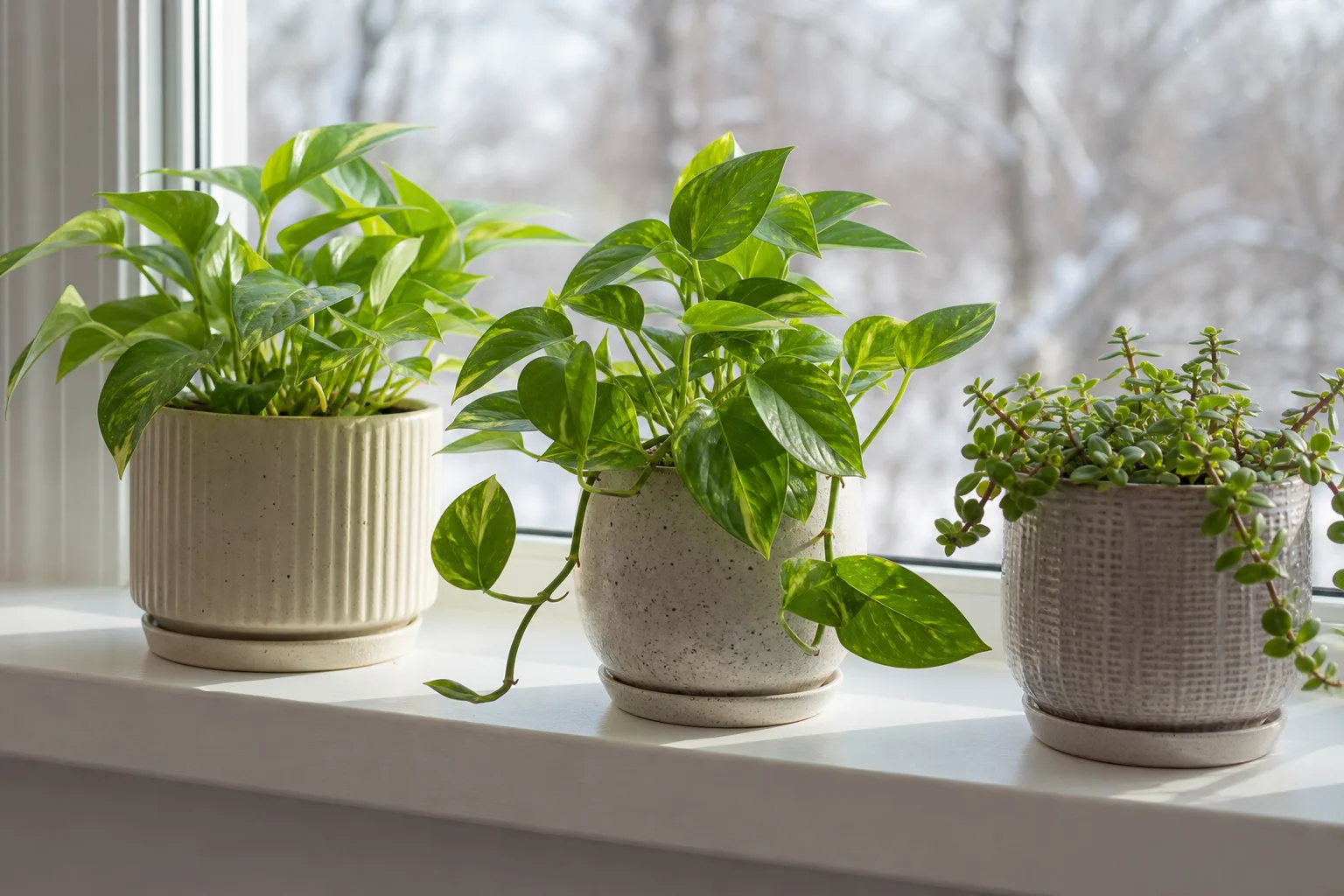
Set rosemary in the brightest window available, ideally a south-facing window in the Northern Hemisphere. It should be near the glass without touching a cold pane, and it should be well away from radiators, forced-air vents, fireplaces, and doors that open directly to freezing air. If the plant stretches, loses density, or produces pale growth, add a full-spectrum grow light rather than moving it into a warmer but darker corner.
Temperature is a balancing act. Fine Gardening recommends ample light, not excessive heat, and good air circulation for indoor rosemary. Fryd’s practical overwintering guidance suggests a cool, bright, frost-free space such as a conservatory, garage, or cool hallway, while Epic Gardening notes that room temperatures can work when light and watering are managed. The plant does not need to be chilled to the point of freezing; it needs conditions that do not force weak growth in poor light.
Do not carry a plant straight from full outdoor sun into a dim room and expect it to look unchanged. Start by moving it to a bright sheltered spot for several days, then bring it indoors before the first hard freeze. In spring, reverse the process: give it bright shade or morning sun outdoors first, then increase direct exposure over roughly one to two weeks. This gradual transition reduces shock from abrupt changes in light, wind, and temperature.
Adjust light, water, and airflow
Indoor rosemary needs less water in winter because cool temperatures and low light slow growth. Do not water because the calendar says it is the weekend or because the needles look slightly dull. Push a finger several inches into the mix, lift the pot to judge its weight, and check whether the pot drains quickly when you do water.
When the mix has dried well below the surface but is not powder-dry throughout the root ball, water thoroughly until some drains from the bottom. Empty the saucer after the pot finishes draining. Then wait again. A small weekly splash is often worse than a less frequent, complete watering because it keeps the upper root zone damp without flushing the pot.
There is no universal winter interval. A cool, dim garage may need very little water; a bright, warm windowsill may dry faster; a small terracotta pot may need checking sooner than a large plastic one. Gardener Report suggests much longer intervals for indoor winter plants, but treat that as a starting example rather than a rule. The moisture in your mix, the plant’s temperature, and the drainage speed should decide.
Keep air moving gently around the plant. Do not crowd rosemary against other herbs or seal it in a humid plastic enclosure. High humidity and poor circulation can encourage powdery mildew, and wet foliage dries slowly indoors. The NC State profile identifies poor circulation and high humidity as conditions that can lead to mildew, while Epic Gardening’s indoor guide connects winter problems to wet media and insufficient airflow.
Avoid routine misting. It does not solve a dry root zone, and repeated wetting of needle-like foliage in a stagnant room can increase disease pressure. If your home is extremely dry, focus first on moving the pot away from a heat vent and improving light and airflow; do not compensate by keeping the soil wet.
Diagnose winter damage, rot, and pests
Winter symptoms overlap. Brown needles can mean frost, wind scorch, a dry root ball, or roots that have rotted in cold wet mix. Yellowing can follow overwatering, low light, pests, or natural replacement of older foliage. Diagnose the root zone and stems before choosing a treatment.
Read the symptoms before acting
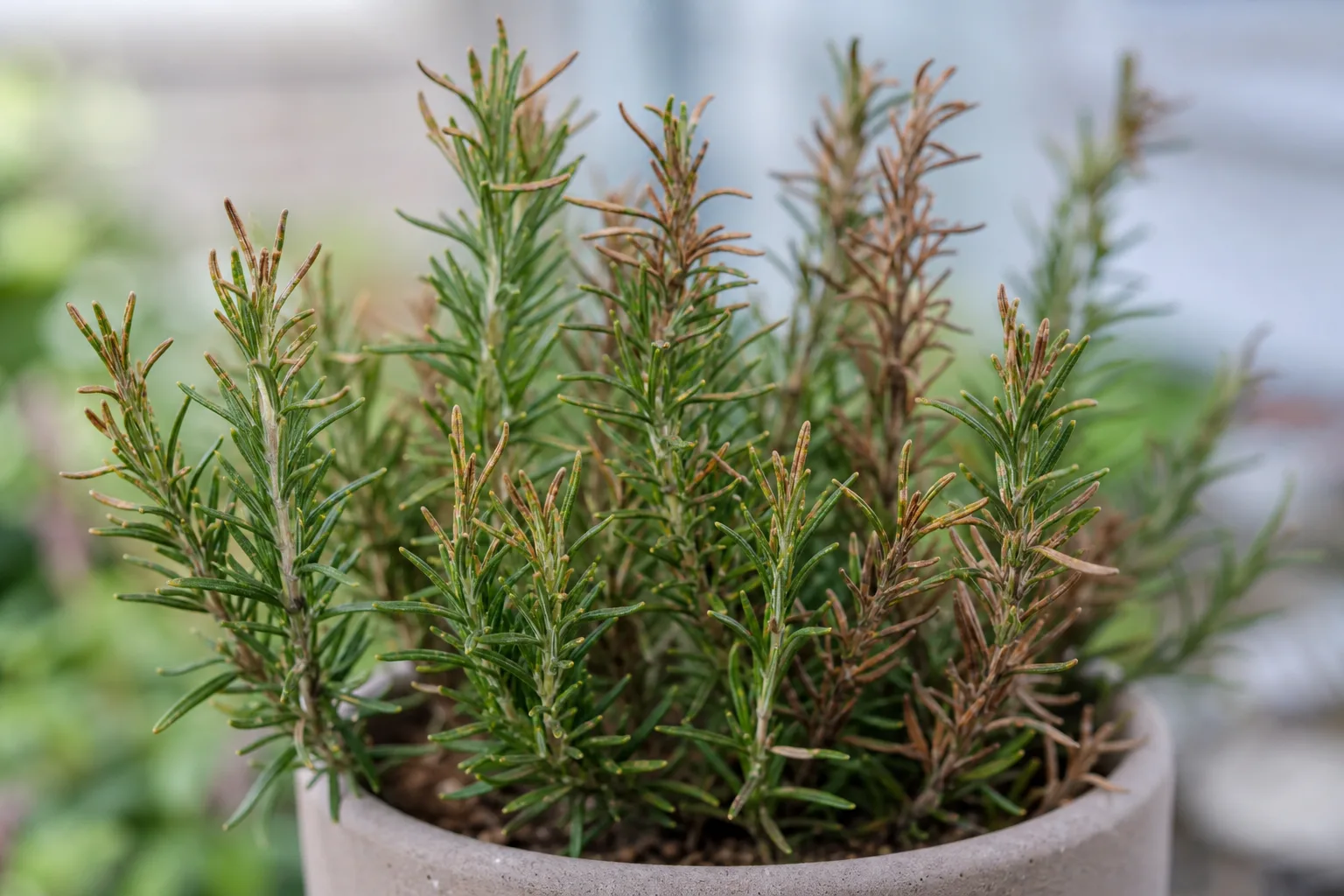
Brown tips after a cold, dry spell often point to frost or wind damage, especially when the stems remain firm and the interior of a scratched stem is green. Do not cut the entire shrub immediately. The RHS frost guidance explains that damage may appear quickly or take months, and that repeated freeze-thaw or rapid thawing can be particularly harmful. Wait until the threat of further hard frost has passed, then trim only tissue you can confirm is dead.
Blackened, collapsed tips are more suspicious after a hard freeze. Test several stems from the tip downward with a clean fingernail or knife. Green tissue beneath the bark means that section is alive; dry tan tissue means keep checking lower. Mark uncertain branches and wait for spring buds before removing major limbs.
Yellow leaves with wet soil, a sour smell, or soft dark roots suggest root rot rather than thirst. Stop watering and improve drainage. If the roots are mushy, unpot the plant, cut away rotten tissue with a clean tool, and move it into a clean pot with fresh, fast-draining mix. Do not fertilize a stressed plant, and do not keep pouring water onto a root ball that cannot absorb it.
Fine webbing, stippling, sticky residue, or clusters of insects suggest pests. Isolate indoor rosemary from other plants, rinse when appropriate, and identify the pest before choosing a labeled treatment. Spider mites are favored by dry indoor conditions, but adding water to the soil will not fix them; leaf inspection and a suitable treatment matter more. Because rosemary is edible, follow harvest restrictions on any product you use.
White dusty patches can indicate powdery mildew, especially when foliage is crowded and air is still. Increase spacing and gentle airflow, keep leaves dry when watering, and remove badly affected material. Avoid responding by misting more often or placing the plant in a sealed humidity dome.
The most useful recovery rule is patience. A damaged evergreen can look dead before the crown or lower stems show new growth. The RHS advises leaving some damaged plants in place until later spring or even early summer when there is a reasonable chance of dormant buds reshooting. Rosemary is less forgiving of old bare wood than some shrubs, but a living lower stem is worth preserving while the plant shows signs of recovery.
Harvest now and help recovery
You can harvest rosemary in winter if the plant is healthy and the weather is mild, but do not strip or prune it during a hard frost. Take a small number of soft tips with clean, sharp pruners rather than removing short pieces from every branch. Leaving most of the foliage gives the plant more ability to photosynthesize and replace moisture lost on bright, windy days.
If a severe freeze is approaching, harvest enough sprigs beforehand to dry or freeze for cooking. Fryd’s rosemary guidance cautions against harvesting during heavy frost, while Fine Gardening notes that rosemary remains evergreen and can be harvested year-round. Those points fit together: winter harvest is possible, but frozen tissue is brittle and a stressed plant needs its foliage.
When spring arrives, remove covers on mild days and pull mulch away from the crown. Check drainage again after snowmelt or spring rain. Prune back only branches that are clearly dead, cutting to living tissue or a healthy side shoot. Once new growth is obvious, shape the plant lightly; do not use a large spring cut as an excuse to cut into every gray, leafless stem.
Resume regular watering as active growth begins and the soil dries, not as soon as the calendar turns warm. If winter killed the top but the roots remain firm and alive, give the plant time to produce basal shoots. If the entire root ball is mushy or there is no living tissue by the time the season is well underway, take a healthy cutting from any surviving branch or replace the plant with a cultivar suited to your conditions.
Conclusion
Successful rosemary winter care starts with a decision, not a blanket. Keep established plants in sunny, well-drained beds when the cultivar and climate support it; use a mulch ring, wind protection, and breathable covers for exposed or marginal plants; and move potted or tender rosemary to a cool, bright shelter before a hard freeze.
The details that matter most are simple but easy to miss: keep rain out of containers, protect roots as well as foliage, stop late fertilizer, avoid hard fall pruning, inspect plants before bringing them inside, and water only when the mix has genuinely dried. In spring, wait for evidence of living tissue before you cut away branches that look brown. Rosemary is much more likely to return when winter protection reduces wetness and exposure without creating a warm, dark, waterlogged room.



