How to Get Leggy Petunias Blooming Again
Leggy petunias can bloom again. Diagnose low light, heat, water stress, and seed set, then cut back stems safely for fuller growth and fresh flowers.
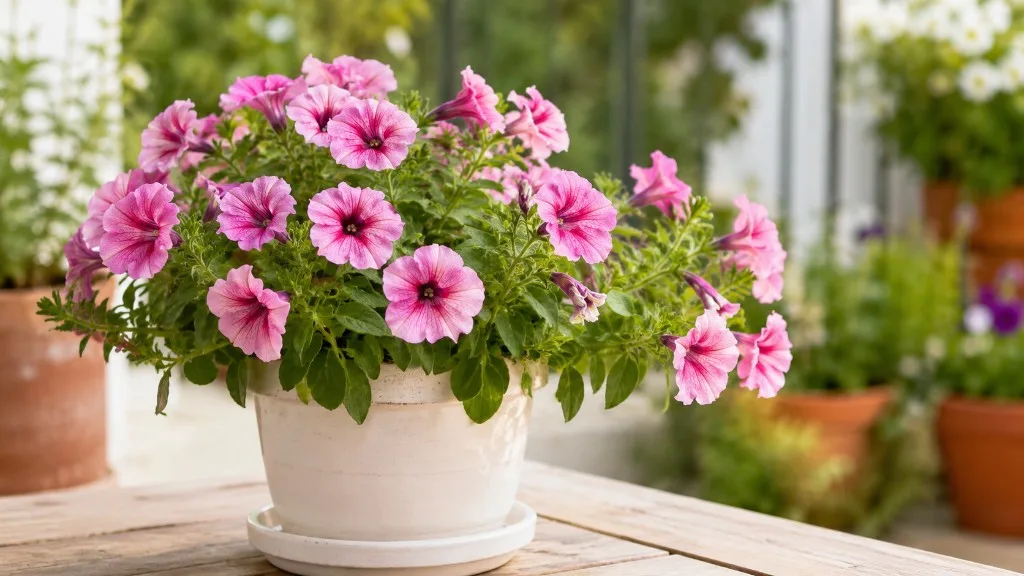
Leggy petunias are usually recoverable when the stems are still green, the crown is producing leaves, and the roots are not sitting in rotten, waterlogged soil. The most reliable reset is a sequence: check real sunlight, check the root zone, identify whether the plant needs deadheading or stem pruning, then give new growth enough water and nutrition to form buds.
Do not start by adding fertilizer or cutting every stem to the soil. Long bare branches can come from shade, repeated drying, heat, seed production, or a plant that simply needs a midsummer haircut. The right fix depends on what the plant is telling you, and a five-minute inspection prevents a good petunia from being stressed twice.
Do a 5-Minute Diagnosis Before You Cut
Leggy growth means the spaces between leaves have stretched and most flowers have moved to the ends of long stems. A plant can be lush and green while still being flower-poor because it is spending its available energy maintaining stretched growth instead of building a compact network of flowering side shoots.
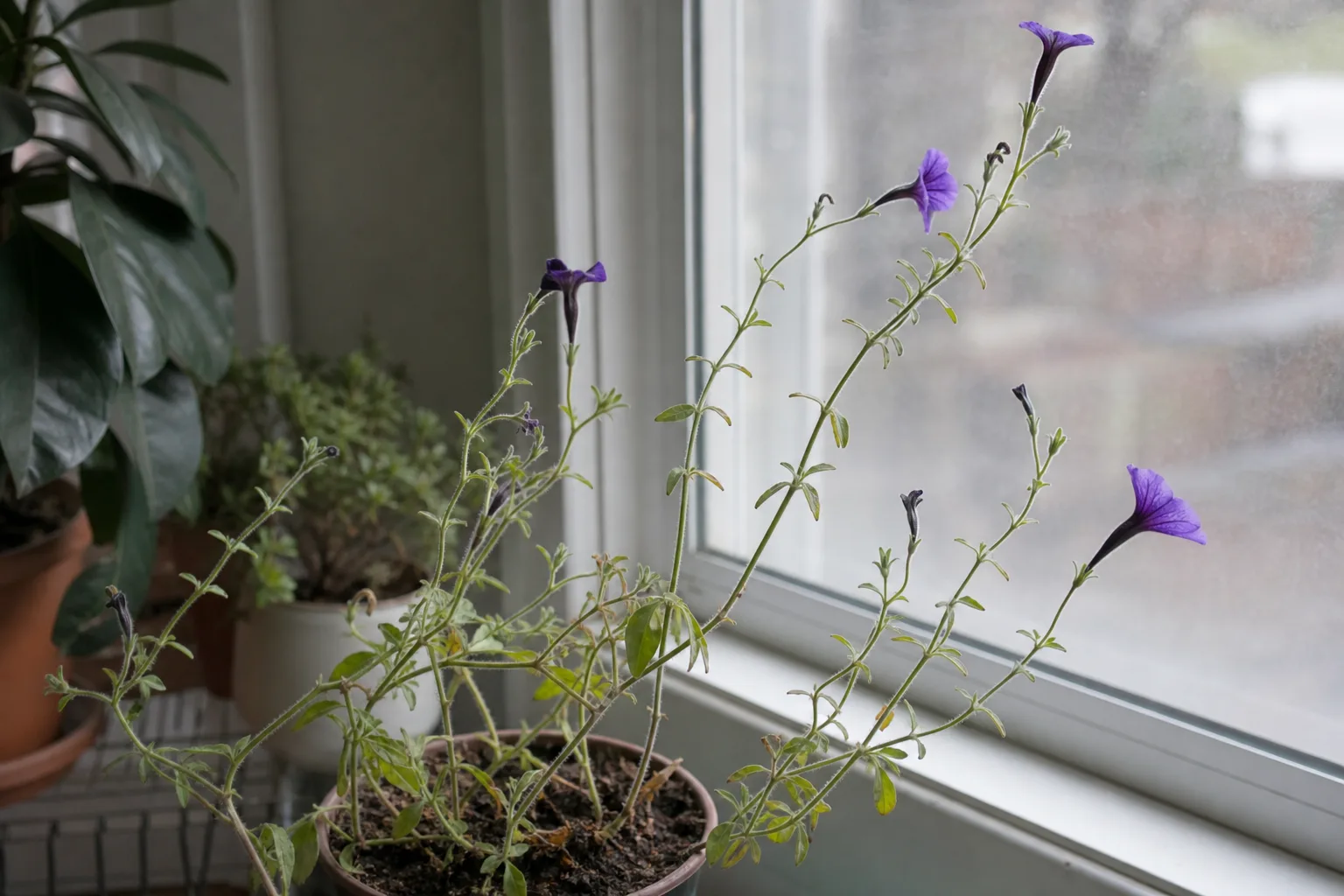
Look at the plant from the side, not just from above. If the basket or pot is full from the rim outward but bare in the center, it may be a naturally trailing type rather than a problem. If an upright or mounding plant has long internodes, bare lower stems, and only a few flowers at the tips, it needs a correction.
Run your fingers along several stems. Green, flexible tissue, firm nodes, new leaves, and unopened buds all suggest that the plant has a recovery route. Black, brittle, or mushy stems that collapse to the crown point to frost damage or disease, not ordinary legginess. In a container, tip the pot out gently if the plant is declining despite wet soil: a few firm pale roots are encouraging, while widespread brown and slimy roots make a new plant more sensible.
Also consider the calendar. Garden petunias are warm-season plants that can flower from spring into fall when conditions remain favorable, but they are treated as annuals in most temperate gardens. The USDA plant profile for petunia confirms the plant’s official profile, while the RHS petunia description identifies petunias as annuals or perennials with trumpet-shaped flowers from late spring to autumn. A healthy plant in midsummer has time to rebound; the same plant after a hard freeze or at the end of a cool season may not.
Start With Light and Root-Zone Moisture
Restore direct sun without causing heat shock
Count direct sun on the leaves rather than assuming that a bright patio or porch provides enough light. NC State Extension recommends at least six hours of sunlight for petunias and notes that plants in shade produce fewer flowers. A tree that was bare in spring can cast dense shade by summer, and a basket moved beneath a roof can stretch surprisingly quickly.
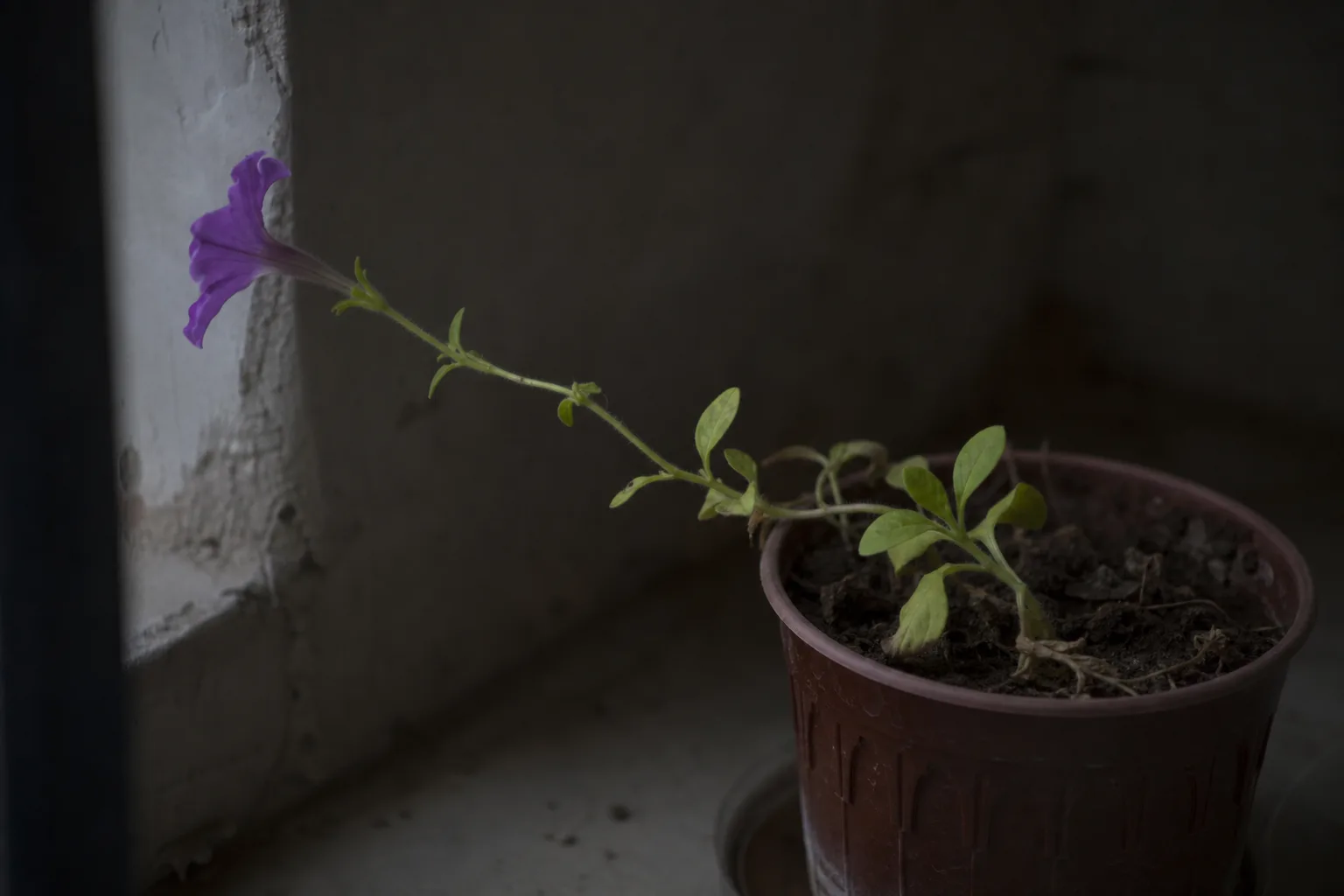
Move a shaded container toward brighter exposure, but do not place a plant that has lived in deep shade against a heat-reflecting wall on the hottest afternoon. A gradual move over several days reduces the chance of scorched leaves. For an established plant in a bed, prune nearby growth that blocks light if that is practical, or accept that the plant may stay less floriferous until the sun returns.
Full sun is the bloom ceiling, not a command to ignore heat. During a severe heat wave, a large-flowered petunia may benefit from morning sun and temporary afternoon protection, but permanent deep shade will bring the original problem back. If a plant gets adequate light and still stretches, continue to the water, variety, and pruning checks rather than feeding harder.
Read dry soil and wet soil differently
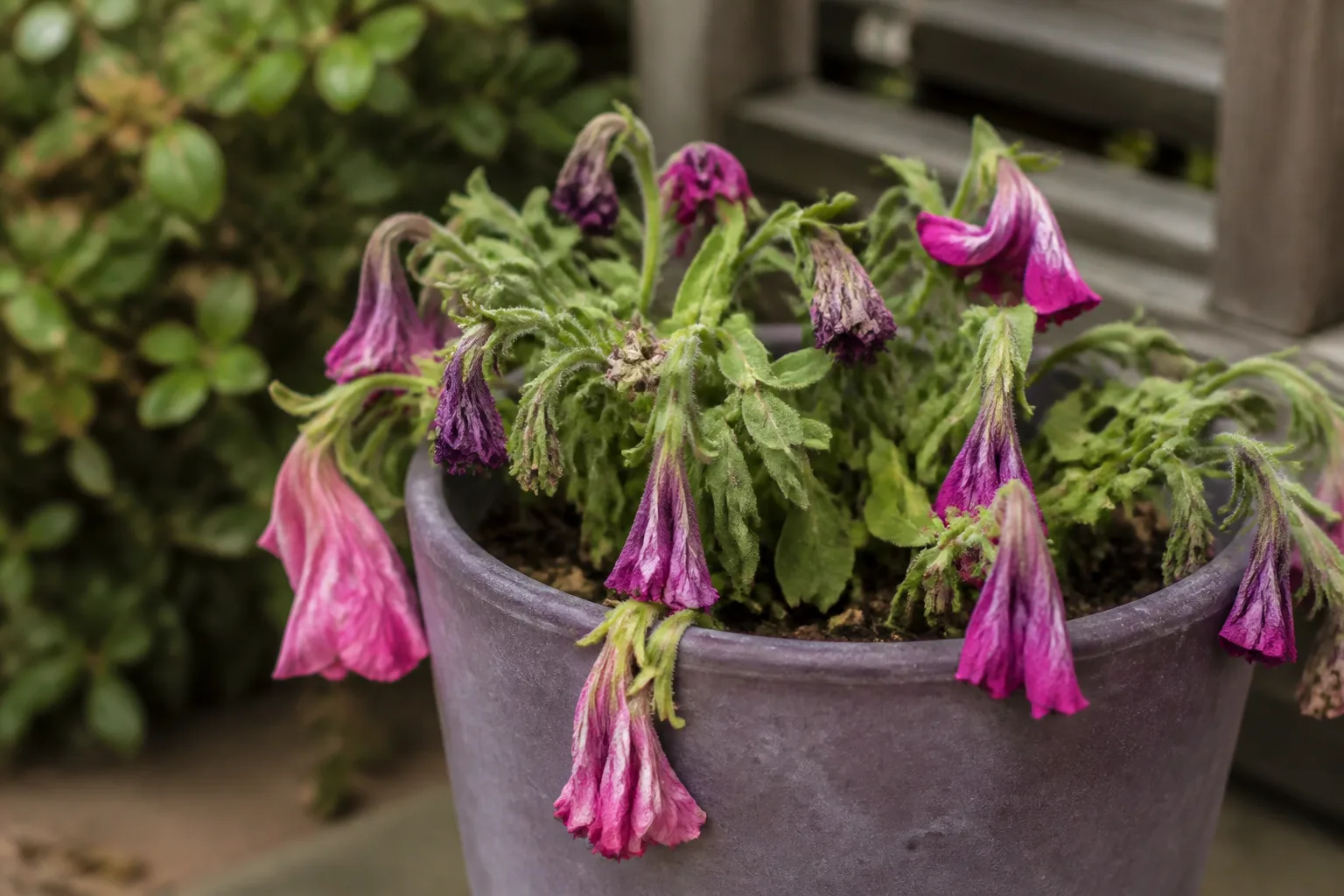
Petunias can wilt dramatically when dry, especially in hanging baskets, but wilt is a symptom rather than a watering schedule. Push a finger into the potting mix, lift the container if you can, and check whether water reaches the whole root ball. A light pot with dry mix several inches down needs a slow, thorough soak at the soil line. A heavy pot with cool, wet mix does not need another drink.
The two situations can look similar above the soil but demand opposite actions:
| What you find | What it usually means | First action |
|---|---|---|
| Light pot, dry mix, soft leaves | Underwatering or rapid container dry-down | Soak slowly until water exits the drainage holes; then empty the saucer. |
| Wet mix, yellowing lower leaves, limp growth | Poor drainage or root stress | Stop watering and inspect drainage and roots. |
| Moist soil, brief afternoon droop, evening recovery | Temporary heat load | Reduce heat exposure and avoid flooding the pot. |
| Dry mix plus flower drop after hot wind | Water stress compounded by heat | Rehydrate deeply and increase moisture checks. |
NC State Extension recommends consistent, even watering while warning that overly wet conditions can create disease problems. Water at the base whenever possible. If overhead watering is unavoidable, do it early enough for foliage to dry before night, especially when the plant is crowded.
Choose the Right Fix for Your Petunia Type
The word “petunia” covers plants with different habits and different maintenance needs. Knowing the type keeps you from deadheading a self-cleaning basket for hours or assuming a seeded grandiflora will keep flowering while it develops seed capsules.
Seed-grown grandiflora and multiflora types
Seeded grandiflora types produce large, showy flowers; multiflora types usually carry more flowers of a somewhat smaller size. Many seeded types benefit from frequent deadheading because the plant’s reproductive goal shifts toward seed production after a flower is pollinated. The NC State Extension guide to keeping petunias blooming explains the practical distinction between seeded and vegetatively propagated petunias and advises removing the spent flower and the seed-producing structure behind it.
These plants are good candidates for regular grooming and an occasional trim. If the plant is full but has fading flowers, deadhead. If it is a long, sparse framework with flowers only at the ends, deadheading alone will not rebuild the shape; use a stem cutback after correcting the light and water problem.
Wave, Supertunia, and other self-cleaning types
Many Wave, Easy Wave, Supertunia, and similar vegetative lines are bred to keep flowering with less seed removal. “Self-cleaning” usually means spent flowers drop or do not interfere with the next flush, not that the plant can survive shade, drought, or waterlogged roots without consequences.
The Proven Winners deadheading guide lists Supertunia petunias among self-cleaning plants that do not require deadheading for continued flowering, while noting that stuck old flowers can still be removed for appearance. Use the plant’s habit as a clue: a spreading petunia with small flowers that sheds them naturally needs less weekly grooming than a large-flowered double that holds wet petals.
Self-cleaning does not eliminate pruning. A Wave basket can become bare at the center, and a Supertunia can send long stems beyond the pot. In those cases, cut back the stems to encourage branching, then restore water and feeding. You are reshaping the plant, not trying to stop seed set.
Deadhead Spent Flowers Without Removing New Buds
Deadheading and pruning solve different problems. Deadheading removes individual finished flowers to prevent seed development or improve appearance. Pruning removes part of a stem to force side shoots, reduce size, or restore a compact framework.
To deadhead a seeded petunia, follow the faded flower down to the small green base where it joins the stem. Pinch or snip off the entire flower structure, including the calyx and ovary. Pulling off only the colorful petals leaves the seed-producing portion behind and does little to change the plant’s flowering signal.
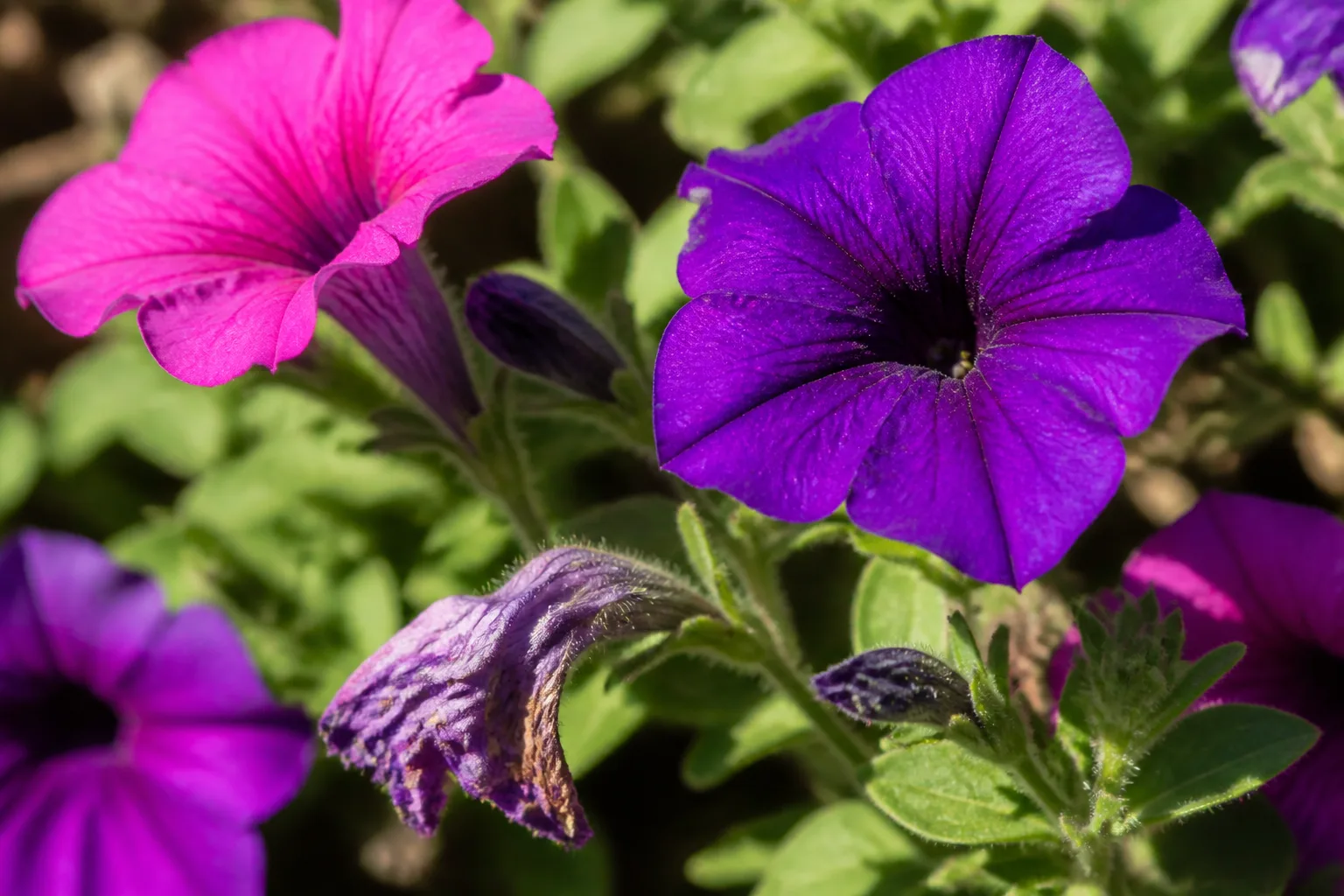
Use your fingers on soft stems or clean, sharp scissors when the plant is dense. Avoid cutting below a fresh bud that is about to open. If you are removing a moldy flower, place it in the trash rather than leaving wet tissue inside the plant, and clean the tool before moving to another container.
When you are unsure of the type, deadhead a small section and leave another section untouched for a week. Watch whether the untrimmed flowers form obvious green capsules while the cleaned stems continue to develop buds. This small comparison is more useful than applying a rigid rule to every cultivar.
For a closer look at the cut point, the petunia deadheading guide covers the difference between removing spent flowers and shortening flowering stems.
Cut Leggy Stems Back Above a Healthy Node
Once a plant has stretched, its flowers will not move back down an old bare stem. New side shoots must form from living nodes, so the goal is to shorten the plant where it can branch again.
Light rolling trim versus hard reset
Choose a light rolling trim when the plant still has enough flowers to keep the display attractive. Shorten the longest few stems by about one-quarter to one-third, cutting just above a healthy leaf node or side branch. Repeat on another section the following week instead of removing all color at once. This method is slower but protects the current display.
Choose a hard reset when the plant is mostly bare, tangled, or so overgrown that the center has disappeared. Cut long stems back by about one-third to one-half, leaving green nodes and some foliage near the crown. NC State Extension recommends cutting long stems back to a bud or node and reports that a larger cut can take a week or two to produce new flowers. The Gardening Know How guide to deadheading also emphasizes sharp, clean cuts and checking for fresh buds before shearing.
Do not make a flat cut across the entire top if you can avoid it. Follow each stem and cut above a node that points outward, which encourages new growth to fill the open center instead of stacking into another crowded knot. If a stem is completely bare for a long distance, cut back only to a section with a living node; do not assume leafless, brown wood will sprout because you shortened it.
Prune in the cooler part of the day when the plant is hydrated. Delay a hard cut if the plant is wilted, waterlogged, or about to face extreme heat. A plant cannot replace lost leaf area efficiently while its roots are already failing to supply water.
Rebuild Blooms After Pruning
Water deeply but let excess drain
A freshly pruned petunia has fewer leaves, so it may use water more slowly for a short period. Water the root zone thoroughly when it begins to dry, but do not keep the mix constantly wet to compensate for the cut. In a container, water until the root ball is evenly moist and a little runs from the drainage holes; then empty the saucer.
Hanging baskets and small pots can dry rapidly in wind and direct sun. Check them more often than garden beds, especially during a hot spell, but make the decision from the soil and pot weight rather than from a fixed daily rule. The RHS annuals and biennials growing guide notes that summer containers dry quickly and need regular attention.
Feed growing plants without forcing weak growth
Petunias flower heavily and container watering can wash nutrients through the mix. Once the plant has been watered correctly and new growth is visible, use a complete fertilizer formulated for flowering plants at the product’s label rate. NC State Extension describes petunias as hungry annuals and recommends regular complete water-soluble feeding for active growth; the RHS also recommends liquid feeding for container-grown annuals. Frequencies vary by formulation, temperature, pot size, and how often you water, so the label is the safe starting point.
Do not feed a wilted plant, a plant sitting in soggy soil, or a plant with badly damaged roots. Fertilizer does not repair drought or root rot, and a concentrated dose on stressed roots can make recovery harder. Likewise, avoid using high-nitrogen fertilizer as a shortcut for flowers. If the plant already has long, soft, dark-green stems and few buds, more leaf-promoting nutrition can deepen the imbalance.
After a hard cutback, the order matters: water if dry, confirm drainage, provide enough direct light, wait for new shoots, then feed at label strength. Remove only the spent flowers that remain on the new growth. Let the shoots lengthen before trimming them again.
Correct Heat, Shade, and Container Stress
Heat can interrupt flowering even when a petunia receives enough light. Large flowers wilt faster, pots heat up around the root ball, and baskets dry from every exposed side. Short afternoon shade can protect a stressed container during a heat wave, but it should not become a permanent low-light location.
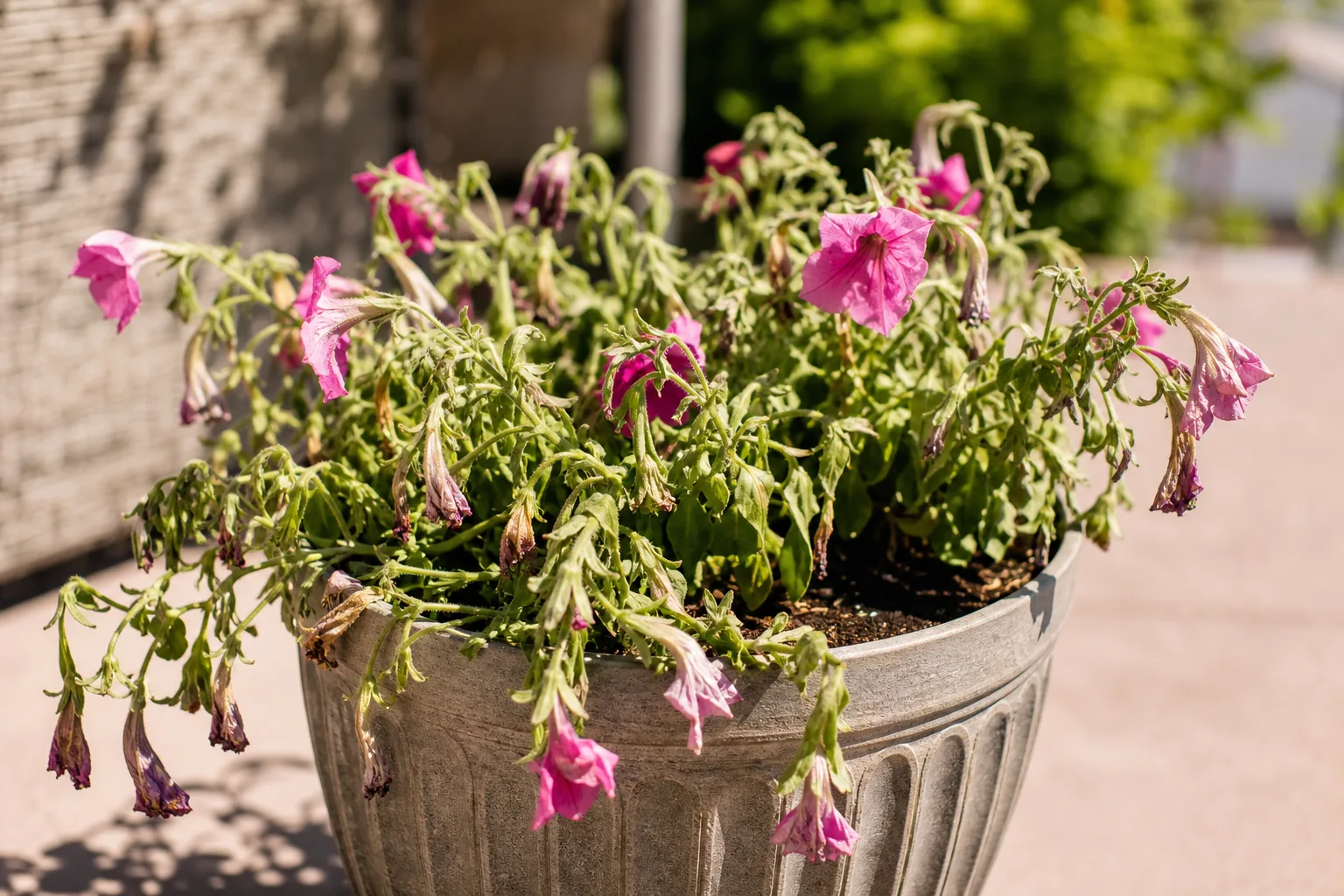
Place containers where they receive morning and midday sun, with relief from reflected heat when temperatures are extreme. Use a pot with open drainage holes and a lightweight mix that holds moisture without staying saturated. If the same basket needs water repeatedly every hot afternoon, the answer may be a larger container, a less exposed position, or a smaller plant—not simply more frequent shallow sips.
Wet flowers and dense stems also raise the risk of gray mold and petal damage. Base watering and good spacing help the foliage dry. Do not crowd a revived petunia into a cachepot that traps runoff, and do not leave the pot standing in water after irrigation.
Check Pests and Disease Before Expecting New Flowers
Inspect the newest tips, leaf undersides, and unopened buds before you decide that the plant only needs pruning. NC State’s garden petunia profile lists aphids, thrips, whiteflies, root rot, gray mold, and tobacco mosaic virus among petunia problems.
Aphids cluster around soft new growth and may leave sticky residue. Thrips can scar flowers and distort new growth. Chewing caterpillars can damage buds before they open, so look inside folded or ragged blooms rather than treating every faded flower as normal age. Remove visible pests by hand where practical and use only a product labeled for the pest and ornamental plant; avoid spraying open flowers while pollinators are visiting.
Root disease changes the plan. If the plant wilts while the mix stays wet, smells sour, or has yellowing lower leaves, stop watering and inspect the roots. Improve drainage and remove damaged tissue only if a meaningful amount of firm root and crown remains. A plant with a mushy crown, widespread root decay, or almost no healthy foliage is unlikely to repay a major rescue effort before the season ends.
Common Mistakes That Keep Petunias Bare
- Deadheading only the petals: The ovary can remain and continue seed development on seeded types.
- Cutting before fixing shade: A pruned plant in inadequate light will stretch again.
- Watering by the calendar: A basket and an in-ground plant can need very different check intervals.
- Treating every wilt as thirst: Wet-root wilt becomes worse when you add more water.
- Hard-pruning a dehydrated plant: Rehydrate and stabilize the roots before removing a large amount of leaf area.
- Feeding a stressed plant heavily: Extra fertilizer cannot compensate for poor drainage, heat, or root damage.
- Cutting below fresh buds: Follow the spent flower or stem to its own base so you do not remove the next flush.
- Assuming self-cleaning means maintenance-free: Wave and Supertunia types still need light, water, nutrition, and occasional stem trimming.
- Ignoring the season: A petunia after a killing frost is not the same rescue problem as a petunia that pauses in midsummer.
Give a healthy, freshly pruned plant roughly one to two weeks to show new shoots and longer for a full flower display. If there is no new growth after the roots, light, and water have been corrected, inspect again for pests, disease, cold damage, or a crown that is already failing.
Conclusion
Most leggy petunias can bloom again when they still have green stems, healthy nodes, and functional roots. Start with direct light and a root-zone check, identify whether your plant is a seeded type that benefits from deadheading or a self-cleaning type that mainly needs reshaping, then cut stretched stems above living nodes.
Use a rolling trim when you want to preserve flowers and a one-third-to-one-half cutback when the plant is mostly bare. Water thoroughly but allow the container to drain, feed only after new growth resumes, and inspect for pests, root disease, heat stress, and frost before you repeat the cut. When the crown is mushy, the roots are broadly rotted, or the growing season is over, replacing the plant is more realistic than trying to force a final flush.



