12 Low-Maintenance Perennial Plants for Your Garden
Twelve low-maintenance perennial plants grouped by sun and shade—with zone ranges, the one-year watering rule, deer warnings, and honest trade-offs so you plant once and stop replacing dead picks.
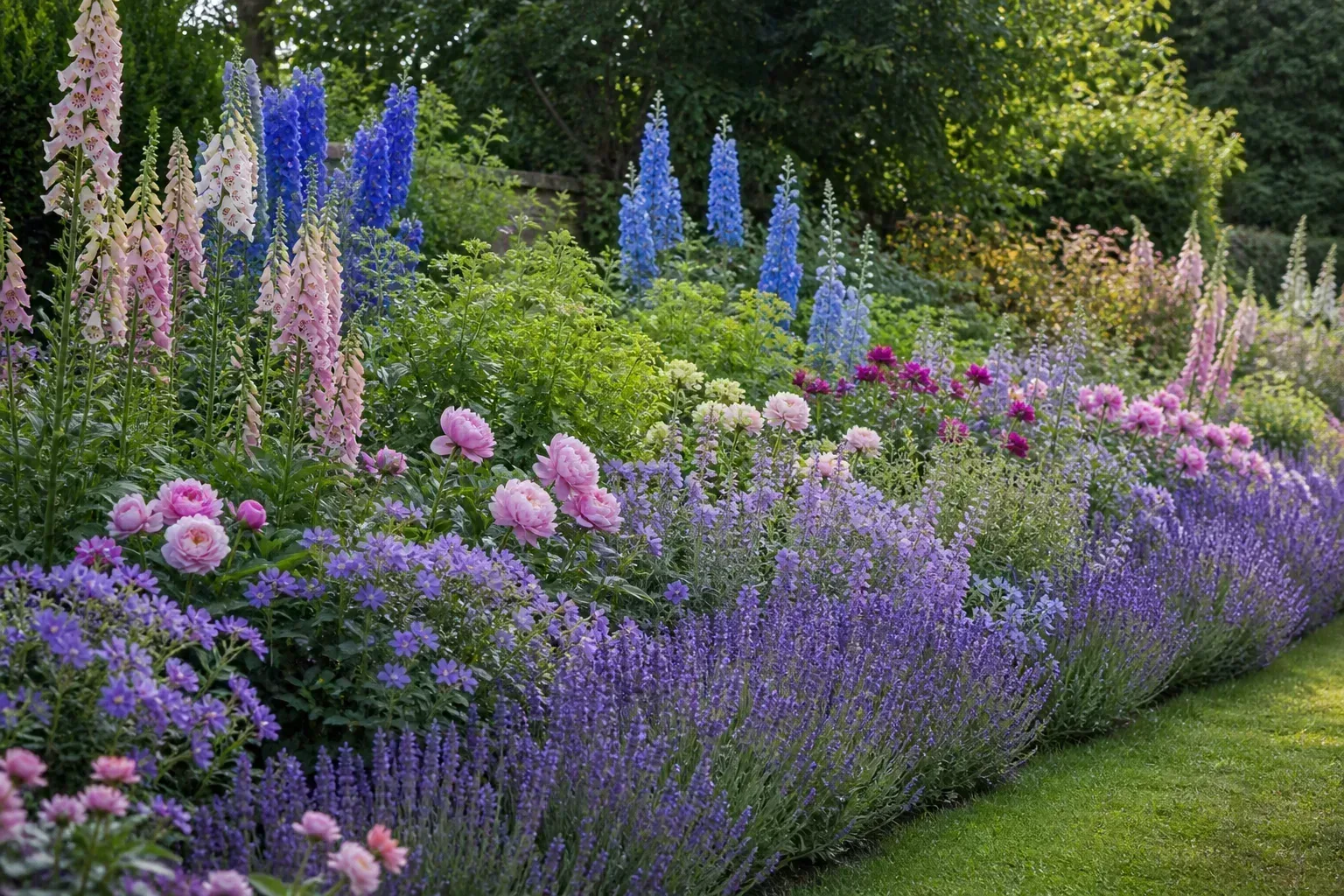
A perennial border that actually stays easy is not a garden you never touch. It is a garden where the plants match your sun, soil, and climate closely enough that you are not replacing dead clumps every spring or dragging a hose across the yard every evening. The twelve low maintenance perennial plants below earn that label because they tolerate heat, drought, shade, or poor soil once established—and because their recurring chores stay modest: occasional cutback, light mulch, maybe one division every few years.
What separates a useful list from a catalog rerun is site matching and an honest establishment year. Plant drought-tolerant sedum in soggy clay and it rots. Plant hosta in afternoon blast sun and it fries. The goal here is not to memorize twelve names. It is to pick the right handful for your job—then stop fighting the yard.
What Low Maintenance Actually Means for Perennials
The RHS low-maintenance gardening guide states plainly that no garden is zero maintenance, but many tasks have lower-input alternatives. Low maintenance in practice means fewer recurring inputs after roots are deep: less deadheading, less division, less feeding, less pest rescue, and less replacement of plants that were never suited to the spot.
It does not mean ignoring the garden for twelve months. You will still pull weeds while plants are small, refresh mulch, and cut back spent stems. Perennials marketed as tough still need water while their root balls expand. The Missouri Botanical Garden’s low-maintenance perennials guide puts the caveat up front: occasional fall or spring cutback, deadheading, or soil-amendment work still happens—these plants just ask for far less of it than finicky alternatives.
The Establishment Year Nobody Mentions
Drought tolerant and low maintenance describe mature plants with developed root systems—not six-inch nursery pots dropped into July heat. Through the first full growing season, aim for about one inch of water per week from rain plus deep irrigation combined. Morning watering and two to three inches of mulch (kept off crowns) help roots reach depth. NC State Extension notes purple coneflower, for example, is drought tolerant once established; that establishment phase is the part most listicles skip.
Underwater new transplants through their first dry summer and you will conclude the plant “does not like your yard” when the real issue was root depth. Fall planting in warm soil can shorten the timeline if you still have six to eight weeks before hard frost. For more picks using the same logic, see our guide to easy-care drought-tolerant perennials.
Match the Plant to Your Site Before You Shop
Walk the yard at mid-morning and late afternoon. Note where sun lasts six hours or more, where soil stays wet two days after rain, and whether deer browse freely at night. New construction sites often have stripped topsoil and compacted fill; match plants to drainage first, then prettiness.
Full-Sun vs Shade Picks at a Glance
Full sun (six or more hours): yarrow, coreopsis, purple coneflower, sedum, false indigo, sage, thyme, and catmint (part shade in hot South). Shade to part shade: astilbe, hostas, Siberian iris, and daylilies (part shade tolerant but bloom heavier in sun). Catmint and daylilies bridge both lists depending on climate and moisture.
If your bed is blazing and dry, start with the sun group. If tree roots and north-facing walls dominate, lean shade. Mixing sun lovers into shade beds—or vice versa—is the fastest way to turn a “low maintenance” list into a high-maintenance replacement project. Our low-maintenance full sun plants guide expands the sunny side with more combinations.
Full-Sun Perennials That Handle Heat and Dry Spells
These seven handle heat and lean soil once roots settle. All still need the establishment-year watering rule above. Group them in drifts of three to five plants rather than dotting singles—pollinators find them faster, and weeds have less bare soil to exploit.
Yarrow (Achillea spp.)
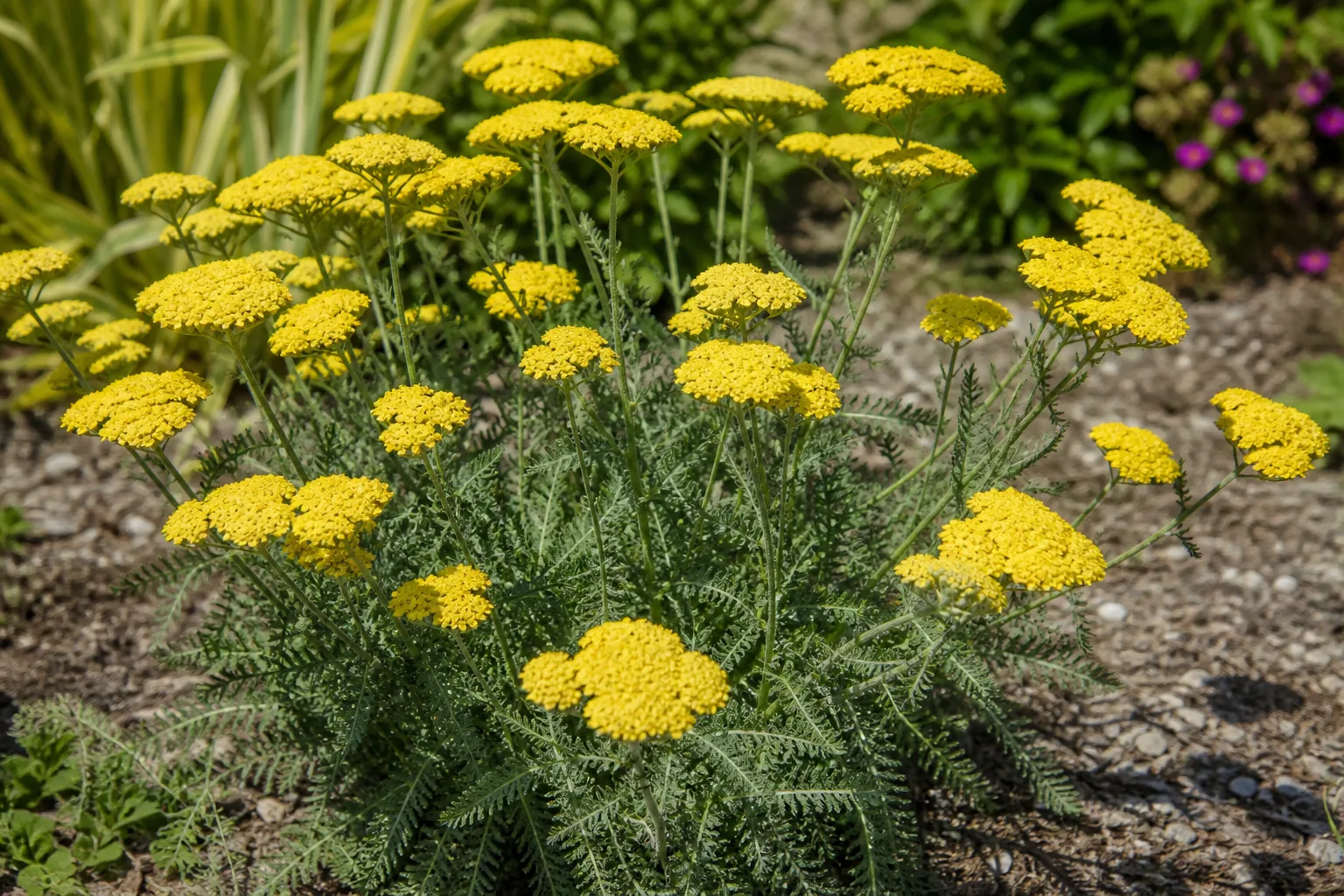
Yarrow grows one to three feet tall with fern-like foliage and flat summer flower clusters in white, yellow, pink, or rust-red depending on cultivar. NC State Extension lists common yarrow hardy in USDA zones 3–9, preferring full sun and dry to medium moisture in well-drained soil. It tolerates drought, poor soil, and salt once established. Blooms run from June through September on stiff stems that hold up in dry summers better than many cottage-garden favorites.
The trade-off: yarrow flops in shade or wet clay, and wet soils invite root rot and leaf spot. Windy sites without neighboring plants for support also cause stems to lean. Common yarrow (Achillea millefolium) spreads by rhizomes and seed—excellent for meadow edges, aggressive in tidy borders. Choose clumping cultivars like ‘Moonshine’ or ‘Coronation Gold’ if you want color without a takeover. Cut spent flower stems to encourage rebloom or leave seedheads for winter interest. Wear gloves when handling; yarrow can irritate sensitive skin and is not pet-safe.
Coreopsis
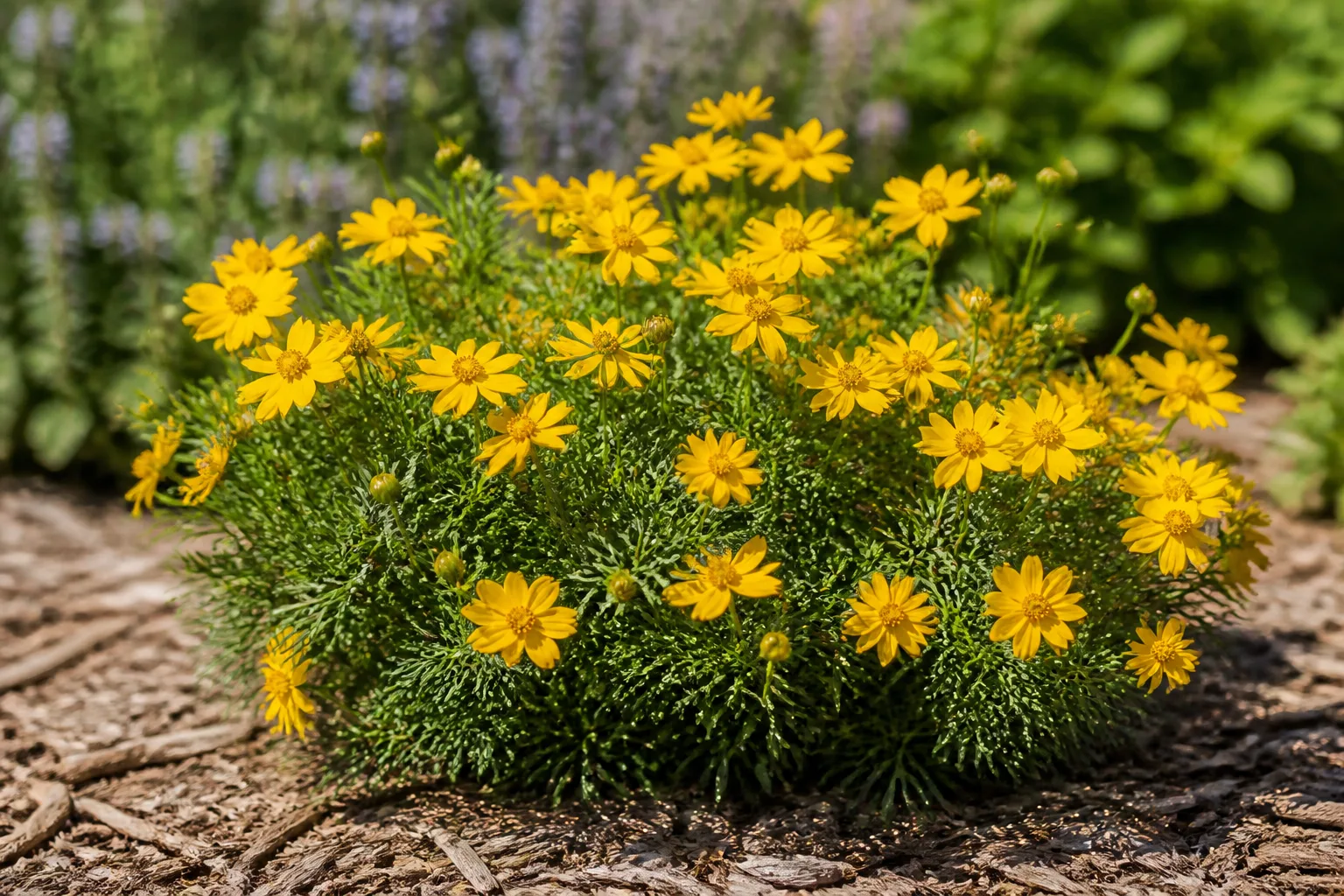
Coreopsis—often called tickseed—produces daisy-like yellow, pink, or bicolor blooms from early summer into fall on plants one to three feet tall. Threadleaf types (Coreopsis verticillata) and large-flowered hybrids both thrive in full sun with dry to average soil. They handle rocky, poor ground where fussier perennials fail.
Deadheading extends bloom but is optional for a low-care border; many gardeners shear plants back by one-third in midsummer for a cleaner second flush. Divide crowded clumps every three to four years in spring. Powdery mildew can appear in humid summers with poor air circulation—space plants and avoid overhead watering late in the day.
Purple Coneflower (Echinacea)
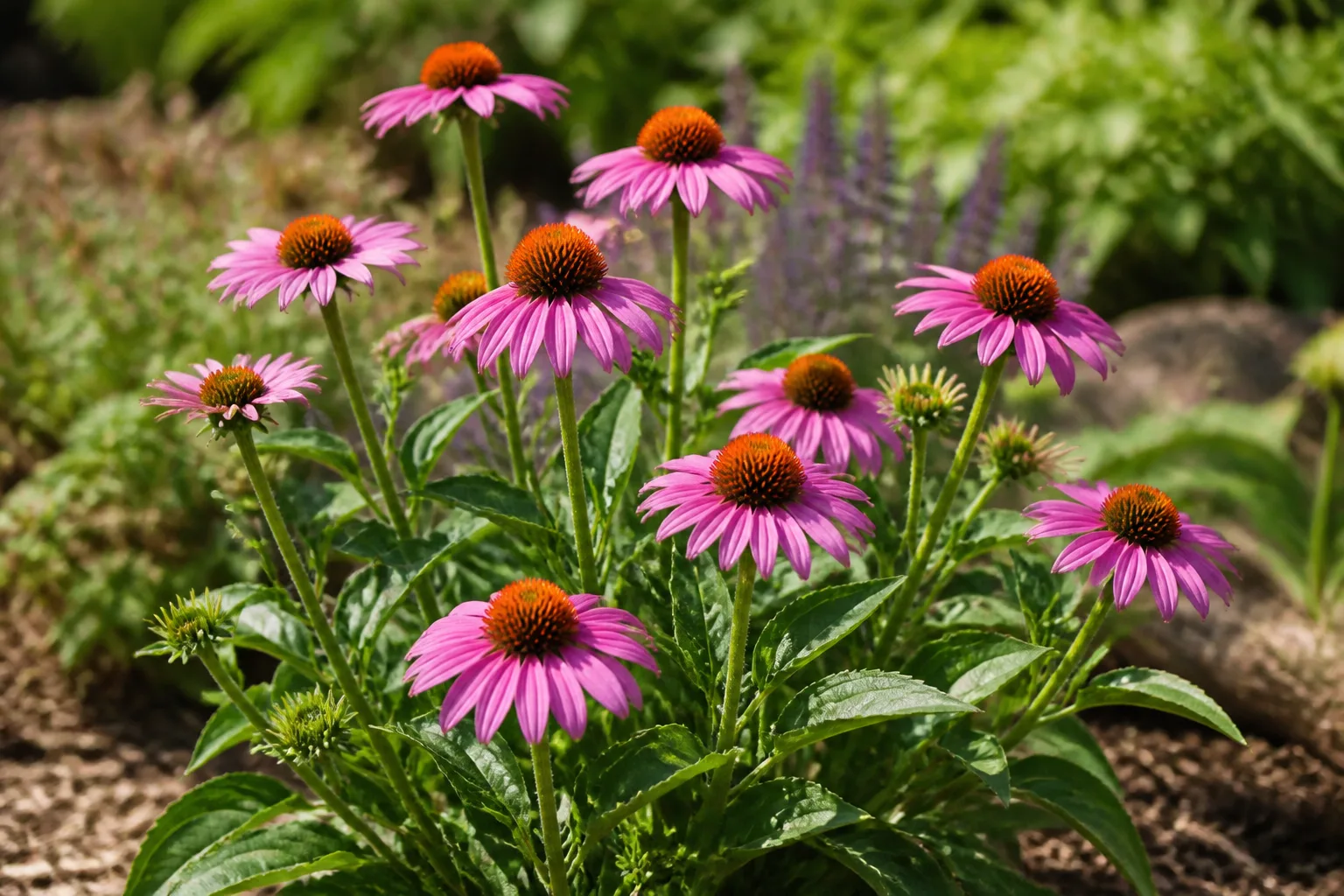
Purple coneflower (Echinacea purpurea) is the native backbone of sunny pollinator borders. Pink-purple ray petals surround a spiny orange-brown cone, blooming from early summer into fall. Mature plants reach roughly three to four feet in zones 3–8, tolerate heat and humidity, and attract butterflies and bees. NC State Extension notes it is drought tolerant once established, deer resistant, and salt tolerant.
Leave some seedheads standing for goldfinches. Cut back in late winter or early spring. Modern cultivars offer orange, red, and double forms—some are less long-lived than the straight species. For deeper care and variety notes, see our purple coneflower guide.
Sedum (Stonecrop)
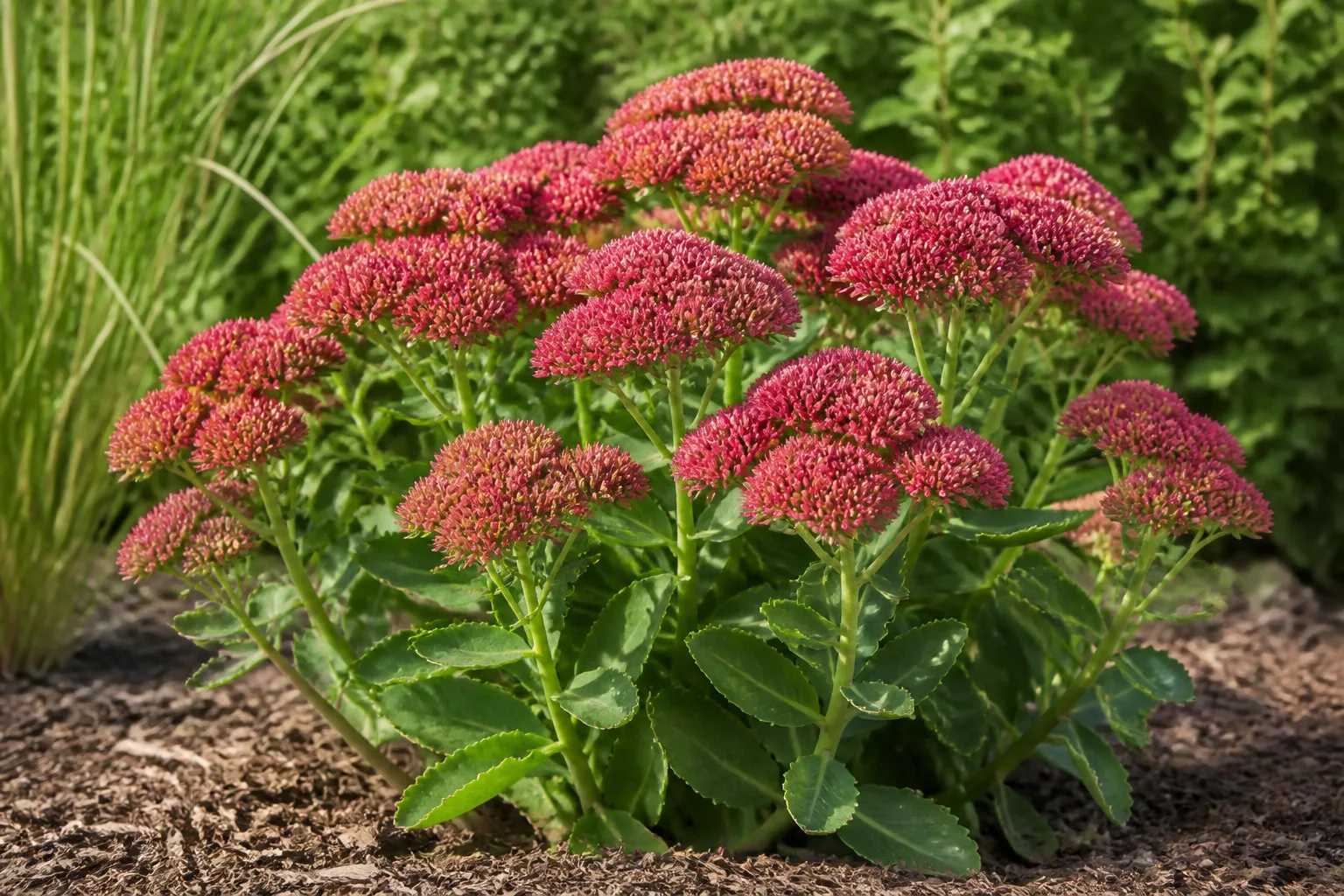
Sedum, also called stonecrop, earns its reputation on rocky slopes and hot borders. Upright types like ‘Autumn Joy’ (Hylotelephium spectabile) and creeping groundcovers both thrive in full sun with sharp drainage. NC State Extension describes showy stonecrop as drought tolerant in zones 3–9 once roots settle.
The only real failure mode is soggy soil—wet clay causes stem rot at the crown. Pair sedum with gravel mulch or raised beds if drainage is poor. Late-season blooms feed bees and butterflies; dried flower heads persist through winter. For groundcover-focused planting, see our sedum for sunny locations guide.
False Indigo (Baptisia)
False indigo (Baptisia spp.) fills large spaces with shrub-like structure: blue-green foliage and pea-like flowers on spikes two to four feet tall in spring. NC State Extension lists blue wild indigo hardy in zones 3–9, preferring full sun and dry to medium well-drained soil. It is drought tolerant, deer resistant, and long-lived—often outlasting shorter-lived perennials in the same bed.
The honest caveat: baptisia is slow in youth and resents transplanting once established—choose the site carefully and expect the first two seasons to look modest while the taproot develops. Seedpods turn charcoal-black and add late-season interest; leave them for structure or remove if self-seeding is unwanted. It works beautifully as a backbone plant in cottage-style borders where you want height without staking. Pair with lower catmint or coreopsis in front so the bed does not look empty while baptisia fills in.
Sage and Catmint (Salvia and Nepeta)
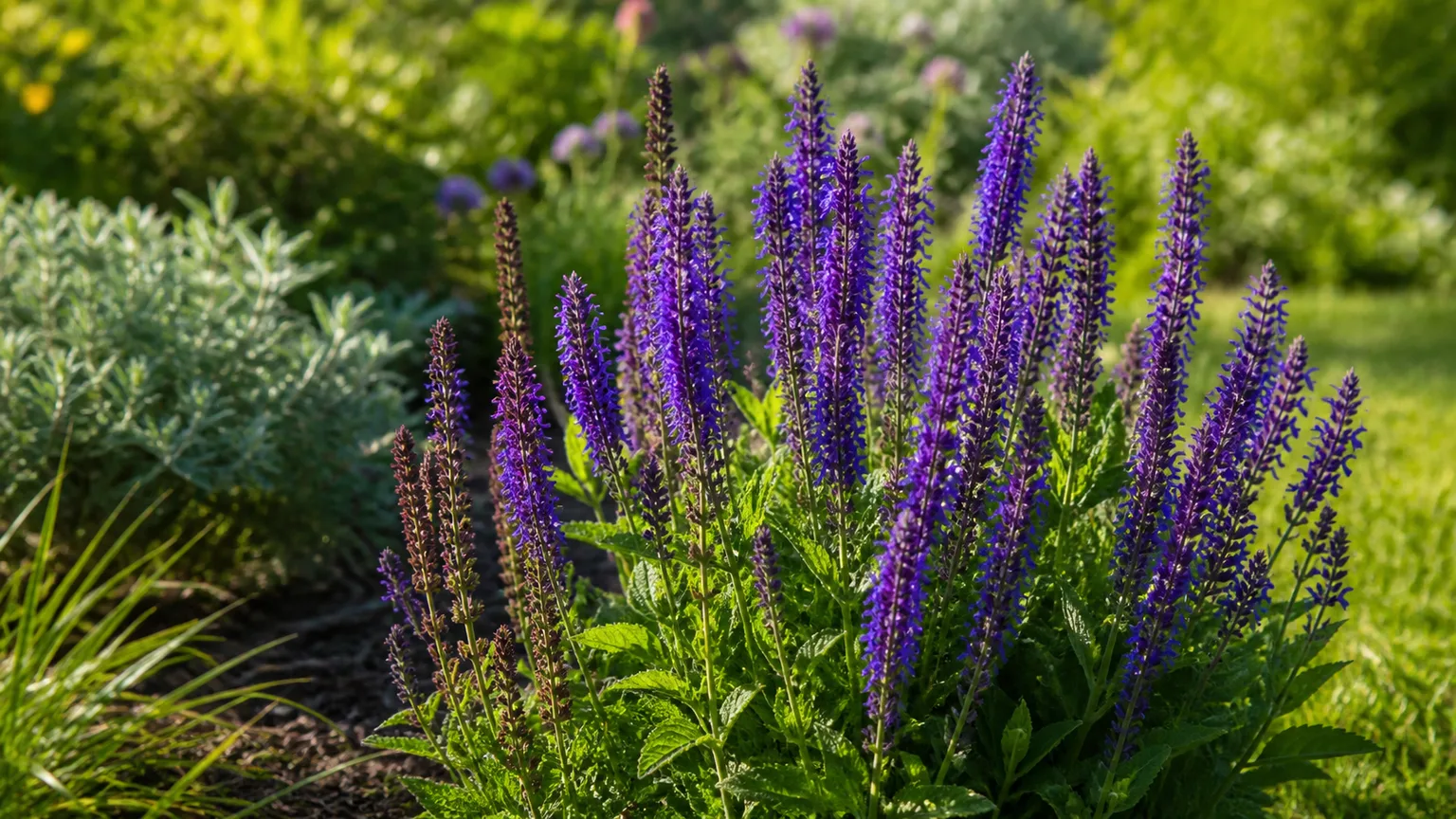
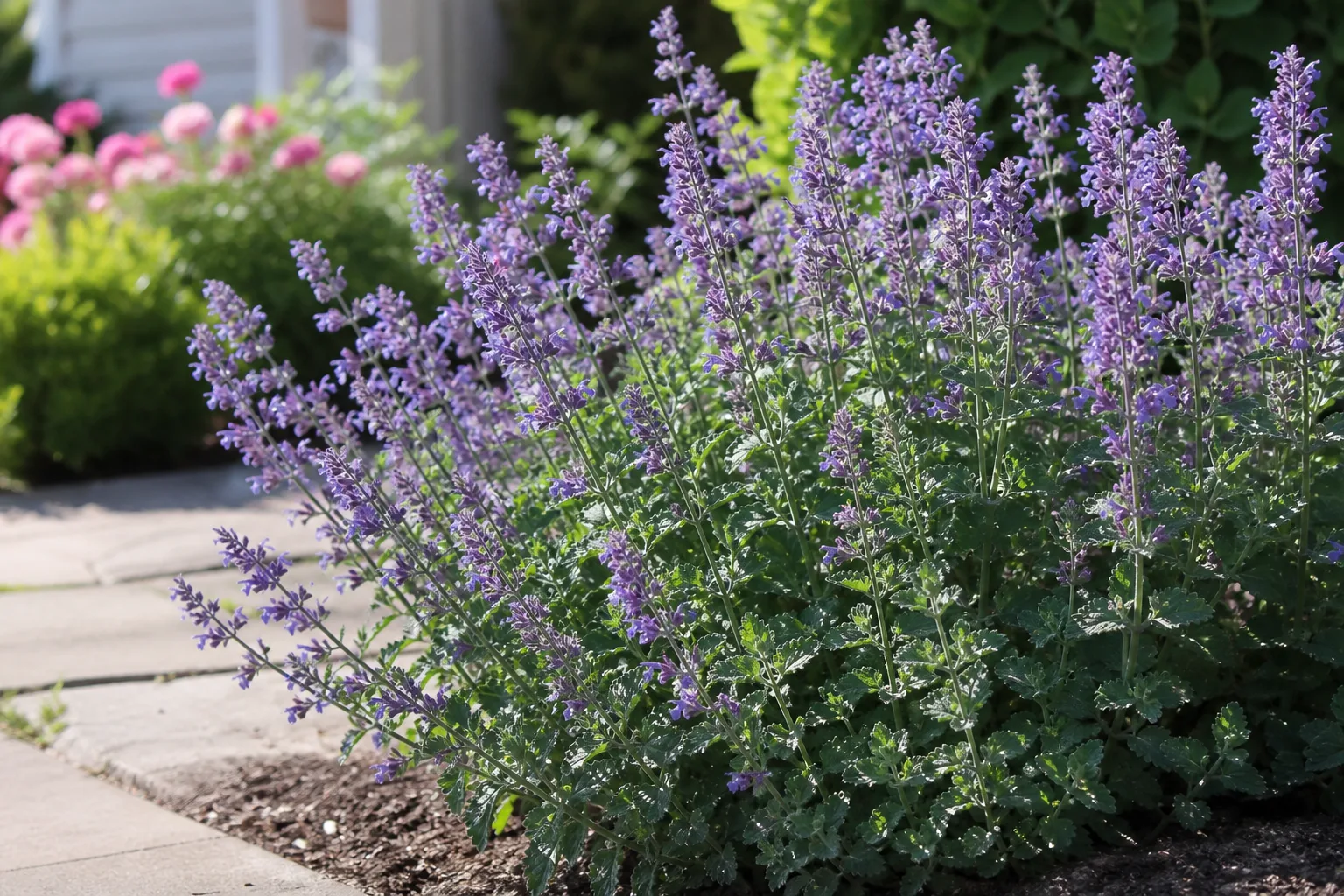
Common sage (Salvia officinalis) and woodland sage (Salvia nemorosa) offer aromatic foliage and violet-blue spikes in early summer. Both want full sun and well-drained soil; sage is hardy roughly zones 4–8, woodland sage zones 3–8. Once established, they tolerate drought and need little beyond a spring cleanup.
Catmint (Nepeta spp.) blooms from late spring through summer with violet-blue spikes on mounds one to three feet tall. NC State Extension notes dwarf catmint prefers full sun to part shade and medium moisture in zones 3–8. Shear plants back after the first bloom flush for a second wave. Southern gardeners often give catmint afternoon shade to keep foliage from scorching.
Deer typically pass both by. Catmint attracts pollinators—and sometimes cats—so plant it where foot traffic will not crush flattened stems.
Thyme (Thymus spp.)
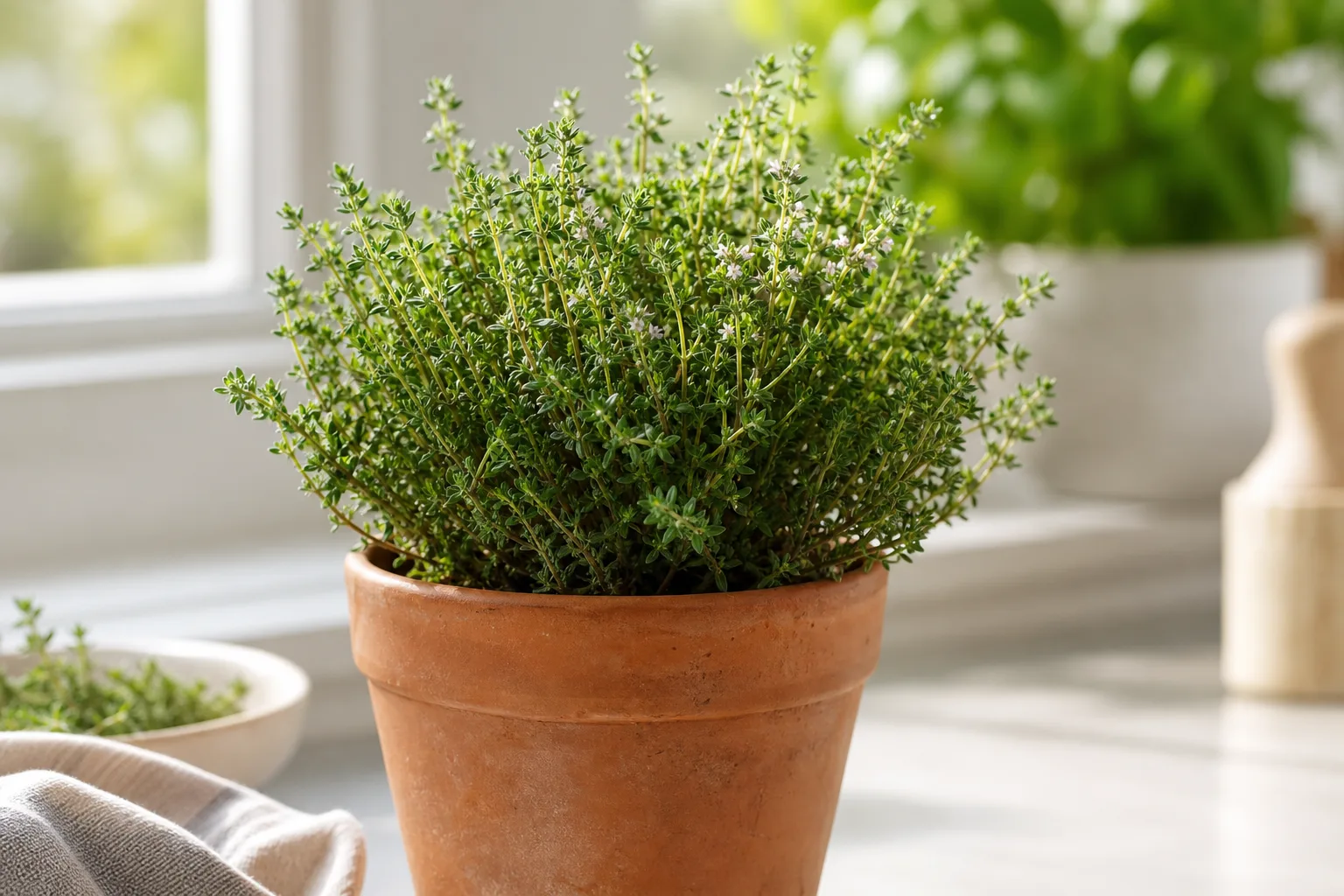
Thyme works as a creeping groundcover between stepping stones or as a mounded herb in sunny borders. Common thyme (Thymus vulgaris) is hardy in zones 5–9 (varies by species), wanting full sun and dry, well-drained soil. Once roots anchor, it needs little beyond occasional shaping.
Woolly and creeping thymes fill gaps where grass struggles on thin soil. Avoid rich, wet beds—thyme rots in heavy clay. Harvest sprigs for cooking anytime; flowering does not hurt the plant, though shearing after bloom keeps mats tidy.
Shade and Part-Shade Perennials With Modest Demands
These five handle dimmer sites where sun lovers fade. Moisture needs vary more here than in the dry-sun group—read each note before assuming “shade equals wet.”
Astilbe
Astilbe delivers feathery plumes in white, pink, purple, or red from late spring into early summer. Traditional types want part to full shade and consistently moist, well-drained soil in zones 4–8. They are heavier feeders than yarrow or sedum—a thin compost top-dressing in spring supports bloom without pushing floppy growth. Astilbe is one of the few shade perennials that delivers reliable color without waiting years for maturity.
Newer hybrids tolerate more sun if soil stays moist; without adequate water, leaves brown at the edges and flower plumes shorten to nubs. Pair astilbe with hostas and ferns in woodland edges where downspouts or shade keep soil damp. In dry shade under thirsty trees, astilbe struggles unless you irrigate through summer—match it to moist shade, not dry shade, for a truly low-care result.
Hostas
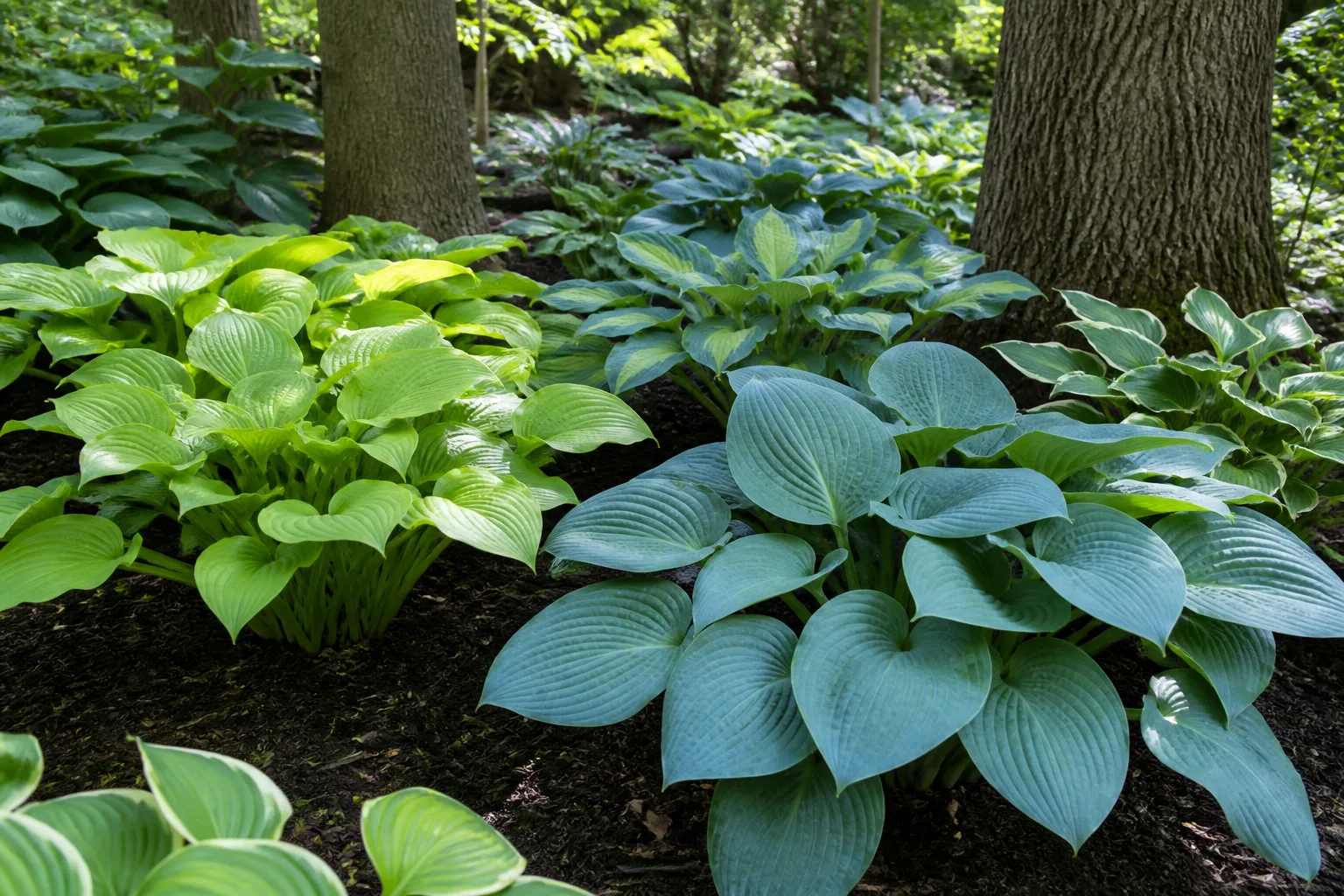
Hostas are the default foliage plant for shade: corrugated leaves from miniatures to six-foot giants, with lavender or white summer flowers. Gardening Know How notes they prefer rich, well-drained soil and part to full shade in zones 3–9. Once settled, they need little beyond slug monitoring and spring cleanup.
The trade-off every honest list must include: deer love hostas. In deer country, plant behind fencing or choose resistant neighbors instead. Slugs chew holes in spring—handpick, use iron-phosphate bait, or accept cosmetic damage on established clumps. For planting depth and spacing, see our how to plant hostas guide; for deer strategies, see how to keep deer away from hostas.
Siberian Iris (Iris sibirica)
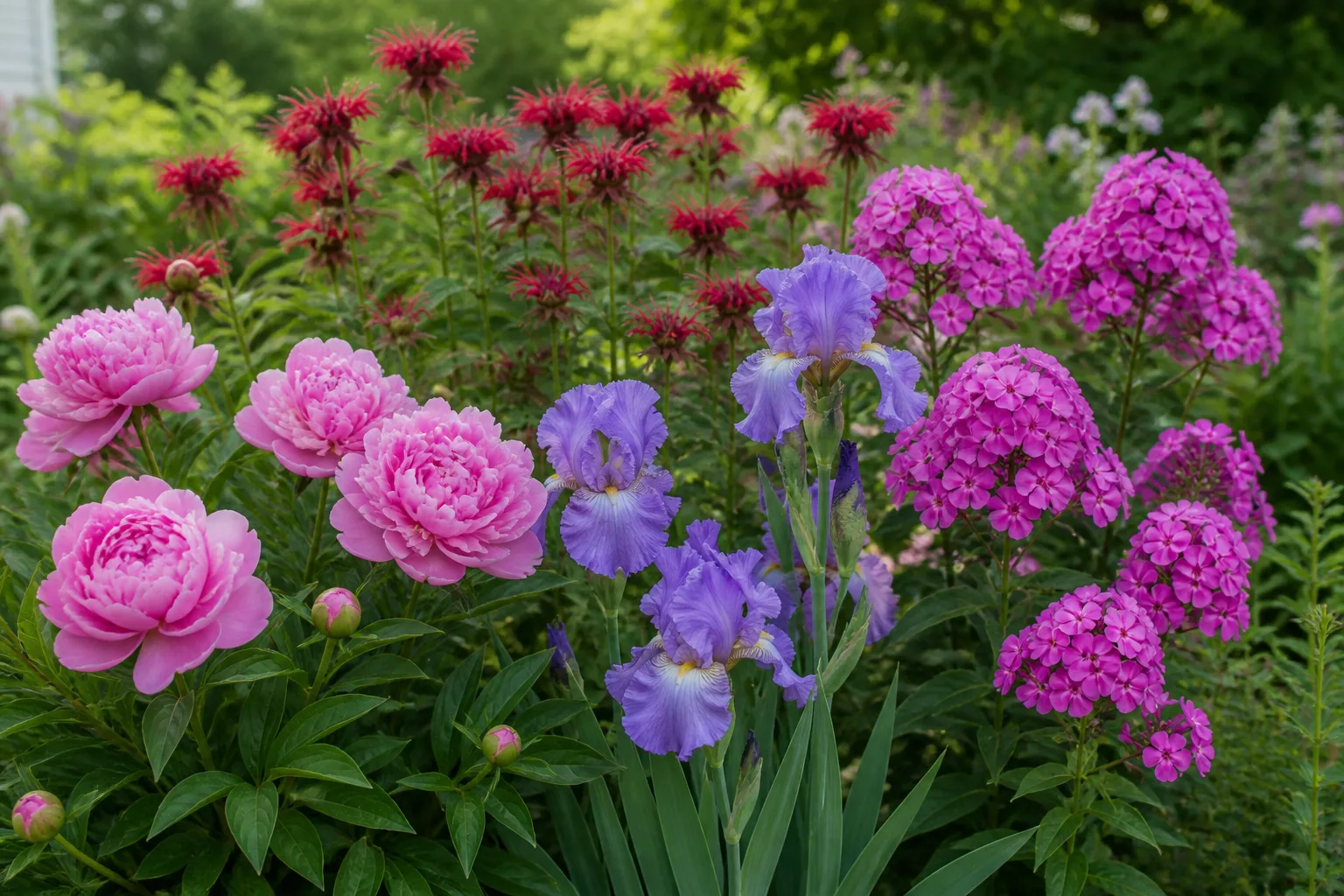
Siberian iris offers grass-like foliage and elegant blooms in blue, purple, white, or bi-colors in late spring—without the borer headaches of bearded iris. Plants prefer full sun to part shade and medium to moist soil in zones 3–9, making them ideal near rain gardens, downspouts, or pond edges.
Divide clumps every four to five years when centers thin out. Unlike bearded types, Siberian iris rarely needs staking and tolerates shade better than its showier cousins. Cut back browned foliage in late fall or early spring.
Daylilies (Hemerocallis)
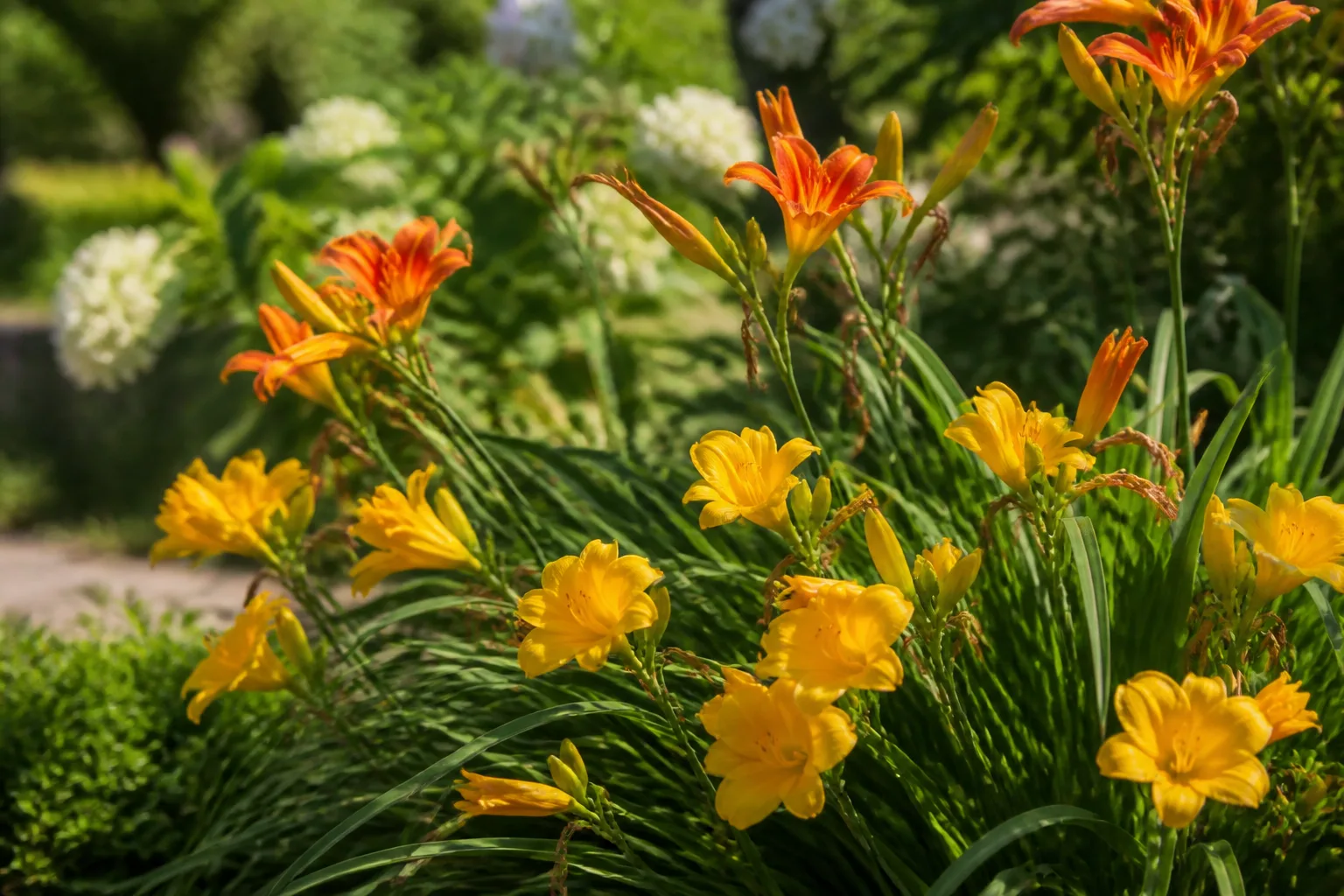
Daylilies are the workhorse of mixed borders: sword-like foliage, summer flower stalks, and thousands of cultivars in nearly every color except true blue. They grow in zones 3–9, tolerating full sun to part shade—more sun means more bloom. Soil can be average provided drainage is good.
Each flower lasts one day, but stalks produce many buds over weeks. Remove spent stalks if you want a cleaner look; it is optional. Divide overcrowded clumps every five to seven years in early spring or after bloom. Deer browse daylilies readily—treat them like hostas in high-pressure areas. Drought tolerance improves after year one, but regular moisture produces heavier bloom.
Deer, Slugs, and Other Low-Maintenance Reality Checks
“Low maintenance” fails when wildlife treats your bed as a buffet. Deer favorites on this list: hostas and daylilies—they will strip foliage overnight in high-pressure areas. Usually passed over: yarrow, coneflower, catmint, sage, baptisia, and sedum. Astilbe and Siberian iris fall in between depending on local pressure and what else is available to browse.
Slugs target hostas and astilbe in cool, wet springs. Iron-phosphate bait, evening handpicking, and keeping mulch off crowns reduce damage without turning slug control into a daily chore. Yarrow and coreopsis can self-seed or spread—welcome in naturalistic plantings, work in borders only if you deadhead or choose sterile cultivars. Baptisia’s deep taproot means do not dig it up once it settles; plan the hole once.
None of these issues makes the plants “high maintenance”—they make site honesty part of the job. Match plant to conditions, accept one or two annual chores, and the list stays easy. If deer pressure is severe, lean on the resistant sun group and treat hostas as optional—not mandatory—shade picks.
How to Build a Perennial Border That Stays Easy
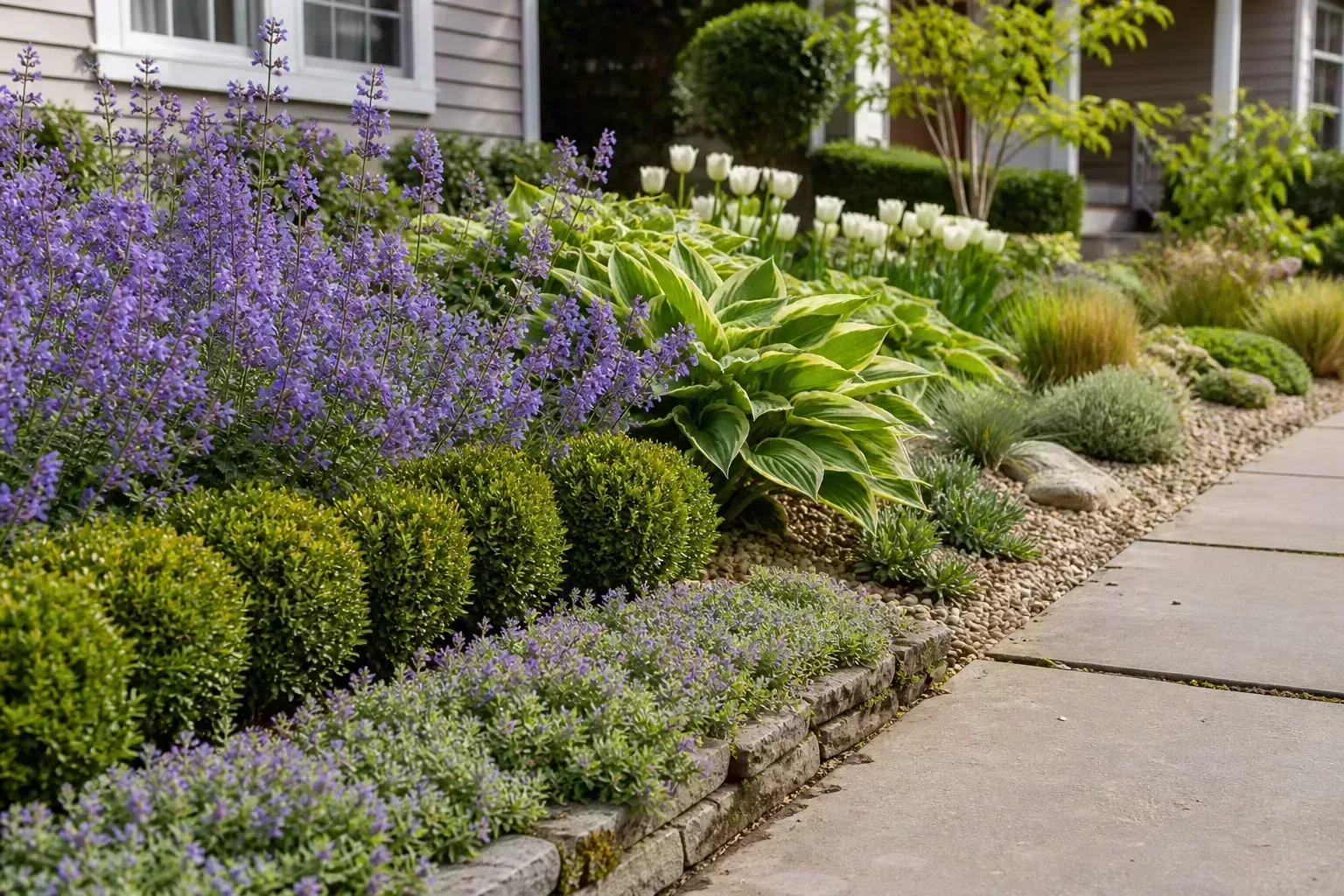
Start with structure, not impulse buys. Audit sun and drainage, then choose two to three backbone plants—false indigo, coneflower, or daylilies for height; sedum or thyme for edges. Fill mid-layer with catmint, coreopsis, or astilbe. Add hostas or Siberian iris where shade demands foliage contrast.
Space for mature width so you are not dividing or hacking every year. Mulch two to three inches deep after planting. Water through the first season. Plant in spring or fall when soil is workable—not midsummer heat unless you can irrigate consistently. Our guide on whether to plant perennials in spring or fall walks through timing trade-offs.
For border layout patterns that reduce weekly weeding, see low-maintenance garden border ideas. The wider 32 low-maintenance plants list adds shrubs, grasses, and groundcovers if you want beyond these twelve perennials.
Conclusion
The twelve low maintenance perennial plants here—yarrow, coreopsis, coneflower, sedum, false indigo, sage, catmint, thyme, astilbe, hostas, Siberian iris, and daylilies—share one trait: modest demands after they match your site and survive their establishment year. Group them by sun and moisture, respect deer and spread habits, and build borders with backbone plants first.
Pick four to six that fit your light and soil, water them intelligently through year one, and you will have a garden that comes back every season without becoming a second job. That is what low maintenance actually looks like.