Manjula Pothos Care Guide: Light, Water & Variegation
Manjula Pothos care for wavy cream-and-green leaves: bright filtered light, slower dry-downs than Golden, soil mix, and variegation fixes.
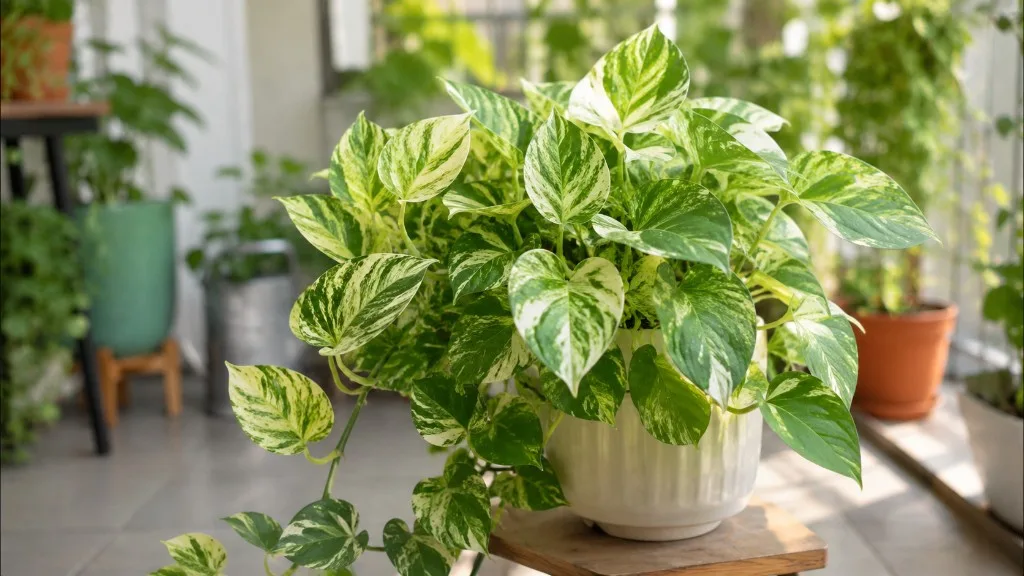
If your Manjula’s newest leaves keep coming out greener, or the pot stays wet while a Golden Pothos in the same room is already thirsty, you are not failing the plant — you are fighting its biology. Manjula Pothos (Epipremnum aureum ‘Manjula’, also sold as Happy Leaf or the breeder code HANSOTI14) is a high-variegation, slow, bushy cultivar. Cream and white sectors are metabolically expensive, so the plant needs brighter filtered light than jade types, drinks more slowly than Golden, and looks “stuck” when it is actually performing as bred.
This guide is the consolidated care framework: cultivar identity, lookalike contrasts, light for patterning, dry-down watering, soil and pot size, pruning and patent limits, problem triage, and pet safety. It ends with a first 30 days checklist you can actually follow.
What Manjula Pothos Is (HANSOTI14) and Why It Grows Slowly
Manjula is not a separate wild species. It is a selected indoor vine with broad, wavy leaves and large cream, white, silver, and green patches that change from leaf to leaf. The US plant patent for ‘HANSOTI14’ describes compact growth, short internodes, slow controlled growth, and foliage that is broad ovate to broad deltate with a moderately undulating surface — the wavy look collectors notice first. Ashish Hansoti discovered the branch mutation in 2010 near Mumbai and selected for shorter internodes and brighter variegation; the patent issued as USPP27,117.
Clemson HGIC lists Manjula as slower growing than many pothos cultivars, with broad upright leaves, a bushy habit, and coloring similar to Pearls and Jade. It also notes Manjula will not vine as aggressively as many cultivars. That slower pace is a feature. White and cream sectors contain little chlorophyll, so the plant builds energy more carefully than a solid-green Golden or Jade.
Trade and extension sources usually place Manjula under Epipremnum aureum; the patent files the denomination under the Epipremnum pinnatum complex naming used in that document. For home care, treat it as a high-variegation pothos: brighter filtered light than jade types, airy soil, and a dry-down watering rhythm. Commercial unlicensed propagation is restricted by the plant patent; home growers commonly root cuttings for personal use.
Manjula vs Marble Queen, Pearls and Jade, Snow Queen, and Golden
All of these share the same basic care skeleton. They diverge on leaf form, growth speed, and how much light they need to keep patterning.
| Cultivar | Leaf look | Growth speed | Light demand for pattern |
|---|---|---|---|
| Manjula (HANSOTI14) | Broad, wavy; large cream/white fields | Slow; bushy, short internodes | High — bright indirect |
| Marble Queen | Pointed heart leaves; fine white marbling | Faster shelf coverage | High |
| Pearls and Jade | Smaller teardrop leaves; speckled white | Slower than Golden | High |
| Snow Queen | Mostly white blades | Slow when pale | Very high |
| Golden | Green with yellow variegation | Fast vine | Moderate — best low-light workhorse |
Pick Manjula when you want sculptural, painterly leaves and can give bright filtered light — not when you need the toughest plant for a dim hallway. For genus-wide habits across cultivars, use the pothos care guide.
What We Observed Growing Manjula Indoors
The intervals below are LeafyPixels indoor observations from Manjula plants we grew while building this care cluster. They are not extension lab data and your room will differ — use them as starting points, then confirm with newest-leaf color and pot weight.
Setup A (primary plant, tracked spring–summer 2025): mature starter Manjula in a 6-inch (15 cm) plastic nursery pot with drainage, sitting inside a breathable cachepot on a shelf about 2 feet (60 cm) from an east-facing apartment window (no sheer; soft morning sun for ~1 hour, then bright ambient light). Mix was roughly 2 parts indoor potting mix : 1 part perlite : 1 part orchid bark.
- Dry-down: after a full soak-and-drain, the top 1–2 inches felt dry and the pot was clearly lighter in about 9–11 days in warm months. A Golden Pothos in the same window, similar pot size, typically needed water in 7–8 days — Manjula ran roughly 2–3 days slower.
- Newest-leaf response: when we temporarily moved the same plant to a dimmer north sill for three weeks, new leaves unfurled with narrower cream sectors and slightly longer internodes. After returning to the east shelf, the next two leaves regained wider cream fields within about three to four weeks. Old leaves did not recolor.
Setup B (contrast): the same cultivar in a 4-inch terracotta hanging pot dried faster — often closer to 6–8 days in the same east exposure — because terracotta and small volume shed moisture quicker. We watered by weight, not by matching Setup A’s calendar.
Takeaway we still use in editing: judge Manjula by the newest leaf and the dry weight of that specific pot, not by how fast Golden grows next to it.
Quick Care Snapshot
For a healthy indoor Manjula, place the plant in bright indirect light, water when the upper 1–2 inches (about 3–5 cm) of mix have dried, use a well-draining aroid-style mix in a pot with drainage holes, and fertilize lightly only during active growth. Penn State Extension recommends moderate to bright light for pothos and notes variegated types lose desirable foliage qualities in low light. Clemson HGIC prefers bright indirect light, soil that dries between waterings, and roughly 50–70% humidity preference with average homes often lower.
| Care factor | Manjula baseline | Deeper guide |
|---|---|---|
| Light | Bright indirect; protect white patches from hot afternoon sun | Light guide |
| Water | Top 1–2 in dry, then soak and drain | Watering guide |
| Soil | Indoor mix + perlite + bark; pH about 6.0–6.5 | Soil guide |
| Growth pace | Slow to moderate; short internodes | Overview hub |
| Pets | Toxic if chewed | Pothos toxicity guide |
Judge success by new leaves, not by how long old foliage hangs on. Bold cream-and-green patterning, reasonably short gaps between leaves, and a pot that dries on a predictable rhythm mean the placement is working.
Light for Cream-and-Green Patterning
Light is the make-or-break variable for Manjula. Pale sectors are beautiful and metabolically expensive. Wisconsin Horticulture states that low light can result in loss of variegation on pothos, and the RHS Epipremnum growing guide recommends bright light without harsh direct sun — east or west windows, or a south window behind sheer curtains. Manjula sits at the demanding end of that range because so much of each leaf is cream or white.
Practical placement: an east window, a few feet back from a bright south or west window behind a sheer curtain, or a north window only if it is truly bright or backed by a grow light. Gentle morning sun is usually fine once the plant is acclimated. Hot afternoon beams through bare glass bleach white patches into tan and leave crispy scorch that will not green again. Move gradually over one to two weeks when you change exposure, and rotate the pot weekly so both sides keep similar patterning.
Hand-Shadow Test and Seasonal Shifts
A useful home test is the soft hand-shadow check at leaf height near midday. A soft, clear shadow usually means bright indirect light. No shadow or a barely visible one often means the plant is in survival light. A harsh, razor-edged shadow with heat on the leaf surface often means direct sun that pale tissue will not tolerate for long. Rooms differ by latitude, window film, and nearby buildings, so treat the test as a starting clue and still confirm with the newest leaf.
Seasonal shifts matter more for Manjula than for solid-green vines. Winter sun is weaker and days are shorter, so a plant that held patterning in June may push greener leaves in January even in the same window. Move closer to the brightest safe exposure, lengthen grow-light hours (full-spectrum LED about 12–18 inches above foliage for roughly 10–12 hours), or accept slower, greener growth until spring — but do not keep summer watering intervals when light drops.
Manjula can survive in medium or low light for a while because it shares Epipremnum toughness. Survival is not the goal. In dim rooms, internodes stretch, new blades shrink, cream patches shrink, and soil stays wet longer because photosynthesis slows. That combination is how variegated pothos quietly slide into not enough light and then overwatering problems.
Reading New Leaves and Pruning Reversion
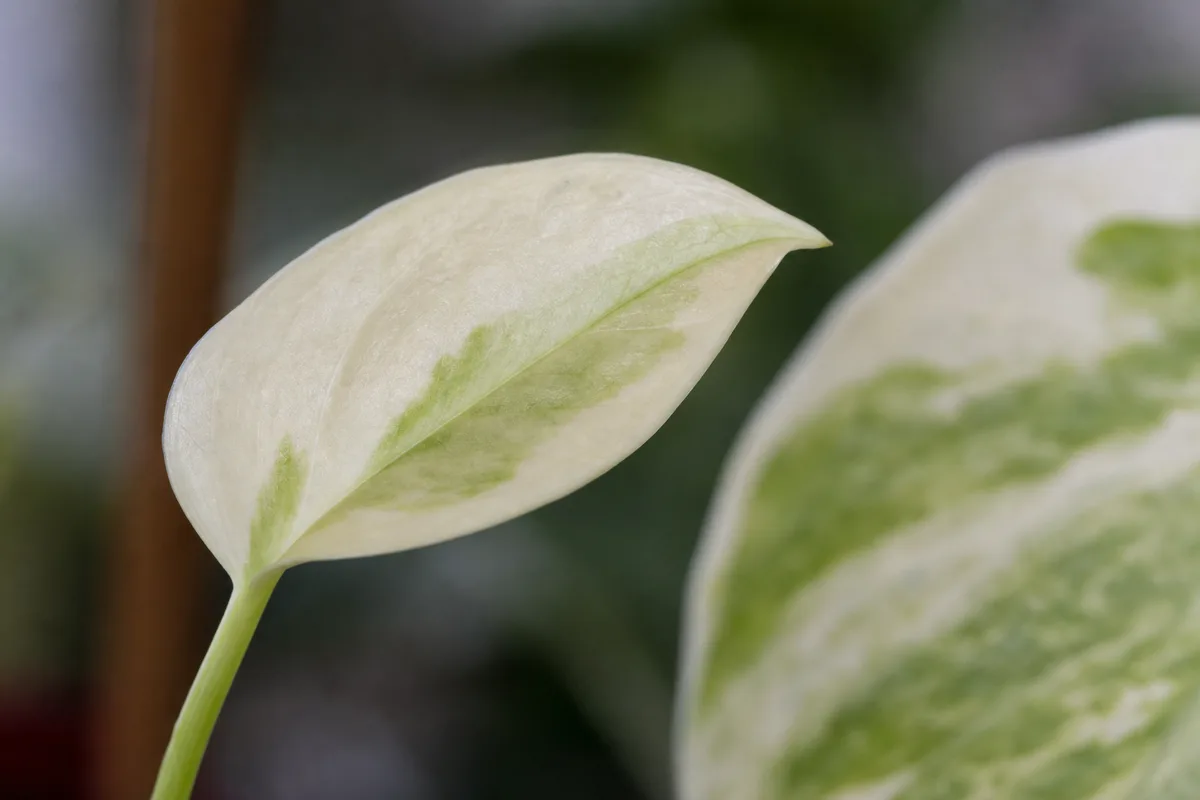
Ignore room brightness as judged by your eyes alone. Read the newest unfurling leaf. Stable cream, white, and green on that leaf means light is adequate. Mostly green new growth with long stem gaps means increase brightness or add a grow light. Bleached or brown papery patches on the window-facing side mean pull back from direct sun. Old leaves will not regain lost color; only future growth can improve.
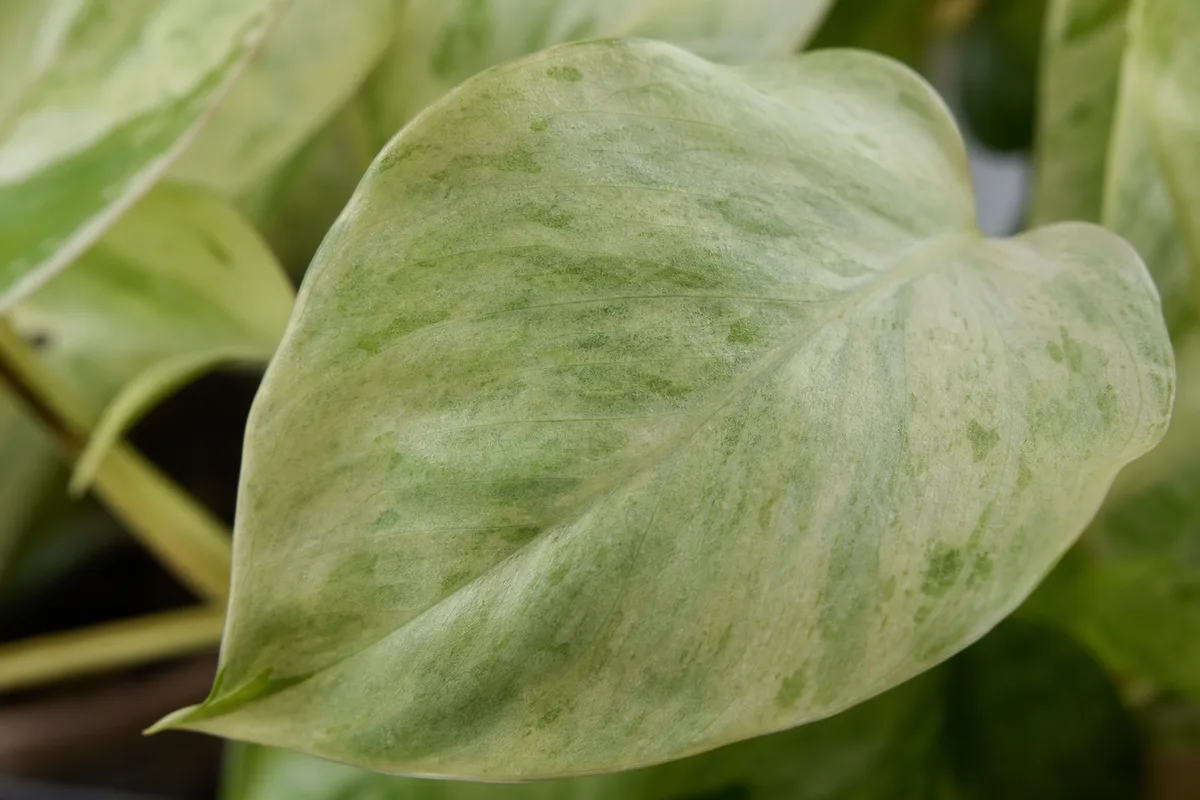
If one vine reverts while others stay patterned, prune the green runner back to a variegated node when possible. Leaving long solid-green stems in place lets the plant invest in the cheaper, faster tissue and crowds out the look you bought the cultivar for. Pair that prune with a light upgrade; pruning alone will not fix a dim corner. See faded leaves and leggy growth when the pattern is already clear.
Watering Without a Calendar
Water Manjula when the upper mix has dried, then soak thoroughly and let excess drain. Clemson HGIC advises allowing soil to dry between waterings and watering thoroughly so moisture reaches the full root zone. The RHS warns that keeping compost too wet causes roots to rot. Wisconsin Horticulture recommends a well-aerated medium and watering when the soil surface is dry. Penn State Extension puts it plainly: water when the soil is dry — pothos is better kept too dry than too wet.
When you water, use room-temperature water until it exits the drainage holes, then empty the saucer within about thirty minutes. Small sips that wet only the top crust leave the center dry and invite salt buildup. For seasonal rhythm and droop diagnostics, use the dedicated Manjula watering guide. If you want the general indoor dry-down mindset that also keeps other tropicals alive, pair this with how to water indoor plants the right way.
Why Manjula Dries Slower Than Golden
Because Manjula grows more slowly and carries heavy variegation, the same pot often dries one to three days later than Golden Pothos in the same window — matching what we measured in Setup A above. A realistic starting range in bright indirect light is roughly every 7–10 days in warm months and every 10–14 days in cooler, darker months, always confirmed by a finger or chopstick check at depth plus pot weight. Low light stretches intervals further. Never copy a weekly calendar from a brighter room or a faster cultivar without checking the mix.
Pot material and size change the interval as much as the calendar does. Terracotta and small hanging baskets dry faster in bright rooms. Large plastic nursery pots and dense decorative cachepots stay wet longer, especially for a slow variegated plant. Learn the wet weight versus dry weight of your specific pot — that muscle memory beats any app reminder.
Overwatering vs Underwatering on Variegated Tissue
Overwatering usually shows as several yellowing leaves, soft stems near the soil, a sour smell, fungus gnats, or mix that stays wet for many days. Leaves may wilt while soil is still wet because damaged roots cannot move water — watering again makes it worse. Escalate to root rot if roots look brown and mushy.
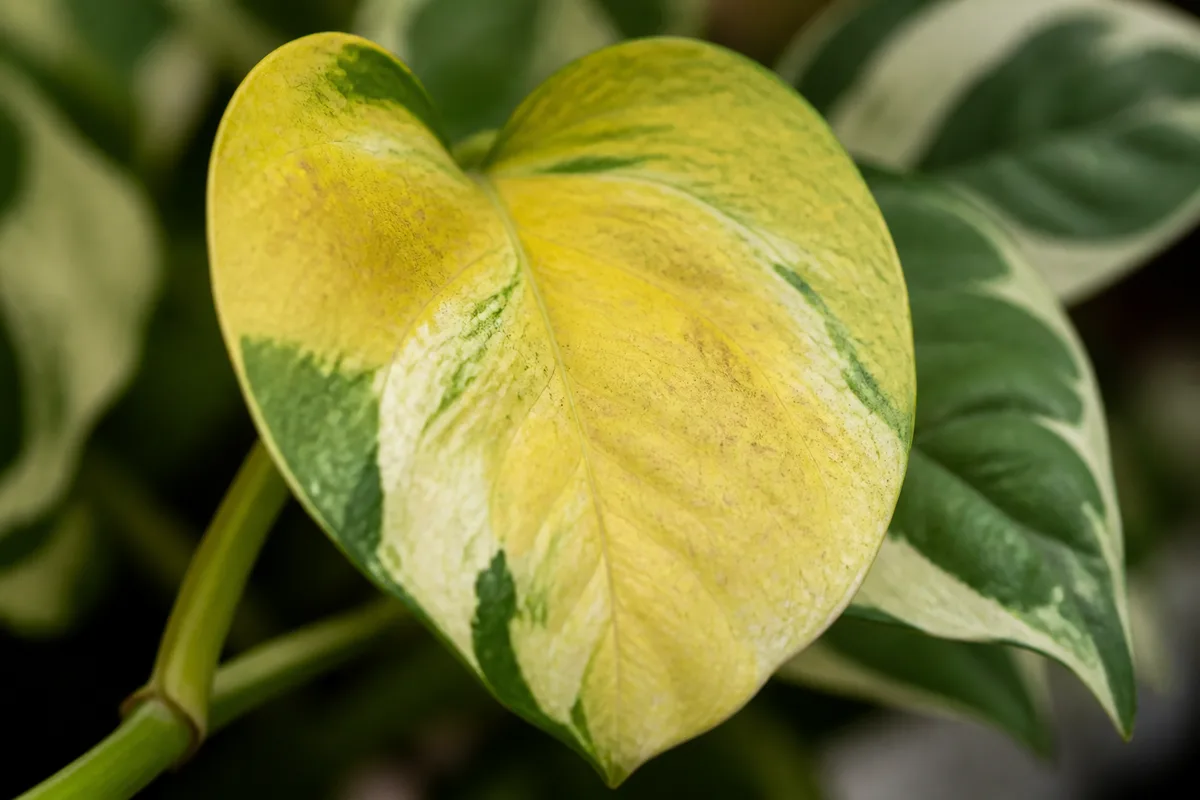
Underwatering usually shows limp leaves on lightweight, dry soil that pulls from the pot walls, sometimes with crispy tips. A thirsty Manjula often perks up within hours after a full soak if roots are healthy. Pair droop with a soil check every time. Droop on wet soil is not thirst; it is root stress. See underwatering and yellow leaves when the pattern is unclear.
White and cream sectors also show moisture stress differently from green tissue. They can brown or look translucent after hard drought-and-flood cycles even when green margins still look fine. Steady dry-downs protect patterning better than frequent shallow sips followed by panic soaks. If you are unsure, wait one more day and recheck depth rather than watering “just in case” on a slow cultivar.
Soil, Pot Size, and Repot Timing
Manjula needs a mix that holds some moisture after watering but still lets air reach the roots. Missouri Botanical Garden notes pothos wants a peaty potting mix with good drainage in practice, and stems can be pinched and cuttings root readily. A practical DIY blend is roughly 2 parts indoor potting mix, 1 part perlite, and 1 part orchid bark by volume. In humid low-light spots, lean chunkier so the slow cultivar does not sit wet for weeks. The RHS suggests an open, moisture-retentive but well-drained, slightly acidic compost and warns that oversized pots keep mix wet too long.
Always use a pot with drainage holes. Cachepots are fine only when the inner nursery pot drains and you empty standing water every time. Full ratios and failure diagnostics live on the Manjula soil guide.
Starter Pot Size and When to Size Up
For a nursery starter, stay in about a 4–6 inch (10–15 cm) pot until roots circle heavily, poke through holes, or the plant dries much faster than it used to. Oversized pots hold more wet mix than current roots can use, which is especially risky for a slow variegated plant. Move up only one modest size (for example 6 inch → 8 inch), not a jump to a deep decorative urn.
Repot in spring or early summer when the plant is actively growing. Water a day before if the root ball is bone dry, loosen circling roots, discard sour mix, and set the crown at the same depth. Refresh collapsing peat-heavy mix every 12–24 months. Some limpness for a few days is normal; do not fertilize until you see new growth. If the mix smells foul or the plant declines after a long wet stretch, treat it as a root-health reset rather than a decorative pot upgrade — see repotting and root rot.
Temperature, Humidity, and Fertilizer for Heavy Variegation
Keep Manjula in typical warm indoor temperatures. Clemson HGIC lists comfortable pothos growth around 70–85°F (21–29°C) days and cooler nights near 60–70°F, and warns against cold drafts and heating vents that dry and damage leaves. NC State Extension notes pothos as a tropical houseplant that appreciates higher humidity when practical; average home humidity often works. Below about 30%, brown tips and spider mites become more likely, especially in winter. Clemson’s preferred humidity band for pothos is roughly 50–70%.
A humidifier near the plant cluster is more reliable than daily misting. Misting wets leaf surfaces briefly without holding ambient humidity, and wet pale tissue in stagnant air can invite spotting. Grouping Manjula with other houseplants or placing it in a bright bathroom with a window can help, but never trade away light just to chase humidity — patterning comes first.
Fertilizer is optional support, not a rescue tool. Wisconsin-style guidance for pothos is light feeding every other month during active growth and little or none when growth stalls in winter. Use a balanced liquid houseplant fertilizer at half label strength only when new leaves are appearing and roots are healthy. Do not fertilize a plant in soggy soil, deep shade, or active root decline — fix light and moisture first. Heavy variegation does not need “more nitrogen to grow faster”; forcing length with feed in weak light usually produces greener, softer growth and salt stress on cream tips. If tips brown after repeated feeding, flush the pot with plain water and pause fertilizer. For rates and salt-flush detail, see Manjula fertilizer.
Pruning, Habit, Propagation, and Patent Limits
Clemson notes Manjula’s bushier habit and that it will not vine as aggressively as many cultivars. That makes it excellent for shelves and compact hanging pots, and still workable on a moss pole if you want vertical training. Prune just above a node to shorten bare vines, remove fully reverted green runners that steal light from variegated growth, and keep the plant full. Missouri Botanical Garden notes pothos stems can be pinched to shape and that cuttings root readily.
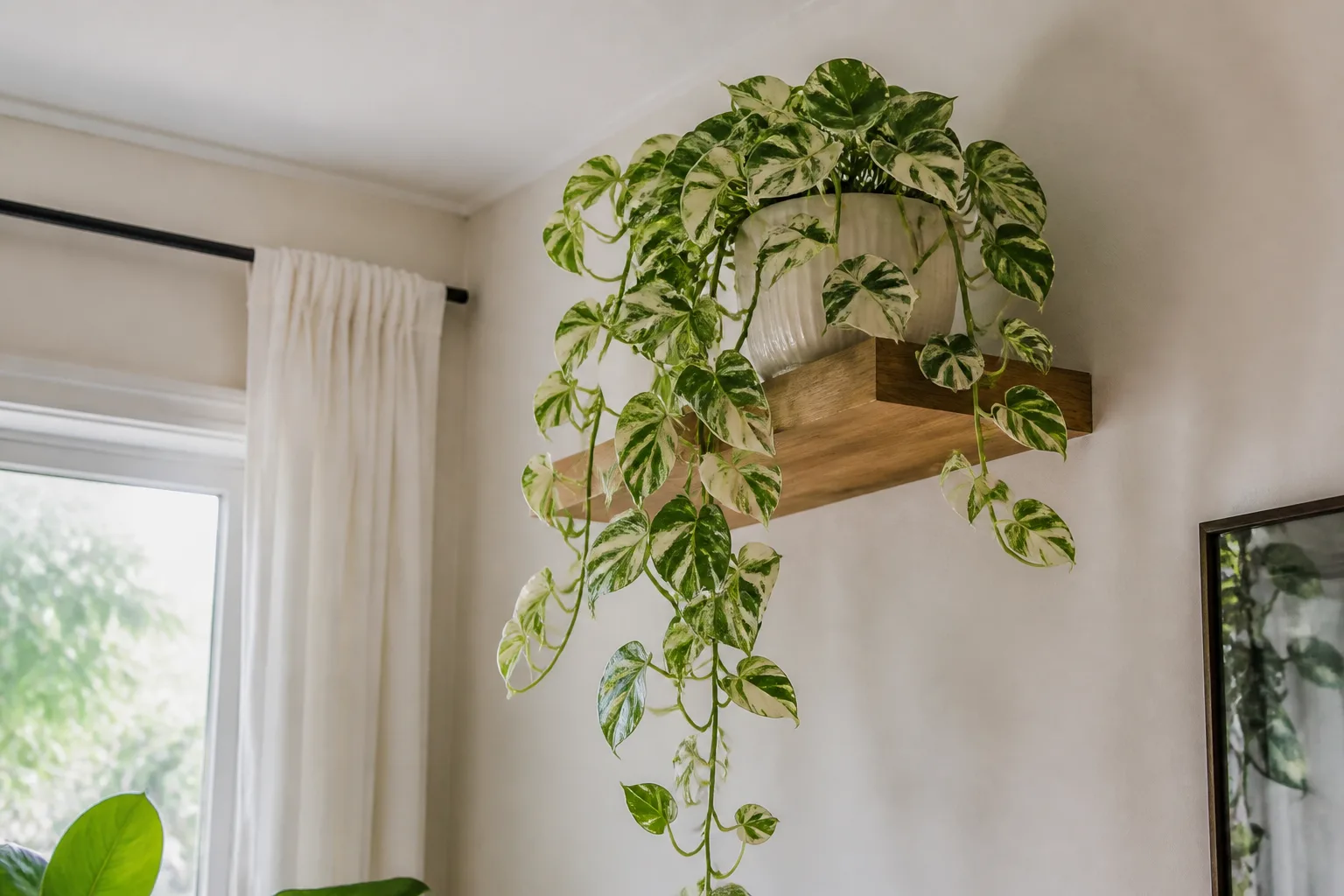
Because internodes stay short when light is good, Manjula often looks fuller near the pot than Golden vines that race and bare out. That is another reason not to over-fertilize chasing length. Shape with pruning and rooted cuttings returned to the same container when you want density. Hang it when you want a cascade; use a short moss pole when you want a denser vertical column — either way, light still decides whether new leaves stay patterned.
For home propagation, take stem cuttings with at least one node and root in water or moist well-draining mix in bright indirect light. The patent reports roughly 20 days to rooting in warm conditions and 3–6 weeks to a rooted plant under the greenhouse conditions described. Manjula is protected by plant patent PP27,117, so unlicensed commercial propagation and sale are restricted; home growers commonly root cuttings for personal use. Full water-versus-soil steps belong on the Manjula propagation guide and the general how to propagate pothos workflow.
Diagnose Problems in Order (Light → Moisture → Pot → Pests)
Most Manjula problems start as too little usable light, too much water around slow roots, or dense mix that never dries. Those three amplify each other. A dim shelf slows water use; peat-heavy soil holds that water; yellow leaves appear weeks later while the grower still waters on a bright-room schedule. Start diagnosis with soil moisture at depth, newest leaf color, and root smell or texture before adding fertilizer or misting rituals.
Pests are less common on healthy indoor pothos but still appear: mealybugs in leaf axils, spider mites in dry rooms, and fungus gnats in chronically wet mix. Wisconsin Horticulture flags mealybugs, scale, spider mites, and root rots from overwatering as the usual issues. NC State Extension similarly notes root rot with overwatering and loss of variegation in low light. Clean leaves, improve airflow, and correct moisture before reaching for repeated sprays.
Work through problems in this order: confirm light with the newest leaf, confirm moisture at depth, confirm drainage and pot size, then look for pests on undersides and nodes. Skipping to fertilizer or daily misting when roots are already stressed usually makes variegation look worse for longer.
Yellow Leaves, Faded Variegation, and Cream Scorch
Several yellow leaves with wet soil usually point to overwatering or early root decline — open yellow leaves and overwatering. One older yellow leaf at the base can be normal aging. Faded or mostly green new leaves after months in the same spot almost always mean insufficient light; move brighter and prune reverted stems so energy returns to patterned growth (faded leaves, leggy growth).
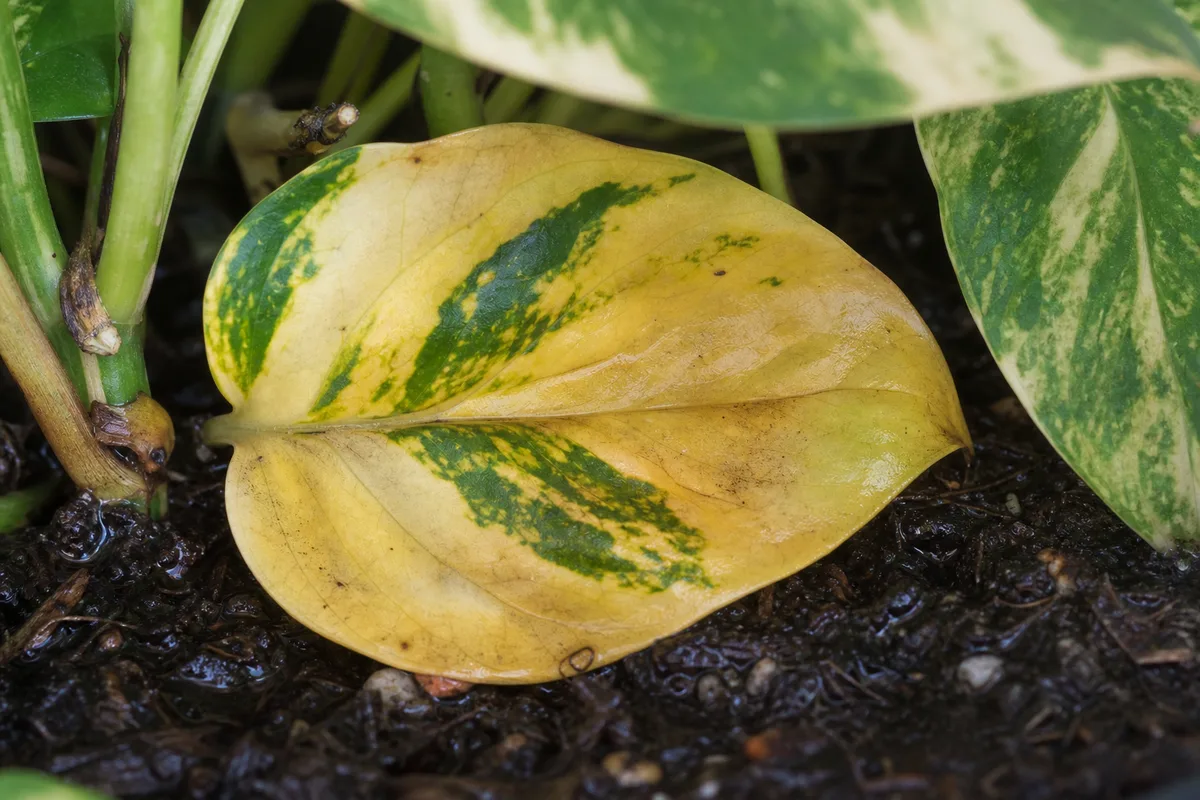
Brown or crispy patches on the sun-facing cream sectors often mean heat or direct-sun scorch — pull back from hot glass and see heat stress and brown tips. Soft stems and foul soil mean stop watering and inspect roots for rot.
If you unpot and find mushy brown roots, trim to firm tissue with clean tools, discard the old mix, and repot into fresh airy media in a pot that fits the remaining roots. Keep the plant in bright indirect light and water lightly until new growth appears. Healthy stem cuttings above damaged tissue are insurance when the crown is badly compromised.
Pet Toxicity and Safe Placement
Manjula is toxic to cats and dogs if chewed. The ASPCA lists Golden Pothos — the same species complex — as toxic due to insoluble calcium oxalates, with clinical signs including oral irritation, intense burning of mouth and tongue, excessive drooling, vomiting, and difficulty swallowing. Clemson likewise notes all parts of pothos are mildly toxic if ingested because of calcium oxalate crystals. Keep vines on high shelves or hanging planters out of reach, and contact a veterinarian or ASPCA Animal Poison Control at (888) 426-4435 if a pet eats the plant. For broader framing, see the pothos toxicity guide.
Related Manjula and Pothos Guides
- Manjula Pothos hub — cultivar overview plus topic and problem library when one lever needs depth
- Manjula light, fertilizer, propagation — step-by-step topic pages beyond the snapshot table
- Pothos care guide — genus framework across Golden, Marble Queen, Neon, and shared watering logic
- Propagate pothos — water vs soil cuttings workflow
- How to water indoor plants the right way — general dry-down mindset that pairs with Manjula’s slower water use
Conclusion: First 30 Days Checklist
Skip hub-hopping for the first month. Run this loop instead.
- Days 1–3: Quarantine away from other plants. Confirm drainage holes. Do not repot unless the mix is sour, waterlogged, or pest-infested. Place in bright indirect light (east window or sheer-filtered south/west).
- Days 3–7: Learn wet vs dry pot weight. Check the top 1–2 inches before watering. If the pot is still heavy, wait. Photograph one newest leaf as your baseline for cream width.
- Week 2: Water thoroughly only after a real dry-down; empty the saucer. Rotate the pot a quarter turn. Watch cream sectors for scorch if afternoon sun hits the glass.
- Week 3: Compare the newest leaf to your photo. Greener and smaller → move brighter or add a grow light. Stable cream fields → keep placement. Soft yellow leaves on wet soil → stretch the interval and check roots.
- Week 4: Skip fertilizer unless you see active new growth and healthy roots. Prune only fully reverted green runners if light is already adequate. Decide whether the current 4–6 inch pot still fits; size up only one step if roots are circling hard.
- Ongoing: New leaf pattern + pot weight beat any calendar. Keep the plant out of pet reach. When one symptom dominates, open the matching Manjula problem page — do not stack repot, feed, and prune in the same weekend.
Good Manjula care is bright filtered light for wavy cream-and-green patterning, watering only after a real dry-down, and an airy pot that never traps water around slow roots. Expect a fuller, slower plant than Golden. Treat mostly green new leaves as a light problem, yellow leaves on wet soil as a root problem, and keep the cultivar away from chewing pets.