How to Grow and Care for Mexican Sunflowers
Learn how to grow Mexican sunflowers from seed, choose the right site, prevent flopping, water wisely, and keep blooms coming until frost.
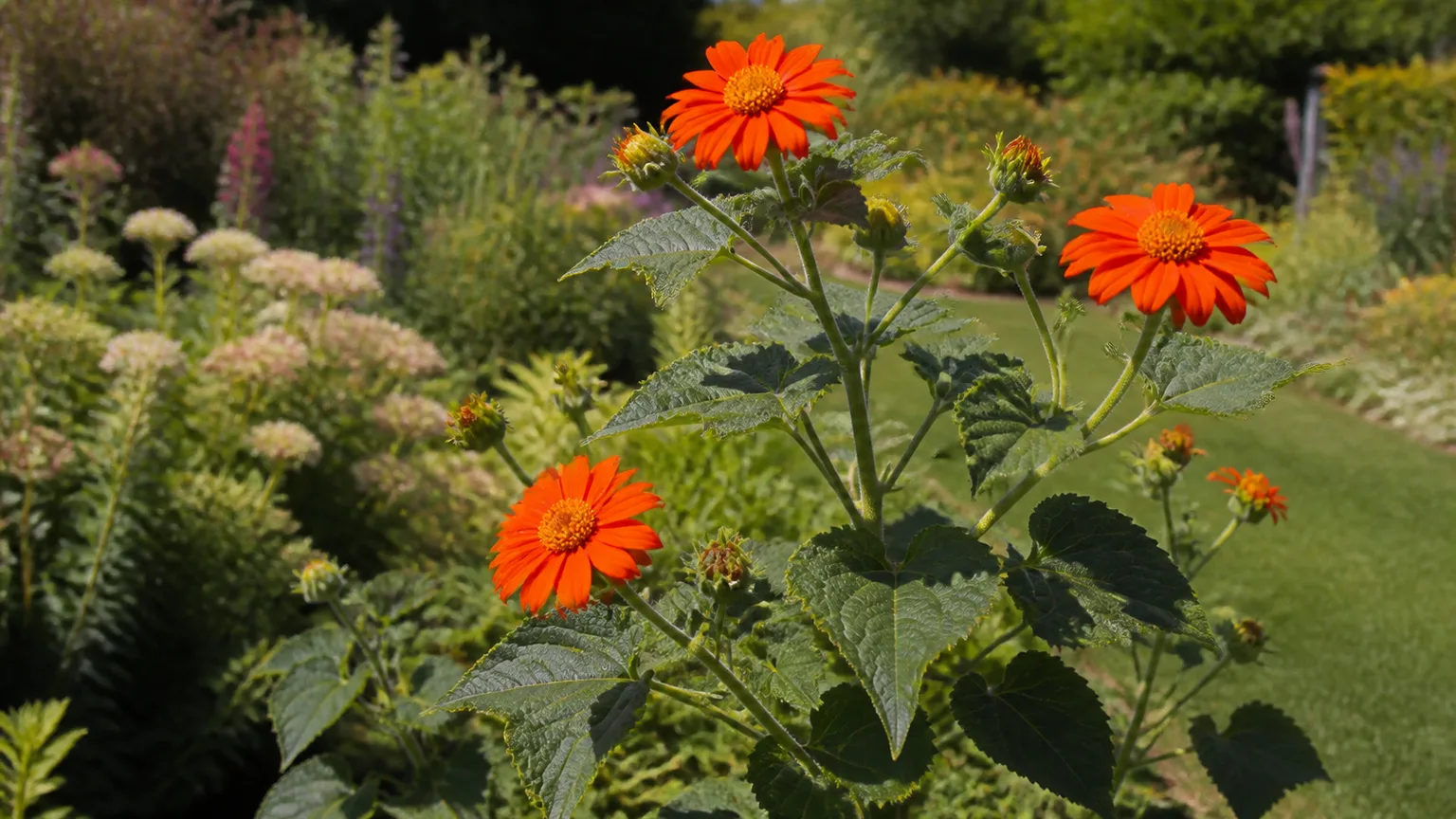
Mexican sunflower (Tithonia rotundifolia) is a warm-season annual that earns its place in a garden with height, heat tolerance, and a long run of orange-red flowers. A mature plant can reach 3 to 6 feet tall and 2 to 3 feet wide, so it is better treated as a back-of-border plant or seasonal screen than as a tidy little bedding annual. The flowers are usually around 3 inches across, and their nectar draws bees, butterflies, and hummingbirds from mid-summer into fall.
The plant is easy, but it is not mindless. Its two biggest failure modes are predictable: planting it before the soil and nights are warm enough, and giving a tall, hollow-stemmed plant more fertilizer and water than it can structurally support. Give it sun, drainage, warmth, and room; support it early; then decide whether your priority is continuous flowers or a supply of dry seed. NC State Extension and University of Wisconsin–Madison Extension both describe it as a fast-growing, heat-loving annual that performs best in full sun and well-drained soil.
Mexican Sunflower Quick Reference
| Factor | Best target | Why it matters |
|---|---|---|
| Botanical name | Tithonia rotundifolia | The common name can be used for more than one Tithonia species, so check the label. |
| Life cycle | Warm-season annual | Frost ends the plant; dropped seed may provide volunteers in a suitable climate. |
| Mature size | About 3–6 feet tall and 2–3 feet wide | Plan for a back border, screen, or large container. |
| Light | At least 6 hours of direct sun | Shade produces weaker stems and fewer flowers. |
| Soil | Average to poor, well-drained soil | Excess fertility can mean leaves and lanky growth instead of sturdy flowering. |
| Water | Keep evenly moist while establishing; reduce once rooted | Drought tolerance is strongest after the root system is established. |
| Spacing | About 2 feet for mutual support; 3–4 feet if staking plants individually | Tight clumps hold one another, while wider spacing improves airflow but increases the need for support. |
| Bloom period | Mid-summer through fall or the first frost | Cool weather delays growth and can shorten the display. |
| Best uses | Pollinator border, cutting garden, seasonal screen | The height is an asset when it is placed behind shorter plants. |
Choose the Right Mexican Sunflower for Your Space
Start by deciding whether you want a tall mass of flowers or a manageable plant for a smaller bed. The standard form is vigorous and can quickly fill the back of a border. Its foliage is coarse and its habit can be rangy, but that is easy to hide behind lower plants. Planted in a group, the stems and flowers read as a deliberate seasonal screen; planted alone in front of a path, the same plant can look oversized and untidy.
Cultivar choice: full-size or compact
‘Torch’ is the commonly available full-size choice, with vivid red-orange flowers and plants that can approach 6 feet. ‘Yellow Torch’ shifts the flower color toward yellow-orange. If you want the same warm-season character in a smaller footprint, look for ‘Fiesta del Sol’, which grows to about 3 feet, or ‘Goldfinger’, which is generally shorter than the standard form. UW–Madison Extension lists these cultivars and their relative scale.
Do not choose a cultivar by flower color alone. A compact cultivar is a better fit for a patio pot or the middle of a narrow border, while ‘Torch’ makes more sense where a tall backdrop is useful. If a packet lists only “Mexican sunflower,” confirm that the botanical name is Tithonia rotundifolia before you sow; common names are not reliable identification.
Give Mexican Sunflowers the Site and Soil They Need
Light is the first flowering decision
Choose the sunniest open spot you have, with six or more hours of direct sunlight. Morning sun plus bright shade is not the same as full sun for this plant. In insufficient light, seedlings stretch, mature stems lean, and the plant may spend its short growing season making foliage without enough energy for a strong flower display. NC State Extension classifies Mexican sunflower as a full-sun plant and notes that its bloom season runs from summer into fall.
Full sun also helps the foliage dry after rain. That does not make the plant immune to disease, but it lowers the combination of damp leaves, crowded growth, and weak stems that creates trouble in humid weather. If the only available site is shaded by a fence or a large tree during the afternoon, use a shorter, shade-tolerant annual instead of trying to force Tithonia to perform there.
Drainage matters more than rich soil
Mexican sunflower is unusually comfortable in average, lean, sandy, rocky, or otherwise low-fertility soil as long as excess water can drain away. Work on drainage rather than automatically adding compost or manure. In heavy clay, plant in a raised or slightly mounded area, avoid a low pocket where rain collects, and do not set the root ball deeper than it was growing in its pot.
Rich soil and repeated high-nitrogen fertilizer can push the plant toward large leaves and soft, weak stems. That trade-off is easy to miss because the plant looks vigorous at first. North Carolina Cooperative Extension specifically warns that rich soil and heavy fertilization promote excess foliage and weak stems.
Start Mexican Sunflowers from Seed
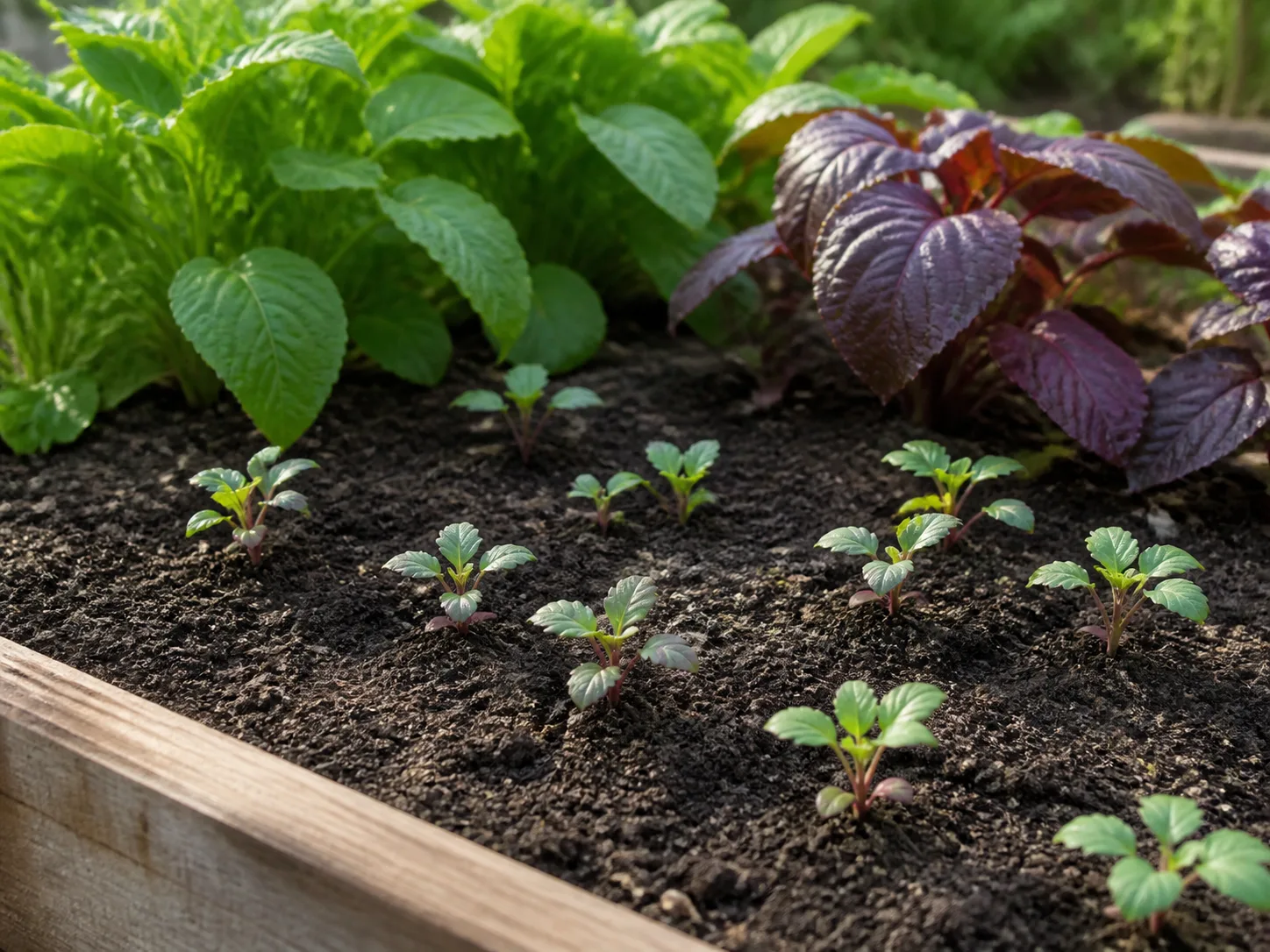
Mexican sunflowers are most often grown from seed. Their large, easy-to-handle seeds make them a good choice for beginners, but they are warm-season seeds: cold soil and a late frost can erase an otherwise healthy start.
Direct-sow after frost
Direct sow when the danger of frost has passed and the soil is warming. Press the seed into moist soil and cover it only with a very light sprinkling of mix. Light helps Tithonia germinate, so burying the seed deeply is a common reason a packet seems to have failed. Gardening Know How reports germination in roughly 4 to 10 days under suitable warm, moist conditions, while Savvy Gardening recommends just a thin covering because the seed needs light.
Keep the seedbed damp but never waterlogged. A gentle spray or a fine-rose watering can prevents the seed from being washed into a clump. Once seedlings emerge, let the surface begin to dry between waterings rather than keeping the bed constantly wet. Thin crowded seedlings while they are small; waiting until roots are tangled makes the job harder and increases transplant shock.
Direct sowing is the simplest route and works well in long, hot growing seasons. Its trade-off is timing: in a cool summer or a garden with a short season, plants started late may grow vigorously only after the window for a long bloom display has narrowed.
Start indoors for an earlier display
To gain several weeks, sow indoors about 6 to 8 weeks before the average last spring frost. Use a clean seed-starting mix, a bright grow light, and containers with drainage. Sow shallowly, keep the mix evenly moist, and provide warmth; do not put the tray in a cold windowsill and expect the same speed as a warm propagation space.
Harden seedlings gradually once outdoor nights are reliably mild. Set them outside for a short period in a sheltered location, increase the time over about a week, and protect them from cold wind. Transplant after frost, disturbing the roots as little as possible. A plant that was grown warm and bright indoors can still stall if it is moved directly into cold soil or exposed to a full day of wind.
Starting indoors is most useful in northern or short-season areas and when you want the flowers to begin soon after summer perennials fade. It is not necessary in a long, hot season where direct-sown plants have plenty of time to mature.
Plant and Space Them for Stronger Stems
Space standard plants about 2 feet apart if you want neighboring stems to support one another in a group. Use roughly 3 to 4 feet between plants when each will be individually staked or when you want more air movement around a specimen. UW–Madison Extension gives both spacing approaches because the correct distance depends on how you plan to support the plant.
Place tall plants at the back of a border, on the sheltered side of a fence, or where shorter flowers can hide the lower stems. Avoid a wind tunnel between buildings. The stems are hollow and can break when a heavy flower head, rain, or a gust catches them; a good location prevents more damage than a last-minute rescue stake.
After transplanting, water deeply enough to settle the soil around the root ball. Mulch can help stabilize soil moisture, but keep it a few inches away from the stem. During the first few weeks, check the soil whenever the surface dries; do not apply the mature plant’s drought-tolerant routine to a newly planted seedling.
Water and Feed Without Making Them Floppy
Water new seedlings and transplants consistently while they establish. Once roots reach surrounding soil and the plant begins rapid warm-weather growth, allow the top layer to dry somewhat between deep waterings. The goal is not to force drought stress; it is to avoid a permanently wet root zone while still helping the plant through an unusually long hot, dry spell.
Look at the plant and the soil together. A wilted plant in dry soil needs water. A wilted plant in saturated soil needs drainage and root inspection, not another drink. A plant that is tall, lush, and leaning despite adequate moisture is more likely suffering from low light, overfertilization, wind, or an unsupported habit than from thirst.
Most Mexican sunflowers do not need a regular fertilizer program in average garden soil. If a soil test shows a real deficiency, correct that specific deficiency rather than applying repeated all-purpose feed. Skip high-nitrogen products, especially after the plant is established; the extra foliage can increase leverage on the stem and reduce the flower-to-leaf balance you want. Fine Gardening likewise recommends well-drained soil, full sun, and only modest fertility for ‘Torch’ rather than a heavy feeding schedule. (Fine Gardening)
Keep Tall Plants Upright and Bushy
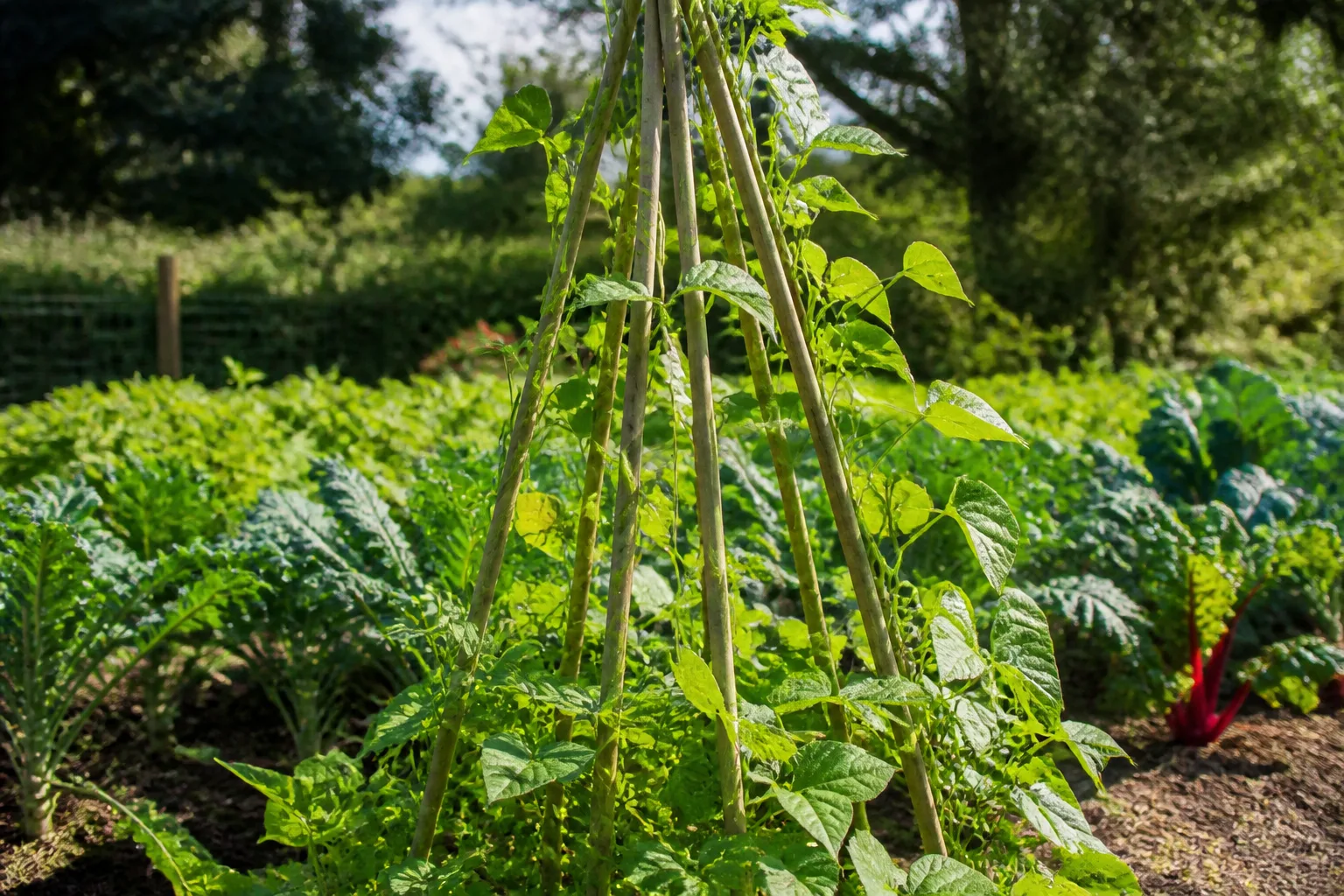
Support is not an admission that you chose the wrong plant. Tall Tithonia naturally benefits from a stake, a sheltered site, or close planting. Install a slender stake while the plant is still small, then tie the main stem loosely with soft material. Waiting until the plant has fallen often means lifting brittle stems that have already kinked.
Pinch the growing tip once the plant is established and has several sets of leaves if you want more branching and a slightly shorter, bushier shape. You can also shear back about one-third in early summer. That delays some flowers, but it can trade a little early height for more branches and a less top-heavy plant. Do not make a hard cut during a heat or drought emergency; water the plant normally and wait until it is actively growing again.
There is a useful choice here. If you want a tall screen quickly, leave the main stem alone and stake it early. If you want a fuller border plant, pinch or shear while it is young. A late-season haircut will not magically turn a mature, six-foot plant into a compact cultivar.
Deadhead for Flowers or Save Seed for Next Year
Deadheading is optional, but it changes the plant’s priorities. Removing faded flower heads before they mature redirects energy toward new flowers and can keep the display going until frost. Cut the spent stem back to a leaf junction or strong side branch rather than leaving a long, bare stub. NC State Extension and Savvy Gardening both recommend deadheading to prolong bloom.
If you want seed, leave a few late flowers on the plant. Let the heads dry until the seeds are hard and dark, then collect them on a dry day. Spread them in a dry place for additional curing before storing in a labeled paper envelope. Do not seal damp seed in a jar or plastic bag; trapped moisture can ruin it.
You cannot maximize every goal at once. A garden deadheaded for the longest possible flower show will produce less mature seed. A garden left to seed may provide food for birds and volunteer plants next year, but it can also create seedlings in places you did not plan to weed. Save seed from the healthiest plant that had the flower color and height you wanted, not from every fading head.
Grow Mexican Sunflowers in Containers and Small Gardens
Compact cultivars are the better container choice. A full-size ‘Torch’ can be grown in a very large, heavy container, but a small pot dries quickly, tips in wind, and gives a six-foot plant too little root volume. Choose a pot with a drainage hole, use a well-drained potting mix, and place it where the container cannot be knocked over by a gust.
Container plants need more frequent checking than in-ground plants because their limited soil volume heats and dries faster. Water when the mix has begun to dry, but do not keep the pot sitting in a saucer of water. Feed lightly only if the potting mix is depleted or the label recommends it; a heavy feeding schedule is still likely to create soft, top-heavy growth.
In a small garden, grow one compact plant as a bright focal point or use a short row at the back of a sunny bed. You can also start a full-size cultivar at the rear of a vegetable garden, where its flowers feed pollinators without stealing the foreground. The important constraint is not square footage alone; it is whether you can give the plant full sun and enough vertical room.
Use Tithonia in Pollinator and Cutting-Garden Plans
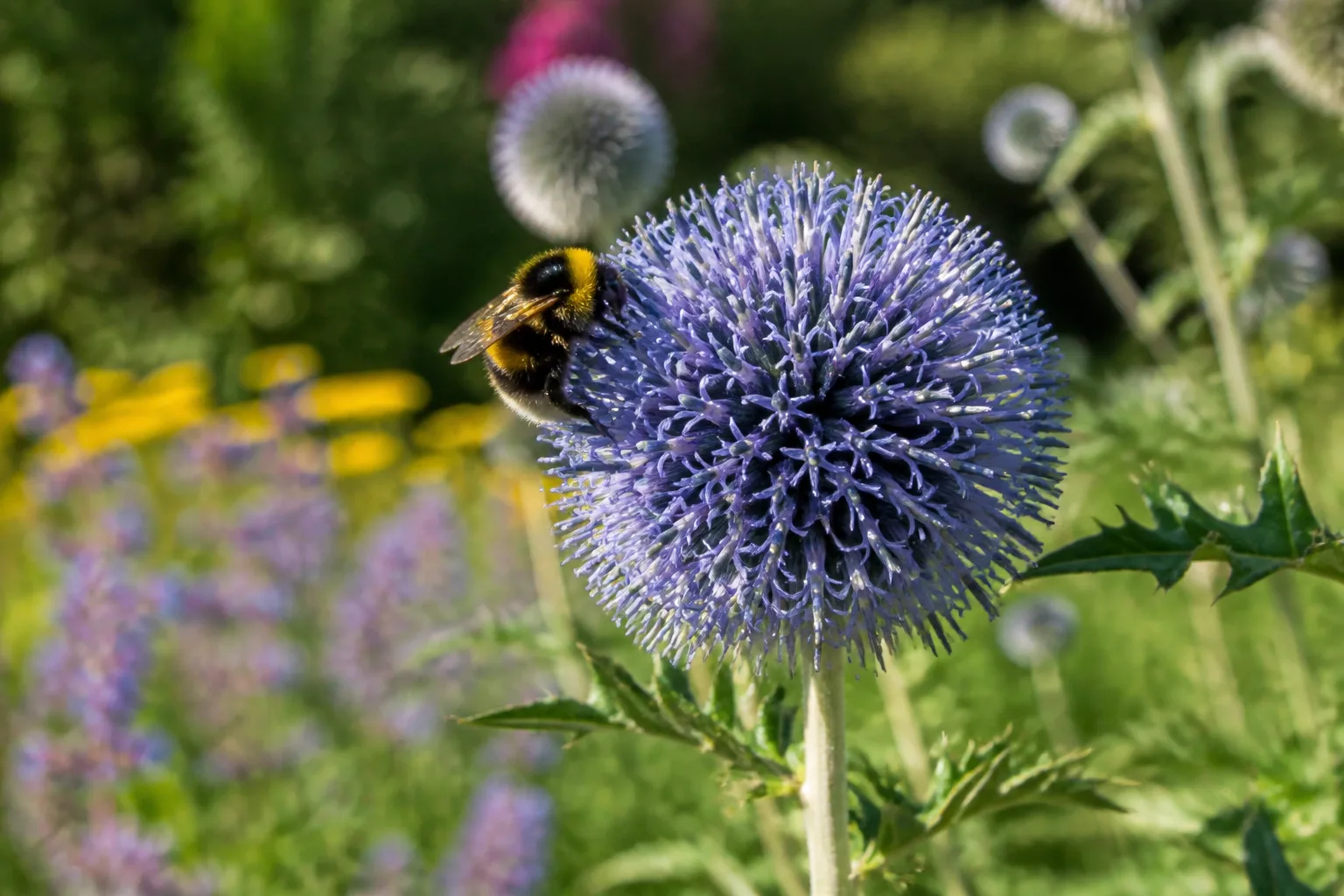
The orange-red flowers are useful where a garden needs late-summer nectar and strong color. NC State Extension lists butterflies, bees, hummingbirds, and songbirds among the wildlife associated with the plant, while the Wisconsin source notes that the flowers make good cut flowers and that the dry seed is easy to collect. (NC State Extension)
Combine Tithonia with plants that share its sun and heat preferences. Zinnias and coreopsis make a high-energy warm-color planting; purple flowers or dark foliage can calm the orange-red color. The Wisconsin Extension guide suggests using Tithonia at the back of a mixed border or as a seasonal screen, which is a better design role than putting its coarse lower foliage beside a narrow path.
For cut flowers, harvest stems when the flowers are newly open and the center is still fresh. Bring a bucket of water to the garden, strip foliage that would sit below the waterline, and recut stems before arranging. Because the stems can be fragile, handle them gently and cut more than you need rather than wrestling a single bent stem into shape.
Prevent the Few Problems It Usually Has
Mexican sunflower is generally low maintenance and has few serious insect or disease problems. Still, “few problems” does not mean “no problems.” North Carolina Cooperative Extension specifically calls out slugs and snails, especially when weather stays wet. Check under leaves and around the soil surface after damp nights, remove hiding places, and use only pest controls that are labeled for the crop and site.
The more common visual problem is structural: a plant leans, splits, or falls after wind or rain. Treat the cause in this order: check that it receives full sun, confirm it is not growing in rich overfed soil, add early support, and review spacing and wind exposure. Powdery mildew or other foliar issues are more likely when foliage stays crowded and damp, so improve airflow and water the soil rather than repeatedly wetting the leaves.
If a plant suddenly wilts while the ground is wet, do not assume it needs water. Inspect the stem base and root zone for damage, improve drainage, and remove badly collapsed growth. A plant that is merely thirsty usually recovers after a deep watering; a plant with a saturated root zone will continue to decline if you keep watering on schedule.
Fix Mexican Sunflowers That Are Not Blooming
Start with sunlight. If the plant gets fewer than six hours of direct sun, moving it may be the only reliable fix. Next check the calendar: Tithonia is a heat-loving annual, and a cool spring or cool summer can delay flowering even when the foliage looks healthy. A late direct sowing in a short season may simply run out of warm days before it can make a full display.
Then check the plant’s balance. Lush, floppy growth with no buds points toward excess fertility, weak light, or too much moisture; it does not call for more fertilizer. If the plant has buds but few open flowers, protect it from wind, keep watering steady during a prolonged dry spell, and deadhead older flowers so the plant does not put all its energy into seed.
Finally, check whether the variety fits your expectations. A compact cultivar will not produce the same wall of flowers as a full-size selection, and a plant grown in a container may stay smaller because root volume and water availability limit it. Correct the controllable factors—sun, warmth, drainage, and support—before changing multiple things at once.
Finish the Season and Manage Volunteers
In climates with frost, Mexican sunflower is a true seasonal annual: the plant will decline after cold weather, and it will not overwinter as a perennial root system. Pull or cut the spent plant after the first hard frost, then compost healthy, disease-free material. If you want birds to use the seed heads, leave a few until late winter and clean the bed afterward.
Volunteers are possible when mature seed drops. That can be a benefit in a pollinator garden, because a self-sown patch can fill a hot, empty corner without another purchase. It can also be a nuisance around paths or in beds where the height is wrong. Thin unwanted seedlings while they are small; move only young plants, because larger Tithonia develops a root system that resents disturbance.
To keep the display intentional, collect seed from selected heads and deadhead the rest. Label the envelope with the cultivar and year, and sow a small test batch the following spring rather than assuming every stored seed will be viable. Seed saving is an opportunity, not a guarantee of an exact clone or an exact number of flowers.
Conclusion
The reliable Mexican sunflower formula is simple: choose Tithonia rotundifolia, wait for warmth, give it at least six hours of direct sun, plant it in well-drained average or lean soil, and leave enough space for a 3- to 6-foot plant. Keep new seedlings moist, then let established plants dry a little between deep waterings. Fertilize sparingly, stake before wind arrives, and pinch early only if you want a bushier shape.
From there, choose your finish. Deadhead for a longer run of flowers, or leave a few heads to dry for seed and bird food. With the right placement and a realistic plan for its height, Mexican sunflower gives a hot, bright, pollinator-friendly display with very little drama.



