Is 10-10-10 Fertilizer Bad for Your Garden?
Is 10-10-10 fertilizer safe? Learn when a balanced N-P-K makes sense, why phosphorus can build up, and how to choose fertilizer from a soil test.
The Short Answer: Use It Only When the Soil and Crop Call for It
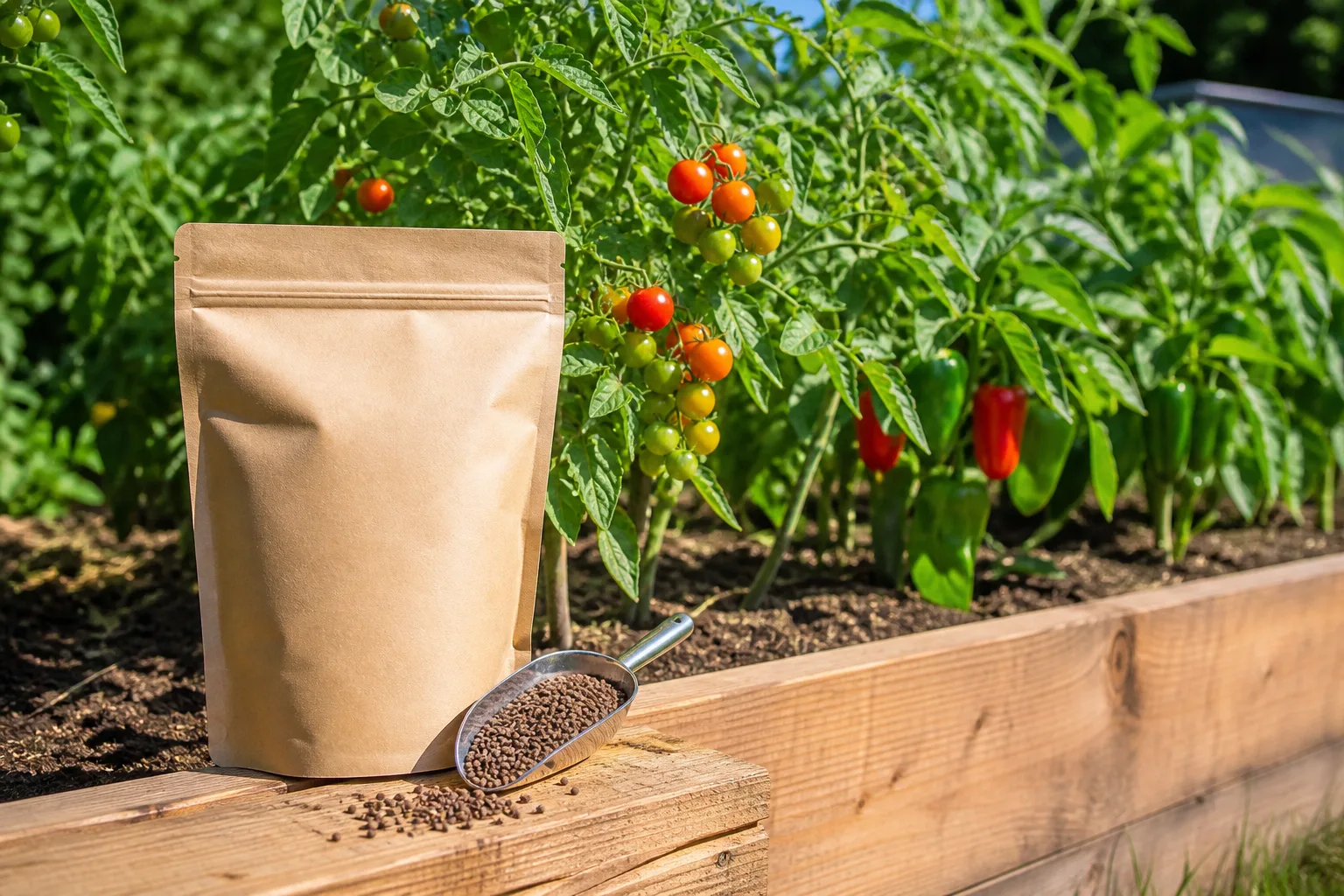
10-10-10 fertilizer is not automatically bad for a garden. It is a complete, balanced analysis that can be useful when a soil test and the crop’s needs point toward roughly equal additions of nitrogen, phosphorus, and potassium. The problem starts when “balanced” is mistaken for “right for everything.”
If you scatter it over every bed every spring without checking what is already there, you may add phosphorus and potassium that your plants cannot use. Nitrogen may still be the nutrient in shortest supply, while the other two accumulate. The result can be wasted money, salt stress, nutrient imbalance, and a harder-to-diagnose garden—not a healthier one.
The better rule is simple: test when you can, identify the actual gap, and feed that gap at the label rate and the right time. If you cannot test today, do not treat 10-10-10 as a harmless insurance policy. Pause, review what has already been added through compost or manure, and choose the smallest defensible intervention.
What 10-10-10 Actually Means
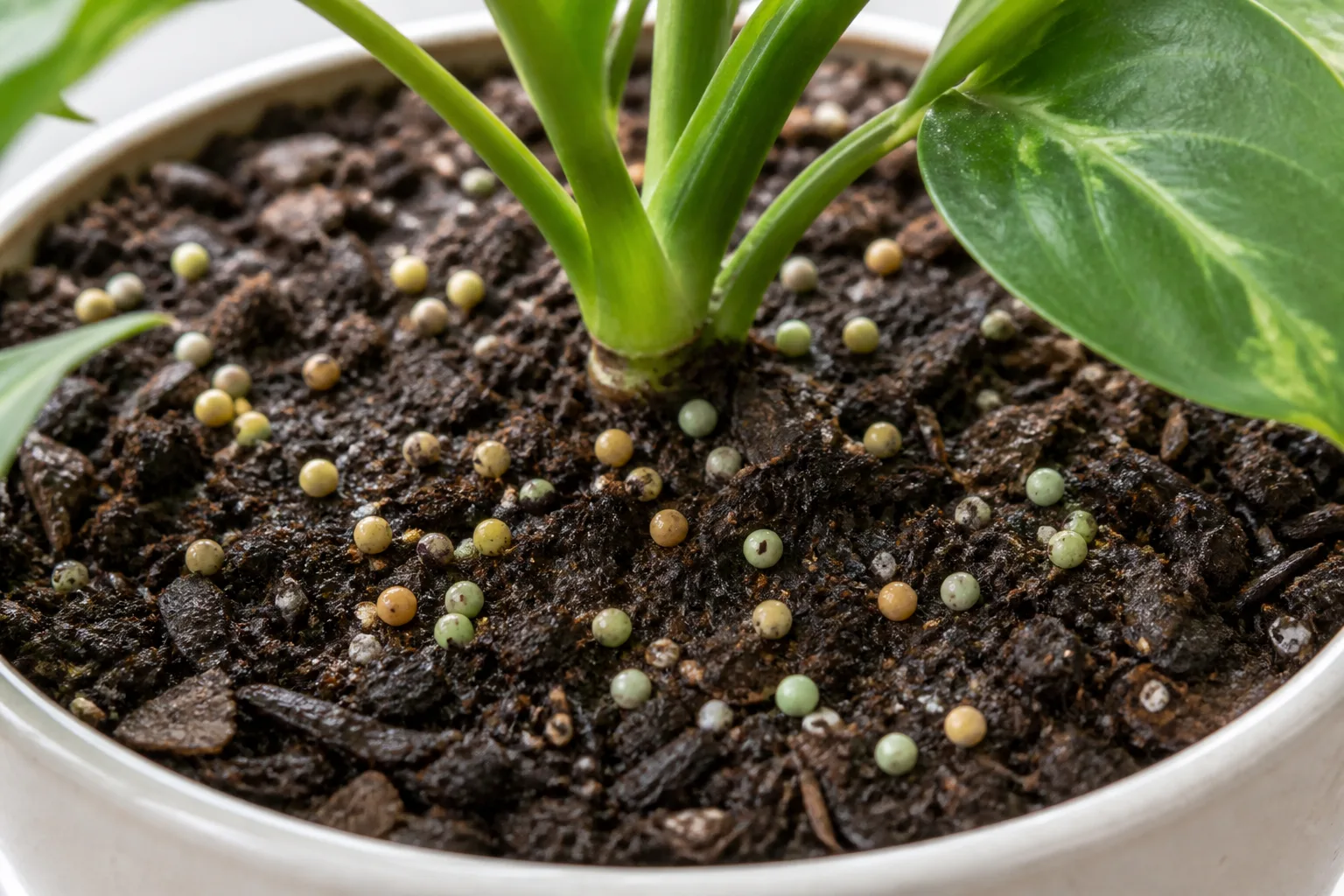
The three numbers on a fertilizer label are the product’s analysis. They describe the percentage by weight of nitrogen (N), available phosphate (reported as P₂O₅), and soluble potash (reported as K₂O), in that order. A 10-10-10 product contains 10 percent of each listed component by weight; a five-pound bag contains about 0.5 pound of each, before you account for any other ingredients or carrier material. (Better Homes & Gardens explains fertilizer analysis and the five-pound example)
That is what “balanced” means on the shelf: a 1:1:1 product ratio. It does not mean your soil has equal deficiencies, that every crop removes nutrients in equal amounts, or that each plant needs the same recipe. It also does not mean the product is a complete substitute for good light, correct watering, appropriate pH, or healthy soil structure.
Why the Numbers Are a Ratio, Not a Prescription
Nitrogen supports leafy growth and is often used heavily by actively growing plants. Phosphorus participates in energy transfer and root, flower, and seed development, while potassium helps regulate water movement and supports many plant processes. Those roles overlap, but the amounts a plant needs depend on species, growth stage, soil supply, pH, weather, and whether the crop is in the ground or in a container.
The bag also does not tell you how much fertilizer your particular bed needs. A product can have a perfect analysis for one situation and be the wrong tool for another. The correct question is not “Is 10-10-10 a good fertilizer?” It is “Which nutrient is limiting here, how much is needed, and how can I deliver it with the least waste?”
Why Equal Amounts Can Create Real Problems
The most common mistake is applying a balanced product repeatedly to a soil that is already adequate or high in phosphorus and potassium. Plants do not simply take every nutrient you add in the same proportion. Some nutrients are held by soil particles, some move with water, and some become less available when the soil’s chemistry changes.
The USDA’s nutrient-management guidance uses the 4R framework: the right source, rate, method, and timing, adjusted for the crop, soil, climate, and site. That is a useful home-garden standard too. A product is not “safe” in the abstract; risk depends on what is already in the bed, how much is applied, where it lands, and whether rain is about to move it away. (USDA Farmers.gov explains site-specific nutrient management and the 4Rs)
Phosphorus Buildup and Nutrient Lockout
Phosphorus is the reason to be especially cautious with routine 10-10-10 use. Excess phosphorus can accumulate after repeated fertilizer, manure, or compost applications. Texas A&M AgriLife Extension notes that high soil phosphorus can reduce a plant’s ability to take up micronutrients—particularly iron and zinc—even when a soil test shows those micronutrients are present. It can also increase the risk of nutrient loss to water. (Texas A&M AgriLife Extension on excess phosphorus and plants)
The pattern is easy to misread. A plant may look pale or grow poorly, so a gardener adds more “complete” fertilizer. If the real problem is high pH, root damage, poor drainage, or a phosphorus-related availability issue, more fertilizer adds noise instead of solving the cause. Test results and a close look at roots, moisture, light, and recent applications matter more than a yellow leaf by itself.
The concern is not that phosphorus is bad. Plants need it, and a genuinely phosphorus-deficient soil can respond to an appropriate application. The concern is adding phosphorus without evidence of need. A 2020 meta-analysis of phosphorus fertilization in grassland studies found that phosphorus-use efficiency declined at higher application rates and that low-phosphorus soils responded more strongly than soils with higher phosphorus status. That is agricultural research rather than a backyard rate recommendation, but it reinforces the central principle: match the input to the deficiency. (Peer-reviewed phosphorus-use study in Scientific Reports)
Use This Decision Rule Before You Buy a Bag
Run through these questions in order:
- What are you feeding? A mature tree, a leafy vegetable, a fruiting tomato, a flowering annual, and a container plant do not have identical demand.
- What is already in the soil? Count recent fertilizer, compost, manure, composted mulch, and pre-fertilized potting mix—not just the bag you are holding.
- Is there a test or a clear crop-specific recommendation? A lab report is stronger evidence than leaf color alone. If you have no test, avoid repeated high-phosphorus applications.
- Which nutrient is likely to limit growth? If nitrogen is the concern, an analysis with less phosphorus and potassium may fit better. If pH is wrong, correcting pH may matter more than adding nutrients.
- Can the plant use the nutrients now? Apply during active growth and avoid timing that places soluble fertilizer ahead of heavy rain or when a plant is dormant.
If the answers are “unknown” across the board, the right action is usually to test first, not to guess with 10-10-10. If you must feed a container plant that has exhausted a soilless mix, use a product labeled for that plant and follow its rate; containers are a different system from established garden soil.
Start With a Soil Test, Not a Fertilizer Ratio
A soil test can reveal pH, phosphorus, potassium, organic matter, and other nutrients, depending on the laboratory and package you choose. It can also give a fertilizer recommendation based on the crop or planting you identify. Fine Gardening’s practical soil-testing guidance emphasizes that a test can catch deficiencies before severe symptoms appear, but it cannot diagnose poor drainage, insufficient light, insects, or disease. (Fine Gardening on collecting and using soil tests)
Use a local cooperative extension laboratory when available because test methods and interpretation ranges are regional. Send separate samples for areas that differ meaningfully—such as a vegetable bed, lawn, shrub border, or a place filled with imported soil. A single mixed sample from unrelated spaces can average away the very problem you are trying to find.
How to Collect a Useful Sample
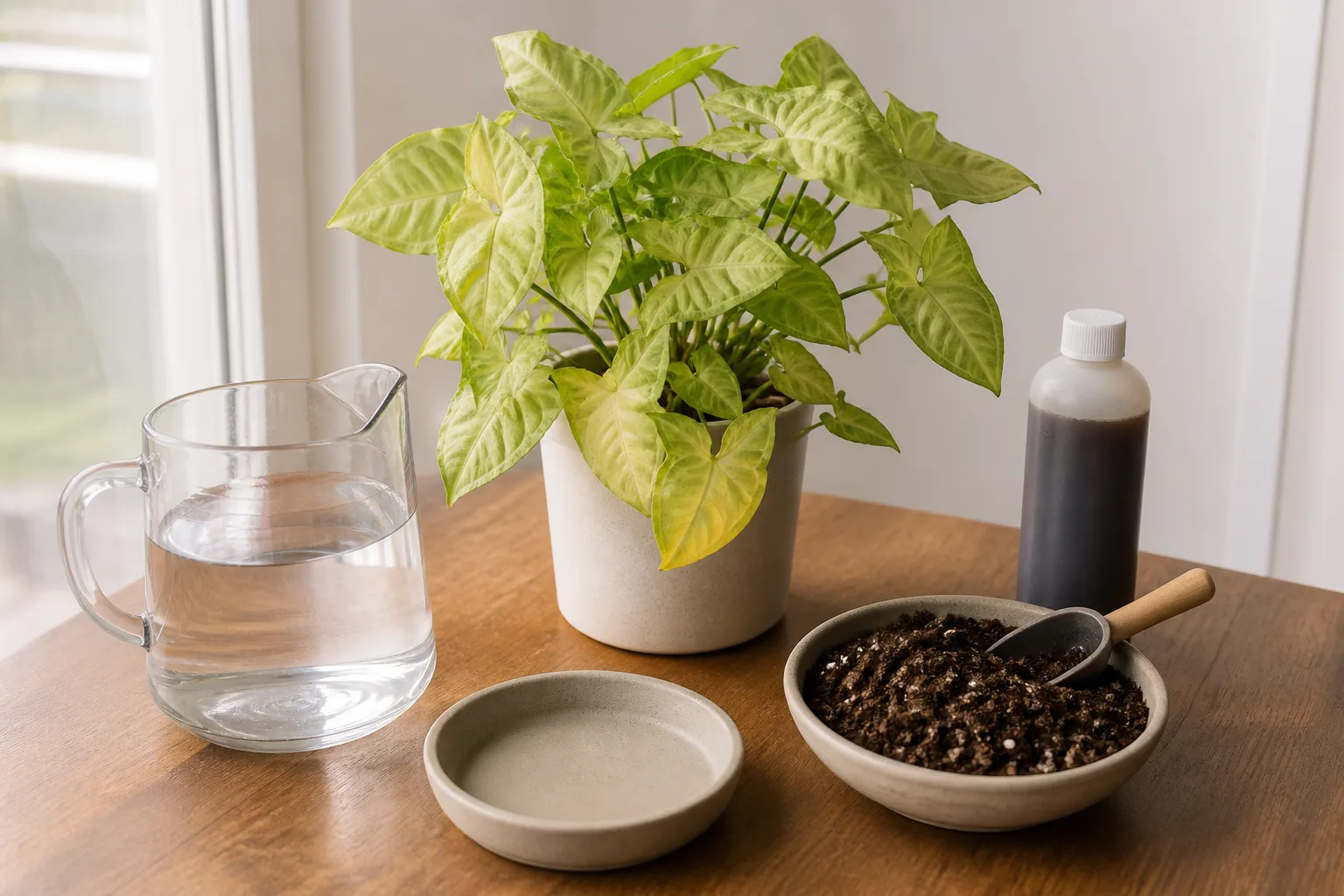
For an in-ground bed, remove surface debris and take multiple thin slices or cores from the root zone, then mix them in a clean plastic bucket. Avoid unusual spots such as a compost pile, fertilizer spill, drain outlet, or place where runoff collects. Fine Gardening recommends sampling to about six inches for many garden beds, mixing representative subsamples, air-drying the soil, and sending the lab the requested amount.
Do not add fertilizer immediately before collecting a sample. It can distort the result and make the recommendation less useful. Record what you have applied, what you plan to grow, and whether the area is irrigated or rain-fed; that context helps the lab interpret the numbers.
Nitrogen deserves special caution. Because it moves and changes quickly, many routine soil tests do not treat a single nitrogen reading as a dependable picture of what plants can access over the whole season. The soil’s organic matter, crop demand, weather, and recent management all affect nitrogen availability. A low-nitrogen recommendation may therefore rely on the crop and the rest of the report, not just one number.
Match the Fertilizer to the Result
When the report arrives, resist the urge to chase the largest number or buy the most “complete” product. Read the lab’s recommendation for the specific crop and area, then compare it with the guaranteed analysis on the bag.
- Low nitrogen with adequate phosphorus and potassium: Look for a nitrogen-focused or higher-N analysis with little or no added phosphorus, as long as the label and local recommendation support it. Slow-release nitrogen can reduce the chance of a sudden flush and may lower losses from leaching.
- Low phosphorus: Use a phosphorus-containing product only at the recommended rate and timing. Do not assume that a high-phosphorus “bloom booster” is better for every flowering plant.
- Low potassium: Choose a product that supplies potassium without automatically adding a large amount of phosphorus, if such a product fits the recommendation.
- Adequate or high phosphorus: Skip routine phosphorus-containing fertilizer until the soil report or a crop-specific recommendation says otherwise. Compost and manure may contain phosphorus too, so include them in the plan.
- pH outside the crop’s range: Address pH with the amendment and rate recommended by the lab. Nutrients can be present but unavailable when pH prevents normal uptake.
The USDA also recommends testing nutrient sources such as manure or organic by-products when their nutrient content affects the plan. That principle matters in a backyard bed: “organic” does not mean nutrient-free, and a material’s origin does not tell you its phosphorus content.
When 10-10-10 Is Reasonable
There are situations where 10-10-10 is a sensible choice. It may fit a new or depleted bed when a soil test indicates that nitrogen, phosphorus, and potassium are all needed in a similar proportion. It can also be useful when a local extension recommendation specifically calls for a balanced analysis and you can measure the rate accurately.
It is more defensible when you are making a single targeted application than when you are placing it on an automatic calendar. It is also easier to justify after you have accounted for compost, manure, starter fertilizer, and previous applications. The product is a tool—not a diagnosis.
For containers, 10-10-10 can be appropriate if the label is intended for container plants and the potting mix needs regular feeding. But container drainage, salt accumulation, small root volume, and watering frequency make overapplication easier. Use the product’s container directions, never guess by converting an in-ground rate, and periodically monitor for salt crusts or leaf-edge damage.
Better Choices for Common Garden Situations
For established trees and shrubs: Start with the plant’s growth, soil test, and local recommendation. Established woody plants often need less routine feeding than gardeners assume, and a nitrogen-forward product may fit better than 10-10-10 when nitrogen is actually limiting. Do not fertilize a stressed tree as a substitute for diagnosing compacted soil, drought, root injury, or pest damage.
For leafy vegetables: A nitrogen-leaning product may be more useful when the soil test supports it, but excess nitrogen can produce soft, overly leafy growth and delay fruiting in crops that eventually flower. Side-dressing or split applications can be more precise than one large broadcast application.
For fruiting vegetables: Keep the crop’s stage in mind. A tomato or pepper may need support during active growth, but increasing fertilizer simply because flowering has started is not a reliable way to increase fruit. Follow the crop’s recommendation and pay attention to water, sunlight, root health, and pollination.
For flowering plants: Flower color is not proof that a plant needs extra phosphorus. Many flowering plants need balanced nutrition overall, and a bloom booster can be counterproductive if phosphorus is already high. Test, then match the product to the actual result.
For a lawn or new planting: Use a product and rate designed for that use, because the recommended nutrient amounts and timing can differ from a vegetable bed. Keep fertilizer off pavement and out of drains, and do not apply ahead of a storm.
Compost and Fertilizer Do Different Jobs
Compost is not a magic replacement for every fertilizer, but it is also not just a weak bagged plant food. Compost primarily builds the soil system by adding organic matter and supporting structure, water movement, and biological activity. Fertilizer is more concentrated and is used to supply particular nutrients in a measurable analysis. Epic Gardening’s comparison makes the same practical distinction: compost feeds the soil environment, while fertilizer is a more direct nutrient input. (Epic Gardening on compost versus fertilizer)
That means the two can complement each other, but they can also stack nutrients. If your bed receives annual compost, aged manure, poultry-based products, or composted municipal material, that history belongs in the fertilizer decision. Texas A&M AgriLife Extension specifically warns that high-phosphorus composts and manures can contribute to phosphorus buildup.
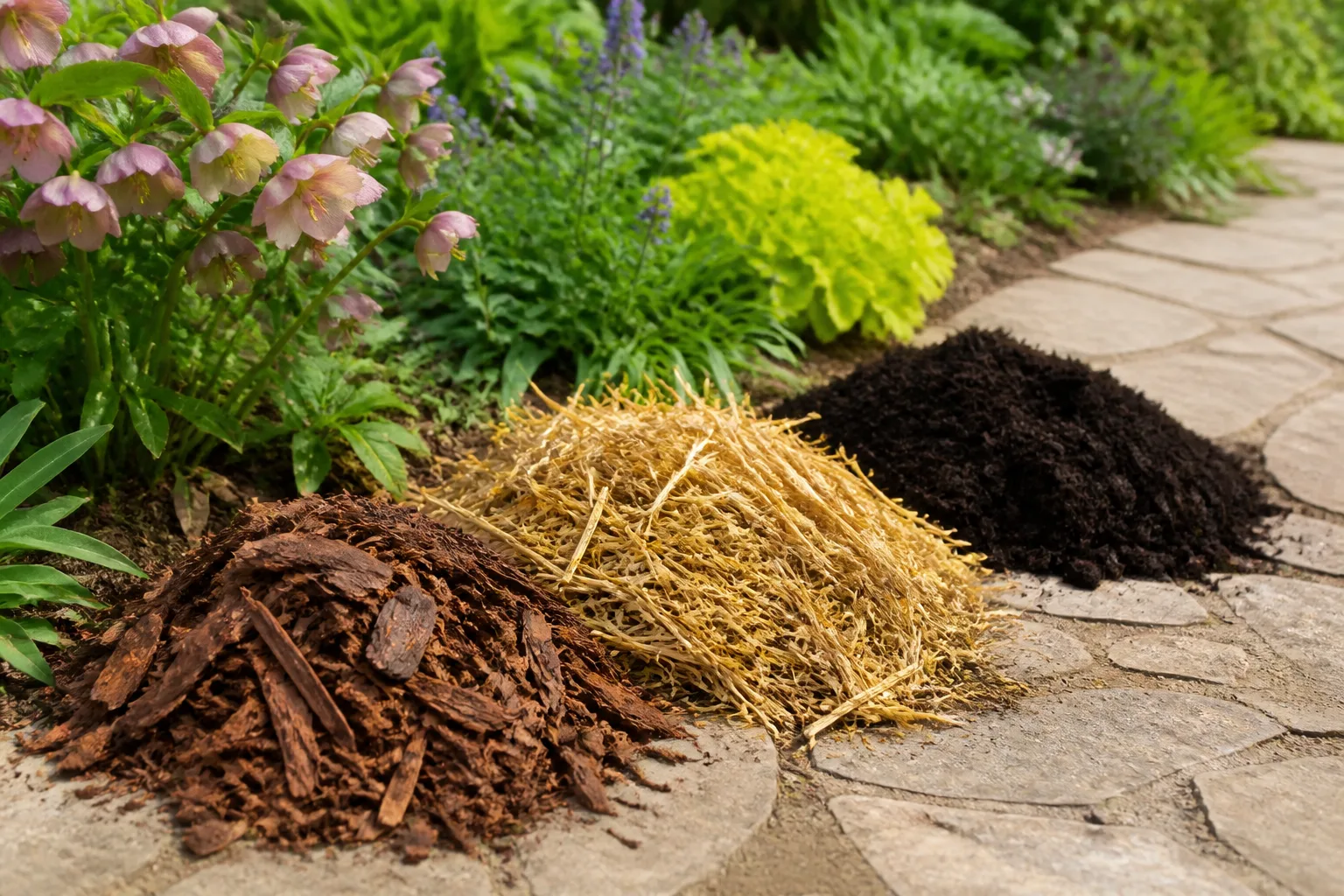
Use finished compost to improve soil organic matter or as a modest top-dressing when that fits your bed and soil report. Do not bury thick layers against plant stems, and do not assume repeated heavy applications are harmless. If you need a nutrient correction, a measured fertilizer may be more precise; if you need better structure, moisture behavior, and biological activity, compost may be the more relevant tool.
A Low-Risk Application Sequence
When fertilizer is justified, the application process matters as much as the analysis:
- Confirm the target. Identify the bed, crop, soil-test recommendation, and nutrient amount before opening the bag.
- Read the entire label. Use the rate for your crop and method. Do not substitute a lawn rate for a vegetable rate or a container rate for an in-ground bed.
- Measure rather than scatter by hand. Uneven piles can create localized salt injury and uneven growth.
- Keep granules away from stems and foliage. Place them where roots can access them without concentrating fertilizer at the crown.
- Apply when plants are actively growing and uptake is likely. Avoid spreading just before a heavy rain, when runoff can carry nutrients away.
- Water as the label directs. Watering can move granular nutrients into the root zone, but it cannot make an excessive application safe. Do not create runoff.
- Record the product, rate, date, and area. A short garden log prevents accidental double-feeding later.
USDA guidance describes nutrient stewardship as the right source, rate, method, and timing, with assessment of site-specific conditions. For a home gardener, a notebook and a soil report are a practical version of that same system.
Mistakes That Make Fertilizer Backfire
Using leaf color as a fertilizer prescription: Yellowing can result from watering problems, root damage, pests, disease, pH, or light. Treat a visual symptom as a reason to investigate, not as permission to pour on a balanced product.
Ignoring slow-release nutrients already in the soil: A garden may be receiving fertilizer through a coated product, compost, manure, or a pre-fertilized mix. Add the sources together before deciding that the plant needs more.
Applying before a storm: Nutrients sitting on the surface can move with runoff. The timing rule is not just about plant uptake; it is also about keeping nutrients out of drains, streams, and ponds.
Fertilizing drought-stressed or waterlogged plants: A plant with damaged roots cannot use fertilizer normally. Correct the moisture problem and check the roots or soil before feeding.
Assuming organic means gentle: Organic fertilizers can still burn roots, contribute salts, and add phosphorus or nitrogen. The source changes how the nutrients are released; it does not remove the need to measure.
Fertilizing dormant plants: If a plant is not actively growing, it has less demand for nutrients. In frost-prone regions, pushing tender new growth late in the season can leave it more vulnerable to cold damage.
If You Already Overapplied
Do not add another product to “balance” the mistake. First stop all fertilizer and nutrient-rich amendments in the affected area, remove any visible granules or pellets that are still on the surface, and note the product, approximate amount, date, soil type, weather, and plants involved.
Next, check the label and contact a local extension office if the application was large, a concentrated liquid was spilled, a waterway is nearby, or plants are showing rapid damage. The right recovery action depends on whether the material is on a container plant, a raised bed, compacted soil, or a well-drained in-ground area.
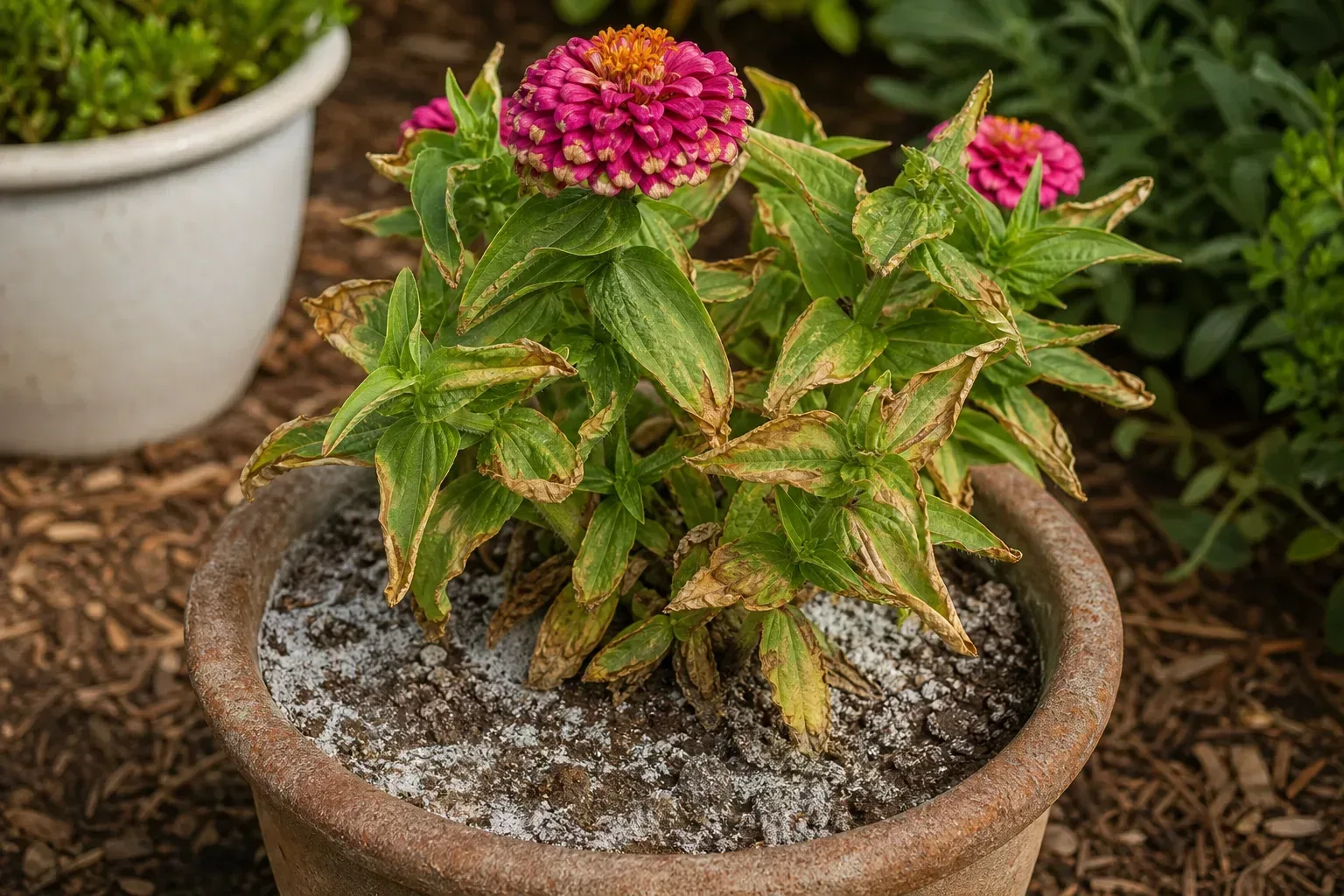
For a small, recent overapplication on a well-drained container, thorough watering that drains freely may help move soluble salts out, but only if the pot can drain and the plant is not already waterlogged. In an outdoor bed, indiscriminate flooding can move nutrients into groundwater or surface water, so do not treat “flush it with a hose” as a universal fix. Remove the source, prevent runoff, allow the area to dry appropriately, and use a soil test or extension advice to decide what comes next.
Brown leaf margins, wilting, a white crust, or sudden decline can be consistent with fertilizer or salt injury, but they are not proof. Damaged leaves will not become new again; judge recovery by the condition of new growth, root health, and the soil result over time.
When to Retest and Reassess
Retest when your local laboratory recommends it, after a major soil amendment or nutrient correction, or when the garden’s performance and the soil report no longer agree. Keep the same sampling area and method when possible so results are comparable. A new sample should represent the bed—not a fertilizer pile, a compost pocket, or an unusually wet corner.
Between tests, keep a simple record of applications and crop performance. Note whether growth improved, whether symptoms appeared on new or old leaves, and whether water drained normally. That record turns the next soil report into a management tool instead of a one-time number.
If a plant still struggles after the nutrient issue is corrected, broaden the diagnosis. Check soil moisture at root depth, drainage, light, root damage, pests, disease, and pH. The most effective fertilizer decision is sometimes deciding not to fertilize until the real constraint is clear.
Conclusion: Feed the Gap, Not the Habit
10-10-10 fertilizer has a place in the garden, but “balanced” is not the same as “universally appropriate.” Equal percentages can oversupply phosphorus or potassium while leaving the plant’s actual limiting factor—often nitrogen, pH, water, or root health—unaddressed.
Use a soil test and a crop-specific recommendation when available. Account for compost and manure, follow the 4Rs, apply only what the label and evidence support, and keep records. Your garden does not need the most complete-looking bag; it needs the right nutrient, in the right amount, at the right time.



