How to Prevent Crabgrass Naturally in Your Lawn
Stop crabgrass before summer with corn gluten timing, soil temperature cues, and mowing height. Learn what works naturally—and what does not once weeds sprout.
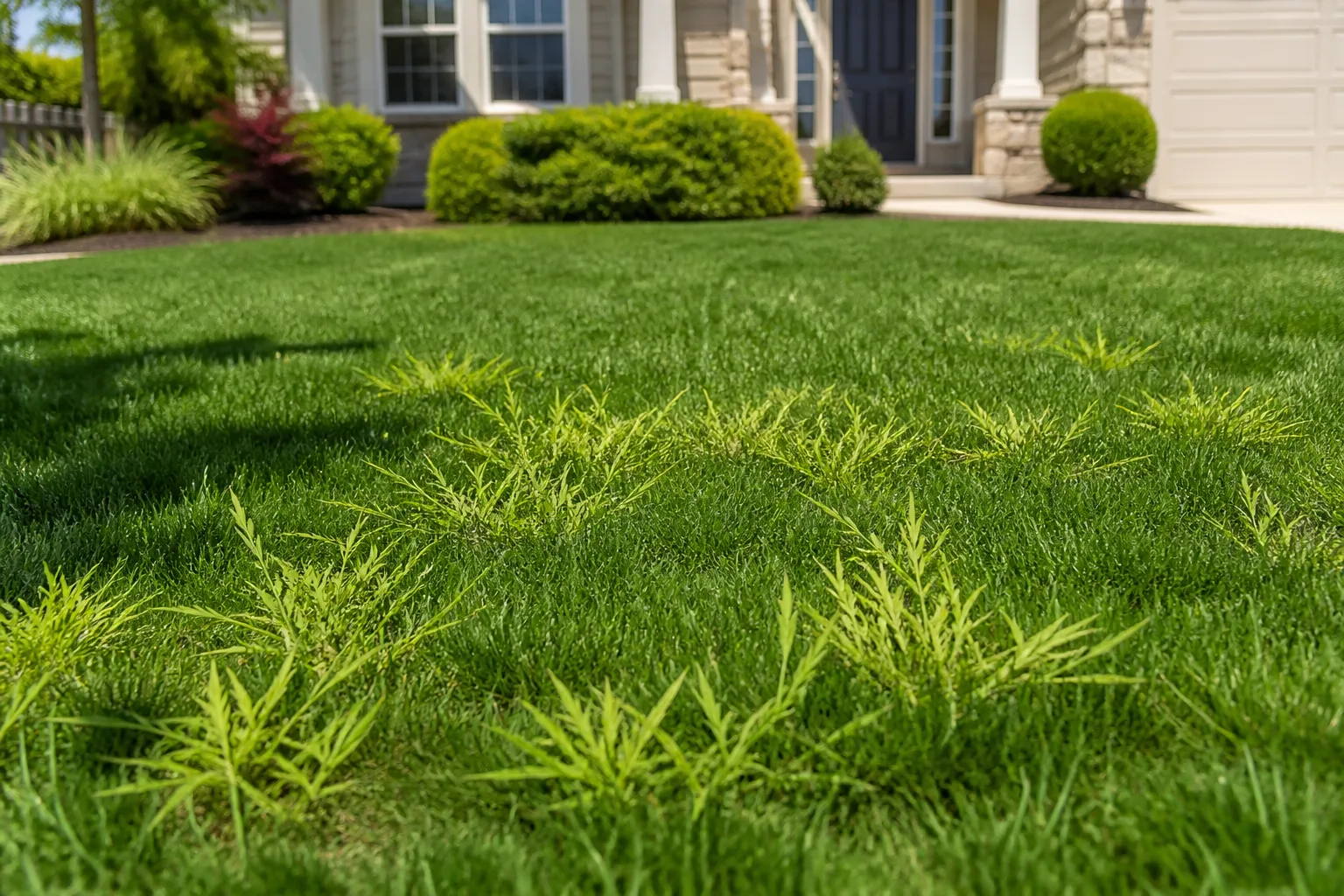
Crabgrass is an annual grass that wins in summer heat—not because it is magical, but because your cool-season lawn is often stressed, short, and thin when crabgrass wants to germinate. Natural prevention works when you treat the seed bank in spring, then keep turf dense enough that new seeds never get light or space. If you are reading this in July and your lawn already has pale, spreading clumps, you can still limit damage—but most of this year’s prevention window has closed. The plan below separates what to do before germination from what is realistic after plants are growing.
Start Here: Natural Prevention Beats Summer Rescue
Organic crabgrass control is really two jobs: block germination in spring and outcompete survivors with thick, healthy turf. Corn gluten meal is the only widely available natural product with pre-emergent activity, but it is not a substitute for mowing height, fall fertilization, and overseeding thin areas. Think of CGM as one layer in a system—not a single bag you spread once and forget.
If your goal is a lawn without synthetic herbicides, your highest-return moves are, in order: monitor soil temperature and apply CGM at the right moment, mow cool-season grass at 3 inches or taller, water deeply rather than daily sprinkles, and schedule core aeration plus overseeding in early fall when crabgrass is dying back. Summer hand-pulling and vinegar spot sprays are cleanup tools. They rarely fix a heavy infestation in one season because each mature plant may have already replenished the soil seed bank.
Why the Calendar on Your Phone Is the Wrong Gauge
“Apply preventer the first week of March” fails as often as it succeeds. Crabgrass germination tracks soil heat, not holidays. In a late-spring year, March application goes on too early and loses potency before seeds sprout. In an early warm spell, waiting for a calendar date means seeds are already emerging. Soil temperature at two-inch depth is the reliable trigger: crabgrass seeds begin germinating when that layer holds 55–60°F for several consecutive days, which is typically a few weeks after forsythia blooms in many northern lawns but can swing by two to four weeks year to year.
Free regional soil temperature maps—such as those from turf-industry monitoring tools or state agriculture departments—give a workable starting point without buying equipment. For precision on a single yard, push a soil thermometer 2 inches deep in a sunny lawn area each morning for a week. When readings cluster near 55°F, you are in the application window.
What Crabgrass Is—and Why It Thrives When Your Lawn Struggles
Crabgrass belongs to the genus Digitaria—warm-season annual grasses that germinate from seed each spring, spread low across the soil, set enormous seed crops by late summer, then die at first hard frost. They are not perennial weeds you can dig once and be done. They are a recurring cycle tied to a seed bank in the top inch of soil.
Purdue Turfgrass Science notes that crabgrass becomes especially problematic when turf is mowed too low, underfertilized, thinned by disease or heat stress, or growing on compacted soil next to sidewalks and driveways (Purdue crabgrass overview). That is why crabgrass often appears first along edges, in dog paths, and in spots where last year’s annual weeds died and left bare soil. It is a symptom of weak competition as much as a cause of it.
Smooth Crabgrass vs Large Crabgrass
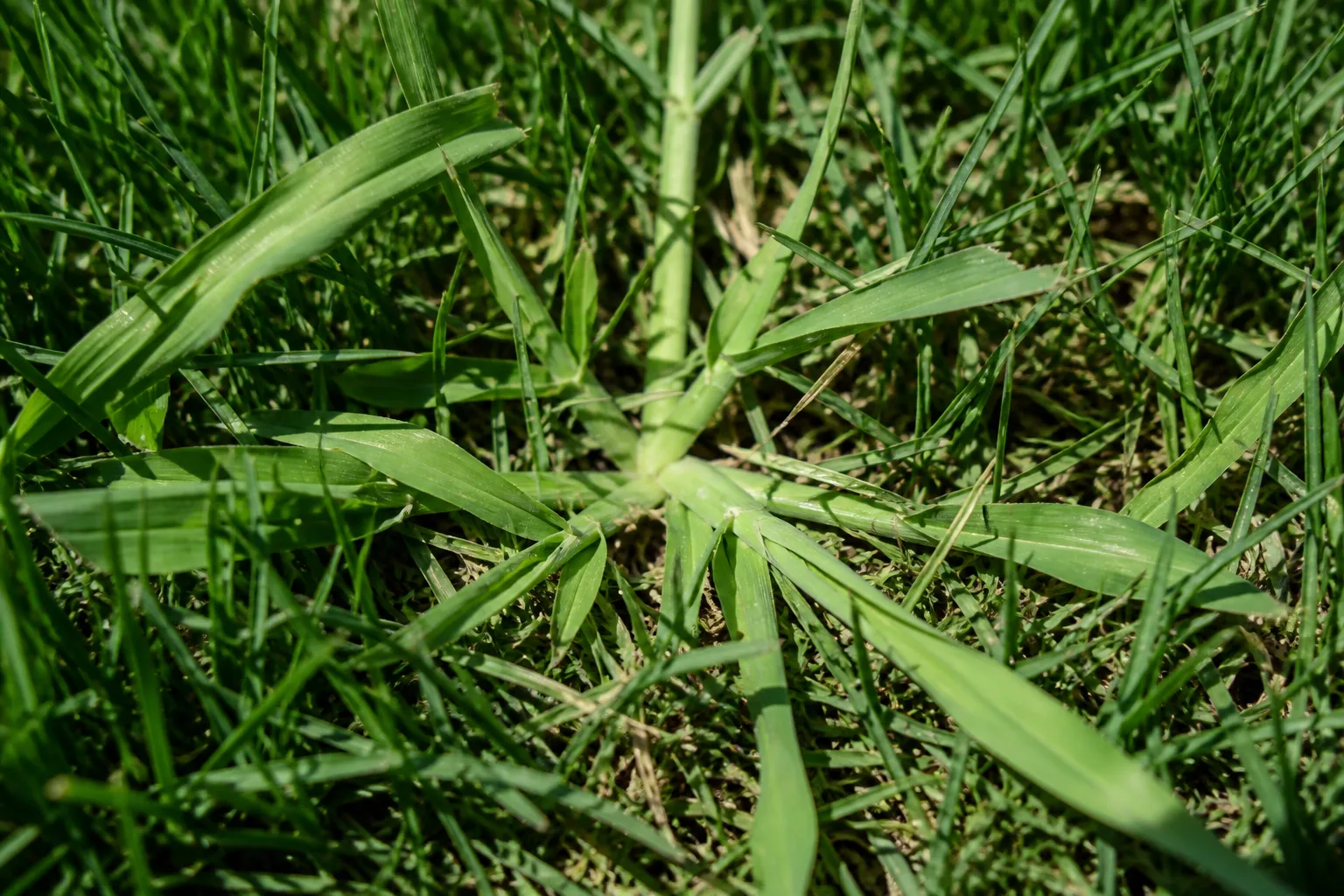
The two species most homeowners see are large or hairy crabgrass (Digitaria sanguinalis) and smooth crabgrass (Digitaria ischaemum). Large crabgrass has noticeably hairy stems and leaves and can grow quite tall if unmowed. Smooth crabgrass is usually smaller, with mostly hairless leaves except for a few hairs near the collar by the membranous ligule. Both form low, radiating clumps that look lighter green than most cool-season turf in midsummer and produce finger-like seed heads by late summer.
Identification matters because both respond to the same prevention tactics, but large crabgrass is often the more aggressive spreader in thin, sunny lawns. If you are unsure, look for the pale yellow-green color, wide flat blades, and crab-like stems spreading from a central point—then confirm with seed heads in August.
The Seed Bank Hiding in Your Soil
A single crabgrass plant can produce tens of thousands to roughly 150,000 seeds, according to university turf extension summaries including UMass Extension’s crabgrass biology work (UMass Biology and Management of Crabgrass). Those seeds do not all sprout the next spring. Many remain dormant in the soil for several years, which is why one good season rarely ends the problem—and why skipping prevention after a clean year is a common mistake.
Birds eat crabgrass seed and deposit it elsewhere. Wind, mowers, and neighborhood lawns that go untreated all feed your seed bank. Natural control is a multi-year commitment to reducing incoming seed and blocking germination, not a one-time organic spray.
Hit the Germination Window—or Miss It for the Year
Pre-emergent products—including corn gluten meal—work only on seeds as they begin to germinate. They do not kill dormant seeds already in soil, and they do not kill established crabgrass plants. Once you see spreading clumps, pre-emergent timing for this generation has passed. Your focus shifts to limiting seed production and rebuilding turf for next spring.
The practical rule: apply natural pre-emergent when soil at 2-inch depth is approaching 55°F—not after sustained 60°F readings and not after visible crabgrass seedlings appear.
Soil Temperature at Two-Inch Depth
Measure in a representative sunny area, not under shade trees or against a south-facing foundation wall that warms early. Take readings at the same time each morning. You are watching for a trend, not a single warm afternoon. When soil holds 55–60°F for two to three consecutive days, crabgrass germination is underway or imminent. That is your application window.
If you miss it by two weeks, CGM will not rescue the season. Shift to cultural controls and spot removal, and mark your calendar for fall overseeding and next spring’s earlier monitoring.
Forsythia Bloom and Regional Timing Cues
Forsythia’s yellow bloom is a useful phenological cue, not a law of nature: apply pre-emergent around full forsythia bloom to petal drop in many Midwest and Northeast lawns. Regional ballparks for soil-temperature-based timing:
| Region / climate band | Typical CGM application window |
|---|---|
| Upper Midwest, New England (zones 4–5) | Mid-April to early May |
| Mid-Atlantic, lower Midwest (zones 6–7) | Late March to mid-April |
| Upper South, transition zone (zone 7–8) | Mid-March to early April |
| Warm South (zone 8+) | Often February–March; warm-season lawns may use different weed profiles |
Always confirm with soil temperature—not the table alone.
Corn Gluten Meal: Your Best Natural Pre-Emergent Option
Corn gluten meal (CGM) is a byproduct of corn wet-milling, sold as a granular soil amendment and OMRI-listed organic fertilizer. It also inhibits root formation in germinating seedlings. When a crabgrass seed sprouts and contacts treated soil, the seedling fails to establish a root system and dies—if timing, rate, and moisture conditions align.
CGM is the closest thing to a natural crabgrass preventer with a credible research history. It is also the most misunderstood product on garden-center shelves because packaging often implies broad weed killing rather than seedling suppression at germination.
What the Research Actually Shows
University of Maryland Extension summarizes that corn gluten research shows mixed field results for crabgrass control—effective in some trials and weak in others, depending on weather, rate, and follow-up applications (UMD corn gluten and crabgrass). Oregon State University Extension notes CGM’s mode of action is drying and inhibiting roots of young seedlings, and that a dry period after application is important for efficacy (OSU corn gluten meal).
Translation for homeowners: CGM is not as reliable as synthetic pre-emergents (which often deliver 90%+ control when timed correctly), but it can meaningfully reduce crabgrass pressure when used at full label rates for two to three consecutive springs. Expect partial control the first year, better results as you combine it with thick turf.
Buy corn gluten meal labeled for turf weed prevention, not generic feed-grade meal with unknown protein content. Protein level affects activity.
Application Rates, Watering Rules, and Repeat Cycles
Follow your product label first. Research and label rates commonly land near 20 pounds per 1,000 square feet for pre-emergent use—far heavier than a light fertilizer dusting. Spread with a broadcast spreader on a dry lawn, then water in with roughly ¼–½ inch of irrigation (about 15–30 minutes with a typical sprinkler) so the meal reaches the soil surface where seeds germinate.
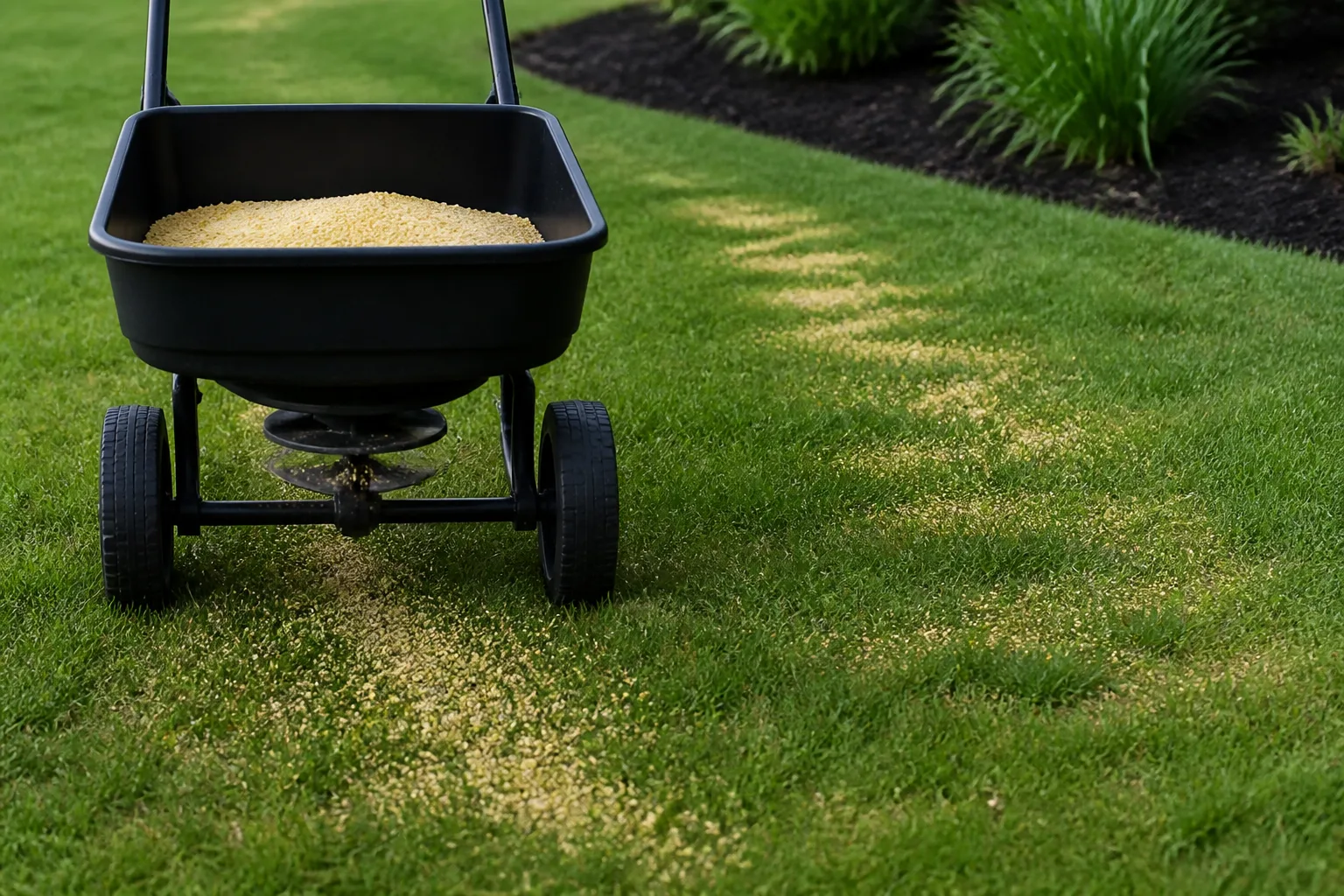
Critical details most guides skip:
- Apply before germination, when soil is moving toward 55°F at 2-inch depth.
- Do not apply immediately before heavy rain that can wash product away unevenly.
- Allow a brief dry window after watering in—OSU and other extension sources stress that seedling desiccation is part of the mechanism.
- Plan a second application 4–6 weeks later if your label allows; many organic programs use spring plus late-spring passes.
- Do not core aerate or aggressive dethatch after application—you break the shallow barrier CGM creates.
- Do not overseed lawn grass for 8–12 weeks after CGM; it inhibits desirable grass seed too.
CGM also delivers slow-release nitrogen (often around 9–10% N), which can help turf—but avoid stacking heavy summer nitrogen that pushes lush crabgrass growth in thin lawns. Fall is the better season for rebuilding cool-season density.
Cultural Controls That Outcompete Crabgrass
Every extension turf guide returns to the same principle: dense, competitive grass is the best weed preventer. CGM blocks some seedlings; thick turf blocks light, space, and moisture at the soil surface. Purdue emphasizes proper mowing height and fertilization timing—primarily fall and spring, with limited summer nitrogen on cool-season lawns—as the foundation of crabgrass suppression (Purdue crabgrass cultural practices).
Mow High and Leave the Clippings
Set your mower to 3 inches minimum for Kentucky bluegrass and tall fescue mixes; 3.5 inches is even better in peak summer heat. Short mowing lets sunlight hit soil, warms the seedbed, and gives crabgrass seedlings the light they crave. Tall turf shades soil, keeps temperatures slightly cooler at the surface, and reduces germination.
Mow often enough that you remove no more than one-third of blade height per cut. If crabgrass is already present, bag clippings when seed heads are forming (late July onward) to avoid spreading seed. Earlier in the season, returning clippings recycles nitrogen. For mower setup and seasonal height discipline, see our guide on edging and mowing order and summer mowing decisions.

Water Deeply and Skip Summer Nitrogen Surges
Crabgrass tolerates hot, dry, compacted conditions better than stressed cool-season turf. Infrequent deep watering—targeting 1–1.5 inches per week including rainfall, delivered in one or two sessions—encourages deeper turf roots and healthier competition. Daily light sprinkling keeps seeds and shallow crabgrass roots happy without strengthening your lawn.
Hold off on aggressive summer fertilization that flushes weak turf and feeds crabgrass in thin areas. Purdue’s recovery guidance for thin turf focuses nitrogen in September and November for cool-season grasses rather than July applications. If you are rebuilding a struggling lawn, pair fall feeding with the overseeding plan below rather than chasing color in August with quick-release nitrogen.
Repair Thin Turf in Fall—Not During Crabgrass Season
Bare soil is an invitation. Crabgrass exploits last year’s dead patches, winter annual weed holes, and compaction along foot traffic lines. Early fall—when soil is still warm but crabgrass is dying—is the best window to thicken cool-season turf.
Core aerate compacted areas in early to mid-September to improve air and water movement. Overseed thin zones with a quality sun or shade mix matched to your site; tall fescue and Kentucky bluegrass establish more competitive summer turf than perennial ryegrass alone in crabgrass-prone yards, per Purdue renovation notes. Keep seed moist until establishment, and avoid pre-emergent products the same spring you need new grass to germinate.
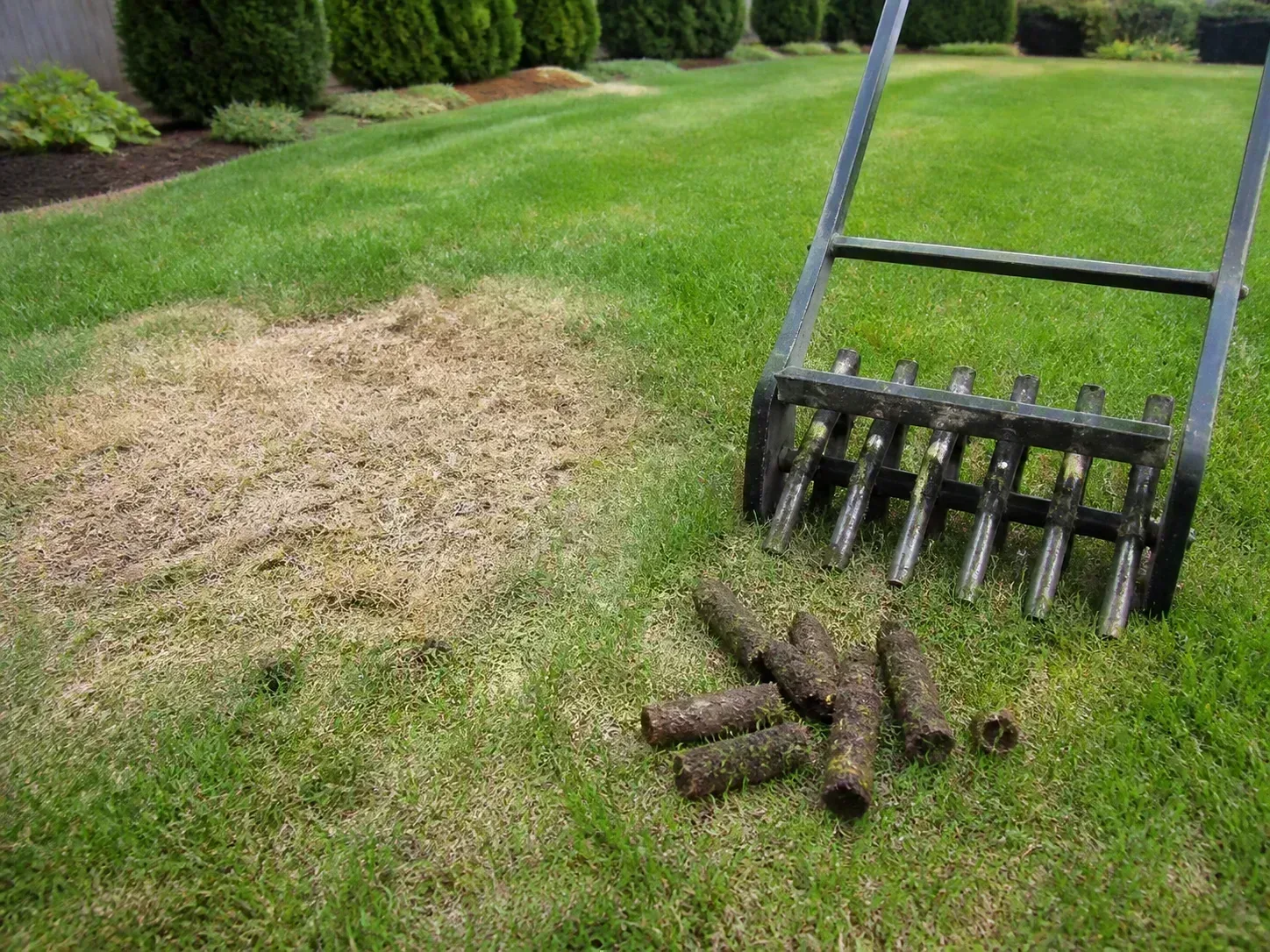
Aeration, Overseeding, and the Pre-Emergent Conflict
You cannot have it both ways in spring: corn gluten and grass seed are incompatible in the same season. If you overseed in fall, skip spring CGM the following year only if your new grass is still immature—generally, established fall seedings can take spring CGM the next year. If you must spring-seed bare patches, you cannot use CGM there; seed bare areas in late summer to early fall instead and use CGM the following spring.
This scheduling conflict is the number-one reason organic lawns stay thin: homeowners seed in spring, wonder why crabgrass exploded, and never connect the blocked germination of all seeds. Build a calendar: fall repair, spring prevent.
For brown or thin patches that might be disease or watering issues rather than weeds alone, troubleshoot with brown patch and lawn stress guidance and lawn watering in summer before you blame crabgrass alone.
When Crabgrass Has Already Sprouted This Summer
If clumps are visible now, accept a hard truth: natural pre-emergents will not kill them. Your goals are to prevent seed set this year and set up fall recovery so next spring’s CGM and cultural program face a smaller seed bank.
Hand-pulling works on young plants after rain when soil is soft. Use a dandelion fork or hand weeder to lift the shallow root system. Pull before seed heads form—typically before those finger-like spikes mature in late summer. Once seeds are present, pulling can scatter them; cut plants at soil level and bag debris instead.
Horticultural vinegar (around 20% acetic acid) burns foliage on contact but does not reliably kill crabgrass roots, and it will kill surrounding turf. It is a poor lawn-wide treatment. For non-selective spot ideas on hardscape only, see DIY vinegar weed spray limits—but keep vinegar off mixed turf unless you are willing to kill a patch and reseed in fall.
Do not scalp the lawn trying to mow away crabgrass; you worsen next year’s problem. Maintain tall mowing height, water correctly, and plan fall overseeding. Crabgrass will die at frost; your job is ensuring it does not deposit another 150,000 seeds per plant on the way out.
If you are fighting a different grassy invader with triangular stems that grow faster than the lawn, you may be dealing with nutsedge—not crabgrass. See how to kill nutgrass for identification and control; the products and timing differ.
Your Year-Round Natural Crabgrass Prevention Calendar
| Season | Priority actions |
|---|---|
| Late winter | Service mower; set height to 3+ inches; note thin areas to overseed in fall |
| Early spring | Monitor 2-inch soil temps; apply CGM as soil approaches 55°F; second pass if label allows |
| Late spring | Spot-pull any escapes while young; avoid spring overseeding if CGM was applied |
| Summer | Mow high; deep infrequent water; hand-pull or cut seeding plants before they mature |
| Early fall | Core aerate compacted zones; overseed thin turf; soil test if needed |
| Late fall | Fall nitrogen per soil test; remove leaves that smother new seedlings |
| Winter | Plan next spring’s CGM purchase; resolve mower/scalping issues before March soil warming |
Stick with the calendar for at least two to three years. Seed banks and neighbor pressure do not disappear after one corn gluten application.
Conclusion
Preventing crabgrass naturally is a timing game in spring and a competition game all year. Corn gluten meal applied as soil reaches 55–60°F at two-inch depth gives you the best organic shot at blocking germination, but university research is clear that results vary—so pair CGM with 3-inch mowing, deep watering, and fall aeration plus overseeding. Once crabgrass is spreading in summer, you are managing seed production and rebuilding turf for next year, not erasing the problem with a single natural spray. Start soil monitoring before forsythia fades, treat prevention as a multi-year seed-bank project, and your lawn will crowd out crabgrass long before it takes over another August.



