Poinsettia Replacement: Grow Christmas Cactus
Tired of tossing poinsettias every January? Christmas cactus delivers holiday color, easier care, pet-safe blooms, and decades of rebloom—here's how to switch.
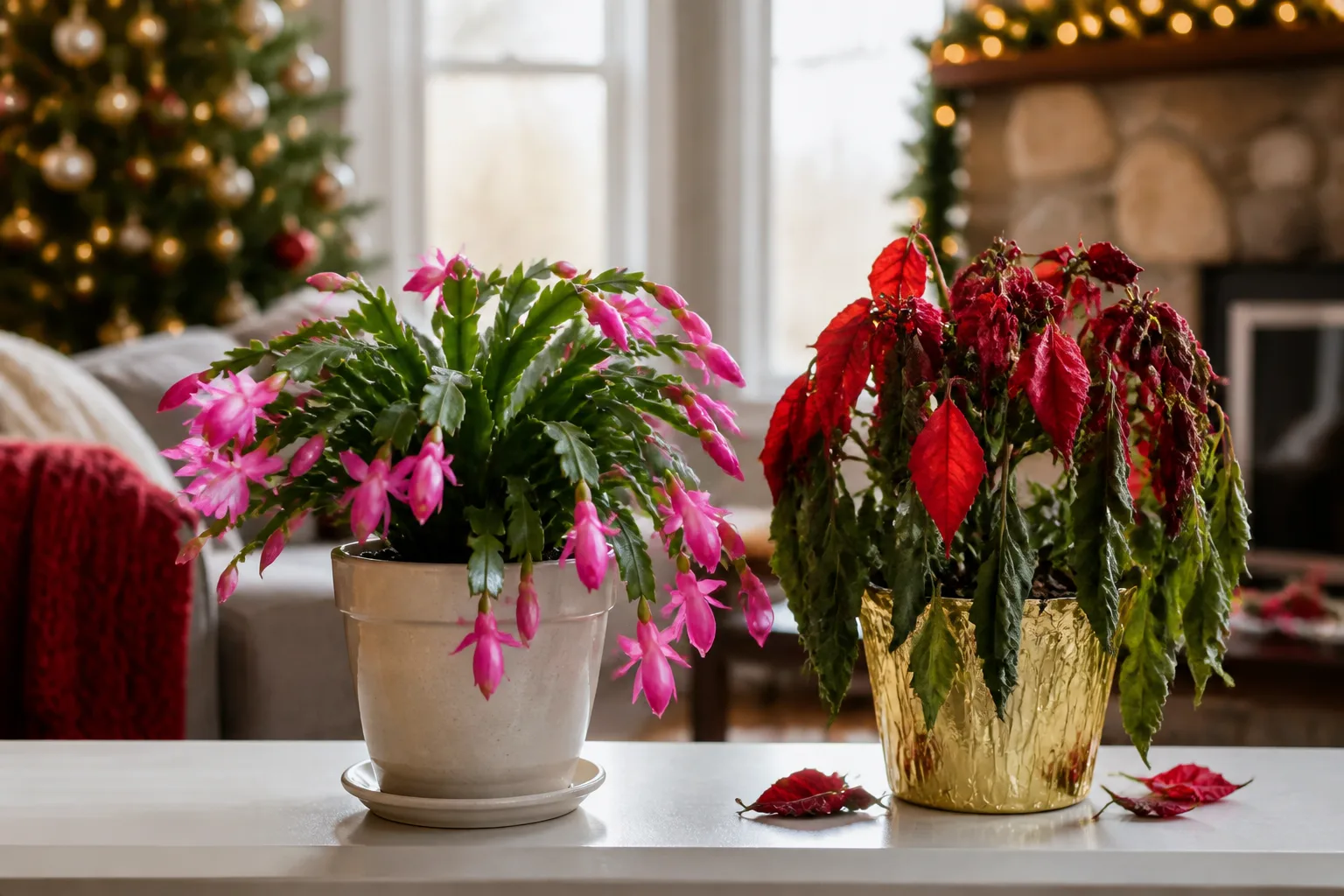
Red foil pots, glossy bracts, and a January trash bag—that is the poinsettia story in millions of homes. The plant looks perfect for two weeks, then sheds leaves, loses color, and becomes another post-holiday cleanup job. If you want holiday color without the throwaway cycle, the poinsettia replacement gardeners keep coming back to is not another red-leafed novelty. It is Christmas cactus (Schlumbergera × buckleyi), a forest epiphyte that blooms on schedule, tolerates normal indoor life, and can become a family heirloom.
This is not an argument that poinsettias are bad plants. They are spectacular when treated as a seasonal display. The shift happens when you want something that survives January, reblooms without a laboratory routine, and will not trigger a pet emergency call every time a cat bats a leaf.
The Real Frustration With Holiday Poinsettias
Poinsettias (Euphorbia pulcherrima) earn their spot at grocery entrances for a reason. The modified leaves—botanically bracts—deliver instant Christmas red, pink, white, or marbled patterns no other houseplant matches at that price point. The problem is not the look. It is the lifecycle mismatch between how retailers sell them and how most homes keep them.
Why Most Poinsettias End Up in the Trash
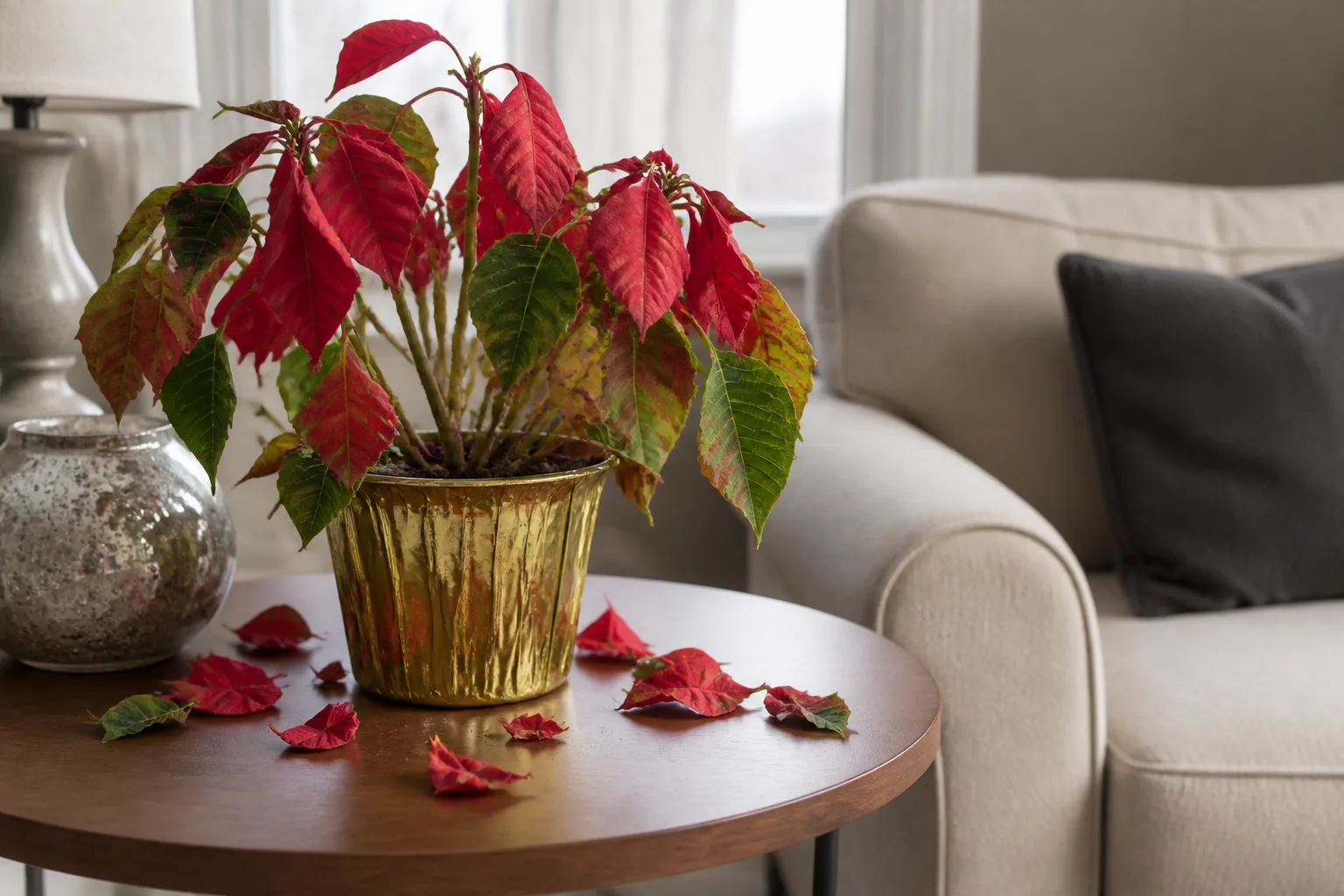
Retail poinsettias are grown in greenhouses under tight temperature, humidity, and light control, then shipped into dry, overheated living rooms with drafty doors and inconsistent watering. By late December the root zone is often stressed, lower leaves yellow, and bracts fade. Most households were never trying to keep the plant for years—they bought a centerpiece. When color disappears, the pot goes out with the tree.
That cycle is expensive and wasteful if you repeat it annually, but it is also predictable. Poinsettias are short-day plants that set color when nights stretch long enough. Growers manipulate that schedule precisely. Your living room does not. Without matched darkness, stable warmth, and careful watering, the plant reverts to ordinary green leaves and looks “dead” even when the stem is alive.
What Rebloom Actually Requires From a Poinsettia
Forcing a poinsettia to color up again means reproducing greenhouse conditions at home: 14 hours of uninterrupted darkness each night for eight to ten weeks starting in early fall, daytime temperatures around 65–70°F, nights not below 60°F, and strict avoidance of streetlights or lamp leaks. Miss a single light interruption and bract development stalls. You also need to prune back hard in spring, repot if roots are crowded, and fertilize through summer growth before starting the darkness regimen again.
It can be done. Master gardeners do it every year. For most busy households, though, the honest math is simpler: rebloom effort exceeds rebloom reward unless you enjoy the project. That is the gap Christmas cactus fills.
Christmas Cactus as the Smarter Holiday Swap
Christmas cactus is not a desert cactus. It evolved in the cloud forests of coastal Brazil, growing on tree branches in filtered light and humid air. The flattened stem segments—phylloclades—store water like succulent tissue, but the plant wants regular moisture in a fast-draining mix, not bone-dry cactus soil. That rainforest habit is why it survives ordinary indoor winters better than a greenhouse-tuned poinsettia.
Color Without the Single-Season Cycle
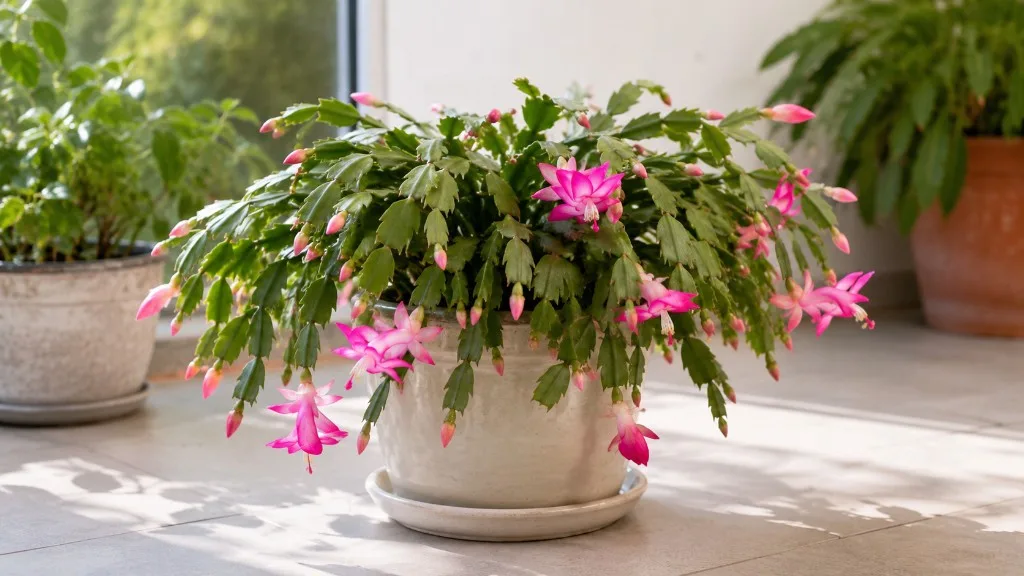
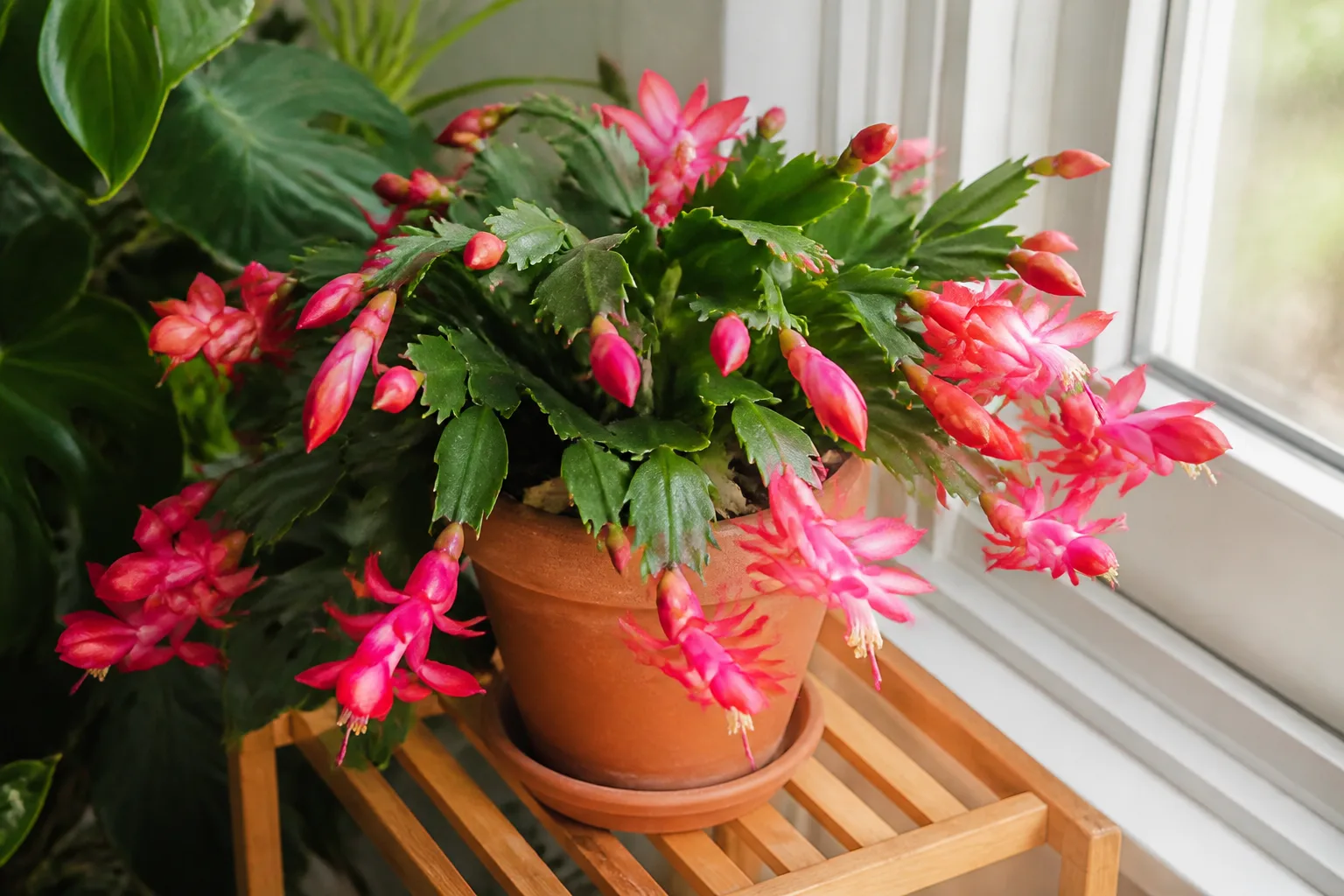
A healthy holiday cactus produces tubular flowers in red, pink, orange, white, purple, or gold—often timed for late November through December, depending on species and cultivar. Retail pots usually arrive already in bloom. Unlike poinsettias, the show does not require you to paint the plant red with a blackout closet. Short nights and cool evenings trigger flowering naturally once you learn the calendar.
Many plants sold as “Christmas cactus” are actually Thanksgiving cactus (Schlumbergera truncata), which blooms a few weeks earlier and has pointed, claw-like teeth on each segment. True Christmas cactus has rounded, scalloped segment margins and more drooping flowers. Care overlaps almost completely; bloom timing differs. If your new plant flowers in mid-November, you likely bought Thanksgiving type—still a excellent poinsettia alternative, just earlier on the calendar.
A Plant That Can Outlive the Decor
Penn State Extension notes that well-tended holiday cacti can live more than a hundred years, with many households passing rooted cuttings through generations. Twenty to thirty years is common even with average care. Compare that to a poinsettia that often looks tired by Valentine’s Day.
The longevity comes from manageable year-round rhythm: active growth spring through summer, a bud-setting cue in early fall, bloom in winter, then a lighter rest period after flowers fade. No annual discard required. For a deeper year-round system, see our Christmas cactus care guide.
Honest Pet-Safety Comparison
Pet owners swap poinsettias for Christmas cactus more than any other reason—and partially because of a myth that needs correcting on both sides.
What ASPCA Lists Say About Each Plant
The ASPCA lists poinsettia as toxic to dogs, cats, and horses because of irritant sap. Clinical signs include mouth and stomach irritation and sometimes vomiting—but the database itself adds that toxicity is “generally over-rated.” This is not a lily-level emergency. It is uncomfortable contact with milky sap containing irritating compounds, not systemic organ failure.
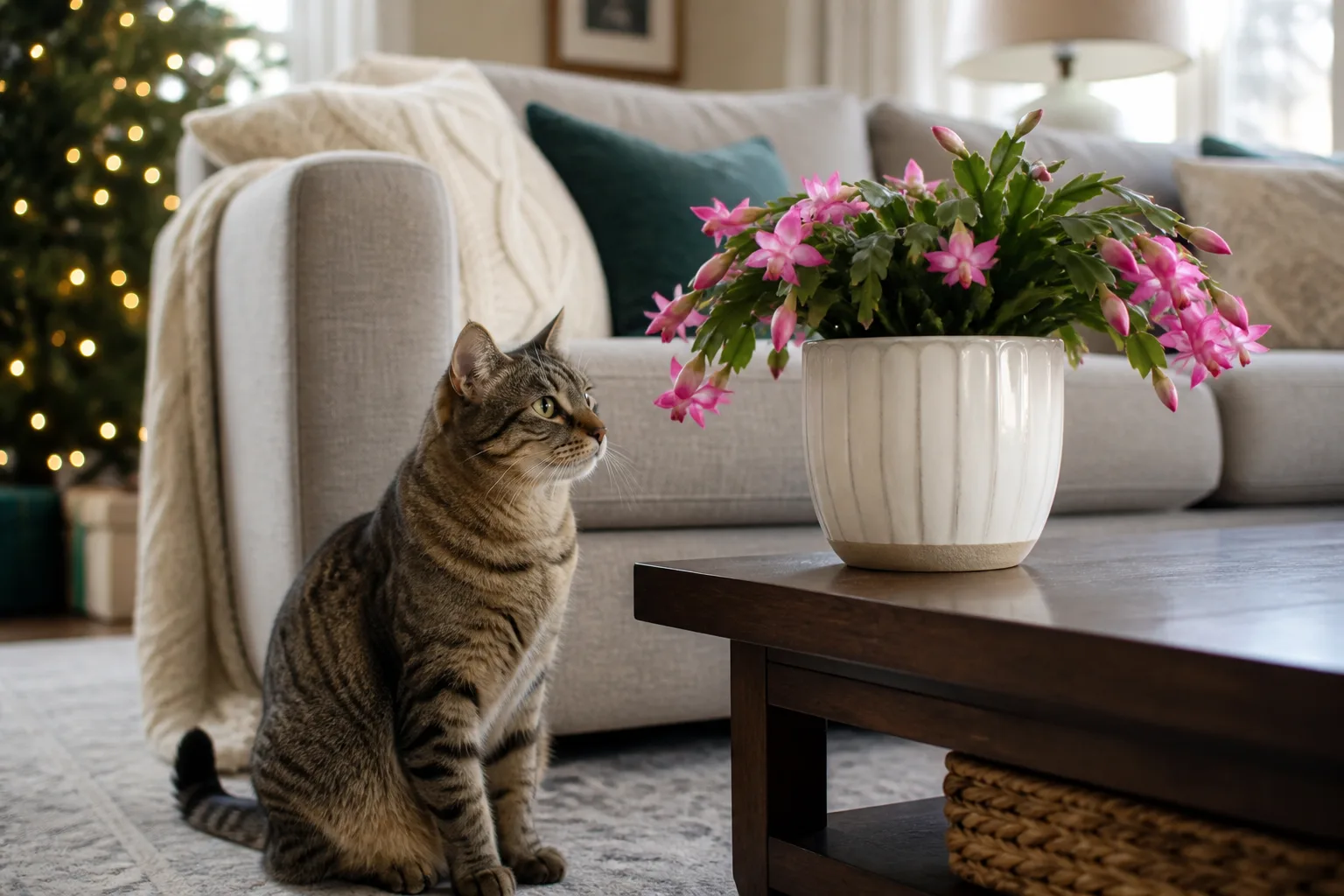
Christmas cactus is listed non-toxic to dogs, cats, and horses. Chewing any houseplant can still cause vomiting from fiber bulk, so “non-toxic” does not mean “all-you-can-eat salad.” It means no recognized poison principle. For pet-forward households, that difference matters when the plant sits on a coffee table at nose height.
Holiday Plants That Deserve Real Worry
If you are auditing holiday décor for pets, spend more energy on true lilies (Lilium species), which can cause fatal kidney failure in cats from small exposures—including pollen and vase water. Mistletoe and holly also outrank poinsettia on risk lists. Christmas cactus lets you keep live color without parking a high-stakes toxin in the middle of the room. Our pet-safe houseplants guide covers more verified non-toxic options if you are rebuilding a safer indoor collection.
Poinsettia vs Christmas Cactus at a Glance
| Factor | Poinsettia | Christmas cactus |
|---|---|---|
| Typical lifespan in homes | One season; few rebloom without effort | Decades; often passed down as cuttings |
| Rebloom difficulty | High—strict 14h darkness, temperature control | Moderate—cool nights + 12–14h uninterrupted darkness in fall |
| Pet safety (ASPCA) | Irritant sap; mildly toxic, overrated risk | Non-toxic; fiber upset possible if chewed |
| Water needs | Even moisture; sensitive to drought and soggy roots | Water when top 1–2 in. dry; more forgiving rhythm |
| Light | Bright indirect; hates dark corners after purchase | Bright filtered light; damaged by hot direct sun |
| Best role | Short-term holiday color statement | Long-term blooming houseplant |
| Propagation | Stem cuttings possible but uncommon at home | Very easy from 3–5 segment cuttings |
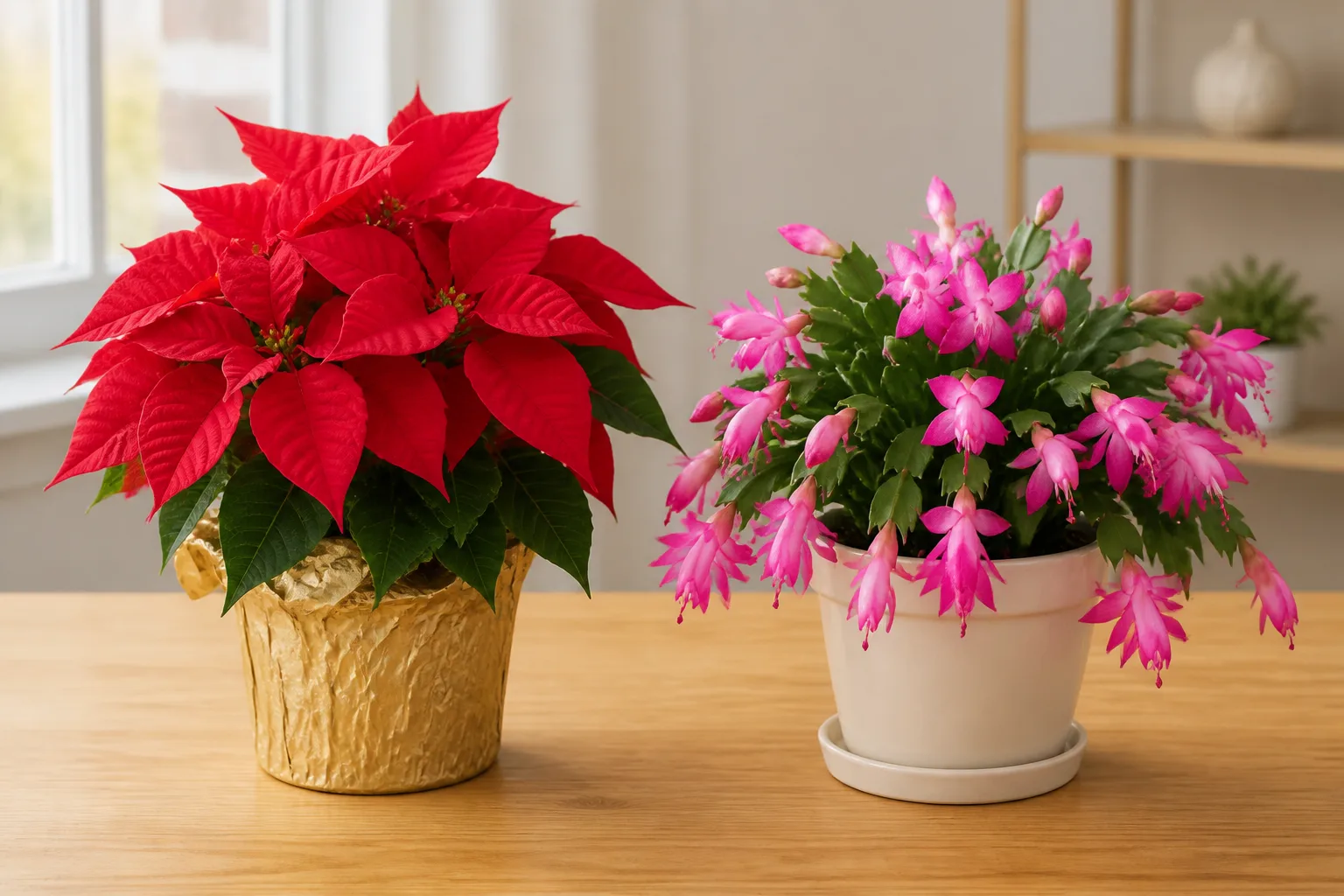
Neither plant belongs in a hot south window or directly above a heating vent. Both hate sudden temperature swings. The difference is what happens after the holidays: poinsettia wants a grower project; Christmas cactus wants a calendar you can repeat.
Which Plant Should You Actually Choose?
When a Poinsettia Still Makes Sense
Choose poinsettia when you want maximum instant impact for a party or photo-ready mantel and you are fine treating the plant as décor. If you have a bright, stable room away from pets that chew plants, and you do not mind composting it in January, nothing else matches that classic red bract look at this price. Poinsettias also offer far more color variants—marbled, speckled, burgundy, ice white—than most holiday cactus benches stock.
When Christmas Cactus Is the Better Fit
Choose Christmas cactus when you want repeat blooms, lower discard guilt, pet-safe placement, or a plant you can propagate into gifts next year. It is the better pick for beginners who killed their last poinsettia by alternating drought and drowning. It also suits renters and apartment dwellers who need one reliable winter bloomer that will not demand grow-lights and blackout curtains at laboratory precision—though fall darkness still matters.
How to Buy a Healthy Holiday Cactus
Skip pots with wrinkled, mushy segments or buds that are mostly fallen. Look for firm phylloclades, plenty of closed bud tips, and dry—not soggy—soil surface. If the tag only says “holiday cactus,” check segment shape: pointed teeth mean Thanksgiving type; rounded scallops suggest true Christmas cactus.
Buy before peak bloom if you want the longest show at home. Transport in a sleeve if outdoor temperatures are below freezing; cold shock drops buds fast. At home, place it in bright indirect light, away from fireplace heat and frequently opened doors. Do not repot while buds are opening—wait until after flowering ends, usually late winter or early spring.
Year-Round Christmas Cactus Care Basics
Treat this plant as a seasonal rhythm, not a constant watering schedule. That mindset prevents the two classic failures: desert-cactus dryness and soggy-root rot.
Light, Water, and Humidity Through the Seasons
From spring through summer, keep the plant in bright filtered light—an east window or a few feet inside a south window works well. Water when the top 1 to 2 inches of mix feel dry, then soak until a little drains and empty the saucer. Feed monthly at half strength during active growth; stop by late summer before bud initiation.
In winter bloom, maintain even moisture once buds appear—drought at that stage causes bud drop, one of the most common complaints. If indoor air is dry, a humidity tray or light misting helps, though this is not a tropical fern.
After flowers finish, reduce watering and skip fertilizer for several weeks of rest. Our January after-holiday guide walks through that recovery window in detail.
Penn State Extension recommends winter targets around 68°F days and 60°F nights during flowering—cooler nights than most poinsettia displays tolerate. Holiday cacti also prefer staying slightly pot-bound; repot every three to four years after bloom, not during it.
How to Trigger Holiday Blooms Again
Starting around mid-September, give the plant:
- Cool nights near 55–65°F when possible.
- 12 to 14 hours of uninterrupted darkness nightly for six to eight weeks—no lamp, TV glow, or streetlight leaking onto the plant.
- Slightly reduced watering until buds form, then return to even moisture.
Interrupted darkness is the number-one reason a healthy plant stays green and flowerless. If buds form then fall, check drafts, heat vents, and uneven watering—see bud drop troubleshooting and no flowers on the care hub.
Propagate Your Own Heirloom Plant
Propagation is almost embarrassingly easy. Pinch or twist off a stem with three to five segments, let the cut dry for a day, then root in moist potting mix or water. Penn State Extension suggests covering soil cuttings with a loose plastic bag for humidity until roots form in three to eight weeks. One parent plant can become hostess gifts within a year.
For step-by-step photos and timing, use our propagate Christmas cactus guide. That is how a single supermarket cactus turns into the plant your kids remember from their grandmother’s kitchen window.
Conclusion
Gardeners are not abandoning poinsettias because they stopped loving red holiday color. They are switching because Christmas cactus delivers the season’s job—living winter blooms—with less waste, less pet anxiety, and a realistic path to next December. Poinsettias remain unbeatable as a short-term showpiece if you accept the rebloom project or the compost pile. Christmas cactus wins when you want a plant that stays, learns your room, and flowers again once you respect its fall darkness cue.
Buy firm segments and closed buds, keep light bright but filtered, water on soil dryness not calendar guilt, and start the September night routine before you wonder why March looks so green. Do that, and the “underrated” holiday plant stops being a trend story and becomes the one pot you never throw out after New Year’s.