How to Grow and Care for Rhododendrons
Grow rhododendrons successfully with a site-first guide to soil pH, planting depth, watering, containers, pruning, flowers, pests, and pet safety year-round.
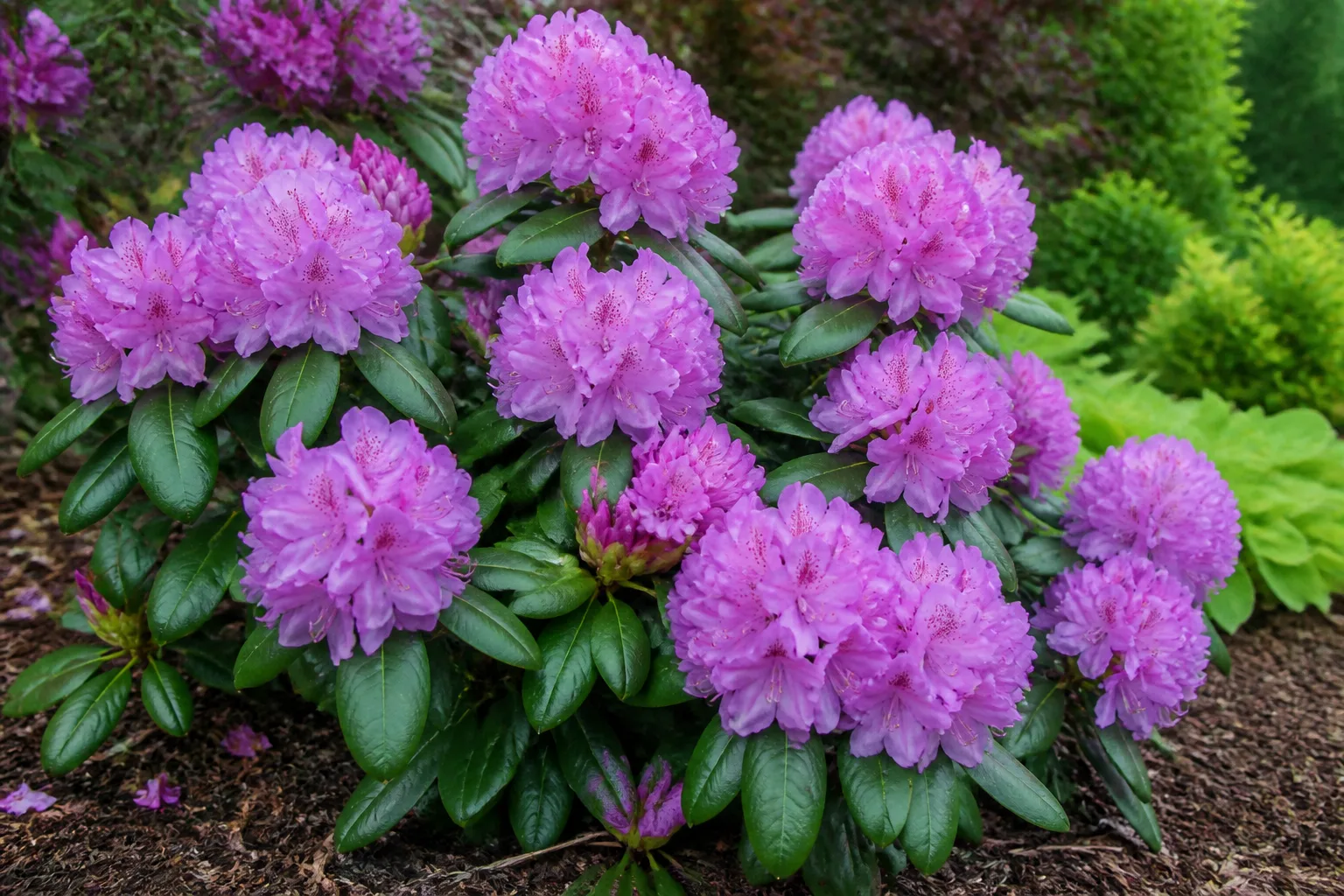
Rhododendrons are long-lived shrubs with showy spring flowers, but their success depends more on the planting site than on a complicated feeding routine. Give the right cultivar acidic, well-drained soil, filtered light, and steady moisture while it establishes; most routine problems trace back to a mismatch in one of those conditions.
The genus is broad enough that a compact evergreen hybrid, a tall mountain shrub, and a deciduous azalea will not behave identically. Start by identifying what you bought and testing the place you want to plant it. Then adjust care to the actual soil, weather, and growth habit instead of following a fixed watering or fertilizer calendar.
Understand the plant before choosing one
Rhododendron is a genus, not one uniform garden shrub. It includes thousands of species and cultivars with different sizes, flower times, leaf habits, and climate tolerances. Some rhododendrons stay compact; others become broad shrubs or small trees. Many keep their leaves through winter, while deciduous azaleas drop them. Flowering can begin in early spring and continue into summer depending on the plant and local climate.
Azaleas belong to the genus Rhododendron, so every azalea is botanically a rhododendron, though the reverse is not true. Garden labels often use “azalea” for shrubs with smaller leaves and more open branching, and “rhododendron” for broad-leaved evergreen types. Those are useful garden shorthand, not a care boundary: both need a suitable cultivar, acidic soil, good drainage, and a root zone that does not dry out. NC State Extension describes both evergreen and deciduous forms and notes the genus’s broad variation.
The plant tag matters more than the name on the nursery bench. Find the botanical or cultivar name, expected mature width and height, bloom period, and local hardiness range before you decide where it will live. A plant’s current pot size is not a reliable measure of how much space it will need in five or ten years.
Choose a rhododendron that fits your site
Match the shrub to your winters, summer heat, light, and available width. In the United States, compare the cultivar’s hardiness range with your local USDA zone, then account for exposure: a sheltered woodland corner can be warmer and less windy than an exposed bed in the same zone. A cultivar advertised as cold-hardy may still lose flower buds to a late frost or suffer winter injury where dry wind pulls moisture from evergreen leaves.
Next, check mature dimensions and leaf habit. A tall Catawba or rosebay type needs room away from a path and foundation; a compact PJM or Yakushimanum hybrid may fit a smaller border or large patio pot. Deciduous native azaleas can bring fall color and spring flowers where evergreen leaves would be too large or too dense. Local nurseries and extension offices can help narrow the choice to plants proven in your region. For a shortlist of compact options, see our dwarf rhododendron varieties.
Do not choose by bloom color alone. If your site is sunny and hot, prioritize a cultivar noted for heat tolerance and plan afternoon shade and dependable water. If you have heavy clay or alkaline soil, look first for a container-friendly compact plant or a raised-bed solution rather than assuming a large shrub will adapt to repeated amendments. A good match makes every later care task easier.
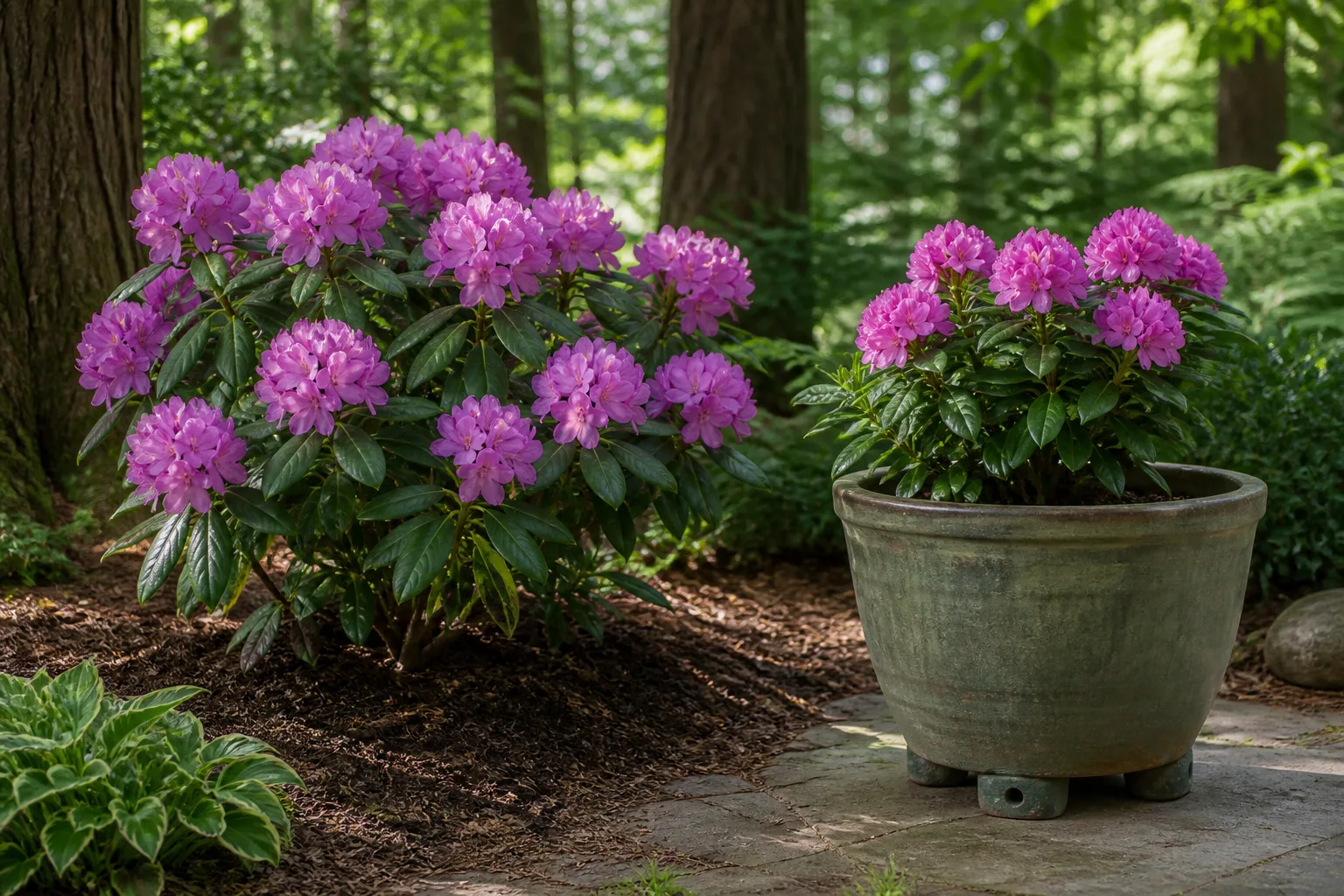
Test pH and drainage before planting
Rhododendrons absorb nutrients best in acidic soil that also has plenty of organic matter and air around the roots. The RHS recommends a soil pH of about 5.0 to 6.0; Fine Gardening gives a slightly lower 4.5 to 5.5 range. That overlap is a useful target, but do not chase a decimal point: test the proposed bed and follow your local soil laboratory’s recommendations for the specific soil type. RHS and Fine Gardening both emphasize acid, humus-rich soil and shallow planting.
Test drainage as well as pH. After a soaking rain, does water remain pooled near the site, or does the soil turn into dense, airless clay? Rhododendron roots are shallow and fine; they need moisture but can decline if the root zone stays saturated. Avoid low spots, downspout outlets, and compacted planting strips. If the garden bed drains slowly, a broad raised bed is often a more reliable fix than digging a narrow hole and filling it with a different mix that can collect water.
When soil is alkaline or heavy
If a soil test shows alkaline soil, decide whether it is practical to acidify the entire planting area. Elemental sulfur works gradually, and the amount needed depends on soil texture and starting pH; a generic “acid-loving plant” fertilizer is not a substitute for lowering pH. Avoid improvised doses and do not apply aluminum sulfate around rhododendrons; the American Rhododendron Society warns that it is toxic to their roots. If the bed is naturally alkaline, near concrete, or difficult to amend, choose a raised bed with suitable acidic soil or a container filled with an ericaceous mix.
For heavy clay, improve drainage across the bed rather than creating a pocket of loose compost inside clay. Incorporate organic matter over a wide area when soil structure needs it, and plant the shrub slightly high so water moves away from its shallow root crown. Do not mound soil against the stems. Recheck pH after amendments have had time to work, and address yellowing with a test rather than repeated iron supplements.
Give it filtered light and shelter
Bright, dappled shade is a dependable starting point for many garden rhododendrons. Morning sun with afternoon shade supports flowers while reducing heat and moisture stress. In cool, cloudy climates, some cultivars tolerate more open sun; in hot summers or reflected heat beside paving and walls, afternoon protection becomes more important. The genus is too diverse for one exposure rule, so use the label and local guidance for the variety you have.
Deep shade can look safe but often produces a loose, leggy shrub with fewer flowers. Full sun can work for some types if roots stay cool and moist, but it raises the risk of leaf scorch, drought stress, and lace-bug damage. If you inherit a shrub and cannot move it, observe when leaves scorch: damage on the hot afternoon side points to exposure, while whole-plant wilt suggests checking root moisture and drainage first.
Shelter the plant from strong, drying winter wind and from harsh early-morning sun after a freeze. Do not crowd it under a tree whose roots take all the water; the dappled canopy should provide shade without creating a dry competition zone. A little air movement is useful, but tight, stagnant planting can make disease management harder.
Plant it high and keep roots cool
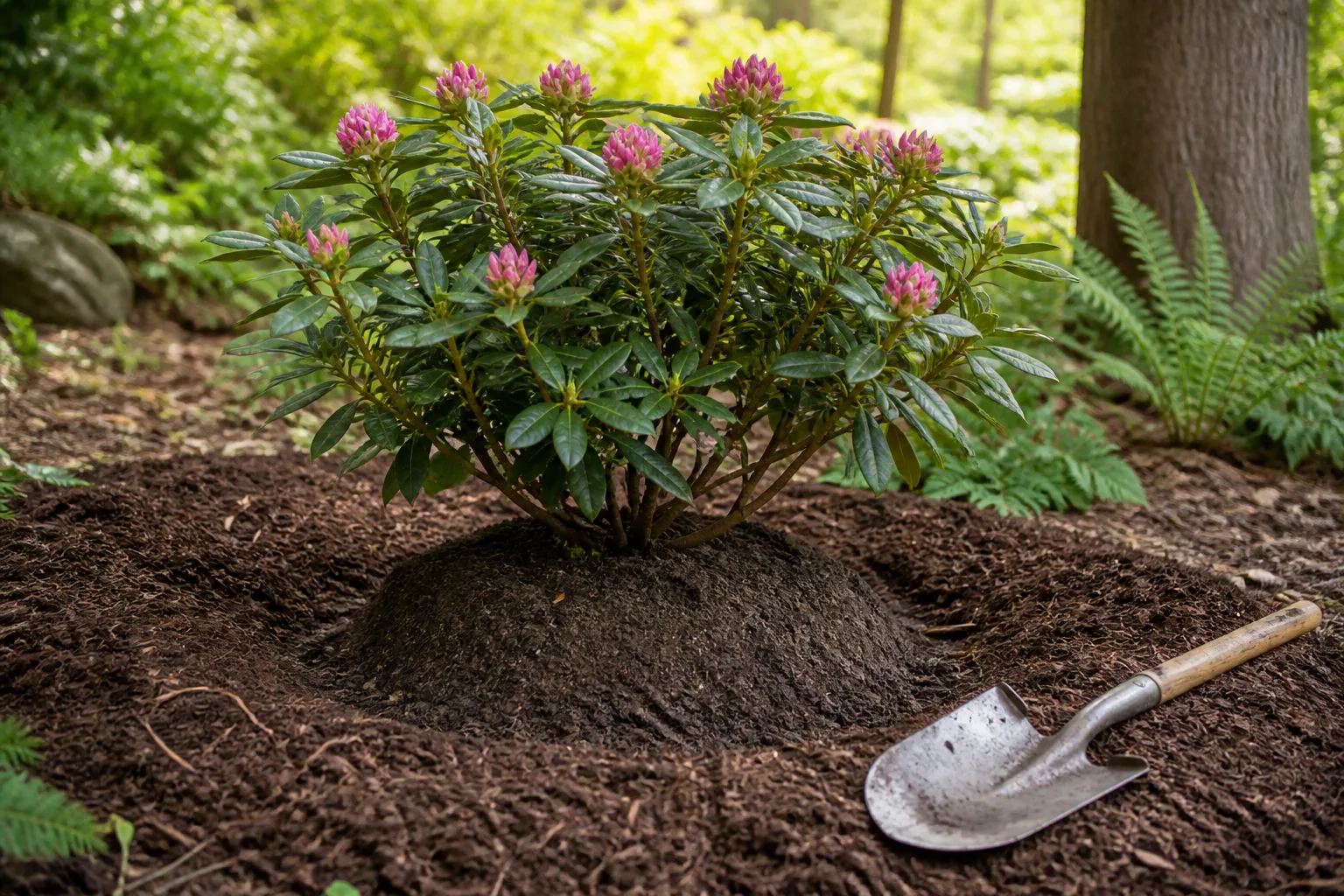
Plant in a mild spell in spring or fall, when the soil is workable and the shrub has time to establish before heat or deep cold. Water the nursery plant before planting. Dig a hole two to three times as wide as the root ball but no deeper; loosen the soil around the sides so new roots can spread. If the root ball is tightly matted, tease only the outer roots gently. Do not cut deeply into a healthy, fine root system.
Set the root ball so its top sits at soil level or slightly above it in a site with marginal drainage. Cover the roots without burying the stem base, then water slowly to settle soil around them. The RHS notes that rhododendrons are surface-rooting and should not be planted deeply; NC State Extension likewise recommends setting the root ball high when drainage is a concern. A plant buried several inches too deep can look fine at first and then decline as the crown stays wet and oxygen-starved.
Spread a 2- to 3-inch layer of shredded bark, pine bark, or another airy organic mulch over the root zone. Keep the mulch a few inches from the stems so bark stays dry and air can reach the crown. Extend it toward the drip line as the shrub grows rather than piling it into a volcano around the trunk. Mulch slows evaporation, moderates soil temperature, and protects shallow roots from cultivation damage.
Growing rhododendrons in containers
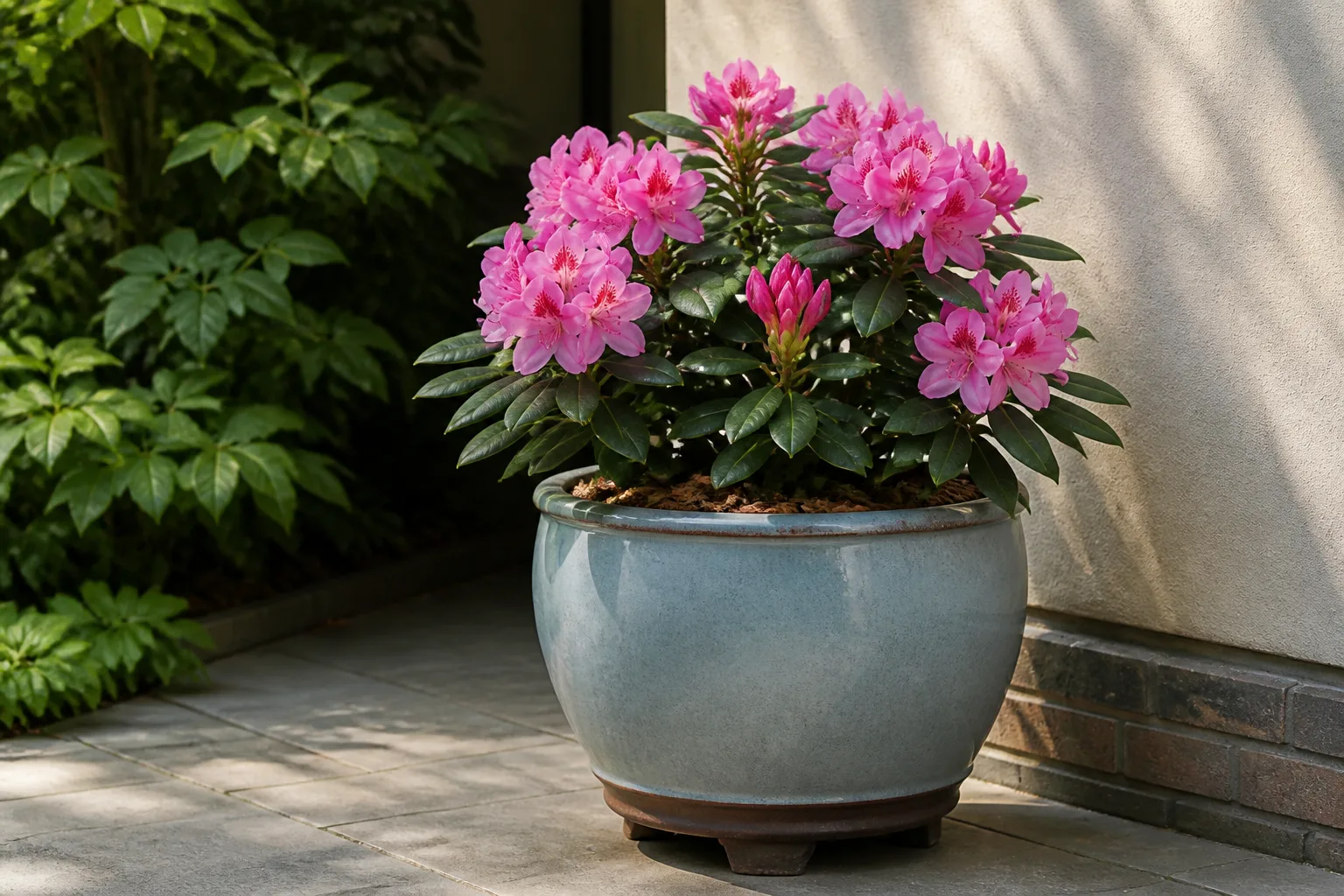
Containers are useful when native soil is alkaline, drainage is poor, or a compact cultivar suits a patio better than a bed. Choose a cultivar whose mature size can live in a stable pot, not merely one that fits the nursery container today. Use a wide container with unobstructed drainage holes and a commercial ericaceous potting mix. Garden soil is too dense for most pots and can compact around shallow roots.
Set the shrub at the same depth it grew in its previous pot, water until excess drains, and empty any saucer. The pot should be only modestly larger than the root ball; an oversized pot holds more wet mix than the roots can use. Containers dry out and heat up faster than garden soil, especially on paving, so check moisture frequently in warm or windy weather. The RHS recommends refreshing peat-free container media periodically because the mix can lose structure and drainage over time. Our guide to rhododendrons in pots versus in the ground compares the ongoing trade-offs.
Water by moisture, not a fixed schedule
Newly planted rhododendrons need regular checks through their first growing season because their roots have not yet spread into surrounding soil. Push a finger into the root zone or move aside a small patch of mulch: if the soil feels dry a couple of inches down, water slowly and deeply. If it is already cool and damp, wait. The goal is consistent moisture, not daily saturation.
For a deep soak, direct water to the root zone instead of repeatedly wetting only the leaves. Check that the water penetrates the original root ball as well as nearby soil; a dry peat-based nursery root ball can shed water even when surrounding ground looks wet. Established plants generally need supplemental water during extended dry periods, heat waves, and late summer, not on an automatic weekly schedule. Rainfall, soil texture, shade, wind, and shrub size all change how quickly the roots dry. The American Rhododendron Society’s soil guidance describes the same balance: shallow, fine roots need moisture but do not tolerate saturated soil.
Leaves can help you decide what to inspect, but they do not diagnose the problem by themselves. Limp or rolled leaves during heat may signal drought; drooping in wet soil points toward poor drainage or root damage. Leaves may also droop temporarily in severe cold and recover when temperatures rise. Check soil moisture before adding water, then look for standing water, root-collar damage, or pests if the plant does not recover. Epic Gardening recommends slow, balanced watering for these shallow-rooted shrubs; the RHS also flags drought-related droop and leaf drop.
If you live in a hard-water area, rainwater is a useful choice when available because repeated calcium-rich water can gradually raise acidity around roots. Do not panic if you use tap water occasionally. Track soil pH and growth over time; water quality is one factor among drainage, fertilizer, and the original soil.
Mulch and feed with restraint
Refresh organic mulch as it breaks down, keeping it loose and away from the stems. Pine bark, shredded bark, leaf mold, or another clean mulch helps preserve moisture and adds organic matter as it decomposes. Avoid digging or hoeing beneath the shrub because its fine roots often sit near the surface. Pull weeds by hand while small, or maintain a broad mulch ring to limit competition.
Do not fertilize by habit. A vigorous shrub growing in suitable acidic soil may need no extra feed, and excess fertilizer can injure shallow roots or push soft growth that is more vulnerable to weather. If growth is weak or leaves are pale, start with pH, drainage, root moisture, and light. A nutrient may be present in the soil but unavailable at the wrong pH, so adding more fertilizer can miss the cause.
When a soil test or a clear deficiency points to a need, use a product labeled for acid-loving shrubs and apply the amount and timing on its label. For container plants, a measured, slow-release feed in spring is often easier to manage than repeated liquid doses. Keep fertilizer off leaves and dry root zones, and avoid late-season feeding that encourages new growth before winter. The RHS advises that plants in decent acid soil are unlikely to need feeding and warns that excess can burn roots and foliage.
Protect next year’s flowers through summer
Rhododendron bloom time varies by species and cultivar, but many garden types flower in spring. The flower display you see this year was prepared earlier: buds for the next season generally begin forming during summer. A shrub that is dry during a hot, late-summer stretch may set fewer buds or carry buds that fail to open well the following spring. Mulch and check soil moisture during dry spells after flowering, especially while the plant is establishing.
Do not mistake every brown or missing flower for a fertilizer problem. Late frost can damage buds; deep shade can limit flowering; drought during bud formation can weaken next year’s display; and pruning at the wrong time can remove buds before they open. A plant may also need time to settle after planting or transplanting. Record when it flowers and when you prune, then compare that calendar with the plant’s local bloom season rather than following a fixed national date.
If the spent flower clusters look untidy, remove them carefully after petals fade, but deadheading is optional for most landscape shrubs. Snap or snip only the old flower stem; new buds and shoots sit immediately below it. On a large plant, skip deadheading if reaching the flowers risks breaking branches or next year’s growth. The English Garden quotes an Exbury Gardens head gardener on summer moisture and pruning after flowering, while the RHS specifically advises watering during dry spells from midsummer to protect future buds.
Prune after bloom, if needed
Most rhododendrons need little pruning beyond removing dead, broken, crossing, or diseased branches. Make those cuts with clean, sharp pruners, cutting back to a healthy branch rather than leaving a long stub. For shape or size, prune soon after the flowers fade and before next year’s buds are well developed. A late-summer or fall haircut can remove the coming display even if the plant itself survives the cut.
Use selective cuts instead of shearing the whole surface. Step back between cuts and preserve the natural outline; removing a few poorly placed branches usually looks better than forcing the shrub into a tight ball. Large-leaved evergreen rhododendrons can be slow to recover from drastic renovation, and results vary by species and cultivar. If an old shrub needs major reduction, identify it first and ask a local extension service or rhododendron specialist whether hard renewal pruning is appropriate.
Deadheading and pruning solve different problems. Deadheading removes faded flower trusses; pruning changes branch structure or size. Neither is required just because the shrub has finished blooming. If there is no dead wood, crowding, or clear aesthetic reason, leave the plant intact and preserve its leaves and flower buds.
Propagate species and named cultivars differently
Growing a rhododendron from seed is best for species plants or for gardeners who are curious about variation. Seedlings from named hybrids usually do not reproduce the parent’s flower color, size, or hardiness reliably. If you want another plant that matches a named cultivar, use a vegetative method such as a semi-ripe cutting or layering, or buy a second labeled plant. The RHS propagation guidance distinguishes seed-grown species from cultivars propagated by cuttings, grafting, or layering.
For a home cutting, choose healthy current-season growth after it has begun to firm up, often in late summer or early autumn depending on climate. Prepare several cuttings because rooting can be slow and success is not guaranteed. Use a clean blade and sterile, airy medium; reduce leaf area if the large leaves would wilt quickly, and keep the medium evenly moist in bright indirect light. Avoid direct midday sun and stagnant, waterlogged conditions. Some broad-leaved types can take months to root.
Layering is slower but can be more forgiving: bend a flexible low branch to the ground, lightly wound a small section, pin it against moist soil, and leave the tip exposed. Keep that spot moist while roots form. Do not detach the new plant until it resists a gentle tug and can support itself. Named varieties can be patented or otherwise protected, so check the plant label and local rules before propagating for sale or distribution.
Diagnose yellow leaves, droop, and poor growth
Treat a symptom as a clue, not a final diagnosis. Start with the soil: check whether it is dry, wet, compacted, or recently amended; then look at which leaves are affected and whether the pattern is spreading. A pH test and a close look at drainage are often more useful than immediately applying iron, sulfur, or fertilizer.
| What you see | First checks | A sensible next step |
|---|---|---|
| New leaves yellow between green veins | Soil pH, drainage, root health | Test soil; correct the site or pH before adding nutrients |
| Older inner leaves yellow and drop gradually | Season, recent drought, plant establishment | Some older-leaf turnover is normal; check whether new growth is healthy |
| Leaves wilt while soil is dry | Root-ball moisture, heat, wind | Deeply water the root zone, then mulch and recheck |
| Leaves wilt while soil is wet | Standing water, drainage, crown and root condition | Stop adding water; improve drainage and seek local diagnosis if decline continues |
| Brown edges or scorched patches | Afternoon sun, winter wind, drought, frost | Reduce exposure or water stress; inspect new growth for further damage |
| Few or no flowers | Shade, summer drought, frost, pruning date, plant age | Protect buds through summer and prune only after flowering |
Yellowing with green veins on new leaves is consistent with iron chlorosis, but high pH is not the only possible cause; damaged roots can also prevent nutrient uptake. Test the soil before using a pH-lowering amendment or iron product. If the pH is suitable, inspect drainage and roots and ask a local extension office to evaluate persistent symptoms. Aluminum sulfate is not a safe shortcut for rhododendron soil.
Leaf droop has a similar two-sided logic: dry soil calls for a slow soak, but wet soil calls for a drainage check. If browning follows a cold snap, wait for mild weather and watch whether new growth remains healthy before pruning. If a branch is dead, scratch a small patch of bark; living tissue is green beneath it, while fully brown, dry tissue can be removed back to healthy wood.
Recognize pests and diseases early
Inspect both the upper and lower leaf surfaces when a plant changes. Rhododendron lace bugs can cause pale stippling or a bleached look above, with insects, eggs, or dark flecks underneath. Scale, mites, and other sap-feeders also weaken leaves, while chewing insects may leave holes or ragged edges. Identify the pest before treatment; a leaf pattern alone is not enough to justify spraying.
Start with cultural checks: reduce drought stress, improve airflow, remove badly affected debris, and confirm that the plant is not in punishing afternoon sun. If a pest is confirmed, choose a control method labeled for that plant and pest and follow its directions. Avoid broad-spectrum pesticide use without a diagnosis, especially while flowers attract pollinators. For severe, recurring damage, send a sample or clear photos to your local extension office.
Root and crown rot are more serious in sites that stay wet. Persistent wilt despite damp soil, declining vigor, leaf loss, and branch dieback call for a drainage and root-health assessment, not more irrigation. NC State Extension lists Phytophthora root rot among important rhododendron problems and recommends good cultural conditions first. Avoid replanting another susceptible cultivar into a known disease site without local guidance.
Prepare the plant for winter
Choose a cultivar that is hardy where you live before relying on protective wrapping. A well-sited in-ground shrub often needs little winter intervention beyond a replenished mulch layer and watering during a dry autumn before the ground freezes. In exposed gardens, a temporary burlap screen on the windward side can reduce desiccation; do not wrap the branches so tightly that buds or stems break.
Container roots are more exposed to temperature swings than roots in the ground. Move pots to a sheltered, unheated location after flowering season, group them against a protected wall, or insulate the container sides where winter is severe. Keep drainage open and check occasionally during dry, mild periods; do not let the root ball bake dry or sit in a frozen saucer. Avoid bringing a dormant outdoor shrub into a warm living room, where it may break dormancy at the wrong time.
Some evergreen rhododendrons curl their leaves in cold weather as a temporary response. If the stems remain firm and leaves relax when temperatures rise, wait before cutting. If leaves stay brown, branches die back, or the plant was exposed to drying wind, trim only dead tissue after you can clearly see where healthy growth begins.
Keep pets away from rhododendron leaves
Rhododendrons and azaleas are toxic to dogs, cats, and horses. The ASPCA identifies grayanotoxin as the toxic principle and warns that eating only a few leaves can cause serious illness. Keep pets from grazing on the shrub, and bag or dispose of pruning debris where animals cannot reach it. Do not assume a plant is safe because a particular cultivar has smaller leaves or a mild taste.
If a pet may have eaten any part of the plant, call a veterinarian or animal poison-control service promptly and share the plant name and estimated amount; do not wait for symptoms to develop. The ASPCA rhododendron listing describes possible vomiting, diarrhea, excess salivation, weakness, and more severe effects. Keep the plant ID label or a clear photo available if you need help confirming the species.
Conclusion
The most dependable rhododendron care starts before planting: choose a cultivar that fits your climate and mature space, test soil pH, and reject sites that stay waterlogged or bake in afternoon heat. Plant the shallow root ball at or just above grade, mulch broadly, and water according to actual moisture rather than a calendar.
After the shrub is established, keep care restrained. Fertilize only for a reason, protect summer buds with water during dry spells, and prune soon after flowering if the plant needs shaping. If leaves yellow or wilt, inspect soil pH, drainage, and roots before treating. Those few decisions solve more problems than a long product list and give a well-matched shrub room to flower for years.