5 Signs of Overwatering Houseplants and What to Do
Yellow leaves and wilt can have several causes. Check soil moisture, drainage, roots, mold, and gnats to diagnose overwatering before you change care.
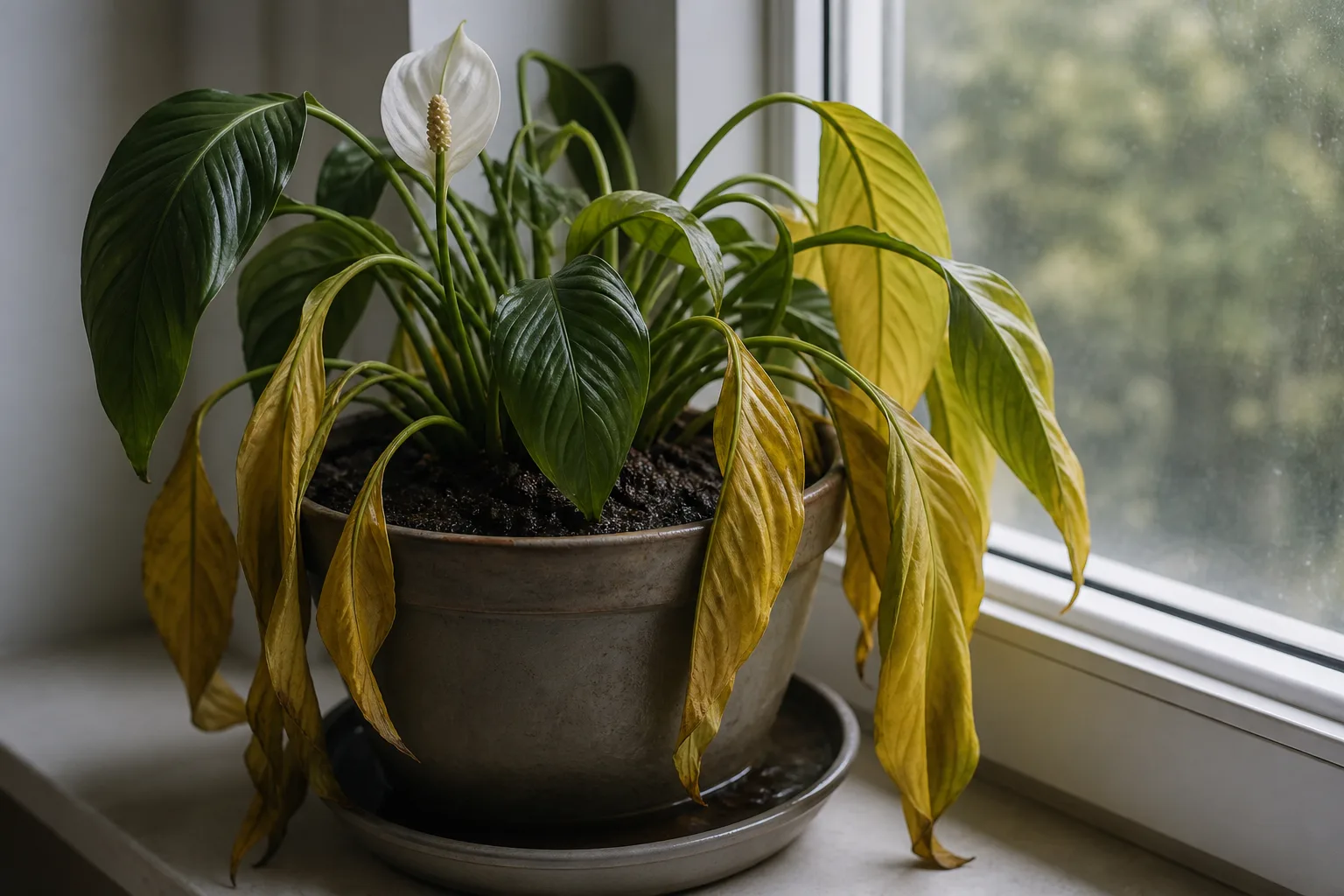
A houseplant can droop in wet soil, yellow from lack of oxygen around its roots, and lose leaves while its pot still feels heavy. That pattern can point to overwatering, but no single leaf symptom proves it: underwatering, low light, cold, pests, and normal aging can look similar.
Start with the root zone, not the watering can. Check how damp the mix is below the surface, whether the pot drains, how long it stays wet, and whether the plant is getting worse. Those clues help you decide whether to pause watering, correct drainage, or inspect roots.
What overwatering really means
“Overwatering” is often used to mean watering too often, but the plant experiences the result: potting mix that stays saturated or wet for too long for that plant’s roots and growing conditions. A single thorough watering in a free-draining pot is not automatically harmful. The risk rises when roots remain surrounded by wet mix, drainage is blocked, the container has no outlet, or the plant uses water slowly because light and growth are low.
Roots need both moisture and air. When water fills too many of the spaces in potting mix, oxygen available to roots drops; stressed or decaying roots then take up water less effectively. That is why a plant can look thirsty while the soil is wet. University of Maryland Extension describes wilting and yellowing as common signs of overwatered indoor plants, while emphasizing that root damage and other stresses can produce overlapping symptoms (University of Maryland Extension).
Think of watering as a balance between how much water the plant uses and how quickly the pot loses it. Species, pot size and material, mix structure, temperature, light, season, and airflow all affect that balance. The same weekly watering routine might leave one small terracotta pot too dry and keep a large plastic pot in dim light soggy.
Confirm the root zone before changing care
Before changing a routine, gather two or three clues. A calendar can tell you when you watered; it cannot tell you whether this pot has dried enough since then. If leaves are yellow but the root zone is dry, adding even more time without water may worsen drought stress. If the pot is wet and the plant is declining, adding water because it looks wilted can make the problem worse.
Check moisture below the surface
Feel the mix at more than one depth. For a small pot, press a finger into the mix; for a deeper pot, slide a clean wooden skewer or chopstick down near the pot wall, wait briefly, then pull it out and check whether it is darkened, cool, or carrying wet mix. A dry surface can hide a saturated lower root ball, especially in a deep container. A moisture meter can add another reading, but compare it with touch and the plant’s normal cues rather than treating the number as a verdict.
Lift the pot after watering and again as it dries. Wet mix makes it noticeably heavier, so learning that change can help when the surface gives a misleading impression. The University of Maryland’s indoor watering guidance recommends checking soil moisture rather than relying only on a schedule and notes that pot weight can help estimate water in the mix (University of Maryland Extension).
Check the container, drainage, and drying pattern
Take a nursery pot out of its decorative cachepot and empty any standing water. Confirm that the growing pot has open drainage holes and that water can escape freely; if the pot is blocked or sits in a water-filled saucer, the lower roots can remain wet even when the surface looks dry. A decorative outer pot may hide that standing water, so check inside it after each thorough watering.
Notice how long the mix remains wet relative to the plant and its conditions, not against a universal number of days. A moisture-loving fern may need an evenly damp root zone, while a cactus or succulent needs a much longer dry interval. If a plant has had wet feet for a long stretch and begins declining, test the whole pattern before deciding that it needs water or a bigger pot. Virginia Cooperative Extension explains that container watering must account for plant type, container, potting medium, and conditions, and recommends allowing excess water to drain rather than leaving pots standing in it (Virginia Cooperative Extension).
Five signs that point to excess water
Look for a cluster of signs and place them in context. A few yellow leaves or one small gnat do not establish a diagnosis. Persistent wetness plus progressive symptoms is more concerning; soft, decaying roots provide stronger confirmation than foliage alone.
1. Soft yellowing starts on lower or inner leaves
Overwatered plants may develop yellow leaves that feel soft or limp, often starting among older lower or inner leaves and spreading as root stress continues. More than one leaf changing over a short period is more informative than a single old leaf that yellows gradually. A lower leaf can also yellow as part of normal aging, so note whether new leaves are affected and whether the pot remains wet.
Compare texture and pattern. Pale, soft yellowing across several leaves with damp mix raises concern about excess moisture. Dry, papery edges may fit drought, low humidity, or salt stress better, while bleached or crisp patches on the window-facing side may suggest sun or heat damage. These are clues, not a home lab test; the next useful question is whether the root zone is still wet.
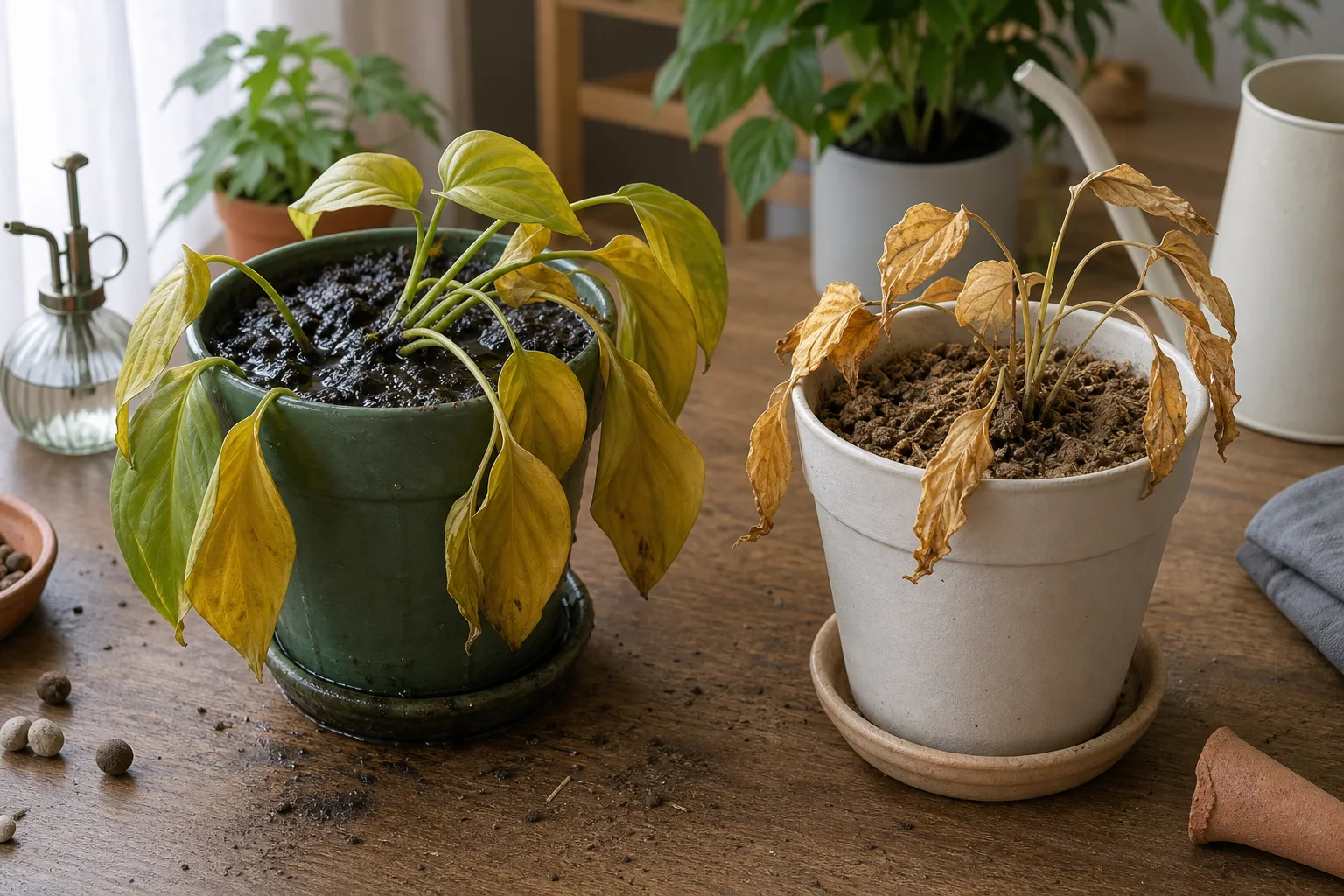
Yellow, limp foliage and persistently wet mix raise a different concern from dry, crisp leaves. Compare leaf texture with the moisture deeper in the pot.
2. The plant wilts while the root ball stays wet
Wilting usually makes people reach for water, but it can happen when damaged roots cannot supply leaves with enough water. The top may feel wet while some roots have died or lost function, so the plant droops despite plenty of moisture in the pot. This wet-soil wilt is a meaningful warning when it appears alongside persistent dampness, yellowing, or a sour smell.
Do not use droop alone to decide. A severely dry root ball can also wilt, and some plants such as peace lilies visibly droop when thirsty. Check below the surface before watering: if the mix is dry through the active root zone, water may be needed; if it is damp and the pot remains heavy, wait and investigate drainage instead. Iowa State University Extension likewise cautions that houseplant wilting can result from either too little or too much water (Iowa State University Extension).
3. Leaves drop or growth stalls without a dry spell
A plant may shed leaves or stop producing new growth when roots are stressed and cannot support the canopy. The leaves might yellow first, or they may drop while still partly green. If the decline begins after a move, cold draft, sudden light change, or pest outbreak, those events could explain it instead; overwatering becomes more plausible when the mix has also stayed wet for longer than usual.
Look at the timing. A couple of older leaves lost over several months is different from several leaves dropping in a week while the soil remains damp. Slow growth by itself is weak evidence in winter or during a normal rest period, when light and growth rates are lower. Treat a sudden pattern of leaf loss as a reason to check the root zone and surroundings, not as an automatic order to repot.
4. The mix stays wet, smells sour, or grows surface mold
A pot that stays soggy long after watering is a direct clue about the growing conditions, even before leaves change. A sour or swampy smell can come from decomposing organic material in poorly aerated mix. It does not identify a particular disease, but persistent wetness with odor and a declining plant deserves prompt attention.
White or pale fuzzy growth on the soil surface is less conclusive. It is often a saprophytic fungus growing on damp organic material, not proof that roots are infected or that the plant needs to be unpotted. Remove a small surface patch if you prefer, improve air movement around the soil, and let the upper layer dry if that species tolerates it. Do not make a moisture-loving plant go bone dry just to remove harmless surface growth.
Fungus gnats also favor moist potting media rich in organic matter, but a few adults can appear without severe root damage. Their presence supports a check of moisture and drainage; it does not prove that the plant is overwatered. UC Statewide Integrated Pest Management recommends reducing excessive moisture and organic debris as part of fungus gnat management, while noting that wilt can result from root damage and not simply a lack of water (UC IPM: Fungus Gnats).
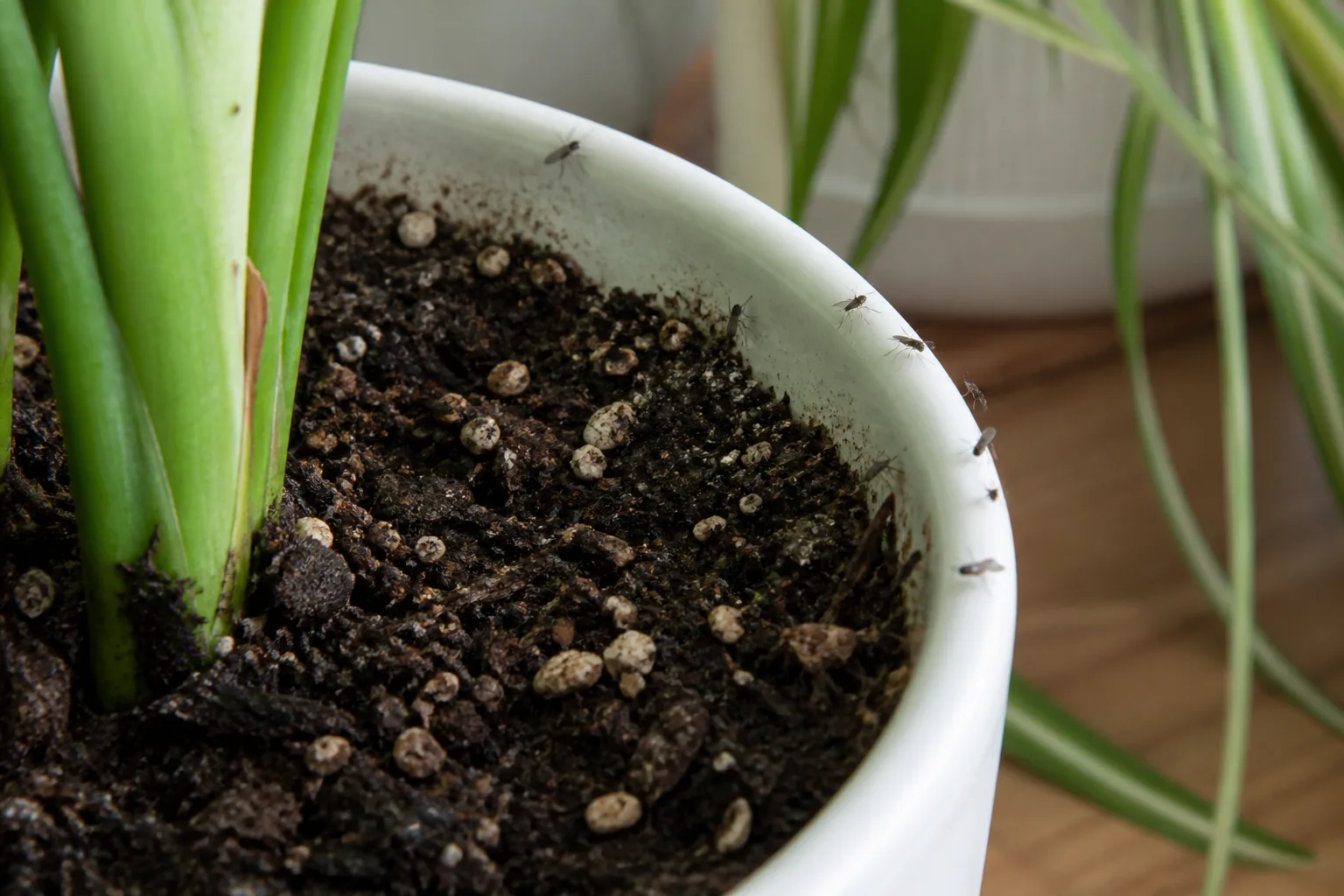
Adult fungus gnats around a pot point you back to the medium’s moisture and debris; their presence alone does not show that roots have rotted.
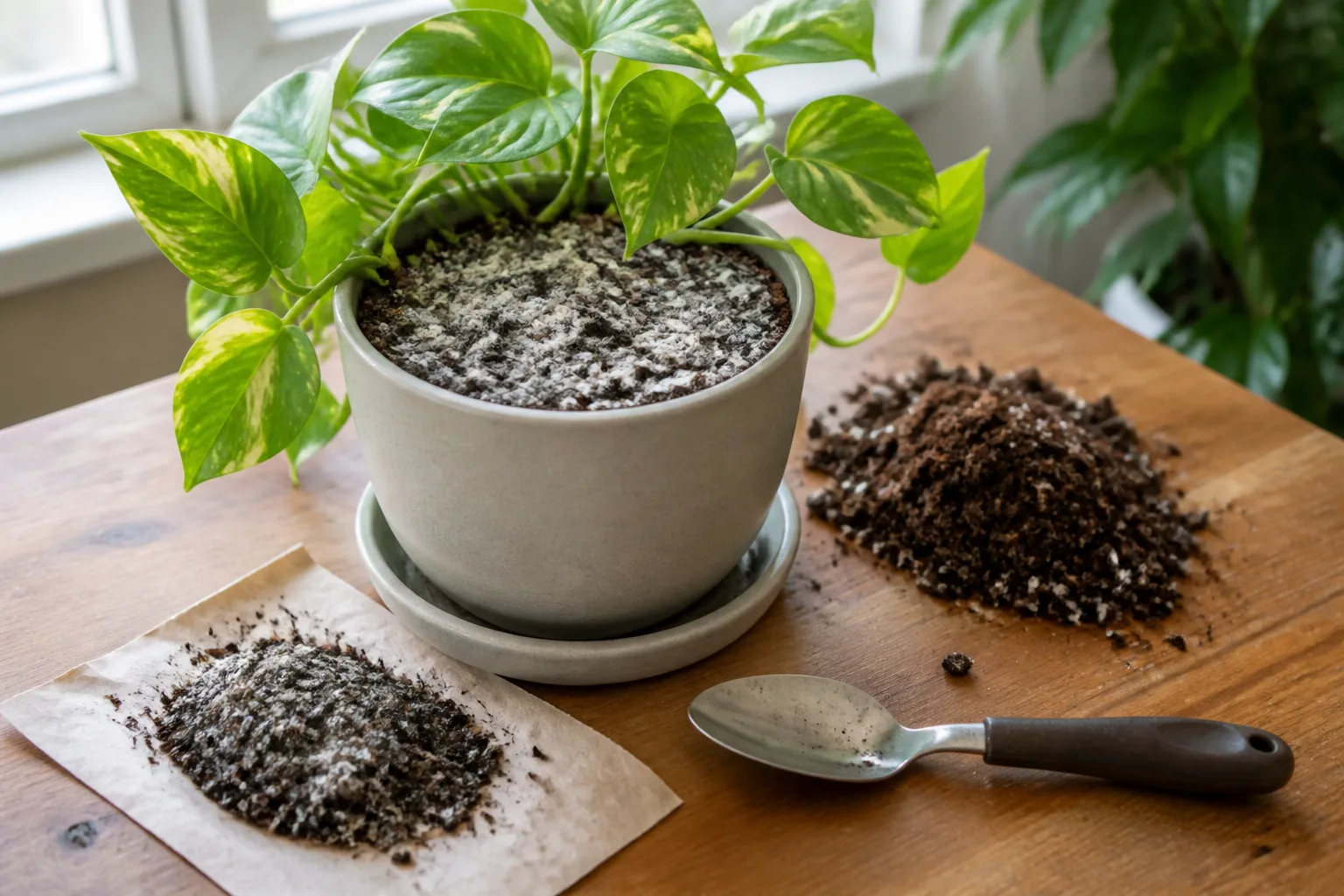
Surface mold can grow on damp organic mix. Read it alongside root-zone moisture and plant decline; it is not a diagnosis of root rot by itself.
5. Roots or the stem base turn soft and dark
The most useful confirmation comes from the roots themselves. Healthy roots vary in color by plant and potting mix, but they should generally feel firm. Roots that are brown or black, mushy, slimy, or hollow, sometimes with an outer layer that slips away when touched, are more consistent with decay than roots that are simply tan from peat or stained by soil.
Inspect only when other clues make it worthwhile: the plant is declining in wet mix, the pot smells sour, or the stem base is soft. Slide the root ball out gently and look at a few roots near the outside and bottom; you do not need to wash away every bit of mix to make the first decision. Firm roots and a firm crown argue against severe rot, even if the foliage has a problem. A soft, dark stem base can indicate crown or stem rot and may mean that saving the whole plant is difficult.
Root color differs by species and growing medium, so texture matters more than a simple color rule. Clemson Cooperative Extension describes root and stem rot as a cause of noticeable wilt and advises checking the plant and growing conditions rather than treating leaves alone (Clemson Cooperative Extension).
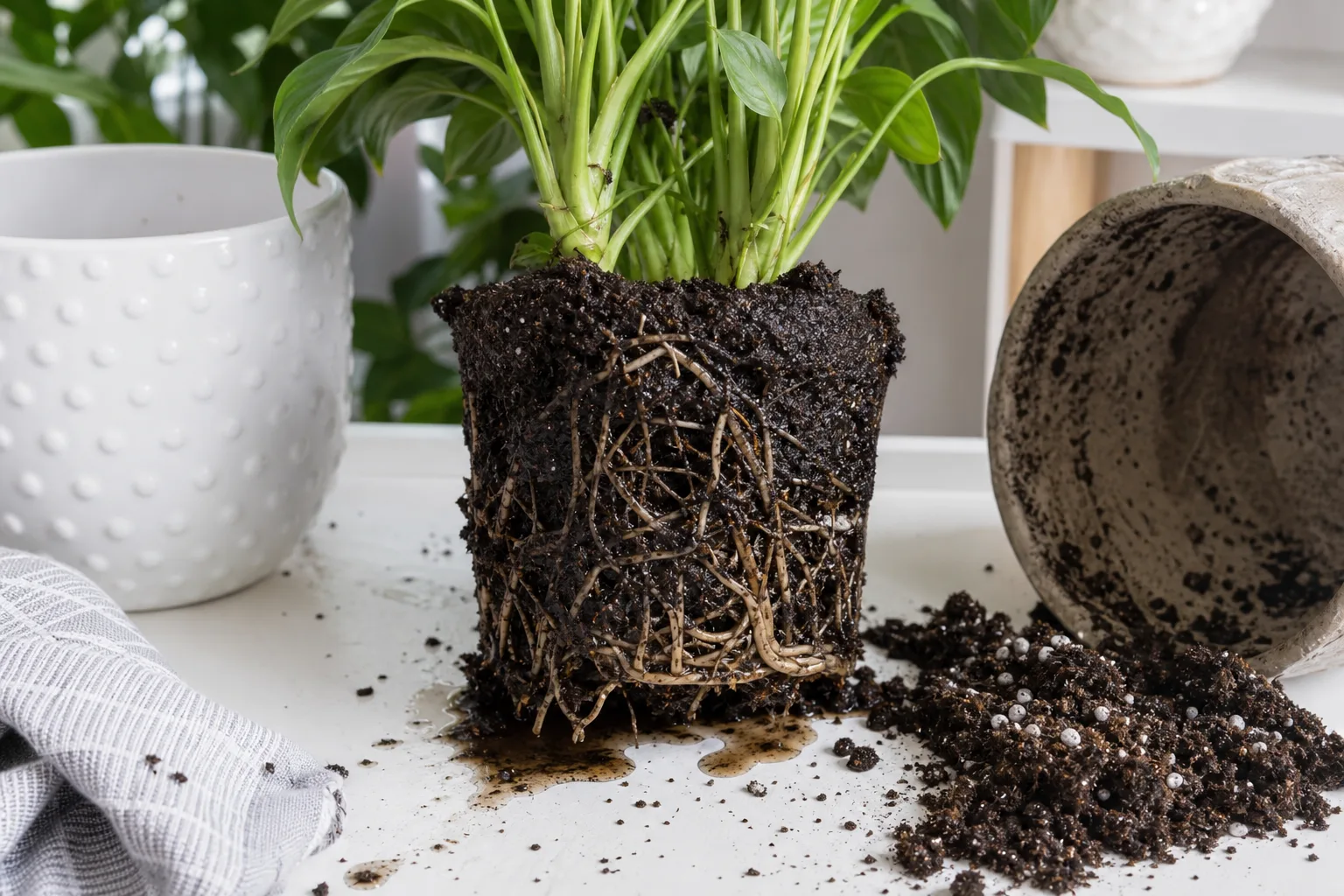
Inspect for texture as well as color. Firm roots can be pale, tan, or soil-stained; mushy roots and a soft crown are more concerning.
Overwatering or underwatering? Use the whole pattern
Both too much and too little water can cause wilt, yellowing, leaf drop, and stalled growth because in either case the canopy is not receiving what it needs. Check the root-zone moisture and look at how the leaves feel before changing anything. Drought often leaves mix dry and the pot light; overwatering is more likely when the root ball is damp, the pot stays heavy, and drainage is poor.
Signs that favor one cause over another
| Clue | More consistent with excess water | More consistent with too little water |
|---|---|---|
| Root-zone mix | Damp for an unusually long time; pot stays heavy | Dry where active roots are growing; pot feels light |
| Leaf feel | Often soft, limp, or yellowing; pattern may spread | Often limp with dry, curled, or brittle edges, depending on species |
| Roots and smell | Possible soft or decaying roots; stale odor can occur | Roots may remain firm but dry; mix may pull from pot edges |
| Water response | More water can worsen a wet-root decline | Appropriate watering may restore firmness if roots remain healthy |
This table is a guide, not a substitute for the plant’s normal care needs. A plant recently moved to a darker corner may use less water without having root rot; a very dry peat-based mix can also repel water, so the surface looks wet after watering while the center remains dry. If top and bottom moisture readings disagree, apply water slowly in stages or bottom-water briefly, then allow full drainage and recheck the root ball rather than repeatedly pouring water over the surface.
Other causes belong in the differential. Low light slows water use and can produce pale leaves; cold drafts can damage foliage; overfertilizing or hard-water salts can cause browning; pests may distort or stipple leaves. RHS guidance notes that yellowing, wilting, browning, and leaf drop are broad signs of poor houseplant health, so check light, temperature, watering, and pests together (Royal Horticultural Society).
What to do now: match the rescue to the evidence
First remove hidden standing water and stop watering until you have checked the root zone again. Move the plant to its usual bright, indirect-light conditions if it is already there; sudden direct sun or a hot radiator will not dry the root ball safely and can add a second stress. Then decide whether roots appear firm or whether you have evidence of rot.
If roots seem firm, restore the right dry-down
If the plant is not collapsing, the pot drains, there is no sour smell, and you have no reason to suspect rot, leave the plant in its pot. Empty the saucer and cachepot, clear debris from the drainage hole, and let the mix approach that species’ normal watering cue. Do not water simply because the top looks dry if the lower root zone is damp. Do not force a fern or other moisture-loving plant to dry completely; aim for the moisture range that species normally needs.
Check the plant again rather than giving it a one-time “rescue” dose. A skewer, a finger at a consistent depth, or pot weight can show whether moisture is changing. When it is time to water, wet the mix evenly and let excess drain away. A plant may keep a few damaged yellow leaves even after conditions improve; judge recovery by whether further decline slows and healthy growth resumes, not by expecting yellow tissue to turn green again.
If rot is confirmed, remove damaged tissue and repot
If you find mushy roots or a soft, dark crown in wet mix, act while healthy tissue remains. Ease away enough old mix to see the damaged area, then use clean scissors to trim only roots that are mushy, hollow, or falling apart. Keep firm roots even if they are tan or stained. If rot has reached the stem base, take a clean cutting above the damaged tissue only if the species can be propagated from a healthy stem; otherwise recovery may not be possible.
Use a clean pot with an open drainage hole, sized to the remaining root mass rather than much larger. A pot that is too large leaves more wet mix around fewer roots and may dry slowly. Add fresh, suitable potting mix that drains while holding the amount of moisture appropriate for the plant. Do not put stones at the bottom as a substitute for drainage; a clear hole and well-matched mix matter more. Water enough to settle the mix, let it drain completely, and hold fertilizer until the plant shows recovery. Repotting is stressful, so avoid disturbing roots when they are firm and the plant is not declining.
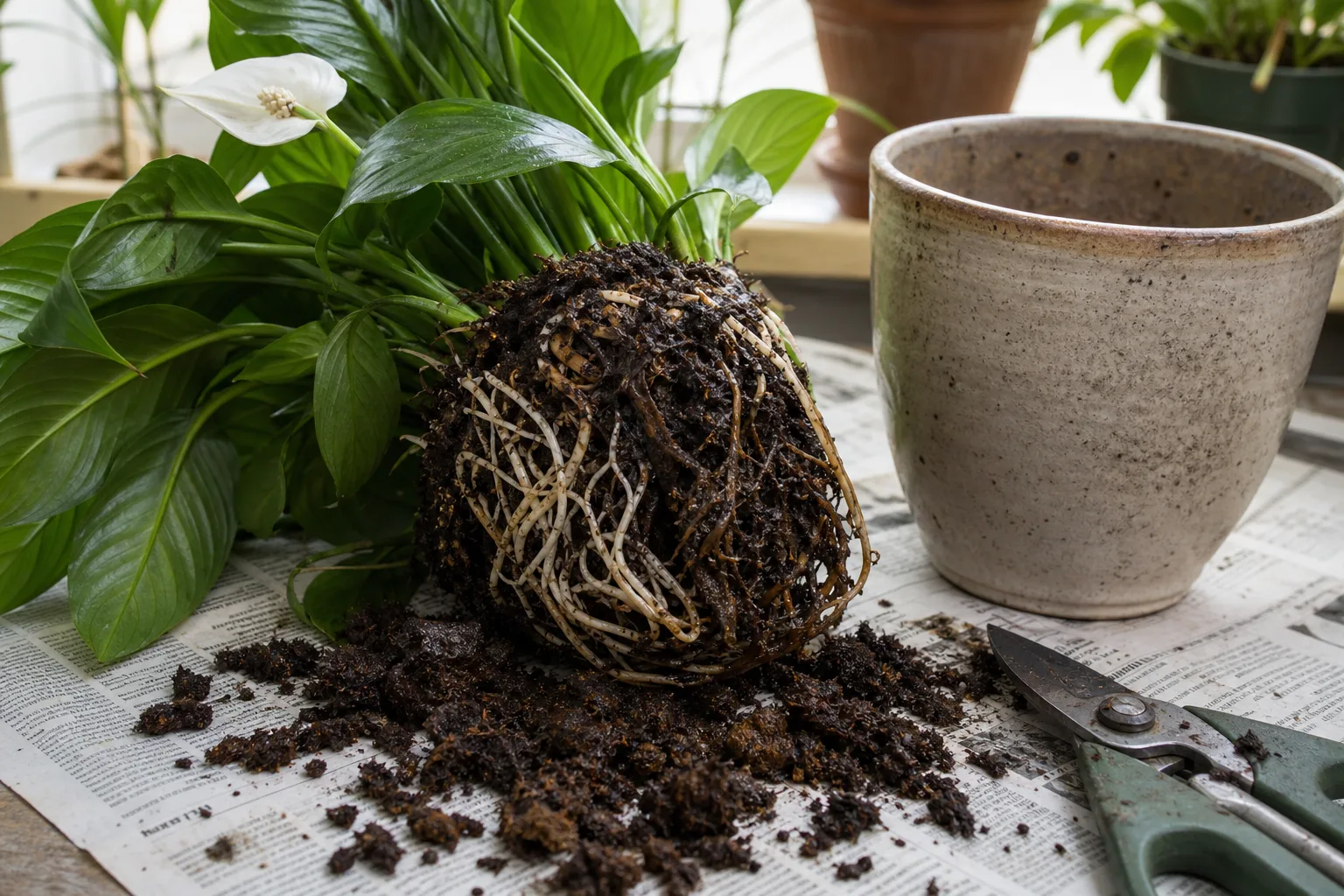
Unpot a plant when wet-root decline or other strong clues justify inspection. If the roots are firm and the plant is stable, avoid unnecessary root disturbance.
Mistakes that make recovery harder
The first common mistake is watering a wilted plant before checking whether the root ball is dry. If its roots are already short of oxygen or decaying, another watering extends the stress. Read moisture below the surface and check the pot weight before acting; the plant may look thirsty while the root system cannot use the water that is already there.
The opposite mistake is withholding water until every houseplant is bone dry. That may suit some succulents, but it can injure plants that prefer an evenly moist mix. Use the species’ normal cue and the moisture at root depth rather than adopting a universal “wait two weeks” or “dry completely” rule.
Do not repot every plant with a yellow leaf, nor prune healthy roots based only on a dark color. Unnecessary repotting adds transplant stress, and healthy roots can be naturally tan or stained by potting mix. Confirm poor drainage or root decay before using the scissors; if evidence is weak, observe the plant and correct the container conditions first.
Skip fertilizer as an emergency treatment. Fertilizer does not repair damaged roots, and a stressed plant may be less able to use the nutrients. Also avoid adding gravel to the bottom of a pot, leaving the nursery pot in standing water, or moving a plant into harsh sun to dry it quickly. Those shortcuts fail to address the root-zone cause or introduce new stress.
Prevent the same problem from returning
Start with the right container and mix for the plant. Most houseplants do better in a pot with drainage; use a decorative cachepot as an outer cover, then remove the growing pot to drain after watering. Choose a mix that supports both moisture retention and air space for that species. A compacted, broken-down mix, a pot much larger than the roots, or a blocked hole can keep a plant wet even if you are not watering often.
Expect the drying rate to change. Indoor plants generally use less water in lower light or cooler conditions, and newly repotted plants may use less while roots settle. A sunny window, warm room, fast-draining mix, or actively growing plant can dry more quickly. Check each pot individually and recheck more often when a season or location changes; do not transfer a weekly routine from one plant to an entire shelf.
Build a plant-specific watering cue
For each plant, identify where roots are active and what moisture range it tolerates. Many foliage plants can be watered when the upper portion of mix has dried while the deeper root zone remains slightly moist; cacti and many succulents usually need a longer dry period, while some ferns and tropical plants prefer more even moisture. Those are broad groups, not fixed rules for every cultivar or home.
When the plant reaches its cue, water thoroughly enough to moisten the root ball, then let all extra water drain and empty the saucer. In a dry peat mix that has shrunk from the pot, add water in two slow passes so it can soak in rather than race down the gap. If you bottom-water, remove the pot once the mix has taken up moisture and let it drain; do not leave the roots sitting in the basin.
Keep a simple note of when you watered, how heavy the pot felt, and how long it took for the root zone to reach its cue. This turns the next watering into an observation instead of a guess. University of Maryland Extension recommends checking soil moisture and accounting for plant differences; Virginia Tech likewise emphasizes that watering depends on the container and growing conditions. Neither a calendar nor a moisture meter replaces seeing how this particular pot behaves.
Conclusion
The strongest case for overwatering is not one yellow leaf, a wilt, surface mold, or a fungus gnat. It is the combination of mix that remains wet, a pot that drains poorly, symptoms that progress, and roots or a stem base that have become soft and decayed. Check moisture below the surface and rule out other stresses before deciding to repot.
If roots are firm, remove standing water and let the mix return to the plant’s normal moisture range. If rot is present, prune only damaged tissue and repot into a clean, draining container sized for the remaining roots. Then use the plant’s species, pot, light, and season to set a watering cue that prevents the next wet-root cycle.



