Veronica Spicata Care: Planting, Pruning, and Propagation
Learn how to grow Veronica spicata with the right sun, drainage, watering, pruning, cultivar, container, and propagation advice.
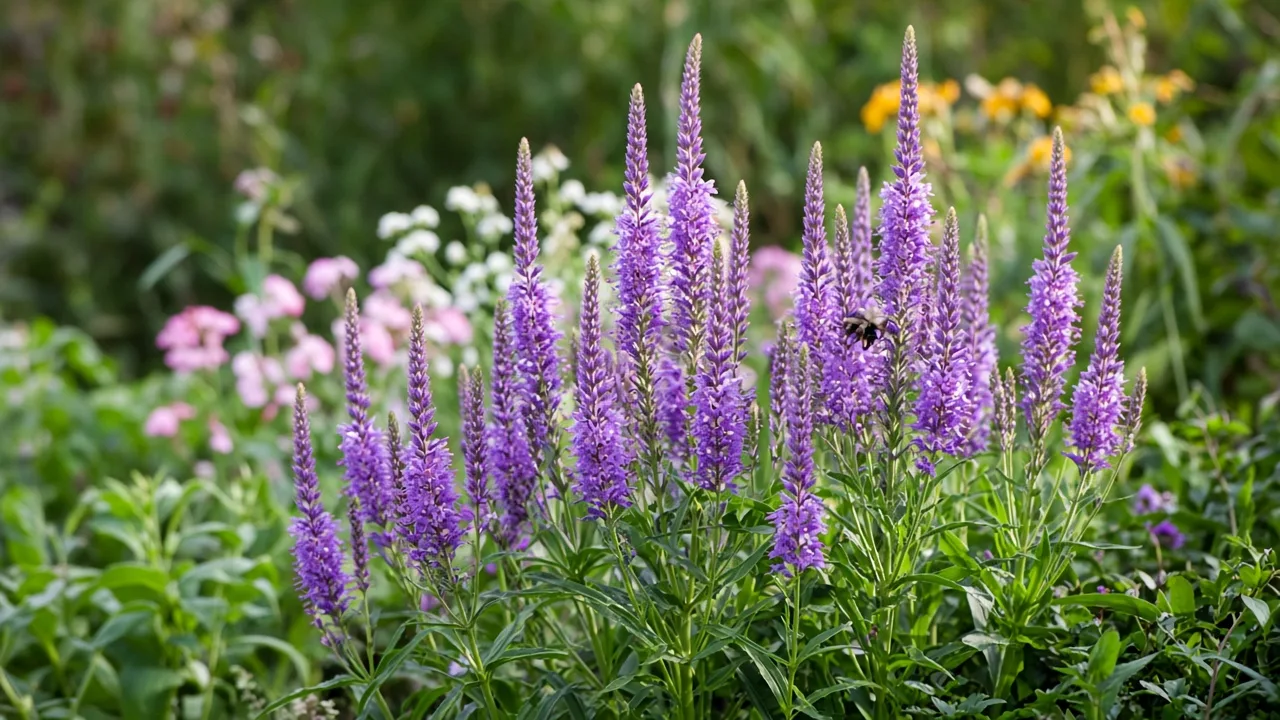
Veronica spicata, commonly called spiked speedwell, earns its place in a sunny perennial border with upright flower spikes, tidy basal foliage, and a long season of interest for relatively little work. The key to good plants is not a complicated fertilizer program. It is matching the plant to a bright site where water can leave the root zone quickly, then using timely deadheading to turn one flush of flowers into a longer display.
The name “speedwell” covers many Veronica species, from creeping ground covers to tall border plants. This guide is about the clump-forming species Veronica spicata, not every plant sold under the common name. It typically grows as a compact perennial with opposite, toothed leaves and dense terminal racemes of tiny, star-like flowers. The accepted species and its synonym history are recorded by ITIS, while NCBI Taxonomy places it in the family Plantaginaceae.
Veronica spicata: quick facts and growth habit
Spiked speedwell is a herbaceous perennial that dies back or becomes quiet in winter and resumes from its crown when conditions improve. The flower spikes rise above a low mound of foliage, so the plant supplies vertical punctuation without taking up the space of a shrub. Depending on the cultivar, the flowering stems may be under a foot tall or around two to three feet; always check the nursery label before deciding where it belongs.
| Feature | What to expect |
|---|---|
| Botanical name | Veronica spicata |
| Habit | Upright, clump-forming perennial |
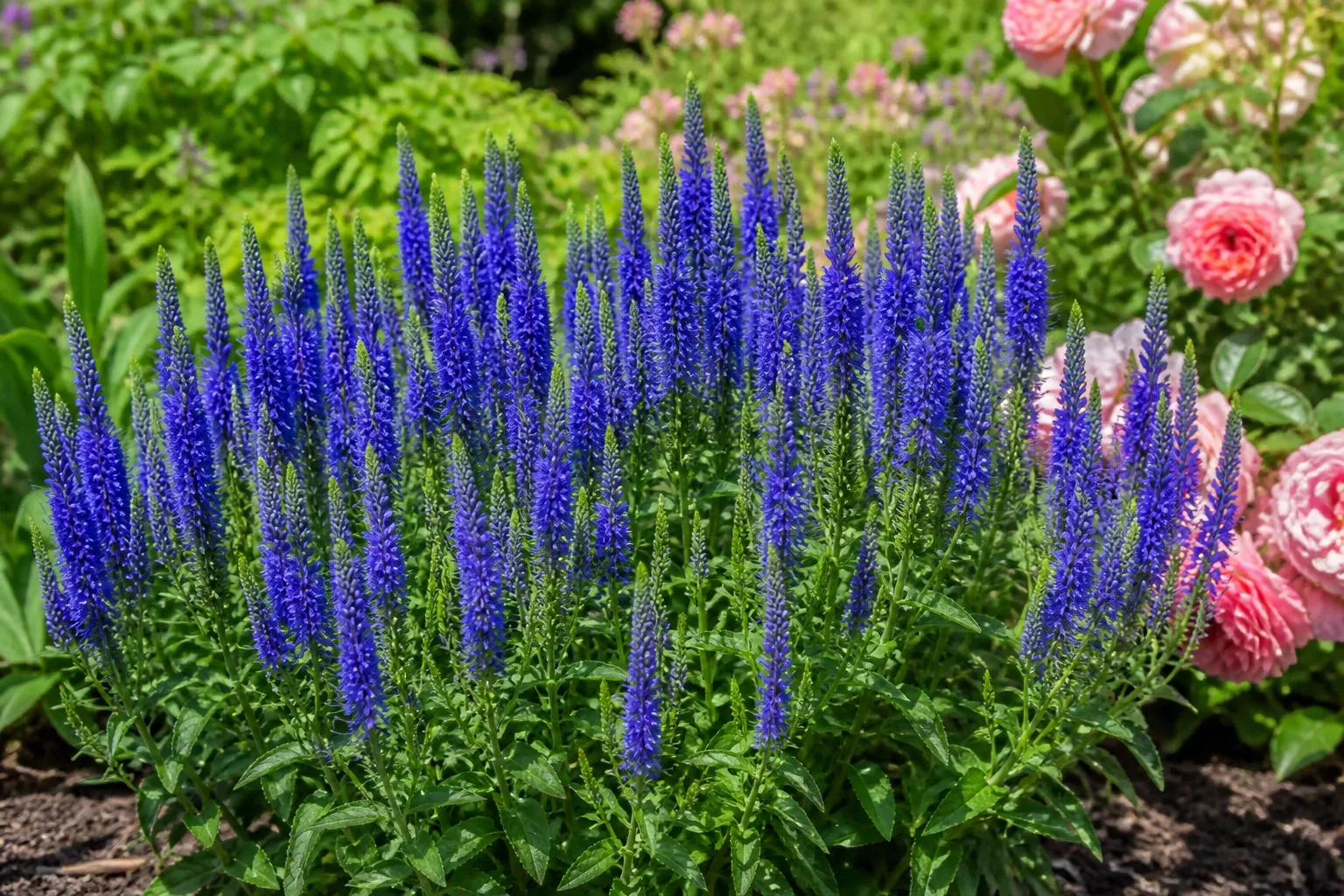
| Flowers | Dense spikes of tiny blue, violet, pink, or white blooms |
| Bloom period | Usually late spring or summer, varying by cultivar and climate |
| Light | Full sun is best; light shade is tolerated with compromises |
| Soil | Average to fertile soil that drains freely |
| Mature size | Roughly 6 inches to 3 feet tall, depending on selection |
| Garden roles | Borders, rock gardens, cutting gardens, containers, and pollinator beds |
The NC State Extension Plant Toolbox describes the species as easy to grow in moist, well-drained soil and notes its blue, terminal racemes, deer and rabbit resistance, and value as a nectar and cut-flower plant. That combination explains why it works in both a structured border and a looser wildlife planting. It is not a plant that needs constant attention, but it is also not a wet-meadow perennial: saturated winter soil is a serious liability.
Choose a site that rewards drainage
Site selection determines more of this plant’s future than any feeding schedule. Choose a spot where the foliage will dry after rain, the crown will not sit in a low puddle, and neighboring plants will not shade the stems as they reach for light. A raised or gently sloping bed is often a better home than a rich hollow at the bottom of a lawn.
Light: aim for six or more hours
Give Veronica spicata at least six hours of direct sun if you want the most flower spikes and the firmest stems. The RHS profile for Veronica spicata lists full sun as its position and describes a clump-forming plant with summer flowers. Morning sun with some afternoon shade can work in a hot climate, but deep shade usually produces fewer flowers and looser, more easily bent stems.
Soil: moisture is fine; waterlogging is not
“Well-drained” does not mean bone-dry soil. A new plant needs consistent moisture while roots move into surrounding soil, and established plants flower better when they are not repeatedly scorched. The distinction is that moisture should be available in the root zone without lingering around the crown for days.
Test the site before planting: dig a hole about 12 inches deep, fill it with water, let it drain, then fill it again. If the second filling is still standing several hours later, treat that spot as a drainage project rather than simply adding a plant. Mix organic matter into compacted soil to improve structure, but do not assume compost alone can solve a perched water table. A raised bed, a slight mound, or a different location is usually the more durable correction.
On heavy clay, loosen the planting area broadly instead of making a small, isolated pocket of fluffy soil. A tiny amended hole can collect water from the surrounding clay and leave the root ball wetter than the bed around it. In a gravel or rock garden, use a mineral, free-draining mix and keep wet mulch away from the crown. The RHS records tolerance for chalk, clay, loam, and sand when drainage is suitable; the soil texture can vary, but stagnant water is the common deal-breaker.
Plant Veronica spicata step by step
Plant nursery-grown speedwell in spring after the soil is workable, or in early fall while the ground is still warm enough for root growth. Cooler planting weather reduces transplant stress. Garden Design’s Veronica growing guide recommends spring or fall transplanting, setting the top of the root ball level with the soil surface, and spacing by the mature size of the variety.
- Choose the final position first. Confirm the light, drainage, mature height, and view from paths or windows. A tall selection belongs behind low edging plants; a dwarf selection can sit near a path without hiding behind its neighbors.
- Prepare a broad area. Loosen soil to roughly the depth of the root ball and about twice its width. Remove perennial weeds and break up hard clods, but avoid turning the bed into a deep, over-amended pocket.
- Inspect the roots. Slide the plant from its pot and look for circling roots. Tease apart only the outermost congested roots; do not shred the root ball or break the crown.
- Set the crown at the original level. The top of the root ball should be even with, or just barely above, the surrounding soil. Deep planting traps moisture at the crown and can cause decline even when the rest of the bed appears dry.
- Water the root zone thoroughly. Apply water slowly enough to settle soil around the roots. After that first watering, return to the plant as the soil begins to dry rather than keeping the surface constantly wet.
For a natural-looking border, plant several matching clumps rather than scattering single specimens across a large bed. Spacing varies widely with the cultivar, but 12 to 24 inches is a useful starting range for many garden selections; use the label’s mature width when available. Crowding can create a dense, humid center and make lower leaves disappear, while excessive spacing makes the spikes look accidental instead of intentional.
Water from planting to maturity
Water newly planted Veronica spicata whenever the top few inches of soil begin to dry, adjusting for rainfall, soil type, wind, and temperature. In a typical garden bed this may mean a thorough watering about once a week during the first growing season, with more frequent checks during a heat wave. Water at the soil line so the roots receive a deep drink and the leaves have time to dry.
Once established, spiked speedwell can handle short dry periods, especially in a sunny, free-draining bed. “Drought tolerant” should not be interpreted as “never water.” If leaves wilt repeatedly, flower spikes abort, or the soil pulls away from the edge of the planting hole, the plant is under stress. A slow, deep soak is more useful than a daily sprinkle that wets only the surface.
Let the soil guide the interval. Sandy beds may need attention sooner; heavy clay may stay wet far too long. Container plants dry faster than plants in the ground, but they also suffer more quickly from poor drainage. The best routine is to check moisture a few inches down, water thoroughly when the root zone is moving toward dry, and empty any saucer that allows the pot to sit in runoff.
Winter changes the priority. Reduce irrigation when growth and evaporation slow, and do not add water simply because the foliage has died back. A dormant crown in cold, wet soil is at greater risk than a dormant crown in slightly dry soil. If the planting area receives roof runoff or irrigation overspray, redirect that water before the coldest part of the year.
Feed lightly and mulch without burying the crown
Spiked speedwell does not need a high-nitrogen feeding program to flower. Excess nitrogen can produce lush, soft growth that leans, especially when light is marginal or the soil is already fertile. Start with a soil test if the bed is routinely amended; otherwise, a thin layer of finished compost around the plant in spring is usually enough for an established clump.
Keep compost and mulch a few inches away from the crown. Mulch is useful for moderating soil temperature, slowing evaporation, and reducing weeds, but a wet blanket pressed against the plant base keeps the root collar damp. In a dry, sharply drained bed, a thin mineral mulch such as grit can be preferable to thick bark. In an ordinary border, use a restrained organic mulch and inspect the crown after prolonged rain.
Prune for repeat bloom and sturdy stems
Speedwell pruning has three different jobs: removing spent flowers, correcting a straggly summer plant, and clearing dormant stems. Treating them as one task often leads to unnecessary cutting. The most useful cut is usually the one made soon after the first flower spike has faded, while the plant still has time to produce side stems.
Deadhead the first flower spikes
Watch the flower spike from the bottom upward. Veronica blooms open progressively, so a spike can look partly fresh while the lower flowers are already finished. When most of the spike has faded, follow its stem down to the first strong leaf joint or a cluster of side shoots and cut just above that point with clean pruners.
Deadheading at a leaf joint keeps the cut from leaving a long, bare stub and preserves the side growth that can carry later flowers. For a plant with many spikes, you do not need to remove every fading flower immediately. Cut the most conspicuous spent stems first, then make a second pass a week later. The result is tidier and less disruptive to visiting insects than repeatedly combing through every bloom.
The likely reward is a second, smaller flush rather than an identical second performance. Cultivar genetics, day length, heat, and water availability all matter. The Garden Gate Magazine guide to speedwell notes that some newer cultivars rebloom more strongly than older types, while other selections hold their first flush for a long time. Deadhead for renewed branching and appearance, not as a guarantee of a second peak.
Cut back at the right time
If the lower foliage has collapsed in a hot, dry summer or the plant has become unattractively ragged, you can cut the whole clump back to its basal foliage and water it well. This is a reset, not a routine requirement. Avoid doing it during severe heat or drought unless you can provide follow-up moisture while new growth returns.
Leave healthy, dormant stems standing through winter if they provide structure or shelter in the border. Cut them down in late winter or early spring before new shoots lengthen. In a wet climate, remove diseased foliage and stems sooner and dispose of them away from the compost pile. Always leave the crown itself intact; do not scalp into the center of the plant.
Tall varieties can need support in exposed sites or rich soil. Install a discreet hoop or stake early, before stems become tangled, rather than forcing a fully floppy plant upright later. If flopping repeats every season, solve the cause—usually inadequate light, excess nitrogen, crowding, or a cultivar that is too tall for the site—instead of relying on a larger stake.
Select a cultivar by height, color, and use
The species name alone does not tell you how tall a plant will be. The catalog name on the pot matters because speedwell cultivars and hybrids differ in height, branching, bloom timing, and rebloom. The following selections are useful starting points, not a complete list.
| Selection | Typical character | Best use |
|---|---|---|
| ‘Royal Candles’ (‘Glory’) | Compact, dark blue-violet spikes | Front of a border, small gardens, containers |
| ‘Icicle’ | White flower spikes, taller than dwarf types | Mixed borders and white-themed plantings |
| ‘Red Fox’ | Compact clump with deep pink to rose-red spikes | Front-to-middle border and pollinator grouping |
| ‘Purpleicious’ | Purple flowers and an upright habit | Repeated drifts and blue-purple color schemes |
| ‘Tickled Pink’ | Pink flowers on a clumping perennial | Soft-color borders and cottage-style beds |
| ‘Sunny Border Blue’ | Taller blue-violet flowering stems | Middle of a border, with support if exposed |
NC State Extension lists ‘Icicle’, ‘Purpleicious’, ‘Rosea’, ‘Royal Candles’, and ‘Tickled Pink’ among cultivated choices. For a fuller range of sizes, Garden Design’s cultivar guide is useful because it separates compact spike speedwells from creeping forms and taller hybrids. Do not buy a low, mat-forming Veronica when your goal is a two-foot cut-flower stem, and do not put a tall selection at the very front of a narrow bed just because the flower color is perfect.
Grow spiked speedwell in containers
Container growing works best with compact selections such as ‘Royal Candles’ or a cultivar specifically sold for pots. Choose a container with a drainage hole, use a free-draining potting mix, and leave enough room around the root ball for a full season of growth. A pot that is much larger than the root system stays wet longer; a pot that is too small dries and overheats quickly.
Place the container where the plant receives strong light and good air movement. Water when the mix is partly dry below the surface, then let excess run out completely. Do not use a decorative cachepot as a permanent reservoir. Move or shelter the container if winter precipitation keeps the mix saturated, and remember that roots in a pot experience colder and faster temperature changes than roots in the ground.
Propagate with division first
Division is the most dependable way to make more plants that match the parent. It also rejuvenates an older clump whose center has become woody or bare. Divide in spring as new growth begins, or in early fall while the plant can establish before hard winter; avoid dividing during a heat wave or just as the plant enters peak bloom.
A root-and-shoot division works only when each piece carries healthy roots and several vigorous shoots.
Water the plant the day before if the soil is dry. Dig around the outer edge of the clump, lift as much of the root system as possible, and shake or wash away enough soil to see where living shoots meet roots. Pull the clump apart if it separates naturally, or use a sharp knife to cut it into sections. Each division should have healthy roots and several vigorous shoots; discard a dead, hollow center rather than treating it as a viable piece.
Replant divisions immediately at the same depth as the original clump. Firm soil around the roots, water slowly, and keep the new plants evenly moist while they settle. Do not feed heavily at planting. A division spends its first weeks rebuilding roots, and a flush of soft top growth is not evidence that it has established.
Take cuttings or start seed when it makes sense
Softwood cuttings taken from fresh, non-flowering growth in late spring or early summer can produce clones, but they need more attention than division. Take several cuttings rather than betting on one, remove lower leaves, insert them into a clean, lightly moist propagation medium, and keep them in bright indirect light with high humidity until roots form. Gradually acclimate rooted cuttings before planting them outdoors.
Seed is useful when you want many plants or are curious about variation, but named cultivars may not come true from seed. The tiny seeds also need a controlled start. Press them onto the surface of a moist seed-starting mix, because light can aid germination, and keep the tray evenly moist without waterlogging it. Garden Design advises surface sowing and a germination window of roughly two to three weeks under suitable temperatures; Harvest to Table also describes spring or early-summer sowing and division, cuttings, and seed as the main propagation routes.
Do not bury speedwell seed deeply or let the tray swing from saturated to bone dry. Once seedlings have several true leaves, pot them on and harden them off gradually. Seed-grown plants can take longer to make a substantial clump, and their eventual flower color or height may differ from the parent. If you want an exact ‘Royal Candles’ or ‘Red Fox’, buy a named plant or divide that named plant instead.
Fix common problems before they compound
When a speedwell looks wrong, start with the site and the roots before reaching for a product. The same wilted appearance can come from drought, root damage, or heat, and the correction for one can worsen another. Use this quick diagnosis as a first pass.
| Symptom | Likely cause | First correction |
|---|---|---|
| Tall stems lean or sprawl | Too little sun, excess nitrogen, rich soil, wind, or a tall cultivar | Improve light if possible, stop high-nitrogen feeding, stake early, or move to a better-sized cultivar |
| Leaves are abundant but flowers are scarce | Shade, crowding, immature plant, or wrong cultivar | Check direct sun, thin competing growth, and give the clump time to establish |
| Center dies while outer shoots remain | Aging clump, congestion, or crown staying wet | Divide healthy outer sections and correct drainage |
| Plant wilts while soil is wet | Root or crown rot from poor aeration | Stop routine watering, inspect the crown and roots, and move or replant in better-drained soil |
| Leaves crisp during a hot spell | New roots, shallow watering, container stress, or reflected heat | Soak the root zone deeply, shade a container during peak heat, and check moisture below the surface |
| Lower leaves disappear after flowering | Seasonal stress, heat, drought, or natural aging of lower foliage | Keep roots watered without saturating them; deadhead or cut back only if the plant is genuinely ragged |
Do not treat every yellow lower leaf as a fertilizer deficiency. A plant can have adequate nutrients and still lose lower foliage when roots are too wet or the canopy is stressed. Conversely, adding fertilizer to a shaded, floppy plant usually produces more weak stems instead of more useful flower spikes.
Watch pests and diseases
Spiked speedwell is generally low maintenance when it has sun, airflow, and drainage, but no perennial is problem-proof. Aphids may cluster on tender shoots and buds, while slugs and snails can chew foliage, especially in damp beds. The RHS lists aphids along with downy mildews, fungal leaf spot, fungal rot, and Phytophthora among possible concerns.
Inspect the undersides of leaves and the newest stems before assuming a disease. A small aphid colony can often be dislodged with a firm water spray, and natural predators may finish the job. Pick slugs or snails at night, remove hiding debris, and reduce the damp, over-mulched conditions they prefer. If you use a pesticide or bait, identify the target first and follow the product label for the crop, timing, protective equipment, and application limits; stronger treatment is not automatically better gardening.
Powdery mildew and leaf spot are more likely when foliage stays crowded, shaded, or wet for long periods. Water at the soil line, give clumps enough space, remove badly affected leaves, and improve air movement. Avoid working through wet plants because you can spread spores from one stem to another. Root rot is the more consequential failure: if the crown is dark and soft, roots are brown and collapsing, and the soil remains wet, drainage correction matters more than feeding.
Build a better border with speedwell
Use spiked speedwell as a vertical accent rather than an isolated specimen lost in a wide bed. Groups of three or five create a stronger rhythm, and larger drifts make the flower spikes easier for pollinators to find. Garden Gate Magazine recommends grouping speedwell for visual impact and describes frequent bee and butterfly visits to its many small flowers.
A mixed pollinator planting can combine upright speedwell with other purple flowers while preserving varied flower shapes.
Pair the spikes with plants that have a different silhouette. Rounded coneflower or daisy heads, flat yarrow clusters, low grasses, catmint, salvia, sedum, and lamb’s ear can balance the vertical form without demanding a constantly wet bed. Match companions by water and sun needs, not just by flower color. A moisture-loving neighbor that requires daily irrigation can create exactly the soggy, lush conditions that make speedwell weak.
For a cutting garden, harvest stems when the lower part of the spike has opened and the upper buds are still developing. Cut in the cool part of the day, strip foliage that would sit below the vase water, and place the stems in water promptly. The exact vase life varies with the cultivar and harvest stage, but cutting early in the spike’s progression gives you more time to enjoy the flowers opening indoors.
Speedwell is also useful in a pollinator bed because its small flowers are presented along a narrow, accessible spike. Avoid spraying open flowers unnecessarily, and leave some late-season structure where practical. Its reported deer and rabbit resistance is helpful in a browsing garden, but resistance is not a guarantee under severe food pressure; protect a new planting if local wildlife is unusually hungry.
Follow a simple seasonal care calendar
Late winter: Cut back old stems before fresh shoots lengthen. Clear diseased debris and check whether winter water has collected around the crown. Do not pile wet compost against the plant base.
Spring: Plant nursery stock after the soil is workable, divide established clumps if needed, and apply a thin compost top-dressing. Water new plants consistently while roots expand. Install support around tall cultivars before stems become tall and tangled.
Early summer: Watch the first spikes develop, water deeply during dry spells, and check young shoots for aphids or slug damage. Harvest a few stems for the vase when the lower flowers open.
Mid to late summer: Deadhead faded spikes down to a strong leaf joint or side shoot. If the plant is truly ragged, cut it back after flowering and water it while new growth returns. Expect rebloom to vary by cultivar and weather.
Fall: Plant or divide early enough for roots to settle before hard freezes. Reduce irrigation as growth slows, but do not let a new division dry out. In a dry, well-drained bed, leave healthy stems for winter structure; in a disease-prone bed, remove compromised material.
Winter: Keep the crown out of standing water. Protect a container from repeated saturation and severe temperature swings, and avoid routine feeding or watering while the plant is dormant.
Conclusion
The most reliable Veronica spicata care routine is simple: give spiked speedwell strong light, plant it at the correct depth, keep the root zone moist while it establishes, and make drainage the priority once the plant is mature. Feed sparingly, deadhead after the first flush, and choose a cultivar whose height matches the space instead of forcing a tall plant to behave like an edging perennial.
When an older clump weakens, divide healthy outer sections rather than endlessly fertilizing the bare center. With that rhythm, spiked speedwell becomes a repeatable garden performer—upright flower spikes for the border, useful stems for the vase, and a dependable source of summer nectar without demanding daily care.



