Watermelon Peperomia Care Guide: Light, Water & Fixes
Grow watermelon peperomia with bright indirect light, dry-top watering, airy soil, and split-leaf propagation. Fix yellow leaves, edema, and leggy growth fast.
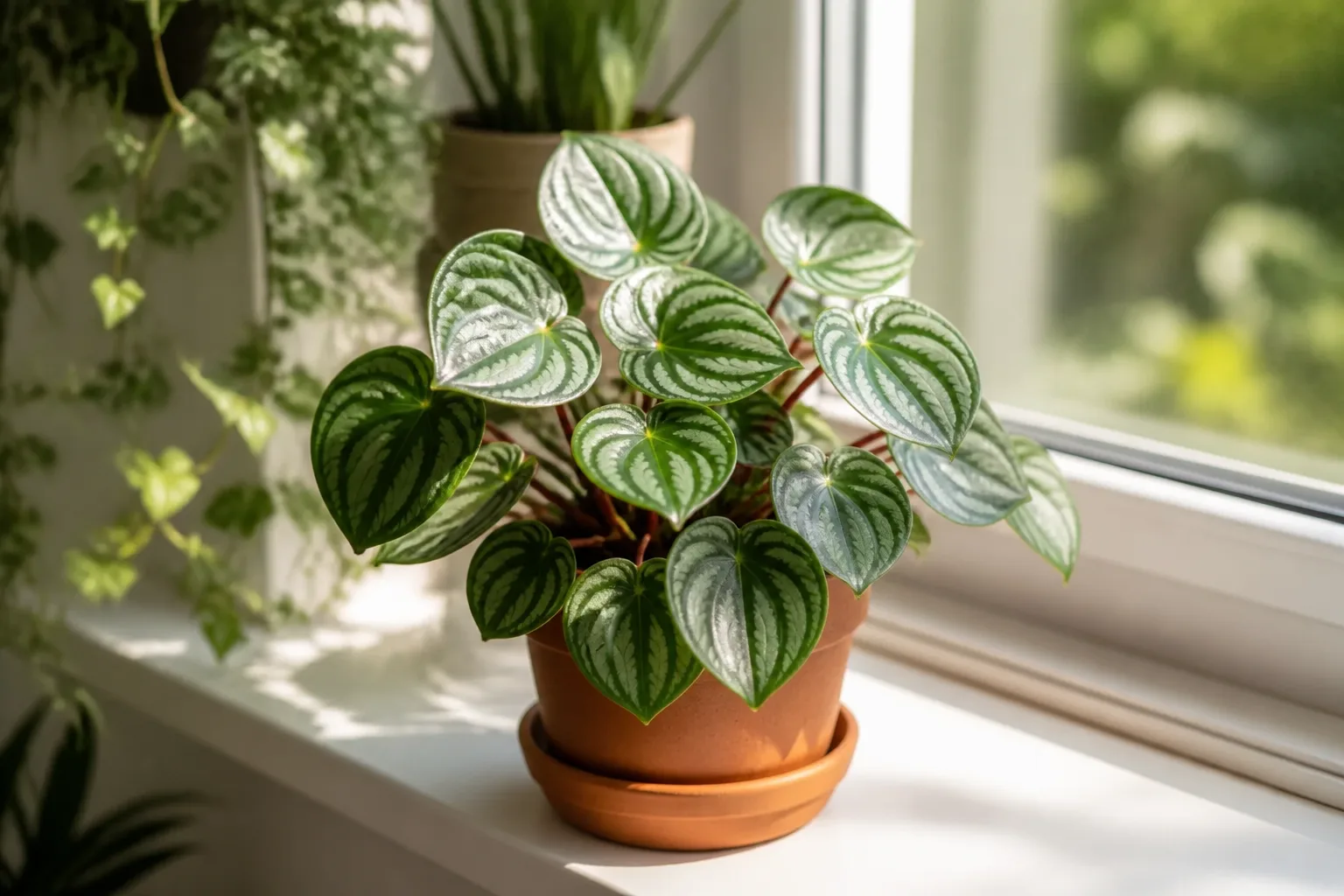
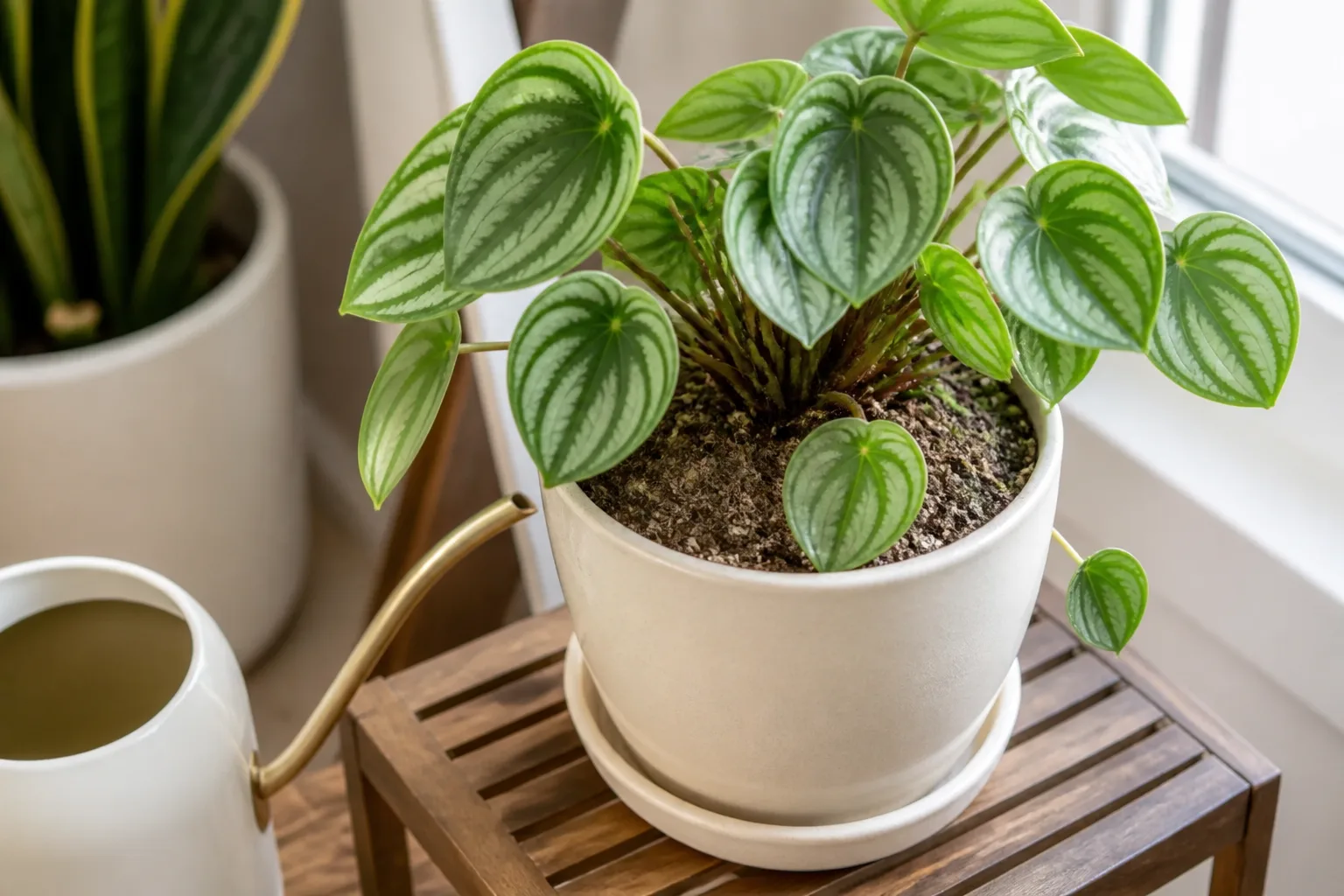
Watermelon peperomia (Peperomia argyreia, sometimes listed as P. argyraea) is the compact houseplant with round, silver-striped leaves that look like miniature watermelon rinds on red stems. It stays small, handles normal apartment conditions when you respect its roots, and ranks among the safer colorful foliage picks for pet homes. The care goal is simple: give it bright indirect light, let the top of the mix dry before you water again, and keep the pot small and airy so roots never sit in wet soil for days.
What Makes Watermelon Peperomia Worth Growing
Most people buy this plant for the pattern. Mature leaves should show crisp dark-green and silver banding on a peltate leaf—meaning the petiole attaches near the center of the round blade, a detail NC State Extension highlights because it helps you confirm the species at the garden center. Growth is slow to moderate indoors, usually topping out around 6–8 inches (15–20 cm) according to the Missouri Botanical Garden, which makes it ideal for desks, shelves, and grouped displays without turning into a floor plant.
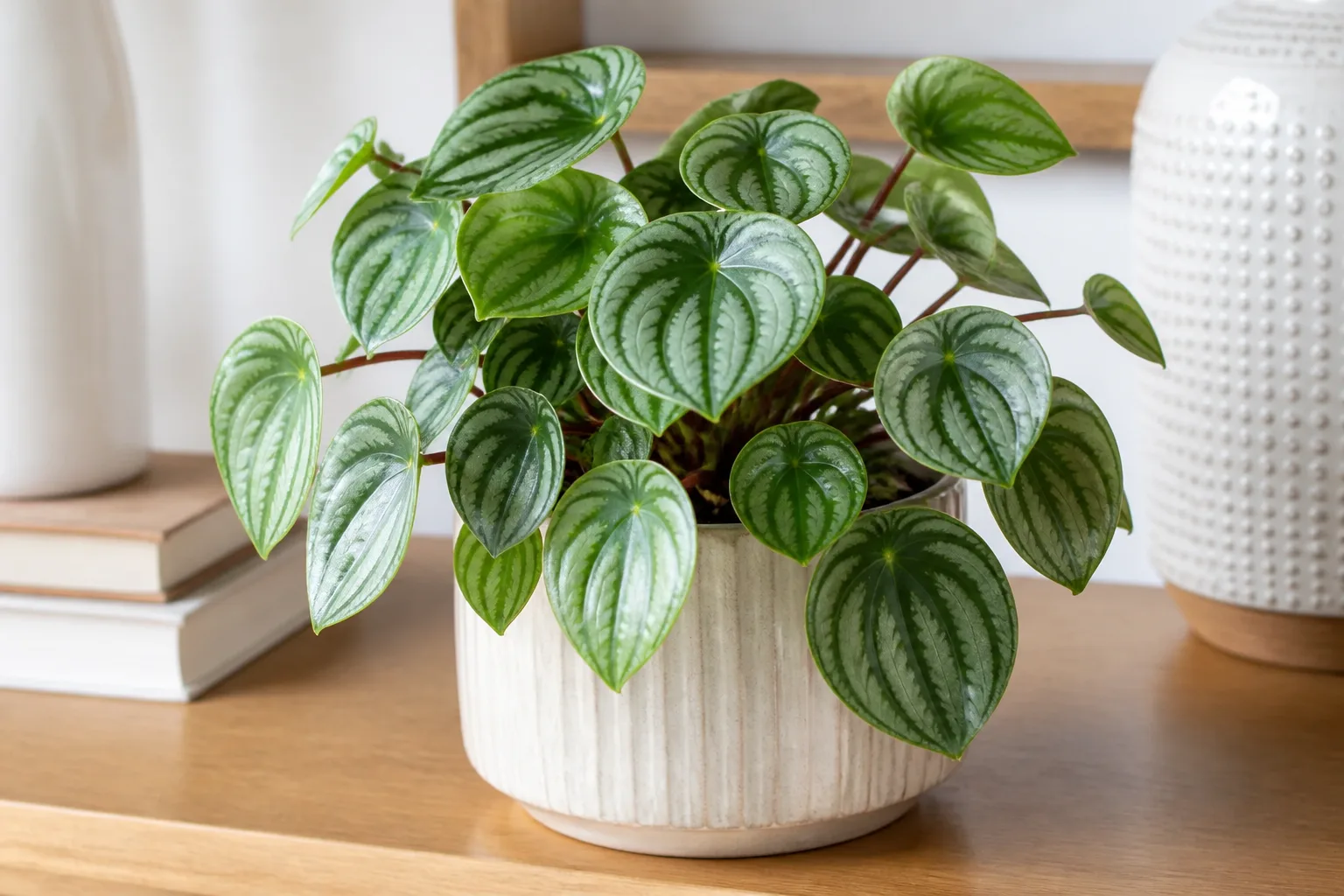
Unlike drama-prone calatheas, watermelon peperomia forgives a missed watering better than its thin-leaf tropical cousins—those semi-succulent leaves store some moisture. That storage is also why overwatering kills it faster than underwatering: the roots are small, the pot is often too large, and the leaves hide chronic wetness until yellowing and soft stems appear. Treat it as a moisture-sensitive foliage plant, not a desert succulent, and you will avoid the two failures that account for most abandoned pots.
Quick Facts and ID Checklist
Before you copy care advice from a random tag, run this ID check. Retail labels often say watermelon begonia, watermelon plant, or even list the wrong genus entirely. Botanically this is a peperomia in Piperaceae—the pepper family—not a begonia and not a pilea. Striped round leaves, red petioles, and creamy flower spikes on a short shrubby plant point to Peperomia argyreia.
| Trait | Watermelon peperomia | Common look-alike mistake |
|---|---|---|
| Leaf pattern | Silver + green watermelon stripes | Pilea cadierei (aluminum plant) has metallic dots, not stripes |
| Leaf shape | Round, peltate attachment | Begonias have asymmetric leaves and different veins |
| Stem color | Reddish, semi-succulent | True succulents often have thicker, waxy stems without red petioles |
| Water needs | Dry-top watering; hates soggy mix | Succulents tolerate longer dry spells; ferns want constant moisture |
Outdoors it is hardy only in USDA Zones 10–12; everywhere else it is a year-round houseplant. NC State Extension notes it is non-toxic to cats and dogs, which matters if you are comparing it with popular but toxic striped plants.
Light Requirements for Strong, Striped Foliage
Watermelon peperomia needs bright, indirect light for most of the day. That is the single biggest lever for leaf size, stripe contrast, and compact growth. Clemson HGIC recommends indirect light from east- or south-facing windows for peperomias in general, and the RHS lists P. argyreia for bright filtered light indoors. Direct midday sun scorches the round surface; deep shade produces leggy red petioles and pale, small leaves.
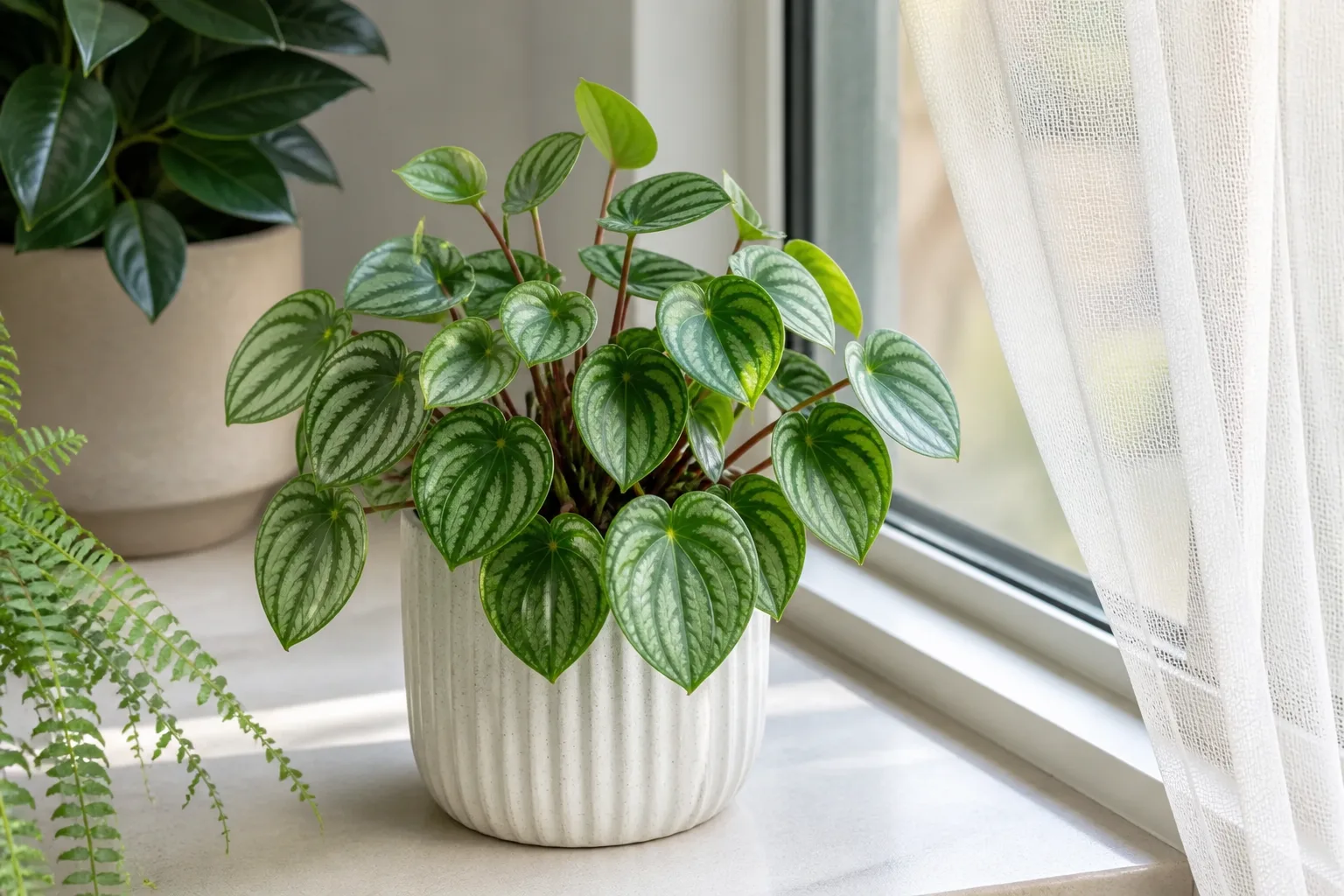
Read new growth, not old leaves, when judging light. Happy plants push leaves that are nearly as wide as they are long, with sharp silver banding. Stretchy stems with shrinking leaves mean move closer to the window or add a grow light. Bleached patches or crispy brown sunburn on the leaf face mean pull back, shear the glass, or shift to morning-only exposure.
Best Window Placements Indoors
An east-facing sill is the default sweet spot: gentle morning sun, then bright ambient light the rest of the day. North windows work in bright rooms if the plant sits within a foot of the glass—not on a distant bookshelf. South and west windows can work when the pot sits 3–5 feet back or behind a sheer curtain so afternoon rays never hit the leaves directly.
Rotate the pot a quarter turn weekly so the rosette stays even. If you only have a dim corner, do not compensate with extra water; low light plus wet soil is the fastest route to yellow lower leaves and fungus gnats. Either improve light or accept slower growth with a longer dry-down between waterings. For deeper placement guidance, see the watermelon peperomia light guide.
Grow Lights and Low-Light Recovery
Offices and interior rooms without useful windows need full-spectrum LED grow lights on a 10–12 hour timer. Hold the fixture 12–18 inches above the canopy and watch leaf color over two weeks. If new leaves stay small, lower the light slightly; if edges crisp, raise it or reduce hours.
When moving from a dim shop shelf to a bright sill, acclimate over 7–10 days—leaves formed in low light burn easily under sudden afternoon sun. Shift the pot a foot closer every few days rather than jumping straight to the glass.
Soil and Potting Mix That Keeps Roots Breathing
Watermelon peperomia wants moisture when you water, air between waterings. Heavy, peat-choked mixes that stay wet for a week will cause root rot even if you “only water once a week.” NC State Extension is explicit: the plant is intolerant of wet soil and very dry soil—the skill is hitting the middle with a fast-draining medium.
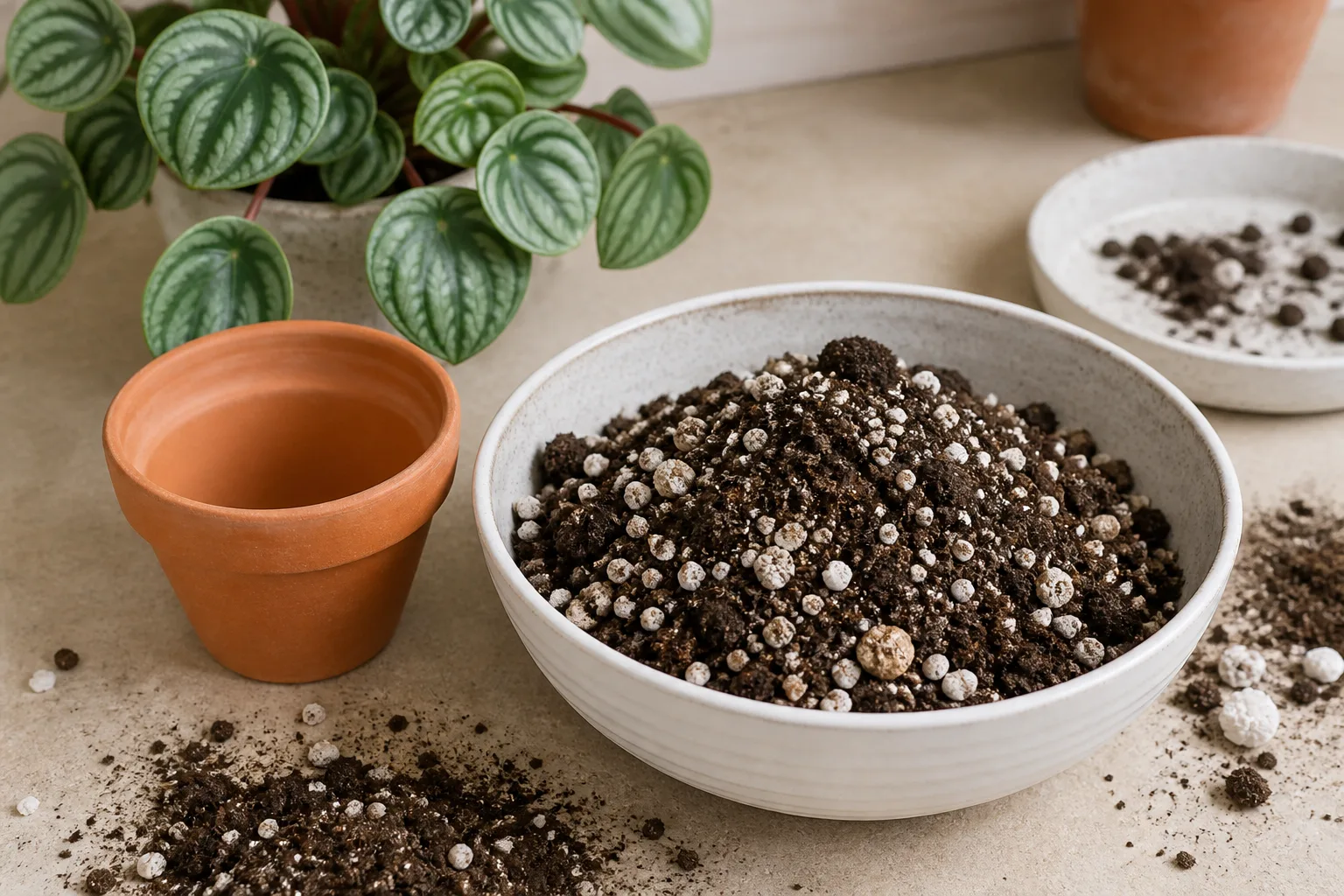
A reliable house blend is quality peat- or coco-based potting mix with 20–30% perlite or pumice by volume. Avoid straight cactus mix unless you cut it with richer potting soil; pure succulent blends drain too fast for this species in small pots. If you repot on a schedule, refresh the top third of mix annually in the same pot when roots still fit.
Choosing the Right Container Size
Peperomias carry small root systems and grow better slightly pot-bound than swimming in excess soil. Choose a pot only 1–2 inches wider than the root ball, with a drainage hole you actually use. Unglazed terracotta dries faster than plastic—helpful in bright south rooms, less forgiving if you forget to check moisture.
Never layer pebbles in the bottom “for drainage”; that raises the wet zone without helping roots. Instead, use loose mix and empty the saucer after each soak. More on mix ratios in the watermelon peperomia soil guide.
Watering Rhythm That Matches the Leaves
Water when the top 1–2 inches of mix feel dry and the pot feels noticeably lighter. Then soak until a little water runs from the drainage hole and discard what collects in the saucer within 30 minutes. Missouri Botanical Garden advises letting the surface go almost dry between drinks; RHS calls watering moderate to sparing.
In practice that often means every 7–14 days in bright warm months and every 14–21 days in cooler dim months, but calendars fail—always verify with your finger and pot weight. Shallow sips that never reach the root zone cause chronic drought stress; flooding a giant pot causes rot. One deep soak beats three teacup pours.
Watch early warnings: duller silver banding with a heavy pot means wetness lingers; limp petioles with light pot weight mean thirst. If you are unsure, wait an extra day—this plant recovers from brief dryness better than from soggy roots.
When to Water Less in Winter
Short days and cooler rooms slow evaporation. Cut frequency before you cut volume—still soak thoroughly when you do water. Plants above radiators or forced-air vents may need more water in winter because dry heat pulls moisture from leaves even when the mix looks fine.
Keep leaves dry when watering. Wet foliage in cool, stagnant air invites spotting and makes edema harder to diagnose on thick undersides.
Temperature, Humidity, and Draft Protection
Target 65–75°F (18–24°C) during active growth. Brief warmth is fine; sustained cold below ~55°F (13°C) stalls growth and can drop leaves. Cold window glass, air-conditioning blasts, and winter doors that open repeatedly are the usual culprits—move the pot inward or add a thin barrier.
Average home humidity 40–60% is adequate when light and watering are right. RHS notes P. argyreia tolerates normal indoor humidity and works in terrariums if drainage stays sharp. Skip routine misting—it raises humidity for minutes, wets leaf surfaces, and does not fix underwatering or low light.
If your air is genuinely dry, use a humidifier, group plants, or a pebble tray with the pot above the water line—not sitting in it. Misting is optional theater, not a care requirement.
Fertilizer and Seasonal Feeding
Watermelon peperomia is not a heavy feeder. Apply a balanced liquid fertilizer diluted to half strength every 4–6 weeks from spring through early fall when new leaves are opening. Clemson HGIC supports light feeding during active growth; skip winter unless you run grow lights and see steady new foliage.
Yellow leaves with wet soil rarely need fertilizer—they need drier roots. Faded stripes with compact growth and dry soil may benefit from feeding, but check light first. Salt buildup in a tight pot shows as brown leaf tips; flush the mix with plain water once in late summer if you fed heavily all season.
How to Propagate Watermelon Peperomia
Propagation is why this species earned the nickname friendship plant: you can divide mature clumps or root split leaf cuttings with high success in warm bright months. Spring and summer give the fastest callus and root formation; winter attempts stall unless you add heat and light.
Unlike many houseplants, cut stems do not branch after you remove a leaf—each sacrificed leaf takes its petiole with it permanently. Take cuttings from outer leaves on a full plant, not every leaf on a struggling one.
Division for Instant New Plants
Unpot a healthy multi-stem plant and gently tease apart offsets with their own roots. Each division should have at least one stem, several leaves, and visible roots. Pot into small containers with the same airy mix, water once, then keep lightly moist—not saturated—for two weeks while roots settle.
Leave tiny pups under an inch wide on the mother plant; they root more reliably in place. Divisions are the fastest way to share a plant without the month-long wait of leaf propagation.
Split-Leaf Cuttings Step by Step
The classic watermelon peperomia method uses half-leaf cuttings with petiole attached:
- Choose a healthy outer leaf and cut the petiole 2–3 inches below the blade, leaving stem tissue attached to one half.
- Slice the leaf across the middle, separating top and bottom halves. One piece keeps the petiole; both can root.
- Pre-moisten mix, then bury the cut edge of the top half slightly and insert the petiole of the bottom half vertically.
- Cover loosely with a clear bag or dome for humidity, vent daily, and keep in bright indirect light at 70–75°F (21–24°C).
- Expect tiny plantlets in 4–8 weeks; pot individually when they have several leaves and roots.
Stem-tip cuttings in water also work and let you watch roots form; transplant when roots reach 1–2 inches. Full timing and aftercare live in the watermelon peperomia propagation guide and the broader how to propagate peperomia walkthrough.
Repotting Without Stressing a Small Root System
Repot only when roots circle the pot or water runs straight through dry mix—typically every 2–3 years in spring. Jump one pot size, refresh mix even if you reuse the same container, and water lightly the first week while cut roots heal.
Plants that look fine but sit in collapsed, sour mix benefit from soil refresh without sizing up. If growth stalled despite good light, slide the root ball out; if roots are sparse and brown-smelling, fix watering before you repot into a mansion pot that holds extra water. Step-by-step timing is in the repotting guide.
Pests and Diseases to Watch For
No plant is pest-proof. NC State Extension lists mealybugs, scale, and aphids as typical houseplant pests on peperomias. Inspect leaf axils and undersides weekly when you water. Wipe isolated mealybugs with rubbing alcohol on a cotton swab; rinse lightly and improve airflow.
Fungus gnats signal chronically wet surface soil—not a separate plague. Let the top inch dry longer, cover exposed mix with a thin sand layer if needed, and avoid decorative cachepots without drainage. Root rot from overwatering is the main disease; recovery requires trimming black mushy roots, repotting into dry mix, and withholding fertilizer until new growth appears.
Troubleshooting Common Problems
Most symptoms trace back to light, water, or temperature. Work through them in that order before you shop for products.
Curling or Drooping Leaves
Curling usually pairs with too much direct sun or underwatering. Sun-stressed leaves curl inward on the bright side; thirsty leaves feel thinner and the pot is light. Move to filtered light or soak thoroughly and reset your dry-top schedule.
Drooping with heavy wet mix points to overwatering or root damage; drooping with dry mix is thirst. Lift the pot—weight beats guesswork.
Yellow, Brown, or Faded Leaves
Yellow lower leaves + wet soil almost always mean overwatering or poor drainage. Crispy brown tips on otherwise firm leaves often mean underwatering or very dry air near a heat source. Brown mushy patches mean rot—remove affected leaves, check roots, and dry the mix out.
Faded silver stripes with long petioles mean low light; bleached patches mean too much sun. Fertilizer will not paint stripes back on—fix exposure first. For a broader symptom path, cross-check the watermelon peperomia hub and watering specifics in the watering guide.
Edema Bumps on Undersides
Edema shows as corky blisters on leaf undersides when roots take up water faster than leaves transpire—common in cool dim rooms with wet soil. Wisconsin Horticulture links edema to overwatering, poor air movement, and low light, not a mysterious fungus.
Ease off watering, improve light and airflow, and avoid misting wet leaves. New growth usually emerges clean once the balance fixes; old blistered leaves will not smooth out.
Pet Safety and Common Name Confusion
The ASPCA lists watermelon peperomia as non-toxic to dogs and cats. That does not mean you should let pets treat it as salad—chewing any plant can cause mild stomach upset. Keep pots stable and out of reach if your cat knocks plants off sills.
The name watermelon begonia is marketing only. Begonia care guides that say “keep evenly moist” will rot peperomia roots. When someone asks whether this plant is a succulent: it has succulent-like leaves but wants more humidity and more frequent watering than echeverias or haworthias. File it with peperomias, not the cactus shelf.
Conclusion
Watermelon peperomia rewards a simple routine: bright indirect light, dry-top watering in airy soil, small pots, and warm stable air. Propagate by division or split-leaf cuttings when the plant is full and healthy, repot sparingly, and diagnose problems by checking light and moisture before you fertilize or mist. Get those pillars right and the silver stripes stay vivid for years—with a plant compact enough to live on a desk and safe enough for most pet homes.



