When to Plant Vegetables by Month and Growing Zone
When to plant vegetables by month: use frost dates, soil temperature, and crop type to plan cool-season and warm-season crops in every zone.
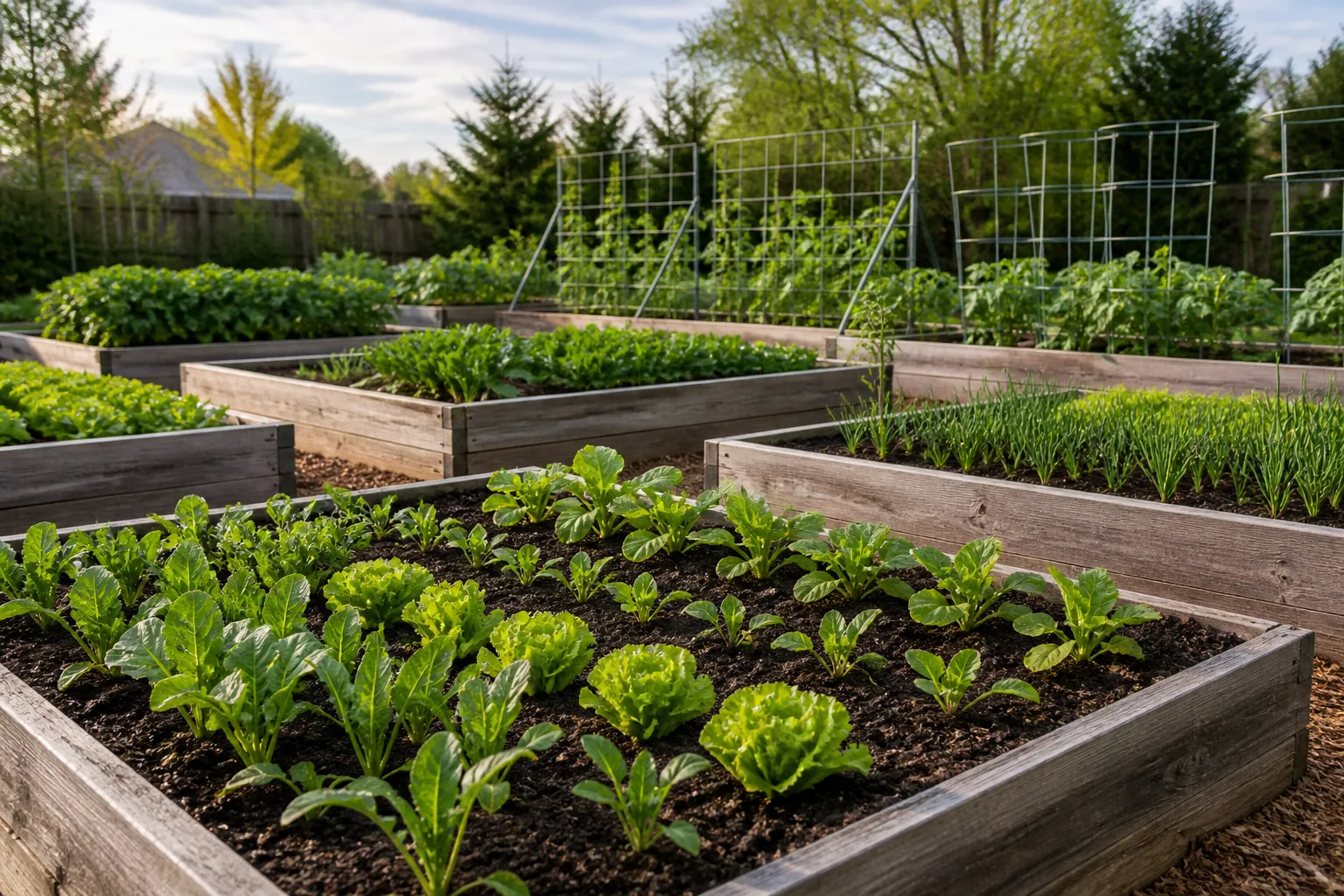
If you are asking when to plant vegetables, start with three facts: your average last spring frost, your average first fall frost, and the temperature your chosen crop needs to germinate and grow. A calendar can suggest the next move, but those conditions decide whether a seedling thrives or stalls.
Use the month-by-month guide below as a working map, not a rigid appointment book. A gardener in zone 5 may be starting tomatoes indoors in February while a gardener in zone 9 is harvesting winter lettuce; both are on the right schedule for their conditions.
The calendar starts with local conditions, not a universal date
The most useful planting calendar is built around your site, not copied from a national list. Write down your local dates, classify each crop as cool-season or warm-season, and then check whether the soil is workable and warm enough. That simple sequence prevents the common mistake of planting tomatoes on the first warm afternoon or leaving an empty bed unused while the weather is perfect for peas and lettuce.
Hardiness zone, frost dates, and soil temperature answer different questions
Your USDA hardiness zone describes the average annual extreme minimum winter temperature for a location. The 2023 map uses 1991–2020 weather data and divides the United States and Puerto Rico into zones 1 through 13, with half-zones such as 6a and 6b. It is valuable for perennial crops and for understanding broad winter severity, but it does not tell you the exact week to sow annual vegetables. Use the USDA Plant Hardiness Zone Map to identify your zone, then look to a local extension office or frost map for planting dates.
Your average last spring frost is the historical date by which freezing temperatures have usually ended, while your average first fall frost helps you decide how late a crop can be started. Neither date is a guarantee. Frost maps summarize past weather; they cannot see the cold front arriving next week. Build a little margin around warm-season transplants and keep row cover available when a late freeze is possible.
Soil adds a third layer. University of Minnesota Extension identifies soil temperature as one of the best indicators for planting, while Colorado State University Extension separates hardy, cool-season crops from tender and very tender crops by temperature needs. A sunny day does not warm a wet, compacted bed enough for every seed. If soil forms a sticky ball or smears when squeezed, wait; working it then can damage structure for the entire season.
Direct sowing, indoor starting, and transplanting are different tools
Direct sowing is best for crops that dislike root disturbance or mature quickly, including carrots, radishes, peas, beans, beets, and many salad greens. Indoor seed starting buys time for long-season crops such as onions, peppers, eggplant, and tomatoes, but it also creates a light, watering, and hardening-off obligation. Transplanting is useful when the outdoor window is short or when a crop needs a head start, but a plant that has outgrown its pot may suffer more than a younger, well-hardened seedling.
Use the seed packet’s days to maturity as a planning estimate, not a promise. The number may be counted from direct sowing, transplanting, or a particular variety size, and cool weather can slow development. Johnny’s seed-starting calculator is a useful model because it counts backward from a user-supplied frost-free date and distinguishes crops that are started weeks before setting out from those that go directly into the garden.
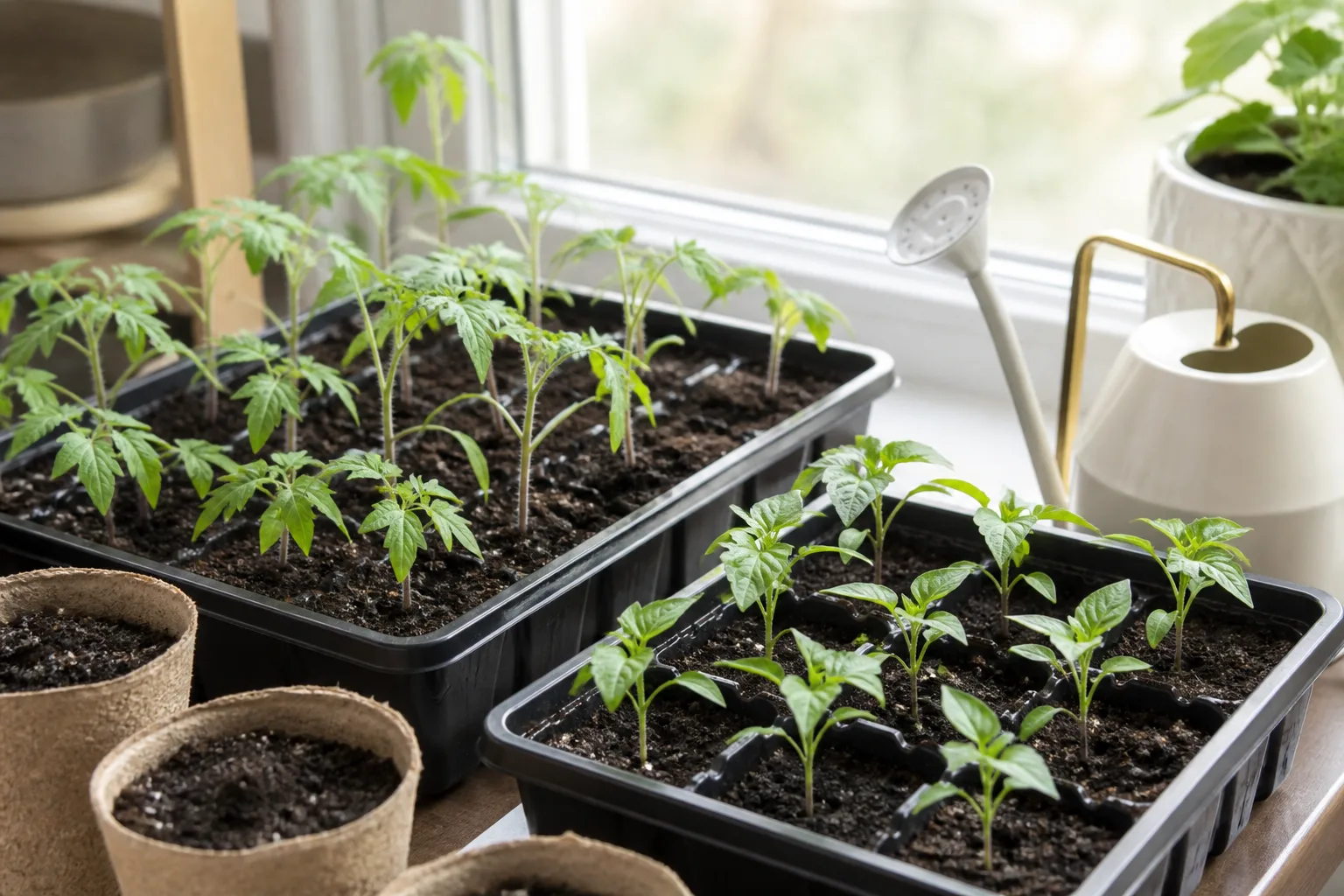
January to March: plan early and plant cool-season crops
In cold climates, the first quarter of the year is mostly about planning and protected sowing. In mild climates, it may be a productive outdoor season for leafy greens, roots, brassicas, and peas. The important distinction is that “January planting” means different things at different latitudes; use the crop list as a temperature-based suggestion.
January: plan beds and start the slowest crops
January is an excellent month to inventory seeds, draw the bed layout, and check when your local seed-starting windows open. Order crops that sell out, test questionable seed by sprouting a small sample on a damp paper towel, and decide where tall tomatoes, corn, or trellised peas will go so they do not shade shorter crops.
In the coldest zones, start long-season onions, leeks, celery, or early brassicas indoors under a strong light if your packet calls for a long lead time. In milder zones, direct-sow spinach, arugula, radishes, carrots, beets, turnips, and hardy lettuce only when the ground is workable. Raised beds, cold frames, cloches, and row cover can make an early sowing more realistic, but protection does not turn a frozen or waterlogged bed into a ready seedbed.
January is also the month to plan soil testing and crop rotation. Mark beds that held tomatoes, peppers, eggplant, potatoes, or brassicas last year so you can avoid repeating the same family in the same soil when disease pressure has been high.
February: sow hardy crops under protection
February is still an indoor-start month for cold regions. Count backward from your likely transplant date rather than sowing every packet at once; a tomato seedling started too early becomes tall, root-bound, and difficult to move before outdoor nights are safe. Peppers and eggplant generally need a longer indoor runway than tomatoes, while peas, carrots, and radishes are usually better candidates for direct sowing.
In mild regions, plant cold-hardy lettuce, spinach, turnips, radishes, and peas outdoors. Use a low tunnel or row cover when nights may dip below the crop’s tolerance, and ventilate protection on bright days so plants do not overheat. The Royal Horticultural Society’s seed-sowing guidance also emphasizes sowing small amounts at intervals to avoid a glut followed by an empty bed; that principle works in any climate.
March: harden off seedlings and widen the crop list
March is a transition month. Cool-season crops can go into the ground earlier than warm-season crops, but your exact window may move several weeks depending on elevation, exposure, and frost history. Start hardening off indoor seedlings when the weather is mild: place them outdoors in a sheltered spot for a short period, increase the time over roughly one to two weeks, and bring them inside if conditions turn cold or windy.
Plant or sow peas, lettuce, spinach, kale, beets, carrots, radishes, broccoli, cabbage, and onions as soil permits. Gardeners in warmer zones may begin beans, squash, sweet potatoes, celery, and other warm-season crops, but do not use a warm March afternoon as proof that the season has changed. A week of cold nights can undo tender growth quickly.
April to June: move from spring greens to heat-loving crops
Spring is not one planting event. It is a relay in which early crops occupy the bed first, warm-season transplants follow, and quick crops are resown wherever space opens. Keep a record of what went into each row and when; memory is least reliable when the garden is busiest.
April: use soil readiness and frost protection
April is ideal for cool-season sowing in many temperate regions. Add peas, lettuce, spinach, chard, kale, carrots, beets, radishes, broccoli, cabbage, and leeks as the soil becomes workable. In a cold zone, cover early rows with a cloche, cold frame, or supported row cover; in a mild zone, make a second sowing of fast crops rather than planting the entire season’s supply in one weekend.
Do not rush cucumbers, squash, melons, basil, peppers, eggplant, or tomatoes simply because garden centers have put them outside. A transplant is ready when its roots and top growth are healthy and compact, the forecast is favorable, and the soil has warmed enough for its crop type. If a late frost threatens, cover plants before sunset with breathable fabric or a supported cover. Remove it when the air warms so plants do not cook or stay damp all day.
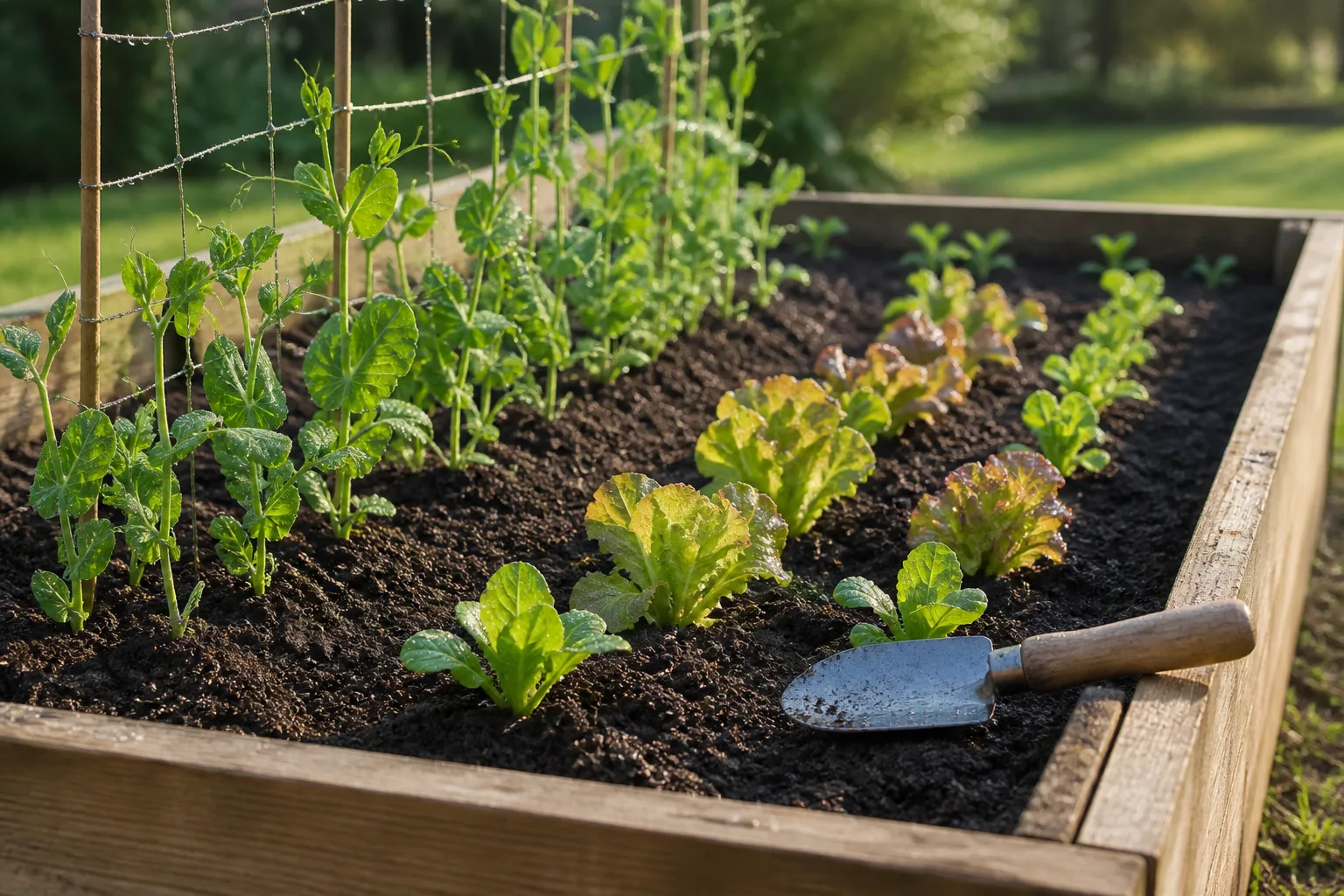
May: set out warm-season transplants carefully
May is the main warm-season planting month for many regions, but the date is still local. Plant tomatoes, peppers, eggplant, cucumbers, summer squash, beans, corn, basil, and pumpkins only after the local frost risk has passed and the soil is suitable for the crop. Illinois Extension makes the key distinction clearly: cool-season vegetables can grow in early spring or fall, while warm-season vegetables do poorly in low temperatures and should wait.
Harden off seedlings before planting. Water them, set them into the garden at the same depth recommended on the tag, and protect them from strong wind for the first few days. Tomatoes can tolerate some stem burial depending on the variety, but peppers and eggplant generally should not be planted deeper than they were growing in their containers. Keep the soil evenly moist while roots establish, and resist applying a strong fertilizer dose to a stressed transplant.
May is also a good time to sow a second round of lettuce, radishes, beets, carrots, and herbs in partial afternoon shade if your weather is warming quickly. That small overlap is insurance against one failed row and gives you a more even harvest.
June: succession-sow and fill empty spaces
By June, the first spring crops are being harvested or removed. Use that space instead of leaving it bare. Sow beans, cucumbers, zucchini, corn, basil, and other warm-season crops where the growing season is long enough, while continuing to plant carrots, beets, chard, lettuce, or kale in climates that are not yet too hot.
Succession planting works best when you match the interval to the crop. Sow a short row of radishes or salad greens every 10–14 days while temperatures remain suitable, or plant a new batch of bush beans after the first crop starts flowering. Stop repeating a cool-season crop when heat will make it bolt; the goal is a steady harvest, not a stack of identical failures.
June is the point to check water access and mulch strategy. Mulch only after the soil has warmed for heat-loving crops, keep it pulled slightly away from stems, and water deeply enough to reach the root zone rather than wetting the surface every evening. In containers, expect faster drying and use the mature size of each plant—not the size of the nursery pot—to determine spacing.
July to September: turn summer beds into a fall garden
The fall garden begins in summer. Waiting for cooler weather to arrive before sowing means many crops will run out of time. To plan a fall harvest, count backward from your area’s average first frost by the crop’s days to maturity, then add a buffer for germination, transplant recovery, and slow growth as days shorten. The Old Farmer’s Almanac succession-planting guide uses this same first-frost logic for calculating late plantings.
July: calculate the fall harvest backward
In short-season regions, July is the month to start fall broccoli, cabbage, kale, carrots, beets, peas, spinach, lettuce, and radishes according to their maturity window. Some crops should be started in a nursery bed or indoors and transplanted later because summer heat makes germination uneven. Others, such as carrots and radishes, are simplest when direct-sown into a carefully prepared row.
In hot climates, July may be more about protecting current crops and preparing the next bed. Remove diseased or exhausted plants, replenish organic matter based on a soil test, and use temporary shade to reduce heat in a seedbed. Do not sow tiny seeds into a dry, crusted surface and assume rain will rescue them; keep the upper layer consistently moist until seedlings emerge.
August: keep seedbeds cool and evenly moist
August planting is possible in every broad zone group, but the crop list changes sharply. Cooler zones can start spinach, lettuce, kale, radishes, carrots, broccoli, and cabbage for a short fall window. Moderate zones can add beets, carrots, chard, peas, brassicas, and herbs. Warm-winter areas may still plant beans, cucumbers, eggplant, peppers, or tomatoes early in the month while beginning onions, mustard, cress, and other cool-season crops for the next cycle.
Use shade cloth, a board laid over the row until emergence, or the filtered shade of a taller crop to protect heat-sensitive seeds—remove the cover as soon as seedlings need light. Water the bed before sowing when it is very dry, plant at the packet depth, and check it daily during a heat wave. A thin layer of fine compost can reduce crusting, but heavy mulch can bury or cool tiny seedlings.
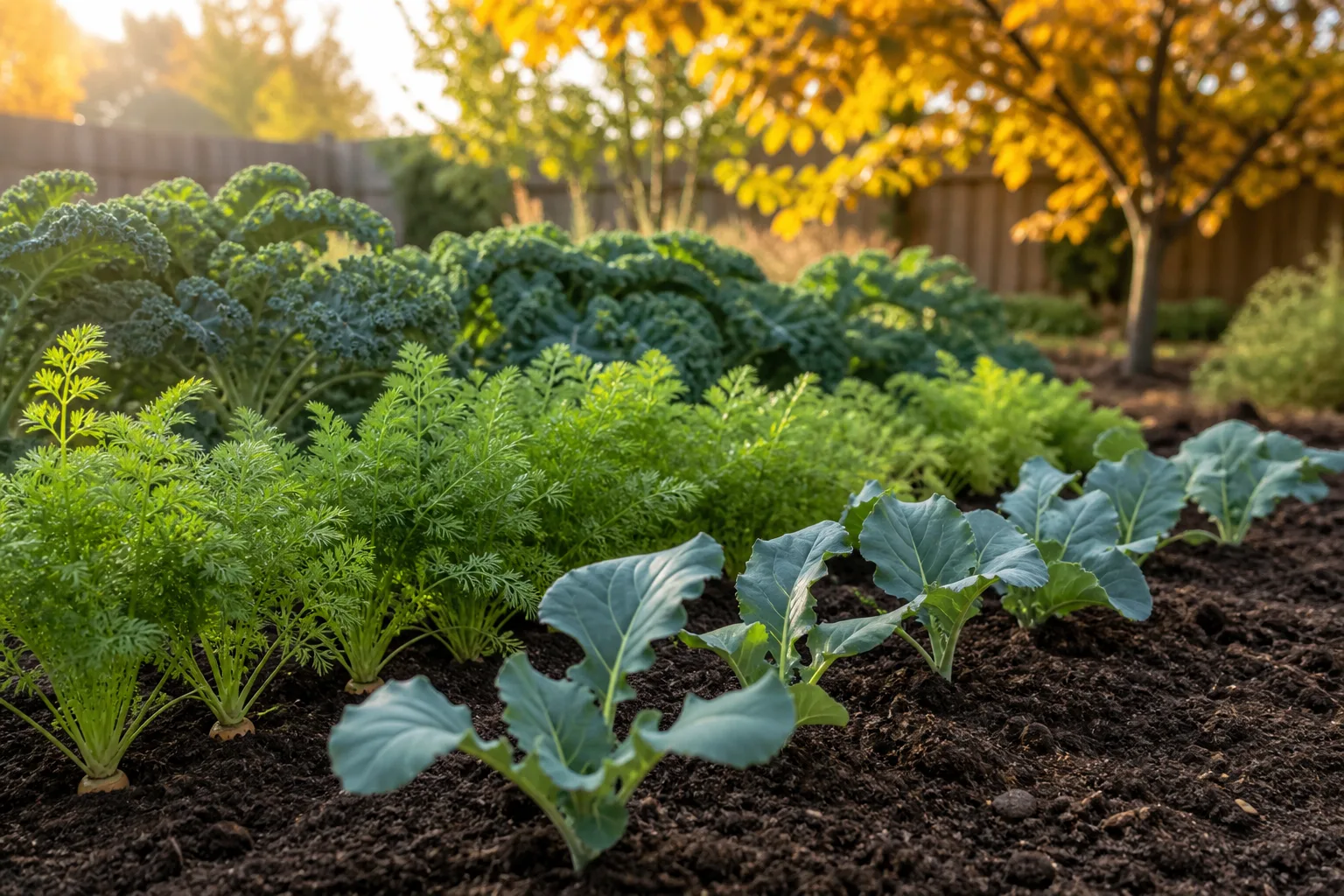
September: protect the final plantings from early frost
September is the deadline month for many fall crops. Sow fast radishes, baby greens, spinach, and turnips where the first frost is still far enough away, and transplant sturdy brassicas or lettuce if they have time to establish. Check the maturity period on the packet and compare it with your first frost rather than guessing from the calendar.
Frost protection becomes part of the planting plan. Hardy crops such as kale, spinach, and many root vegetables can handle light frost, while beans, cucumbers, squash, and tomatoes are much less forgiving. Keep row-cover hoops or cloches ready, but do not cover plants directly with airtight plastic. A cover can buy a night or two; it cannot make a tender crop suitable for a cold season.
October to December: harvest, protect, and reset the garden
Late fall is not a blank period. It is when you decide which crops can continue, which beds should be protected, and what information you want to carry into next year. In mild climates, vegetables may keep growing through winter; in cold climates, harvest and soil care become the main jobs.
October: extend the season and plant overwintering crops
October is a useful month for garlic, spinach, kale, lettuce, carrots, beets, peas, onions, and other crops suited to your winter conditions. In zones with harsh freezes, plant only varieties and forms that can survive your conditions, and use mulch or a cold frame where appropriate. In warmer zones, October may be one of the best months for leafy greens, roots, brassicas, and herbs because summer heat has eased.
Season extension works best when protection is chosen before the forecast turns cold. A low tunnel, cloche, or cold frame holds warmth and blocks wind, but it also needs ventilation on sunny days. Harvest selectively so young leaves keep producing, and do not walk on beds when the soil is saturated.
November and December: mulch, cover, and plan the next cycle
In November, finish harvesting tender crops before a hard freeze, remove diseased plant debris, and add a protective layer of clean mulch to beds that will rest. If you leave roots such as carrots or beets in the ground, make sure the soil will not freeze solid and that you can still reach them. Cabbage, kale, spinach, and other hardy greens may continue in a protected bed where the climate allows.
December is the quiet reset. Review your notes: which rows bolted, which transplants stalled, which varieties matured early, and which plantings produced more food than your household could use? Order seeds, sketch a rotation, and reserve space for succession sowings rather than filling every bed with one spring planting. The RHS vegetable crop planner separates quick, medium-term, and slow crops by harvest time; that is a helpful way to balance a small garden.
The biggest winter mistake is treating a calendar as more accurate than the garden. If the ground is frozen, the forecast is dangerous, or the soil is wet enough to smear, waiting is an active gardening decision. A protected bed with healthy soil is more valuable than an early row that never establishes.
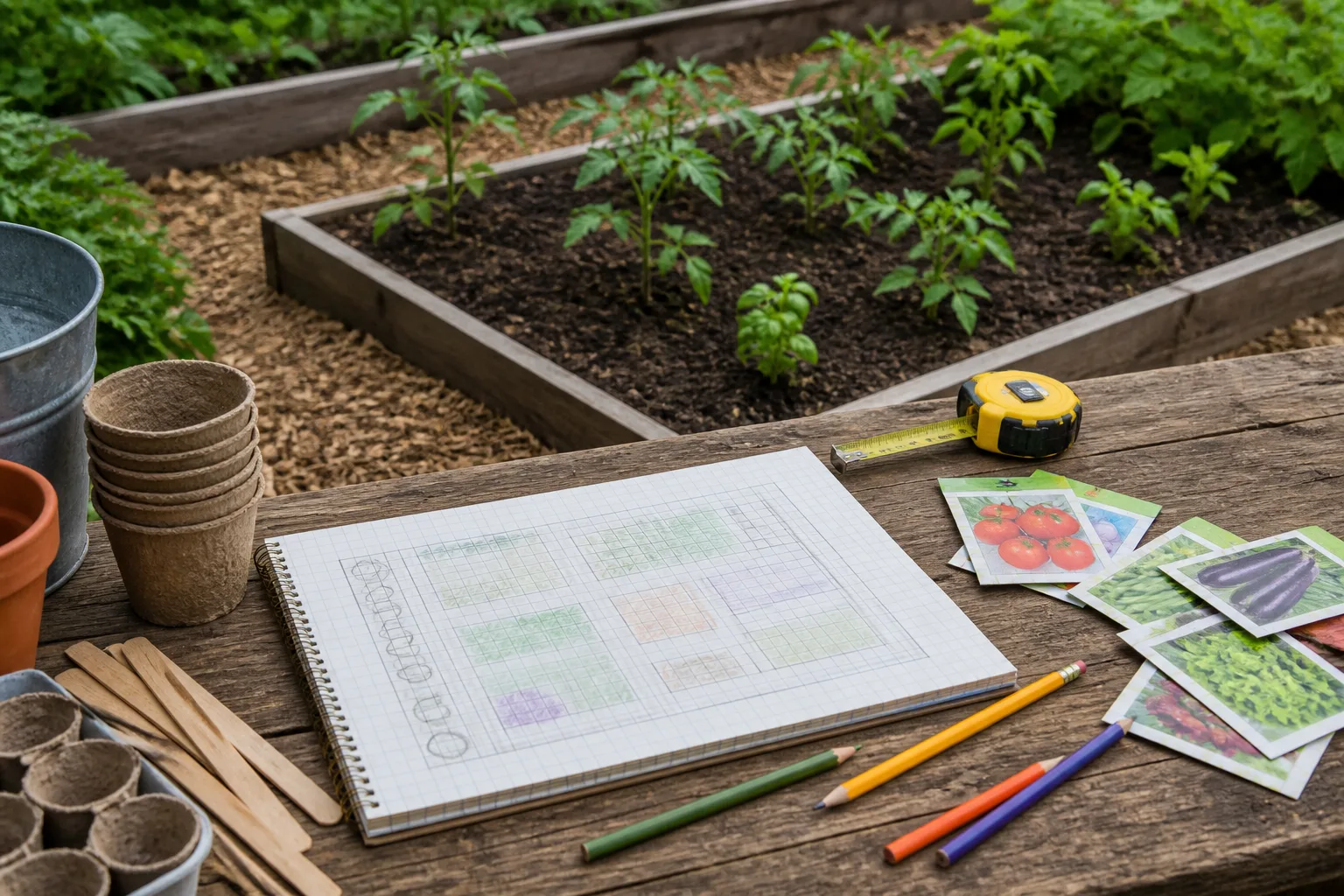
Conclusion: plant by conditions, then keep planting in succession
The best answer to when to plant vegetables is a sequence, not a single date. Use your hardiness zone for broad winter context, your local last and first frost dates for seasonal boundaries, and soil temperature and workability for the final decision. Then match each crop to the right method: direct sowing for roots and quick greens, indoor starting for long-season plants, and transplanting when a healthy head start is worth the extra care.
January through March favors planning and cool-season crops; April through June moves the garden toward warm-season production; July through September builds the fall harvest; and October through December protects what can continue while the next plan takes shape. Keep rows short, sow in succession, and leave room for a second crop. That is how a vegetable garden becomes productive across the year instead of producing one crowded harvest and a long empty season.