Young Zucchini Leaves Turning Yellow: 7 Causes
Young zucchini leaves turning yellow? Learn how to distinguish water stress, transplant shock, nutrient problems, pests, and disease—and what to do first.
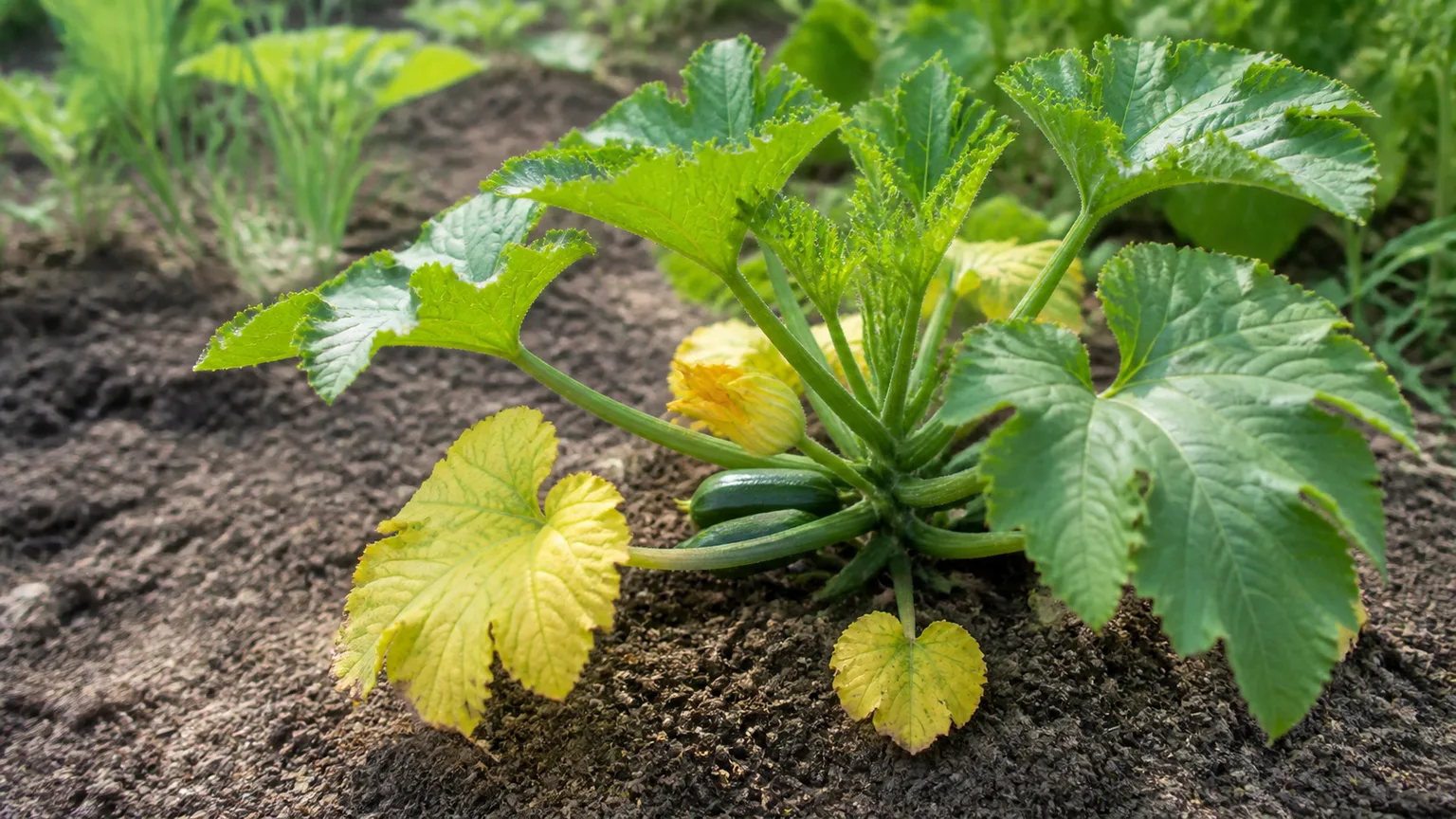
Yellow leaves on a young zucchini plant are a clue, not a diagnosis. The same color can come from dry soil, waterlogged roots, a cold transplant, an actual nutrient shortage, sap-sucking insects, or a virus that no fertilizer can cure.
The fastest fix is not always “feed it.” First identify which leaves changed, what pattern they show, how wet the root zone is, and whether the stem and leaf undersides look normal. Then take one targeted action and judge the plant by its next new growth; an old yellow leaf usually will not turn green again.
Start With the Symptom Pattern, Not the Fertilizer Bag
Take a whole-plant photo and a close photo of the top and underside of one affected leaf. Note whether the yellowing began on the seed leaves, the lowest true leaves, or the newest leaves at the center. Also write down the last week of weather and watering, because a cool rainy spell, a hot dry wind, or a recent transplant can explain more than a generic fertilizer label.
Zucchini is a fast-growing summer squash in the cucurbit family, so it moves quickly from seedling to a broad, hungry plant. It also has large leaves that lose water quickly, while its roots still need air; that combination makes both drought and saturated soil plausible. The Royal Horticultural Society likewise cautions that drought, waterlogging, poor light, and poor establishment can look like nutrient deficiency, so leaf color alone is not enough to choose a feed (RHS nutrient deficiencies).
Four Checks That Narrow the Cause in Minutes
Use these checks in order. The first strong match tells you what to do next; do not apply several “fixes” at once or you will lose the evidence.
- Feel the soil below the surface. Push a finger or small trowel 2–3 inches into the root zone, not just the dry crust. Soggy soil with a limp plant points toward poor drainage or root damage; powder-dry soil with temporary midday wilt points toward drought stress.
- Find the oldest yellow leaf. Even fading that starts low and moves upward can be nitrogen shortage, root stress, or ordinary aging of a cotyledon. Yellowing that starts in the newest leaves deserves a closer look at iron availability, cold roots, pests, or disease.
- Look for a pattern. Uniform yellowing is different from yellow tissue between green veins, fine stippling, angular spots, white powder, or a green-and-yellow mosaic. Patterns are more useful than the shade of yellow itself.
- Inspect undersides, crown, and neighbors. Aphids, mite webbing, squash bug eggs, and beetles hide under leaves or near the crown. Check the stem base for soft or dark tissue, then inspect other cucurbits because pests and viruses do not stop at one zucchini plant.
If the plant has only two round seed leaves and the first true leaves are healthy, the oldest seed leaf may simply be finishing its job. That is normal senescence, not a rescue emergency. A young plant whose true leaves are yellowing, wilting, or failing to grow needs the diagnosis below.
Reason 1: Water Stress or Poor Drainage
Water is the most common first suspect because zucchini needs steady moisture but cannot use water efficiently when its roots sit in airless mud. Watering on a calendar can create both extremes: a small seedling may stay wet for days in heavy soil, then a container plant may dry out within hours during hot weather.
The RHS recommendation for vegetables is to water thoroughly to the root zone rather than repeatedly wetting only the surface. For courgettes and other cucurbits, consistent moisture matters through harvest, while containers may need checking every day in a dry spell (RHS watering vegetables and fruit).
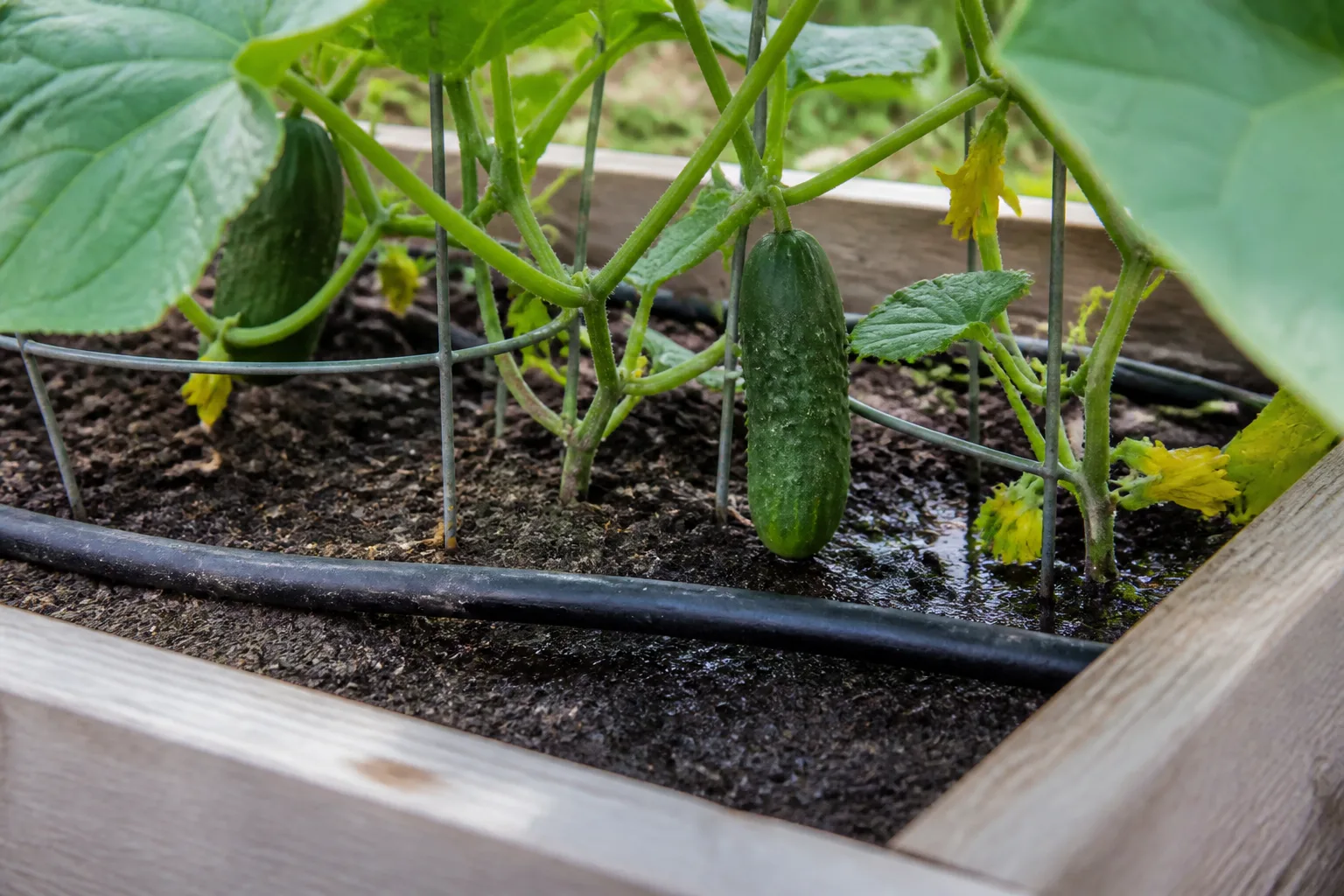
Overwatering and Underwatering Leave Different Clues
Overwatering or poor drainage usually means soil that remains wet, lower leaves that turn yellow and limp, slow growth, and sometimes a sour smell or soft roots. A plant can look thirsty in this situation because damaged roots cannot move water upward. Do not respond to wet-soil wilt by watering again or adding liquid fertilizer.
Stop watering until the upper few inches begin to dry, then correct the cause of the saturation. Clear blocked container holes, lift the pot so water can escape, move a container out of a runoff pocket, or replant into a raised, well-drained bed next season. In an established bed, adding finished organic matter and using a slight mound can improve structure; simply mixing sand into a small area of clay often creates a denser pocket rather than true drainage.
Underwatering or heat stress produces dry soil several inches down, limp leaves that improve after a deep soak, and yellowing that may start at edges before becoming crisp or brown. Water slowly at the soil line until the root zone is wet, then use mulch to slow evaporation while keeping mulch away from the stem. A short-lived midday droop on a very hot day is less concerning than a plant that remains wilted overnight in moist soil.
For container zucchini, check moisture below the surface and empty the saucer after watering. A large, wide pot gives a young plant more buffer than a small nursery pot, but “water every day” is not a rule: daily checking is sensible in heat, while watering a pot that is still heavy and damp can push roots toward rot. A related zucchini container guide from GrowVeg also emphasizes warm conditions, organic matter, mulch, and enough spacing for airflow (GrowVeg: Perfect Zucchini Every Time).
Reason 2: Transplant Shock or Cold, Wet Soil
Zucchini roots are easily disturbed, and a seedling can yellow one or two older leaves after moving from a pot into a bed. The plant is reallocating energy to root establishment while it adjusts to wind, brighter sun, new temperature swings, and a different moisture pattern. If the center is still firm and producing green leaves, this is often temporary.
Cold soil makes the same problem last longer. A transplant placed outdoors before frost risk has passed may sit in wet soil without actively growing, while a sudden cold night can damage tender tissue. GrowVeg recommends hardening zucchini off gradually over about 10 days and waiting for warm conditions rather than rushing a plant outside (GrowVeg).
Give a shocked plant stable moisture, shelter from strong wind, and bright light without abruptly moving it from a protected room into harsh all-day sun. Do not dig it up repeatedly, prune healthy leaves, or give a strong nitrogen dose while the roots are trying to reestablish. If new leaves emerge normally within about a week and the yellowing stops, leave the older damaged leaves until they are fully spent, then remove them with clean pruners.
If yellowing continues through the center, the plant stops growing, or the soil stays cold and saturated, stop calling it transplant shock. Recheck drainage, pests, and the crown; “shock” should explain a short adjustment period, not progressive decline.
Reason 3: Nutrient Deficiency or Nutrient Lockout
Zucchini grows fast enough to expose genuinely lean soil, especially in a small container or a bed where several heavy-feeding crops have grown. But a nutrient can be present and still unavailable when roots are cold, waterlogged, too dry, or growing in an unsuitable pH. That is why a soil test and a stable watering pattern are more reliable than adding a handful of every amendment.
The RHS lists nitrogen, phosphorus, potassium, calcium, magnesium, sulfur, and trace elements such as iron among the nutrients plants need, while warning that growing conditions can mimic deficiencies. It also notes that container compost can run short of nutrients after a period of active growth and that soggy or dry roots cannot take them up well (RHS nutrient deficiencies).
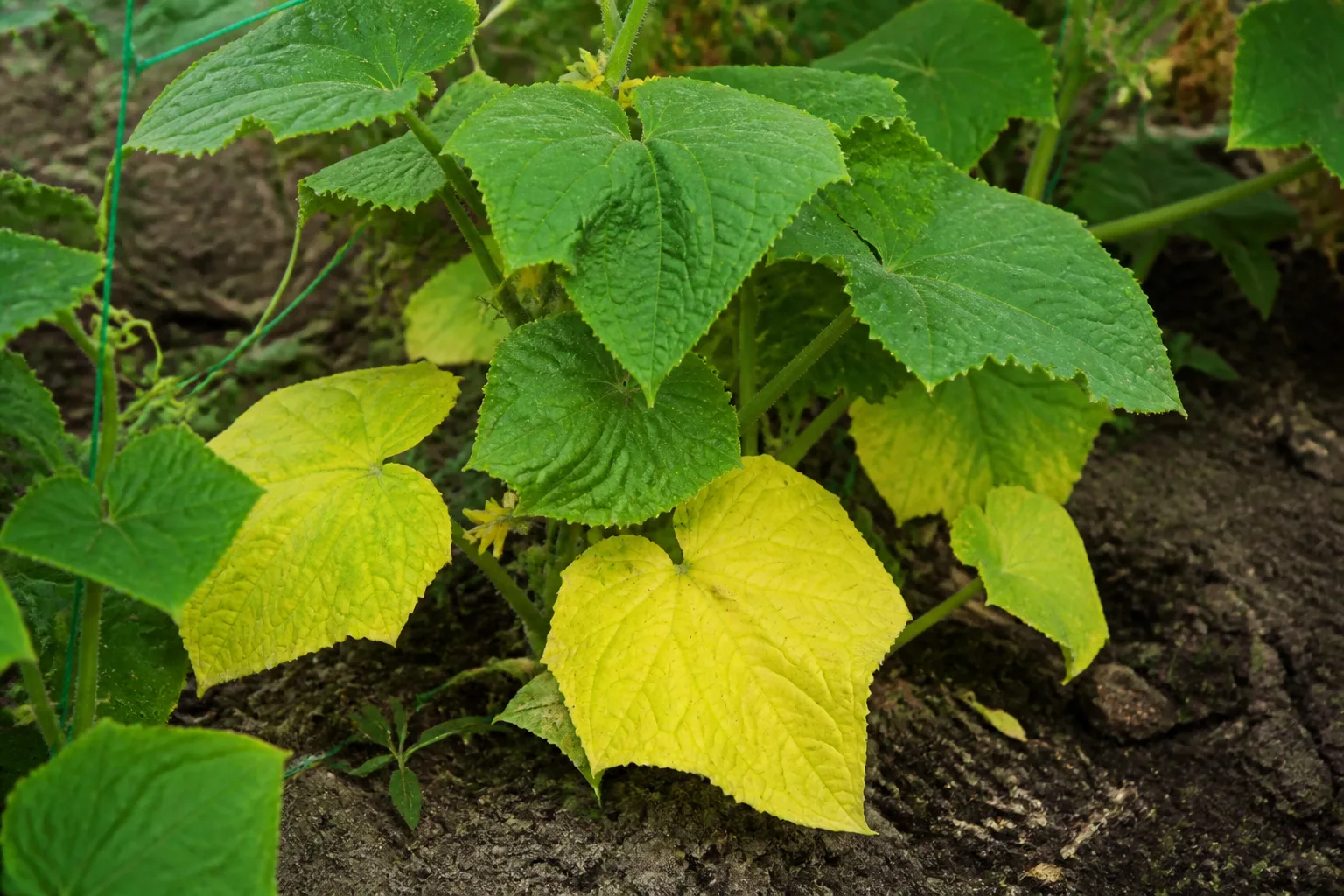
Read Nitrogen, Magnesium, and Iron Patterns Carefully
Nitrogen shortage is more likely when older lower leaves fade evenly, the plant is pale or spindly, and new growth is greener but undersized. Correct the moisture problem first, then use a balanced vegetable fertilizer or a modest nitrogen-containing feed according to the label or soil-test recommendation. Excess nitrogen can make foliage lush and delay fruiting, so more is not a faster version of the right dose.
Magnesium shortage can cause yellow tissue between green veins, often on older leaves, but that pattern is not exclusive to magnesium. Iron shortage more often affects the youngest leaves first, with green veins against pale tissue, and can be connected to high pH or poor root function. The RHS describes both interveinal patterns and the importance of soil conditions; if the newest leaves are pale while the roots are wet or the soil pH is unknown, test before using Epsom salt or chelated iron.
Potassium shortage may show as yellowing or browning that begins at the edges of older leaves and can coincide with weak flowering or fruiting. It is less useful to diagnose by eye than many gardeners assume, and repeatedly applying a high-potassium tomato feed can upset magnesium uptake. Use a soil test or a fertilizer program designed for vegetables, follow the label, and allow time for new growth to show whether the correction helped.
Do not expect a yellow leaf to repaint itself. A successful nutrient correction shows up as greener, normally shaped new leaves and stronger growth; old yellow tissue may remain yellow until it is shed. If the plant is declining despite adequate moisture and tested nutrition, move back to the pest and disease checks instead of escalating the fertilizer.
Reason 4: Fertilizer or Pesticide Burn
Yellowing that appears soon after fertilizing or spraying is a timing clue. Fertilizer salts can scorch roots or leaf margins, especially when the weather is hot and the soil is dry. Even insecticidal soap and horticultural oil can injure stressed zucchini foliage when used in unsuitable weather or at a concentration the label does not allow.
Look for a fairly abrupt change, brown or crispy margins, distorted new tissue, or damage on leaves that were hit by a spray. Gardening Know How notes that fertilizer and pesticide injury can resemble disease, and that stressed plants are more vulnerable to phytotoxicity; it recommends following the product instructions and avoiding applications during extreme heat, dryness, or wind (Gardening Know How).
If excess fertilizer is the likely cause and the container drains freely, flush the root zone with plain water once, allowing the excess to run out completely; do not leave the pot standing in that runoff. In a bed, stop feeding and let rainfall or normal watering dilute the salts rather than repeatedly flooding a poorly drained soil. Remove only leaves that are fully dead or badly scorched, and do not stack a second spray on top of the first injury.
For any pesticide, confirm that the product is labeled for zucchini or the intended edible crop, use the label rate and harvest interval, and spray when pollinators are not active. Homemade soap, oil, vinegar, baking soda, or “organic” does not automatically mean plant-safe. Treat the cause and the weather window, not just the symptom.
Reason 5: Sap-Sucking or Chewing Pests
Pests create yellow leaves by removing sap, damaging cells, or introducing disease. A plant can look nutrient-starved from a distance, but the leaf underside often tells the story. Check new growth, leaf stems, and the crown twice a week while the plant is small; young zucchini has little spare foliage to lose.
Match the Damage to Aphids, Mites, Bugs, or Beetles
Aphids cluster on tender shoots and leaf undersides. They can curl young leaves, leave sticky honeydew, and attract ants. A strong water spray can reduce a light infestation, but spray the undersides and inspect again in a few days. If you use insecticidal soap or horticultural oil, follow the edible-crop label and avoid hot, sunny, or drought-stressed conditions.
Spider mites leave fine yellow or bronze stippling and sometimes delicate webbing, especially in hot, dry weather. Hold a sheet of white paper under a leaf and tap it; tiny moving specks are a useful clue, though a hand lens is better. Rinsing the undersides with water can help a light outbreak, while severe cases need a product labeled for the crop and pest; broad-spectrum spraying can remove predators and worsen secondary outbreaks.
Squash bugs cause yellow or brown patches, wilt, and general loss of vigor. Look for flat gray-brown adults, nymphs, or bronze egg clusters on the underside of leaves. Scrape or crush egg masses and handpick adults into soapy water; the existing LeafyPixels squash-bug image shows the inspection target clearly.
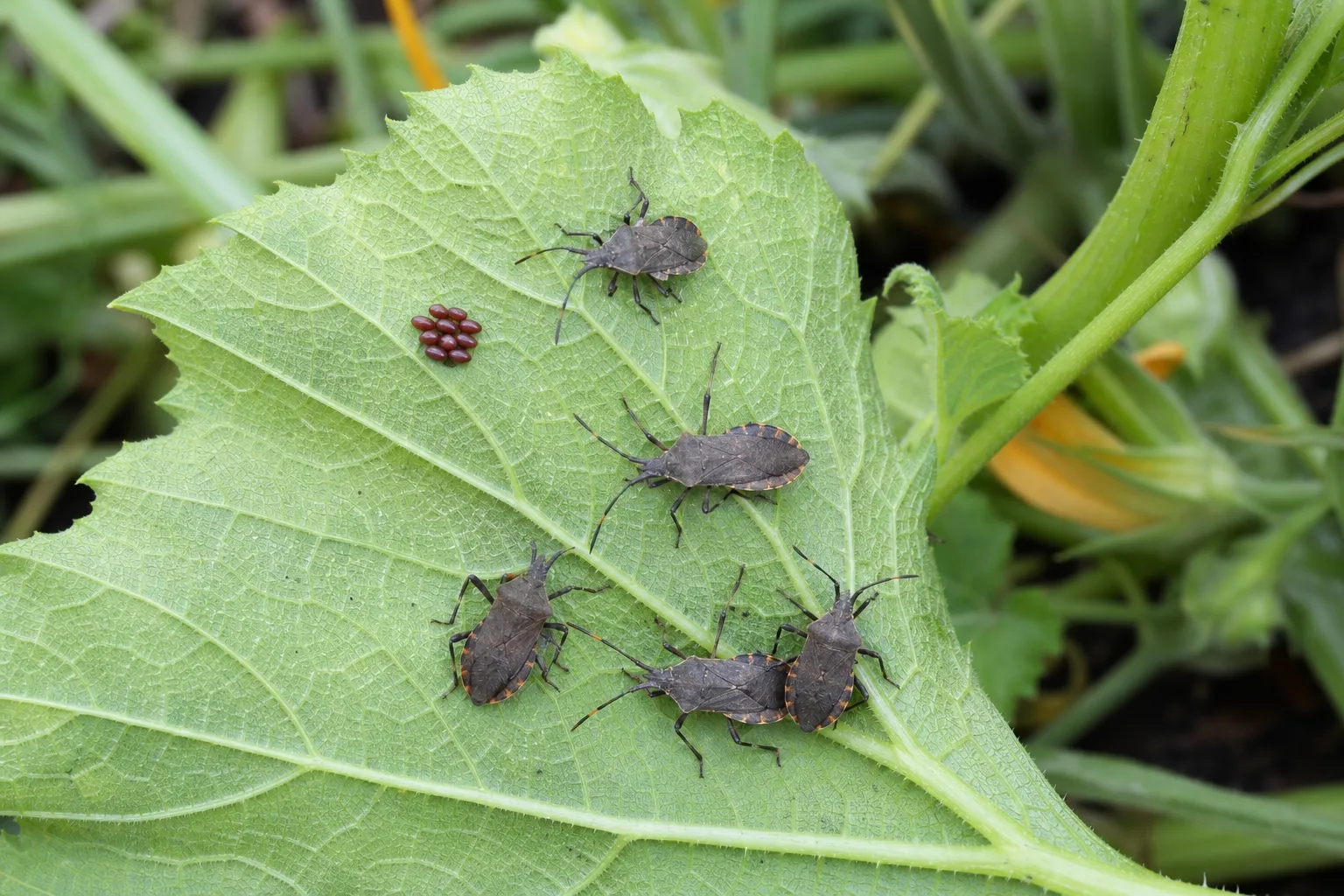
Do not confuse predatory assassin bugs with squash bugs, because killing beneficial insects removes part of your garden’s natural control.
Cucumber beetles and squash vine borers are more serious on a young plant than a few chewed holes suggest. Cucumber beetles can spread bacterial wilt, while a borer leaves frass or sawdust-like material at the stem base and causes sudden wilt. Floating row cover protects seedlings only while flowers are closed; remove it for pollination or hand-pollinate flowers if you keep it in place longer. The RHS lists aphids, red spider mites, and other invertebrates among common cucurbit problems, and recommends early attention before pests become established (RHS cucurbit problems).
Reason 6: Foliar Disease or a Virus
Disease is more likely when yellowing appears in patches, follows wet weather, spreads quickly from leaf to leaf, or comes with white growth, brown lesions, fuzzy undersides, distortion, or wilt. Keep leaves as dry as practical, water at the soil line, and avoid working through a wet patch because splashing and wet tools can move pathogens.
Powdery Mildew, Downy Mildew, and Leaf Spots
Powdery mildew starts as white or gray powder on the leaf surface. The tissue below can yellow and die, but natural pale markings on some zucchini varieties are flat, consistent, and not fuzzy. The RHS says cucurbits are prone to powdery mildew, especially when plants are drought-stressed, crowded, or exposed to conditions that favor disease; it recommends moisture retention, mulch kept off the stem, base watering, and better airflow (RHS cucurbit problems).
Remove a few badly affected leaves on a dry day and put them in the trash if local guidance does not permit diseased material in home compost. Keep enough green foliage to support fruit, and do not strip a small plant bare. If the disease is recurring or widespread, choose resistant varieties and use only a labeled fungicide or an extension-recommended treatment for your crop and region.
Downy mildew is not the same powder. It typically produces angular yellow or pale green patches bounded by veins, with gray or purple fuzzy growth on the underside in humid conditions. Leaf spots produce discrete brown or tan lesions, often with yellow halos, rather than an even wash of yellow. Colorado State University Extension also advises adequate spacing and watering the soil instead of the foliage for squash and zucchini, and notes that some zucchini varieties have natural patterns that can be mistaken for mildew (Colorado State University Extension).
The practical first steps are the same: open crowded foliage, improve air movement, keep irrigation off the leaves, remove the worst tissue, and photograph the pattern before spraying. If the disease moves rapidly or affects several cucurbits, contact your local extension office with clear top-and-bottom leaf photos rather than guessing between mildew, bacterial spot, and a virus.
Mosaic Virus and Bacterial Wilt
Cucumber mosaic virus causes irregular yellow-and-green mottling, puckering, distorted leaves, stunting, and sometimes misshapen fruit. A nutrient deficiency usually follows a more consistent age or vein pattern; a mosaic often looks patchy across the leaf and travels with poor growth. Once a virus is established, there is no curative fertilizer or spray, so remove the affected plant and dispose of it rather than composting it, then control aphids to protect neighboring plants.
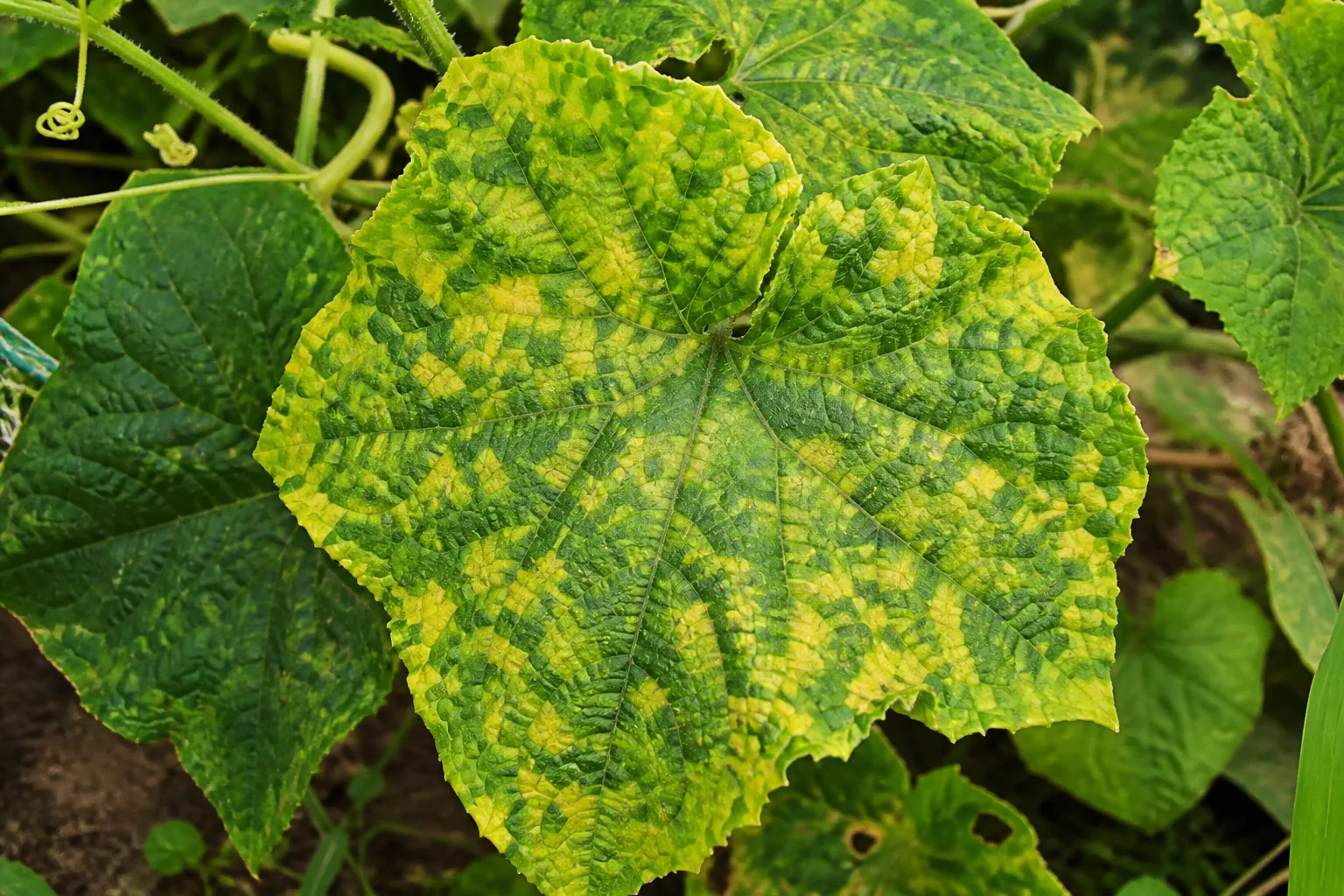
Bacterial wilt often begins with a dull or pale plant that wilts despite moist soil, sometimes recovering overnight before collapsing again. Cucumber beetles can spread it, and a cut stem may show bacterial ooze. Pull a plant with convincing bacterial-wilt symptoms promptly and manage beetles on healthy plants; pruning yellow leaves cannot repair a colonized vascular system.
Epic Gardening’s reviewed zucchini disease guide distinguishes mosaic mottling, mildew, bacterial wilt, and crown rots by their patterns and emphasizes sanitation, airflow, crop rotation, and resistant seed where available (Epic Gardening: Zucchini diseases). It is a useful reminder that “yellow” is only the starting color, not the final diagnosis.
Reason 7: Root or Crown Disease, Herbicide Injury, or Severe Stress
Some plants yellow because the problem is below the leaf. A dark, soft, or foul-smelling crown; roots that are brown and mushy; whole-plant wilt while soil is wet; or one side of the plant dying points toward crown or root disease rather than a simple nutrient shortage. Fusarium crown rot and similar soilborne problems can advance quickly in saturated soil, so do not keep a collapsing plant in place while hoping a tonic will reverse it.
Herbicide injury is another possibility when the newest leaves are cupped, twisted, narrow, or distorted along with yellowing—especially after a lawn treatment, drift, or use of contaminated manure or mulch. The RHS identifies accidental weedkiller exposure as a cause of stunted, distorted, and yellow foliage, while Colorado State Extension notes that herbicide residues in materials such as manure can affect vegetable growth. If damage appeared across several unrelated plants at once, suspect an environmental exposure rather than a zucchini-specific deficiency.
Know When the Whole Plant Needs to Come Out
Utah State University Extension describes Verticillium wilt as a soilborne disease that can cause bottom-up yellowing, premature wilt, death, and symptoms on one side of a plant; it also notes that the pathogen can survive in soil for many years and has no chemical control (Utah State University Extension). Remove a plant with strong wilt-disease evidence, including the surrounding root ball and obvious contaminated soil, and clean tools before working on healthy plants.
Do not diagnose Verticillium or Fusarium from one yellow leaf. Pulling a healthy plant wastes a harvest, while leaving a confirmed diseased crown beside other cucurbits can spread debris and preserve inoculum. When in doubt, take photos, keep the plant isolated from new cucurbits, and ask a local diagnostic clinic or extension service before reusing the bed.
What to Do in the Next 48 Hours
Use this sequence when you need a fast, low-risk response:
- Pause automatic watering and feeding. Check soil moisture 2–3 inches down. Water only if the root zone is genuinely dry; do not fertilize a plant sitting in saturated soil.
- Photograph the pattern. Capture the whole plant, one yellow leaf above and below, the crown, and any insect or webbing. This prevents you from forgetting what changed after treatment.
- Inspect and isolate the cause. Look under leaves for aphids, mites, egg clusters, or beetles. Check stems and roots only if the soil condition or wilt justifies disturbing the plant.
- Make one correction. Deeply water a dry plant, open drainage for a wet one, shelter a cold transplant, remove a few diseased leaves, or handpick a small pest outbreak. One change gives you useful feedback.
- Remove only what is truly spent or dangerous. Cut fully yellow, dead, badly diseased leaves with clean pruners, but keep healthy green leaves. Remove and discard the whole plant when virus, bacterial wilt, severe crown rot, or a confirmed soilborne wilt is the better diagnosis.
- Recheck new growth in three to seven days. Recovery means the center stays firm and new leaves are greener and normally shaped. Old yellow leaves are not a reliable progress meter.
If a product is genuinely needed, read the label before opening it. “Organic,” “natural,” and “homemade” do not replace crop registration, dilution instructions, protective equipment, pollinator precautions, or harvest intervals for an edible garden.
Prevent Yellow Leaves on the Next Zucchini Plant
Start with warm, well-drained soil and a site that receives full sun and enough room for air to move around the leaves. Work finished compost into the bed before planting, but do not create a tiny rich pocket surrounded by compacted soil; roots need a continuous zone that drains and holds moisture evenly.
Harden off indoor seedlings gradually and wait until frost risk has passed. Protect a young transplant from strong wind and cold nights for the first few days, but uncover it when conditions are safe so it acclimates instead of remaining soft and sheltered. If a container is the only option, choose a wide, stable pot with drainage holes and one plant rather than crowding several seedlings into a small volume.
Water deeply at the soil line when the root zone begins to dry, adjusting for rain, heat, soil type, and container size. Mulch after the soil has warmed to slow evaporation and reduce soil splash, leaving a gap around the crown. The RHS advises improving soil with organic matter and using mulch to retain moisture; it also warns that overwatering can encourage root and stem rots (RHS watering vegetables and fruit).
Test soil before correcting a suspected deficiency, especially if the plant has unusual interveinal chlorosis or if you have already applied fertilizer. Use a measured vegetable feed rather than stacking compost, fish emulsion, Epsom salt, lime, and tomato fertilizer together. A soil test is cheaper than a season of chasing symptoms with incompatible amendments.
Scout the undersides of leaves and the stem base twice a week while plants are small. Use row covers against early beetles and squash bugs, remove them when flowers open, choose resistant varieties when they fit your region, and keep weeds and volunteer cucurbits from bridging pests into the bed. Rotate zucchini, cucumbers, melons, pumpkins, and squash away from a problem spot; rotation does not solve every flying pest, but it reduces the chance that soilborne disease and old debris start the season beside the new plant.
At the end of the season, remove diseased or pest-infested cucurbit debris instead of leaving a dense mat for pathogens and overwintering insects. Clean stakes and pruners, avoid handling wet foliage, and do not save seed from a plant with suspected virus. Healthy plants are not invulnerable, but steady moisture, good airflow, clean tools, and early scouting give them a much wider margin for error.
Conclusion
Young zucchini leaves turn yellow when roots, nutrients, leaf tissue, or the plant’s vascular system are under stress. The useful diagnosis is in the combination: wet soil plus limp leaves points to drainage; dry soil plus crisp edges points to thirst; even old-leaf yellowing can indicate nitrogen or normal seed-leaf aging; green veins, stippling, webbing, spots, mosaic, or one-sided wilt point you toward a different branch.
Check the root zone and leaf undersides before you fertilize or spray. Correct one cause, keep healthy foliage, and look for greener new growth over the next week. If the plant is mottled, repeatedly wilting in wet soil, collapsing at the crown, or clearly infected with a noncurable wilt or virus, remove it to protect the rest of the cucurbit patch.