Mold on Soil on Banana: Causes, Checks & Fixes
Quick answer
Surface mold on banana soil usually means the compost-rich mix stays wet at the top longer than this fast-growing tropical herb can use it. First step: scrape the fuzzy top layer, clear fallen paddle debris, and pause watering until the top 2–3 cm of mix feels dry before the next deep drink.
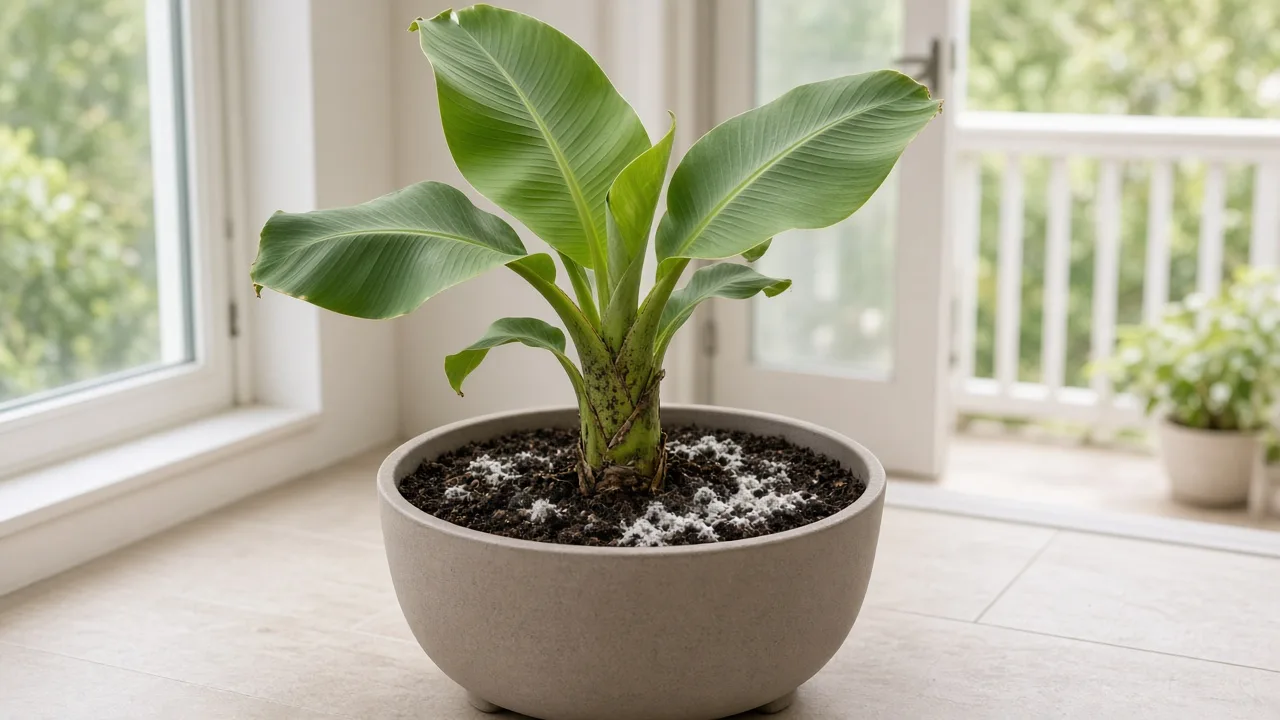
Mold on Soil on Banana: Causes, Checks & Fixes
This guide covers mold on soil on Banana. See also the general Mold on Soil guide, watering, and light pages for this plant.
Mold on Soil on Banana: Causes, Checks & Fixes
Quick answer
Surface mold on banana (Musa acuminata) soil almost always means the top layer of compost-rich mix stays wet longer than this fast-growing tropical herb is using it. Banana is not a drought succulent—it wants steady root-zone moisture in warm active growth—but a permanently damp surface feeds saprophytic fungi breaking down peat, compost, and fallen organic debris.
First step: scrape off the fuzzy top layer, remove fallen paddle leaves and mulch from the soil surface, and pause the next watering until the top 2–3 cm of mix feels dry. Then resume deep watering that drains freely, matching how Banana watering works in your season and light level.
For how surface mold forms on potting mix in general, see our mold on soil guide. On Banana, the diagnostic pattern is fuzzy soil around a firm pseudostem with an upright cigar leaf—not leaf spots, powdery mildew on paddles, or pseudostem collapse.
What mold on soil looks like on Banana
On container bananas, mold most often appears as a white, gray, or occasionally greenish fuzzy film across the potting mix surface. It may cluster around the pseudostem base, along the pot rim where water sits longest, or under the shade of overlapping paddle leaves. You might notice it first through a musty smell when you move the pot, or through small dark flies hovering near the surface when fungus gnats share the same wet habitat.
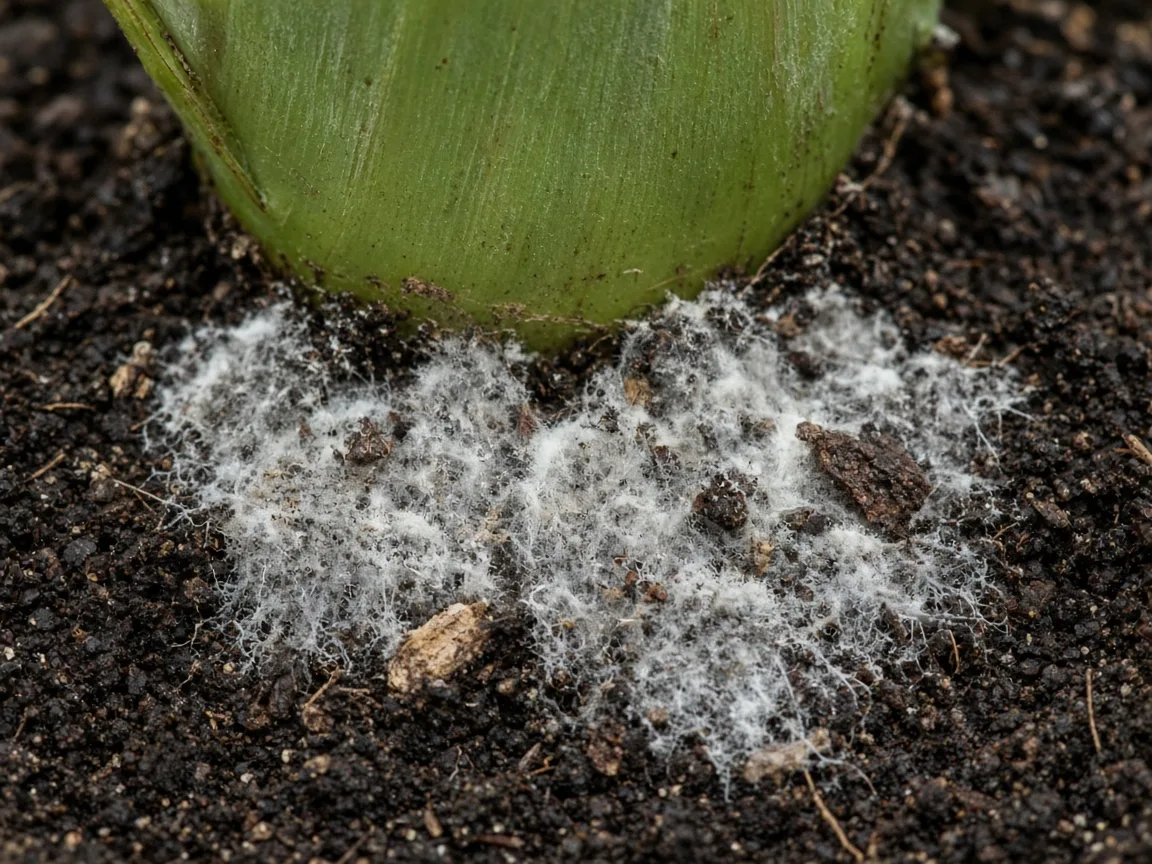
Mold on soil symptoms on Banana - compare the fuzzy surface layer with firm pseudostem tissue above.
Healthy banana plants keep a stiff, upright pseudostem and push a tight cigar leaf from the crown even when surface mold is present. That contrast matters: fuzzy soil with firm stems and normal new growth usually points to a surface moisture and organic-matter problem, not Sigatoka leaf disease or pseudostem rot. If the pseudostem base softens, lower paddles yellow while mix stays wet, or the cigar leaf stalls and wrinkles, treat that as possible overwatering on Banana or root rot moving beyond cosmetic mold.
Mold can also show at drainage holes or in saucers that hold runoff. In dim winter rooms or oversized decorative pots, the surface may stay damp for a week after a single watering—exactly the conditions that keep mold returning on Banana soil rich in compost.
Why Banana gets mold on soil
Banana sits in an awkward middle ground for indoor growers: it is thirsty in heat but extremely vulnerable to stagnant wet soil. UF/IFAS notes that bananas are extremely susceptible to damage from flooding, continuously wet soils, and inadequate drainage, with symptoms including stunting, leaf yellowing, and reduced yields. Surface mold is often the first visible clue that moisture is out of balance—even before the pseudostem shows stress.
Compost-rich mix and organic surface debris
A practical banana container blend is organically rich and moisture-retentive—potting mix, compost, and perlite. That fertility supports rapid paddle growth, but decaying peat, compost particles, and fallen banana paddles on the surface give saprophytic fungi plenty of food. In a dry pot, that organic layer is harmless. When the top centimeter never dries, mold colonizes the buffet.
Watering on calendar, not on growth phase
In summer on a sunny terrace, a container banana may drink every two to three days and use water fast enough that the surface rarely molds. The same schedule in a cool indoor room—where growth slows below about 16°C—leaves the top layer wet while the plant barely grows. Mold follows within two to four weeks.
Many growers also mistake banana’s moisture needs for “keep the surface damp at all times.” Banana wants even root-zone moisture, not a permanently wet carpet on top. Water when the top 2–3 cm dries, then soak until excess drains—do not sprinkle lightly every day, which keeps only the surface chronically moist.
Oversized pots and poor drainage
A small rhizome in a huge tub of compost holds moisture the roots cannot pull up quickly. Dense peat-heavy mix, blocked drainage holes, cachepots trapping saucer water, and decorative moss toppers all slow surface drying. Clemson Extension distinguishes soft fuzzy mold from chalky salt crusts—but both can appear on over-fertilized bananas and need different fixes. Mold signals wet organics; salts signal leaching needs.
Low light, cool air, and leaf shade
Banana’s own broad paddles shade the pot rim and reduce airflow at the soil line. A plant pushed into a dim corner for winter protection dries slowly and transpires less, so even “moderate” watering keeps the surface damp. Stagnant air around crowded plant shelves has the same effect.
Companion fungus gnats
Fungus gnat larvae feed on fungi and decaying organic matter in consistently moist top layers—the same habitat surface mold prefers. Gnats do not cause mold, but their presence confirms the upper mix is staying wet too long.
How to confirm the cause
Work through these checks in order before repotting or spraying anything.
-
Top-layer moisture and pot weight. Push a finger 2–3 cm into the mix. If it feels cool and damp days after you watered, the surface is drying too slowly. Lift the pot—heavy weight with only surface mold often means excess volume or poor drainage, not that banana needs less water overall.
-
Surface pattern. White or gray fuzz on wet organic-rich soil with a firm pseudostem strongly suggests saprophytic surface mold. Green algae on the rim points to constant surface wetness plus light. If mold returns within three to five days after scraping, the environment is still too wet—scraping alone will not fix it.
-
Drainage audit. Confirm open drainage holes, no standing water in the saucer, and no outer cachepot trapping moisture. Check whether the mix is dense peat that clumps when squeezed wet—banana needs grit in the blend per Banana soil guidance.
-
Pseudostem and cigar-leaf clues. A stiff pseudostem and clean emerging cigar leaf mean you likely caught a moisture-timing issue early. Soft tissue at the base, sour smell, or a stalled cigar leaf despite wet mix mean escalate beyond surface treatment toward root rot.
-
Season and placement cross-check. Has the plant moved indoors, lost sun, or entered cool weather while watering stayed on a summer rhythm? That mismatch is one of the most common banana mold triggers.
First fix for Banana
Make one change first so you can read the plant’s response: scrape the moldy surface, clear organic debris, and pause watering until the top 2–3 cm of mix dries.
Use a spoon to remove the top 1–2 cm of fuzzy mix and any fallen paddles or old mulch sitting on the soil line. Discard the scrapings in the trash, not the compost bin. Do not pour fungicide, cinnamon, or hydrogen peroxide as your first move unless mold covers a large area and you need a brief cosmetic stopgap—those treatments do not replace correcting dry-down.
Skip the next scheduled drink even if lower paddles look fine; banana handles a short surface dry spell far better than a permanently wet top layer. Once the top 2–3 cm reads dry, resume one deep watering until excess runs from drainage holes, then empty the saucer within thirty minutes.
Give the pot base breathing room past the leaf canopy—broad paddles trap humidity at the rim. If the plant sits in deep shade, move it to the brightest realistic spot per Banana light without shocking sun-burned nursery leaves.
Step-by-step recovery
When surface mold appears on an otherwise upright banana:
-
Isolate slightly if fungus gnats are present, so adults do not colonize other wet pots nearby.
-
Remove visible mold, debris, and saucer water. Scrape the affected surface and pick off fallen paddle pieces, spent sheath bits, or decorative toppers trapping moisture.
-
Improve drying at the soil line. Shift the pot so air moves across the rim. In crowded collections, give bananas space—their own leaves shade the mix.
-
Match watering to growth phase. In warm active growth, water deeply when the top 2–3 cm dries. In cool slow months, stretch intervals and reduce volume so the surface gets real dry cycles between drinks.
-
Refresh the surface if needed. After the top layer dries, add a thin layer of dry, gritty mix to replace what you scraped—avoid fresh compost on the surface until the moisture pattern stabilizes.
-
Repot only if mold keeps returning, the mix smells sour, roots feel soft, or drainage cannot be improved in the current container. Repot into a fresh compost-perlite blend with open holes, trim mushy roots with clean tools, and withhold a full soak for a few days only if you removed damaged roots—banana still needs moisture at depth, not a desert repot.
Recovery timeline
Pure surface mold on a firm pseudostem often clears within one to two corrected watering cycles once the top layer dries reliably—the fuzzy mat shrinks to harmless dust you can brush away. If you scraped mold and fixed drainage, expect the surface to stay clean within one to three weeks in bright warm conditions.
If underlying mix was soggy for weeks, recovery takes longer. Yellow lower paddles from chronic wetness will not green up again; watch for a clean cigar leaf and firm new paddles as your success signal. Severe rhizome damage can take several weeks to stabilize and may require removing the weakest sucker while the mat recovers.
Mold that reappears within days after scraping means the environment is still too wet—treat that as a pot size, mix, light, or seasonal watering problem, not a failed surface cleanup.
What not to do
Do not treat banana like a snake plant and withhold all water for weeks. Extended drought stresses a tropical herb built for steady moisture; the goal is better dry-down at the surface, not a bone-dry root ball.
Do not keep watering on your summer calendar because paddles still look upright in a cool dim room. Growth rate, not the day of the week, should drive drinks.
Do not repot into fresh wet mix on day one without checking moisture deep around the rhizome—you may bury wet roots in more compost.
Do not pile fresh compost or thick mulch on the surface while fighting mold; banana appreciates organic matter, but a wet top dressing feeds fungi.
Do not assume mold is harmless when gnats, sour smell, or yellowing paddles appear together. Surface saprophytes and overwatering damage share the same wet-soil cause on banana.
Do not stack fungicide sprays, heavy cinnamon doses, and repotting on the same day. Change surface moisture first, then escalate only if the pattern persists.
Causes to rule out
Several issues look similar on the shelf but need different fixes:
-
Green algae on the pot rim — surface moisture plus light, not necessarily the same fungus as white mold. Still fix watering, but algae often fades when the surface dries and light improves slightly.
-
Mineral or salt crust — white crust from hard water or fertilizer feels gritty, not fuzzy. Flush the pot and adjust feeding rather than only drying the surface.
-
Fungus gnats only, no visible mold — shared wet-soil cause; drying the top layer addresses both.
-
Root rot without surface mold — advanced overwatering may show soft pseudostem bases and foul smell before fuzzy soil appears. Inspect the rhizome if paddles decline while you watered “normally.”
Lookalike symptoms on Banana
Folded paddles with dry mix throughout point to underwatering, not surface fungus. The pot feels light and the top dusts dry quickly.
Brown crispy margins with otherwise dry soil often trace to low humidity, wind damage, or old leaf age—not mold. The surface stays dry.
Powdery white coating on living paddle blades is a leaf disease pattern, not soil mold. Fuzzy growth limited to potting mix with clean leaf surfaces fits saprophytic surface fungus.
Mealybugs show as white cottony clusters in leaf sheaths and axils, not evenly across soil. Wipe and treat pests; moisture fixes alone will not clear them.
When in doubt, match the full pattern: wet heavy pot plus fuzzy organic surface plus optional gnats equals mold from slow surface dry-down on a compost-fed tropical herb—not a mysterious banana-specific pathogen.
Banana care cross-check
Align mold treatment with how banana is normally grown:
-
Watering: Deep drinks when the top 2–3 cm dries in active growth; reduce sharply in cool weather per Banana watering.
-
Soil: Organically rich but gritty mix with about 30% perlite or grit and open drainage holes—avoid pure peat in oversized tubs.
-
Light: Full sun outdoors or the brightest indoor spot; dim winter corners slow drying and growth together.
-
Debris: Clear fallen paddles weekly from the soil line during routine care.
-
Pot size: Upsize gradually; a huge volume of wet compost around a small rhizome is a mold factory.
If you recently moved the plant indoors, added a moisture-trapping topper, or started sprinkling the surface between deep waterings, mold often follows within two to four weeks. Correct that change before repeating surface scrapes.
How to prevent mold on soil next time
Prevention on banana is about moisture at the roots without a permanently wet surface:
-
Check the top 2–3 cm before every watering, and stretch intervals when temperatures drop below about 16°C.
-
Water thoroughly but less often—deep soaks followed by real surface dry-down beat daily light sprinkles.
-
Remove fallen paddles and old organic debris from the soil line during weekly scouting.
-
Give pot rims airflow past the leaf canopy; avoid crowding bananas on shelves.
-
Use compost-rich mix with grit, repot before peat collapses into a water-retentive sponge, and empty saucers after every drink.
-
Scout for fungus gnats early—they flag the same wet top layer mold prefers.
A healthy banana in warm sun can use water quickly enough that surface mold never appears. Treat that growth-driven dry-down as your prevention tool, not a reason to keep the top layer constantly damp “because bananas like moisture.”
When to worry
Surface mold alone on a firm pseudostem is a medium-priority care correction, not a rescue emergency. Worry and inspect the rhizome when:
- Mold returns within days after removal.
- Soil smells sour or musty deep in the pot.
- The pseudostem base softens or lower paddles yellow while mix stays wet.
- Fungus gnats persist after four to six weeks of corrected surface dry-down.
- The pot stays heavy more than ten days after you corrected watering in a warm room.
Those patterns suggest wet conditions may already be damaging roots. Unpot, trim mushy tissue, and repot into fresh gritty mix if inspection confirms rot.
Practical checks
Urgency check
Cosmetic surface mold with a firm pseudostem and clean cigar leaf gives you time to correct surface dry-down over one to three weeks. Soft stem bases, spreading yellowing, or sour soil need same-week rhizome inspection.
Best inspection order
For banana, check top 2–3 cm moisture and pot weight first, then drainage holes and saucer water, then surface mold extent and fallen debris, then pseudostem firmness at the soil line, then fungus gnat activity, then cigar-leaf emergence.
Severity note
This issue is marked medium for banana—a triage clue that surface moisture is out of balance, not a guarantee the mat is dying. Many cases resolve once watering matches growth phase and the top layer dries between drinks.
Escalation point
Repot or inspect the rhizome when mold recurs after two corrected dry cycles, paddles decline despite fixed watering, or suckers wilt while mix stays wet.
When to use this page vs other Banana guides
- Banana watering guide — Use for routine moisture checks before assuming mold on soil is the main issue.
- Banana problems hub — Browse all common issues on this species.
- Fungus gnats on Banana — Different entry point when symptoms overlap with mold on soil.
- Overwatering on Banana — Different entry point when paddles yellow and pseudostem tissue softens in wet mix.
- Root rot on Banana — Escalate here when inspection finds mushy rhizome tissue, not just surface fuzz.
Related Banana guides
- Banana overview
- Banana watering
- Banana light
- Banana soil
- Banana repotting
- Fungus gnats on Banana
- Overwatering on Banana
- Root rot on Banana
- Slow growth on Banana
- Banana problems
Conclusion
White fuzzy growth on compost-rich banana potting mix is usually a saprophytic surface fungus fed by wet organic debris—not a leaf disease on Musa acuminata. Scrape the top layer, clear fallen paddles, let the upper 2–3 cm dry between deep waterings, improve airflow at the shaded pot rim, and judge recovery by a firm pseudostem and clean cigar leaf. Escalate to rhizome inspection when mold returns fast, the mix smells sour, or paddles yellow in wet soil.
Related tool
Use the Plant Problem Diagnosis Tool to narrow causes for mold on soil on this plant before changing multiple variables at once.