Brinjal Fertilizer Guide for Pots and Garden Beds
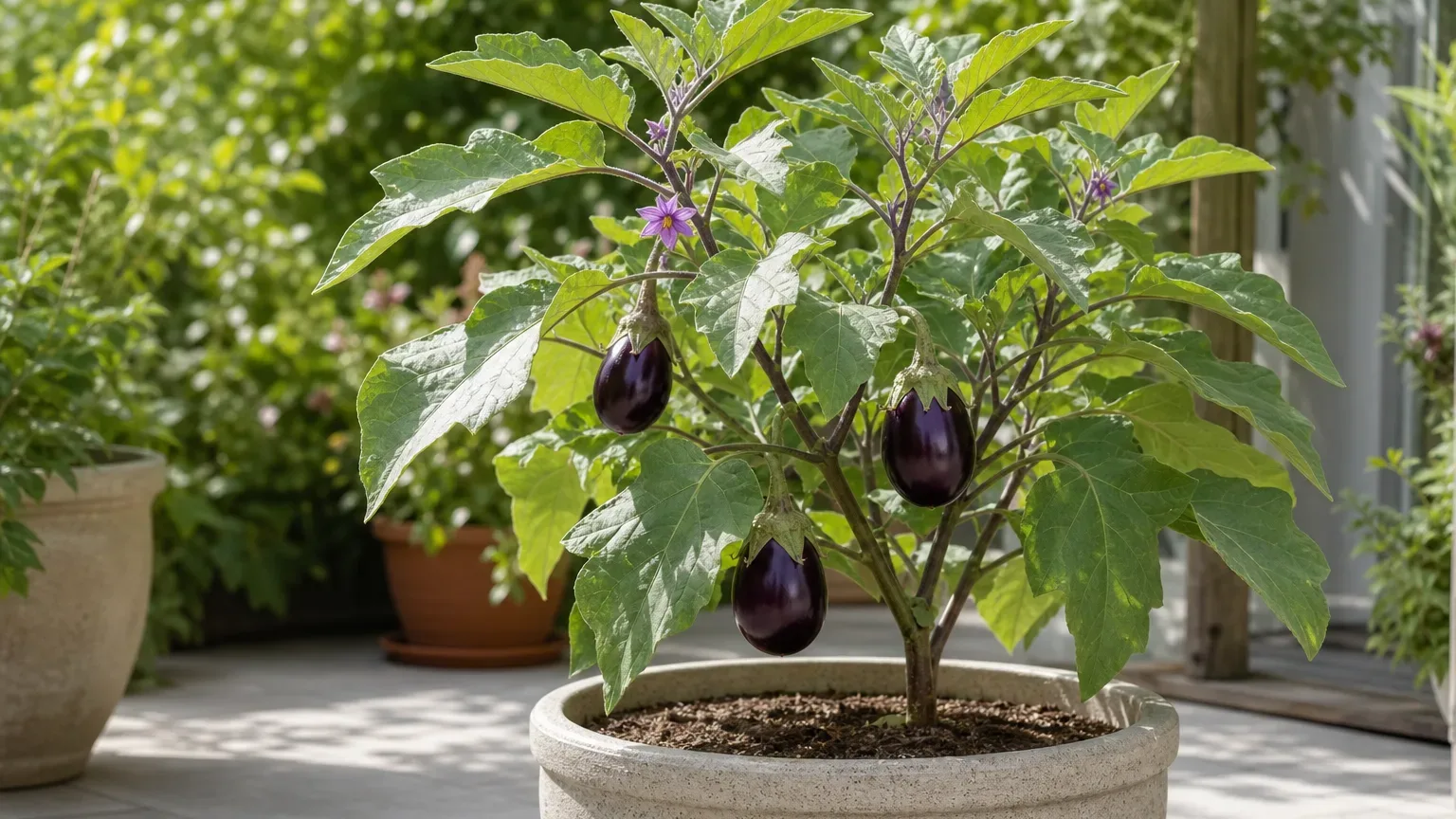
Brinjal Fertilizer Guide for Pots and Garden Beds
Brinjal Fertilizer Guide for Pots and Garden Beds
Brinjal (Solanum melongena) needs fertile soil to build a branching canopy and carry repeated fruit, but “more feed” is not a reliable route to a better crop. The useful question is whether the root zone can supply nutrients at the plant’s current stage without becoming salty, waterlogged or overloaded with nitrogen.
This guide uses that question to plan fertilizer for a home bed or container. It deliberately does not convert field rates into spoonfuls per pot: fertilizer products differ in concentration, soil nutrient reserves vary, and a vigorous hybrid can demand more than a compact cultivar.
The quick answer: feed the crop, not the calendar
Start with fertile, well-drained soil and use a soil test where one is available. Clemson Extension describes eggplant as needing moderate fertilizer and recommends basing pre-plant applications on a soil test, while Virginia Cooperative Extension describes it as a crop for rich soil and gives separate pre-plant and later side-dress guidance when no soil test is available. The apparent difference is a good warning against treating one dose as universal.
For a home grower, the practical sequence is simple. Build the soil before planting, let a transplant establish, support active growth without forcing soft foliage, then reassess as flowering and harvest begin. Feed only while roots are active and the plant has enough light, warmth and moisture to use the nutrients.
Choose fertilizer from the soil and growing system
A “tomato and vegetable” fertilizer, another complete fertilizer labelled for edible crops, or a suitable organic fertilizer can all work. The brand matters less than matching the product to the soil, following its label, and avoiding repeated products that duplicate the same nutrients.
Do not choose fertilizer from the front NPK numbers alone. Compost and soil may already supply part of the crop’s needs, while container mixes may begin with a starter charge that lasts for a stated period. Check the potting-mix bag and fertilizer labels before combining them.
Test soil before correcting it
A soil test can show whether phosphorus, potassium or lime is actually needed; it also prevents a “complete” fertilizer from repeatedly adding nutrients already present. Utah State University advises determining eggplant fertilizer needs from a soil test before planting and incorporating any warranted fertilizer into the root zone.
If local testing is unavailable, use the conservative rate on a fertilizer label for vegetable beds rather than copying a farm recommendation. Indian field schedules are expressed per hectare and vary between open-pollinated varieties and hybrids, as the TNAU brinjal manuring guidance demonstrates. Those rates establish that cultivar and production system matter; they are not a safe home-pot conversion.
Read the analysis and the edible-crop label
The three prominent numbers are percentages of nitrogen, phosphate and potash, not a direct promise of leaves, flowers and fruit. A balanced or crop-appropriate complete fertilizer is a sensible starting point when soil or mix lacks a nutrient, but the soil test and label should decide the product and rate.
Use only a product whose label permits use on edible vegetables, and observe its application interval and harvest restrictions if stated. Never use lawn “weed and feed” around brinjal; University of Minnesota Extension specifically warns that fertilizer containing a weed killer may kill vegetable plants.
A stage-aware brinjal feeding plan
Brinjal does not need the same intervention every week from seedling to final harvest. Commercial research makes the changing demand visible: TNAU’s hybrid fertigation schedule divides nutrition by establishment, vegetative, flowering and harvest stages. A home gardener should use the stage concept, not copy the hectare-scale formula.
Before each feed, confirm that the plant is actively growing, the root zone is moist but aerated, and the previous application interval has elapsed. If the plant is cold-stalled, shaded, wilted or sitting in saturated soil, correct that constraint first.
Seedlings and newly transplanted plants
Young seedlings grown in a nutrient-free medium need a gentle, complete feed only after true leaves are developing, following the seedling-fertilizer label. Seed-starting mix that already contains fertilizer may need none. Dark green, compact seedlings should not be pushed simply because transplant day is approaching.
At transplanting, avoid placing concentrated granules against roots or stems. If the bed was prepared from a soil recommendation or the container mix includes starter nutrients, allow the plant to establish before adding another feed. New leaf expansion is a better signal of resumed root activity than a fixed number of days.
Established vegetative growth
Once the plant has rooted in and is extending new branches, reassess colour, internode length and growth rate. Species-specific extension schedules commonly place a nitrogen side-dress several weeks after planting: Illinois Extension recommends nitrogen when eggplant is half grown and again after the first harvest, while Clemson uses two spaced side-dress applications.
That does not mean every dark-green plant needs extra nitrogen. A brinjal in compost-rich ground or fresh pre-fertilized potting mix may already have enough. Apply only the labelled amount, keep dry fertilizer away from the stem and leaves, and water it into an already moist root zone.
Flowering, fruit set and repeated harvest
When buds and flowers appear, stop judging success by leaf size alone. Keep nutrition available, but do not answer slow fruit set with an unmeasured nitrogen-rich feed. Fruit set also depends on warmth, direct sun, pollination and steady water, so review the Brinjal light guide and Brinjal watering guide before blaming fertilizer.
For a plant carrying fruit, continue a complete edible-crop feed at the label interval if the soil test, mix or plant performance indicates a need. Reassess after early harvests because a productive plant is still making flowers and fruit; the Illinois stage after first harvest is more useful than the blanket claim that brinjal always needs weekly feeding.
Feeding brinjal in garden beds
Prepare the bed before transplanting rather than trying to repair poor soil with frequent surface feeds. Work mature compost into the planting area in moderation, correct nutrients from a soil result, and use the Brinjal soil guide to maintain drainage and root aeration. TNAU’s field guidance uses both farmyard manure and mineral nutrients as basal inputs, showing that organic matter and fertilizer play related but different roles.
Later side-dressing should sit beside the active root zone, not against the stem. Clemson advises keeping side-dress fertilizer away from plants to reduce root burn and watering granules off foliage. In a small mixed bed, measure the labelled area accurately; guessing a row rate for one plant can easily overapply it.
Feeding brinjal in containers
A container has a limited nutrient reservoir, and regular watering can remove soluble nutrients through drainage. Start by checking whether the potting mix contains fertilizer and for how long the manufacturer expects that charge to feed. When that period ends and active growth continues, use one complete edible-vegetable fertilizer at the label’s container rate rather than stacking granules, compost teas and homemade tonics.
Water the pot first if the mix is dry, apply the measured feed evenly, and let excess water drain. Never leave the container standing in the drained solution. If growth is steady and foliage is healthy, do not shorten the label interval merely because the plant has begun fruiting; a smaller root volume makes excess salts, not just deficiency, a container concern.
Pot volume also changes the result. A vigorous brinjal in a cramped pot may wilt, stall and shed flowers even when fertilized, because fertilizer cannot replace root space or water-holding capacity. Move an undersized plant according to the Brinjal repotting guide instead of feeding it more aggressively.
Adjust feeding in heat, heavy rain and monsoon humidity
During hot, bright weather, container brinjal may use water quickly, but extra watering is not automatically a reason for extra fertilizer. Keep the root ball evenly moist, follow the product interval, and watch whether rapid drainage is actually leaching the mix before changing the plan.
Heavy monsoon rain can leach mobile nutrients from free-draining beds, while a poorly drained pot can remain saturated and unable to use them. TNAU treats irrigation and fertigation as a coordinated system and places basal nutrients before staged delivery in its drip-fertigation guidance. At home, pause feeding in waterlogged soil, restore drainage, then reassess new growth rather than adding fertilizer to stressed roots.
Excess nitrogen: a leafy plant is not always a productive plant
Excess nitrogen often presents as large, dark, soft foliage and vigorous stems with delayed flowering or fruit maturity. Utah State University explicitly warns that overfertilization encourages excessive leaf growth and delays flowering and fruit maturity.
Stop nitrogen-led feeding when this pattern appears, but do not try to “balance it out” with an unmeasured dose of phosphorus or potassium. Give the plant full sun, steady water and time to use what is already in the root zone. Prune only for structure or damaged growth according to the Brinjal pruning guide; cutting healthy leaves does not remove excess fertilizer from the soil.
Diagnose deficiency and fertilizer burn before adding more
Uniformly pale older leaves and weak new growth can fit nitrogen shortage, but they can also follow root damage, cold, waterlogging or an exhausted container mix. Interveinal yellowing can point toward a different nutrient problem, yet pH and root health affect nutrient availability. Check moisture, drainage, light, pests, recent applications and soil pH before selecting a deficiency treatment.
Fertilizer burn is more likely when browning leaf edges follows a recent heavy application, granules touched foliage, or a white crust has formed on container mix. Remove visible granules, water a freely draining pot thoroughly with plain water, let it drain completely, and pause fertilizer until healthy new growth resumes. Do not flush a saturated or root-rotted pot; fix drainage first.
When to use this page vs other Brinjal guides
Use this page to decide whether, when and how to feed. Use the Brinjal overview for the whole crop cycle, the soil guide for pH and mix structure, and the watering guide when wilt, flower drop or wet roots make diagnosis uncertain.
Fertilizer cannot compensate for too little sun, an undersized pot, cold roots or damaged branches. Those constraints belong in the light, repotting and pruning guides, even when the first visible symptom looks like slow growth.
Related Brinjal guides
- Brinjal light guide — check whether the plant receives enough direct sun to flower and use nutrients.
- Brinjal watering guide — coordinate feeding with a moist, aerated root zone.
- Brinjal soil guide — choose drainage, organic matter and pH before applying fertilizer.
- Brinjal repotting guide — correct limited root volume when a container plant stalls.
- Brinjal pruning guide — manage structure without treating pruning as a nutrient correction.
Conclusion
The safest brinjal fertilizer plan begins with evidence: test a garden bed where possible, read the potting-mix and fertilizer labels, and observe the plant’s growth stage. Establish roots first, support vegetative growth without chasing oversized leaves, then maintain measured nutrition through flowering and harvest only while the plant is actively growing.
In beds, let soil reserves and test results lead. In containers, account for the finite mix and drainage without stacking products. When growth is poor, check sun, water, drainage, temperature and root space before reaching for another feed; fertilizer helps a functioning crop, but it cannot repair the growing system by itself.