Brinjal Soil Guide: Mix, pH and Drainage
Brinjal Soil Guide: Mix, pH and Drainage
Brinjal Soil Guide: Mix, pH and Drainage
Brinjal needs soil that can do two jobs at once: hold enough moisture for a fruiting vegetable and release excess water quickly enough to keep roots aerated. That balance matters in a hot container, where mix can dry within a day, and in an Indian monsoon bed, where the same root zone may stay saturated after repeated rain. Start by checking drainage and pH; do not start by buying a long list of amendments.
The species is Solanum melongena, also called eggplant or aubergine. Its soil needs are closer to tomato and chilli than to an ornamental houseplant, but brinjal is not helped by simply making soil “richer.” A fertile, crumbly root zone is useful; dense compost, raw manure, waterlogged clay and repeated high-nitrogen feeding create different problems.
The quick answer: best soil for brinjal
The best brinjal soil is fertile, moist but well-drained sandy loam or loam, with enough organic matter to buffer moisture and nutrients without closing the air spaces between particles. NC State Extension gives Solanum melongena a pH range of 5.5–6.8 and describes its preference for moist, well-drained, fertile sandy and loamy soils. Aim near pH 6.0–6.8 unless a local soil test recommends a different correction.
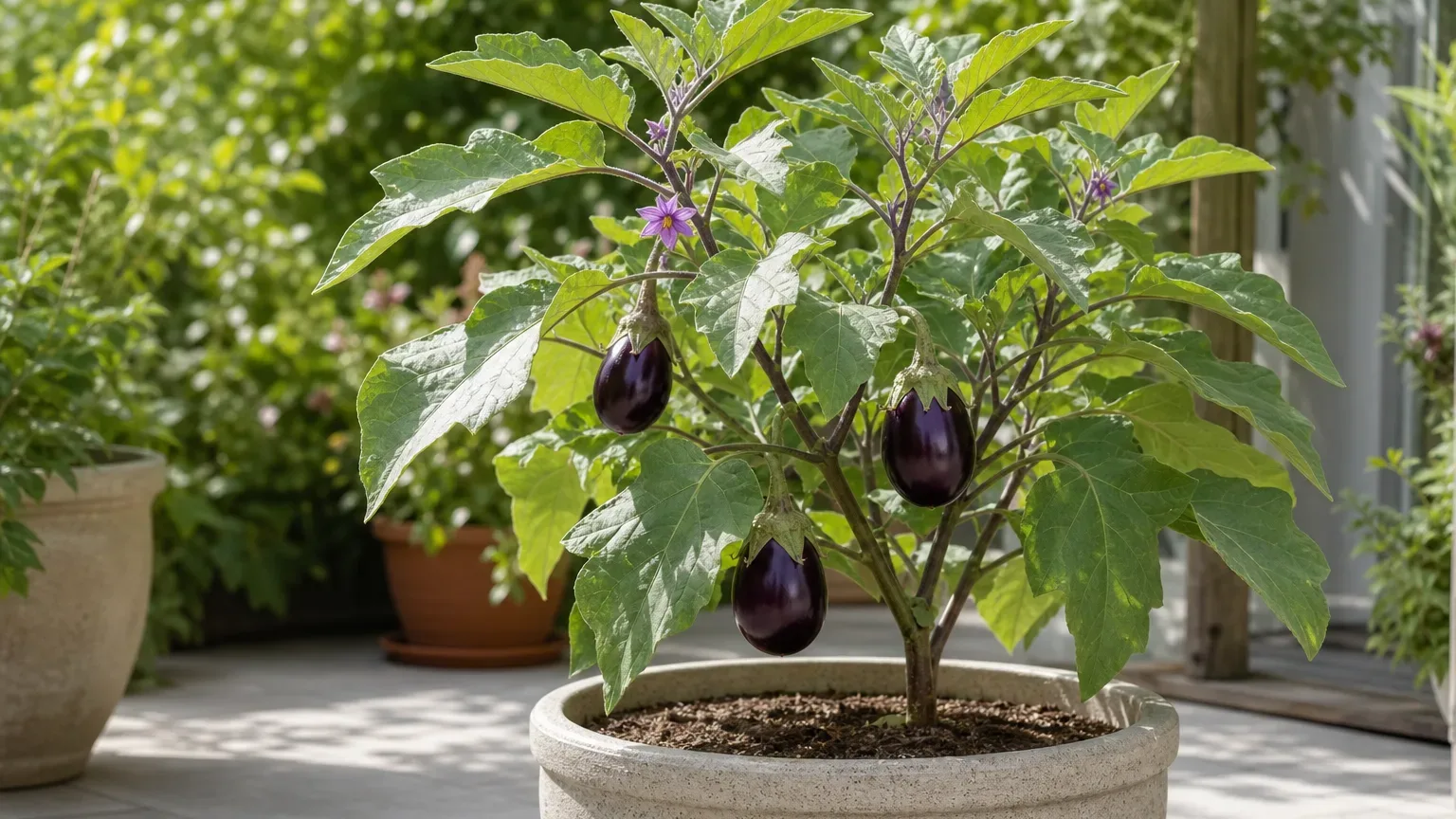
In a bed, improve the existing soil rather than trying to replace it. In a pot, use a manufactured potting mix rather than field soil: a workable starting blend is 50% quality potting mix, 30% mature compost and 20% aeration material such as perlite, fine bark or coarse horticultural sand. Treat that ratio as a starting point—humid monsoon balconies need more air space, while very hot, windy terraces may need slightly more moisture retention.
What brinjal roots need from soil
Brinjal grows and fruits over a long warm season, so its roots need steady access to water, nutrients and oxygen. The Royal Horticultural Society lists S. melongena for moist but well-drained conditions, a more useful description than either “moisture-loving” or “drought-tolerant.” Soil should feel damp after irrigation, then lose its glossy wetness and regain air before the next soaking.
Texture alone does not decide success. Clay can grow brinjal if it is structured, raised and not worked while wet; sandy soil can grow it if organic matter and irrigation prevent sharp moisture swings. The warning condition is not a named soil type but a root zone that puddles, compacts into a hard mass, dries hydrophobic, or accumulates fertilizer salts.
Preparing brinjal soil in garden beds
Clear perennial weeds and old nightshade roots, then loosen the bed without pulverising wet soil. Spread mature compost over the surface and incorporate it through the upper root zone rather than burying a concentrated pocket directly under each transplant. Utah State University describes eggplant as preferring organic, rich, well-drained sandy soil and recommends deciding fertilizer needs from a soil test before planting.
Prepare the entire planting strip when possible. A single soft planting hole surrounded by compact clay can act like a pot sunk in the ground: water enters the amended pocket but escapes slowly through the denser sides. A broad improved zone lets roots move beyond the original transplant hole and makes moisture more even.
Test texture and drainage before amending
Dig a hole about 30 cm deep in the intended bed, fill it with water, allow it to drain once, then refill it. You do not need to chase a universal drainage rate; observe whether water remains for many hours and whether the sides smear into a slick clay lining. Persistent standing water after the surrounding ground has drained means the site needs elevation, drainage work or a different location, not just extra compost.
Also squeeze a moist handful. Soil that forms a ribbon and stays sticky is clay-dominant; soil that falls apart immediately is sandy; a crumb that holds briefly and breaks under pressure is closer to workable loam. Repeat the observation after heavy rain, because a bed that appears fine in the dry season may reveal its drainage limit only when subsoil is saturated.
Improve heavy clay or fast-draining sand
For heavy soil, build a broad raised bed, keep foot traffic out of the growing area and add mature compost over several seasons. Do not try to “fix” clay with a little sand: an unsuitable clay-to-sand ratio can produce a denser, concrete-like mass. Coarse organic matter improves aggregation gradually, while elevation gives storm water somewhere to leave.
For sandy soil, compost increases water and nutrient retention, but too much fine organic material can still collapse pore space as it decomposes. Mulch the surface after the soil is warm, and use the Brinjal watering guide to adjust irrigation from actual root-zone moisture. The goal is to reduce rapid swings, not keep sand constantly wet.
Building soil for container-grown brinjal
A container changes the physics: drainage happens through a short column, roots occupy a limited nutrient reservoir, and exposed pot walls heat and dry quickly. Penn State Extension notes that eggplant can be grown in a garden bed or container, but a vigorous or large-fruited cultivar needs more root volume than a compact patio type. A final pot at least 30 cm wide is a practical minimum; larger cultivars benefit from substantially more volume and stronger support.
Do not fill that pot with garden soil alone. In a container, field loam settles, loses large pores and becomes difficult to re-wet evenly. A stable potting base keeps roots aerated while compost contributes a limited nutrient and moisture buffer.
A practical brinjal potting mix
For one container, combine roughly:
- 50% quality potting mix for structure and dependable water distribution
- 30% mature, screened compost for nutrient buffering and biological activity
- 20% perlite, fine bark or coarse horticultural sand for durable air space
Mix throughout instead of layering gravel at the bottom. If the base mix is already coarse and bark-rich, reduce the extra aeration fraction; if it is fine and peat-heavy, increase it. During prolonged humid rain, the correct mix is the one that drains fully and begins to lighten between storms, not the one that matches a recipe exactly.
Drainage holes, pot depth and settling
Use several unobstructed drainage holes and keep the pot off a flat floor where runoff can seal the openings. Empty saucers after rain or irrigation. A layer of stones does not compensate for blocked holes and sacrifices root volume; uniform porous mix from top to bottom is more reliable.
Fill the container before transplanting, water once and top up only where the mix settles. Keep the original stem depth unless the transplant guide says otherwise, and leave a watering lip below the rim. When roots fill the nursery pot or the plant becomes top-heavy, follow the Brinjal repotting guide rather than moving a small seedling directly into an oversized, slow-drying container.
Brinjal soil pH and testing
pH changes how readily roots can use nutrients already present. It is therefore possible to see deficiency-like leaves in fertilised soil when pH is far outside the useful range. Penn State Extension places eggplant with tomato and pepper at a soil-solution pH of 6.2–6.5 for strong nutrient uptake, while other extension ranges are slightly broader.
That variation is not a contradiction requiring precision to one decimal place. Soil methods, regional conditions and whether a source is discussing field soil or soil solution affect the stated range. For home growers, a tested mildly acidic result around 6.0–6.8 is a sensible working zone.
The useful target range and how to correct it
Test before adding lime, wood ash, sulphur or acidifying products. The New England Vegetable Management Guide recommends using soil-test results and maintaining pH 6.5–6.8 for commercial eggplant fertility management. A laboratory or reputable local soil-testing service can also tell you whether a pH correction is appropriate for your soil’s buffering capacity.
Apply the amendment specified by the test, mix it through the recommended depth and allow time for the reaction. Do not use wood ash as a casual potassium source in neutral or alkaline beds, because it also raises pH. In pots, replacing a failed or exhausted mix is often safer than repeatedly adding corrective chemicals to a small volume.
Fertility without turning the bed into compost
Brinjal is productive in fertile soil, but “heavy feeder” should not be interpreted as unlimited nitrogen. University of Maryland Extension’s eggplant production guidance recommends adjusting soil to around pH 6.5 and incorporating balanced nutrients before planting. For a home bed, the transferable lesson is to establish baseline fertility before transplanting and let a test—not a generic farm dose—decide what is missing.
Keep soil preparation separate from in-season feeding. Compost improves the root environment and supplies some nutrients; a fertiliser corrects defined nutrient demand. The Brinjal fertilizer guide covers feed type and timing once plants are established.
Use mature compost as an amendment
Choose dark, earthy-smelling, fully decomposed compost without recognisable fresh manure or hot plant waste. Spread a moderate layer through the bed rather than planting into pure compost. Mature compost supports structure and moisture buffering, while an excessive proportion can hold too much water, shrink as it decomposes and supply an unpredictable nutrient load.
In containers, compost should remain a component, not the whole medium. If homemade compost varies greatly between batches, use less and rely on a consistent potting base. Never place fresh manure against roots; compost it fully and follow local food-garden safety guidance before use.
Avoid excess nitrogen and salt buildup
Too much nitrogen makes a large leafy brinjal without guaranteeing flowers or fruit. Utah State’s tomato-pepper-eggplant fertility guide warns that overfertilisation can reduce yield, earliness or fruit quality and recommends soil testing and composted organic matter before fertiliser decisions. If growth is lush but flowering is delayed, stop adding nitrogen and review light, cultivar and temperature before blaming the soil mix.
White crust on a pot rim or soil surface suggests soluble salts from fertiliser or hard water. Flush only if the container drains freely; pouring extra water through already saturated mix worsens oxygen stress. If crust returns quickly, reduce feed strength, check irrigation water and consider refreshing part of the mix.
Monsoon soil management in India
During monsoon, drainage capacity matters more than how often you intended to water. In beds, maintain a raised root zone, keep channels open around—not through—the bed, and stop irrigation while rain supplies moisture. Do not mound soil against the stem, where prolonged wetness can soften tissue. If puddles persist beside plants, divert surface flow and wait until soil is workable before stepping in or cultivating it.
Move containers out of continuous roof runoff and raise them on feet or a slatted stand. Remove saucers, check that roots have not blocked the holes, and pause feeding while the mix remains saturated. Do not repeatedly loosen wet mix with a stick; this can break roots and destroy structure. Once rain eases, judge moisture several centimetres below the surface before resuming the schedule.
Mulch is useful but needs restraint in humid weather. Keep a thin layer away from the stem and reduce it if soil stays wet for days. If a pot remains heavy long after rain, shelter it from the next downpour and improve the setup at the next safe repot rather than adding dry material only to the surface.
Crop rotation for brinjal beds
Do not follow brinjal with tomato, chilli, sweet pepper, potato or another brinjal in the same small bed when alternatives exist. These crops share the Solanaceae family and can carry over soil-borne problems. Utah State advises rotating pepper and eggplant to ground where solanaceous crops were not grown in the preceding three years.
In a home garden, a perfect three-year rotation may be impossible. Use separate beds or large containers, remove diseased roots rather than composting them, clean tools and avoid moving suspect soil into a fresh bed. Rotation reduces risk; it does not sterilise soil or replace diagnosis.
Diagnose soil problems from plant and pot clues
Wet soil plus wilt points first to impaired roots, poor drainage or disease—not lack of water. Stop irrigation, clear outlets and inspect the root zone before acting. Dry soil pulling from pot edges suggests the mix has become hydrophobic or the root ball is too crowded; re-wet slowly in stages and assess whether repotting is due.
Pale growth in a wet, recently fertilised mix calls for a pH and root check before more feed. Rapid drying and repeated midday wilt call for greater container volume, surface mulch or more moisture retention, followed by a watering adjustment. Hard crust and slow infiltration call for gentle surface aeration after the bed is dry enough to work, plus long-term organic-matter management rather than deep digging around active roots.
Change one major variable at a time. Replacing mix, liming, fertilising and increasing irrigation together makes the response impossible to interpret and can push a stressed plant further from balance.
When to use this page vs other Brinjal guides
- Start with the Brinjal overview when you need whole-plant context, cultivar size or seasonal planning.
- Use the Brinjal watering guide when the mix is suitable but you need to decide when and how deeply to irrigate.
- Use the Brinjal fertilizer guide for in-season nutrient type, dose and timing after soil preparation.
- Use the Brinjal repotting guide when roots circle the pot, drainage has collapsed or the plant needs a final container.
- Use the Brinjal propagation guide for sterile seed-starting mix, germination and seedling aftercare.
Related Brinjal guides
Soil works as part of a system. Pair this guide with Brinjal light requirements because strong light drives the water and nutrient demand that the root zone must support. Review Brinjal pruning before removing growth from a plant whose real problem is saturated soil or low fertility.
Conclusion
Build brinjal soil around drainage, measured pH and moderate fertility. In beds, improve a broad root zone, raise heavy ground and rotate away from tomato, chilli, pepper and potato. In containers, use a stable potting mix with mature compost and durable aeration material, then keep drainage holes open.
For Indian monsoon conditions, prevent repeated saturation before trying to correct symptoms with fertiliser. A mildly acidic tested root zone, usually around pH 6.0–6.8, gives a useful target, but structure and drainage decide whether roots can use it. Check the soil first, correct the limiting condition, and let the plant’s next healthy growth confirm the change.