Yellow Leaves on Brinjal: Moisture, Fruit Load & Fixes
Quick answer
Yellow leaves on brinjal (eggplant) usually mean uneven moisture, waterlogged mix during monsoon, nitrogen draw-down while fruiting, or cold-stalled roots—not a mystery disease. First step: press your finger 2–3 cm into the mix and lift the pot; match wet-heavy versus dry-light weight before changing anything else.
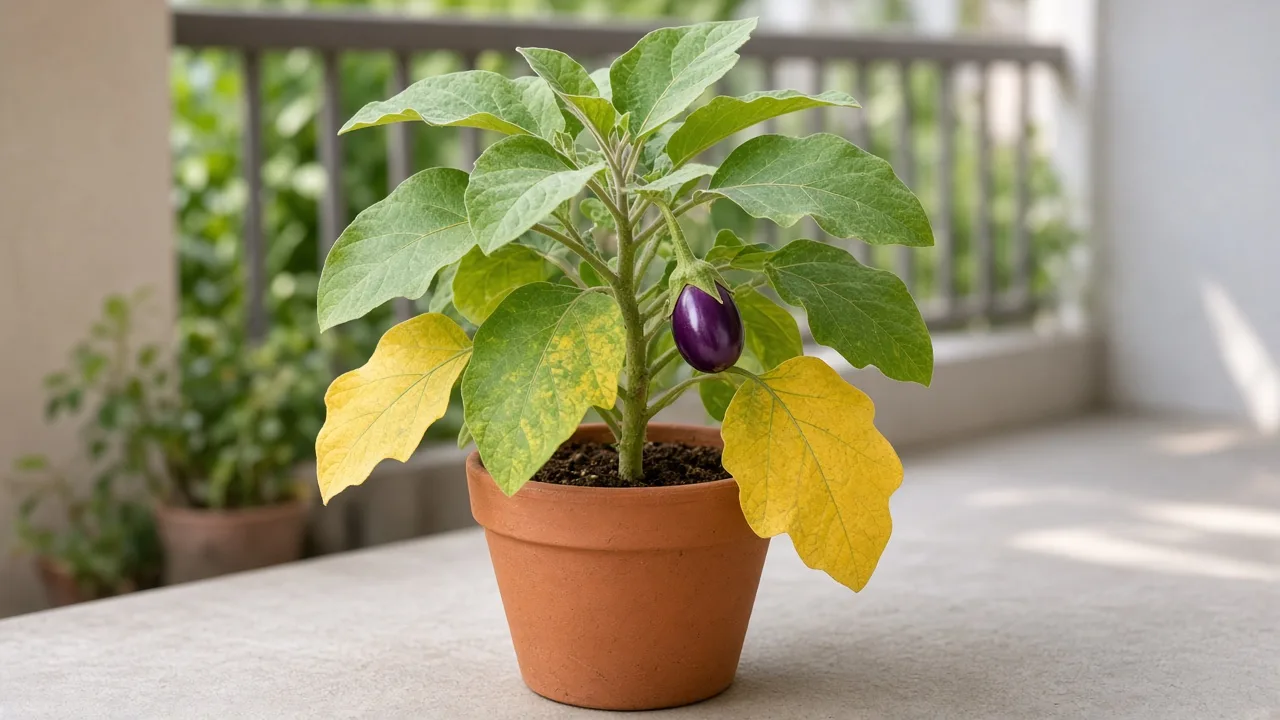
Yellow Leaves on Brinjal: Causes, Checks & Fixes
This guide covers yellow leaves on Brinjal. See also the general Yellow Leaves guide, watering, and light pages for this plant.
Yellow Leaves on Brinjal: Causes, Checks & Fixes
Quick answer
Brinjal (Solanum melongena—eggplant, aubergine) is a warm-season nightshade that makes broad leaves, repeated flowers, and heavy fruit on a single stem. Yellow leaves here rarely mean “add fertilizer today.” They usually trace to moisture swings, roots sitting in wet mix, nitrogen draw-down during fruit fill, cold nights that stall roots, or sap-feeding pests on tender shoots.
For how chlorosis works across plants in general, see our yellow leaves hub. On brinjal, the decisive read is the upper 2–3 cm moisture check plus pot weight while the plant is flowering or carrying fruit—not whether one older leaf at the soil line faded.
NC State Extension describes eggplant as needing moist, well-drained soil in full sun. RHS notes aubergines are tender plants that need warmth and may need daily watering in hot weather in containers—the same pot can stay wet for days during monsoon cloud cover.
First step: press your finger 2–3 cm into the mix and lift the pot. A light, dry container with midday wilt points to underwatering or uneven drought during fruit load. A heavy pot with yellow lower leaves and no new growth points to overwatering or stagnant mix, not generous watering. Pale new leaves on otherwise stable moisture may need light or feeding after you rule out saturation—see brinjal fertilizer.
When to use this page vs other Brinjal guides
| Pattern | Read next |
|---|---|
| Wet soil for days, limp lower leaves, sour smell | Overwatering or root rot |
| Dry crust, light pot, wilt into evening | Underwatering or wilting |
| Long internodes toward a dim window, few flowers | Not enough light or leggy growth |
| Sticky new growth, curled tips, insects visible | Aphids or spider mites |
| Whole plant limp in afternoon after missed watering | Drooping leaves |
| Routine moisture rhythm and monsoon checks | Watering guide |
| Full symptom index | Problems hub |
What yellow leaves look like on brinjal
Healthy brinjal carries large, slightly fuzzy green leaves on a sturdy upright stem, often with glossy immature fruit visible. Yellowing on this species has repeatable patterns:
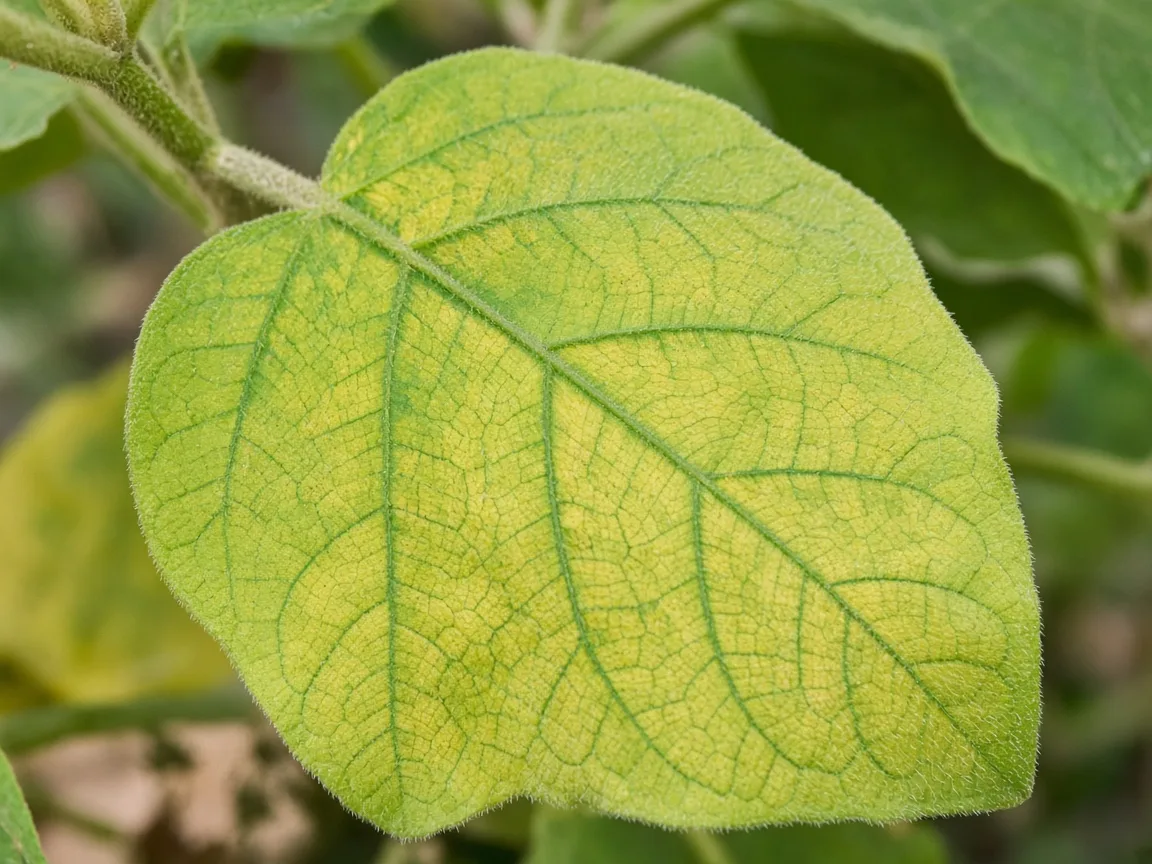
Stress yellowing on brinjal often starts on the lowest leaves during fruit load—compare with firm green new growth at the stem tip.
- Bottom-up yellow on the oldest leaves while the tip stays green—often normal senescence, nitrogen redistribution to fruit, or mild drought on a loaded plant
- Lower leaves yellow with limp texture and soil that stays wet for days—waterlogging or early root stress; overlaps overwatering
- Uniform pale wash on new leaves with older leaves still deep green—low light, cool roots, or iron limitation on alkaline tap water
- General yellowing from the bottom upward with stunted, thin new growth on a compact plant—nitrogen deficiency; RHS describes nitrogen shortage as pale yellow leaves on older foliage first, spreading upward
- Mottled yellow between veins on young leaves with fine stippling—pest or mite damage, not a watering formula issue
- Sudden yellow after a cold night below about 10–12°C (50–54°F)—warm-season roots stop taking up nutrients; growth resumes when nights warm
This differs from brown tips from acute desiccation or salt edge burn. On brinjal, read which leaves yellow and what the root zone feels like, not one blade in isolation.
Why brinjal gets yellow leaves
Uneven moisture during flowering and fruit fill
Brinjal crops best when moisture stays steady through flowering and fruit swelling. Utah State University Extension notes that inconsistent water in tomato, pepper, and eggplant can contribute to poor growth, flower drop, and fruit problems. Repeated dry-then-flood cycles yellow lower leaves as the plant sheds tissue and aborts weaker growth. Terrace growers who water on a calendar instead of checking the upper 2–3 cm see this most during hot, windy weeks—details in brinjal watering.
Monsoon containers and chronic wet mix
During humid, cloudy spells, evaporation slows. The same container that needed water every day in May can stay saturated for a week in monsoon. RHS chlorosis guidance links leaf yellowing to waterlogged conditions where roots cannot take up nutrients effectively. On brinjal, yellow lower leaves with firm stem but no new shoots often mean oxygen-poor mix, not kindness with the watering can. Blocked drainage holes, saucers left full, and dense peat without perlite are common on balcony brinjal.
Lower-leaf shedding under fruit load
A plant carrying several glossy fruits is redirecting nitrogen and sugars upward. One to three fully yellow leaves on the lowest nodes while upper leaves stay dark green and flowers continue often means normal aging, especially on compact cultivars in pots at least 30 cm wide. Remove yellow blades to reduce pest hiding spots; do not repot solely for bottom senescence.
Nitrogen draw-down in fast container growth
Eggplant is a heavy feeder relative to leaf herbs. RHS nutrient guidance lists nitrogen deficiency as spindly growth with pale yellow leaves, older leaves affected first. A brinjal that has fruited once in the same mix without compost refresh may yellow from the bottom while still trying to set a second flush. Confirm stable moisture and warm nights before feeding—see fertilizer guide.
Cold-stalled roots on a warm-season crop
Brinjal grows strongest around 21–29°C and struggles when roots stay cold even if air feels mild. Iowa State Extension emphasizes eggplant as a warm-season vegetable needing full sun and fertile soil. Yellowing after a cool transplant week, unheated greenhouse nights, or a pot sitting on a cold concrete slab often lifts once roots warm—without any disease spray.
Pests on tender new growth
Aphids, whiteflies, and spider mites cluster on leaf undersides and shoot tips on nightshades. Sap loss causes pale, yellow-stippled new leaves while stems may still look thick. Honeydew and distorted buds separate pest chlorosis from drought—cross-check aphids and spider mites before assuming fertilizer deficiency.
How to confirm the cause
Work in this order so you do not feed a waterlogged plant:
- Moisture and weight — Finger-test 2–3 cm deep. Heavy pot + wet mix + yellow lowers → saturation. Light pot + dry mix + wilt → drought.
- Which leaves yellow — Bottom only, slowly → aging or nitrogen redistribution. New growth pale → light, cold, iron, or pests. Whole plant rapid → root failure.
- Fruit and flower stage — Heavy fruit load with a few yellow bottom leaves → often benign senescence if tips stay green.
- Temperature — Note nights below 12°C and cold root zone; warm up placement before diagnosing disease.
- Stem base — Soft, darkened stem with sour mix → escalate to root rot.
- Pest scan — Stippling, sticky residue, colonies under leaves → pest page, not bulk fertilizer.
- Light check — Fewer than six hours of direct sun and long gaps between nodes → light guide and not enough light.
Symptom comparison table
| Pattern | Likely cause | First direction |
|---|---|---|
| Yellow lowest leaves; firm stem; fruit still glossy | Aging / fruit load | Remove yellow leaves; steady moisture |
| Yellow lowers; wet heavy soil; stalled new growth | Overwatering / poor drainage | Stop watering; drain saucer |
| Pale new leaves; dry soil; afternoon wilt | Underwatering / drought | Deep water; adjust check rhythm |
| Bottom-up pale yellow; compact plant; cool wet mix stable | Nitrogen deficiency | Half-strength feed after moisture fix |
| Pale new growth after cold nights | Cold root stall | Warm placement; wait before feeding |
| Stippled yellow new leaves; pests visible | Sap feeders | Rinse/shade; confirm pests |
| Rapid yellow + soft stem | Root failure | Stop water; inspect roots |
First fix for brinjal
Apply one primary correction based on the table—not fertilizer, repotting, and pruning the same afternoon.
If soil is wet and heavy: Stop irrigating until the upper 2–3 cm dries. Empty saucers and confirm drainage holes are open. Remove fully yellow mushy leaves only. Do not fertilize until new growth looks stable for about two weeks.
If soil is dry and the pot is light: Water deeply at the base until a small amount drains, then discard runoff. Resume checking daily in hot weather per watering guide.
If only lowest leaves yellow on a fruiting plant with green tips: Snip yellow blades. Maintain even moisture; do not increase feeding unless new growth also pales.
If nitrogen pattern fits (pale bottom-up on stable moist mix, warm nights): Apply one half-strength balanced liquid feed after a normal watering. Wait two weeks before repeating.
If cold-stalled: Move the pot to the warmest bright spot available; protect from nights below 12°C before adding fertilizer.
If pests confirmed: Isolate if needed, rinse leaf undersides with plain water, then follow the relevant pest guide—do not spray and feed the same day.
Recovery timeline by cause
Overwatering: Yellowing often stops spreading within 3–7 days once soil aerates. Expect green new leaves at the tip within one to two weeks if roots were not rotted.
Underwatering: Foliage firms and yellowing halts within 24–48 hours after a deep drink if roots are intact.
Nitrogen deficiency: New growth should green up within one to two weeks after one dilute feeding when temperatures support growth.
Cold stall: Improvement follows several warm nights; new leaves may take 7–14 days to normalize color.
Natural lower-leaf aging: Old yellow leaves do not re-green; success means continued green tips and held fruit.
Pest-related chlorosis: New growth clears within one to two weeks after pest pressure drops.
Judge success by new leaf color, flower retention, and firm stem, not by old yellow tissue re-greening.
What not to do
- Do not fertilize waterlogged yellow brinjal—salts worsen root stress.
- Do not assume every yellow leaf needs nitrogen—monsoon saturation and cold roots are common on terraces.
- Do not repot on day one unless roots are clearly rotted or mix has collapsed; stress a fruiting plant further.
- Do not strip more than a few yellow leaves at once on a small container plant mid-harvest.
- Do not ignore wet-soil wilt—adding water when roots are drowning accelerates root rot.
- Do not treat cold-yellow new growth like sun scorch—moving into hotter afternoon sun can burn leaves already stressed.
How to prevent yellow leaves on brinjal
- Check moisture at 2–3 cm, not on a fixed calendar—especially when weather shifts from dry heat to monsoon humidity.
- Use fertile, well-drained mix with perlite or coarse sand; see soil guide.
- Give at least six hours of direct sun in a warm position; NC State lists full sun and moist well-drained soil as baseline needs.
- Stake early so fruit weight does not break stems and force defensive leaf drop.
- Refresh compost or feed lightly after the first heavy harvest in the same pot.
- Inspect leaf undersides weekly during tender new growth flushes.
- Count rain as irrigation; drain containers after storms.
When to worry
Escalate quickly if:
- Stem base softens or turns dark while soil stays wet
- Yellowing climbs to most leaves within a week
- Flowers and small fruit drop together with widespread chlorosis
- New growth stays pale after two weeks of corrected moisture, warmth, and appropriate feeding
- Wilting persists in wet mix—see wilting and root inspection
Slow bottom-leaf yellow on an otherwise productive brinjal is often manageable. Rapid whole-plant chlorosis with stem softening is not.
Conclusion
Yellow leaves on brinjal usually come down to moisture rhythm, fruit load, nitrogen, cold roots, or pests—not a generic houseplant mystery. Match wet-heavy versus dry-light pots, read which leaves yellow first, and protect warm roots during cool spells. Recovery shows in green new tips and held fruit; fully yellow blades rarely re-green. When in doubt, fix one variable (usually water or drainage) before stacking feed and repotting.
Related Brinjal guides
- Brinjal overview
- Brinjal watering
- Brinjal light
- Brinjal soil
- Brinjal fertilizer
- Overwatering on Brinjal
- Underwatering on Brinjal
- Root rot on Brinjal
- Brinjal problems
Related tool
Use the Yellow Leaves Diagnosis Tool to narrow causes for yellow leaves on this plant before changing light, water, and fertilizer all at once.