Wilting on Brinjal: Dry Pot vs Wet-Soil Checks
Quick answer
Wilting on brinjal means lobed leaves and stems lose turgor while the plant is actively growing in warm weather. First step: poke the upper 2–3 cm of mix and lift the container—only water deeply if that layer is dry and the pot feels light; if mix is wet and wilt persists, stop watering and check drainage and roots.
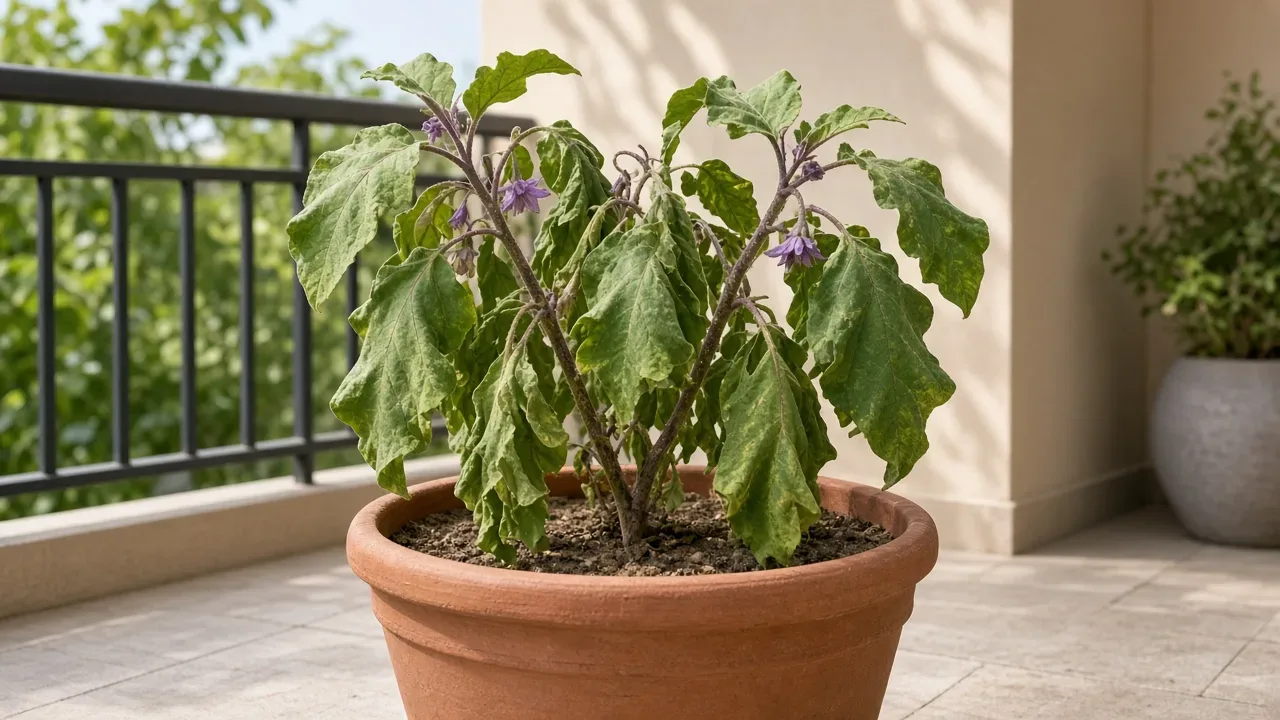
Wilting on Brinjal: Causes, Checks & Fixes
This guide covers wilting on Brinjal. See also the general Wilting guide, watering, and light pages for this plant.
Wilting on Brinjal: Causes, Checks & Fixes
Quick answer
Wilting on brinjal (Solanum melongena, eggplant, aubergine) is a loss of turgor—large lobed leaves and soft stems hang limp instead of holding their usual firm angle on a warm-season nightshade. For how impaired water movement works in general, see our wilting guide. On brinjal, the fork that saves the plant is the upper 2–3 cm check plus pot weight: dry light mix means thirst; wet heavy mix with limp foliage means do not pour more water yet.
First step: poke the upper 2–3 cm of mix away from the stem and lift the container before you water. Use the same dry-down habit from the brinjal watering guide. Dusty-dry surface with a noticeably lighter pot calls for one deep soak until water drains, then empty the saucer. Cool, clinging soil with yellow lower leaves calls for the overwatering path instead of another top-up.
When to use this page vs other Brinjal guides
Wilting here means flaccid canopy tissue, not a slight posture change on one older leaf.
| Pattern | Read next |
|---|---|
| Afternoon limpness that eases by evening; firm stem; mix moist at 2–3 cm | Stay on this page—likely heat + transpiration on broad leaves |
| Light pot, mix pulled from edge, wilt into evening | Underwatering |
| Wet heavy pot, yellow lowers, soft stem base | Overwatering or root rot |
| Petioles angle down but tissue still feels relatively firm | Drooping leaves |
| Stretchy pale stems, weak flowers | Not enough light |
| Honeydew on shoot tips with limp new growth | Aphids |
| Several overlapping symptoms | Brinjal problems hub or overview |
What wilting looks like on brinjal
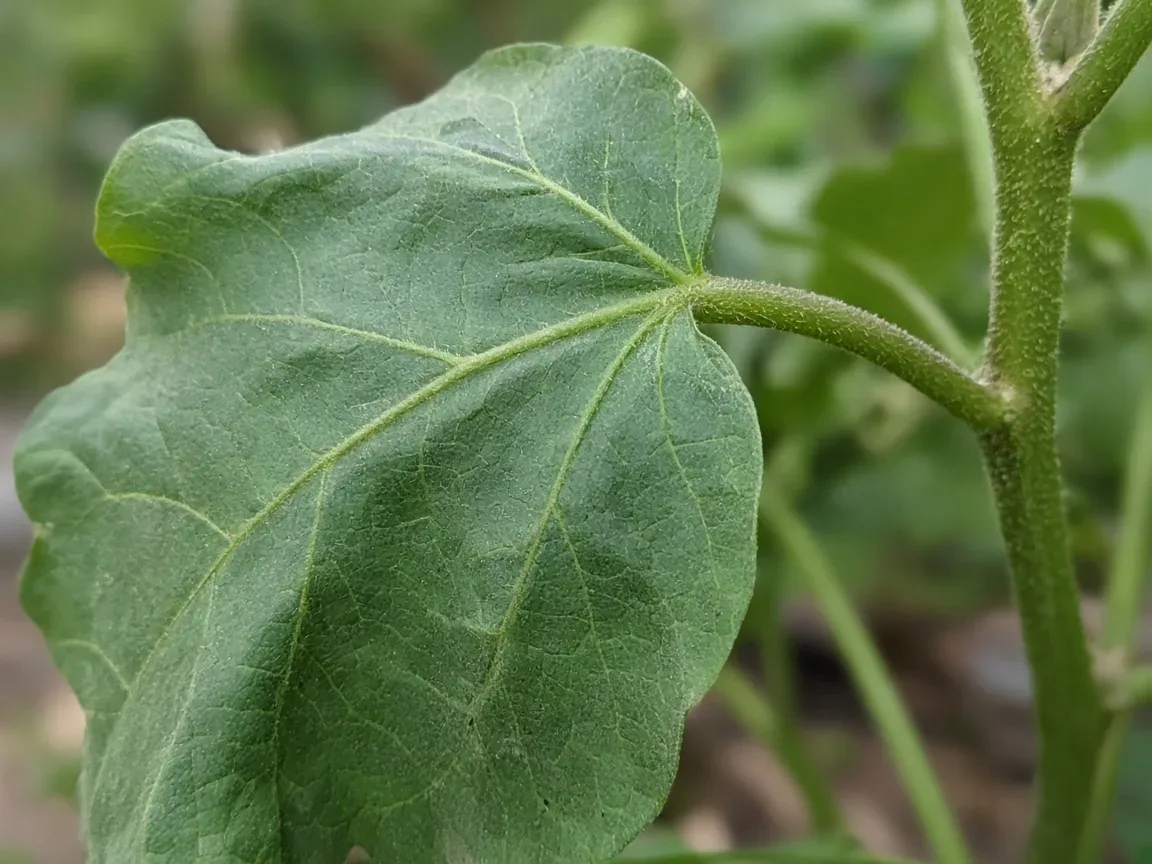
Brinjal carries broad, lobed, often fuzzy leaves on a bushy or staked warm-season crop that needs full sun and moist, well-drained fertile soil. Wilting shows up when roots cannot supply water as fast as leaves lose it through transpiration—whether the limit is dry soil, saturated roots, extreme heat, or vascular disease.
Limp brinjal tissue on a firm stem often means moisture or heat stress—confirm the 2–3 cm layer and pot weight before you treat wet-soil wilt as thirst.
Typical thirst wilt:
- Whole canopy or upper third goes limp over hours to a day
- Mix at 2–3 cm depth feels dusty-dry; container feels light when lifted
- Leaves look dull and slack; stem above the soil line still feels woody and firm
- Often follows a hot windy day on a fruiting patio pot you skipped for one watering cycle
Heat-stress wilt (still firm roots):
- Limpest in mid-afternoon on a sunny balcony or beside hot paving
- Mix at 2–3 cm still lightly moist; pot weight unchanged from morning
- Partial recovery by evening as air cools—NParks GardeningSG notes wilting leaves in hot weather as heat stress on brinjal and recommends steady moisture and mulch, not panic watering at peak sun
Wet-soil / uptake-failure wilt:
- Leaves stay limp overnight while mix at 2–3 cm feels cool and heavy
- Lower lobes may yellow; growth on new shoots slows
- University of Maryland Extension describes plants that wilt when adequate moisture is present in the potting media—roots, not leaves, are failing to transport water
What wilt is not: fine stippling with webbing (spider mites), white cottony axil masses (mealybugs), or only the lowest leaf yellowing without limpness (yellow leaves from other causes).
Fruiting containers and the 2–3 cm dry-down
This workflow is nightshade-crop specific—it would mislead on a succulent or a fern crown.
Once brinjal flowers and sets glossy fruit, transpiration jumps. RHS guidance for aubergines notes that container plants dry quickly and may need daily attention in hot weather, while cloudy monsoon weeks can leave the same pot wet for days. Calendar watering causes both midday collapse on dry mix and wet-soil wilt when you keep topping up during humid spells.
The practical trigger is the upper 2–3 cm from the watering guide, plus pot weight after you learn the wet feel. Utah State University Extension recommends regular monitoring of soil water for eggplant and related solanaceous crops because inconsistent availability contributes to poor growth and fruit defects—not because the answer is to keep soil soggy.
A 30 cm-wide pot with a vigorous cultivar and several developing fruits can need water every day in dry Indian summer heat, then barely any for a week under rain-heavy cloud cover. Wilting after a dry spell needs one deep soak; wilting on wet mix needs drainage and root checks first.
Midday heat on lobed leaves and reflected patio sun
Brinjal is bred for warm conditions—growth is strongest around 21–29°C on the hub—but broad leaves in full sun can lose water faster than roots replace it for a few hours. That produces temporary wilt that scares growers into overwatering.
Heat wilt usually:
- Peaks between late morning and mid-afternoon on exposed terraces
- Improves as temperatures fall, if mix at 2–3 cm was already moist
- May coincide with flower or small fruit drop if heat and drought stack—Utah State notes that water stress and high temperatures can affect eggplant fruit quality
Reflected heat from west-facing glass or light paving can wilt a plant whose root ball is still moist. Shade cloth or moving the pot off the hottest surface for a few days is often smarter than a second watering. If wilt stays heavy after sunset, return to the wet-versus-dry fork—not more afternoon splashes on foliage.
Confirm the cause: moisture, timing, and stem firmness
Work in this order before repotting, feeding, or spraying:
- 2–3 cm finger or skewer test near the pot edge—not only the dusty surface crust.
- Lift the pot off the saucer. Light and dry confirms thirst; heavy and wet points to uptake failure (see overwatering mechanics in our global guide).
- Time of day. Afternoon-only limpness with evening partial recovery favors heat + steady moisture; all-day limpness favors root-zone problems.
- Stem base feel. Firm woody stem with dry mix = underwatering. Soft or darkened collar on wet mix = escalate to root rot checks.
- Whole plant vs one side. One-sided wilt on older garden beds can suggest verticillium wilt—NC State lists verticillium wilt on eggplant and recommends resistant cultivars and crop rotation.
| What you see | Likely cause | Next step |
|---|---|---|
| Dry 2–3 cm, light pot, firm stem | Underwatering | One deep soak; see underwatering |
| Wet 2–3 cm, heavy pot, limp overnight | Overwatering / root stress | Stop water; improve drainage; inspect collar |
| Moist mix, midday limp, evening recovery | Heat + transpiration | Mulch, shade hottest hours; do not double-water |
| Persistent wilt, one branch yellowing first | Vascular wilt (garden soil) | Remove affected plant; rotate nightshades |
| Sticky shoot tips, curled new leaves | Sap feeders | Aphids after moisture is ruled out |
Confirmed thirst — Dry depth, light pot, rapid perk after a deep drink. Confirmed wet-soil failure — Limp leaves on mix that has not dried at 2–3 cm for many days.
First fix: read the root zone before the watering can
Your single first action is diagnostic, not a treatment stack:
Poke the upper 2–3 cm and lift the pot. Do not water until you know which side of the fork you are on.
- If dry and light: Water slowly at the soil line until water runs from drainage holes, then empty the saucer. Wait until the next day before changing light, fertilizer, or repotting.
- If wet and heavy: Do not add water. Tilt the pot to drain, clear blocked holes, and move it off a flooded saucer. Re-check limpness the next morning; if still wilted on wet mix, inspect the stem base and consider a careful root look per the soil and drainage guide.
This one step prevents the classic brinjal mistake: treating wet-soil wilt as thirst and drowning roots that were already oxygen-starved.
Step-by-step recovery after the first fix
After a justified deep soak (dry pot):
- Keep the plant in full sun if it was already acclimated—see light guide—but protect from reflected afternoon scorch for a few days if that triggered the episode.
- Mulch the surface (not against the stem) to slow edge drying on patio pots.
- Expect firmer leaves within hours to one day if roots were healthy; flower buds may still abort if stress was severe.
After pausing water on wet mix:
- Let the upper 2–3 cm begin to aerate before the next drink—often several days in cool humid weather.
- Remove only mushy lower leaves, not half the canopy at once.
- If the collar softens or smell turns sour, follow root rot salvage—do not fertilize into rot.
Hold fertilizer until new growth looks normal for one to two weeks. Feeding a wilted brinjal pushes soft shoot tissue and can invite aphids on stressed nightshade tips.
Recovery timeline and what improvement looks like
| Severity | What to expect |
|---|---|
| One missed watering on a firm plant | Leaves firm up within hours after a deep soak |
| Several dry days on a fruiting container | Partial leaf limpness may remain; new fuzzy leaves should open firm within 3–7 days |
| Heat-only midday wilt | Same-day evening recovery if moisture was steady |
| Wet-soil wilt caught early | 1–2 weeks of stable drainage before normal growth rhythm returns |
| Soft stem base or vascular wilt | Poor outlook; focus on saving seedling backups and rotating the bed |
Judge recovery by firm new shoots, open flowers, and glossy developing fruit—not by old lobes becoming perfectly flat again.
Mistakes that make brinjal wilt worse
- Watering because leaves look limp at 2 p.m. without checking the 2–3 cm layer—classic overwatering trigger on monsoon pots.
- Shallow sprinkles that wet the surface but not the root ball—Utah State recommends deep irrigation that wets the active root zone, not frequent light splashes.
- Fertilizing or repotting while the canopy is still limp from unresolved moisture stress.
- Leaving pots in standing saucer water after heavy rain counts as irrigation—see watering during monsoon habits.
- Ignoring one-sided yellowing in ground beds where verticillium can persist in soil.
When to worry
Treat as urgent if:
- Stems soften at the soil line on wet mix
- Wilt spreads across the whole plant within 48 hours despite correct dry-down watering
- Leaves stay limp overnight on soggy mix with a sour smell
- One branch collapses while the rest looks fine on an in-ground plant (vascular wilt pattern)
Lower urgency: afternoon droop on moist mix that eases by evening, or one dry day on an otherwise firm fruiting plant that perks after a single deep soak.
Conclusion
Wilting on brinjal is rarely a mystery species disease—it is water moving too slowly or too quickly for broad warm-season leaves carrying flowers and fruit. Run the 2–3 cm check and pot weight before every watering can decision, separate midday heat droop from wet-soil uptake failure, and use sibling guides when the pattern points to rot, thirst, pests, or shade stress. Old limp lobes may stay creased, but firm new growth and steady fruit set mean you chose the right lever; return to everyday Brinjal care once the cluster symptoms clear.
Related Brinjal guides
- Brinjal overview — cultivar size, heat, and cluster map
- Brinjal watering — 2–3 cm check and seasonal rhythm
- Brinjal soil — moisture retention without waterlogging
- Underwatering on Brinjal — when a light pot explains collapse
- Overwatering on Brinjal — when wet mix explains limp leaves
- Brinjal problems hub — all common issues on this crop
Related tool
Use the Drooping Leaves Diagnosis Tool to narrow causes for wilting on this plant before changing multiple variables at once.