Mealybugs on Brinjal: Axil & Fruit Checks & Fixes
Quick answer
Mealybugs on brinjal settle as white cottony wax in leaf axils, stem crotches, and the crown of warm-season eggplant—often with sticky honeydew on lobed leaves or young fruit. First step: isolate the plant and dab every visible cluster with a cotton swab soaked in 70% isopropyl alcohol before spraying the whole plant.
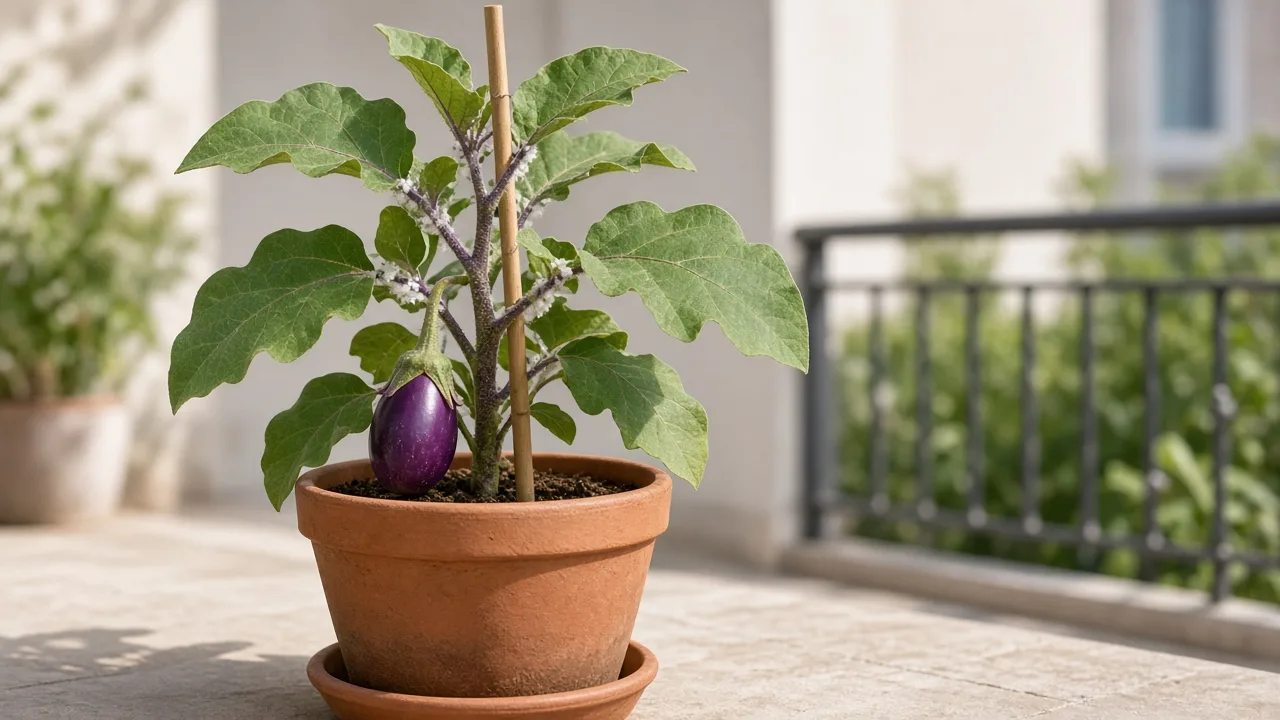
Mealybugs on Brinjal: Causes, Checks & Fixes
This guide covers mealybugs on Brinjal. See also the general Mealybugs guide, watering, and light pages for this plant.
Mealybugs on Brinjal: Causes, Checks & Fixes
Quick answer
Mealybugs on Solanum melongena (brinjal, eggplant, aubergine) are small, soft, wax-covered insects that look like tiny cotton balls tucked into leaf axils, stem crotches, the crown, and sometimes between touching young fruit. They suck sap, leave sticky honeydew that can feed sooty mold, and hide in the protected pockets where lobed nightshade leaves meet the fuzzy stem.
For how mealybugs reproduce, why ants defend them, and when alcohol dabs work in general, see our mealybugs pest guide. On brinjal, the practical pattern is cottony tufts in axils on the upper bush, honeydew on glossy developing fruit, and wax that survives one casual rinse on a staked terrace plant during warm growth.
First step: isolate the plant and dab every visible cottony cluster with a cotton swab soaked in 70% isopropyl alcohol before you spray the whole canopy. Wilting with constantly wet mix and a soft stem base is a different emergency—see the brinjal overwatering guide before you treat pests.
When to use this page vs other Brinjal guides
This page is the pest-first entry for wax-covered sap feeders hiding in nightshade crotches.
- Brinjal watering — Use when limp leaves and wet mix suggest moisture stress, not insects.
- Aphids on Brinjal — Use for soft pear-shaped insects on new shoot tips and buds, not stationary cottony wax.
- Spider mites on Brinjal — Use for fine webbing and stippling in hot, dry air.
- Yellow leaves on Brinjal — Use when lower leaves yellow without cottony clusters or honeydew on new growth.
- Brinjal problems hub — Browse all common issues on this species.
Why brinjal gets mealybugs in axils and on fuzzy stems
Warm-season nightshade growth is easy cover. Mealybugs are favored by warm weather and often feed in somewhat protected areas such as branch crotches, crowns, and stems near soil. Brinjal pushes soft new leaves and flowers in full sun and steady moisture while fruiting—exactly the habit that leaves tight axils and overlapping lobes where wax-covered pests settle.
Eggplant is a documented host. Research on Philippine eggplant lists multiple mealybug species on Solanum melongena, with susceptible market types showing heavy infestation when colonies build unchecked (UPLB journal summary). You do not need to name the species in your pot—cottony wax in axils on eggplant is enough to treat as mealybugs until proven otherwise.
Nitrogen-rich feeding softens new tissue. UC IPM notes that over-applied nitrogen combined with regular irrigation stimulates new growth where mealybugs prefer to lay eggs. Heavy fertilizer during warm growth on a container brinjal can produce succulent shoot tips and axils that hide larger colonies.
Ants and honeydew keep colonies alive. Like other sap feeders, mealybugs produce honeydew; ants often farm them and block natural enemies. Sticky pot rims and glossy fruit skin are common first clues on a balcony crop before you spot the white wax higher on the stem.
Shared solanaceous beds carry pests over. NC State lists several insect pests on eggplant in vegetable settings. Rotating away from tomato, chilli, potato, and other nightshades in the same soil reduces carry-over of sap feeders that hit the same soft growth.
What mealybugs look like on brinjal
- White to gray cottony wax tufts in leaf axils, stem crotches, and the crown—not moving pear-shaped insects
- Colonies where two lobed leaves touch or where a petiole meets the fuzzy main stem
- Sticky honeydew on upper leaf surfaces or on young purple, white, or striped fruit skin
- Ants traveling up the main stem toward protected axils
- Yellowing or wilt on heavily fed leaves while lower lobed foliage may still look firm
- Sooty mold on untreated honeydew in humid monsoon or greenhouse air
- Flattened, slow-moving insects if you wipe wax away—often pink-orange when crushed
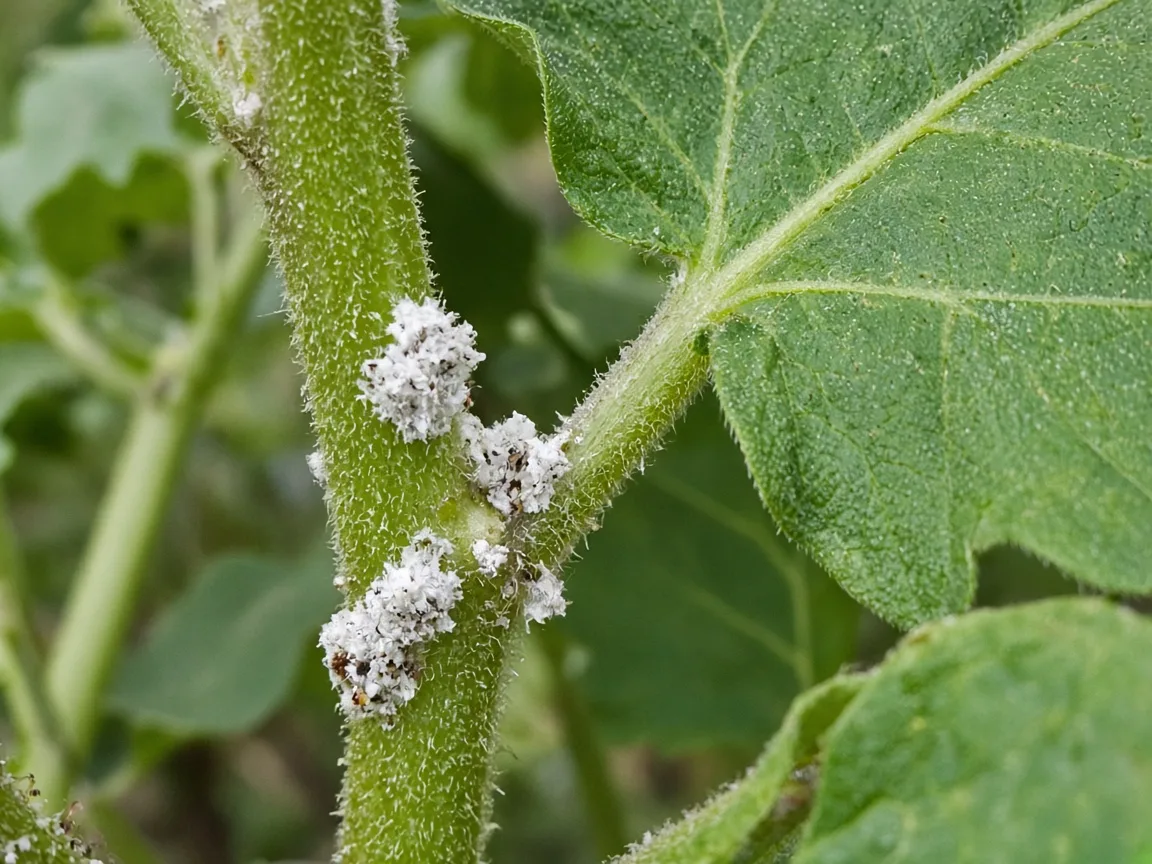
Mealybugs on brinjal often hide where the petiole meets the fuzzy stem—cottony wax stays put when you blow on it, unlike loose mold or dust.
On glossy young fruit, honeydew is especially obvious—wipe a fingertip along a developing fruit; tacky residue that returns within a day means sap feeders are still active above in the axils or calyx.
Where to inspect on a fruiting brinjal plant
Brinjal is a staked or bushy warm-season crop, and mealybugs use tight nightshade angles a rinse misses. Work through this order:
- Leaf axils on the upper third — Where petioles meet the fuzzy stem; colonies often sit under the leaf base.
- Leading shoot tip and flower buds — Soft tissue near open or forming purple blooms.
- Stem crotches where side branches fork — Protected wax on staked plants with multiple fruiting branches.
- Calyx and stem of young fruit — Check where honeydew drips onto developing fruit.
- Crown and stem base near the soil line — Mealybugs sometimes hide on stems near soil; lift lower leaves without burying the stem.
- Pot rim, cachepot gap, and stake ties — Ant trails and honeydew drips often start here.
This path is specific to a flowering solanaceous food crop—not a rosette succulent or vining houseplant.
Confirm mealybugs vs aphids, mites, scale, and care stress
| What you see | Likely cause | Key check |
|---|---|---|
| Stationary white cottony wax in axils | Mealybugs | Swab smears pink-orange; wax does not move when disturbed |
| Soft pear-shaped insects on fresh shoot tips | Aphids | Colonies move; cornicles on abdomen; heavy tip clustering |
| Fine webbing and yellow stippling in dry heat | Spider mites | Dry air; mites on undersides, not cotton in axils |
| Hard brown disks glued to stems | Scale (no dedicated page—treat as wax pests) | Does not smear with alcohol like mealy wax |
| Midday wilt, dry soil pulling from pot edge | Underwatering | No cottony clusters; pot light when lifted |
| Yellow lower leaves, wet mix, soft stem base | Overwatering / root rot | No wax tufts; soil never dries at 2–3 cm depth |
Confirmed diagnosis — Cottony wax plus honeydew or ants in axils with firm lower stems. Suspected — Sticky fruit or leaves without visible wax may need a hand lens on every upper axil before treating.
First fix: isolate and alcohol-dab visible clusters
Move the plant away from tomato, pepper, and other nightshades on the same balcony for at least two weeks after you last see live mealybugs.
Dab every visible cluster with 70% isopropyl alcohol on a cotton swab. UC IPM recommends dabbing with a solution of 70% (or less) isopropyl alcohol and water on houseplants, testing a small area first for leaf burn. Epic Gardening describes popping cottony material off with an alcohol-dipped swab into soapy water—the same motion works on brinjal axils where sprays never reach.
Work cluster by cluster in upper axils, bud crotches, and the crown. The wax coating on adults makes contact sprays less effective until crawlers or exposed tissue are treated—physical dab removes the worst pockets first.
Alcohol timing on sun-grown brinjal
Dab and rinse in early morning so lobed leaves dry before peak afternoon sun on a terrace. Brinjal tolerates steady root-zone moisture but dislikes alcohol or rinse water sitting on foliage in still, enclosed spaces—improve airflow after treatment rather than re-wetting the same day.
Avoid dabbing open flowers when bees are active; work buds and axils instead, or wait until late evening.
When to add rinse or spray
If dabs clear visible wax but honeydew returns within a week, follow with a firm water stream on the upper third (similar to the aphid rinse sequence) to knock crawlers from tender growth—then repeat alcohol on any new cotton.
If colonies remain after two or three weekly dab-and-rinse cycles, apply insecticidal soap or narrow-range horticultural oil labeled for vegetables, per label directions. UC IPM lists insecticidal soaps, horticultural oils, and neem oil applied directly to immature mealybugs. Epic Gardening suggests reapplying soaps in 7 to 10 days if populations persist.
Critical rules for brinjal:
- Spray early morning so leaves dry before hot sun hits container fruit.
- Coat protected axils and stem crotches, not just upper leaf surfaces.
- Read the pre-harvest interval (PHI) on the label before spraying near harvestable fruit.
- Patch-test one leaf and wait 24 hours before treating the whole plant.
- Avoid stacking repot, heavy prune, or extra fertilizer the same week you start spray.
Keep pets away from foliage—NC State flags brinjal leaves, stems, flowers, and roots as poisonous to cats, dogs, and horses even though the cooked fruit is the food crop.
What not to do the same day
Do not increase watering because leaves look stressed—check whether the upper 2–3 cm of mix is actually dry first. Do not apply oil sprays in hot afternoon sun on a black pot. Do not ignore ants—they protect mealybug colonies from predators. Protect natural enemies such as lady beetles, lacewings, and parasitic wasps unless colonies are still exploding after repeated dabs.
Recovery timeline and the next fruit flush
Visible cottony clusters should shrink within one to two weeks of consistent dabbing and targeted rinses. Expect clean new shoots and flower buds within three to five weeks during active warm-season growth. Yellowed or puckered leaves will not fully flatten once they harden. Judge success by the next glossy fruit set and firm internodes, not by reopening damaged tissue.
Firm lower stems and steady new growth are good signs. Softening at the collar on wet mix means rot—not mealybugs—and needs a different response immediately.
How to prevent mealybugs on brinjal
Quarantine every nursery seedling for two weeks before placing it near other solanaceous crops. Inspect axils and shoot tips weekly during spring and summer active growth. Dab any new wax immediately while colonies are still small.
Keep care aligned with the brinjal overview—full sun, fertile well-draining mix, and moisture that matches how fast the pot dries. Avoid excess nitrogen while pests are active; tie feeding to the fertilizer guide and fruit load instead of chasing leaf size.
Manage ants on pot rims before they establish mealybug “farms” in upper axils. Prune out only heavily infested side shoots when the rest of the plant is healthy, rather than shearing the whole top in peak heat.
When to escalate
Escalate if new axils repeatedly fill with wax after three full dab-and-spray cycles, if sooty mold covers most foliage or fruit, or if ants make colonies impossible to reach. Chronic sap feeding during flowering can stall fruit set and weaken new nodes even when roots are healthy.
For heavy recurring infestations, a local extension office can confirm the species and discuss label-legal options on food crops. Systemic insecticides move through plant sap and can affect pollinators—contact dabs and soaps are usually safer first choices on eggplant you harvest regularly.
Mealybugs alone rarely kill a mature brinjal with firm lower stems, but they can ruin a flush of flowers and young fruit and open the door to secondary stress if you respond with extra water or fertilizer.