Slow Growth on Brinjal: Heat, Roots & Pace Checks
Quick answer
Slow growth on brinjal is abnormal in warm weather—eggplant should push fuzzy new leaves and purple flower buds steadily once nights stay mild. First step: tape the main stem at soil level, note whether the upper 2–3 cm of mix is dry or wet, and compare night temperatures on your balcony or patio before changing fertilizer or repotting.
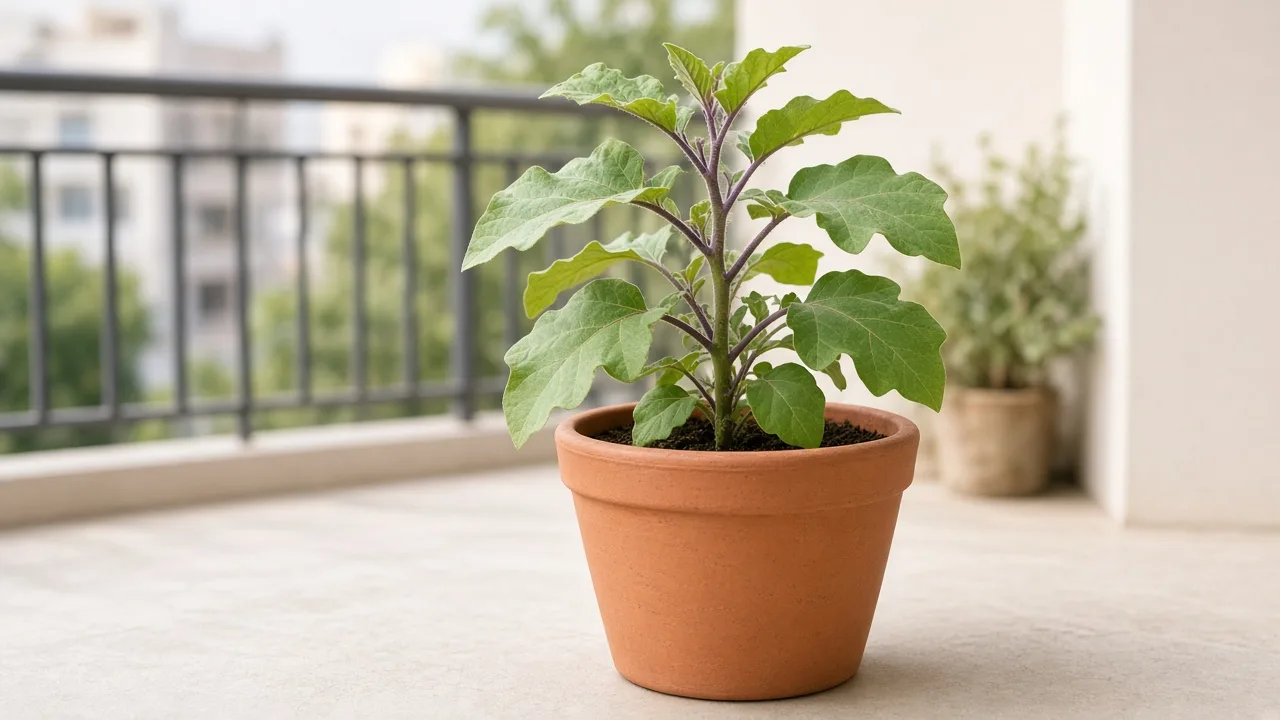
Slow Growth on Brinjal: Causes, Checks & Fixes
This guide covers slow growth on Brinjal. See also the general Slow Growth guide, watering, and light pages for this plant.
Slow Growth on Brinjal: Causes, Checks & Fixes
Quick answer
Slow growth on brinjal (Solanum melongena, eggplant, aubergine) means the plant is **not adding stem height, lobed leaves, or purple flower buds at the pace this warm-season nightshade manages when roots, heat, and sun align. NC State notes eggplant grows fastest between about 70 and 85°F (21–29°C) and remains very sensitive to cold—so a “healthy-looking” pot that never moves is often a care mismatch, not a patient succulent.
For how chronic stagnation works across plants in general, see our slow growth hub. On brinjal, the decisive check is whether taped stem height increases while the upper 2–3 cm of mix dries on a predictable rhythm—not whether older lower leaves still look dark green from across the patio.
First step: tape the main stem at soil level and press your finger into the upper 2–3 cm of mix that same morning. No height gain plus dusty-dry mix and a light pot point toward underwatering or a root-bound container. No gain plus cool, clinging soil points toward overwatering or failing roots. Steady moisture but a dim balcony often overlaps not enough light or leggy growth toward a brighter wall.
When to use this page vs other Brinjal guides
| Pattern | Read next |
|---|---|
| Long thin stems reaching for a window, sparse leaves | Leggy growth or not enough light |
| Yellow lower leaves on a heavy wet pot | Overwatering or root rot |
| Midday wilt, dry 2–3 cm layer, light container | Underwatering or wilting |
| Sticky shoots, curled tip leaves, ants on the pot | Aphids on Brinjal or spider mites |
| Pot dries within hours after every soak | Repotting guide and soil |
| Big leaves but no flowers after warm weeks | Light guide and fertilizer timing |
| Full symptom index | Problems hub |
What slow growth looks like on Brinjal
Healthy brinjal in active growth extends a fuzzy purple-tinged stem with large lobed leaves and, once mature enough, star-shaped violet flowers that become glossy fruit. Slow growth is about that forward motion stopping while much of the plant may still look acceptable:
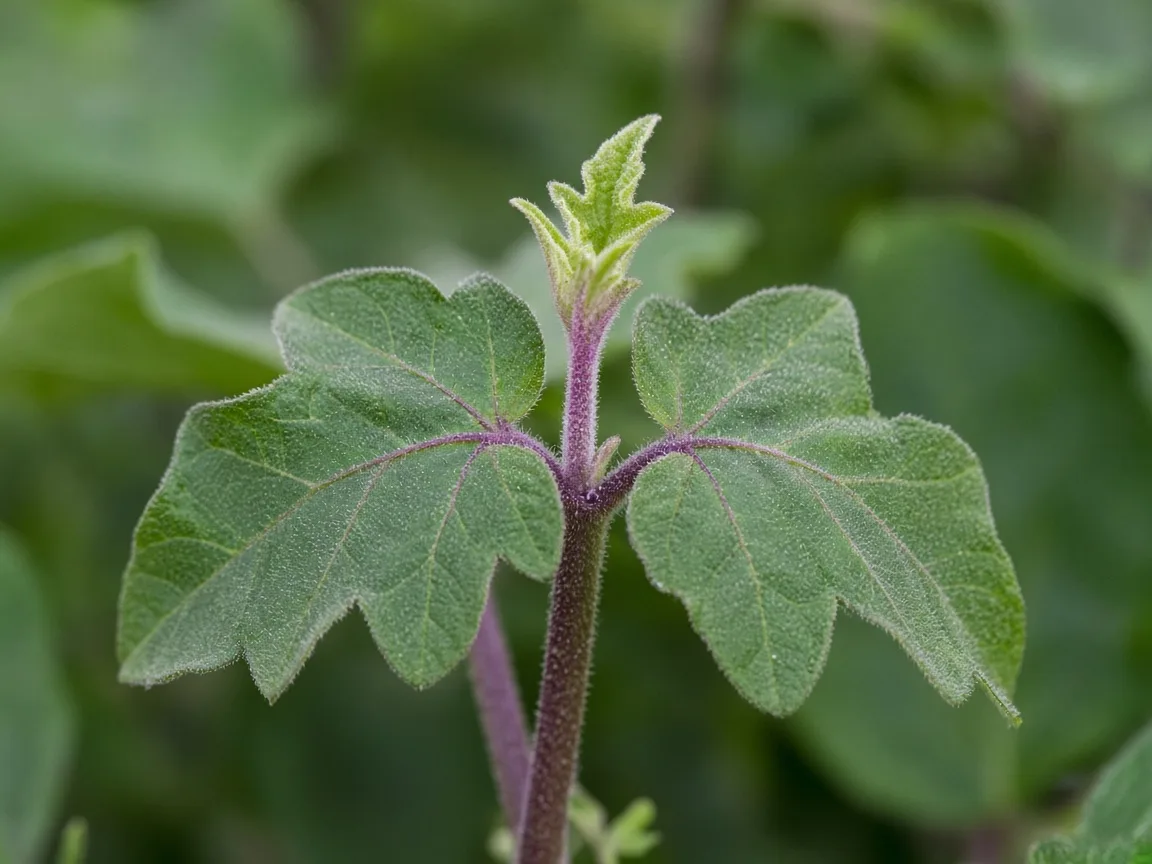
Stalled tip growth: compare tight internodes and a tiny new lobe with broader leaves lower on the same stem.
- Same stem height for three to four weeks during warm weather despite firm green tissue
- New leaves stay smaller than the two or three mature lobes below the tip
- Short internodes — new segments hug the stem instead of adding 5–10 cm between leaves
- No new purple flower buds for weeks while the plant looks vegetative only
- Flowers drop or fruits stall at pin size when moisture or heat wobble during fruit fill
- Post-transplant pause — little extension for 10–14 days after moving to a final pot (common, then should resume)
- Cool-week quiet — minimal extension when nights stay cool and cloudy, then a burst when heat returns
This differs from leggy growth, where long gaps between small leaves appear quickly toward dim light, and from wilting, where the whole shoot collapses. Slow growth can accompany mild yellow leaves when roots are stressed, but the defining signal is missing stem and leaf extension, not one blemished lobe.
Why brinjal stalls when other plants might still inch along
Heat and roots set the pace. Eggplant is a frost-tender warm-season crop that prefers evenly moist soil and temperatures between 70 and 85°F. Cool roots on an early-season balcony, or a pot baking on hot pavement with irregular watering, both throttle the same fast metabolism that should carry you toward harvest in roughly 105–133 days from seed.
Transplants with flowers or fruit start behind. Utah State Extension warns that eggplants with blossoms or fruits at transplant establish slowly and yield poorly. Nursery pots pushed into bloom for display often sit visually “fine” while stem height barely moves—remove early fruit and let vegetative growth catch up before you expect a container crop.
Too much nitrogen leaf, not enough flower. Over-fertilization encourages excessive leaf growth and delays flowering and fruit maturity on eggplant. A dark green bush with no buds after warm weeks often traces to heavy fertilizer during cool nights or repeated high-nitrogen feeds—not a mysterious virus.
Root room and dry-down rhythm. Brinjal in a final pot smaller than about 30 cm wide can stall between waterings when roots circle and the mix dries within hours—see repotting. The opposite failure is saturated compost-heavy mix that never dries at 2–3 cm depth, limiting oxygen and uptake; that path overlaps overwatering more than “lazy genetics.”
Pests on soft nightshade tips. Aphids and mites on the leading shoot can curl and stunt new leaves while lower foliage looks fine—use aphids on Brinjal when you see colonies or honeydew, not more fertilizer.
Cold nights on a container brinjal
Balcony and patio pots lose heat faster than in-ground beds. Brinjal that looked vigorous in a nursery greenhouse may add almost no height for two weeks when nights drop near 10–15°C (50–59°F) even if days feel warm. Plants are killed by light frost and grow poorly in cool conditions, and night temperatures below about 55°F (13°C) contribute to tough fruit and stress when combined with water swings.
What to check: soil temperature at the root ball (cool to touch at dawn), position in an open draft, and whether the pot sits on cold concrete. First warm-season fix for chill-limited pots: move the container to the warmest full-sun wall, wait for several nights above about 15°C (59°F), then reassess stem tape before repotting or feeding.
Cultivar pace and the harvest clock
Compact cultivars may finish near 60 cm; vigorous types can exceed 1.2 m and need matching root room on the overview. Slow growth is easier to misread when you compare a long Asian type to a dwarf patio label—or when you expect fruit eight weeks after sowing while the species still needs a long warm window.
Use the cultivar label plus NC State’s typical 105–133 day fruit window as context: a six-week-old seedling with steady inch-per-fortnight extension is on track; a two-month-old transplant with no buds in full summer sun is not. Match staking and pot size to expected fruit load so the plant is not spending all its energy supporting heavy fruit on a weak stem.
How to confirm the cause
Work through these checks in order—each points to a different sibling guide:
- Stem tape — Mark soil line to highest node; remeasure in 14 days during warm weather.
- 2–3 cm moisture — Dry and light pot vs wet and heavy (watering guide).
- Sun hours — At least six hours of direct sun on the crop canopy (light).
- Night temperature — Several nights below ~15°C (59°F) on the pot rim?
- Transplant history — Flowers or fruit on the plant the week you bought it?
- Root peek — Roots circling drainage holes or emerging at the surface?
- Tip inspection — Stippling, webbing, sticky residue, or curled newest leaves?
| What you find | Likely limit | First lever |
|---|---|---|
| Dry 2–3 cm, light pot, dull leaves | Thirst or root-bound drought | Deep soak once; plan repot if dry-down is within hours |
| Wet clinging mix, yellow lowers | Overwatering / early root rot | Stop watering; improve drainage |
| Dim site, long pale internodes | Not enough light | Move to full sun |
| Cool dawn soil, recent cold snap | Temperature | Warm microclimate; wait for mild nights |
| Open flowers at purchase, no height gain | Transplant fruit load | Remove small fruit; let vegetative growth resume |
| Dark green, no buds, heavy feeding | Excess nitrogen | Pause feed; confirm warmth and sun first |
| Pests on tip | Aphids / mites | Water knockdown on shoots before fertilizer |
The first fix to try
Tape the stem and run the 2–3 cm dry-down check the same morning—then make one correction based on what you find.
- If the upper layer is dry and the pot is light, water deeply once until a little drains, empty the saucer, and remeasure tape in seven days—do not also repot and fertilize.
- If the layer stays wet for many days, skip water and read overwatering before adding feed.
- If moisture is steady but the site is shaded, move to the sunniest spot you can offer for one week before any other change.
- If the plant arrived with small fruit or open flowers, remove them so energy returns to stem and leaf growth (Utah State transplant guidance).
Hold off on repotting, pruning, and pesticide the same day—you need to read which single variable moved the tape mark.
Step-by-step recovery
After the first fix, layer actions based on severity:
- Warmth and sun — Full sun, warm wall, no frost exposure; ventilate if under plastic when air exceeds ~80°F (27°C) per UF/IFAS culture notes.
- Moisture rhythm — Steady 2–3 cm dry-down; deep drinks in heat, slower in monsoon cloud cover (watering).
- Root room — Repot one size up with airy mix if roots circle or mix dries within hours (soil, repotting).
- Feed timing — Resume half-strength fertilizer only after new extension shows for two weeks in warm weather—not while soil is soggy or nights are cold.
- Pest clearance — Rinse shoot tips if aphids or mites are present before assuming a nutrient problem.
Recovery timeline
- Transplant or cold snap pause: often 10–14 days of little height gain, then visible extension when nights warm.
- Light or water correction: new larger leaves commonly appear within two to four weeks in warm season.
- Root-bound repot: allow one to two weeks for root settle before expecting flower buds.
- Over-fertilized vegetative bush: bud initiation may lag several weeks after you stop excess nitrogen and confirm heat.
Judge success by tape measure gain, larger new lobes, and purple buds—not by old leaves darkening further.
Lookalike symptoms
| Looks like slow growth | Actually | Clue |
|---|---|---|
| Small tip leaves, no height | Leggy growth toward dim light | Long internodes, lean toward window |
| Plant static, soil always wet | Overwatering | Yellow lowers, heavy pot, sour smell |
| Static plant, very dry pot | Underwatering | Midday wilt, light weight |
| Stunted tips, sticky leaves | Aphids | Colonies on buds and undersides |
| Winter pause indoors | Seasonal rest | Cool room, slow dry-down, firm stems |
Mistakes to avoid
- Feeding a stalled plant before heat, light, moisture, and roots check out—excess nitrogen delays flowers.
- Repotting into cold mix on a cool night—transplant shock on heat-loving nightshades extends the stall.
- Keeping display fruit on a new nursery transplant instead of letting stems catch up.
- Assuming “more water” when mix is already wet—eggplant needs even moisture, not saturation.
- Comparing to tomato speed on the same balcony—eggplant often needs warmer roots before it pushes.
How to prevent slow growth next season
- Transplant after frost danger into at least 30 cm final containers for standard cultivars (overview).
- Site for six or more hours of direct sun and stable warmth (light).
- Water on 2–3 cm dry-down, not a calendar (watering).
- Choose stocky transplants without fruit when possible (Utah State).
- Scout shoot tips weekly during peak summer for pests.
- Match cultivar vigor to pot size and staking before fruit load builds.
When to worry
Treat as urgent if stems soften at the soil line on wet mix, yellowing climbs the plant while the pot stays heavy, roots smell sour when you probe, or pests coat flower buds with honeydew—follow root rot, overwatering, or aphids rather than waiting out “slow growth.”
Lower urgency: a firm plant with short extension during a known cool week, or two weeks after repotting, while the 2–3 cm check cycles normally and no pests appear on the tip.
Conclusion
Slow growth on brinjal is usually a warm-season crop running on cold, wet, dry, dim, or root-bound limits—not a mystery disease. Solanum melongena tells you the truth on stem tape, tip leaf size, and flower buds, not on how dark the oldest lobes look. Fix one bottleneck—heat, sun, moisture rhythm, root room, transplant fruit load, or pests—then give the plant two to four warm weeks before you stack the next intervention. Return to everyday Brinjal care when symptoms overlap sibling pages in the table above.
Related Brinjal guides
- Brinjal overview — cultivar size, heat, harvest pace
- Brinjal watering — 2–3 cm check through fruit fill
- Brinjal light — full sun without scorching reflected heat
- Brinjal fertilizer — when to feed without delaying flowers
- Brinjal repotting — final pot size before top-heavy fruit
- Brinjal problems hub — all common issues on this crop
Related tool
Use the Plant Problem Diagnosis Tool to narrow causes for slow growth on this plant before changing multiple variables at once.