Brown Tips on Brinjal: Water, Heat & Sun Checks
Quick answer
Brown tips on brinjal usually mean the farthest lobe of a large leaf dried out before roots could keep up—often after a hot dry spell, a missed watering on a fruiting container, harsh reflected sun, or wet soil that limits uptake. First step: poke the upper 2–3 cm of mix; if dry, water deeply once and empty the saucer.
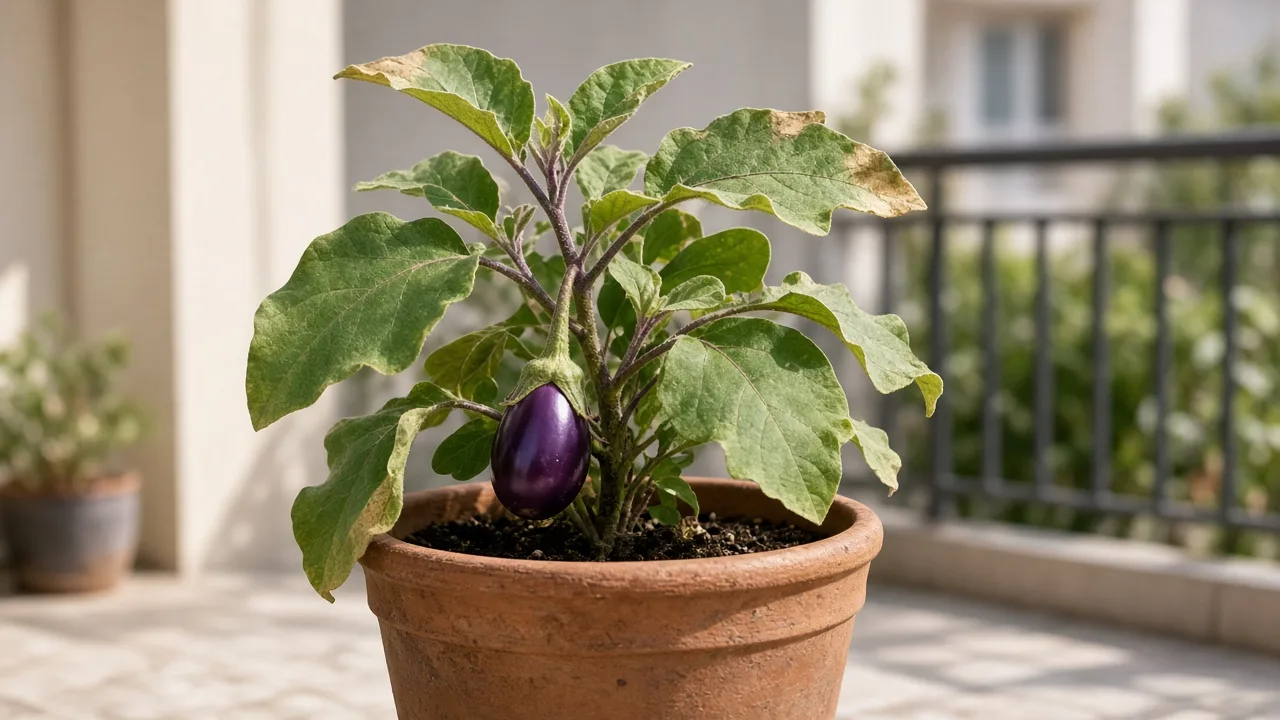
Brown Tips on Brinjal: Causes, Checks & Fixes
This guide covers brown tips on Brinjal. See also the general Brown Tips guide, watering, and light pages for this plant.
Brown Tips on Brinjal: Causes, Checks & Fixes
Quick answer
Brown tips on brinjal (Solanum melongena) mean the distal lobe or leaf point has turned dry and tan while much of the blade may still look deep green. For how tip burn works on plants in general, see our brown tips hub. On brinjal, the pattern almost always traces to uneven moisture during flowering and fruit fill, heat plus strong sun on a patio container, low humidity in a dry room, salt buildup after heavy feeding, or roots that cannot take up water in soggy mix—not a mysterious leaf disease.
First step: run the brinjal 2–3 cm dry-down check before you change light or fertilizer. Dusty-dry upper mix and a light pot point to underwatering. Cool, clinging soil with yellow lower leaves points to overwatering. Crisping on the sun-facing side right after a heat wave or a move to harsh reflected patio stone points to light and heat stress.
When to use this page vs other Brinjal guides
| Pattern | Read next |
|---|---|
| Whole lobes yellow, wet heavy pot, soft stem base | Overwatering |
| Midday wilt, light pot, mix pulled from pot edge | Underwatering |
| Tips after daily feed or white crust on soil | Fertilizer guide |
| Bleached patches on sun-facing lobes only | Light / scorch |
| Dry air, winter heat, crispy margins on many leaves | Low humidity |
| Stippling plus fine webbing on undersides | Spider mites |
What brown tips look like on Brinjal
Brinjal carries large, lobed, often fuzzy leaves on a warm-season nightshade that crops best in full sun and steady moisture. The farthest point on each lobe is the last place water arrives and the first place it leaves in hot, windy air—so tips and margins crisp before the midrib yellows. NC State Extension describes eggplant as a full-sun crop that prefers moist, well-drained, fertile sandy or loamy soil in the mildly acidic range—indoors or on a patio, that biology still shows up as tan, papery lobe tips when the root zone falls out of balance.
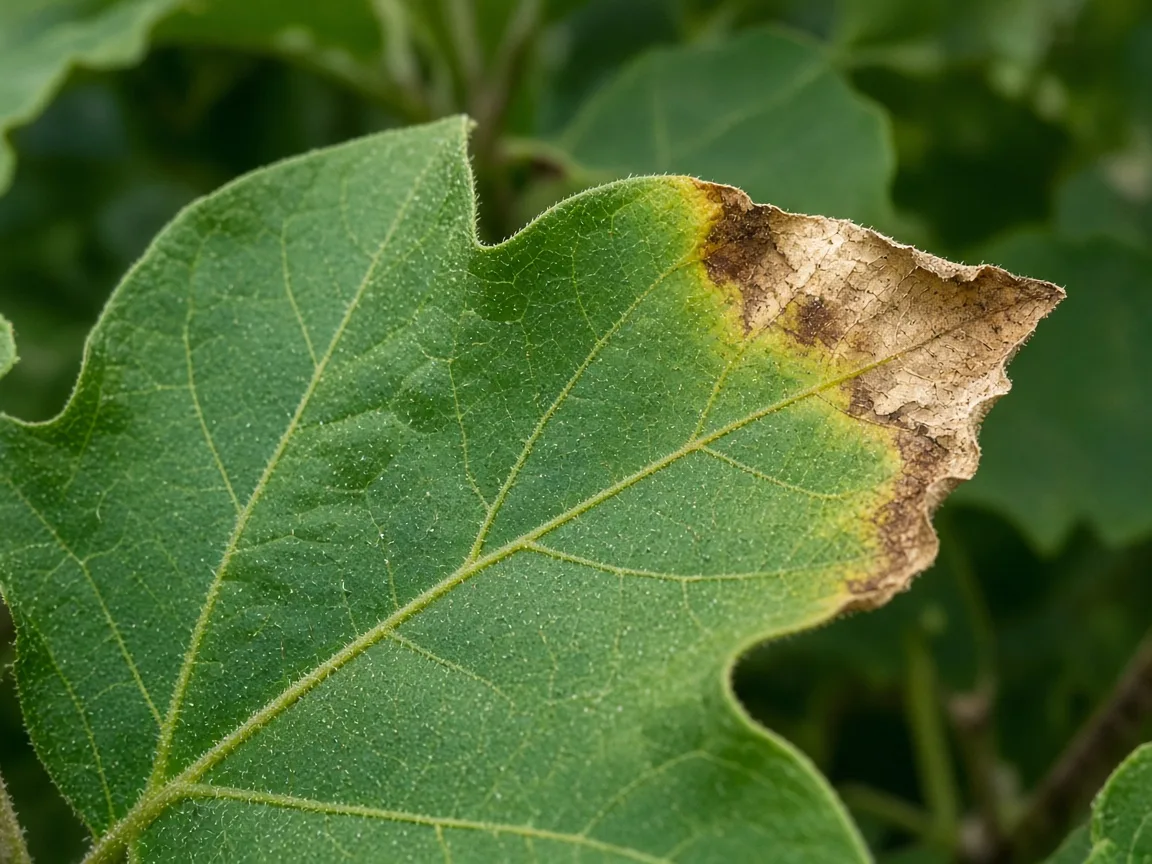
Dry tan tips on a brinjal leaf lobe—dead tissue will not re-green; watch the next flush of fuzzy growth for clean margins.
Classic tip burn (thirst or dry air):
- Narrow tan-to-brown band at the tip of one or more lobes, sometimes along the wavy margin
- Dry, papery texture on otherwise green, firm tissue
- Often worse on older lower leaves while the plant still pushes new shoots and flowers
- May spike when a fruiting container dries for a day in hot weather
Heat and sun-scorch signature:
- Browning on sun-facing lobes after a heat wave, a move beside hot paving, or reflected afternoon glass
- Damage may skip shaded lobes on the same leaf
- Missouri Botanical Garden notes that leaf scorch appears when foliage loses water faster than roots can replace it—broad eggplant leaves in 35°C patio heat amplify that mismatch
Wet-root uptake failure:
- Tips brown while mix at 2–3 cm feels cool and heavy after repeated top-ups in humid weather
- Lower leaves may yellow; growth feels sluggish—see root rot if the collar softens
What tip burn is not: uniform yellowing with wet soil (overwatering), sudden collapse with midday wilt on dry mix (wilting from thirst), or stippling with webbing (spider mites).
Fruiting containers and the 2–3 cm dry-down
This section is brinjal-specific—it would not apply to a fern or a succulent rosette.
Once flowers and small fruits load the plant, transpiration jumps. RHS guidance for aubergines notes that container plants are especially prone to drying out and may need watering daily in hot weather. Brinjal growers often water on a calendar; the better signal is the upper 2–3 cm from the watering guide. When that layer goes dusty-dry while fruits swell, lobe tips crisp within 24–48 hours even though the stem still feels firm.
A 30 cm-wide patio pot with a vigorous cultivar can need water every day in dry Indian summer heat, then stay wet for days during monsoon cloud cover. Brown tips after a dry spell mean one deep soak; brown tips on wet mix mean stop topping up and inspect drainage before the next pour.
Heat waves, reflected patio sun, and lobed leaf scorch
Brinjal wants warmth, but leaf tissue has limits. Utah State University Extension reports that tough skins and poor fruit quality can follow night temperatures below 55°F, day temperatures above 95°F, or water stress—the same stress window that browns leaf margins on container plants parked on west-facing stone or metal railing.
South- or west-facing balcony: Afternoon reflected heat dries the outer lobes first. You may see tan tips on the top third of the plant while lower leaves stay green. Pull the pot back from the railing, add afternoon shade cloth, or group pots so leaves do not bake before you increase watering.
Greenhouse or poly tunnel: Midday heat without ventilation crisps tips on the upper canopy. Damping down or opening vents addresses the air layer; drowning the pot does not.
Monsoon wet feet vs crispy tips paradox
Growers in humid climates sometimes see brown tips while soil stays wet—a pattern that confuses calendar watering.
Heavy compost-rich mix in a saucered pot can stay saturated through rainy weeks. Roots lose efficiency; tips desiccate because uptake lags even though you keep adding water. Pair this with mold on soil or fungus gnat fliers and treat it as a drainage and dry-down problem, not thirst. USU’s solanaceous irrigation guide stresses that inconsistent water availability causes multiple crop problems in the tomato-pepper-eggplant group—brinjal leaves are the early warning before fruit quality slips.
How to confirm the cause
Work through these checks in order. Change one variable at a time so the next leaf flush tells you the truth.
-
2–3 cm finger test — Match the watering guide. Dusty-dry at depth plus a light pot = thirst. Cool, clinging soil plus yellow lowers = wet stress.
-
Pot weight and drainage — Lift the container after watering. Does water sit in the saucer for hours? Are drainage holes blocked by roots? Heavy wet mix plus tip burn points to overwatering, not more water.
-
Heat and exposure history — Did tips appear within a week of a heat spike or a move to brighter patio stone? Inspect sun-facing lobes first.
-
Fruit load — Are several small fruits swelling while you skipped a hot day? Fruiting stress often shows at lobe tips before whole leaves wilt.
-
Feeding and crust — White mineral rim on the pot or soil surface after frequent feed suggests salt tip burn. Hold feed and flush with plain water per the fertilizer guide.
-
New-growth watch — The decisive test is the next fuzzy leaf opening after your correction. Clean margins on fresh lobes confirm the fix; repeated crisping on new flushes means another cause is still active.
-
Pest scan — Hold leaves to the light. Stippling plus webbing on undersides is spider mites, not humidity alone.
First fix for Brinjal
Apply one correction first, then wait for the next leaf flush.
If the upper 2–3 cm are dry and the pot is light
Water deeply once with room-temperature water until it runs from drainage holes, then empty the saucer within 30 minutes. Utah State recommends deep, infrequent irrigation that wets soil thoroughly rather than shallow sprinkles. Do not leave the stem collar submerged in stagnant water.
If sun scorch followed a heat wave or patio move
Relocate or shade once—afternoon shade cloth, move off hot paving, or shift to morning sun with afternoon protection per the light guide. Avoid shuffling the pot daily; let new growth acclimate.
If soil stays wet and the pot feels heavy
Stop watering until the upper 2–3 cm dry. Confirm drainage holes are open; tilt the pot to dump saucer water. If lower leaves yellow and the stem base softens, move to the root rot workflow before fertilizing.
Cosmetic trim (after the environment fix)
Snip dead lobe tips with clean scissors along the natural contour. Brown tissue will not re-green; trimming is optional.
Recovery timeline
Damaged lobe tissue is permanent. Judge success by stopped spread and clean margins on newly opened leaves.
- After a proper soak: Dull leaves may perk within 24–48 hours; old tip color stays tan.
- After shade or heat relief: Scorched lobes remain brown; the next flush should open without fresh crisping in one to two weeks.
- After drainage correction: New growth may take two to three weeks to show intact tips if roots were stressed but firm.
If three consecutive new leaves open with clean edges, consider the brown-tip problem controlled. Keep monitoring through peak summer fruit load.
What not to do
- Do not increase watering because tips are brown while the pot is already heavy and cool at depth—that deepens overwatering on a collar-sensitive nightshade.
- Do not park a container on blazing west stone to “dry out” tips—lobed leaves scorch before roots catch up.
- Do not fertilize a stressed plant to “push” fruit while margins are still crisping.
- Do not stack repotting, hard pruning, and pesticide on the same day as a watering or shade overhaul.
How to prevent brown tips on Brinjal
- Water when the upper 2–3 cm dry, with full drainage—especially during flowering and fruit fill on the overview.
- Expect daily checks on fruiting containers in hot dry weather; slow down when monsoon humidity keeps mix wet longer.
- Give at least six hours of direct sun but protect pots from reflected afternoon heat—see light and soil for mix that holds moisture without waterlogging.
- Mulch the soil surface on outdoor beds to slow evaporation without burying the stem.
- Flush the pot occasionally with plain water if you feed regularly during warm growth.
- Inspect new shoots weekly during peak summer so tip damage is caught while the fix is still one soak or one shade adjustment.
When to worry
Treat as urgent if brown damage spreads to most new leaves within a week, stems soften at the soil line on wet mix, soil smells sour, or fine webbing appears on undersides—those patterns point past cosmetic scorch toward root rot, chronic overwatering, or spider mites.
Lower urgency: a few tan tips on older lobes while stems stay firm, the 2–3 cm check reads normal, and flowers or small fruits keep developing. Fix water and heat before escalating to repotting.
Conclusion
Brown tips on brinjal are usually an environmental mismatch on warm-season nightshade foliage, not a death sentence. Solanum melongena telegraphs dry spells, heat scorch, wet-root uptake failure, and salt stress at the lobe tip before the whole plant collapses. Run the 2–3 cm dry-down, read sun exposure on the patio, and match monsoon drainage to your pot—then watch new fuzzy leaves for the real verdict. Old tips stay tan, but clean new lobes mean you found the right lever; return to everyday Brinjal care when symptoms overlap sibling issues.
Related Brinjal guides
- Brinjal overview — cultivar size, heat, and cluster map
- Brinjal watering — 2–3 cm check and seasonal rhythm
- Brinjal light — full sun vs scorching reflected heat
- Brinjal soil — moisture retention without waterlogging
- Underwatering on Brinjal — when thirst, not disease, drives crisping
- Brinjal problems hub — all common issues on this crop
Related tool
Use the Brown Tips Diagnosis Tool to narrow causes for brown tips on this plant before changing multiple variables at once.