Mold on Soil on Brinjal: Causes, Checks & Fixes
Quick answer
Surface mold on Brinjal soil usually means the top of your compost-rich mix stays wet longer than this fruiting nightshade can use—often from watering before the upper 2–3 cm dry, monsoon saucer water, or dense mix in a humid corner. First step: scrape the fuzzy top layer, clear fallen leaves from the rim, and pause the next soak until a finger test at 2–3 cm depth reads dry.
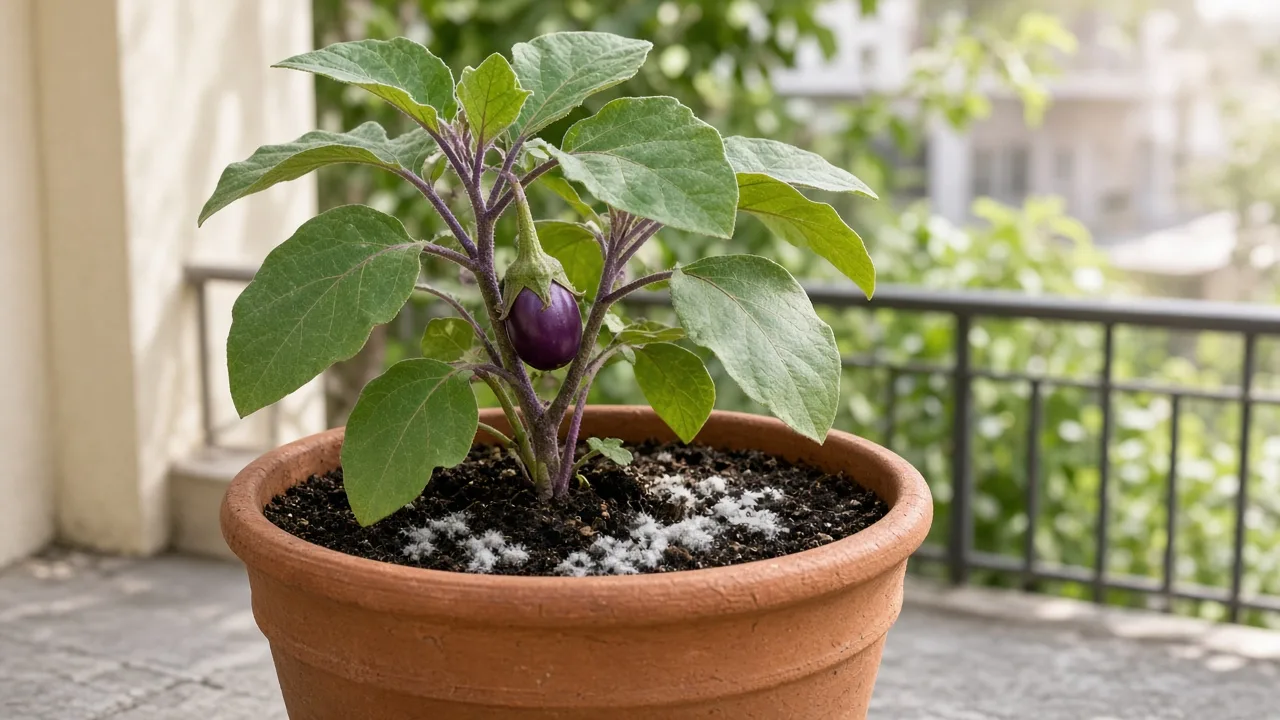
Mold on Soil on Brinjal: Causes, Checks & Fixes
This guide covers mold on soil on Brinjal. See also the general Mold on Soil guide, watering, and light pages for this plant.
Mold on Soil on Brinjal: Causes, Checks & Fixes
Quick answer
Surface mold on Brinjal (Solanum melongena—eggplant, baingan) almost always means the top layer of your organic mix stays wet longer than the plant is using it, not that the crop “needs more humidity” on the soil surface. NC State notes that eggplant grows best in moist, well-drained, fertile soils—steady root moisture during flowers and fruit, without a sealed sponge at the rim.
First step: scrape off the fuzzy top inch of mix, remove fallen brinjal leaves from the surface, and skip the next scheduled soak until the top 2–3 cm pass a finger dry test. Then resume one thorough watering that drains freely, matching the Brinjal watering guide.
For how saprophytic fungi break down organic matter on potting mix in general, see our mold on soil hub. On Brinjal, the useful pattern is white or gray fuzz at the stem base with firm stems and new growth still opening—not powdery patches on leaf blades, soft stem collars, or wilt with sour-smelling mix.
When to use this page vs other Brinjal guides
This page is the symptom-first entry for fuzzy soil on a brinjal pot.
| Pattern | Read next |
|---|---|
| Small dark flies at the pot rim with damp mix | Fungus gnats |
| Yellow lower leaves, soft stem base, heavy wet pot after scraping | Overwatering |
| Soft collar, sour smell, sudden wilt | Root rot |
| Mix never dries at 2–3 cm despite sparse watering | Soil guide |
| Midday wilt, light pot, cracked dry mix, no surface fuzz | Underwatering |
| Full symptom index | Problems hub |
What mold on soil looks like on Brinjal
On container brinjal, mold most often appears as a white, gray, or occasionally greenish fuzzy film across the potting mix. It may cluster where the main stem meets the soil, under the broad lower leaves that shade the rim, or where water sits longest after a deep soak. You might notice a musty smell when you lift the pot, or fungus gnats sharing the same damp organic layer.
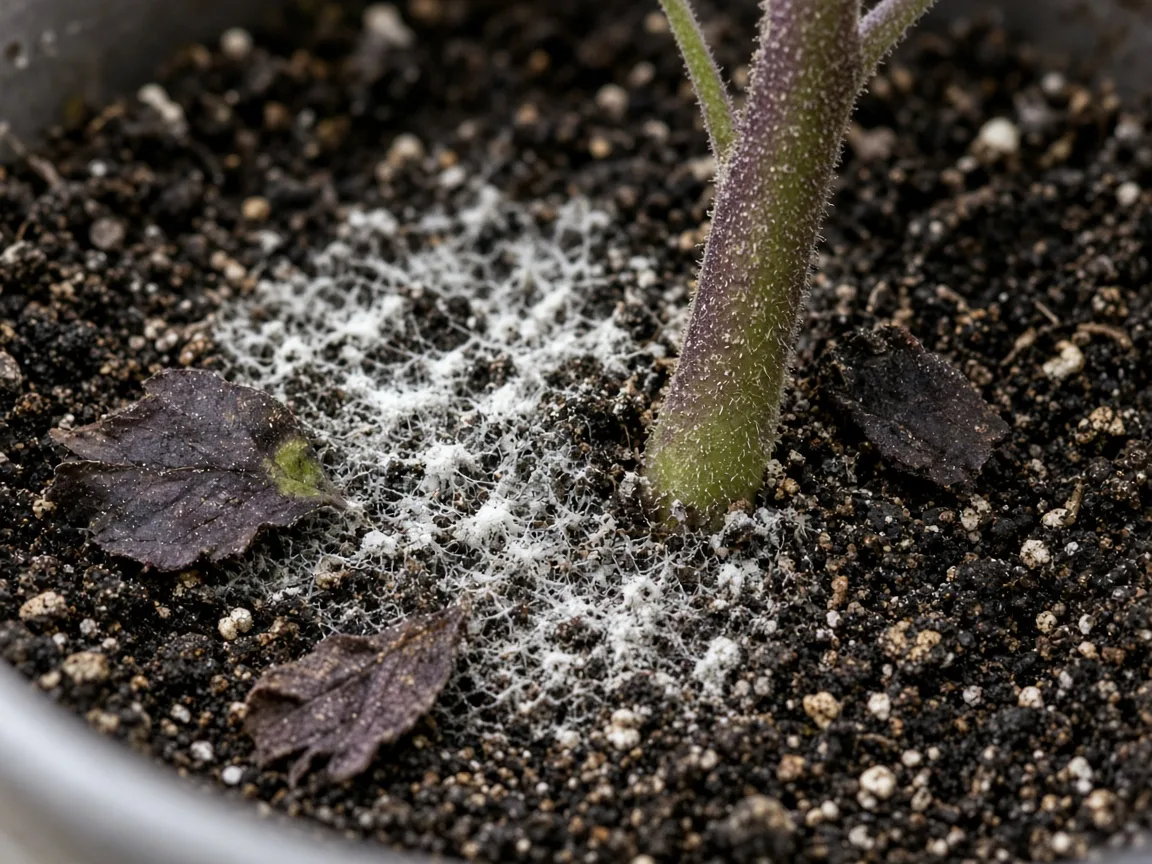
Mold on soil on Brinjal - compare fuzzy surface mix with firm stems and healthy leaves above the soil line.
Healthy brinjal keeps firm stems at the soil line, broad green leaves, and steady new growth, flowers, or glossy young fruit even when surface mold is present. That contrast matters: fuzzy soil with upright growth usually points to a surface moisture and organic-debris problem, not a leaf disease attacking blades high on the plant. If the stem base softens, several lower leaves yellow while mix stays wet, or the plant wilts with a sour odor, escalate toward root rot rather than treating mold as cosmetic.
Mold can also line drainage holes or saucers that hold runoff. On Indian balconies, monsoon rain plus hand-watering can leave saucers full for days. In a humid shaded corner, the surface may stay damp for a week after one generous watering—exactly the conditions that keep mold returning on Brinjal soil rich in compost.
Why Brinjal gets mold on soil
Brinjal is a warm-season nightshade that wants steady moisture for fruit set in fertile, well-drained mix—a narrower band than “keep the surface wet at all times.” Surface mold is often the first visible clue that moisture is out of balance before the stem base fails on a crop that USU Extension groups with tomatoes and peppers for regular, uniform watering—not chronic saturation at the rim.
Fruiting moisture without a wet carpet
Many growers hear “keep soil moist while fruiting” and water lightly every day, which keeps only the top centimeter chronically damp while deeper mix may still be usable. Brinjal wants even root-zone moisture with a real dry-down at the top 2–3 cm between soaks—not drought stress and not a waterlogged surface. When that top layer never dries, harmless saprophytic fungi colonize decaying peat, compost fines, and fallen leaves.
Monsoon benches, cachepots, and hot afternoons
On patios and terraces, monsoon rain plus hand-watering can leave saucers full for days while humidity stays high. Cachepots trap moisture at the rim where brinjal’s large leaves hang low. In very hot weather the same pot may need daily deep watering—but during cloudy monsoon weeks the same rhythm overfills the mix and grows mold within two to four weeks.
Compost-heavy mix for yield
A practical brinjal container blend is organically rich and moisture-retentive—compost, coir, and perlite. That fertility supports flowers and fruit, but fresh manure, undecomposed compost on top, or thick mulch give fungi extra food. In a dry pot those materials are harmless; when the surface never dries, mold follows.
Low light and the plant’s own shade
Dense leaf cover over the pot rim blocks evaporation. Pair that with not enough light in a cool room and the plant drinks slowly while the surface stays dark and damp—mold’s favorite combination. Brinjal crops best in full sun; dim corners slow transpiration without slowing fungal growth on wet organic mix.
Seedlings vs fruiting pots
White fuzz on seed-starting mix after brinjal germination often traces to overhead watering and limited airflow in shallow trays—same saprophytic mold, but the fix is bottom-watering and surface dry-down before transplant, not the same deep soak rhythm a 30 cm fruiting pot needs. Once brinjal is in its final container, mold at the stem collar during fruit load is the higher-stakes version: chronic wetness at the base overlaps overwatering and root oxygen loss described in MOBOT’s overwatering guidance.
How to confirm the cause
Work through these checks in order before repotting or spraying:
- Finger test at 2–3 cm. If only the surface is fuzzy but deeper mix is lightly damp and the stem is firm, you are likely dealing with surface mold on timing, not imminent collapse.
- Pot weight and drainage. Lift the pot two days after watering. Heavy with no dry-down at 2–3 cm points to overwatering or poor drainage—not a mysterious fungus attacking leaves.
- Stem base and lower leaves. Gently brush soil from the collar. Firm green tissue with mold only on the surface is different from soft, dark stem tissue with sour smell and yellow lower leaves.
- Growth above the soil. New leaves, flowers, or glossy fruit with steady upright habit support a surface-habitat diagnosis. Wilt with wet mix suggests root stress—see wilting and root rot.
- Flies and return rate. Scrape mold, correct watering, and watch for seven to ten days. Mold that returns immediately plus hovering flies means the wet layer never left—pair with fungus gnats steps; UC IPM notes gnats thrive in moist organic media.
| What you see | Likely cause | First action |
|---|---|---|
| Fuzz on surface only; firm stem; new growth continues | Saprophytic mold on wet top layer | Scrape → dry top 2–3 cm → fix watering |
| Fuzz + gnats at rim | Same damp organic habitat | Dry-down + gnat monitoring |
| Fuzz returns weekly; heavy pot | Chronic wet mix | Review soil and overwatering |
| Sour smell, soft stem base, wilt | Advancing root stress | Root rot protocol same day |
| Dry deep mix, no fuzz, persistent midday wilt | Underwatering | Water through; do not chase mold treatments |
The first fix to try
Scrape the fuzzy top inch of mix, clear surface debris, and pause watering until the top 2–3 cm are dry to the touch—then give one thorough soak that drains freely.
That single correction tells you whether the problem was surface timing or deeper saturation. University of Maryland Extension guidance for indoor plants treats white or gray surface growth on moist potting media as saprophytic—not a reason to drench fungicide on healthy brinjal tissue.
After the dry-down:
- Empty saucers and cachepots immediately after each soak.
- Resume watering on the 2–3 cm finger test, not a fixed calendar.
- If mold returns within a week with a still-heavy pot, address mix structure before repotting on impulse.
Do not start with repotting, systemic drenches, or foliar sprays on day one unless the stem base is already soft or soil smells sour.
Step-by-step recovery
Mild surface mold with firm stem (most cases):
- Scrape fuzzy soil into the bin; do not compost it if gnats are present.
- Remove fallen leaves and any fresh manure or mulch on top.
- Let the top 2–3 cm dry completely.
- Water until a little runs from drainage holes; discard runoff.
- Watch new leaves and flower buds over the next two to three weeks.
Mold with fungus gnats but firm plant:
- Complete the scrape-and-dry-down above.
- Set one yellow sticky trap at the pot rim.
- Follow fungus gnats monitoring if flies persist after the surface dries.
Mold that keeps returning:
- Top-dress the scraped area with a thin layer of coarse perlite or fine bark to speed surface drying.
- Review whether the pot is oversized, mix is too peat-heavy, or saucers hold water—see soil and overwatering.
- Repot only if roots circle tightly or mix smells anaerobic despite corrected watering.
When stem tissue softens:
Stop cosmetic scraping and move to root rot triage. Waterlogged soils favor root decay and pathogens—a higher-stakes problem on fruiting brinjal than fuzz alone.
Recovery timeline
Surface mold often clears within one to two corrected watering cycles once the top 2–3 cm dry reliably. Judge success by:
- No new fuzz for two to three weeks after scraping
- Firm stem and steady new leaves or fruit set
- Pot weight that lightens between soaks
- Optional: fewer flies at the rim
Existing yellow or brown lower leaves from earlier wet stress will not revert to perfect green—watch new flush instead. If mold, sour smell, and soft stem base persist after three weeks of corrected drainage, unpotting is justified.
Mistakes to avoid
- Misting the soil surface because humidity is low—leaves may want warm air; the mix surface still needs dry-down between soaks.
- Fungicide on the potting mix when stems are firm and only the top layer is fuzzy—target moisture, not a broad chemical drench on an edible crop.
- Bone-drying a wilting plant that already has limp leaves and pulling soil—use targeted top dry-down, not desert cycles during fruit load.
- Fresh manure cakes on top for “fertility” while fighting mold—feeds saprophytic fungi and holds water at the collar.
- Repotting, pruning, and pesticide on the same day—change one variable so you can read the plant’s response.
How to prevent mold on soil next time
Align daily habits with how brinjal actually grows in pots:
- Water when the top 2–3 cm dry, then soak until drainage runs clear—RHS notes container aubergines may need daily water in hot weather, but only when the root zone actually needs it.
- Use fertile, well-draining mix with perlite or coarse sand—not straight water-holding peat in a shaded corner.
- Empty saucers after every watering; lift pots out of cachepots until runoff stops.
- Skip extra irrigation during monsoon weeks when rain already wets the mix.
- Reduce frequency in cool, dim months when extension growth slows.
- Keep the pot rim in partial airflow—not buried under a solid curtain of leaves.
- Scout the soil line weekly on the overview care rhythm.
Related Brinjal guides
- Overview — cultivar choice, heat, staking, and harvest timing
- Watering — finger test depth and seasonal rhythm
- Soil — compost-rich mix, pH, and drainage
- Fungus gnats — flies sharing wet surface habitat
- Overwatering — when wet mix damages nightshade roots
- Root rot — soft stem base and collapse
- Problems hub — full symptom index
Conclusion
Mold on Brinjal soil is a surface moisture signal in most home and balcony pots—not a disease eating leaves on the plant. Scrape the fuzzy layer, let the top 2–3 cm dry before each soak, and align watering with a fruiting nightshade that needs steady root moisture and real drainage. Firm stems and clean new growth are the recovery markers; a soft collar and sour mix mean root problems, not fuzz alone.
Related tool
Use the Plant Problem Diagnosis Tool to narrow causes for mold on soil on this plant before changing multiple variables at once.