Brinjal Watering Guide for Pots and Ground
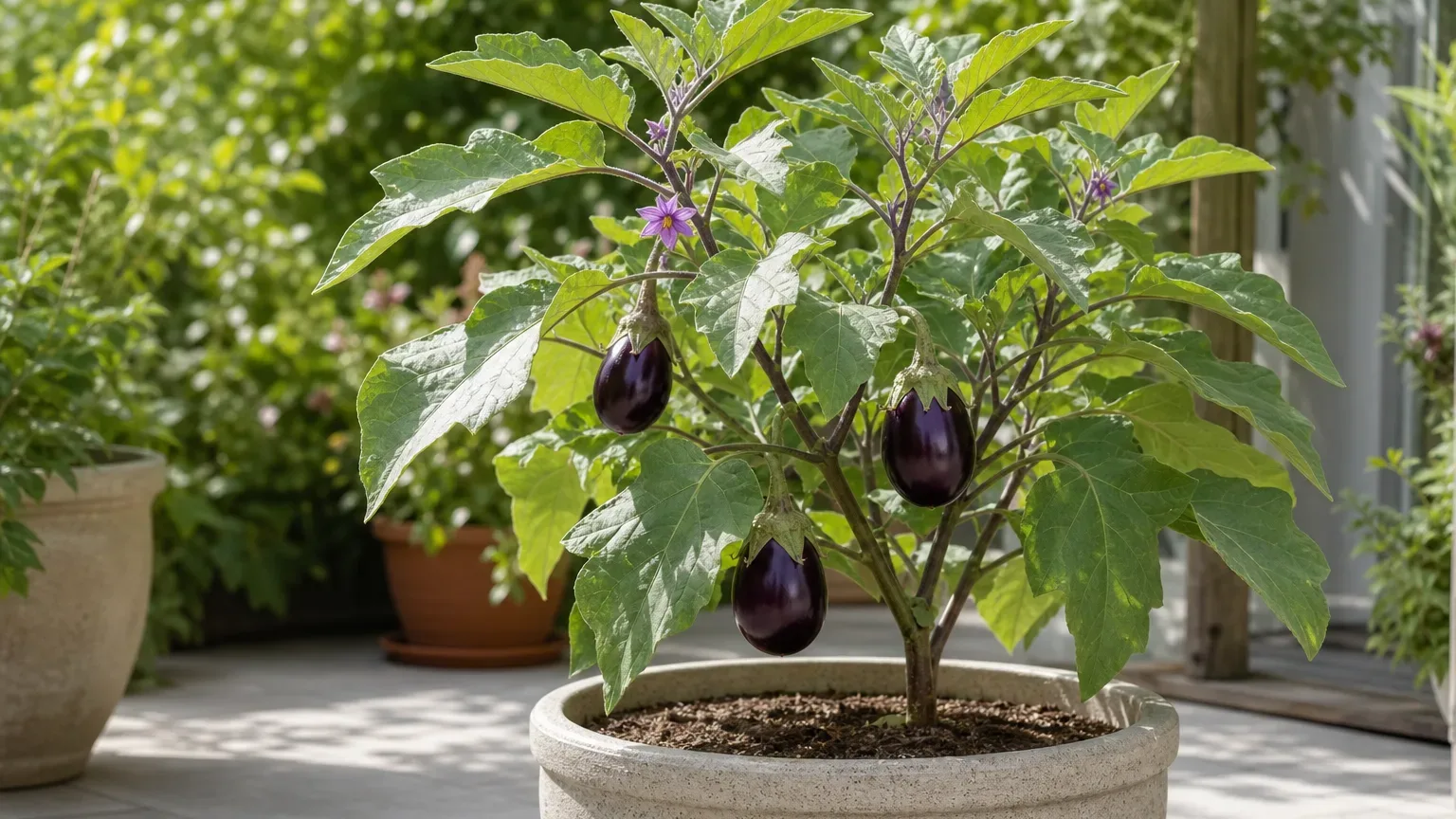
Brinjal Watering Guide for Pots and Ground
Brinjal Watering Guide for Pots and Ground
Brinjal needs a root zone that stays consistently moist but aerated. That balance matters because Solanum melongena makes broad leaves, flowers repeatedly and carries fleshy fruit, yet its roots lose function in saturated soil. NC State Extension describes eggplant as a plant of moist, well-drained soil, which is more useful than either “water daily” or “let it dry out.”
The safest habit is simple: check the soil, water the whole active root zone when it is beginning to dry, and then let surplus water drain. Containers need much more frequent checking than beds. Heat increases demand; monsoon cloud, humidity and rain reduce it. A wilted plant is not proof of dry soil, so always touch the root zone before reaching for the watering can.
Brinjal watering: the quick answer
Check a potted brinjal every day in hot weather and a garden plant every one or two days, but water only when the upper 2–3 cm is dry and the soil below still feels lightly moist. Give enough water to wet the root ball or bed deeply, not a small surface splash. Empty pot saucers and do not irrigate ground that is still wet from rain.
Uniform moisture is especially important as buds, flowers and fruit develop. Utah State University Extension notes that inconsistent water in eggplant and related solanaceous crops can contribute to poor growth, flower drop, sunburn and fruit defects, and recommends regular monitoring of soil water. This does not mean keeping soil permanently wet; it means avoiding repeated swings between hard drought and saturation.
When does brinjal actually need water?
Use moisture, weather and plant stage together. A recently transplanted seedling has a small root system and needs close checks while it establishes. A large plant carrying several fruits uses water faster, particularly in sun and moving air. A cloudy plant after overnight rain may use very little even if yesterday’s schedule says it is “watering day.”
The upper 2–3 cm check is a practical trigger for pots and ordinary loam. In very sandy soil, inspect a little deeper because the surface and root zone can dry quickly together. In clay or a large plastic pot, do not assume a dry-looking crust means the lower soil is ready; dense media can remain wet around the roots.
Check the root zone, not the calendar
Push a finger into the soil away from the stem. Water when the top layer feels dry but the lower layer is not bone-dry. For a container, lift the pot after watering and learn its wet weight; a noticeably lighter pot confirms that much of the stored water has been used.
A wooden skewer inserted near the pot edge can resolve doubt in deep containers. Damp soil darkens the wood or clings to it; if that happens, wait and check again later. This observation-first approach fits Virginia Cooperative Extension’s guidance that container watering frequency changes with potting medium, container and growing conditions, so a date-based routine cannot be reliable.
Containers and garden beds dry differently
A container has limited soil, warmer walls and no access to moisture beyond its root ball. A garden bed has a larger reservoir but varies widely with texture, compaction, slope and shade. Treating both situations alike usually leaves the pot dry or the bed waterlogged.
Watering brinjal in containers
Use a final pot at least 30 cm wide for a compact plant and more volume for vigorous or large-fruited cultivars. Water slowly over the surface until runoff appears from several drainage holes, pause briefly, and water again if a dry mix initially shed water down the sides. Discard runoff; do not let the pot stand in it.
The Royal Horticultural Society says container-grown aubergines are particularly prone to drying and may need daily watering in hot weather. “May” matters. Check daily, but skip watering if the mix is still moist or the pot remains heavy. A black nursery pot on a west-facing terrace can dry far faster than a pale, larger pot protected from reflected heat.
Watering brinjal in the ground
Water a wider circle as the canopy expands rather than pouring against the stem. A deep irrigation followed by an observation period encourages roots to occupy more soil; Utah State’s home-garden eggplant guidance recommends deep, infrequent irrigation and gives 2.5–5 cm per week as a broad field starting point. Rainfall, soil and heat can move the real need far above or below that range.
On level loam, aim to moisten roughly the upper 15 cm without producing runoff. University of Georgia home-garden guidance similarly advises watering eggplant to a depth of about 15 cm, preferably with drip irrigation. Split an application if clay accepts water slowly, and stop when water begins ponding or moving away from the plant.
Flowering and fruiting need steady moisture
Do not let the root zone repeatedly become dust-dry once flower buds appear. Water stress at this stage can worsen flower loss, and a fruiting plant has a larger leaf area and fruit load drawing on the same roots. Increase how often you check, then irrigate according to actual soil moisture.
Controlled research also shows why blanket irrigation claims are risky. A two-year eggplant trial found that irrigation level interacted with nitrogen and affected water use, yield and fruit quality, while its best treatment depended on the specific arid production system (Plants, 2025). For a home grower, the useful conclusion is not a copied field percentage; it is to avoid severe deficit and excessive irrigation, and keep the root environment stable through flowering and fruit filling.
Do not suddenly flood a very dry plant in dense soil. Apply water slowly in two passes so the root ball absorbs it instead of shedding it. Once fruits reach harvest size, continue steady care until picking; large fruits do not make saturated soil safer.
Adjust watering for severe heat
During hot, dry or windy weather, inspect pots in the morning and again late afternoon. A small fruiting container can genuinely need a full morning watering every day. Beds usually need less frequent but deeper irrigation, helped by mulch and a broad wetting area.
Water early enough that the plant enters peak heat hydrated. If the soil is moist and leaves droop only at midday but recover after sunset, do not automatically add water: temporary heat wilt can happen when leaves lose water faster than roots can supply it. Shade the pot wall, move movable containers away from reflected masonry heat, and confirm moisture before changing the irrigation volume.
An organic mulch 5–8 cm deep reduces surface evaporation and buffers soil temperature. Keep it several centimetres away from the stem and apply it over already-moist soil. Nebraska Extension recommends mulch to conserve soil moisture around eggplant, but mulch is not a substitute for checking underneath.
Change the routine during monsoon
Monsoon care is usually about withholding unnecessary irrigation and moving excess rain away. Check under the mulch, not just the surface. Humid, cloudy weather slows both evaporation and plant water use, so a pot that dried in one day during May may stay wet for several days during a rainy spell.
Move containers out of continuously dripping roof runoff, raise them on feet, clear every drainage hole and empty saucers. In the ground, open a shallow exit channel only where it can drain safely, and use raised beds in sites that flood repeatedly. Do not cultivate or squeeze saturated soil around the roots; compaction makes future drainage worse.
After heavy rain, wait until the upper layer begins to dry before watering again. If standing water remains, drainage is the priority. Colorado State Extension explains that soil drainage governs water movement and root growth; adding another drink cannot correct a root zone whose pores are already full.
How to apply water without wasting it
Apply water at soil level rather than routinely wetting the canopy. Direct the flow over the root zone and move slowly enough for infiltration. Overhead watering is least useful late in the day because foliage stays wet longer and much of the water may miss the roots.
For pots, two slow passes are better than one forceful pour. For beds, make a low, wide basin around the plant without piling soil against the stem. Stop if the basin remains full rather than draining within a reasonable period.
Drip lines, watering basins and mulch
A drip emitter gives steady delivery and keeps most foliage dry, but it still needs checking: a blocked emitter can leave one plant dry, while a timer can irrigate during heavy rain. Place emitters where they wet the active root zone and expand the wetting area as the plant grows.
Hand watering can work if you measure the result. Dig a small inspection hole outside the stem area after watering to see how deep moisture travelled, then close it. Iowa State Extension advises matching water delivery to soil infiltration because a fast hose flow can cause runoff instead of useful soaking.
Why a wilted brinjal may not be thirsty
Wilt means leaves are not maintaining pressure; it does not identify the cause. Dry soil, extreme afternoon heat, damaged roots, waterlogging and vascular disease can all produce drooping. Watering every wilted plant without checking can turn a recoverable stress into root loss.
First feel the soil 5–8 cm deep. Then compare the time of day, stem firmness, recent rain and recovery pattern. A plant that droops in afternoon heat, has moist soil and stands up after evening is different from one that remains limp at dawn.
Dry wilt versus wet-soil wilt
Dry wilt comes with a light pot, dry soil at depth and often soil pulling from the container edge. Water slowly and thoroughly, let it drain, and reassess within several hours. Do not compensate with tiny drinks for several days.
Wet-soil wilt comes with a heavy pot or saturated bed, yellowing lower leaves, stalled growth, a soft or dark stem base, or an unpleasant soil smell. Flooded soil deprives crop roots of oxygen; North Dakota State University identifies oxygen deprivation as the primary injury behind flooding and waterlogging. Withhold water, restore drainage and inspect container roots if decline continues.
Signs of too little and too much water
An underwatered brinjal may show dry soil, persistent evening wilt, crisp leaf edges, flower or tiny fruit drop and a pot that feels unusually light. One thorough irrigation is the first response. If the soil was severely dry, recheck after 20 minutes because a shrunken root ball may need a second slow pass.
An overwatered or waterlogged plant may yellow from the lower leaves, wilt while soil is wet, stop growing, or develop dark, soft tissue near the base. Do not diagnose from one yellow leaf. Combine the symptom with root-zone moisture, drainage speed and recent rain.
If wet-soil wilt persists, slide a container plant out carefully. Healthy roots are firm and pale to tan; decayed roots are dark, soft and may smell sour. Remove standing water immediately, but avoid aggressive root surgery unless decay is present.
Common brinjal watering mistakes
The most common mistake is watering on a fixed daily timetable in every season. Replace “water daily” with “check daily in hot weather.” Other failures include using a pot without drainage, giving frequent shallow splashes, leaving a saucer full, and maintaining summer irrigation through a cloudy monsoon week.
Do not bury the stem under wet mulch, and do not assume more water will correct every flower drop. Temperature, nutrition and pollination also affect flowering; use the Brinjal fertilizer guide and Brinjal light guide when soil moisture is already stable.
When to use this page vs other Brinjal guides
Use this page to decide when and how much to water, interpret wilt, and adjust for pots, beds, fruiting, heat and rain. If water runs through instantly, stays stagnant, or the mix compacts, the Brinjal soil guide addresses the root-zone structure behind the symptom.
For a plant that has outgrown its pot or dries within hours despite thorough watering, consult the Brinjal repotting guide. The Brinjal overview brings watering together with warmth, sun, support and harvesting.
Related Brinjal guides
Watering works as part of the whole crop cycle. Use the Brinjal propagation guide for seedling moisture and transplant establishment, where small root systems need different handling. Use the Brinjal pruning guide before removing growth from a stressed or fruit-laden plant.
Those pages answer different decisions; they do not replace a root-zone check. When several care factors seem wrong at once, stabilize drainage and moisture first, then review light, soil and feeding.
Conclusion
Good brinjal watering is steady, responsive and fully drained. Check the upper 2–3 cm, water the active root zone deeply as it starts to dry, and increase checks during heat and fruiting rather than obeying a fixed schedule.
In containers, expect rapid drying but never leave runoff around the roots. In beds, irrigate a broad area deeply and let soil texture set the interval. During monsoon rain or whenever a wilted plant sits in wet soil, stop treating droop as automatic thirst: restore air and drainage before adding water.