Overwatering on Brinjal: Wet-Mix Checks & Fixes
Quick answer
Overwatering on brinjal shows yellow lower lobes, a heavy cool pot, and limp leaves while the upper 2–3 cm of mix still feels damp—often after daily top-ups in humid weather or a cachepot holding runoff. First step: stop watering, empty any saucer, and poke the upper 2–3 cm until it reads dusty-dry before the next deep soak.
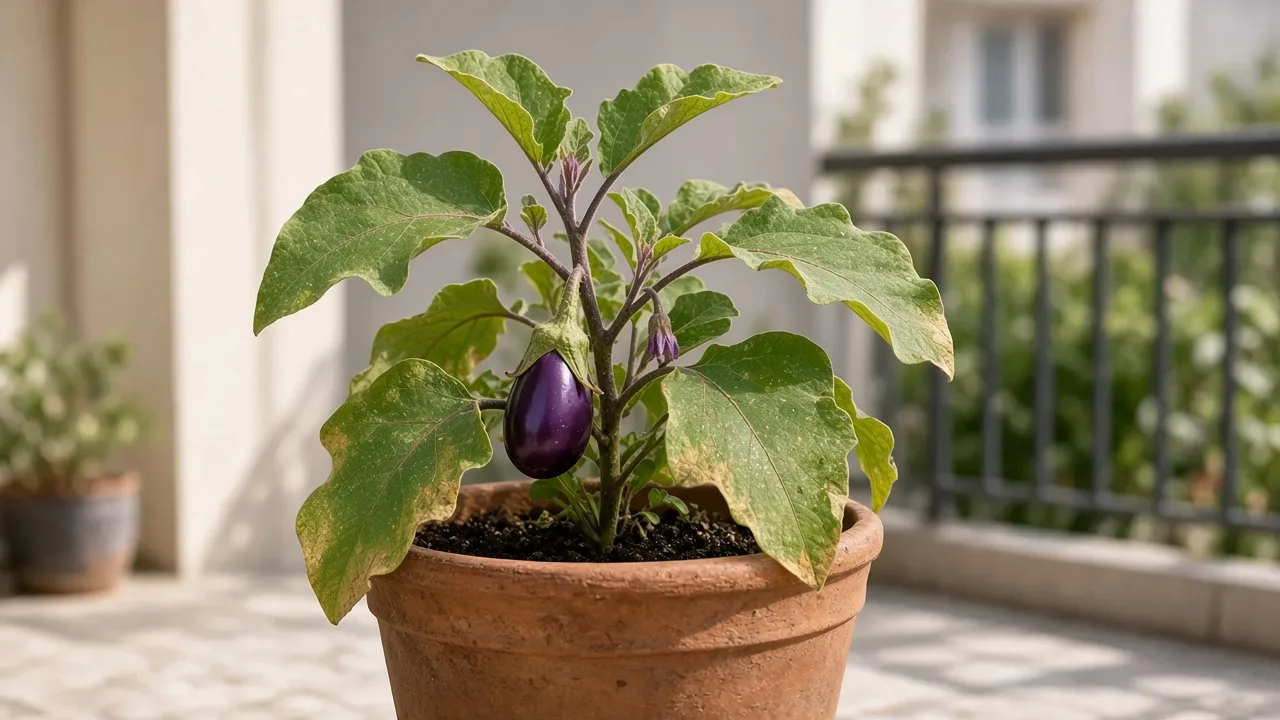
Overwatering on Brinjal: Causes, Checks & Fixes
This guide covers overwatering on Brinjal. See also the general Overwatering guide, watering, and light pages for this plant.
Overwatering on Brinjal: Causes, Checks & Fixes
Quick answer
Chronic wet mix on brinjal (Solanum melongena, eggplant, aubergine) starves warm-season nightshade roots of oxygen while the plant still looks “thirsty.” For how saturated soil damages roots in general, see our overwatering guide. On brinjal, the tell is usually yellow lower lobes, a heavy cool pot, and limp fuzzy leaves while the upper 2–3 cm of mix still feels damp—not crisp midday wilt on dusty-dry soil.
First step: stop watering, empty the saucer or cachepot, and wait until the upper 2–3 cm reads dusty-dry using the brinjal 2–3 cm check. Do not repot, prune hard, or feed until pot weight drops and new shoots look firm again. If the stem base softens on wet mix, move to root rot on brinjal instead of repeating shallow top-ups.
When to use this page vs other Brinjal guides
| Pattern | Read next |
|---|---|
| Midday wilt, light pot, mix pulled from pot edge | Underwatering |
| Whole-plant yellowing without a wet heavy pot | Yellow leaves |
| Collapse with wet mix and mushy roots | Root rot |
| Dry tan lobe tips on otherwise green leaves | Brown tips |
| Limp leaves after heat, soil may be correctly moist | Wilting or drooping leaves |
| Small flies on constantly wet surface | Fungus gnats or mold on soil |
What overwatering looks like on Brinjal
Brinjal carries large lobed, often fuzzy leaves on a multi-branched warm-season crop that prefers moist, well-drained, fertile sandy or loamy soil in full sun. Overwatering is not one shade of green—it is a moisture pattern: roots stay saturated while leaves show hunger and stress at the same time.
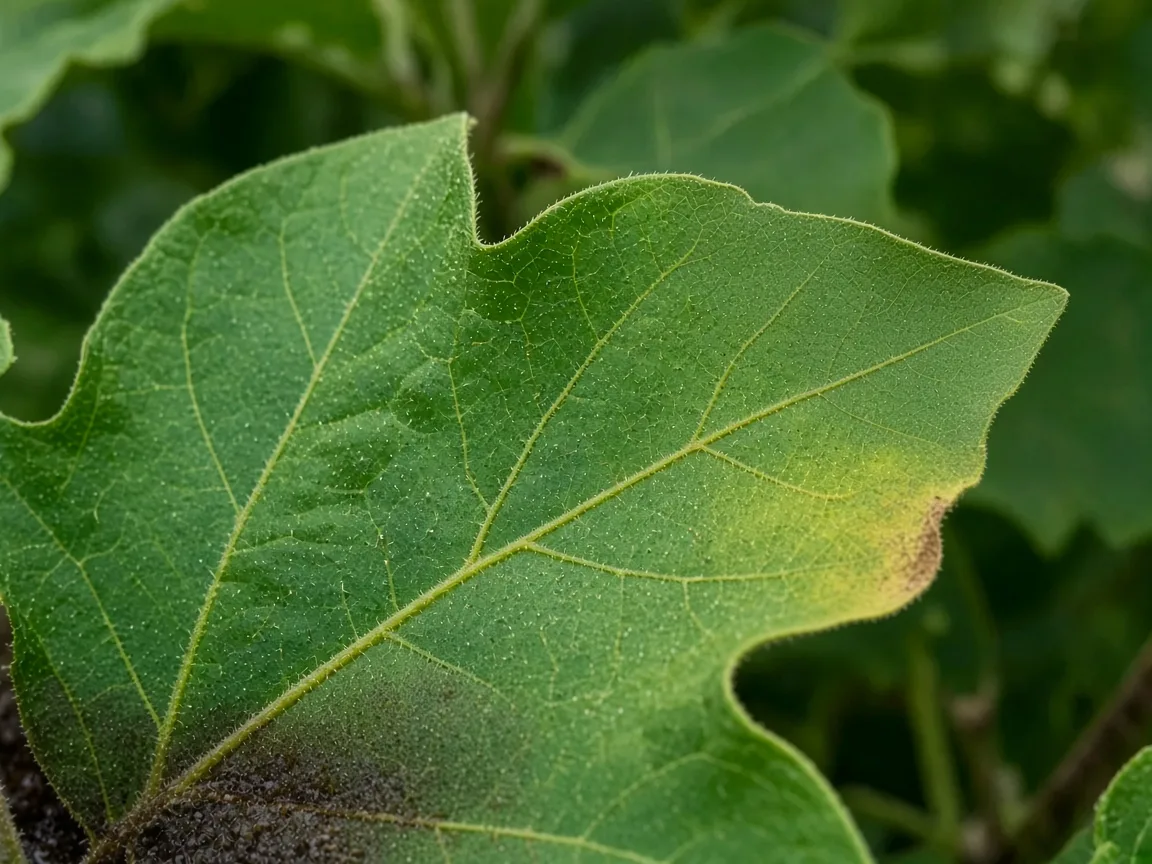
Lower brinjal lobe yellowing with damp potting mix—dead yellow tissue will not re-green; watch the next flush of fuzzy growth.
Classic overwatering on a patio container:
- Yellow lower lobes while mix at 2–3 cm depth feels cool, dark, and clinging
- Heavy pot that barely lightens days after you watered
- Limp leaves that do not perk after you stop adding water
- Slow or dull new shoots while older leaves drop
- Flower or young fruit drop after a cloudy, humid week with repeated top-ups
- Green algae or moss on the soil surface; fungus gnats hovering when the surface never dries
Advanced warning signs:
- Soft, darkened stem at the soil line (nightshade collar rot)
- Musty or sour smell from drainage holes
- Brown tips on wet mix from failed uptake—see brown tips when tips crisp while depth stays wet
- Bleached new growth on soggy mix in dim light—rule out not enough light before you water again
What overwatering is not: crisp wilt at midday with light pot and dusty-dry 2–3 cm (underwatering), stippling with fine webbing (spider mites), or uniform scorch on sun-facing lobes only after a heat move (light stress).
Monsoon calendar trap on fruiting containers
This section is brinjal-specific—it would not apply to a snake plant or a fern crown.
Brinjal needs steady moisture while flowering and fruiting, but RHS notes that container aubergines dry quickly in hot weather and may need daily attention. Growers often keep the same daily pour when monsoon cloud cover, high humidity, or a move to a cooler room slows evaporation for days. The surface looks dry while the middle of a compost-heavy 30 cm pot stays saturated—classic overwatering with a “responsible” watering habit.
Once small fruits load the plant, transpiration jumps in dry Indian summer heat; the same pot may need water every day. During humid spells, the upper 2–3 cm from the watering guide is the brake—not guilt about skipping a calendar slot. Yellow lower leaves plus a fruit drop after a wet week usually mean roots lost air, not lack of love.
Nightshade stem collar and root oxygen
Eggplant shares tomato and pepper biology: roots need air as much as water. Missouri Botanical Garden notes that overwatered plants sit in soil without enough oxygen for root function. On brinjal, damage often shows at the stem collar first—the junction where the fuzzy stem meets wet mix. Firm green stems are good; soft, sunken, or dark tissue at that line on constantly damp soil means oxygen loss is advancing toward root rot.
Heavy compost-rich mix without enough perlite (see soil) holds water long after a deep soak. Buried stems from piled mulch or repotting too deep worsen collar rot on nightshades. Keep the crown slightly above the soil line and match drainage to your container size on the overview.
Why Brinjal gets overwatered
Misreading wilt on wet soil. Limp lobes on damp mix often mean roots are already damaged, not that the plant needs another drink. Watering again deepens the cycle.
Cachepots and saucers. A nursery pot may drain at the bottom yet sit in standing runoff inside a decorative outer pot. The top 2–3 cm can feel almost dry while the root ball drowns.
Shallow frequent sprinkles. Light daily splashes keep the surface wet without training deep roots—then one “make-up” soak saturates the whole volume. Utah State University recommends deep, thorough irrigation for eggplant rather than shallow sprinkles.
Cool weather + unchanged schedule. Brinjal slows in cool roots or cloudy weeks; the same weekly drench that worked in May stays too much in September.
Overcorrection after a dry spell. One missed day on a fruiting container causes crisp tips; panicked daily top-ups without checking depth can flip the plant from drought stress to chronic wet feet in a week.
Inconsistent swings. Inconsistent water availability stresses tomato, pepper, and eggplant crops—but the fix is steady dry-down checks, not constant saturation.
How to confirm the cause
- 2–3 cm finger test — Cool, clinging soil at that depth after days without watering strongly suggests excess moisture held in the pot core.
- Pot weight — Heavy container, slow to lighten, compared with a healthy dry-down cycle from watering.
- Leaf level pattern — Yellowing starting on lower lobes while upper leaves still look relatively green points to root-zone stress more than sudden fertilizer burn.
- Drainage audit — Water runs out freely; saucer emptied within 30 minutes; no blocked holes from circling roots.
- Stem collar feel — Firm versus soft at the soil line on wet mix.
- New growth verdict — Next fuzzy leaves opening dull or twisted after you pause watering suggests recovery has not started; firm new tips after dry-down suggest you caught it in time.
If five checks point to wet roots but the collar is still firm, dry-down alone is usually enough. If the collar softens or smell turns sour, inspect roots per the root rot guide before the next pour.
First fix for Brinjal
Stop watering until the upper 2–3 cm is dusty-dry and the pot feels noticeably lighter. Empty any saucer or cachepot. Keep the plant in full sun if it was already acclimated—do not shove a stressed wet-root plant into deep shade unless leaves are actively scorching (light guide).
When symptoms are mild (firm stem, no sour smell, yellowing mostly on lower lobes):
- Pause all watering.
- Recheck depth and weight every 1–2 days.
- When the 2–3 cm layer is dry, one deep soak until a little water exits the holes, then discard runoff.
- Wait for the next dry-down before repeating—do not return to calendar daily pours until weight rhythm stabilizes.
- Watch the leading shoot: firm new leaves mean the first fix worked.
When the stem base softens, leaves wilt on wet mix anyway, or yellowing climbs fast:
- Follow root rot on brinjal—unpot, trim mush, repot into airy mix in a same-size or slightly smaller pot with open drainage.
- Hold fertilizer until new growth looks healthy for two weeks on a stable dry-down cycle.
- Do not prune away half the canopy and repot the same day unless rot forces it.
Recovery timeline
Mild overwatering (lower yellow only, firm stem): after a proper dry-down, new fuzzy growth often looks cleaner within 7–14 days in warm sun. Old yellow lobes may stay pale; that is normal.
Moderate stress (some flower drop, sluggish shoots): expect two to three weeks before fruit set feels reliable again. Water stress can reduce fruit quality on eggplant—recovery is about stable moisture, not chasing size with feed.
Severe collar or root damage: stems may recover slowly over several weeks, or you may need to restart from a healthy side shoot if the main stem rots. Honest limit: a plant that loses most of its root mass may not carry a heavy fruit load this season.
Lookalike symptoms
| What you see | Likely cause | Next step |
|---|---|---|
| Yellow lowers + heavy wet pot | Overwatering | Dry-down, fix drainage |
| Midday wilt + light pot + dry 2–3 cm | Underwatering | One deep soak, then reset checks |
| Tips brown, soil wet at depth | Uptake failure from wet roots | This page + brown tips |
| Uniform yellow, no weight clue | Nutrition or light | Yellow leaves, light |
| Wilting with dry soil after heat | Heat + thirst | Wilting, shade pot from reflected heat |
| Stippling, webbing | Pests | Spider mites |
Mistakes to avoid
- Watering because leaves look limp without checking whether the pot is already heavy.
- Repotting into a larger container “to help drainage”—extra wet soil volume often makes saturation worse.
- Feeding a yellow plant on soggy mix—salts plus weak roots burn lobes; fix moisture first.
- Keeping the same daily schedule through monsoon humidity because the surface looks dry.
- Letting the pot sit in a full saucer “so it does not dry out.”
How to prevent it next time
- Run the 2–3 cm dry-down from Brinjal watering every time—not a wall-calendar rule.
- Use soil with perlite or coarse sand in containers; refresh compacted mix between seasons.
- Empty saucers after each soak; lift nursery pots out of cachepots to verify the bottom is not bathing in runoff.
- Scale checks to weather: daily in hot dry fruiting weather; slower in humid or cloudy weeks.
- Stake early so you are not disturbing roots repeatedly while diagnosing moisture.
- Browse the problems hub when symptoms overlap—fix one variable at a time.
When to worry
Treat as urgent if stems soften at the soil line, most leaves wilt on wet mix, soil smells sour, or yellowing spreads to new shoots within a week—those patterns need root inspection, not another top-up.
Lower urgency: a few yellow lower lobes, firm stem, and new growth still pushing after you correct drainage. Pause water, confirm dry-down, and recheck in 48 hours before escalating.
Conclusion
Overwatering on brinjal is usually a container and rhythm problem on a crop that legitimately needs moisture during fruit fill—not a mystery disease. Solanum melongena warns you with lower-lobe yellow on heavy wet mix, collar softness if you wait too long, and flower drop when roots lose air during humid weeks. Lead with one dry-down cycle guided by the 2–3 cm check, then judge firm fuzzy new leaves and stable pot weight. Return to everyday Brinjal care once siblings on the problems hub no longer fit the pattern.
Related Brinjal guides
- Brinjal overview — cultivar size, heat, and harvest rhythm
- Brinjal watering — 2–3 cm check and seasonal changes
- Brinjal soil — moisture retention without waterlogging
- Root rot on Brinjal — when wet mix has already damaged roots
- Underwatering on Brinjal — limp leaves on dry mix
- Brinjal problems hub — all common issues on this crop
Related tool
Use the Root Rot Risk Checker to narrow causes for overwatering on this plant before changing multiple variables at once.