Drooping Leaves on Brinjal: Causes, Checks & Fixes
Quick answer
Drooping leaves on brinjal usually mean the root zone is out of balance—midday heat wilt is normal, but limp leaves at dawn point to dry soil, wet roots, or disease. First step: probe the upper 2–3 cm of mix and lift the pot before you water again.
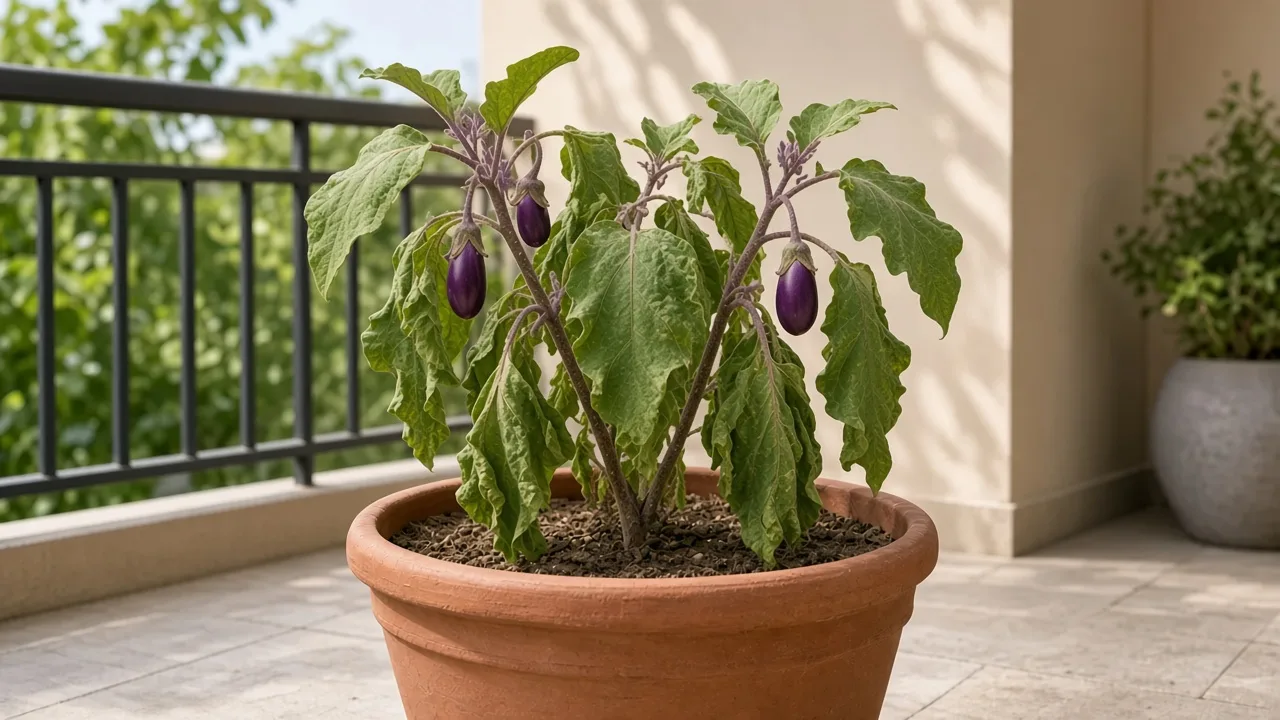
Drooping Leaves on Brinjal: Causes, Checks & Fixes
This guide covers drooping leaves on Brinjal. See also the general Drooping Leaves guide, watering, and light pages for this plant.
Drooping Leaves on Brinjal: Causes, Checks & Fixes
Quick answer
Drooping leaves on brinjal (Solanum melongena) mean broad, fuzzy foliage has lost turgor and hangs from the petioles instead of holding a firm angle. That sag almost always traces to water moving through the roots—not because the plant automatically needs another drink. For how turgor loss works in general, see our drooping leaves hub. On brinjal, probe the upper 2–3 cm of soil and lift the pot before you pour more water.
First step: push your finger 2–3 cm into the mix and lift the container. A light, dry pot with limp leaves calls for measured deep watering. A heavy, wet pot with drooping lower leaves means root stress, saturation, or disease—stop watering and inspect the stem base before you add more water.
When to use this page vs other Brinjal guides
- Wilting — overlapping symptom page; use either for limp foliage, but this guide emphasizes sagging petioles and hanging leaf blades rather than rapid whole-plant collapse
- Underwatering — use when the upper 2–3 cm are dry and the pot feels light, especially during flowering
- Overwatering — use when mix stays dark and damp for days after rain or heavy irrigation
- Root rot — use when the stem base is soft, roots are mushy, or mix smells sour
- Watering guide — use for long-term dry-down rhythm after drooping stabilizes
What drooping leaves look like on Brinjal
On a healthy brinjal, broad leaves with slightly fuzzy surfaces sit at a firm angle along sturdy stems, often with purple-tinged petioles and glossy fruit forming on side branches. Drooping changes that silhouette—and the time of day matters as much as the droop itself.
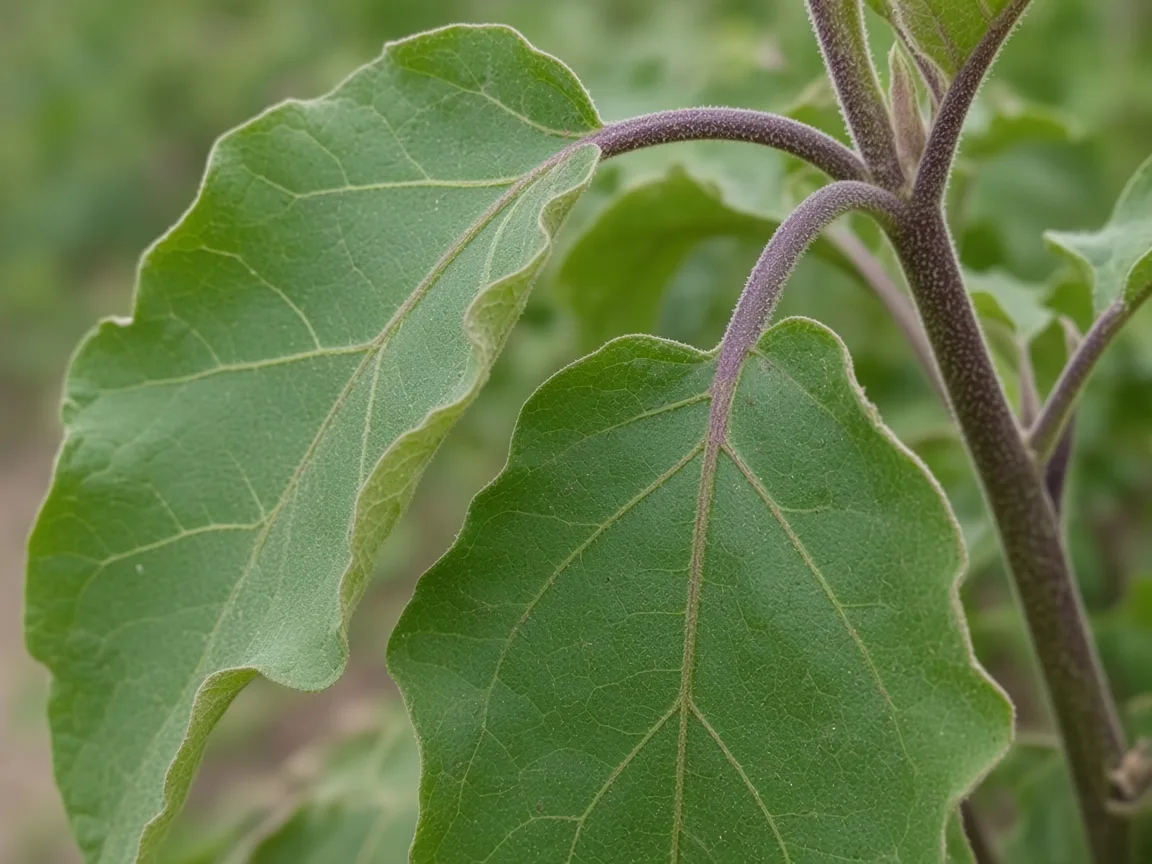
Drooping leaves on brinjal—a limp petiole and hanging blade often track root-zone moisture or heat stress, not a single generic “thirst” signal.
Midday heat droop is common on fruiting brinjal in full sun. Large leaves transpire fast when temperatures climb; petioles soften and blades hang until evening cool-down. If leaves look firm again the next morning on evenly moist soil, the plant is managing heat—not dying of drought.
Morning droop is the warning sign. Leaves still limp at dawn, especially with dry surface mix or a lightweight pot, point to underwatering or root uptake failure. Lower leaves that yellow while soil stays wet suggest overwatering or root rot, not heat alone.
One-sided droop—one branch or half the plant sagging while the rest stays upright—raises suspicion for vascular wilt. On nightshades, Verticillium wilt often starts with yellowing lower leaves and V-shaped brown lesions at leaf margins before advanced wilting.
Fruit-stage droop can appear when a heavily fruiting plant pulls more water than roots supply after a missed watering, or when inconsistent moisture triggers flower or young fruit drop. Utah State University Extension notes that inconsistent water can cause flower drop and other fruit problems in eggplant, peppers, and tomatoes.
Midday droop vs morning droop on brinjal
Brinjal is a warm-season crop with broad leaves built for full sun. On hot afternoons, limp foliage is often a temporary transpiration mismatch, not a death sentence. Extension guidance on Verticillium wilt describes plants that wilt in the afternoon and appear to recover in the morning when vascular disease is involved—but the same daily rhythm can also appear on a healthy plant that simply cannot move water as fast as leaves lose it in peak heat.
Use this rule: check the plant at breakfast, not at 3 p.m. Morning limp leaves on dry upper soil need water. Morning limp leaves on wet soil need drainage and root inspection. Afternoon limp leaves that firm overnight on moist soil need shade from reflected heat or steady moisture—not an extra flood.
If you moved a container onto hot paving or against a west-facing wall, afternoon droop may worsen even when the root ball is moist. Shift the pot, mulch the surface, and review the light guide before treating heat droop as root failure.
Flowering, fruit load, and the upper 2–3 cm check
Brinjal needs moist, well-drained soil and steady moisture while flowering and filling fruit. LeafyPixels brinjal watering follows a practical trigger: water when the upper 2–3 cm feels dry, then drain fully. That depth matches how quickly a fruiting container dries in Indian summer heat—and how slowly the same pot dries during monsoon cloud cover.
Before you water a drooping brinjal:
- Probe 2–3 cm deep away from the stem. Crumbly dry surface with a light pot confirms dry droop.
- Lift the pot. Heavy weight plus limp lower leaves on damp mix points to oversaturation or failing roots.
- Look at flowers and thumb-sized fruit. Sudden droop with blossom drop often follows a dry spell or a swing from drought to saturation—both stress solanaceous crops.
The Brinjal watering guide covers pot weight, skewer checks, and counting rain as irrigation. Drooping during peak fruit set usually means your rhythm drifted from even moisture, not that the cultivar suddenly needs double water every day.
Monsoon and cachepot traps on container brinjal
Container brinjal in monsoon season faces a specific trap: rain counts as irrigation, but leaves still look limp when roots sit in stale water. A saucer or decorative cachepot that holds runoff keeps the lower root ball saturated while upper mix looks merely damp. Roots in waterlogged soil cannot absorb oxygen and may decay; leaves droop even though you “have not watered in days.”
Signs you are in this trap:
- Mix stays cool and heavy while leaves hang limp
- Fungus gnats hover near the soil line after weeks of rain
- Lower leaves yellow on wet soil
- Pot weight barely changes between cloudy spells
Empty saucers after every storm, clear drainage holes, and raise pots off standing puddles. Resume hand watering only when the upper 2–3 cm begins to dry—not when leaves look sad in afternoon humidity.
Verticillium and wet-soil droop on nightshades
Brinjal shares wilt diseases with tomato and potato. Verticillium wilt can mimic drought: lower leaves yellow, V-shaped lesions develop at margins, and plants wilt when actively transpiring. NC State Extension notes vascular streaking in stems and leaves as a characteristic sign—distinct from simple dry stress.
Separate the patterns:
| Signal | Heat or dry droop | Wet-root droop | Verticillium suspicion |
|---|---|---|---|
| Time pattern | Afternoon limp, firm by morning | Often constant on wet mix | Afternoon wilt, slow decline |
| Soil | Dry upper 2–3 cm | Damp mid-depth, heavy pot | May be moist; roots fail uptake |
| Lower leaves | Even wilt, little yellowing first | Yellow bottom leaves on wet soil | Yellow lower leaves, V-shaped lesions |
| Stem | Firm base | Soft base if rot advanced | Brown streaks inside stem when cut |
| Recovery | Perks after one proper watering | Rare until roots heal | No cure; remove plant, rotate crop |
There is no rescue spray once Verticillium blocks vessels. Discard severely affected plants, avoid replanting brinjal in the same soil for several seasons, and choose resistant cultivars where available. NC State recommends crop rotation and resistant varieties for field management; home growers should treat persistent one-sided wilt as a bed-health issue, not a watering tweak.
Why Brinjal gets drooping leaves
Underwatering dries fine roots first. Broad leaves lose turgor quickly; midday wilt may persist into evening if the dry spell was sharp. Flower and fruit drop can follow if stress hit during bloom. RHS guidance notes that container aubergines may need daily watering in hot weather—but only when the root zone is actually drying, not on autopilot.
Overwatering and root failure produce the paradox wilt: limp leaves on wet soil because damaged roots cannot move water upward. Overwatering damages roots that cannot supply the plant Owners see droop and add more water, which accelerates decline. Heavy compost mixes, oversized pots, and monsoon cachepots are frequent brinjal mistakes.
Heat and root-zone temperature stall uptake when nights are cool but days are blazing, or when a black nursery pot overheats roots despite moist mix. Cold, wet roots on a heat-loving nightshade behave like a failing pump—see not enough light or cold exposure only after you rule out moisture extremes.
Transplant or stake shock can droop leaves for days after repotting or disturbing roots while tying heavy fruit. Keep moisture even but not soggy until new growth looks firm.
Pest sap loss from aphids, whiteflies, or spider mites on tender shoots can wilt top growth while lower leaves look normal. Inspect undersides before assuming water stress—start with aphids or spider mites if stickiness, webbing, or clustered insects appear.
How to confirm the cause
Work through these checks in order:
- Morning vs afternoon — Firm by morning on moist soil after afternoon droop suggests heat; limp at dawn suggests water or disease.
- Upper 2–3 cm moisture — Dry and light pot vs damp and heavy pot.
- Leaf pattern — Bottom-up yellowing on wet soil suggests root stress; one-sided collapse suggests vascular wilt.
- Stem base — Soft, dark collar on wet mix points toward root rot; firm base with dry mix points toward thirst.
- Fruit and flowers — Recent drop with limp leaves suggests inconsistent moisture during a critical stage.
- Stem slice (optional) — If wilt persists on one side, cut a lower stem and look for brown vascular streaking per NC State Verticillium guidance.
- Root peek — If wet droop continues after a dry-down period, slide the plant out. Healthy brinjal roots are firm and white-cream; rotted roots are brown and slimy.
Confirmed dry droop: dry upper 2–3 cm, light pot, firm stem base, recovery within hours of deep watering. Confirmed wet droop: damp mid-depth mix, yellow lower leaves, sour smell, or mushy roots. Suspected Verticillium: one-sided pattern, V-shaped leaf lesions, vascular streaking, history of tomato or potato in the same bed.
First fix for Brinjal
Probe the upper 2–3 cm of soil and lift the pot before any other action. That single test separates opposite fixes.
If the mix is dry through the upper layer and the pot is light, water deeply until a small amount drains from the holes, then empty the saucer within 30 minutes. Do not sprinkle the surface once; brinjal needs the whole root ball re-wetted. Wait until the upper 2–3 cm dry again before the next drink.
If the mix is wet at mid-depth and leaves are drooping, stop watering immediately. Move the pot to brighter airflow if it sits in deep shade after monsoon rain. Wick excess moisture with paper towels under drain holes. Inspect roots and stem base if decline continues—follow the overwatering guide.
Make one correction, then wait 24–48 hours before stacking repotting, pruning, and pesticide.
Step-by-step recovery by cause
Dry droop path
- Water until drainage runs, then discard all runoff.
- For a severely dry root ball in a large pot, bottom-water 20–30 minutes, then drain completely.
- Stake heavy branches so limp leaves are not torn while turgor returns.
- Resume the upper 2–3 cm dry-down rhythm from the watering guide.
Wet droop path
- Stop irrigation and empty saucers; count rain toward the next check.
- If roots are mushy, trim decay, repot into fresh well-drained mix sized to remaining roots, and keep mix barely moist.
- See yellow leaves if lower foliage keeps yellowing on wet soil.
Heat droop path
- Shift containers off hot paving; mulch the surface without burying the stem.
- Maintain even moisture—do not flood every afternoon.
- Harvest glossy fruit on schedule so the plant is not carrying excess load in peak heat.
Verticillium or advanced wilt
Remove the plant if vascular streaking and one-sided collapse confirm disease; do not compost infected stems in home bins used for nightshade beds. Plan rotation and resistant cultivars for the next season.
Recovery timeline
| Cause | What improvement looks like | Typical timeframe |
|---|---|---|
| Underwatering | Leaves firm after one deep watering; soil evenly moist | Same day to 48 hours |
| Midday heat | Afternoon droop only; firm leaves each morning | Immediate once heat or placement adjusts |
| Mild root stress | Drooping stops spreading; new leaves stay firm | 1–2 weeks after drying and root trim |
| Transplant shock | Gradual firming without stem softening | 1–2 weeks |
| Verticillium / severe rot | Little new firm growth from tips | Often not recoverable |
Older drooping leaves may never return to a perfect upright angle. Judge progress by firm new growth at the shoot tip and stable fruit set, not by forcing every lower leaf vertical.
What not to do
- Watering because leaves look limp when the upper 2–3 cm are still wet—the classic root-failure accelerator on fruiting brinjal.
- Fertilizing a drooping plant before moisture and roots are confirmed; salts on stressed roots worsen wilt.
- Repotting, hard pruning, and spraying on the same day while leaves are still limp.
- Ignoring one-sided wilt as “needs more water” when V-shaped lesions appear on lower leaves.
- Leaving containers in cachepots full of monsoon runoff.
How to prevent drooping leaves on Brinjal
Water when the upper 2–3 cm feel dry, not on a fixed calendar. In hot fruiting weather, check daily; during monsoon cloud cover, stretch intervals and count rainfall. Use fertile, well-drained mix in a pot with drainage holes at least 30 cm wide for mature plants, and stake before fruit weight bends stems.
Rotate beds away from tomato, potato, and chilli if Verticillium wilt appeared. Inspect leaf undersides weekly during tender growth. Review the care overview for cultivar size, sun, and support expectations matched to your container.
When to worry
Seek aggressive action—not another routine watering—when:
- The stem base feels soft or smells sour on wet mix.
- Drooping spreads upward quickly while soil stays saturated.
- One side of the plant collapses with yellow, V-notched lower leaves.
- Most roots are brown and slimy on inspection.
If the stem base is still firm and you catch wet-root stress early, rescue is realistic. If vascular streaking confirms Verticillium, focus on protecting nearby nightshades and planning a clean rotation rather than saving the original plant.
Brinjal care cross-check
- Watering rhythm — Calendar watering during monsoon is the most common wet-soil droop setup.
- Pot and drainage — Cachepots without drainage mimic chronic overwatering.
- Heat and roots — Black pots on hot terraces overheat roots even when mix feels moist.
- Fruit load — Heavy cultivars need stakes early; limp stems from weight mimic wilt.
- Related problems — Wet-soil droop overlaps overwatering and root rot; fast collapse overlaps wilting.
Related Brinjal guides
- Brinjal overview — full sun, moisture, and cultivar-sized support
- Brinjal watering — upper 2–3 cm dry-down, monsoon checks, pot weight
- Brinjal light — full sun vs reflected heat on containers
- Brinjal soil — drainage and pH for nightshade roots
- Underwatering on Brinjal — light pot, dry mix, midday wilt into evening
- Overwatering on Brinjal — limp leaves on wet soil, gnats, yellow lowers
- Root rot on Brinjal — mushy roots, soft stem base
- Wilting on Brinjal — rapid turgor loss vs slower droop
- Brinjal problems — browse all common issues on this species
Conclusion
Drooping leaves on brinjal tell you water is not moving through the plant the way fruiting Solanum melongena needs—not that the fix is always “water more.” Check at morning, probe the upper 2–3 cm, lift the pot, and match one correction to one cause. Most droop resolves when moisture stays even through flowering and fruit fill; the leaves that recover first are the new firm ones at the growing tip, not every older blade that already hung in the afternoon heat.
Related tool
Use the Plant Problem Diagnosis Tool to narrow causes for drooping leaves on this plant before changing multiple variables at once.