Brinjal Light Requirements: Sun, Heat & Balconies
Brinjal Light Requirements: Sun, Heat & Balconies
Brinjal Light Requirements: Sun, Heat & Balconies
Brinjal is not a foliage plant that can simply remain green in a bright-looking room. Solanum melongena is a warm-season fruiting crop, and its useful light target is the exposure that lets it build a broad canopy, keep flowering, and carry developing fruit. Cornell describes eggplant as a heat-loving annual whose site requirement is full sun, while NC State defines that category for this species as six or more hours of direct sunlight per day.
Treat six hours as a practical baseline, not a guarantee. A compact cultivar in an open balcony may crop with that exposure, while a vigorous plant shaded by railings, walls, or nearby towers may receive fewer useful hours than the balcony direction suggests. Fruiting also depends on suitable warmth, moisture, nutrition, pollination, and cultivar, so a sunny position removes one major limitation without solving every cause of poor fruit set.
Quick answer: how much sun brinjal needs
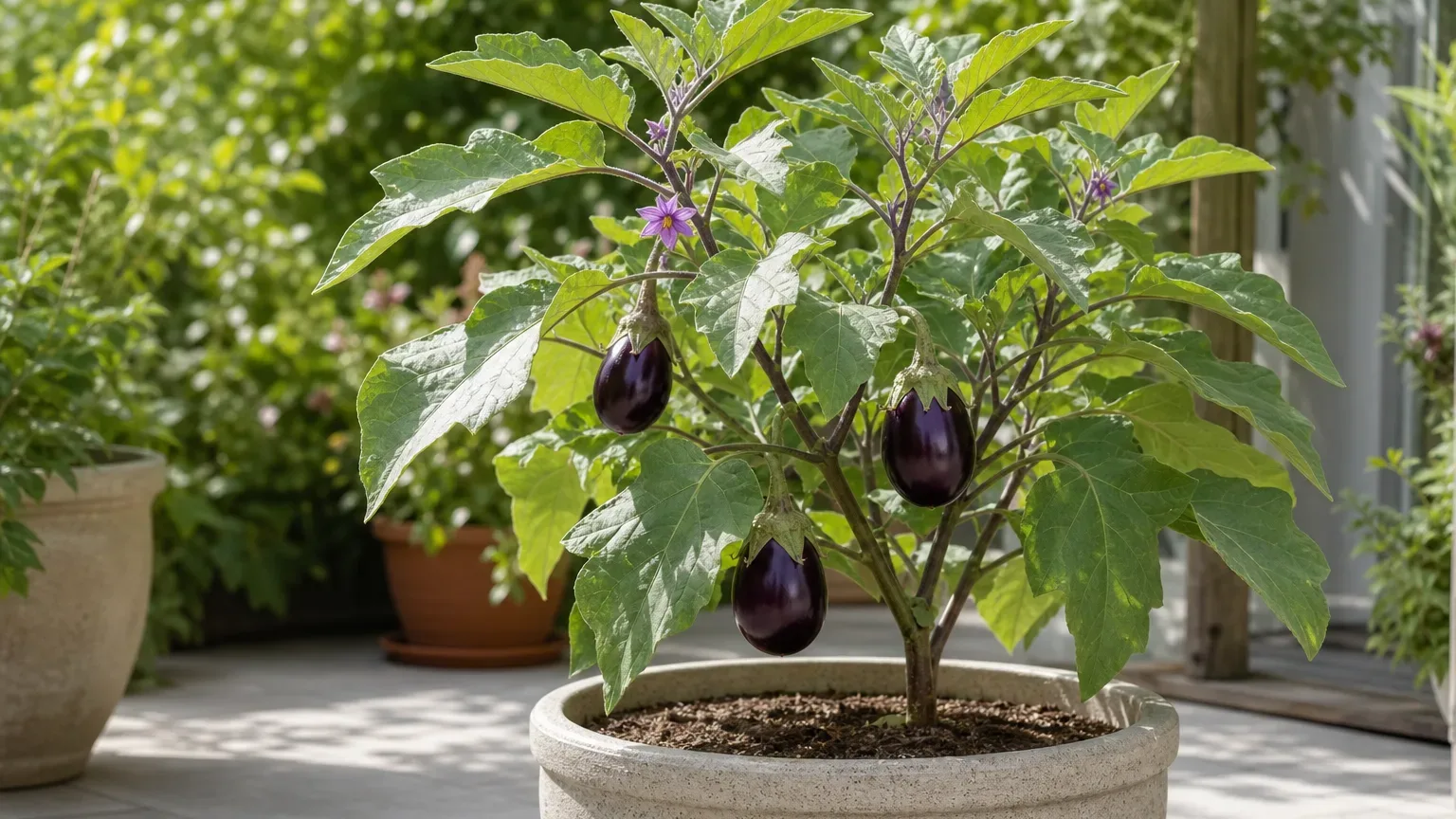
Place brinjal in the sunniest open position you can manage, aiming for at least six hours when the sun reaches the leaves directly. Full-day outdoor light usually gives the plant more energy for flowering and fruit filling than a position with only brief morning rays followed by deep building shade. Iowa State likewise recommends fertile soil in full sun, reinforcing that direct sun is standard crop culture rather than an optional bonus.
In a hot Indian summer, do not automatically move a healthy plant into permanent shade at midday. First check whether the real stress is a hot, dry root ball, a dark container heating against concrete, or reflected radiation from glass and pale walls. Temporary filtered light during an exceptional heat spell can be sensible, but routine heavy shade often trades a heat problem for weak growth and fewer flowers.
Why fruiting brinjal needs direct sun
Brinjal has to support leaves, repeated blooms, expanding fruits, and new shoots at the same time. Strong light supplies the energy for that work and helps growth remain compact enough to support a crop. The Michigan State University cultivation guide classifies eggplant as a warm-season vegetable, while the Missouri Botanical Garden describes it as cold-sensitive and calls for a sunny, warm location.
That does not mean every flower on a sunny plant will become a fruit. Excess heat, drought, saturated roots, poor nutrition, pests, or simply immature growth can interrupt flowering and fruit set. Diagnose the whole plant rather than assuming that adding fertilizer will compensate for weak light or that adding shade will cure every midday wilt.
Light supports flowers, fruit, and a sturdy canopy
In adequate sun, new stems should develop at a reasonably compact spacing, leaves should expand without becoming unusually thin, and the canopy should be able to hold flowers without stretching strongly toward one side. The plant still needs support as fruit gains weight; good light does not remove the need to stake a vigorous or large-fruited cultivar.
Low light often shows first as structure rather than colour. Stems lengthen toward the open sky, lower leaves are shaded by a sparse but stretched canopy, and flowering is delayed or limited. A plant can look green during this process, so “the leaves are not yellow” is not proof that a deep balcony receives enough sun.
Choosing the brightest workable growing position
Outdoors, compare positions by watching where sunlight actually lands over a clear day. An east-facing opening may provide useful morning sun but lose the afternoon behind the building. A west-facing balcony may receive a shorter, hotter exposure. South- and west-facing concrete can also store and reradiate heat, so direction alone cannot tell you whether the plant receives productive light or a damaging combination of sun and hot surfaces.
Place the pot where the upper and middle canopy see the widest section of sky. Keep it away from an opaque parapet that shades most leaves, and avoid squeezing the canopy behind other large plants. Rotate a container when one-sided growth becomes pronounced, but do not use rotation to disguise a site where only a small section of the plant ever receives sun.
Balcony limits: direction matters less than obstruction
A balcony can grow brinjal successfully when direct sun reaches most of the canopy and the pot has enough root room. Cornell specifically notes that eggplants can grow in outdoor containers, with dwarf and small-fruited varieties particularly suitable. On a restricted balcony, cultivar choice is therefore part of light management: a compact plant is easier to keep entirely in the sun than a vigorous canopy extending into wall or railing shade.
Assess obstruction from the plant’s height, not from where you stand. Upper leaves may be sunny while flowers and lower leaves sit behind a solid railing. Nearby towers, balcony ceilings, privacy screens, grills, and seasonal sun angle can cut direct exposure. If the site only receives a short patch of sun, choose the brightest edge, elevate the pot safely, keep the canopy open, and set modest expectations for yield.
Can brinjal grow indoors under a window or lamp?
A normal indoor window is usually a poor fruiting site because glass, roof overhangs, curtains, and distance all reduce the light that reaches the leaves. A plant may survive close to a sunny pane but lean, flower weakly, or fail to carry a useful crop. The University of Minnesota’s eggplant guide treats it as an outdoor home-garden crop, which is the realistic default.
Artificial production is possible only with a proper horticultural light that illuminates the whole canopy, plus enough space, warmth, airflow, and attention to pollination. A decorative bulb or ceiling light is not a substitute for sun. If you cannot provide a strong grow-light setup, use the indoor space for seedlings temporarily and move acclimated plants outdoors for flowering and fruiting.
Managing brinjal light through Indian seasons
India does not have one universal brinjal calendar. A cool-season crop in a hot plain, a monsoon crop in a humid coastal area, and a summer balcony plant at elevation face different combinations of sun, heat, cloud, and rainfall. Keep the full-sun requirement as the baseline, then respond to visible stress and local weather instead of following a fixed national shading schedule.
The key distinction is between light intensity and heat load. Brinjal is heat-tolerant, and NC State lists heat resistance, but a heat-tolerant crop can still wilt when roots cannot replace water lost from leaves. Reflected radiation and a hot container can push a balcony plant harder than the same sunlight would in open ground.
Hot, dry summer: protect roots before sacrificing sun
When leaves droop in the hottest part of the day but recover toward evening, check moisture below the surface and the pot temperature before moving the plant. Utah State Extension explains that plants use water to cool leaves and that heat stress worsens when water supply cannot match loss. Water deeply when the root zone needs it, insulate the pot from scorching paving, and use mulch without burying the stem.
Use temporary filtered shade only when the plant repeatedly fails to recover despite a suitably moist root ball, or when newly exposed leaves begin bleaching or scorching. A light-coloured shade cloth positioned for the harshest period is preferable to placing the crop in permanent deep shade. Morning sun plus bright open-sky light can be a workable compromise during an extreme spell, but return the plant to stronger exposure as conditions moderate.
Monsoon: preserve light while improving airflow
Cloudy monsoon weather reduces available light even before a balcony roof or neighbouring wall adds shade. Move containers to the brightest rain-safe position available, spread crowded plants, and avoid putting the pot farther indoors merely because rain is frequent. Brinjal still needs light during flowering and fruit growth; overcast weather is not a reason to accept a dark corner.
At the same time, do not confuse “more sun” with keeping foliage wet in a stagnant, enclosed space. Give the canopy airflow, ensure water drains freely, and reduce watering when cloud and humidity slow the pot’s dry-down. If heavy rain is damaging flowers or saturating the mix, shelter the container from direct downpour while preserving an open view of the sky.
Acclimating seedlings and nursery plants to direct sun
Seedlings raised under shade net, indoors, or in a crowded nursery should not move immediately into the strongest balcony exposure. Leaves formed under gentler conditions can scorch after an abrupt jump, even though mature brinjal belongs in full sun. The University of Maryland advises hardening transplants before planting, a principle that applies equally to a balcony container.
Begin with a sheltered outdoor position receiving gentler sun, then increase exposure in stages as leaves remain firm and unbleached. Let weather guide the pace: advance more cautiously during a heat wave and more readily during mild, bright conditions. If pale patches or crisp areas appear on the sun-facing side, step back to the last tolerated exposure; do not expect damaged tissue to turn green again.
Acclimation should change light, not every care variable at once. Avoid combining the move with severe root disturbance, heavy feeding, and water stress. Once the plant holds itself well through the day and new leaves form without scorch, continue toward the permanent full-sun position.
Signs brinjal is not getting enough light
Suspect insufficient light when several signs occur together: long gaps between leaves, pronounced leaning, unusually thin new growth, slow flowering, repeated flower failure without obvious heat or water stress, and a canopy that stays damp for long periods. One symptom alone is not diagnostic. Yellow lower leaves, for example, can also reflect waterlogging, nutrient trouble, or normal ageing.
Take the first action at the site level. Remove an avoidable obstruction, shift the container toward the balcony edge, stop taller plants from shading it, or move to a genuinely sunnier location. Then watch new growth rather than old stretched stems. If the plant still receives only a few direct hours, a compact cultivar may cope better, but no cultivar turns deep shade into a reliable fruiting position.
Signs of excessive sun, heat, or reflected radiation
True light or heat injury appears most strongly on exposed tissue. Look for bleached tan patches, crisp leaf margins, or damage concentrated on the wall- or glass-facing side after a sudden move or heat event. General midday droop without tissue damage may instead be a temporary water-balance response, especially if the plant recovers later.
Before adding permanent shade, move the container away from hot glass or a radiating wall, keep the root zone evenly moist but aerated, and confirm drainage. If injury continues, filter the harshest exposure while retaining morning sun and open-sky brightness. The goal is not to make the plant cool at all times; it is to prevent repeated damage without removing the light needed for fruiting.
Match watering and containers to the light exposure
A sunny brinjal uses water faster than the same plant in cloudy or obstructed conditions. Check the root zone rather than copying a fixed watering calendar. The Brinjal watering guide explains how to keep moisture steady during flowering and fruit filling without leaving roots waterlogged.
Container size and colour also alter how light feels to the plant. A small dark pot on exposed concrete can heat and dry rapidly, while an oversized pot in monsoon shade may stay wet too long. Use the Brinjal repotting guide to choose adequate root room and the Brinjal soil guide for a mix that balances moisture retention with drainage.
A practical light-placement checklist
Use this check before changing fertilizer or blaming the cultivar:
- Watch the site across a clear day and count only the periods when sun reaches the leaves directly.
- Confirm that most of the canopy, not just the top shoot, receives the exposure.
- Check for seasonal obstructions such as balcony ceilings, towers, trees, or taller plants.
- Separate scorch from drought by checking root-zone moisture and where damage appears.
- Acclimate shaded seedlings before exposing them to the strongest sun.
- Reassess after major weather changes, especially the onset of intense summer heat or persistent monsoon cloud.
If light is adequate but growth remains weak, investigate the other basics instead of chasing ever more sun. Soil fertility, root health, moisture, temperature, pest pressure, and cultivar habit can all become the limiting factor.
When to use this page vs other Brinjal guides
- Start with the Brinjal overview when you need cultivar, growth-habit, toxicity, and whole-plant context.
- Use the Brinjal watering guide when drooping or slow dry-down may be a moisture issue rather than a light problem.
- Check the Brinjal fertilizer guide when a well-lit plant has pale growth or weak productivity.
- Follow the Brinjal soil guide when the container remains saturated or dries too abruptly in sun.
- Read the Brinjal pruning guide before thinning a crowded canopy; unnecessary leaf removal reduces the area capturing light.
Related Brinjal guides
- Brinjal overview — identity, cultivar differences, and complete growing context
- Brinjal watering — moisture checks for hot, bright, and cloudy periods
- Brinjal soil — root-zone drainage and moisture retention
- Brinjal fertilizer — feeding a flowering and fruiting crop
- Brinjal repotting — container size and transplant timing
- Brinjal propagation — raising seedlings before outdoor acclimation
- Brinjal pruning — managing shoots without over-thinning the canopy
Conclusion
Brinjal needs full sun for dependable flowering and fruiting, with six hours of direct exposure serving as a useful minimum target. On a balcony, judge the light that reaches the whole canopy rather than relying on compass direction or how bright the room appears. When exposure is limited, remove obstructions and favour compact cultivars, but keep yield expectations realistic.
In Indian heat, protect moisture and the root zone before defaulting to permanent shade. During monsoon cloud, preserve the brightest open position while improving drainage and airflow. Acclimate nursery plants gradually, read new growth for the result, and treat light as one part of a connected system that includes water, soil, temperature, and cultivar.