How to Prune Brinjal: Training, Cleanup & Harvest
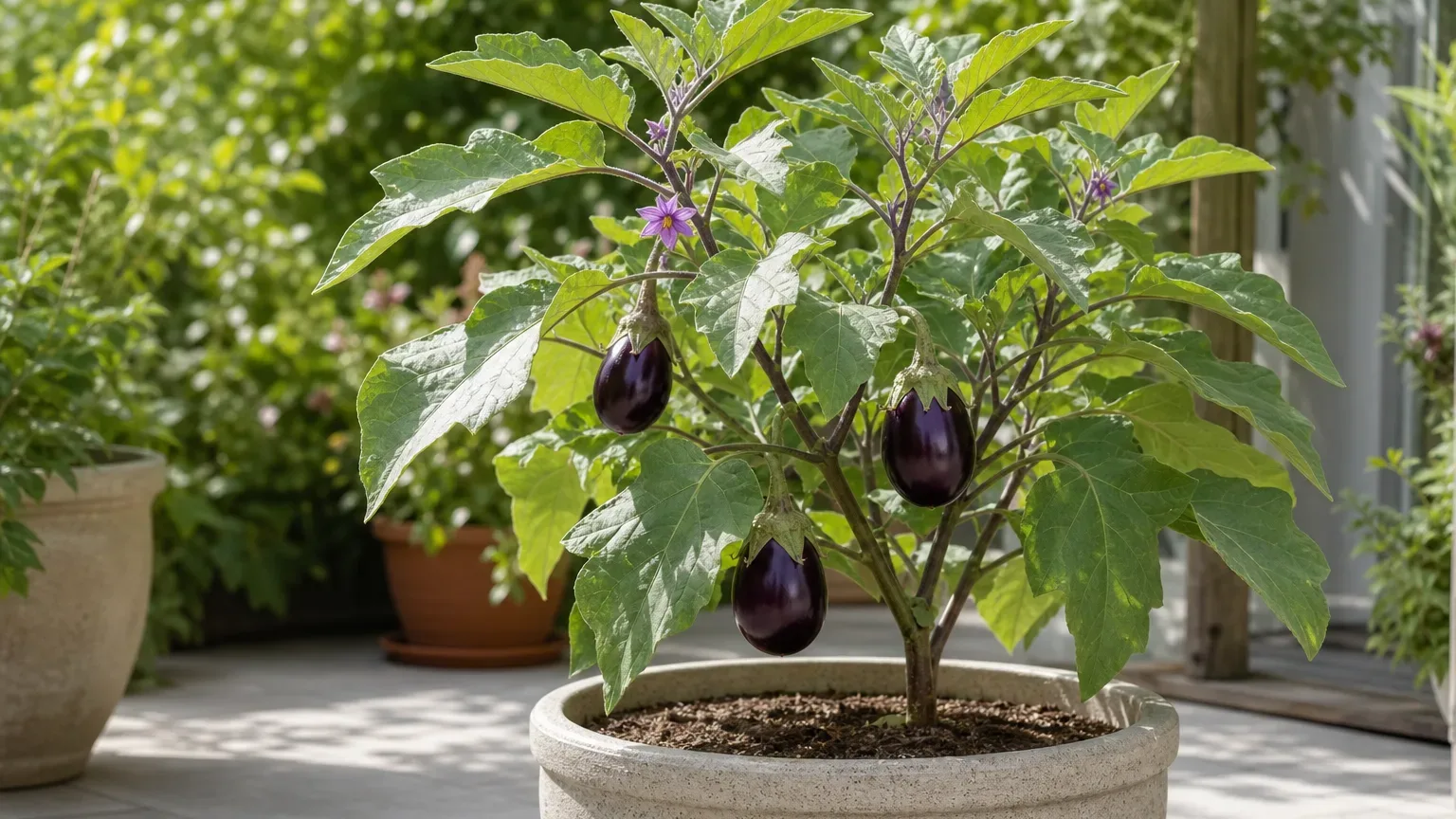
Brinjal Pruning Guide: Training, Cleanup, and Harvest Cuts
Brinjal Pruning Guide: Training, Cleanup, and Harvest Cuts
First, remove just one dead, broken, or clearly diseased leaf or shoot. Cut at its natural attachment point with clean, sharp secateurs, then step back and inspect the canopy before deciding whether healthy growth needs training. Brinjal does not require a universal heavy-pruning routine, and a productive compact cultivar may need no structural pruning at all.
Reviewed by LeafyPixels Review Board · Author: sai-ananth
Quick answer
Prune brinjal (Solanum melongena) for a specific reason: remove damaged tissue, train an overly dense supported plant, take out a borer-damaged shoot, or harvest fruit cleanly. Do not strip lower leaves merely because they are old, and do not copy a fixed “three-stem” system without considering the cultivar, spacing, support, climate, and fruit size. The species is naturally erect and multi-stemmed, while fruit form and plant habit vary substantially among cultivars (NC State Extension).
Routine pruning cannot correct low light, waterlogged roots, or an undersized pot. Stabilize brinjal light and brinjal watering first if growth is weak. Keep enough healthy foliage to power fruit development and shade fruit from intense sun.
Decide whether this brinjal needs pruning
Walk around the plant before cutting and identify the job. A cleanly snapped shoot, a leaf with expanding disease lesions, or a wilted borer-damaged tip is a cleanup problem. Several vigorous shoots crowding the centre of a well-supported plant may justify selective training. A short, open, compact plant with healthy leaves and accessible fruit usually needs neither.
Check these points:
- Cultivar habit: compact patio and small-fruited types often carry more branches without becoming unmanageable; vigorous or large-fruited types may need stronger support and selective training.
- Fruit position: retain leaves around developing fruit unless they are diseased or badly damaged.
- Stem support: tie the stems you intend to keep before removing a competing shoot.
- Plant condition: postpone optional pruning if the plant is wilting beyond midday, newly transplanted, recently repotted, pest-weakened, or losing leaves rapidly.
- Cause of damage: do not assume every yellow or spotted leaf should be cut. Check the leaf undersides, stem base, soil moisture, and nearby plants first.
Review the Brinjal overview if the plant’s expected size and support needs are unclear. A pruning plan should fit the plant you are growing, not an imagined standard purple eggplant.
When to prune brinjal
Train only during active, steady growth
Make optional shoot-selection cuts after the transplant has established, is producing firm new leaves, and has a support in place. Warm active growth gives retained shoots the best chance to take over. Avoid a calendar rule for India: the usable window depends on the sowing season, local heat, monsoon conditions, and whether the plant is in a container or open soil.
Delay structural pruning during transplant shock, prolonged cloudy wet weather, severe hot-weather wilt, drought stress, or a disease outbreak. If repotting brinjal is necessary, let the root system settle before making optional canopy cuts rather than stacking both stresses on the same day.
Remove hazardous or diseased material promptly
Dead, snapped, and locally diseased tissue does not need to wait for an ideal training window. Work when foliage is dry, bag suspect material, and clean the blades before moving to another plant. For sudden whole-plant wilt, a rotting crown, or white fungal growth at the soil line, pruning individual leaves is not a cure: Clemson documents diseases such as bacterial wilt and southern blight that can kill the entire plant and may require removal of the infected plant (Clemson Cooperative Extension).
Choose a training system by cultivar and space
Brinjal can be grown unpruned or trained to a limited number of leaders. Training is most useful where vigorous plants are closely spaced, protected cultivation requires an organised canopy, or heavy fruits need branches tied to a frame. It is less compelling for a compact home-garden plant that already has light and air through the canopy.
Research does not support one stem count for every brinjal. A 2025 field trial compared unpruned plants with two-, three-, and four-stem systems at several spacings, but it tested the ‘Black Beauty’ cultivar in one location; some combinations improved fruit size, while both four-stem and unpruned plants at a particular spacing produced high total yields (shoot-pruning trial). That interaction is the useful lesson: stem number, spacing, cultivar, and production goal work together.
For a home plant, use a conservative decision:
- Compact or small-fruited cultivar: retain its natural framework unless shoots rub, lie on soil, or make inspection impossible.
- Vigorous supported cultivar: retain the strongest main stem plus a small number of well-spaced outward-growing leaders; remove only obvious weak or inward-growing competitors.
- Large-fruited cultivar: prioritise support over leaf removal. Tie loaded branches so fruit weight does not tear them from the main stem.
- Unknown cultivar: observe the first branching and fruit set before imposing a system.
How to prune brinjal step by step
1. Prepare the plant and tools
Use sharp bypass secateurs for stems and a clean knife or fine snips for small petioles. Brinjal stems and calyces can carry prickles, so wear gloves and support the branch with your free hand. Remove soil and sap from the blades, then sanitise them; Iowa State Extension recommends sanitising pruning shears to avoid carrying problems between cuts or plants (tool-sanitation guidance).
Prune dry foliage rather than working immediately after rain or overhead watering. Keep two containers nearby: one for sound plant material and one for suspect diseased or borer-damaged waste.
2. Make the first cleanup cut
Trace a dead or diseased leaf stalk back to where it joins the stem. Cut the petiole close to that junction without slicing into the main stem. For a broken or hollowed shoot, follow it down to firm, clean tissue and cut just above a healthy node or branch junction.
Do not tear leaves downward. A torn strip can enlarge the wound on the soft green stem. Do not compost tissue with active lesions, rot, or insect tunnelling unless your composting system reliably handles diseased crop waste.
3. Select leaders only if training is justified
Identify the upright stem and the strongest outward-facing branches you intend to support. Keep branches that already carry healthy flowers or fruit unless they are structurally unsafe. Remove one weak, inward-growing, crossing, or ground-touching shoot at its origin, then reassess the canopy before making another cut.
Do not leave a long stub, which can die back, and do not cut flush into the swollen branch junction. If two stems form a narrow, weak fork under a heavy fruit load, support the better-positioned stem first and remove the weaker competitor while it is still small.
4. Stop before the fruit loses its leaf cover
There is no defensible universal “remove one-third” rule for brinjal. Stop when air and access have improved but the canopy still looks leafy. Eggplant fruit can develop sunscald where foliage no longer protects it during hot, dry weather, and plants with good leaf cover are less vulnerable (Utah State University Extension).
Never remove healthy leaves simply to make fruit visible in strong summer sun. If the plant is dense because of excess nitrogen, adjust the future feeding plan in the brinjal fertilizer guide rather than repeatedly stripping foliage.
Diseased leaves, wilted shoots, and borer damage
A sanitation cut begins with diagnosis. One leaf with a discrete expanding spot can be removed without dismantling the plant. Several scattered spotted leaves, rapid wilt, stem discoloration, or lesions on fruit indicate a plant-health problem that pruning alone will not solve.
For suspected brinjal shoot and fruit borer, inspect a wilted tender shoot for an entry hole and frass. Cut below the tunnel into solid tissue and bag the shoot; then inspect fruit and neighbouring tips. Do not respond by shearing the whole canopy, because removing undamaged foliage reduces the plant’s remaining productive area without killing larvae already inside fruit.
Use this sanitation sequence:
- Cut the least affected material first and the suspect tissue last.
- Keep diseased cuttings off the soil and away from healthy plants.
- Sanitise blades after suspect cuts and before using them elsewhere.
- Recheck the plant over the next several days for expanding wilt, new holes, or fresh lesions.
- Remove and isolate a plant with irreversible whole-plant collapse rather than repeatedly trimming symptoms.
Improving spacing and keeping foliage dry can reduce conditions favourable to foliar disease, but opening the canopy is not a substitute for diagnosis. Follow the brinjal soil guide when drainage or persistent wetness is part of the problem.
Harvest cuts are part of brinjal pruning
Harvesting is the most frequent cut on a productive brinjal. Hold the fruit without squeezing it and use a knife or secateurs to cut the stalk rather than twisting or pulling. Utah State Extension specifically advises cutting the stem because twisting can damage the branch; it also recommends harvesting when fruit is full-sized, smooth, and glossy (eggplant harvest guidance).
Leave the calyx attached and a short section of stalk on the fruit. Watch for prickles around the calyx, especially on cultivars with spiny stems. Support a loaded branch while cutting so the sudden release of weight does not whip or split it.
Remove overmature or damaged fruit as well as harvest-ready fruit. Leaving a heavy, unusable fruit on a weak branch adds load and keeps the plant investing in seed maturation. Use the seed supplier’s cultivar description—rather than purple colour alone—to judge expected size and colour.
Aftercare and recovery
Return the plant to the same light after pruning; do not expose newly uncovered fruit abruptly to harsher sun. Check the root zone and water only if it actually needs moisture. The brinjal watering guide explains how to keep fruiting plants evenly moist without keeping roots saturated.
Do not force recovery with a concentrated fertiliser dose. Keep existing ties loose enough for stem expansion, add support under fruiting branches, and leave the plant alone until it shows stable growth. Good recovery signs are:
- retained leaves remain firm through the day;
- flowers and young fruit do not suddenly abort;
- a retained node extends a new shoot;
- the cut surface dries without darkening down the stem; and
- no new wilt or lesions appear beyond the original problem.
The timing of visible regrowth varies with temperature, plant vigour, fruit load, and cultivar, so judge the plant rather than counting days. Persistent wilt, a soft stem base, spreading discoloration, or repeated shoot collapse calls for diagnosis, not another pruning round.
Mistakes to avoid
- Treating heavy pruning as compulsory: unpruned plants can crop well, and evidence from one cultivar or production system should not become a universal rule.
- Removing all lower leaves: healthy lower foliage still supports the plant and can shade fruit.
- Pruning a wilt disease as if it were cosmetic: systemic or crown diseases may require whole-plant removal.
- Training before staking: manipulating unsupported stems increases the chance of splits.
- Twisting fruit off: this can tear a productive branch; make a clean harvest cut.
- Cutting during severe stress: elective pruning adds canopy loss when the roots and leaves are already struggling.
- Using dirty blades across plants: sanitise after diseased tissue and before moving to another brinjal.
Related Brinjal guides
Use the Brinjal overview to match support and expectations to the cultivar. Check light before trying to prune stretched growth, watering when leaves wilt, and propagation if you want to start the next crop. Pruning is a canopy decision; these guides address the growing conditions that cutting cannot fix.