Low Humidity on Brinjal: Seedling, Greenhouse & Patio RH
Quick answer
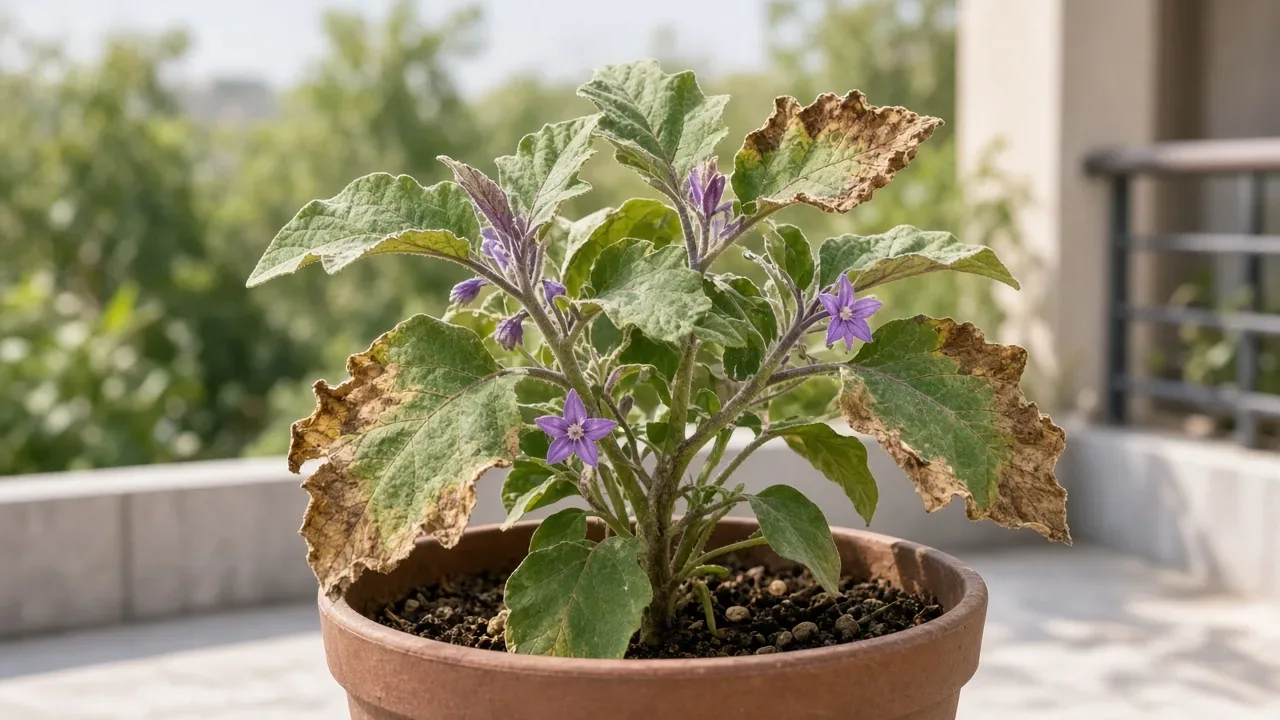
Low humidity on brinjal shows as papery brown margins on large lobed leaves—often on several blades at once while the upper 2–3 cm of mix still feels appropriately moist. Heated seedling benches, dry greenhouse air, and windy patio heat are common triggers. First step: place a hygrometer at canopy height and raise ambient humidity (damp down, tray evaporation, or a humidifier)—not another deep watering.
Low Humidity on Brinjal: Causes, Checks & Fixes
This guide covers low humidity on Brinjal. See also the general Low Humidity guide, watering, and light pages for this plant.
Low Humidity on Brinjal: Causes, Checks & Fixes
Quick answer
Low humidity on brinjal (Solanum melongena, eggplant) means the air around the plant is drier than its leaves can tolerate while roots still supply water. For how dry air crisp leaf edges on plants in general, see our low humidity hub. On brinjal, damage usually starts as papery brown margins on several large lobed leaves—often while the upper 2–3 cm of mix still reads appropriately moist, not bone-dry.
NC State Extension describes eggplant as a warm-season crop that grows fastest between 70 and 85°F, prefers full sun, and needs moist, well-drained fertile soil. That combination still loses water from broad, fuzzy lobed foliage when relative humidity (RH) drops in a heated propagator, a parched greenhouse bench, or a windy patio beside hot paving.
First step: place a hygrometer within 12 inches of the canopy and raise ambient humidity once—damp down a greenhouse floor, set pots on a pebble tray with water below pot bases, group containers, or run a cool-mist humidifier into the air. Read RH for 24 hours before you soak the pot or repot.
When to use this page vs other Brinjal guides
| Pattern | Read next |
|---|---|
| Narrow tan band at lobe tips only | Brown tips |
| Light pot, dusty-dry upper mix, wilt into evening | Underwatering |
| Yellow lower leaves, heavy wet pot, soft stem base | Overwatering |
| Bleached or crisp sun-facing lobes after heat spike | Light / scorch |
| Stippling plus fine webbing on undersides | Spider mites |
| Midday collapse on dry mix | Wilting |
This page covers dry-air crisping on lobed margins when the root zone is not obviously thirsty.
What low humidity looks like on Brinjal
Brinjal carries large, lobed, often fuzzy leaves on a multi-branched warm-season nightshade. The wavy outer edge of each lobe is the last tissue to receive water and the first to lose it when RH is low—the same scorch pattern Missouri Botanical Garden describes when foliage loses water faster than roots can replace it.
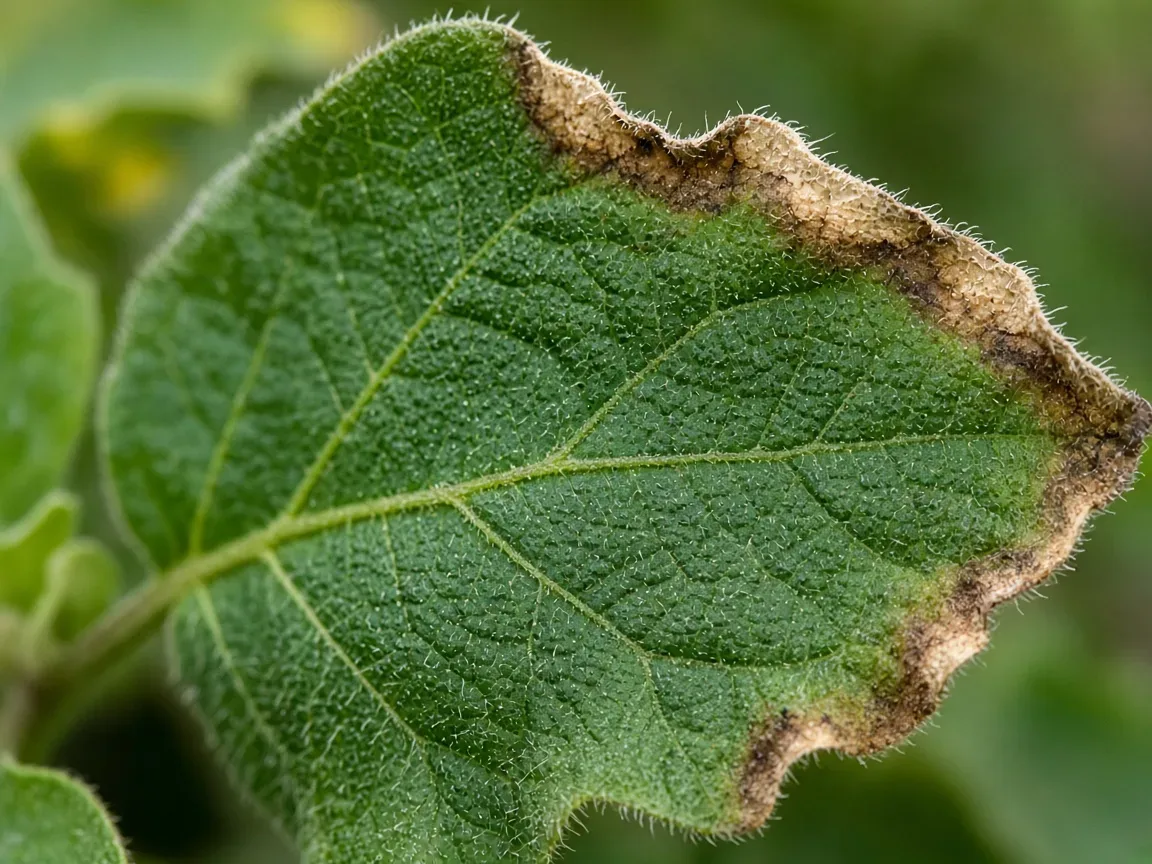
Papery tan margins on a brinjal lobe—dead edge tissue will not re-green; watch the next fuzzy flush for clean wavy edges.
Typical dry-air pattern:
- Papery brown or tan margins along one or more lobes, sometimes on several leaves at once
- Firm green midrib and stem while edges crisp—mix at 2–3 cm may still feel normally moist
- Worst on leaves nearest a heat mat, grow-light array, greenhouse exhaust fan, AC vent, or dry west-facing glass
- Seasonal spike when central heating or dry pre-monsoon winds run while you still keep the plant indoors or under cover
- Slow spread over days to weeks in a dry room—not overnight mush on wet soil
Usually not low humidity alone:
- Dusty-dry mix, light pot, and dull wilt that perks after one deep soak — underwatering
- Yellow lowers with cool, clinging soil — overwatering or root rot
- Isolated tip bands without full margin involvement — brown tips
- Stippling, dull patches, and webbing — spider mites in hot dry air
- Pale stretched stems toward a dim window — not enough light
Heated propagators and winter seedlings
This section is brinjal-specific—it does not apply to a humidity-loving fern or a succulent.
Aubergine seeds need at least 21°C (70°F) to germinate, often in a heated propagator that provides a warm, humid lid environment. Once seedlings move to a bright windowsill at 16–18°C, the lid comes off and RH crashes. Fuzzy cotyledons and first true lobes then show crisp edges even though you water on schedule.
What to do: Keep seedlings under a vented humidity dome or clear cover until roots fill a 7.5 cm pot, then harden off gradually rather than moving straight into dry room air. If edges crisp under lights, lower the fixture slightly and raise RH around the tray—not the soil volume.
Greenhouse benches: damping down vs drowning the pot
RHS guidance for aubergines notes that container plants dry quickly in hot weather and may need daily watering. In greenhouses, the same page recommends misting foliage with tepid water or damping down the floor on hot mornings so evaporating water raises humidity, which also helps discourage glasshouse red spider mite.
That is a greenhouse air fix, not permission to flood the root zone. Brinjal still needs the 2–3 cm dry-down check and open drainage. If margins crisp while mix stays wet and cool, you may have both poor ventilation and soggy roots—see overwatering before you mist again.
Flowering, fruit fill, and dry windy patios
During flowering and small-fruit swell, transpiration jumps on a fruiting container. Utah State Extension reports that tough skins and poor fruit quality can follow night temperatures below 55°F, day temperatures above 95°F, or water stress. Dry wind on a south-facing terrace adds another layer: lobes crisp at the margin even when you watered yesterday.
South- or west-facing balcony: Afternoon heat plus dry air pulls water from outer lobes first. Group pots, add a windbreak, or shift to morning sun with afternoon shade per the light guide before you double watering. Match soil that holds moisture without waterlogging—saturated mix in humid monsoon weeks is a different problem.
How to confirm the cause
Work through these checks in order. Change one variable at a time.
-
Hygrometer at canopy height — Log RH for 24 hours. Below roughly 40–45% beside the leaves while margins crisp strongly suggests dry air. RH in the middle of the room can mislead.
-
2–3 cm finger test — From the watering guide. Dusty-dry at depth plus a light pot points to underwatering, not humidity alone.
-
Microclimate history — Did damage start after moving off a propagator, turning on heat, opening greenhouse vents wide in a heat wave, or parking on hot paving?
-
Pest scan — Hold lobes to the light. UC IPM notes spider mites reproduce rapidly in hot, dusty conditions and on water-stressed plants—stippling and webbing mean spider mites, not RH alone.
-
New-growth watch — The next fuzzy lobe opening after your humidity fix should have clean wavy edges. Repeated crisping on new flushes means another stressor is still active.
First fix for Brinjal
Apply one humidity correction first, then wait for the next leaf flush before stacking changes.
If RH is low beside the canopy (greenhouse or indoor)
Damp down or humidify once. Wet greenhouse paths or staging in the morning so water evaporates through the day, or run a humidifier near—but not blasting—the foliage. RHS describes humidity as the concentration of water vapour that affects how fast leaves transpire. Keep pot bases above standing water; use a pebble tray where the pot sits on stones, not in the water.
If seedlings just left a heated propagator
Restore a vented cover or mini dome for 3–5 days while hardening off, and keep them out of direct dry heater airflow. Open vents progressively as edges stay green.
If dry wind hits a fruiting patio pot
Shield the plant once—group with other pots, add mesh or cloth windbreak, or move off the hottest paving. Do not respond with a second deep soak until the 2–3 cm check reads dry.
Cosmetic trim (after RH stabilizes)
Snip dead margin tissue with clean scissors. Brown edges will not re-green; trimming is optional.
Recovery timeline
Damaged lobe margin tissue is permanent. Judge success by stopped spread and clean edges on newly opened leaves.
- After humidity rises: Existing tan margins stay tan; new lobes should open without fresh crisping within one to two weeks.
- After a seedling hardening fix: Cotyledon damage may remain; true leaves should look cleaner within 10–14 days if RH holds.
- If spider mites were involved: Margin recovery waits until mite pressure drops—often two to three weeks after humidity and a rinse per the spider mite guide.
If three consecutive new lobes open with intact margins and flowers keep setting, consider the dry-air problem controlled.
What not to do
- Do not soak the pot because margins are brown while the upper 2–3 cm is already cool and moist—that deepens overwatering on a collar-sensitive nightshade.
- Do not mist constantly on a still indoor windowsill; fuzzy lobes stay wet and invite leaf spots. Prefer ambient humidification.
- Do not fertilize a crisping plant to “push” fruit—balance feed only after growth stabilizes per the fertilizer guide.
- Do not ignore mites when stippling appears—dry air and spider mites often arrive together.
How to prevent low humidity damage on Brinjal
- Plan hardening off when seedlings leave heat mats—vented cover, then open air.
- Damp down greenhouse floors on hot days instead of only opening every vent to bare dry heat.
- Group patio containers and mulch the soil surface on in-ground beds to slow evaporation from the root zone, not from the lobes.
- Water when the upper 2–3 cm dries, with full drainage—especially during fruit load on the overview.
- Inspect new shoots weekly in dry seasons so margin damage is caught while the fix is still one humidity adjustment.
When to worry
Treat as urgent if crisping spreads to most new lobes within a week, stems soften at the soil line on wet mix, or webbing covers undersides—those patterns point past dry air toward root rot, chronic wet stress, or mite explosion.
Lower urgency: papery edges on a few older lobes while stems stay firm, the 2–3 cm check reads normal, and flowers or small fruits keep developing. Fix RH and wind exposure before repotting.
Conclusion
Low humidity on brinjal is usually an air-layer problem on warm-season nightshade foliage, not a mysterious leaf disease. Solanum melongena tells you the room, greenhouse, or patio air is too dry when several lobed margins crisp while roots still drink on schedule. Measure RH at the canopy, damp down or humidify once, and keep the 2–3 cm dry-down honest—then read the next fuzzy leaves for the verdict. Return to everyday Brinjal care when symptoms overlap sibling guides.
Related Brinjal guides
- Brinjal overview — cultivar size, heat, and cluster map
- Brinjal watering — 2–3 cm check and seasonal rhythm
- Brinjal light — full sun vs scorching reflected heat
- Brinjal soil — moisture retention without waterlogging
- Brown tips on Brinjal — when only lobe points crisp
- Brinjal problems hub — all common issues on this crop
Related tool
Use the Humidity Calculator to narrow causes for low humidity on this plant before changing multiple variables at once.