Leggy Brinjal Seedlings: Light, Staking & Fixes
Quick answer
Leggy brinjal shows long pale stems, wide gaps between lobed leaves, and a hard lean toward the brightest window or sky—classic etiolation on a full-sun nightshade. First step: move the plant to stronger direct light (or add a grow light 10–15 cm above leaves for 16 hours) before repotting, staking, or feeding.
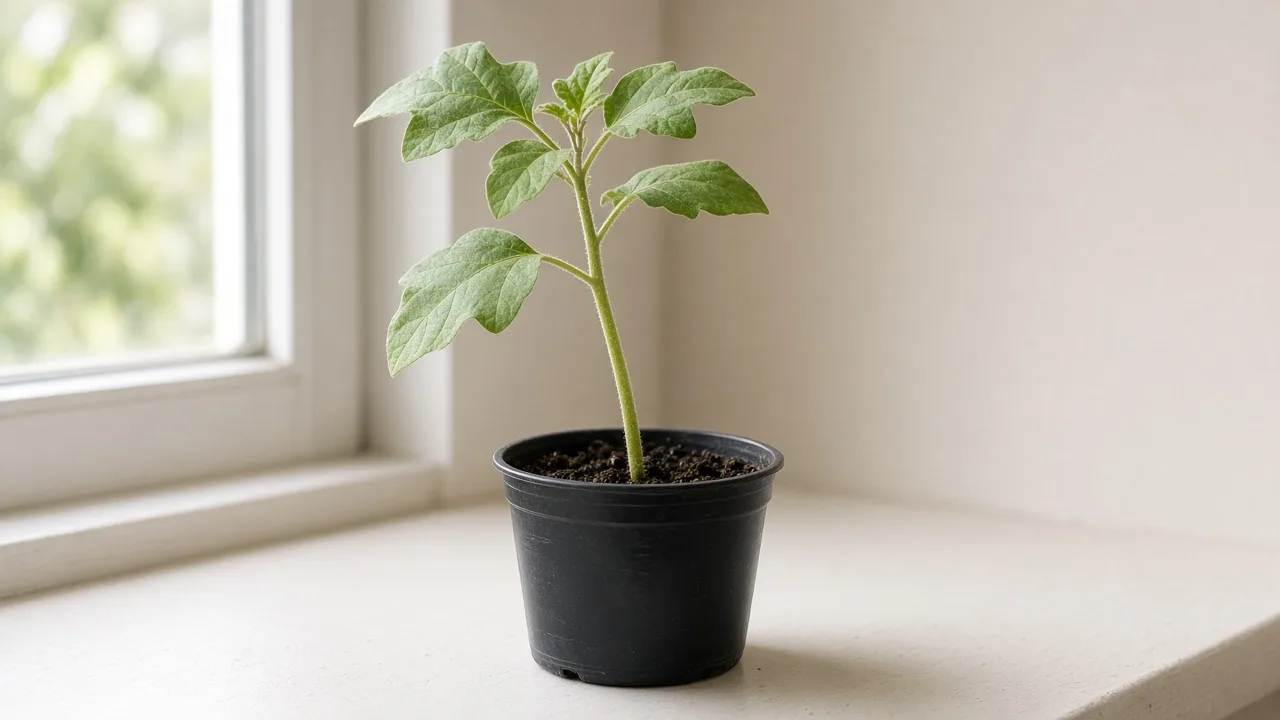
Leggy Growth on Brinjal: Causes, Checks & Fixes
This guide covers leggy growth on Brinjal. See also the general Leggy Growth guide, watering, and light pages for this plant.
Leggy Growth on Brinjal: Causes, Checks & Fixes
Quick answer
Leggy growth on Solanum melongena (brinjal, eggplant, aubergine) is etiolation on a full-sun fruiting nightshade: the stem lengthens toward light, lobed leaves stay small and spaced far apart, and the whole plant may lean toward a window, balcony opening, or grow lamp. It is especially common on indoor seedlings started in late winter and on container plants that receive bright ambient room light but too few hours of direct sun.
For how low light triggers stretch in general, see our leggy growth hub. On brinjal, the pattern is long fuzzy stems between lobed leaves, a pale leading shoot, delayed flowering on mature plants, and a pot that becomes top-heavy before the root ball catches up—unlike tomato, you cannot fix stretch by burying the stem deeper at pot-up.
First step: increase direct light immediately—move outdoor pots to the sunniest open spot with gradual acclimation, or for seedlings hang a grow light about 10–15 cm above the leaves on a 16-hour-on / 8-hour-off timer before repotting, staking, or feeding.
When to use this page vs other Brinjal guides
This page is the stretch-and-structure entry when stems are long and thin—not when colour alone fades or roots fail.
| Pattern | Read next |
|---|---|
| Dim room but stretch not advanced yet | Not enough light |
| Green plant, just slow in cool weather | Slow growth |
| Limp leaves with heavy wet pot | Overwatering or wilting |
| Lower leaves yellow while upper stem still stretches | Yellow leaves |
| Ready to shorten side shoots after light is fixed | Pruning guide |
| Window hours, balcony sun, Indian summer heat | Light guide |
What leggy growth looks like on brinjal
Healthy brinjal builds an erect, multi-stemmed warm-season canopy with broad lobed leaves and, on many cultivars, a slightly fuzzy stem. NC State describes eggplant as growing best in full sun on fertile, well-drained soil—conditions that produce stocky internodes and firm stems. Leggy etiolation breaks that silhouette:
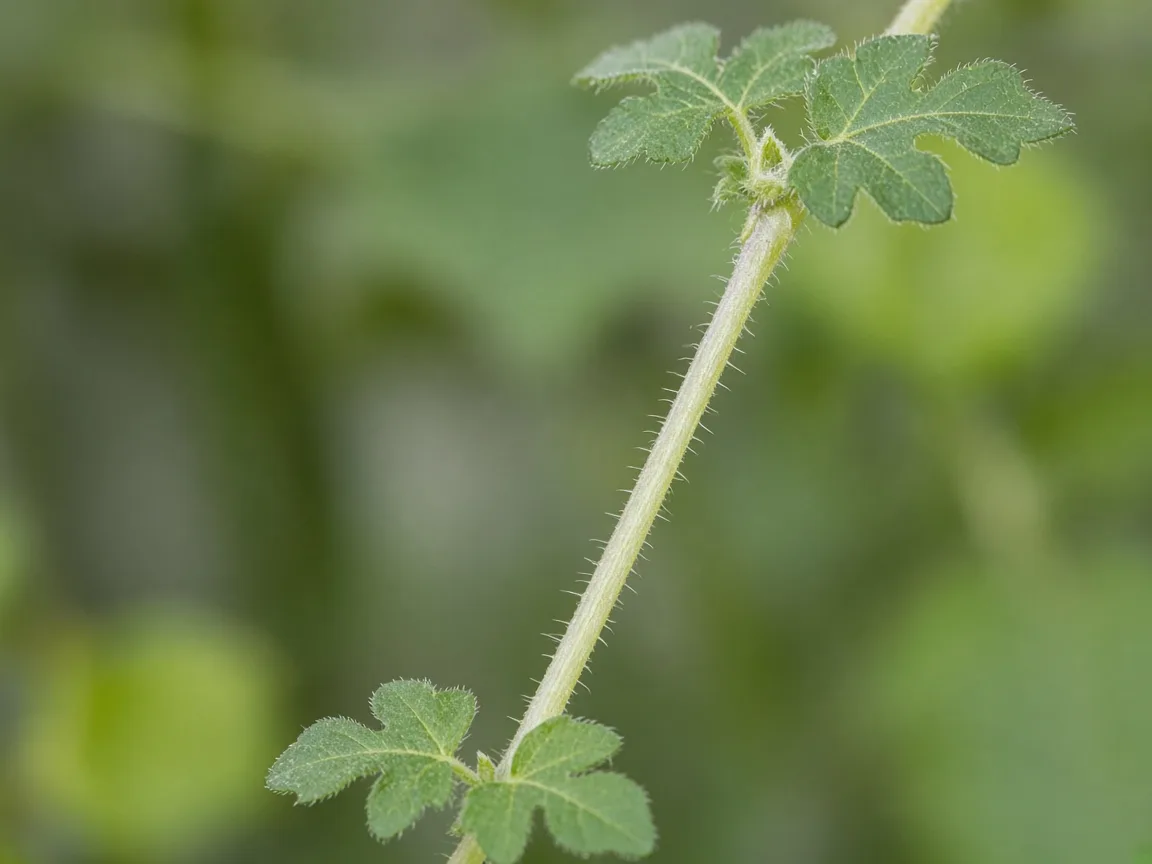
Wide gap between two small lobed leaves on a pale stretched brinjal stem—compare with tighter spacing on firm lower growth after light improves.
- Long internodes — Obvious empty stem between lobed leaves, especially on the top 15–30 cm
- Small, pale new leaves — Energy goes to height, not leaf area
- Hard lean — Whole plant or leading shoot points at the brightest window or sky gap
- Thin stem that may flop — Weak structure before staking; worse when fruit load arrives
- Delayed flowers on mature plants — Stretch often pairs with sparse buds when sun hours stay low
- Seedling-specific look — Cotyledons or first true leaves far below a tall pale neck reaching for light
A firm stem base on appropriately moist mix supports a light-first diagnosis. Soft collar tissue on soggy soil overlaps with root problems—confirm pot weight and stem squeeze before only adding light.
Why brinjal is not tomato when fixing leggy seedlings
Tomato and pepper guides often recommend planting leggy seedlings deeper so adventitious roots form along the buried stem. Brinjal does not share that rescue path. Pot-raised vegetables should be set no deeper than they stood in the original container—advice that matters on collar-sensitive nightshades. LeafyPixels brinjal repotting guidance likewise warns against routinely burying the stem in wet mix.
Practical rescue on leggy brinjal instead means:
- Stop stretch today with stronger light or a corrected lamp height.
- Stake the main stem with a soft tie so the seedling does not snap before it hardens.
- Pot up to a larger container at the same soil line if roots need space—never deeper burial as the primary fix.
- Harden off into full sun using the light guide before expecting stocky outdoor growth.
This distinction is plant-specific: copying tomato trench-planting onto brinjal is a common balcony mistake in South Asia where both crops are started on the same windowsill.
Why brinjal gets leggy growth
Brinjal is a warm-season crop that wants full sun—six or more hours of direct sunlight daily. When photons fall short, the plant lengthens stems toward the source while keeping leaves small—classic etiolation. University of Minnesota Extension notes that legginess in seedlings is caused by low light as plants stretch to reach a source, eventually weakening stems.
Plant-specific triggers:
- Indoor seed starts without supplemental light — Illinois Extension calls insufficient light the most common cause of long leggy seedlings; brinjal germinates in about 8–12 days and can stretch within days if trays stay in a dim germination corner.
- “Bright” windows that fail the six-hour direct-sun bar — Deep balconies, tinted glass, and nearby towers cut afternoon rays; stems lean toward the one open patch of sky.
- Grow lights too high or too weak — Burpee’s seedling FAQ recommends 16 hours of light with the fixture about 10 cm above plants; distant ceiling fixtures leave brinjal reaching.
- Warm germination mats left on after emergence — Heat accelerates stem elongation; cool the tray once seedlings are up and prioritize photons.
- Crowded cells — Neighbours shade each other; thin to one strong seedling per cell when growing brinjal from seed.
- Nitrogen push in low light — Soft succulent shoots elongate; fix light before extra fertilizer on a stretched plant.
How to confirm the cause
Work through these checks in order:
- Direct sun audit — At the pot, does a hand cast a sharp shadow at midday on a clear day? Brinjal fruiting culture targets full sun, not bright shade.
- Lean direction — Does the leading shoot point at one window or lamp? Confirms phototropism.
- Internode comparison — Measure gap between leaves on newest growth vs a lower node from last week. Widening gaps mean ongoing stretch.
- Seedling light setup — For indoor starts, verify lamp height (roughly 10–15 cm above leaves) and a 16-hour timer—not just “the room is bright.”
- Stem base squeeze — Firm and dry supports light-first care; soft on wet mix needs watering correction alongside light.
- Cultivar and pot match — A vigorous large-fruited type in a small shaded pot will stretch faster than a compact patio cultivar; check the overview for expected height.
First fix for brinjal
Move the plant to stronger direct light today—or lower the grow light to about 10–15 cm above the leaves and set a 16-hour timer.
That single change stops most ongoing stretch on a firm-rooted plant:
- Outdoor containers: Shift toward the sunniest open edge of the balcony or terrace; acclimate over several days if the plant lived in deep shade—details in the light guide.
- Indoor seedlings: Add or adjust a full-spectrum grow light; Burpee recommends 16 hours on and 8 off with the lamp close to the canopy.
- Rotate pots every few days so all sides of a bushy brinjal receive sun and the stem does not lean permanently.
- Stake immediately if the leading shoot flops—use a bamboo cane and soft tie at the first firm node, especially before fruit weight arrives.
- Hold fertilizer until new growth shows tighter spacing and deeper green for about two weeks in the brighter spot.
Do not repot on day one unless roots are root-bound; stretch is rarely solved by a larger pot alone. Do not bury the stem deeper “like tomato.”
Recovery timeline and staking before fruit load
Tighter leaf spacing on the leading shoot often appears within two to four weeks after light improves in warm conditions. Lower stem sections that already elongated will not shorten—plan on compact new growth above, or selective pruning once the plant is stable and actively growing.
UMN Extension warns that stretched seedlings can collapse with small watering mistakes and are more susceptible to damping-off—keep moisture even but not soggy while stems harden. Large-fruited cultivars on a leggy frame need early staking so side branches do not snap when glossy fruit develops.
Signs you are winning: upright top growth, shorter internodes, deeper green lobed leaves, and flowers appearing on mature plants that previously only stretched. Signs to escalate: creased bending stems despite good light, persistent wilt on wet mix, or collapse—inspect roots before repeating light moves alone.
Lookalike symptoms on brinjal
| What you see | Likely cause | Next page |
|---|---|---|
| Long stem, pale tips, lean to window | Leggy etiolation (this page) | Light |
| Washed-out leaves without extreme internodes | Insufficient light not yet stretch | Not enough light |
| Soft stem base, yellow lower leaves, wet pot | Root-zone stress | Overwatering |
| Midday wilt, dry upper 2–3 cm | Drought stress | Underwatering |
| Green but no new nodes in cool cloudy spell | Temperature-limited growth | Slow growth |
| Tiny insects on soft tips | Pest sap feeding | Aphids |
What not to do
- Do not bury leggy brinjal stems to hide stretch—risky on this species and ineffective compared with light plus staking.
- Do not fertilize a pale reaching plant still in a dim corner; nitrogen can soften tissue further.
- Do not move straight from a dark room to harsh midday sun without gradual hardening—sun scorch on weak leaves is a separate problem.
- Do not delay light after germination—UMN notes the window between emergence and needing light can be slim.
- Do not stack repotting, heavy pruning, and feeding on the same day on a weakened seedling.
How to prevent leggy growth next time
Start brinjal seeds with a plan for immediate light after emergence: strong supplemental fixtures for indoor trays, or a greenhouse bench with full exposure. Keep lamps within roughly 10–15 cm of leaves, run about 16 hours daily, and thin crowded cells early. When moving outdoors, follow staged hardening in the propagation guide and the light guide.
For container culture, match pot width to cultivar vigor, place the pot where it receives six or more hours of direct sun, and stake while stems are still flexible. Scout weekly on balconies where monsoon cloud or neighbouring plants steal afternoon rays.
Related Brinjal guides
Conclusion
Leggy brinjal is almost always too few photons for a full-sun nightshade, showing up as long fuzzy stems, wide leaf gaps, and a lean toward the brightest opening. Increase direct light or fix grow-lamp height and hours first, stake weak stems, and keep the original soil line when potting up—do not treat brinjal like tomato for deep planting. Recovery is measured on the next compact flush of lobed leaves and, on mature plants, on steady flowering—not on old stretched internodes shrinking back.
Related tool
Use the Plant Problem Diagnosis Tool to narrow causes for leggy growth on this plant before changing multiple variables at once.