Fungus Gnats on Monstera Siltepecana: Causes, Checks & Fixes
Quick answer
Fungus gnats on Monstera siltepecana usually mean the potting mix is staying damp near the surface. For an established plant, let the top 3–5 cm dry before watering again, then resume a thorough drink and drain; do not dry the whole root ball for weeks.
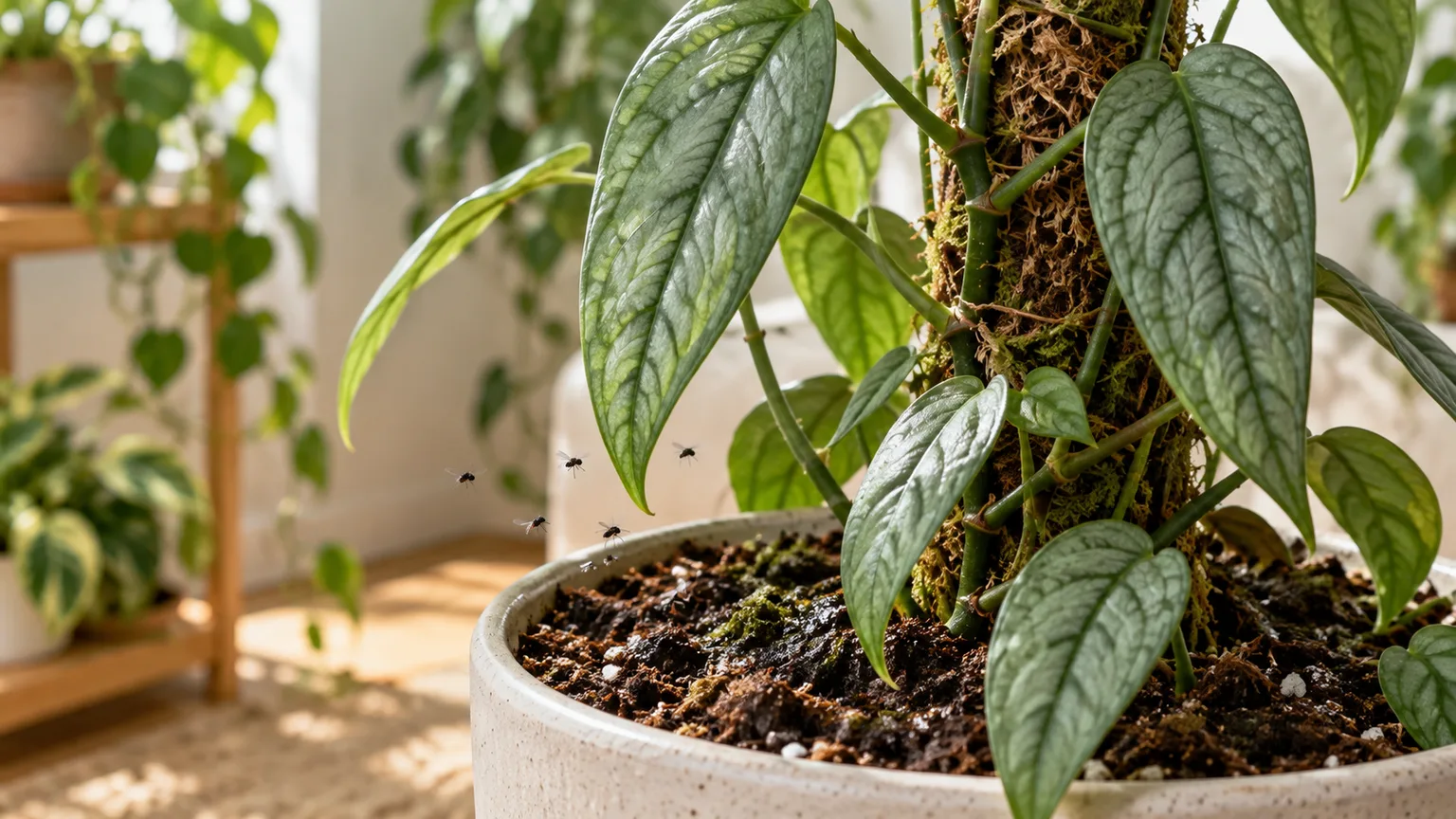
Fungus Gnats on Monstera Siltepecana: Causes, Checks & Fixes
This guide covers fungus gnats on Monstera Siltepecana. See also the general Fungus Gnats guide, watering, and light pages for this plant.
Fungus Gnats on Monstera Siltepecana: Causes, Checks & Fixes
Quick answer
Fungus gnats on Monstera siltepecana are usually a sign that the mix stays damp near the surface long enough for a small fly to breed. If the plant is established and the mix is still wet, the first fix is to let the top 3–5 cm dry before watering again. Then water the root ball thoroughly and let excess drain; do not leave the whole pot bone-dry for weeks.
The adult flies are irritating but usually do not injure a mature vine. Their larvae live in the mix, where they feed mostly on fungi and decaying organic material; heavy numbers can damage fine roots, especially on seedlings or weak plants. For the general life cycle and broader treatments, start with the fungus gnats guide. This page focuses on what the pest means for a climbing Monstera siltepecana and how to dry its upper mix without sacrificing the moist, aerated root zone it needs.
What fungus gnats look like around Monstera siltepecana
Adults are tiny, dark, delicate flies with long legs and antennae. They often walk over the potting mix or drift up when you water, move the pot, or brush past it. A magnifier may show a rounded Y-shaped vein pattern in the transparent wings. Larvae are much harder to spot: look for pale, translucent worms with shiny black heads in the upper couple of inches of damp mix. Wisconsin Extension describes both forms and notes that larvae are commonly confused with other small insects in soil (adult and larval signs).
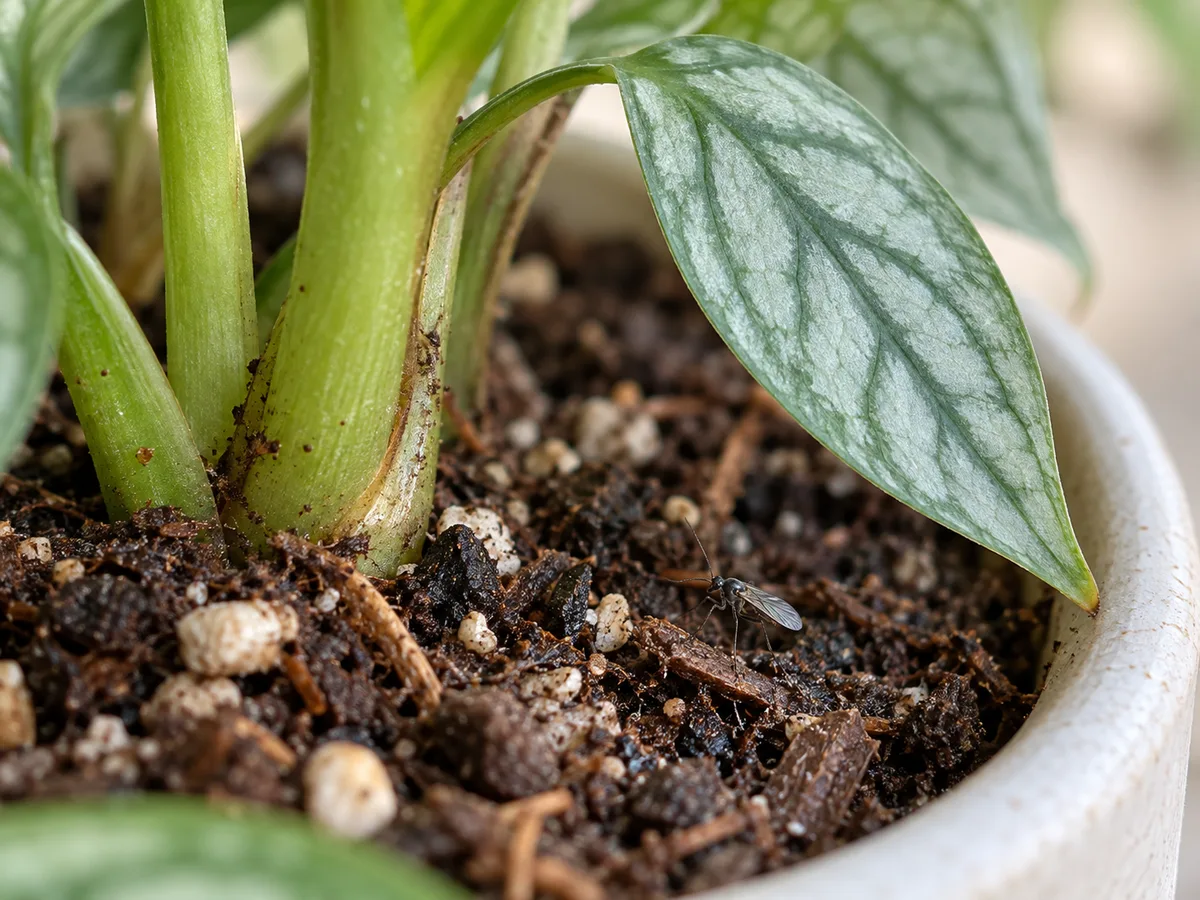
Adult fungus gnats gather around the potting mix; the larvae are in the damp upper layer, not on the siltepecana’s silver leaves.
The plant’s narrow, silver-green juvenile leaves with dark green veins are normal for Monstera siltepecana. A solid, silver juvenile leaf is not a pest symptom, and neither are the plant’s naturally larger, greener leaves if it has matured while climbing. Fungus gnats are a soil-zone clue. If you see only small flies near a window, check whether they rise from this pot before treating the vine.
Why a siltepecana pot can keep breeding gnats
The key condition is not a particular Monstera leaf stage; it is a persistently moist organic surface. Fungus gnat eggs and larvae are associated with damp potting mix, and larvae feed on fungi and decaying material near the surface. Adults can enter with a recently purchased plant or after a plant spends summer outdoors, then move among nearby pots. One gnat does not prove the siltepecana is sick, but repeated adults emerging from the same pot point to a breeding site.
Monstera siltepecana is a climbing, epiphytic aroid, but its container still needs a balanced dry-down. NC State Extension recommends moist, well-drained, aerated mix and watering when the top 1–2 inches are dry (siltepecana watering guidance). In LeafyPixels’ care data, that check is about 3–5 cm. It is not a direction to keep the pot constantly wet, nor a reason to let the entire root ball desiccate.
This distinction matters when the vine is trained on a moss pole or board. A damp support can look thirsty even while the potting mix is still wet. Check the mix in two places, away from the stem and near the pot wall, and lift the pot to compare its weight with a recently watered pot. Do not add extra water to the container just because aerial roots or the support surface feel dry. Aerial roots and the pole are not the same as the roots feeding the plant from its mix.
The siltepecana’s chunky aroid mix should hold some moisture while allowing air to reach roots. A dense, compact, or oversized pot may stay wet much longer than a small pot in bright indirect light. A deep cachepot with standing runoff, a cool dim winter location, or a regular watering day that comes before the upper mix dries can all stretch the damp period. Cross-check the watering guide and soil guide if the mix remains wet between checks.
Confirm that this pot is the source
Do not diagnose from a single fly across the room. First, watch the surface when you water or gently tap the side of the pot. Fungus gnat adults tend to rise from the mix, then settle nearby. Fruit flies are more likely to gather around ripe or fermenting food; Wisconsin Extension notes that the two are distinct insects. If flies do not emerge from the siltepecana or another nearby pot, inspect the kitchen, compost, and drains before changing plant care.
Use a yellow sticky card as a monitor, not as proof that the larvae are gone. Place it close to the foliage and soil line without pressing it against leaves. A rising catch over several checks tells you adults remain active, but the card only catches flying insects. North Dakota State University Extension recommends cards for monitoring adults and a cut potato slice for checking larvae in potting mix. Put a small piece cut-side down on the surface, check it after a couple of days, then remove and discard it; pale larvae with dark heads feeding underneath support a soil diagnosis (larval monitoring method).
Inspect the pot before disturbing roots. Note whether the top 3–5 cm is still damp, whether water drains freely, and whether the container sits in runoff. Smell near the drainage holes only if the mix is already very wet; a sour or stagnant smell is a reason to check drainage and root condition, not a normal fungus-gnat sign by itself. If the vine has yellowing lower leaves or limp stems, compare that evidence with the overwatering guide or root rot guide instead of assuming the larvae caused it.
First fix: give the upper mix a safe dry-down
For an established Monstera siltepecana in damp mix, wait until the upper 3–5 cm has dried before watering again. This is the first change to make because it makes the preferred egg-laying zone less suitable while staying close to the species’ normal watering trigger. When it is time, water thoroughly, allow the pot to drain, and empty any cachepot or saucer. Do not use a fixed weekly pour while the room, season, and potting mix are changing.
Avoid an extreme drought treatment. Leaving the plant dry for several weeks can stress its roots and thin leaves, while the adult gnats continue to emerge from eggs or pupae already in the mix. Gardening Know How’s general houseplant advice also emphasizes letting the upper mix dry between waterings and emptying drained water (houseplant dry-down advice); for siltepecana, apply that principle without letting the whole root zone become dusty and dry.
Keep the normal bright-indirect-light position stable while you adjust watering. A sudden move into deep shade may slow dry-down further, and a hot patch of direct sun can damage the silver leaves without solving the soil habitat. Use the plant’s light guide if you need to assess the location. Do not prune healthy climbing stems, wash the roots, or repot solely because you saw a few adults.
If larvae persist after watering is corrected
Keep the yellow card near the pot for a couple of weeks and compare the catches over time. It should help answer whether adult activity is falling, but do not treat a clean card for a few days as proof the larvae are eliminated. Eggs, larvae, pupae, and adults can overlap indoors, so improvement is a declining catch alongside a less persistently damp surface. A small experimental butterwort may capture adults, but it cannot reach larvae in the siltepecana’s pot; The Guardian’s houseplant test makes the same adult-versus-soil-stage distinction (adult trapping limits).
If the potato check confirms larvae and the problem continues despite a suitable dry-down, consider a biological larvicide containing Bacillus thuringiensis subsp. israelensis (Bti). Wisconsin and North Dakota State University Extension describe Bti products for fungus gnat larvae in potting soil; the product must be labeled for the use you intend. Follow that label for mixing, application, repeat intervals, and indoor use rather than copying a dose from another product (Bti guidance for larvae). Bti targets larvae, not adult flies, eggs, or pupae, so continue monitoring and keep the upper mix from staying wet.
Do not pour peroxide, dish soap, essential oils, or an unlabelled pesticide into the pot as a diagnostic shortcut. Unmeasured home mixtures can injure roots, and killing visible adults alone does not address larvae below the surface. If you use any pesticide, including a biological product, verify the label explicitly permits the target and application location and keep children and pets away as directed.
Tell fungus gnats from siltepecana care symptoms
Fungus gnats do not create silver mottling, chew holes in the leaves, or make the normal juvenile leaves lose their shape. NC State describes juvenile siltepecana foliage as lance-shaped and silvery green with dark veins; climbing plants can develop larger, greener adult leaves with fenestrations. If the vine is firm and the newest leaf opens in its expected form, that is not evidence the gnat problem is worsening.
Yellowing, drooping, or a stalled tip needs a separate check. Look at the mix depth, drainage, and recent watering before blaming fungus-gnat larvae. Persistent wetness can be the shared condition behind both gnats and root stress, but seeing adults does not prove root rot. For a white or fuzzy surface growth rather than flying insects, compare the mold-on-soil guide; for confirmed larvae, follow the soil checks on this page.
| What you see | Better next check |
|---|---|
| Tiny dark flies rise from damp potting mix; larvae have dark heads | Check the top layer and use a potato slice or sticky card to confirm activity. |
| Flies stay near ripe fruit or a drain and do not emerge from the pot | Look for a food or plumbing source before changing the siltepecana’s watering. |
| Yellow leaves or limp stems without flies or larvae | Check moisture and roots; use the general overwatering guide. |
| Silver juvenile leaves with dark veins, but no soil insects | This is normal juvenile foliage; compare with the Monstera siltepecana overview. |
Recovery timeline for the climbing vine
Adult counts should begin to trend down after the soil surface stops staying wet, but it may take several weeks to see a stable change because the stages already in the mix do not all disappear at once. Wisconsin Extension notes that fungus gnats can take about three to four weeks to come under control with modified watering and other measures. Use that as a monitoring window, not a promise that every infestation follows the same schedule.
Judge the plant separately from the trap. A mature siltepecana may keep healthy older leaves while the gnat count falls; its existing silver leaves will not turn greener just because pests are gone. Improvement means fewer new adults on the card, the mix drying at a predictable pace, no fresh signs of root decline, and a firm growing tip. If the yellowing spreads or stems soften while the mix remains wet, inspect the roots and drainage promptly.
Prevent a repeat outbreak in this pot
- Water by dry-down, not weekday. Check the upper 3–5 cm and pot weight before each watering. The interval changes with pot size, season, light, and mix; a fast-growing pole-trained vine may use water differently from a small trailing basket.
- Let runoff leave the root zone. Use a pot with drainage holes and empty the saucer or cachepot after watering. Do not leave the plant sitting in water to keep a moss pole damp.
- Keep the mix airy. The siltepecana’s potting mix should drain and re-aerate after watering. If it stays wet for many days despite a reasonable light level and appropriate pot size, review the mix before adding a thick surface cover that would make moisture checks harder.
- Inspect introductions. Check new plants and their nursery mix for small adults or larvae before grouping them with the climbing vine. Adults can arrive with plants that have been kept outdoors; keep a questionable purchase separate while you monitor it.
- Change one condition at a time. If you adjust watering, leave the light and support stable long enough to read the result. A wet moss pole is not a reason to add water to a pot whose mix is still damp.
When this needs repotting or closer inspection
Gnats alone are not a reason to bare-root a Monstera siltepecana. Repot only if the mix is degraded or compacted, drainage has failed, roots are declining, or a confirmed heavy larval problem persists despite correcting the surface moisture. If you do repot, use a clean container with open drainage and fresh, aerated aroid mix; remove only loose, failing soil and avoid tearing healthy roots just to search for every larva.
If you unpot the plant, healthy roots should feel firm rather than mushy. A sour odor, widespread soft roots, or a stem base that is collapsing points to root or stem trouble needing prompt attention. Remove badly damaged tissue with clean tools and reset the plant in a suitable mix, but keep expectations realistic: a vine with no firm roots or viable growth points may not recover. Do not make that judgment from the presence of a few gnats or from cosmetic damage on old juvenile leaves.
When to use this page vs other Monstera siltepecana guides
Use this page when you see small, dark flies emerging from the potting mix or confirm larvae in its upper layer. If the evidence is leaf yellowing, wilt, or a constantly wet pot without gnats, start with the general overwatering guide or root rot guide. If the surface is fuzzy but no insects fly from it, use mold on soil to distinguish surface growth from a pest infestation.
Related Monstera siltepecana guides
- Monstera siltepecana overview — use for normal juvenile and adult growth, including the silver leaves that can be mistaken for damage.
- Monstera siltepecana problems hub — browse other plant symptoms if gnats or larvae are not present.
- Watering guide — calibrate the dry-down for this pot and season.
- Soil guide — review drainage and aeration if the mix stays damp.
- Light guide — assess whether dim placement is slowing the pot’s dry-down.