Mold on Soil on Philodendron Florida Beauty: Causes, Checks
Quick answer
White mold on a Philodendron Florida Beauty's soil is almost always harmless saprophytic fungus feeding on damp bark and organic matter — not a plant infection. First step: scrape off the top 2–3 cm of moldy mix and hold water until the top 3–5 cm are dry, then fix the airflow and watering rhythm that kept the surface wet.
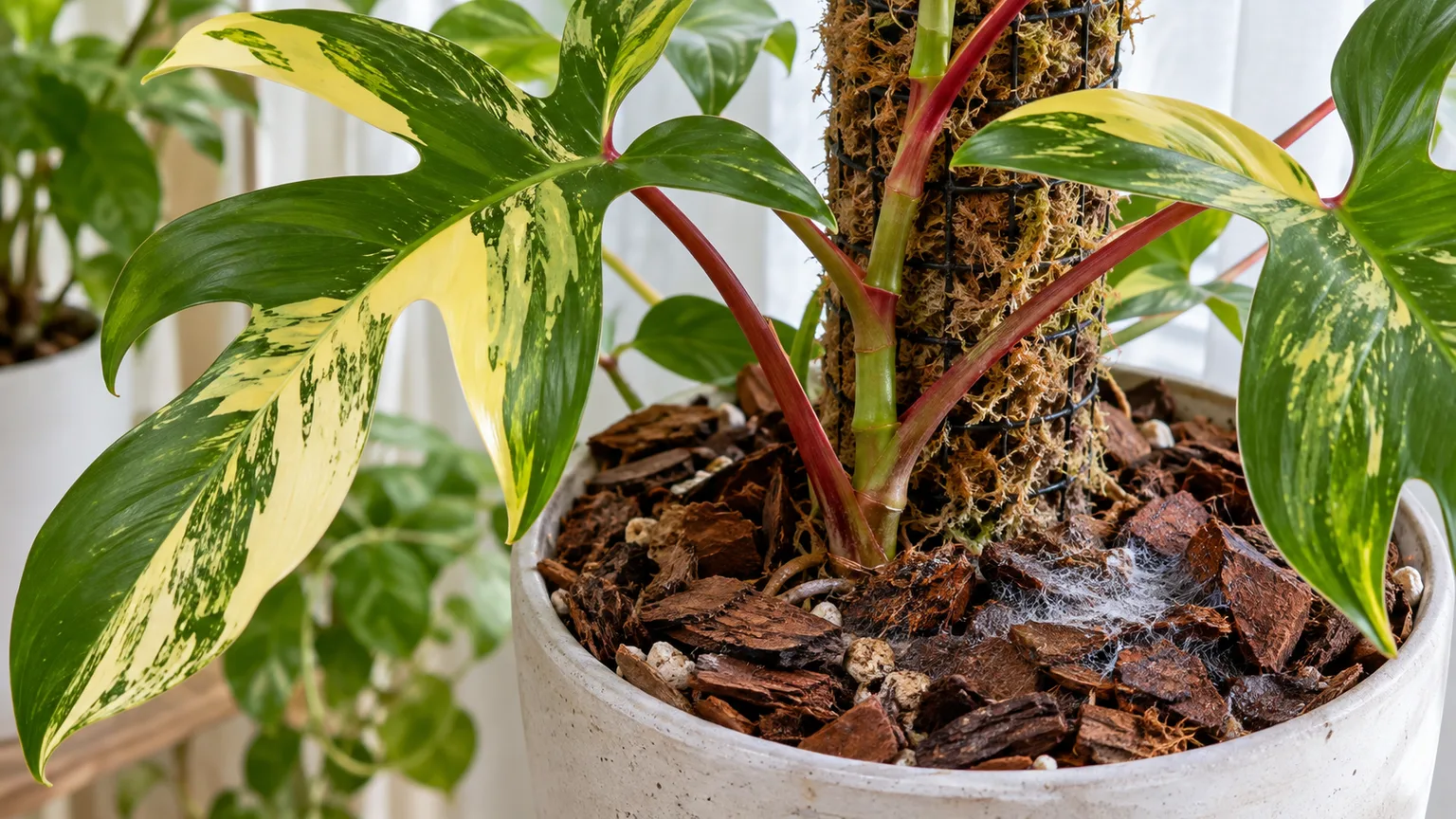
Mold on Soil on Philodendron Florida Beauty: Causes, Checks & Fixes
This guide covers mold on soil on Philodendron Florida Beauty. See also the general Mold on Soil guide, watering, and light pages for this plant.
Mold on Soil on Philodendron Florida Beauty: Causes, Checks & Fixes
Quick answer
White fuzz on your Philodendron Florida Beauty’s potting mix looks alarming but is almost always harmless saprophytic fungus — decomposer organisms feeding on damp bark, peat, and coir, not on your plant. The mold itself needs no fungicide. First step: scrape off the top 2–3 cm of moldy mix, then hold water until the top 3–5 cm feel dry before soaking again. For how surface mold works on houseplants in general, see our mold on soil guide. On Florida Beauty, the rest of this page covers why this particular plant’s pot molds so readily and how to stop it returning.
What mold on soil looks like on Florida Beauty
Expect a thin white or pale-grey cobwebby film spreading across the surface of the chunky mix, often starting where damp orchid bark chunks meet the pot rim or where the moss pole enters the soil. It may look like frost or dust, and it usually appears a few days after watering in still, humid air. A faint earthy smell is normal.
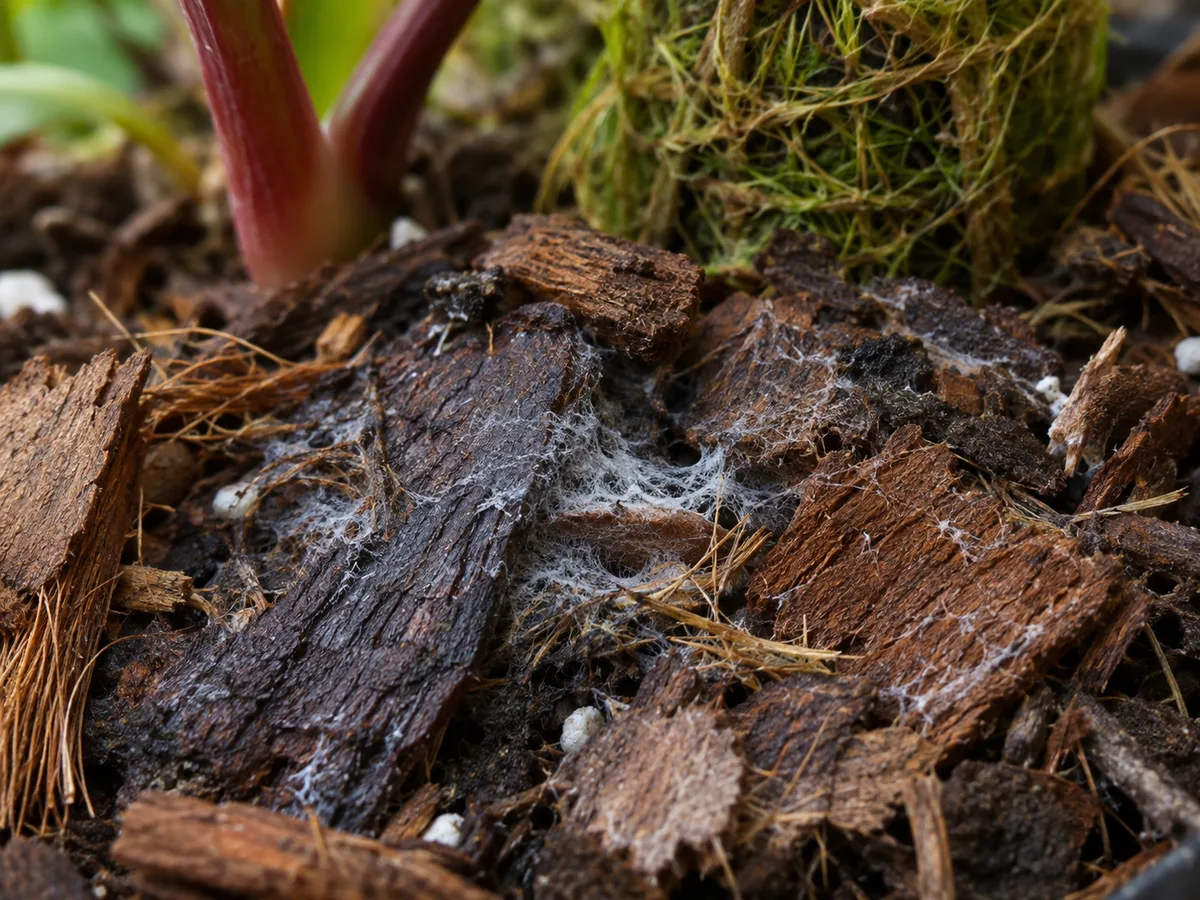
Surface mold feeds on damp organic mix; it is distinct from growth on stems or soft, dark root tissue.
What you should not see is mold climbing the stem itself, black or slimy patches at the stem base, or a sour rotten stink from the pot — those belong to stem or root trouble, covered under when-to-worry below.
Why Florida Beauty’s pot molds: bark mix plus a slow-drinking variegated vine
Florida Beauty grows in a chunky aroid mix of potting soil, perlite, and orchid bark — and that bark is fungal food. Organic material such as bark, peat, and coir supplies the carbon that saprophytic fungi decompose, with visible growth triggered when the surface stays moist and evaporation is slow (Bovees moldy soil guide). A bark-heavy mix that never gets a dry surface is essentially a served meal.
The plant’s own biology slows the dry-down. Florida Beauty’s cream and yellow leaf sectors photosynthesize poorly, so a strongly variegated plant drinks more slowly than a solid-green philodendron in the same spot — yet owners often water it on a standard weekly schedule. Water thoroughly only after the surface has dried, roughly weekly in active growth and every 10–14 days in winter (Florida Beauty care). Watering before the top 3–5 cm dry keeps the bark permanently damp, and the fuzz follows within days.
Light position compounds it. Florida Beauty wants bright but indirect light and scorches in harsh sun, so growers often park it a few feet back from the window (Florida Beauty care). Dimmer positions dry slowly, and low light with cool, still air is exactly the combination where potting-soil mold takes hold (Bovees moldy soil guide). If your plant sits in a dimmer corner to “protect the variegation,” that kindness is likely feeding the mold.
The moss-pole moisture trap
This is the Florida Beauty–specific cause most generic mold articles miss. Florida Beauty is a climbing pedatum × squamiferum hybrid that needs vertical support to mature, so most specimens grow up a sphagnum moss pole — and poles are watered far more often than pots. A pole that is misted or poured over daily wicks moisture down into the top of the pot, keeping a ring of mix around the pole base permanently wet even when the rest of the surface reads dry on your finger test.
Check the pole base before anything else. If the fuzz concentrates in a collar around the pole, or the sphagnum itself shows white film, the pole schedule — not the pot schedule — is the problem. Water the pole lightly and less often, directing water at the pole’s upper section so it moistens without flooding the pot surface, and let the pot’s top layer dry on its own rhythm. Details on pole setup belong to the Florida Beauty soil and potting guide.
How to confirm it’s harmless surface mold
Run these checks before treating anything:
- Location test. Dry, fluffy white growth confined to the soil surface is classic saprophytic mold. Growth on living leaf tissue is a different problem (powdery mildew), and slimy, water-soaked crust with a sulfur smell signals a genuine soil pathogen (white mold diagnosis).
- Finger test. Push a finger 3–5 cm into the mix. Cool and damp days after watering confirms the surface never dries — the trigger condition for germination (moldy soil causes).
- Pot-weight test. Lift the pot. Heavy many days after watering means the whole root zone is wet, not just the surface — that points toward overwatering rhythm rather than a surface-only issue.
- Pole and dressing inspection. Look at the moss-pole base and any decorative moss or mulch layer. These trap moisture at the surface and are frequent mold nurseries on climbing aroids.
- Gnat check. Tap the pot and watch for tiny black flies. Fungus gnat larvae feed on decaying organic matter and fungi in wet soil, and adults hovering over the surface confirm chronically wet mix (UW Extension on fungus gnats).
- Stem-base check. The stem where it meets the soil should be firm with its normal reddish color. Soft, dark, or collapsing tissue means stem or root rot — skip the rest of this page and treat that as urgent.
The first fix to try
Scrape off the top 2–3 cm of moldy mix with a spoon, bag it, and bin it — then do not water until the top 3–5 cm of the remaining mix feel dry.
This single reset removes the established fungal mat and most spores in one move while the dry-down breaks the wet-surface condition mold needs to re-establish (moldy soil fix). Resist the urge to spray fungicide, repot, fertilize, and prune on the same day — surface mold does not warrant a chemical response, and throwing treatments at it disrupts the soil’s microbial balance without fixing the moisture cause (white mold treatment). Make this one change, then read the pot’s response over the next week.
If mold returns: step-by-step recovery
Recurrence within days means the environment, not the scrape, needs work. Go in this order:
- Add gentle airflow. A small fan on low for a few hours a day across the soil surface often ends recurring mold alone — moving air dries the top layer and physically disrupts fungal growth (moldy soil fix).
- Brighten the position. Move the plant closer to a bright, indirectly lit window so the surface warms and dries faster. Philodendrons need indirect light above about 15°C with average humidity, and compost should dry slightly between waterings (RHS philodendron guide). Check the pale variegated sectors for scorch over the first week — sheer-filtered light is the target, per the Florida Beauty light guide.
- Reset the watering rhythm. Water only when the top 3–5 cm are dry, soak until water drains freely, and empty the saucer and cachepot afterward so the pot never sits in standing water. The full seasonal cadence is in the Florida Beauty watering guide.
- Refresh the top layer. If the bark has broken down into fine, compacted crumbs, replace the top few centimeters with fresh chunky mix amended with perlite rather than reusing the old surface. Reused or exhausted mix molds more readily than fresh (Bovees moldy soil guide).
- Repot only on evidence. Persistent mold plus sour smell, or brown mushy roots found during a check, justifies a repot into fresh mix with a root trim. Surface fuzz alone does not — repotting a healthy Florida Beauty for cosmetic mold adds transplant stress for no gain.
Lookalikes: salt crust, minerals, pests, and mushrooms
- White mineral or fertilizer crust forms dry, crystalline, slightly sparkly deposits — often ring-shaped at the pot rim — rather than fluffy threads. It brushes off as grit, not cobwebs, and points to hard water or overfeeding, not fungi.
- Mealybugs at the stem base look like distinct cottony lumps on stems and leaf axils, not a film across soil. If the “mold” has legs or sits on the plant rather than the mix, suspect pests.
- Mushrooms or yellow blobs sprouting from bark chunks are fellow decomposers enjoying the same wet organics. Scoop them out, and treat the moisture cause the same way.
- Algae (green film) also signals a constantly wet surface but needs light plus moisture; the fix overlaps — dry the surface and improve drainage.
- Stem-base blackening with collapse is rot, not mold. That is the one lookalike that changes everything: firm white or tan roots are healthy, while brown, mushy, foul-smelling roots mean rot has started and damaged roots should be trimmed during repotting (moldy soil fix).
Mistakes to avoid
Do not reach for fungicide sprays first — they don’t fix wet mix and can harm the beneficial microbes that keep soil healthy. Do not repot on day one for surface fuzz alone. Do not bury the stem deeper when refreshing the top layer; the stem base must stay at the surface where air reaches it. Do not fertilize while diagnosing — feeding a plant whose roots sit in soggy mix risks fertilizer burn on top of everything else. And do not seal the pot in a decorative cachepot with no airflow gap; Florida Beauty’s humidity appetite (55–70%) is for the air around its leaves, not a swamp at its roots.
How to prevent it next time
Prevention is the plant’s normal rhythm, not a special regimen. Keep the chunky bark-perlite mix open and fresh, refreshing compacted top mix yearly. Water by dryness of the top 3–5 cm, not by calendar — slower in winter when growth stalls. Give the pot bright filtered light and gentle air movement so the surface dries within a few days of each soak. Water the moss pole separately and sparingly so it never floods the pot surface. And keep drainage honest: holes open, saucers emptied, no water pooling under the nursery pot. Chronic wet mix is also what summons fungus gnats and eventually root rot, so the same rhythm protects against the overwatering and fungus gnat problems that share this cause.
When to worry
Treat the situation as urgent — beyond surface mold — if the stem base softens or darkens, lower leaves yellow in quick succession, the pot smells rotten or sulfurous, the plant wilts despite wet soil, or swarms of tiny flies rise on every touch (heavy larval load can damage root hairs at high numbers, per UW Extension). Unpot, inspect roots, trim rot, and repot into fresh mix. If in doubt between mold and rot, the root rot risk checker walks through the same triage before you change multiple variables at once.
Related Florida Beauty guides
- Florida Beauty overview — the plant’s climbing habit, variegation needs, and care baseline.
- Florida Beauty watering guide — use when the finger test shows the pot staying wet too long.
- Florida Beauty soil guide — use when bark has broken down or the moss pole setup needs rethinking.
- Florida Beauty light guide — use when a dim position keeps the surface damp for days.
- Overwatering guide — use when the whole pot stays heavy, not just the surface.
- Fungus gnats guide — use when tiny black flies accompany the mold.
- Root rot guide — use when stems soften or roots smell foul.
Related tool
Use the Plant Problem Diagnosis Tool to narrow causes for mold on soil on this plant before changing multiple variables at once.