Mold on Soil on Philodendron Majestic: Causes, Checks &
Quick answer
White or gray mold on Philodendron Majestic soil is usually harmless surface fungus feeding on damp bark-rich mix, not a disease on the plant. Scrape off the top 1-2 cm, let the top 3-5 cm dry before watering again, and fix the moisture habit behind it.
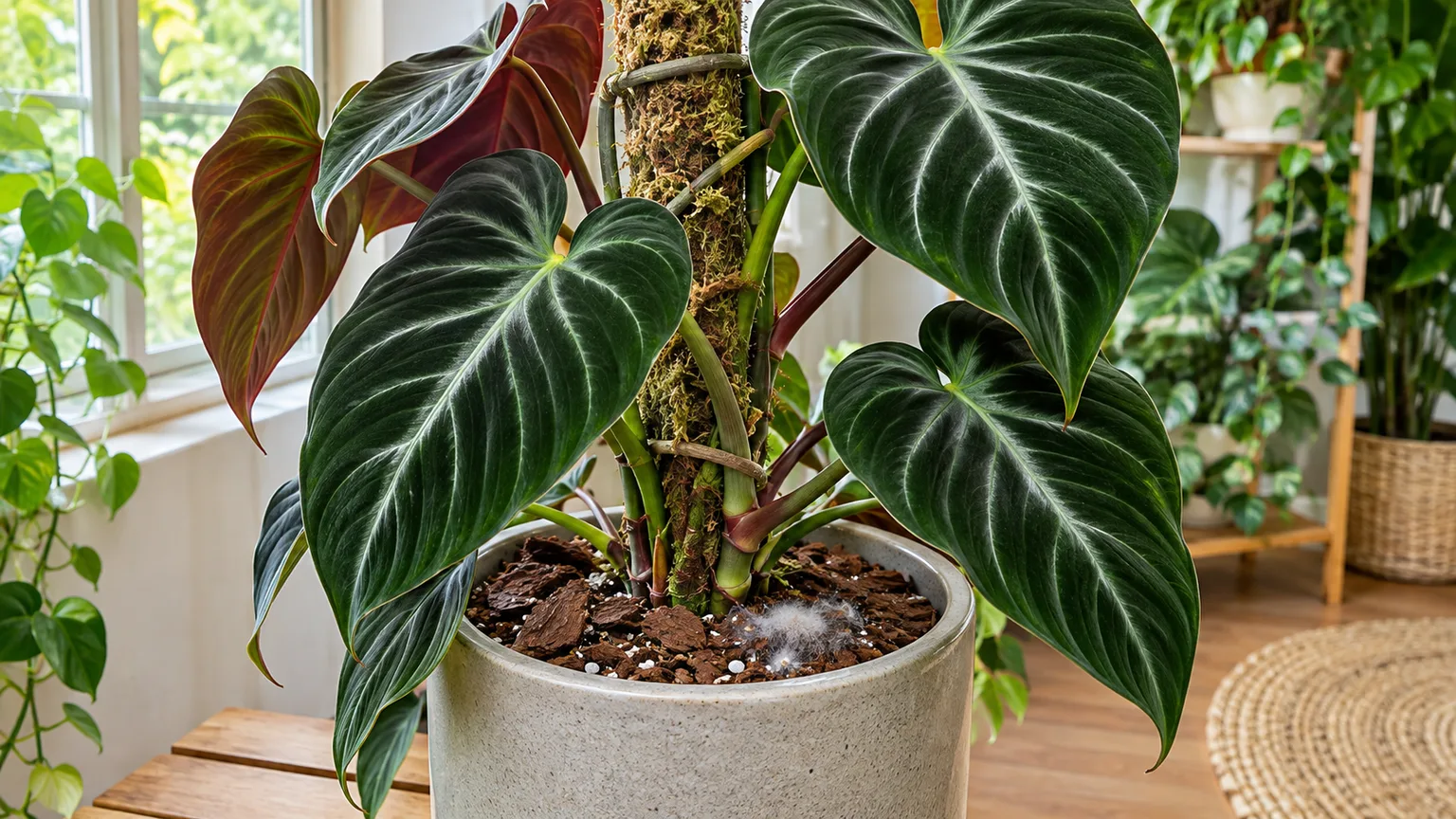
Mold on Soil on Philodendron Majestic: Causes, Checks & Fixes
This guide covers mold on soil on Philodendron Majestic. See also the general Mold on Soil guide, watering, and light pages for this plant.
Mold on Soil on Philodendron Majestic: Causes, Checks & Fixes
Quick answer
You found white or gray fuzz spreading across your Majestic pot and want to know whether to scrape it, repot, or worry. On this hybrid the answer is almost always the same: the fuzz is surface fungus eating damp organic mix, and the real problem is a soil surface that never gets to dry.
First step: scrape off the top 1-2 cm of moldy mix with a spoon, trash it, and do not water again until the top 3-5 cm feels dry. If stems are firm and the velvet silver-veined leaves still look healthy, you are correcting a moisture habit, not rescuing a dying plant. For how surface mold behaves on houseplant soil in general, see our mold on soil guide. On Majestic, the pattern usually shows up as mold on bark-heavy aroid mix kept damp by humidifier air, frequent pot-plus-pole watering, and trapped runoff under a big climbing canopy.
What mold on soil looks like on Philodendron Majestic
A healthy Majestic pot should show a dry, crumbly bark-and-perlite surface between waterings. Mold changes that picture:
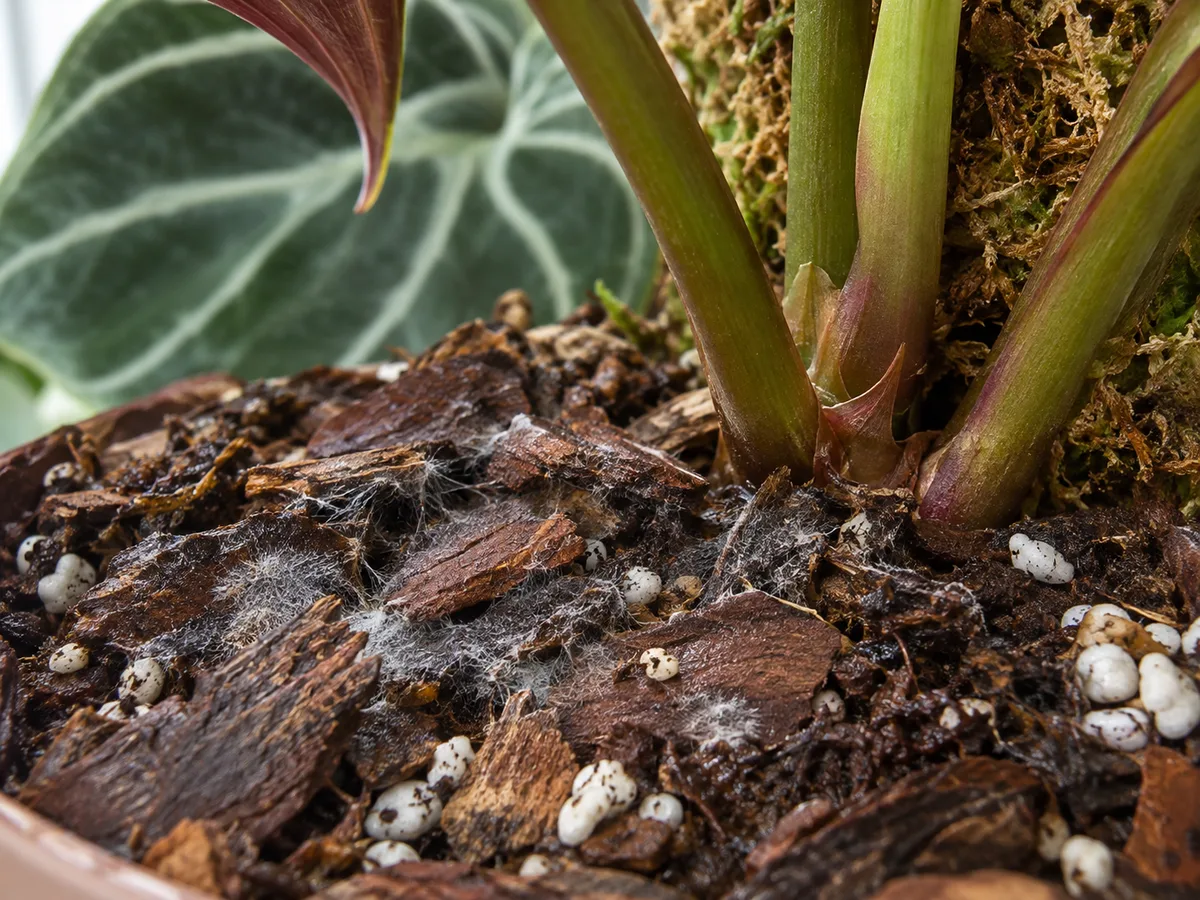
Surface mold forms on damp organic mix while the Majestic stems and silver-veined leaves can remain healthy.
Typical harmless surface mold:
- White, gray, or faintly tan fuzzy patches across the top of the mix, often thickest where bark chips and shed cataphyll sheaths collect
- Surface still cool and damp to the touch days after watering
- Stems firm at the soil line, aerial roots gripping the pole normally, velvet leaves holding their silver-vein contrast
- No strong smell beyond normal earthy potting mix
Signs the wet conditions behind the mold are hurting the plant:
- Mold returns within days of scraping
- Small dark flies rise when you disturb the surface
- Pot feels heavy long after the last watering
- New leaves emerge small, stuck in their sheaths, or with dulled silver veining despite humid air
- Sour or swampy smell from the drainage hole
- Stem base softens where it meets damp mix
Velvet foliage hides early stress well. Leaves can look acceptable while the root zone sits in airless mix, so read the pot surface and pot weight rather than waiting for dramatic leaf symptoms.
Why Majestic pots grow mold so readily
Three features of this hybrid’s normal care conspire to keep pot surfaces damp: a bark-rich aroid mix, 60-75% humidity, and two-zone watering on pole-grown specimens.
Bark-heavy mix is fungal food. The potting mix plus perlite plus orchid bark blend recommended in the soil guide is correct for hemiepiphytic roots, but every bark chip is also dead organic matter that saprophytic fungi feed on. That is expected biology, not a bad recipe. Mold appears when the surface stays moist enough for those fungi to fruit visibly, which means dry-down rhythm is the variable to fix, not the bark itself.
High humidity slows surface drying. Majestic wants 60-75% humidity to preserve silver veining and prevent stuck cataphylls, as described in the overview. In a humidifier-equipped room, the pot surface can stay damp for a week or more after a soak even when the watering volume was reasonable. The plant needs that humidity, so the correction has to come from airflow, drainage, and watering timing rather than drying the air.
Large cordate leaves shade the surface. A mature canopy of broad velvet leaves intercepts light and stills the air right above the pot, so evaporation from the mix is slower than on an open small-leaf plant in the same room. Combined with winter dimming, when the same pot takes far longer to dry, the surface can sit wet nearly continuously. The light guide explains why dim placement compounds every watering mistake on this hybrid.
None of this means the fuzz is attacking your plant. White mold formed by saprophytic fungi will not harm your plants directly. It means the top layer is wet, still, and full of food all at once.
The moss-pole moisture trap
This is the most Majestic-specific cause and the one generic mold articles never mention. A pole-grown plant has two moisture zones: the pot and the pole. Many growers soak the pot fully and then pour generously down the moss pole in the same session, or mist the pole daily between waterings. Water runs off the pole onto the already-wet surface, and the surface never dries.
The watering guide treats pot and pole as one system for exactly this reason. When the pot is due, hydrate the pole as part of that single session. Between sessions, let both zones dry: squeeze the pole fiber and probe the mix at 3-5 cm. If the pole is still evenly damp but the pot surface is growing fuzz, the pot needs a longer interval, not more pole misting. A dust-dry pole with a moldy pot surface is the reverse signal: water the pole lightly without soaking the pot, and improve air movement over the soil instead.
Majestic without a pole has the mirror problem. Vines left to tangle without vertical support drape over the pot rim, shade the surface, and drip condensation onto it, keeping one side of the pot permanently damp while the rest dries. Tie stems loosely to a textured pole with aerial roots facing the support, and rotate the pot so the shaded side gets its turn in brighter indirect light.
Velvet silver-vein leaves, humidity, and why misting backfires
Velvet-leaf growers reach for the mister when humidity reads low, and that habit feeds soil mold twice over. Mist settles on the pot surface as well as the leaves, re-wetting the top layer daily without ever watering deeply. Meanwhile the ambient humidity barely moves, so the plant still unfurls poorly while the soil grows fuzz.
Run humidity through a humidifier near the plant instead, as the overview recommends, and keep mist off both velvet foliage and the soil. Hard-water mist also leaves pale mineral spots on dark velvet that are nearly impossible to clean without damaging texture, and it dulls the silver veining collectors grow this hybrid for. If you already misted heavily, blot standing droplets from leaf centers in the morning and extend the next watering interval until the surface dries.
Cabinet growers get a related trap: sealed, humid, still air. A small fan on low, placed to move air above the pots rather than blast the leaves, shortens surface wetness dramatically without dropping humidity out of the 60-75% band. Stagnant humid air grows mold; gently moving humid air grows Majestic.
How to confirm it is surface mold, not something worse
Work through these checks before repotting or spraying anything:
- Surface depth test - Push a finger 3-5 cm into the mix. Mold with dry soil beneath is a surface-only issue. Mold over wet, clinging soil means the whole root zone is too wet.
- Pot weight - Lift the container. A heavy pot days after watering confirms saturation throughout, not just a damp crust.
- Stem base check - Feel where stems meet the mix. Firm and upright points to cosmetic fungus. Soft, darkened, or sour-smelling stem bases point toward decay at the soil line.
- Smell check - Earthy is normal. Sour or swampy means anaerobic conditions and possible root decay, which Clemson links to a soil mix that does not drain quickly or overly frequent watering.
- Gnat check - Tiny dark flies rising when you tap the pot mean larvae are breeding in the same damp organic layer as the mold. Persistent flies belong to the general fungus gnats guide.
- Pole and saucer audit - Check whether the pole was soaked separately from the pot schedule and whether the saucer or cachepot holds standing water. Philodendrons should be kept evenly moist but never left standing in water.
Lookalike comparison
| What you see | Likely cause | How to tell apart |
|---|---|---|
| White or gray fuzzy threads on damp mix | Saprophytic surface mold | Threads brush away easily; soil beneath is wet and organic |
| Hard white or tan crust, no fuzz | Mineral salt buildup from fertilizer or hard water | Crust is gritty, not fluffy; soil beneath often dry |
| Smooth green film on mix and pot rim | Algae on constantly wet surface in low light | Slimy rather than fuzzy; same dry-down fix as mold |
| White threads through fresh repot mix only | Harmless mycelium in new bark before first dry-down | Fades after one full dry cycle; no smell, no gnats |
| Mold plus soft stem base and sour odor | Early stem or root decay from chronic wetness | Tissue damage, not just surface growth; inspect roots promptly |
Salt crust deserves a special note on Majestic because velvet leaves show fertilizer stress early. If white crust coincides with crisped new-leaf margins while roots look healthy, flush the pot with plain water until runoff runs clear and review feeding in the fertilizer guide rather than treating for mold.
First fix for Philodendron Majestic
Scrape off the top 1-2 cm of moldy mix with a spoon and discard it in the trash, then withhold water until the top 3-5 cm reads dry.
This is the whole first intervention. Scraping removes the active spore load and the wettest, most decomposed layer, and the dry-down makes the surface inhospitable to regrowth. Simply scraping the fungus off the surface is the standard first response because the organism lives on dead matter in the mix rather than on the plant. Do not spray fungicide, peroxide, or cinnamon first. Surface treatments without a moisture correction let mold return within days, and wet velvet foliage plus chemicals risks leaf spotting for no gain. Wash your hands after handling the mix, since philodendron tissue and sap can irritate skin.
Step-by-step recovery
After the scrape, follow the branch that matches what your checks found:
If mold was cosmetic and the root zone is healthy:
- Wait until a finger probe at 3-5 cm comes out dry and the pot feels noticeably lighter.
- Water deeply once until runoff drains, then empty the saucer within 30 minutes and remove the nursery pot from any cachepot until it stops dripping.
- Improve air movement with a gentle fan and confirm bright indirect placement per the light guide.
- Resume the check-first rhythm from the watering guide: probe plus pot weight on the 7-10 day summer cadence, never calendar alone.
If mold returns within a week:
- Scrape again and replace the top inch with dry, fresh chunky mix matching the soil guide recipe.
- Confirm drainage holes are open and the pot is only slightly larger than the root ball. Oversized pots hold a wet reservoir the roots never use.
- If bark has broken down into dark fines or the mix smells musty throughout, plan a full repot into fresh mix during active growth following the repotting guide. Old decomposed bark stays wet far longer than fresh chunks.
- Stretch the interval: in cool or dim conditions the same pot can need water half as often as in bright summer growth, closer to the 10-14 day winter rhythm.
If fungus gnats appear with mold:
- Let the top few centimeters dry completely between waterings to break the gnat life cycle alongside the mold.
- Add yellow sticky traps for adults and remove fallen leaf sheaths and debris from the surface so larvae have less to feed on.
- Treat standing water as the shared enemy: saucers emptied, cachepots drained, pole watering folded into pot sessions. For persistent flies, follow the general fungus gnats guide.
If the mix smells sour or stems soften:
Stop surface fixes. Tip the plant out, trim black mushy roots with sterile shears, and repot into fresh airy mix in a clean pot with drainage. Mold was the visible tip of root-zone failure; the general root rot guide covers the surgery sequence, and chronic wet-soil patterns are described in the overwatering guide. Hold fertilizer until new growth confirms recovery.
Recovery vignette: humidifier-room Majestic with pole-plus-pot soaking
A pole-grown Majestic in a six-inch nursery pot in a humidifier-equipped bright room developed gray fuzz across the bark top two weeks after the grower started misting the pole daily while keeping a weekly full-pot soak. Stems were firm and the silver veining still showed well. The grower scraped the top inch, stopped pole misting, folded pole hydration into the pot session only, added a low fan above the pots, and waited eleven days until the 3-5 cm probe read dry before the next soak. No new fuzz appeared after that watering. Total visible clearance took about ten days. The fix was one moisture rhythm for two zones, not a new mix or a spray.
Mistakes to avoid
- Scraping mold without changing watering - The fungus returns within days if the surface stays damp.
- Daily pole misting on top of full pot soaks - Double-waters the surface while the root zone never dries.
- Misting velvet leaves to raise humidity - Wets the soil surface daily, spots velvet foliage, dulls silver veining, and barely moves ambient humidity. Use a humidifier.
- Watering into a sealed cachepot - Runoff wicks back through drainage holes within hours and keeps the surface humid.
- Spraying fungicide, peroxide, or cinnamon first - Cosmetic treatment over an unchanged wet environment; correct moisture before chemicals.
- Repotting on day one for mild mold - Firm stems and earthy-smelling mix usually resolve with scrape plus dry-down. Repot when mold recurs fast, bark has collapsed to fines, or roots smell sour.
- Ignoring gnats - Flies mean the same wet layer feeding mold is breeding pests that stress roots.
- Burying nodes or aerial roots deeper at repot - Especially deadly on climbers; keep the planting depth described in the propagation guide.
Recovery timeline
Surface mold usually clears within one to two weeks once the top layer dries and stays dry between waterings. Expect:
- No new fuzzy growth after the first full dry-down
- Lighter pot weight before each watering
- Firm stems and steady new-leaf unfurling with clean silver veining
- Existing velvet leaves unchanged, since surface mold alone rarely marks foliage
New fuzz within a week, persistent gnats, stuck cataphylls, or yellowing lower leaves mean the moisture fix was incomplete. Escalate to mix replacement, pot downsizing, or root inspection rather than scraping a third time.
How to prevent it next time
Build the routine around Majestic’s two-zone moisture system:
- Probe 3-5 cm deep and lift the pot before every watering; a dry-looking bark surface can hide a wet center.
- Keep the chunky aroid mix open by refreshing bark every one to two years before it collapses into water-holding fines.
- Fold pole hydration into pot sessions instead of running a separate daily pole schedule.
- Empty saucers within 30 minutes and drain cachepots fully; philodendrons should stay evenly moist but never soggy.
- Hold Majestic in bright but indirect light so growth and evaporation keep pace with watering. NC State Extension likewise places philodendrons in bright indirect sunlight with moist, well-drained soil.
- Clear fallen sheaths and debris from the surface promptly; decaying matter is the food source that saprotrophic fungi recycle into the soil.
- Ease off frequency in winter and dim rooms; indoor mold in general is driven by excess moisture on organic matter, so winter air does not justify summer watering volume.
When to worry
Treat mold as urgent when:
- Stems soften or darken at the soil line
- The mix smells sour or swampy from the drainage hole
- Multiple leaves yellow while soil stays moist
- Mold, gnats, and odor appear together
- Two scrape-and-dry cycles fail in a row
In those cases the mold is signaling root-zone decay, not a harmless surface bloom. Inspect roots the same day rather than waiting for another dry-down cycle.
Mild fuzz on firm stems with healthy velvet leaves is low urgency. Fix the watering habit and it usually resolves without losing the plant.
When to use this page vs other Philodendron Majestic guides
This page is the symptom-first entry for fuzzy soil on a Majestic pot. Use it to decide what the surface growth means and which single action comes first.
- Watering - Go here for the full pot-plus-pole dry-down rhythm and seasonal intervals after mold clears.
- Soil - Go here when bark has broken down, water pools on the surface, or you need the chunky-mix recipe and squeeze test.
- Light - Go here when dim placement keeps every pot wet long after watering.
- Repotting - Go here when mix refresh, pot downsizing, or moss-pole reset is due.
- Overview - Go here for whole-plant context on humidity, climbing support, and acclimation.
- Problems hub - Go here to pick a different symptom guide when soil mold is not the main issue.
Related Philodendron Majestic guides
- Philodendron Majestic overview - humidity, climbing support, and whole-plant context
- Watering - pot-plus-pole dry-down rhythm and seasonal timing
- Soil - chunky aroid recipe, drainage tests, and bark refresh cadence
- Light - bright indirect placement that keeps pots drying on schedule
- Repotting - timing, pot sizing, and moss-pole reset
- Propagation - correct node depth so repotted sections do not rot
- All Philodendron Majestic problems
Frequently Asked Questions
How can I confirm mold on Philodendron Majestic soil is harmless surface fungus?
Harmless mold stays fuzzy and superficial on the top layer while stems stay firm and velvet leaves keep their silver-vein contrast. If the mix smells sour, stems soften at the base, or mold returns within days of scraping, the root zone is staying wet too long and needs a dry-down rather than another scrape.
What should I check first when I see mold on Majestic soil?
Check moisture at 3-5 cm deep and lift the pot to judge weight before anything else. Then check whether the moss pole is being watered on top of full pot soaks and whether a cachepot holds runoff, since both keep the surface damp.
Will mold on the soil damage my Philodendron Majestic?
The surface fungus itself rarely attacks living tissue, but the constantly wet mix that grows it can suffocate roots and invite fungus gnats. Treat mold as a moisture warning for a climber that needs airy fast-draining mix rather than a cosmetic issue to ignore.
When is mold on Majestic soil urgent?
It is urgent when mold returns within a week of scraping, fungus gnats swarm the pot, the mix smells sour, or stems soften near the soil line. Those signs point to root-zone decay rather than surface fungus, so inspect roots promptly.
How do I prevent mold on Philodendron Majestic soil long term?
Water only when the top 3-5 cm is dry, keep drainage holes open and saucers emptied, refresh bark mix every one to two years, and run humidity through a humidifier rather than misting. Letting the surface dry between drinks is what keeps saprophytic fungus from returning.
Related tool
Use the Plant Problem Diagnosis Tool to narrow causes for mold on soil on this plant before changing multiple variables at once.