Wilting on Raat Rani: Causes & First Fix
Quick answer
Test the mix 2–3 cm down and lift the pot before watering a wilted Raat Rani. Dry and light means one deep watering with full drainage; damp and heavy means hold off water and let the root zone breathe.
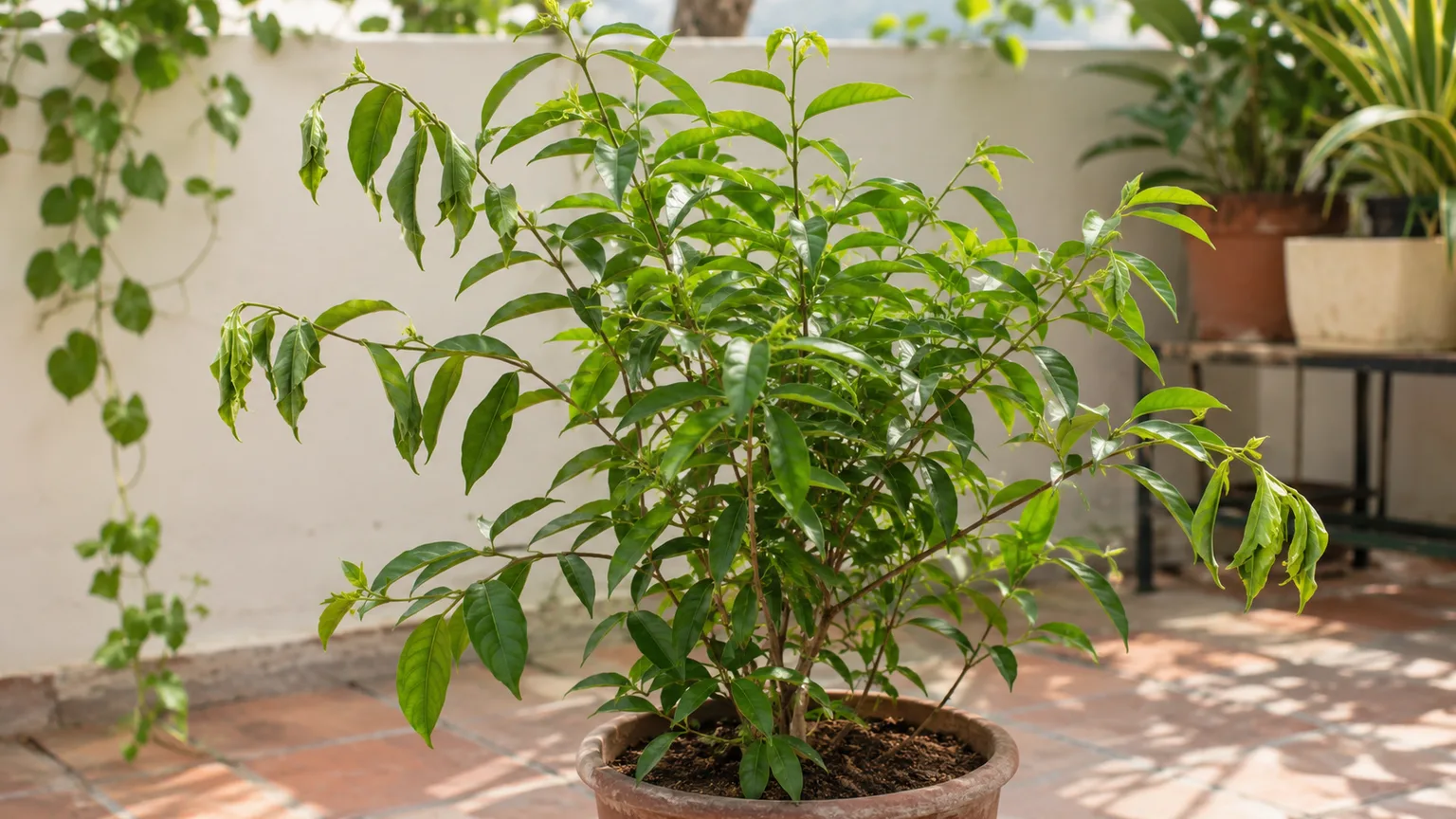
Wilting on Raat Rani: Causes, Checks & Fixes
This guide covers wilting on Raat Rani. See also the general Wilting guide, watering, and light pages for this plant.
Wilting on Raat Rani: Causes, Checks & Fixes
Quick answer
If your Raat Rani has gone limp, test the mix with a finger 2–3 cm down and lift the pot before reaching for the watering can. A dry, light pot calls for one deep watering until excess drains out, followed by emptying the saucer. A damp, heavy pot calls for the opposite: withhold water and let the root zone breathe. Most wilts on this shrub trace back to that single moisture verdict.
What wilting looks like on Raat Rani
Raat Rani carries many thin, fast-growing stems set with narrow, pointed, slightly glossy leaves, so wilt shows as posture before colour. Shoot tips flop first, then whole leaf sprays hang downward while still green, and unopened buds may drop before opening. This matches the species profile: an evergreen shrub with shiny leaves and tubular night-fragrant flowers (Queensland Poisons species description).
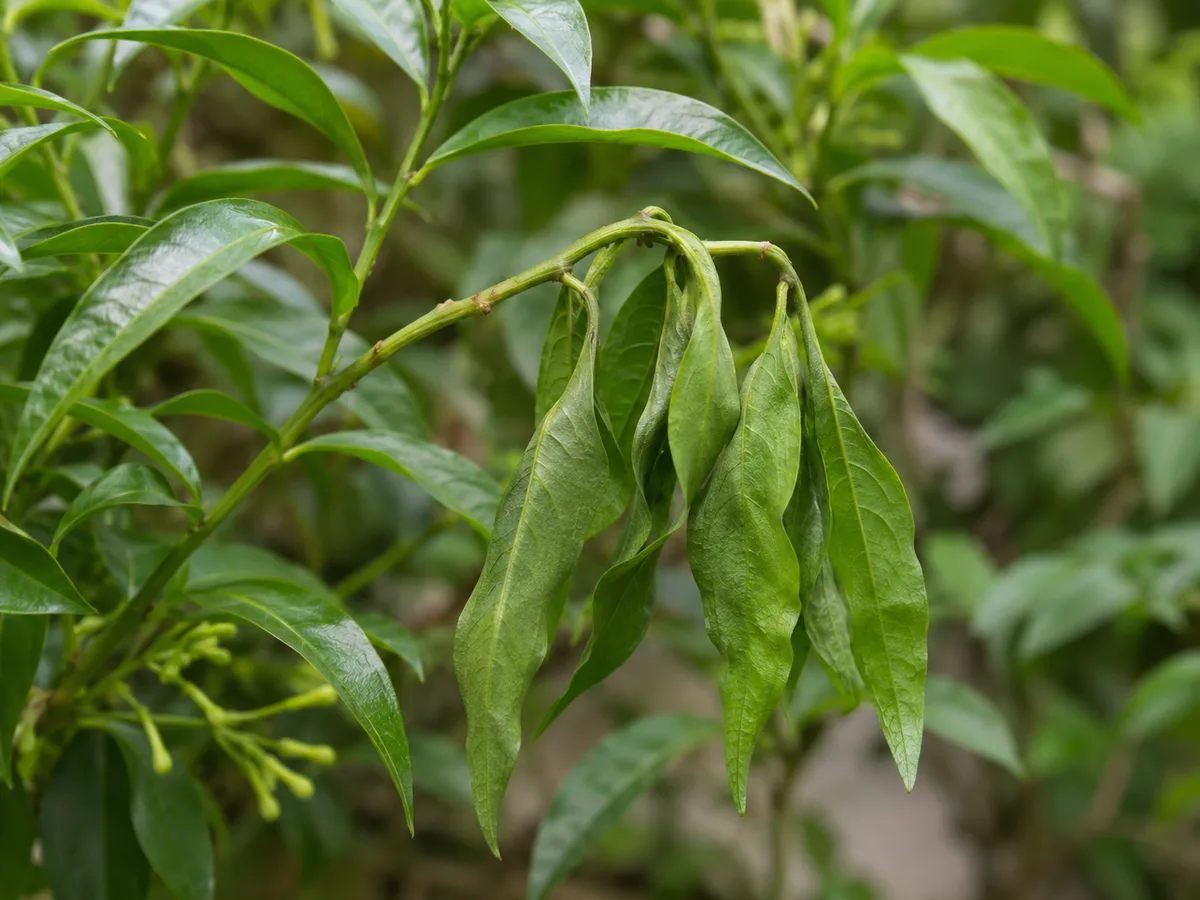
Limp green sprays can signal either dry roots or roots short of oxygen; check soil moisture before adding water.
Note the speed and spread. Several stems collapsing within a day of a heatwave or a missed watering tells a different story from one lower spray declining over weeks while the crown stays firm. Because Raat Rani can grow 2–4 m unpruned and turns straggly fast, a long unpruned cane hanging under its own weight is a pruning matter, not proof of thirst.
Why a fast-growing shrub wilts so visibly
Raat Rani is built for speed, not for storage. It pushes flushes of soft new growth through the warm months, and that tender canopy transpires heavily in sun and wind while its woody root system holds modest reserves. Growth is rapid and the habit is loose and arching, which is why neglected plants become bare-stemmed with flowers only at the tips.
That architecture makes the shrub honest: when supply from the roots falls behind demand from the canopy, the thin stems signal it within hours. Small containers amplify the swing, because a compact root ball in a sun-heated pot can go from saturated to dry in a single hot day.
Dry roots versus drowned roots
The central distinction is whether healthy roots lack water or damaged roots cannot move it. A dry root ball simply has too little available moisture. A saturated one loses air around the roots, and declining roots then fail to supply the canopy despite the wet mix. Clemson Extension explains that roots need both water and oxygen, and that overwatering and underwatering produce similar above-ground symptoms.
For the general mechanics of how waterlogged mix injures roots across species, see our wilting guide. On Raat Rani, the pattern usually shows up as whole-spray limpness after either a long dry gap in a small terrace pot or a stretch of heavy rain in a poorly draining bed.
A wilted plant that looks worse every time it is watered deserves special suspicion. Better Homes & Gardens notes that a houseplant that seems worse every time you water may be suffering root rot rather than thirst, which is exactly when more water deepens the damage.
Terrace pots and summer heat
Container Raat Rani lives a harder thermal life than the same shrub in the ground. Pot walls absorb afternoon sun, the small soil volume dries from all sides, and wind across a terrace strips moisture from the soft canopy. Indian growers report terrace pots needing daily summer watering with the pot sides shaded, while in-ground plants in the same city cope on far less attention.
Practically, this means pot size is diagnosis, not background. A fast shrub crammed into a small container with circling roots will wilt on schedule no matter how faithfully it is splashed each morning, because there is too little mix holding too little water. Indian practice recommends a container at least 40 cm wide and deep with watering when the top few centimetres of soil are dry. If your plant wilts every afternoon and recovers each night, the pot is likely undersized for the canopy rather than the roots being diseased. The Raat Rani watering guide covers how this check shifts with pot size and season.
Monsoon beds and heavy soils
The opposite failure arrives with the rains. Raat Rani wants steady moisture but not standing water: extension guidance for the genus specifies moist, well-drained, loamy soil with full sun to partial shade. In sticky black cotton soil or a low-lying bed, monsoon downpours can keep the root zone saturated for days, and the first signal is often limp sprays on wet soil followed by yellowing lower leaves.
Drainage at planting time decides most of these cases. In heavy soils, setting the shrub in a pit loosened with sand and compost so water moves away after rain prevents the seasonal collapse that no amount of foliar spraying will fix. If an established bed plant wilts through a wet week while its pot-grown neighbour thrives, suspect the soil profile before the watering can. The Raat Rani soil guide explains workable mixes and drainage fixes for both beds and containers.
How to confirm the cause
Work through these checks in order and stop once the evidence clearly favours one cause.
- Finger test at depth. Push a finger 2–3 cm into the mix near the root ball, not just the decorative top layer. Clemson recommends the finger test as the most reliable gauge: dry at fingertip depth means water is due, cool and clinging means it is not.
- Lift the pot. Compare its weight against how it feels just after a thorough watering. A strikingly light pot confirms drought; a heavy one days after rain or watering confirms excess.
- Check drainage and runoff. Confirm the pot has open holes and is not standing in a full saucer or cachepot. Water sitting under the root ball for days is a finding, not a neutral detail.
- Review the last two weeks. Note missed waterings, monsoon stretches, heatwaves, a move to harsher sun, or a recent hard prune. Raat Rani flowers on new growth after flushes, so a heavy cut followed by wilt implicates recovery stress rather than disease.
- Inspect stem bases and smell the mix. Firm green stem bases with a fresh-smelling mix are reassuring. Softening near the soil line or a sour odour at the drainage holes points toward root decline and justifies unpotting.
- Look under the leaves. Sap-suckers colonise the tender flush growth first; sticky honeydew, white cottony clusters at joints, or tiny white flies rising when the spray is tapped all complicate a simple thirst story.
The first fix: answer the moisture check
Do one thing first, matched to what you confirmed. If the root ball is dry and light, water deeply until excess flows from the drainage holes, empty the saucer completely, and return the plant to its normal bright position. If the root ball is damp and heavy, empty all standing runoff, move a potted plant where air circulates, and let the mix dry toward its normal check-point before watering again.
Resist stacking treatments on day one. Do not fertilise, hard-prune, repot, and spray on the same afternoon a wilted shrub is already struggling; each adds stress while hiding which correction actually worked. If the mix has dried into a hard, water-shedding brick, rewet it slowly in two passes half an hour apart rather than flooding it once and watching the water run down the pot walls.
When a root inspection is justified
Unpot only when persistent wilt pairs with wet, heavy mix plus at least one of these: sour smell, softening stem base, spreading yellowing, or buds dropping across the shrub. Slide the root ball out gently, shake off loose mix, and look for texture rather than colour alone: firm roots of any pale shade are working tissue, while mushy, collapsing, foul-smelling roots are not.
Trim only the clearly rotted portions with clean scissors, discard the sour mix, and repot into a container matched to the remaining healthy roots with open drainage and fresh airy substrate. An oversized pot around a reduced root system simply recreates the wet conditions that caused the failure. If most roots have collapsed and the stem base is soft through, the original shrub is unlikely to recover; a firm green tip cutting taken for propagation is the more honest backup plan.
Sap-suckers on stressed shoots
Whiteflies, aphids, and mealybugs all target Raat Rani’s soft new growth, and a heavy infestation can tip a mildly water-stressed spray into visible wilt. Extension notes whitefly monitoring for the genus, and Indian field experience lists mealybug clusters at leaf joints alongside whitefly and aphid colonies under leaves. Start with a strong jet of water to dislodge colonies, and reserve insecticidal soap or neem oil for persistent patches, applied in the cool of the evening. Treat pests as a second step after the moisture correction, never as a substitute for it.
Recovery: what improves and what does not
A drought wilt usually answers within hours: spray tips lift, leaves regain their slight gloss, and buds stop dropping by the next day. If limpness persists two days after a correct watering with good drainage, re-examine the roots rather than watering again. On a wet-wilt recovery, expect a slower arc measured in weeks, with the first good sign being no further yellowing rather than instant perkiness.
Damaged tissue has limits. Crisped margins, fully yellowed leaves, and dropped buds will not resurrect; recovery means the decline halts and fresh shoots emerge firm and cleanly green. Leave viable green leaves in place since they still feed the plant, and prune only fully dead or rotting material. Withholding fertiliser until new growth looks settled for a couple of weeks avoids forcing soft growth on a rebuilding root system.
Preventing the next wilt
Water by check, not by calendar. Established shrubs do well watered deeply when the top inch or so dries, with gardeners advised to reduce watering sharply in winter when cool weather slows growth. Mulch containers and beds to buffer the surface against terrace heat, and cut back by roughly a third after each flowering flush with one harder shaping in late winter so the canopy never outruns its roots.
Light placement matters too: the shrub flowers best with six or more hours of sun, easing into light afternoon shade only where summers are punishing. A plant shifted from bright sun into dim shade keeps its old watering rhythm while using far less moisture, so re-learn the dry-down after every move. The Raat Rani light guide and Raat Rani pruning guide help keep demand and supply in balance through the growing season.
Handling safety while you work
Raat Rani is not a plant to prune bare-handed around children or pets. All parts are toxic if eaten, especially the berries, and the night fragrance itself can irritate sensitive airways. Wear gloves for pruning and root work, collect fallen berries, and site the shrub away from bedrooms and play areas. For whole-plant context, the Raat Rani hub summarises identity, placement, and toxicity precautions.
When to act urgently
Move from observation to intervention the same day if the stem base softens, the mix smells sour, multiple sprays collapse together on wet soil, or runoff has stood under the pot for days. These indicate root-zone failure that waiting will only extend. A single tired spray on an otherwise firm shrub with a dry pot is routine: water it once, drain it fully, and reassess tomorrow. If decline spreads despite a corrected root zone and stable position, the shrub may be past saving, and energy is better spent on a healthy cutting.
When to use this page vs other Raat Rani guides
Use this page when sprays or shoot tips have lost firmness and you need to separate thirst, waterlogging, heat, and pests. Use the watering guide when the question is routine scheduling, the soil guide when beds stay soggy or pots dry unevenly, and the light and pruning guides when leggy growth or poor flowering accompanies the wilt. If the symptom does not fit any of these patterns, the Raat Rani problems hub routes the full set of diagnosed issues.
Related Raat Rani guides
- Raat Rani hub — identity, placement, and whole-plant care context.
- Raat Rani watering — dry-down checks, pot weight, and seasonal rhythm.
- Raat Rani soil — mixes and drainage for beds and terrace pots.
- Raat Rani light — sun needs and shade adjustments that change water demand.
- Raat Rani pruning — flush trimming and winter shaping to balance canopy and roots.
- Raat Rani problems hub — routing when the symptom pattern is unclear.
Related tool
Use the Plant Watering Calculator with Raat Rani pre-selected to set a starting check interval, then confirm every watering with the finger test before pouring.